Air Freight from China to Pakistan: The Complete 2026 Importer''s Guide
· By SinoShipment
With the rapid expansion of the China-Pakistan Economic Corridor (CPEC) and the latest phases of the China-Pakistan Free Trade Agreement (CPFTA), trade volumes between the two nations are surging. For B2B importers, e-commerce sellers, and manufacturers, fast and reliable logistics are no longer optional—they are a critical competitive advantage. Air freight from China to Pakistan provides the speed necessary to restock high-value electronics, deliver urgent machinery spare parts, and keep supply chains moving without costly downtime.
However, many Pakistani importers face common frustrations: unexpected shipping costs due to confusing volumetric weight calculations, lengthy customs delays at Karachi or Lahore airports, and the complexities of navigating the mandatory WeBOC system. In this comprehensive 2026 guide, we will break down exact air cargo from China to Pakistan rates, transit times, strategic airport choices, and provide a step-by-step customs clearance checklist to help you import with confidence and save on your bottom line.
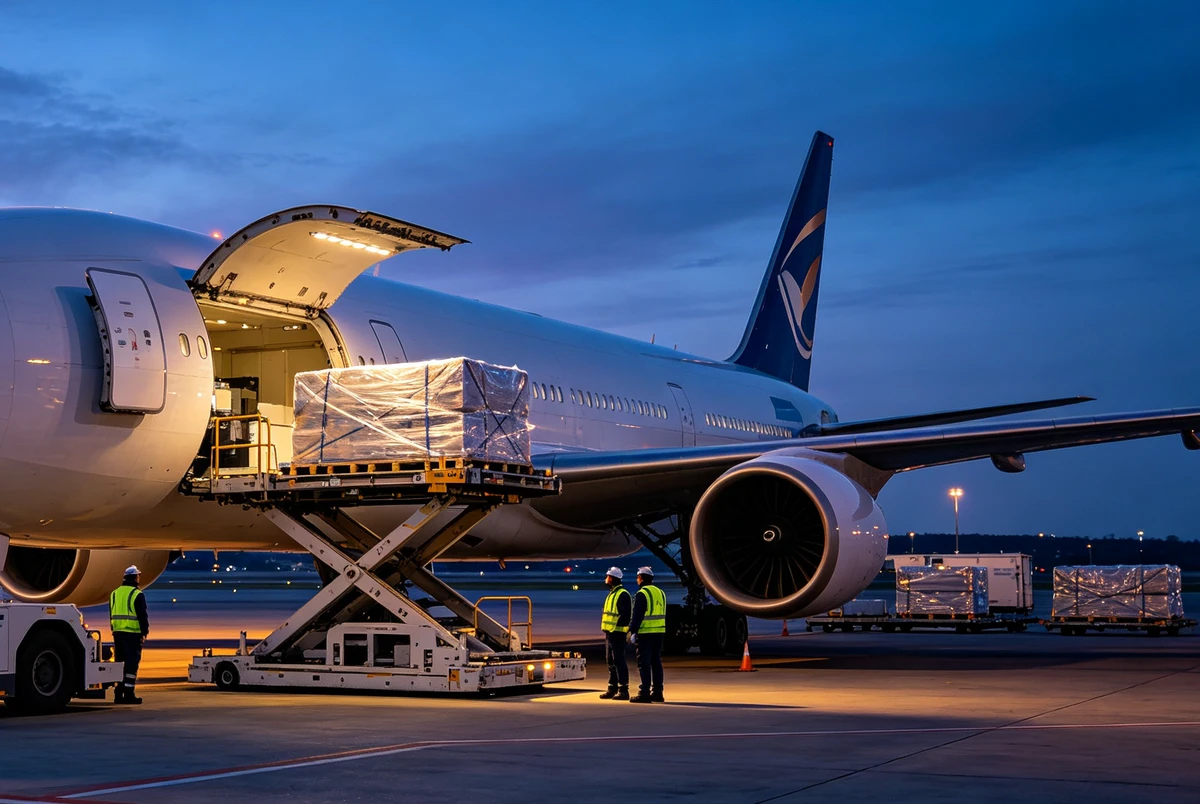
Air Freight vs. Express vs. Sea: Making the Right Choice
When importing from China, selecting the right shipping mode depends entirely on your cargo’s weight, value, and how urgently you need it. Let’s define the three main options to help you find the fastest air freight from China to Pakistan or the most cost-effective alternative.
- Standard Air Freight: Cargo is flown on commercial passenger airlines or dedicated freighter aircraft. It is airport-to-airport by default, though forwarders can arrange door-to-door delivery.
- Express Courier (DHL, FedEx, UPS): A premium door-to-door service designed for small parcels and documents. It includes rapid customs clearance but comes at the highest cost per kg.
- Sea Freight: Cargo travels by ship in containers (FCL) or shared space (LCL). It is the cheapest method but takes significantly longer.
Decision Matrix: Cost, Speed, and Suitability
| Shipping Method | Estimated Cost Level | Transit Time | Best Suited For |
|---|---|---|---|
| Express Courier | Highest ($8–$15+/kg) | 2–5 Days | Documents, samples, parcels under 45kg |
| Standard Air Freight | High ($3–$8/kg) | 3–7 Days | Electronics, spare parts, cargo 100kg to 1000kg+ |
| Sea Freight (LCL) | Medium ($15-$20/CBM) | 25–40 Days | Small commercial loads, non-urgent goods |
| Sea Freight (FCL) | Lowest (Per Container) | 20–35 Days | Bulk cargo, heavy machinery, large volumes |
When to Choose Air Freight: Standard air freight is the optimal choice for shipments weighing between 100kg and 1000kg+. It strikes the perfect balance between speed and budget, making it ideal for high-value goods like smartphones, medical equipment, and fashion apparel. If you are looking for cheap air freight from China to Pakistan, consolidating shipments through a reliable forwarder like Sinoshipment can significantly lower your per-kilogram rate compared to express couriers.
How Much Does Air Freight Cost from China to Pakistan?
Understanding the air freight cost from China to Pakistan is crucial for protecting your profit margins. Unlike flat-rate parcel shipping, commercial air freight pricing is tiered and depends heavily on the volume of your shipment.
Current 2026 Rate Benchmarks
While rates fluctuate based on seasonal demand and airline capacity, here are the indicative air freight shipping rates from China to Pakistan for 2026:
| Weight Bracket | Estimated Rate (Per KG) | Strategic Value |
|---|---|---|
| 45kg - 100kg | $5.00 – $8.00 | Better alternative to express for medium parcels. |
| 100kg - 300kg | $4.00 – $6.00 | Sweet spot for e-commerce and electronics. |
| 300kg - 500kg | $3.50 – $5.00 | Bulk discounts begin to apply. |
| 500kg+ | $3.00 – $4.50 | Most economical rates for large commercial shipments. |
Chargeable Weight Explained
One of the most common pitfalls for new importers is misunderstanding chargeable weight. Airlines charge based on whichever is greater: the actual gross weight or the volumetric weight (dimensional weight).
The standard formula for calculating volumetric weight in air freight is: Length × Width × Height (in cm) ÷ 6000 = Volumetric Weight (kg)
- Example: You are shipping a box of lightweight phone cases. The box weighs 15kg. Its dimensions are 60cm × 40cm × 40cm.
- Calculation: (60 × 40 × 40) ÷ 6000 = 16kg.
- Result: Because the volumetric weight (16kg) is higher than the actual weight (15kg), the airline will use 16kg as the chargeable weight to determine your freight rates per kg.
Cost Breakdown: What Are You Paying For?
A transparent freight quote should itemize several components. When reviewing a quote, ensure it includes:
- Base Freight Rate: The core cost of the airline space.
- Fuel Surcharge (FSC): Variable fee based on global jet fuel prices.
- Security Surcharge (SSC): Fees for mandatory airport x-ray and security screening.
- Terminal Handling Charges (THC): Fees for loading/unloading at both origin and destination airports.
- Local Fees: Export customs declaration in China and document fees.
Transit Times: How Fast Can Your Cargo Reach Pakistan?
When planning inventory, precision matters. The air freight from China to Pakistan transit time varies depending on the level of service you select and the flight routing.
Airport-to-Airport vs. Door-to-Door
- Airport-to-Airport (3-7 Days): This is the transit time from the moment the plane departs China to when it lands in Pakistan. It does not include the time needed for your customs broker to clear the goods.
- Door-to-Door (5-10 Days): If you opt for door to door air freight from China to Pakistan, this timeline covers pickup from the Chinese supplier, export clearance, the flight, Pakistan import clearance, and final truck delivery to your warehouse.
Direct vs. Transit Flights
- Direct Flights: Airlines like China Southern or Air China offer direct routes from hubs like Guangzhou or Beijing to Karachi or Islamabad. These take 1-2 days of actual flying time but command a premium price.
- Transit Flights: Airlines routing through hubs in the Middle East (e.g., Emirates, Qatar Airways) or Southeast Asia. While they may add 2-3 days to the transit time, they often offer more competitive rates.
Key Factors Affecting Speed: Always account for peak seasons (like the weeks leading up to Chinese New Year or Ramadan), where airline space shortages can cause delays. Weather disruptions at major Chinese airports can also temporarily ground flights.
Origin and Destination Airport Strategy
To optimize costs and speed, you must align your Chinese departure airport with your supplier’s location and your preferred Pakistani arrival airport.
Choosing the Right Departure Airport in China
China has several massive air cargo hubs, each specializing in different regional manufacturing strengths:
- Shenzhen (SZX) / Hong Kong (HKG): The absolute best choice for air freight from Shenzhen to Pakistan when shipping consumer electronics, mobile phones, and battery cargo. Hong Kong offers more flexible regulations for dangerous goods.
- Guangzhou (CAN): The primary gateway for South Asia. Air freight from Guangzhou to Pakistan is ideal for textiles, garments, fashion accessories, and general consumer goods.
- Shanghai (PVG): The industrial powerhouse. Choose air freight from Shanghai to Pakistan for heavy machinery, automotive spare parts, and pharmaceuticals.
Navigating Pakistani Arrival Airports
- Jinnah International Airport (KHI) - Karachi: The largest cargo hub in the country. Air freight from China to Karachi offers the most flight options and highest capacity. However, due to the sheer volume, customs clearance here can be complex and requires an experienced broker.
- Allama Iqbal International Airport (LHE) - Lahore: The optimal destination for air freight from China to Lahore. It serves the massive manufacturing and textile sectors of Punjab, offering a direct entry point without trucking goods up from Karachi.
- Islamabad International Airport (ISB): Serving the capital region, air freight from China to Islamabad is excellent for government procurements, IT equipment, and SME imports. Clearance is often faster, but overall cargo capacity is more limited than Karachi.
Pakistan Customs Clearance & CPFTA Benefits (WeBOC Guide)
Navigating air freight from China to Pakistan customs clearance is often the most stressful part of importing. Pakistan enforces strict regulations, and non-compliance results in heavy demurrage fees.
The WeBOC System
WeBOC (Web Based One Customs) is Pakistan’s mandatory electronic customs clearance system. Before you can import anything, your business must be registered with the Federal Board of Revenue (FBR) to obtain a National Tax Number (NTN) and General Sales Tax (GST) registration. Once registered, you or your clearing agent will use WeBOC to file the Goods Declaration (GD).
Essential Documents Checklist
To avoid delays, ensure your Chinese supplier provides these documents before the flight departs:
- Commercial Invoice: Must show accurate item descriptions, HS codes, and the true transaction value. Under-invoicing is severely penalized by Pakistan Customs.
- Packing List: Detailed breakdown of weights, dimensions, and carton counts.
- Air Waybill (AWB): The official contract of carriage issued by the airline.
- Certificate of Origin (Form P): Critical for claiming tariff exemptions.
Leveraging CPFTA for Tax Savings
The China-Pakistan Free Trade Agreement (CPFTA) Phase-II offers massive competitive advantages. By presenting a valid Form P (the specific Certificate of Origin for this FTA), Pakistani importers can benefit from zero-tariff treatment on over 300+ product lines, including specific raw materials, machinery, and electronics. This drastically reduces your overall import duties and landed costs.
Specific Regulations to Watch
- Electronics/Telecom: Devices with SIM cards or radio transmitters require Type Approval from the Pakistan Telecommunication Authority (PTA).
- Quality Standards: Certain consumer goods require certification from the Pakistan Standards and Quality Control Authority (PSQCA).
- Pharmaceuticals: Must comply with Drug Regulatory Authority of Pakistan (DRAP) guidelines.
Shipping Special Cargo: Electronics & Battery Products
A significant portion of shipping electronics by air from China to Pakistan involves items containing lithium batteries (laptops, smartwatches, power banks). Airlines classify these as Dangerous Goods (DG).
The Challenge of Battery Cargo
Lithium batteries pose a fire risk at high altitudes. If your supplier attempts to ship these as general cargo without declaring them, the shipment will be confiscated by Chinese airport security, resulting in severe fines.
Required Certifications and Packaging
To ship battery cargo legally, you must provide:
- UN38.3 Test Report: Proves the battery design has passed rigorous safety testing.
- MSDS (Material Safety Data Sheet): Details the chemical composition and handling instructions.
- Battery Transport Certificate: Issued by an authorized Chinese testing lab confirming the goods are safe for the specific flight.
The goods must be packed according to IATA Dangerous Goods Regulations, featuring specific warning labels. For hassle-free battery shipping, it is highly recommended to route the cargo through Hong Kong (HKG), which has more streamlined DG processing than mainland airports.
Real-World Case Studies: Cost & Time Breakdowns
Let’s look at how strategic planning impacts real shipments.
Case Study 1: Electronics to Lahore
- Scenario: A Lahore-based e-commerce seller needed to restock 250kg of smartphones before a major holiday sale.
- Routing: Shenzhen (SZX) via Hong Kong (HKG) to Lahore (LHE).
- Solution: Sinoshipment arranged a DDP air freight from China to Pakistan service. We handled the UN38.3 battery certifications, exported via HKG, and managed the PTA clearance in Lahore.
- Result: The client paid an all-inclusive rate of $6.50/kg. The goods arrived at their warehouse in 6 days, with zero unexpected customs holds.
Case Study 2: Machinery Parts to Karachi
- Scenario: A textile factory in Karachi faced production downtime due to a broken machine component. They needed an 80kg spare part from Guangzhou urgently.
- Routing: Guangzhou (CAN) direct to Karachi (KHI).
- Solution: To save costs, Sinoshipment utilized consolidation—grouping the part with other shipments to secure a lower per-kg rate, while still booking a direct flight for speed.
- Result: The shipment cleared Karachi customs within 24 hours of landing, saving the factory thousands of dollars in lost production time.
Frequently Asked Questions (FAQ)
How much does air freight from China to Pakistan cost per kg? In 2026, standard air freight typically ranges from $3.00 to $8.00 per kg, heavily dependent on the chargeable weight (actual vs. volumetric) and current fuel surcharges.
Is DDP air freight available from China to Pakistan? Yes. Delivered Duty Paid (DDP) is an excellent option for importers who want a hassle-free experience. The freight forwarder handles all logistics, export/import clearance, and pays the Pakistan sales tax and duties, delivering the goods directly to your door for a flat, pre-agreed fee.
What is the cheapest way to ship air cargo to Pakistan? To secure the lowest rates, ship dense cargo (where actual weight exceeds volumetric weight), consolidate smaller orders until they exceed 300kg, and opt for transit flights via the Middle East rather than direct flights.
Does Amazon FBA air freight exist for Pakistan? While Amazon does not operate FBA fulfillment centers inside Pakistan, many Pakistani cross-border sellers manufacture in China and use Amazon FBA air freight from China to Pakistan forwarders to ship their goods directly from Chinese factories to Amazon warehouses in the US, UK, or UAE.
Conclusion
Mastering air freight from China to Pakistan requires balancing speed, precise cost calculation, and strict adherence to Pakistan’s customs regulations. Whether you are navigating WeBOC, utilizing CPFTA tax breaks, or handling complex battery certifications, having the right logistics partner is the difference between a profitable import and a costly delay.
As a Shenzhen-based freight forwarder with over 10 years of experience and 5,000+ satisfied clients globally, Sinoshipment Logistics specializes in the China-Pakistan trade lane. We secure premium airline capacity, handle complex DG documentation, and offer seamless customs clearance in Karachi, Lahore, and Islamabad.
Ready to accelerate your supply chain? Contact Sinoshipment today for a free, customized air freight quote and let our experts streamline your next import.