Air Freight from China to UK Guide (2026): Cost, Transit Time & Customs
· By SinoShipment
Are you paying premium rates for Air Freight from China to UK, only to face unexpected delays at Heathrow or hidden customs charges? In our experience managing hundreds of shipments from Shenzhen and Shanghai to London, many first-time importers focus solely on the per-kg base rate. This oversight leads them to ignore chargeable weight formulas, peak season volatility, and the complexities of customs clearance (HMRC), which can erode profit margins by up to 15% and delay time-to-market. This comprehensive guide, updated for Q1 2026, breaks down real-time freight cost structures, realistic door-to-door transit times, and actionable strategies to optimize your supply chain from China to the UK.
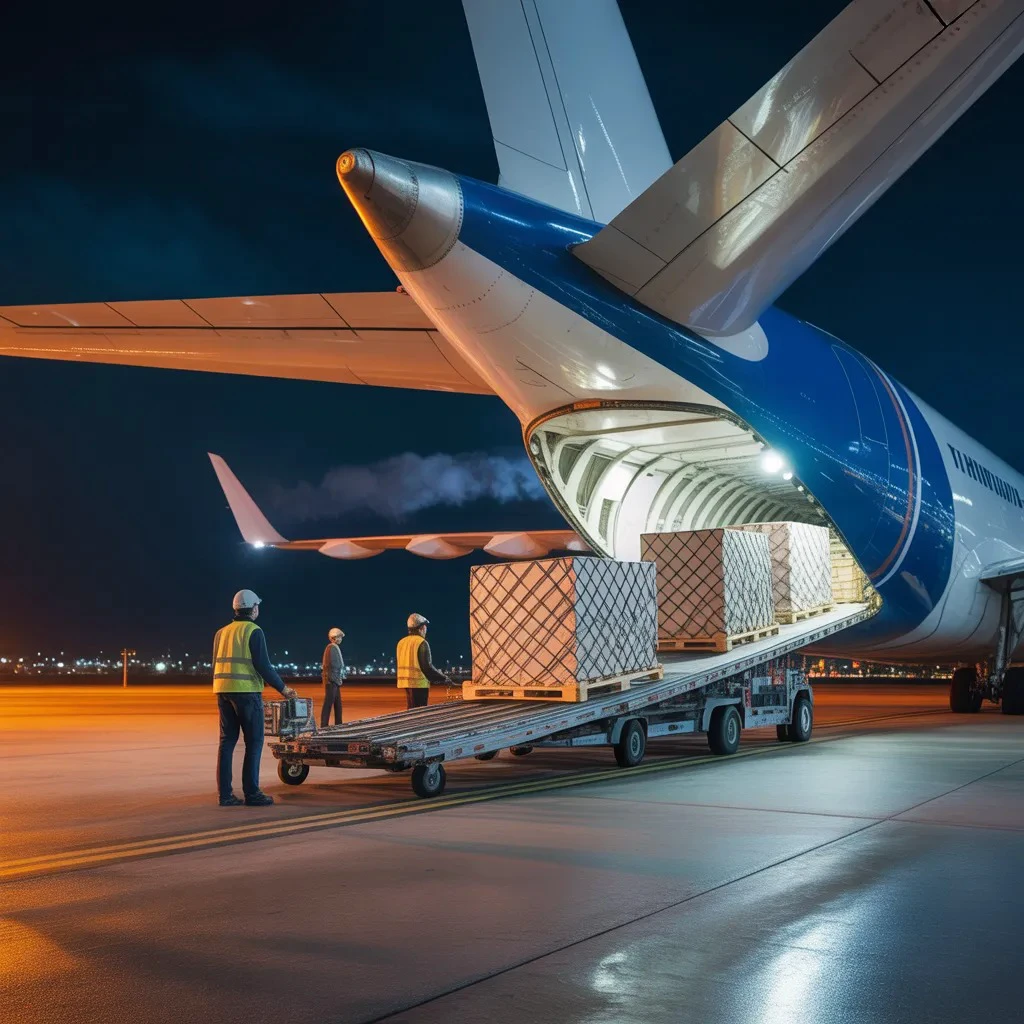
Choosing the Right Air Freight Service from China to the UK
Choosing the right service depends entirely on your urgency and budget. Express air (3-5 days) is best for time-critical stockouts, standard air (5-8 days) balances cost and speed for regular replenishment, while air consolidation offers the most economical route for flexible timelines.
When planning your logistics, recognizing that “air freight” is not a single, uniform service is the first step to optimizing your supply chain. Importers must align their inventory needs with the specific tier of air transport available.
Express Courier vs. Standard Air Freight vs. Consolidation
Express couriers (like DHL, FedEx) provide seamless door-to-door service for smaller parcels under 100kg, whereas standard air freight is designed for heavier commercial cargo moving airport-to-airport. Consolidation groups multiple shipments to lower costs but adds 2-3 days to the timeline.
If you are shipping a 50kg box of high-value electronics samples, using an express courier is highly recommended. The rate you pay is generally “all-in,” meaning customs clearance and final delivery are included in the upfront quote. However, once your shipment exceeds 100kg—and especially when it crosses the 300kg threshold—standard air freight becomes significantly more cost-effective. For businesses that are not in an extreme rush, utilizing a freight forwarder’s consolidation service (where your goods share cargo space with other importers in our warehouse services facilities) can reduce costs by up to 20%.
Major Origin and Destination Airport Pairs (PVG/CAN to LHR/MAN)
Direct flights from major Chinese hubs like Shanghai Pudong (PVG) and Guangzhou Baiyun (CAN) to London Heathrow (LHR) offer the fastest transit. Alternatively, regional airports like Manchester (MAN) or Birmingham (BHX) may offer cost savings and faster local processing for consolidated loads.
The route your cargo takes heavily dictates both the price and the speed. London Heathrow (LHR) remains the dominant gateway for UK imports, handling the vast majority of wide-body cargo flights. However, Heathrow is notorious for peak-season congestion. Forward-thinking logistics managers often route shipments through Manchester (MAN) for goods destined for Northern England, bypassing southern bottlenecks and reducing domestic trucking costs.
How Much Does Air Freight from China to UK Cost in 2026?
In 2026, standard air freight from China to the UK typically ranges between \(4.00 and \)8.00 per kg, heavily influenced by chargeable weight, fuel surcharges, and seasonal demand spikes. The exact rate depends on your cargo’s volume and the specific airline routing.

Navigating air freight costs requires looking past the initial per-kg quote. Forwarders calculate pricing using a multi-tiered approach, and understanding this structure is vital to prevent budget overruns.
Understanding Chargeable Weight (Actual vs. Volumetric)
Airlines charge based on whichever is greater: the actual gross weight or the volumetric weight. Volumetric weight is calculated using the standard 1:167 ratio (Length x Width x Height in cm / 6000), making dense packing critical for strict cost control.
For example, if you are shipping lightweight but bulky items like plush toys, the physical weight might only be 100kg, but the box dimensions might yield a volumetric weight of 250kg. The airline will bill you for 250kg. This industry standard (enforced by IATA) ensures airlines maximize revenue for the space an item occupies in the cargo hold.
Complete Cost Breakdown: Beyond the Base Rate
Your final landed cost includes much more than the line-haul base rate. Importers must account for the Fuel Surcharge (FSC), Security Surcharge (SSC), origin terminal handling charges, export customs fees, and destination customs brokerage fees in the UK.
A common pitfall for new importers is assuming the “freight rate” covers everything. A transparent quote should itemize:
- Base Rate: The cost of the flight itself.
- FSC & SSC: Surcharges that fluctuate weekly based on global oil prices and security protocols.
- Origin Charges: Trucking to the Chinese airport, X-ray screening, and export clearance.
- Destination Charges (DTHC): Unloading at Heathrow, airline handling fees, and HMRC customs entry fees.
Peak Season vs. Off-Peak Pricing Trends
Rates historically surge by 30-50% during Q4 holiday preparations (October-November) and right before the Chinese New Year in Q1. Securing favorable pricing requires advanced booking strategies and flexible routing during these high-demand windows.
During off-peak months (March to July), importers enjoy stable pricing and abundant cargo space. However, as Black Friday, Christmas, and Amazon FBA inventory deadlines approach, tech giants launch new products, absorbing massive amounts of air cargo capacity. During these peaks, securing space becomes a bidding war.
| Weight Bracket | Service Type | Est. Rate per kg (USD) | Transit Time | Best For |
|---|---|---|---|---|
| Under 100kg | Express Courier | $8.00 - $12.00 | 3-5 Days | Urgent samples, small high-value goods |
| 100kg - 300kg | Standard Air Freight | $5.50 - $8.00 | 5-7 Days | Restocking fast-moving inventory |
| 500kg+ | Air Consolidation | $4.00 - $6.00 | 7-10 Days | Economical commercial shipments |
(Note: Rates are indicative for 2026, heavily dependent on precise routing and market conditions.)
Air Freight Transit Times from China to the UK: Door-to-Door Breakdown
While the flight itself takes only 12-15 hours, true door-to-door transit time typically spans 5 to 8 days. This accounts for origin pickup, export customs, airline scheduling, UK import clearance at facilities like Heathrow, and final-mile delivery.
Managing stakeholder expectations requires clearly distinguishing between the time the plane is in the air and the time it takes for the entire logistical chain to complete.
Airport-to-Airport vs. Door-to-Door Timelines
Airport-to-airport transit is highly predictable, taking just 1-3 days depending on direct flight availability. However, door-to-door timelines must factor in local trucking availability and customs processing queues at both ends, adding 3-5 days to the total journey.
Once your cargo lands at a UK airport, it is moved to an airline transit shed. It cannot be collected by a domestic haulier until HMRC has granted customs release and the ground handling agent has broken down the aircraft pallets (ULDs). According to Heathrow Cargo Operations, optimizing the handover process is critical during peak seasons. This ground-level processing often takes 24 to 48 hours.

Common Delay Triggers and How to Mitigate Them
Direct Answer: The most frequent delays stem from cargo rollover due to overbooked flights, incorrect UK customs documentation, or specialized inspections for restricted goods like electronics containing lithium batteries. Ensuring perfect paperwork prior to departure is the best mitigation strategy.
“Rollover” happens when an airline accepts more freight than a plane can carry, bumping lower-priority cargo to the next flight. To avoid this, work with a forwarder who holds block space agreements (BSAs) with premium carriers, guaranteeing your cargo boards the intended flight.
Essential UK Customs Rules for Air Freight Imports
Smooth clearance through HMRC requires absolute accuracy in your HS codes, a declared value that exactly matches the commercial invoice, and proper EORI registration before the cargo departs China. Non-compliance results in storage fees and delivery delays.
UK customs compliance is strictly enforced. Attempting to clear goods without the correct regulatory groundwork is a guaranteed way to incur severe detention fees at the airport. For the most up-to-date procedures, importers should always refer to the official HM Revenue & Customs (HMRC) guidelines on importing goods.
In late 2025, a client attempted to import \(50,000 worth of LED displays without proper UKCA marking documentation. The shipment was detained at LHR for 14 days, resulting in over \)2,500 in storage fees. By auditing their paperwork before departure, we now ensure 100% of their shipments clear customs within 12 hours of landing.
Required Documents Checklist (Commercial Invoice, Packing List, AWB)
A flawless clearance process demands a detailed Commercial Invoice with correct HS codes, a precise Packing List detailing weights and dimensions, the Air Waybill (AWB), and any specific compliance certificates required for regulated products entering the UK market.
Your Commercial Invoice must clearly state the Incoterms (e.g., FOB, EXW, FCA) and provide a granular description of the goods. Vague descriptions like “Apparel” will trigger manual inspections; instead, use “Men’s Cotton T-Shirts, Knitted.”
Duties, UK VAT, and the Importance of the EORI Number
UK importers must possess a valid Economic Operators Registration and Identification (EORI) number starting with “GB”. You must also be prepared to pay the standard 20% VAT on the total customs value, plus any applicable import duties based on the specific commodity’s HS code.
A massive advantage for UK businesses is the Postponed VAT Accounting (PVA) system. Rather than paying the 20% VAT upfront at the border to release the goods, eligible businesses can account for this import VAT directly on their standard VAT return, massively improving cash flow. You can verify eligibility through the UK Government’s PVA guidance. However, import duties must still be paid immediately unless you hold a deferment account.
Handling High-Risk or Restricted Goods (Batteries, Electronics)
Products like lithium batteries require specialized Material Safety Data Sheets (MSDS) and UN38.3 testing reports. Failure to provide these upfront will result in immediate rejection by airlines and severe delays at Chinese export customs.
Aviation safety protocols strictly regulate how batteries (PI965, PI966, PI967) are packed and labeled. Even if your product only contains a tiny button battery, you must declare it. Working with a forwarder experienced in Dangerous Goods (DG) handling is non-negotiable to ensure compliance with the IATA Dangerous Goods Regulations (DGR).
How to Reduce Your Air Freight Costs from China to the UK
The most reliable way to reduce air freight costs is through proactive packaging optimization to lower volumetric weight, consolidating smaller shipments, and booking 1-2 weeks ahead of peak demand windows to avoid premium spot rates.
Cost reduction in air freight is rarely about aggressive negotiation; it is about smart logistics engineering and strategic planning.
Optimizing Packaging to Minimize Volumetric Weight
Redesigning product packaging to eliminate dead space directly reduces the dimensional weight. Since airlines charge for space as much as weight, minimizing box sizes is often the primary driver of reducing high air freight invoices.
Consider a shipment of winter jackets. If shipped loosely in large cartons, the volumetric weight will skyrocket. By utilizing vacuum-sealed bagging before packing them into master cartons, you can drastically reduce the cubic volume, often saving thousands of dollars on a single commercial shipment.
Quote Governance: Avoiding Hidden Destination Fees
Always request an “all-in” quote from your freight forwarder that explicitly itemizes destination terminal handling charges (DTHC), customs clearance fees, and final-mile delivery to prevent surprise costs upon arrival in the UK.
Some forwarders quote artificially low base rates to win your business, only to hit you with inflated “handover fees” or exorbitant local trucking rates once the cargo arrives in London. Demand a transparent breakdown before handing over your supplier’s details.
Why Choose Sinoshipment Logistics for Your UK Air Freight?
Sinoshipment Logistics provides transparent, end-to-end air freight solutions from China to the UK. We offer guaranteed capacity, proactive compliance checks, and clear communication without hidden fees, ensuring your cargo arrives on time and on budget.
Navigating the complexities of international air freight requires a partner, not just a vendor.
What Importers Should Expect from a Reliable Forwarder
A top-tier forwarder acts as a strategic partner, offering not just competitive per-kg rates, but also route optimization, risk management, and dedicated support for complex HMRC customs scenarios, giving you complete peace of mind.
At Sinoshipment, we analyze your supply chain to determine if air freight is truly necessary, or if a hybrid sea freight and air solution might better serve your margins. We handle the intricacies of UK customs, battery compliance, and terminal recovery so you can focus on growing your business.
While this guide focuses heavily on the UK market, our European air freight network provides seamless daily consolidations for other major economies. If you are expanding your operations, we offer dedicated services for freight shipping from china to germany, freight shipping from china to france, freight shipping-from china to italy, freight shipping from china to spain, and freight shipping from china-to netherlands.
Expert Tip from our Senior Customs Broker: “Never assume your supplier has perfectly categorized your goods. Always double-check the 10-digit UK commodity code before booking your freight. A single digit error can delay your cargo by a week.”
Frequently Asked Questions (FAQ)
How much does it cost to air freight 100kg from China to the UK?
For a 100kg shipment, standard air freight typically costs between 500 dollar and 800 dollar in 2026. This excludes local UK destination charges, UK VAT (20%), and any applicable HMRC import duties.
How long does air freight from China to the UK really take door-to-door?
A realistic door-to-door transit time is 5 to 8 days. While the flight is only 12 hours, this timeline includes origin pickup in China, export clearance, the flight, UK import customs clearance at the destination airport, and final domestic delivery to your warehouse.
Do I need an EORI number to import via air freight to the UK?
Yes, any business importing goods into the UK on a commercial basis must have a valid EORI number starting with “GB” (e.g., GB123456789000). Without it, your customs broker cannot legally clear your goods through HMRC, resulting in immediate delays.
Is it cheaper to use express courier or standard air freight for a 50kg box?
For shipments under 100kg, express couriers (like DHL, UPS, or FedEx) are generally cheaper and faster. Their door-to-door rates typically include basic customs clearance fees, whereas standard air freight incurs high minimum handling charges at the airport that make small shipments uneconomical.
How is volumetric weight calculated for UK air freight?
Volumetric weight is calculated using the IATA standard formula: (Length x Width x Height in cm) / 6000. You can refer to the IATA Cargo guidelines for more details on dimensional weight policies. If the resulting number is greater than the actual physical weight of the cargo in kilograms, the airline will bill you based on this volumetric weight.