Air Freight from China to USA (2026): Rates, Transit Time & Door-to-Door Cost Guide
· By SinoShipment
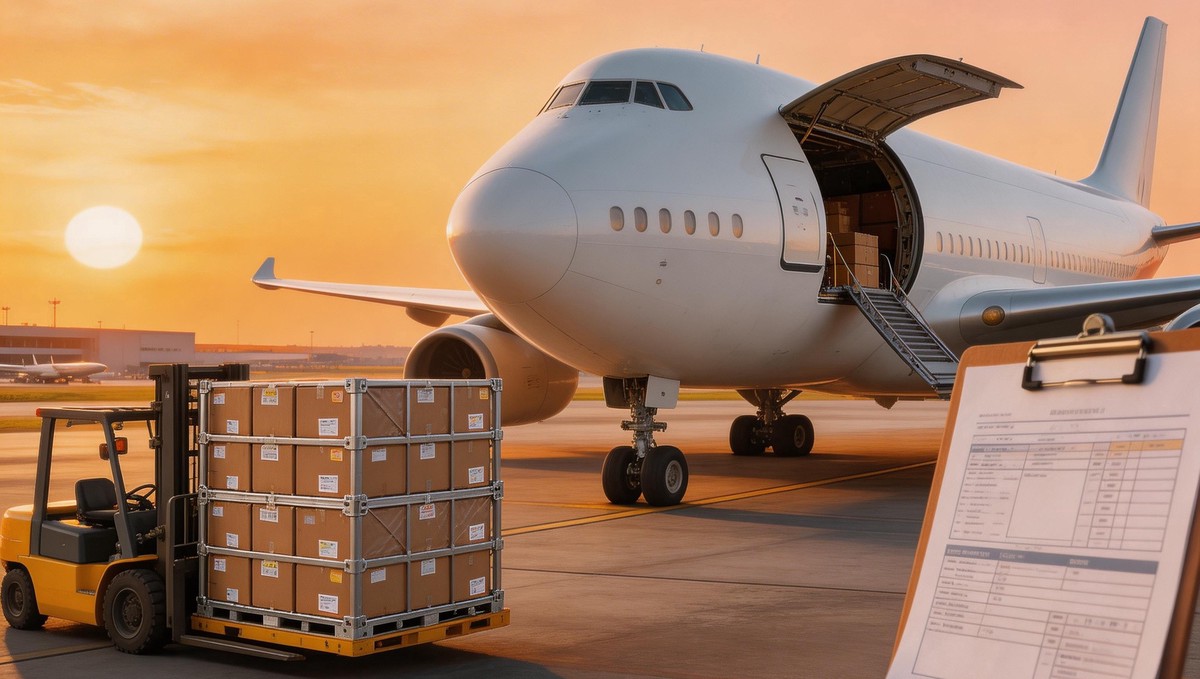 Why does one forwarder quote USD 4.8/kg while another quotes USD 7.2/kg for what looks like the same shipment? In our daily operations, this is the most common question we hear from US importers. The short answer is simple: Air Freight from China to USA pricing depends on much more than a base rate, including weight tier, chargeable weight, route structure, customs readiness, and destination delivery scope.
This guide is written for importers who need clear, decision-ready information instead of vague estimates. We summarize what matters in 2026, explain where hidden costs appear, and provide practical steps to reduce spend without increasing risk. All figures are updated for 2026 and should be treated as planning benchmarks rather than fixed public tariffs.
Introduction: Air Freight from China to USA in 2026
Direct Answer: Air Freight from China to USA is the fastest and most controllable option for urgent, high-value, or stockout-sensitive cargo, but total cost is determined by route, chargeable weight, and destination handling, not just the quoted line-haul rate.
In the past 12 months, our team has handled shipments from Shenzhen, Guangzhou, and Shanghai to Los Angeles, New York, Chicago, and Dallas for e-commerce, wholesale, and B2B replenishment clients. A recurring pattern is this: importers focus on price per kg, then discover late-stage costs because quote scope was not aligned.
If you are planning your next shipment, use this article as a checklist before booking. It will help you compare quotes fairly, reduce avoidable fees, and choose the right service mode between airport-to-airport and door-to-door execution.
1. Air Freight from China to USA: Latest 2026 Rate Benchmarks
Direct Answer: In 2026, standard China-US air cargo rates generally decrease as shipment weight increases, and lane selection (origin/destination pair) can shift costs by 15-30%.
Typical benchmarks below are for general cargo under stable market conditions. Actual prices vary by commodity, season, and surcharge changes.
| Origin | Destination | +100kg | +300kg | +500kg | Typical Transit (Airport-to-Airport) |
|---|---|---|---|---|---|
| SZX/CAN | LAX | \(5.8-\)7.2/kg | \(5.1-\)6.4/kg | \(4.6-\)5.8/kg | 2-4 days |
| PVG | LAX | \(5.6-\)7.0/kg | \(4.9-\)6.2/kg | \(4.5-\)5.6/kg | 2-4 days |
| CAN/HKG | JFK | \(6.2-\)7.8/kg | \(5.4-\)6.8/kg | \(4.9-\)6.2/kg | 3-5 days |
| PVG | ORD | \(6.0-\)7.5/kg | \(5.3-\)6.7/kg | \(4.8-\)6.0/kg | 3-5 days |
| SZX/CAN | DFW | \(6.1-\)7.6/kg | \(5.4-\)6.9/kg | \(4.9-\)6.2/kg | 3-5 days |
- Line-haul vs all-in: A line-haul quote may exclude origin terminal fees, security surcharge, handling, and destination delivery.
- Weight-tier strategy: Crossing from +100kg to +300kg can materially lower unit cost; small consolidation decisions often save more than rate negotiation.
When we prepare client quotes for air freight, we provide scope separation (what is included, what is excluded) to prevent comparison mistakes.
2. Air Freight from China to USA Transit Time: Airport-to-Airport vs Door-to-Door
Direct Answer: Airport-to-airport can be very fast (2-5 days), but importers should plan 5-10 days for full door-to-door execution because customs and final delivery add real lead time.
A realistic timeline should include five stages:
- Supplier pickup and origin receiving (0.5-2 days)
- Export handling, security screening, uplift scheduling (1-2 days)
- Flight transit, direct or transfer (1-4 days)
- US customs clearance and release (1-3 days)
- Final-mile delivery to warehouse/FBA prep center (1-3 days)
Direct flights are faster but often higher priced. Transfer flights may reduce cost but add uncertainty during peak windows. For urgent replenishment, we usually split SKUs: urgent SKUs by air, non-urgent by sea freight. This mixed strategy protects both speed and margin.
3. Air Freight from China to USA Cost Formula: Chargeable Weight, Surcharges, and Hidden Fees
Direct Answer: The final invoice is mainly driven by chargeable weight plus mandatory surcharges and destination service fees, not only the headline per-kg number.
Core Formula
Total Air Freight Cost = Chargeable Weight x Air Rate + Surcharges + Origin Fees + Destination Fees + Last-Mile Delivery

Chargeable Weight Rules
Airlines charge the higher of:
- Actual weight, or
- Volumetric weight = L(cm) x W(cm) x H(cm) / 6000
Example:
- Carton dimensions: 80 x 60 x 50 cm
- Volumetric weight: 80x60x50/6000 = 40 kg
- Actual weight: 28 kg
- Billed weight: 40 kg
Common Cost Components
- Fuel surcharge
- Security surcharge
- Origin handling and documentation
- Destination terminal and handling
- Delivery trucking and appointment fees
The most expensive mistake we see is selecting a quote that looks cheap but excludes destination-side charges. Always request a written inclusion list and ask explicitly whether the quote is airport-only or full delivery.
For high-value shipments, add cargo insurance. Air cargo claims are possible, and carrier liability is limited under standard conventions.
4. Air Freight from China to USA Customs and Compliance
Direct Answer: Fast customs clearance depends on accurate product classification, complete documents, and compliant declaration data before cargo departs origin.
Minimum documentation set:
- Commercial invoice
- Packing list
- Air waybill
- Importer legal details (including EIN where required)
Compliance risk increases for restricted/sensitive categories such as battery-related products, electronics with certification requirements, and regulated goods. If documentation and HS classification are not aligned, inspections can trigger storage and delay costs.
US importers should rely on professional customs clearance processes when cargo complexity is high.
In our experience, first-time importers reduce delay risk significantly when they verify product coding before booking space and confirm battery/declared-dangerous-goods requirements at the quotation stage.
Authoritative references:
- U.S. Customs and Border Protection (CBP)
- CBP Importing into the United States Guide
- U.S. International Trade Commission HTS Search
- TSA Air Cargo Programs
- IATA Cargo Standards and Guidance
These official sources should be treated as the final compliance baseline.
5. Air Freight from China to USA vs Sea Freight: Which One Fits Your Business Scenario?
Direct Answer: Air freight is usually right for high urgency and high value density; sea freight is usually right for low urgency and cost-sensitive bulk cargo.
Use this practical decision matrix:
| Scenario | Recommended Mode | Why |
|---|---|---|
| Urgent stock replenishment (7-10 day need) | Air Freight | Speed protects sales continuity |
| Seasonal launch with strict launch date | Air Freight | Better schedule control |
| Bulky, low-value goods | Sea Freight | Lower per-unit logistics cost |
| Mixed urgency product portfolio | Split Shipment | Optimizes both speed and margin |
For Amazon sellers, stockout cost can exceed freight savings. In those cases, paying higher air cost may still be the financially rational decision.
6. 7 Ways to Reduce Air Freight from China to USA Costs Without Losing Reliability
Direct Answer: The best savings come from preparation and shipment design, not last-minute bargaining on rate alone.
- Consolidate suppliers into one departure to reach better weight tiers.
- Optimize carton dimensions to reduce volumetric weight.
- Book earlier before peak uplift windows when possible.
- Use transfer flights for non-urgent SKUs.
- Split urgent and non-urgent cargo to avoid overpaying for all units.
- Pre-check paperwork before cargo handover to reduce customs friction.
- Buy insurance for high-value cargo to limit downside exposure.
Operationally, consolidation support from warehouse services can improve both carton efficiency and weight-tier economics.
7. Why Importers Use Efanda for Air Freight from China to USA
Direct Answer: Importers typically choose Efanda for transparent quote structure, stable route planning, and integrated execution from pickup to delivery.
Our approach is practical and non-theoretical:
- We separate line-haul and local charge visibility before booking.
- We support airport-to-airport and door-to-door flows with clear milestones.
- We align service mode with business objective, not one-size-fits-all sales logic.
For first-time importers, we generally recommend starting with transparent scope and moderate lane complexity, then scaling after one or two stable cycles. This reduces learning-cost errors and protects working capital. If your destination is Amazon fulfillment centers, planning labels, cartons, and appointments together with amazon fba workflows can reduce handling rework.
If your shipment requires end-to-end execution, combine booking, customs, and destination trucking under one SOP to keep operational control and reduce claim disputes.
8. FAQ: Air Freight from China to USA
How much does air freight from China to USA cost per kg in 2026?
For general cargo, many lanes fall roughly between \(4.5/kg and \)7.8/kg depending on origin, destination, weight break, and surcharges.
How long does door-to-door air shipping usually take?
Most shipments complete in 5-10 days under normal conditions, but peak periods and customs inspections may extend timelines.
Why is billed weight higher than my scale weight?
Because billing uses chargeable weight, which may be volumetric weight if package dimensions are large.
Is customs clearance included in door-to-door service?
It depends on quote scope. Always confirm whether brokerage, duties/taxes, and destination handling are included.
Should first-time importers choose DDP or DDU?
If predictability is your priority, DDP can simplify execution. If you already have strong import infrastructure, DDU may offer flexibility.
Is air freight suitable for electronics and fragile cargo?
Yes, with correct packaging, labeling, and compliance documents. For sensitive cargo, use reinforced packaging and insurance.
Can I split cargo between the USA and nearby markets?
Yes. Some importers route part of inventory to North America alternatives based on demand and duty planning. If you are building a regional strategy, compare your US lane with freight shipping from china to mexico to optimize total landed cost.
Need a lane-specific quote? Share origin city, destination ZIP code, dimensions, weight, cargo type, and ready date. We will provide a transparent option set with inclusions clearly listed.