China to Afghanistan DDP Shipping: The Complete 2026 Guide (Costs, Routes & Process)
· By SinoShipment
Afghanistan imported over $1.2 billion in goods from China in 2025 — yet every single container must pass through at least one transit country before reaching Afghan soil. This geographic reality makes China to Afghanistan DDP Shipping far more than a convenience: for most importers, it is the only practical way to get a predictable landed cost without navigating three separate customs regimes, two border crossings, and a volatile currency environment on your own.
The problem is that most freight forwarders do not publish Afghanistan rates online. The few numbers you find are often outdated, incomplete, or bury transit fees, border detention charges, and customs brokerage costs in fine print. A single weeklong closure at the Torkham border can add over $1,000 in unexpected detention fees — and if your forwarder did not warn you about that risk upfront, that bill lands on your desk.
This guide changes that. You will learn how each of the four freight corridors actually works with transit times per leg, what DDP shipping from China to Afghanistan costs in Q3 2026 with a real worked example, the complete 8-step process from Chinese factory to Afghan warehouse, Afghanistan customs procedures that most guides skip, the 18 restricted Pakistan transit goods list no competitor publishes in full, and a seasonal planning calendar to avoid the costliest delays.
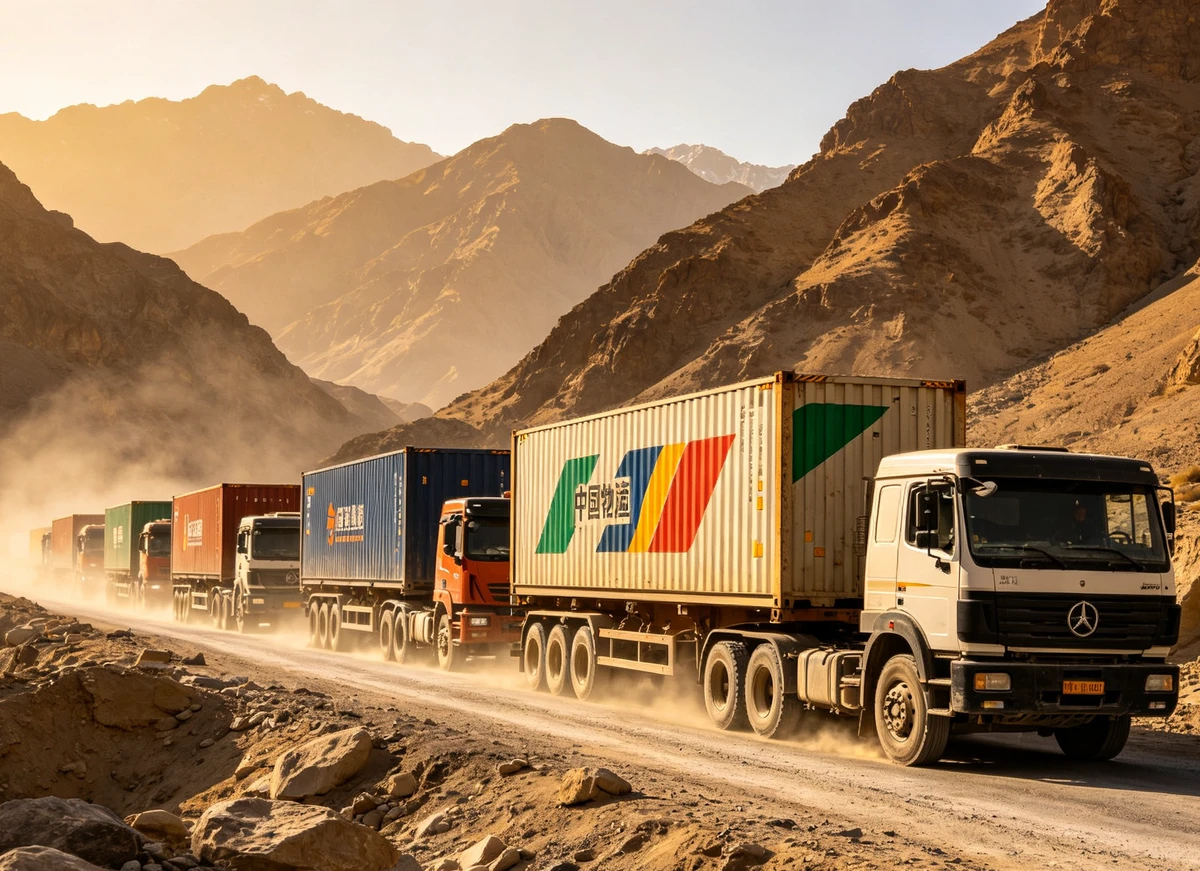
What Is DDP Shipping from China to Afghanistan?
Under Incoterms 2020, DDP (Delivered Duty Paid) places maximum responsibility on the seller or freight forwarder. They handle everything: pickup from the Chinese supplier, China export customs clearance, international transport, transit country customs, Afghan import clearance, all import duties and taxes, and final delivery to the buyer’s door. You pay one all-in price and receive the goods ready to use or sell.
This matters enormously for Afghanistan because door to door shipping from China to Afghanistan never follows a straight line. Afghanistan is landlocked — there is no seaport. A “door to door” shipment from Shenzhen to Kabul typically involves four to six handling points: factory loading, Chinese port, ocean vessel, transit port discharge, cross-border trucking, Afghan border customs, and final delivery. The multimodal nature adds 15 to 30 days and $1,000 to $3,000 in extra costs compared to shipping to a coastal country like Pakistan or the UAE.
DDP vs. DAP vs. CIF — What Is Actually Cheaper?
Before committing to DDP, understand the trade-off that no competitor guide discusses honestly:
| Incoterm | Who Handles Afghan Customs? | Who Pays Duties & VAT? | Best When |
|---|---|---|---|
| DDP | Forwarder | Forwarder | You have no Afghan customs broker; you want one predictable landed cost |
| DAP | Buyer | Buyer | You have a reliable local broker but want the forwarder to manage transport |
| CIF Karachi | Buyer | Buyer | You have an established Afghan import operation and want to control costs directly |
Industry Insight: In our experience managing shipments from Shenzhen to Kabul, we find that DDP saves importers 15–25% on total landed cost compared to self-managed CIF — not because the freight is cheaper, but because self-managed importers routinely underestimate Afghan customs brokerage fees ($150–400 per clearance), Torkham border detention risks ($80–150/day), and the administrative burden of coordinating Pakistani transit documents, Afghan duty payments, and last-mile trucking across three separate vendors. For first-time importers or shipments under $50,000 in value, DDP is almost always the lower-risk, lower-stress option. For experienced importers moving high volumes through a single corridor with an established local broker, CIF or DAP can yield savings.
The 4 Freight Corridors from China to Afghanistan (Compared)
China to Afghanistan freight moves through four distinct corridors. The route you choose determines your total transit time, cost, and risk exposure. There is no universal best choice — only the best choice for your cargo type, destination city, and timeline.
Corridor 1: Sea + Land via Karachi, Pakistan (The Workhorse)
This corridor handles over 80% of all China-to-Afghanistan containerized cargo. It is the cheapest per-kilogram option and the default for bulk shipments. Because every container transits through Pakistani territory, working with a forwarder experienced in freight shipping from China to Pakistan ensures that APTTA documentation, bonded carrier coordination, and border-crossing procedures are handled correctly from day one.
Route: Chinese port → Karachi Port / Port Qasim → APTTA (Afghanistan-Pakistan Transit Trade Agreement) transit customs → bonded trucking via Peshawar → Torkham border → Kabul
For southern Afghanistan, an alternate branch runs Karachi → Quetta → Chaman/Spin Boldak border → Kandahar.
| Leg | Duration |
|---|---|
| Ocean freight (Shanghai → Karachi) | 16–24 days |
| Karachi port handling + transit customs | 3–5 days |
| Bonded trucking Karachi → Torkham (~2,010 km) | 3–4 days |
| Torkham border clearance | 1–2 days |
| Last-mile delivery in Afghanistan | 1–3 days |
| Total door-to-door | 25–40 days |
Best for: Bulk cargo, heavy machinery, construction materials, textiles, and any shipment where cost-per-kilogram matters more than speed.
Key risk: Torkham border congestion is unpredictable. Pakistan also restricts 18 categories of goods from transiting to Afghanistan without an import license (see Section 5 for the full list). Always confirm your product category before choosing this corridor.
Corridor 2: Sea + Land via Bandar Abbas, Iran (Western Afghanistan)
This corridor serves importers in western Afghanistan — especially Herat, Farah, and Nimruz — where the Karachi route would require an extra 1,000 km of trucking across the country.
Route: Chinese port → Bandar Abbas, Iran → Islam Qala border → Herat → onward
Total transit time: 30–40 days door to door.
Critical caveat: Iran’s sanctions environment restricts which shipping lines, cargo types, and banks can participate. Do not attempt this route through a generalist forwarder unfamiliar with Iran transit compliance. Importers already sourcing through Iran may also want to review our analysis of how the Iran war supply chain impact is reshaping regional logistics and what it means for cargo routed through Bandar Abbas.
Corridor 3: Rail + Truck via Central Asia (Fastest Overland)
For time-sensitive cargo that does not justify air freight, the Central Asian rail corridor offers the best speed-to-cost ratio for northern Afghanistan.
Route: Kashgar / Urumqi → rail via Kazakhstan / Uzbekistan → Hairatan border (Uzbekistan) → Mazar-i-Sharif / Kabul
Total transit time: 18–25 days door to door.
This corridor benefits from the TIR Carnet system, which simplifies customs transit across multiple Central Asian borders with a single sealed document. Note that a rail gauge change is required at the Kazakhstan-Uzbekistan border (standard gauge to broad gauge), which adds handling time but is managed by the rail operator.
Best for: Northern Afghanistan destinations (Mazar-i-Sharif, Kunduz), bulk non-urgent shipments.
Corridor 4: Air Freight (Fastest Overall)
When speed trumps everything, air freight delivers in under a week.
Route: Guangzhou (CAN) / Shenzhen (SZX) / Shanghai (PVG) → Dubai / Doha / Istanbul hub → Kabul International Airport (KBL)
Transit time: 3–7 days door to door.
Best for: High-value electronics, medical supplies, perishables, urgent commercial shipments. Kabul air cargo has weight and volume constraints — oversize items may require charter arrangements.
Route Comparison at a Glance
| Route | Transit Time | Cost Level | Best For | Primary Risk |
|---|---|---|---|---|
| Karachi Sea + Land | 25–40 days | ★★☆☆☆ | Bulk cargo, machinery, construction | Torkham border delays |
| Bandar Abbas Sea + Land | 30–40 days | ★★☆☆☆ | Western Afghanistan (Herat) | Iran sanctions complexity |
| Central Asia Rail + Truck | 18–25 days | ★★★☆☆ | Northern Afghanistan, time-sensitive overland | Limited rail frequency |
| Air Freight | 3–7 days | ★★★★★ | Urgent, high-value, perishable | Weight/size limits at KBL |
Which Route Should You Choose?
- “I have a full container and 40 days to spare.” → Karachi sea + land. Lowest cost per kilogram.
- “My cargo is destined for Herat.” → Bandar Abbas. Geographically optimal.
- “I need it in under three weeks, destination Mazar.” → Central Asia rail.
- “It’s 200 kg of electronics and the buyer needs it now.” → Air freight.
China to Afghanistan DDP Shipping Costs: 2026 Rates & Real Examples
Understanding the total DDP shipping cost from China to Afghanistan means looking at every cost component — not just the ocean freight quote.
Sea Freight: China Ports to Karachi (Ocean Leg Only, Q3 2026)
| Port of Loading | 20GP | 40GP / 40HQ |
|---|---|---|
| Shanghai | $750–$900 | $1,350–$1,600 |
| Ningbo | $750–$900 | $1,350–$1,600 |
| Shenzhen (Yantian/Shekou) | $700–$850 | $1,250–$1,500 |
| Guangzhou (Nansha) | $750–$900 | $1,350–$1,600 |
| Qingdao | $800–$950 | $1,500–$1,750 |
| Tianjin | $850–$1,000 | $1,550–$1,800 |
Ship from the port closest to your supplier. There is no need to truck goods across China to a “preferred” port — your forwarder should book from whichever departure point minimizes domestic logistics cost.
Overland Transit: Karachi to Kabul (All-Inclusive DDP Component)
| Cargo Type | 20GP | 40GP / 40HQ |
|---|---|---|
| Commercial (CFR, all-inclusive transit) | $2,000–$2,300 | $3,000–$3,400 |
| LCL (per CBM) | $80–$120 / CBM | — |
This covers Pakistan transit customs, bonded trucking, Torkham border handling, Afghan import clearance facilitation, and last-mile delivery to Kabul. For destinations beyond Kabul, add incremental trucking cost.
Air Freight Rates to Kabul
| Weight Band | Rate (per kg) |
|---|---|
| Under 45 kg | $8–$12 |
| 45–100 kg | $6–$9 |
| 100–500 kg | $5–$7 |
| 500+ kg | $4–$6 |
Chargeable weight is calculated by actual weight or volumetric weight (L × W × H ÷ 6000), whichever is higher.
DDP Door-to-Door All-In Pricing
| Destination | 20ft FCL (DDP) | 40ft FCL (DDP) | LCL DDP (per CBM) |
|---|---|---|---|
| Kabul (via Karachi) | $4,500–$6,500 | $6,000–$9,000 | $145–$195 |
| Kandahar (via Chaman) | $4,300–$6,300 | $5,900–$8,700 | $145–$195 |
| Herat (via Bandar Abbas) | $4,200–$6,200 | $5,800–$8,500 | $150–$200 |
| Mazar-i-Sharif (via Hairatan) | $4,800–$7,000 | $6,500–$9,500 | $155–$210 |
Afghan Import Duties & VAT: Quick Reference
All DDP quotes include Afghan import duties and the flat 10% VAT. Understanding the rates by product category helps you verify whether a quote is realistic.
| Product Category | Import Duty Rate | Notes |
|---|---|---|
| Synthetic fabrics & yarn | 8% | Fabric composition must be detailed on invoice |
| Electric motors & generators | 10% | — |
| Mobile phones & accessories | 12% | High scrutiny category |
| Motorcycles & parts | 15% | — |
| Steel rebar & construction bars | 30% | Increased July 2025; highest tariff category |
| Plastic footwear | 25% | — |
| LED lights & solar panels | 5% | Favorable tariff; growing import category |
| Pharmaceutical raw materials | 5% | Health certificates required |
| Furniture & home textiles | 10% | Wooden items require IPPC fumigation |
| Automotive spare parts | 15% | — |
| General machinery | 5–10% | Varies by HS code subheading |
| Electronics (general) | 10–15% | Battery-containing goods require MSDS/UN38.3 |
| Food products | 10–20% | Phytosanitary certificates required |
| Medical devices | 5% | Import permit may be required |
VAT formula: 10% × (CIF value + import duty)
Worked Example: DDP Landed Cost from Shenzhen to Kabul
Let us walk through a real shipment scenario: one 40HQ container of mixed electronics and machinery, CIF value $10,000, shipping from Shenzhen to Kabul via Karachi.
| Cost Component | Amount |
|---|---|
| Ocean freight (Shenzhen → Karachi) | $1,350 |
| Karachi → Kabul overland transit (all-in) | $3,200 |
| Afghan import duty (weighted average ~10%) | $1,000 |
| VAT (10% on $11,000) | $1,100 |
| Customs brokerage & miscellaneous fees | $400 |
| Total DDP landed cost | $7,050 |
Industry Insight: When a machinery client in Dongguan shipped a 40HQ container to Kabul under DDP terms, the all-in quote was $6,800. By pre-screening all 47 HS codes on the packing list before the container left Yantian Port and confirming Pakistan Route Permit eligibility for every item, we cleared Torkham customs in under 48 hours — avoiding what could have been a five-day hold and $600 in detention fees. That is the operational difference a freight forwarder with China-Afghanistan lane experience makes.
Factors That Move Your Price
- Mode: Air freight costs 4–6× more per kg than sea freight.
- Season: Peak season (June–October) adds 15–25% to sea freight rates.
- Route: The Iran corridor carries sanctions-related administrative costs. The Central Asia rail route has higher per-container costs than Karachi.
- Cargo type: Hazardous, oversized, or temperature-controlled goods require surcharges.
- Currency: The Afghan Afghani (AFN) fluctuates against the USD. DDP insulates you from this risk — your forwarder absorbs the currency exposure.
The Complete 8-Step DDP Process: From Chinese Factory to Afghan Delivery
Understanding the full journey helps you spot where delays and costs creep in. Here is exactly what happens from pickup to delivery.
Step 1: Supplier Pickup & Consolidation (1–3 days)
Your forwarder collects cargo from your supplier’s factory anywhere in China — Guangzhou, Shenzhen, Yiwu, Shanghai, Foshan, or any other manufacturing hub. If you source from multiple suppliers, cargo is consolidated at the forwarder’s warehouse. This is especially valuable for LCL (Less than Container Load) shipments, where combining goods from different suppliers into one container reduces per-unit shipping cost.
Packaging is inspected for multimodal suitability — your cargo will be handled four to six times en route, so export-grade packaging is non-negotiable.
Step 2: China Export Customs Declaration (1–2 days)
The forwarder files an export declaration with China Customs. Required documents include the Commercial Invoice, Packing List, export contract, and customs declaration form. Certain product categories — machinery, electronics, chemicals — may trigger a commodity inspection by the China Inspection and Quarantine authority (CIQ).
A forwarder based in Shenzhen or Guangzhou can typically clear same-day because they work with the same customs officers and processes daily.
Step 3: Ocean Freight to Transit Port (16–25 days)
Your container loads at one of China’s major ports and sails to Karachi or Bandar Abbas. Real-time container tracking keeps you informed throughout the voyage.
Step 4: Transit Port Customs & Bonded Transfer (3–5 days)
At the transit port, a transit customs declaration is filed — under APTTA for Pakistan or Iran’s transit regime for Bandar Abbas. Cargo transfers to a bonded carrier for cross-border trucking. For LCL, cargo is stripped at a Container Freight Station (CFS) and consolidated; FCL containers move intact on bonded trucks.
Critical detail most guides omit: Afghanistan has not signed international container transport conventions. Empty containers must be trucked back to the transit port — a cost that standard coastal-country door-to-door quotes do not include. An experienced forwarder builds this into the DDP price.
Step 5: Cross-Border Trucking into Afghanistan (2–5 days)
This is the most variable leg. Bonded trucks haul cargo from Karachi to Torkham (~2,010 km, 3–4 days) or to Chaman (~913 km, 2–3 days). Delays arise from winter road conditions on high-altitude routes, security checkpoints, and border congestion. Reputable forwarders use GPS-tracked fleets and offer armed escort options for high-value cargo.
Step 6: Afghan Import Customs Clearance (1–3 days)
At the border, your forwarder’s customs broker files an import declaration through ASYCUDA World, Afghanistan’s electronic customs platform managed by the Afghanistan Customs Department (ACD). Officials verify documents and conduct physical inspection — partial or full, depending on cargo type and risk profile.
Step 7: Duty & Tax Payment (1 day)
The ACD assesses duties and VAT based on the CIF value and HS code classification. Under DDP, your forwarder pays directly. Under DAP, the buyer arranges payment to the Afghan Revenue Department.
Step 8: Last-Mile Delivery (1–3 days)
Trucks deliver to the final destination — Kabul, Kandahar, Herat, Mazar-i-Sharif, Jalalabad, or any other Afghan city. You sign a Proof of Delivery (POD) to confirm receipt.
Complete Timeline Summary
| Route | Total Door-to-Door |
|---|---|
| Sea + Land (Karachi) | 25–45 days |
| Sea + Land (Bandar Abbas) | 30–40 days |
| Rail + Truck (Central Asia) | 18–25 days |
| Air Freight | 3–7 days |
Afghanistan Customs Clearance & Documentation: What You Must Know
Afghanistan customs clearance is where shipments succeed or stall. Preparation is everything.
Required Documents Checklist
| Document | Purpose |
|---|---|
| Commercial Invoice (CI) | Basis for customs value assessment |
| Packing List | Contents verification — quantities, weights, dimensions |
| Bill of Lading (B/L) or Air Waybill (AWB) | Transport contract and proof of shipment |
| Certificate of Origin (Form A or China-AFG) | Enables preferential tariff treatment where applicable |
| Pakistan Route Permit / BIETC | Mandatory transit authorization for Pakistan corridor |
| Fumigation Certificate | Required when wooden packaging is used (IPPC stamp) |
| Import License / Permit | Required for regulated goods (pharma, food, chemicals) |
Every package transiting Pakistan must be clearly marked: “GOODS IN TRANSIT TO AFGHANISTAN VIA KARACHI/PAKISTAN.” Missing this marking is one of the most common reasons for border holds.
HS Code Accuracy: The Single Biggest Determinant of Clearance Speed
The Afghanistan Customs Department (ACD) uses HS codes to classify every item and determine the applicable duty rate. Common pitfalls include:
- Misclassification: Generic descriptions like “electronics” or “spare parts” trigger manual review. Always provide specific subheadings.
- Under-valuation: Declaring below-market CIF values to reduce duties is heavily penalized by ACD. Penalties can exceed the original duty amount.
- Textile descriptions: Afghan customs now require detailed fabric composition on invoices — material type, fiber percentage, knit vs. woven. “Clothing” is insufficient.
The 18 Restricted Pakistan Transit Goods Categories
Pakistan restricts 18 categories of goods from transiting to Afghanistan without an import license. If your cargo falls into any of these categories, the Pakistan corridor is not viable — you must use Iran or Central Asia instead.
The restricted categories include: tires, electronics (including refrigerators, air conditioners, televisions, telephones and parts), certain chemicals, cosmetics, cigarettes, tea, and other consumer goods subject to Pakistani import licensing. Always verify your product category against the current APTTA restricted list with your forwarder before booking a Karachi-route shipment. A competent forwarder pre-screens every HS code against this list before the container leaves the factory.
Product-Specific Shipping Considerations
Different product categories face different requirements on the China-Afghanistan lane.
Electronics & 3C products require special attention to battery compliance. Lithium batteries need MSDS (Material Safety Data Sheet) documentation and UN38.3 certification for air transport. Most electronics route through Dubai or Doha by air, or Karachi by sea. HS code accuracy is critical — Afghan customs scrutinizes electronics valuations closely.
Textiles & garments face detailed fabric composition requirements. Afghan customs now demands material type, fiber percentage, and construction method (knit or woven) on every commercial invoice. Avoid generic descriptions. Counterfeit or branded goods without authorization carry a high seizure risk at Afghan borders.
Machinery & equipment often involves oversized dimensions. Verify that your cargo fits standard container dimensions before booking. Oversized items may require flat-rack or open-top containers, which increase cost and reduce sailing frequency options. Spare parts should use separate, accurate HS codes and be consolidated into the same shipment when possible.
Construction materials face Afghanistan’s highest tariff — steel rebar and bars carry a 30% import duty (increased July 2025). Factor this into your DDP cost calculation. For high-volume construction cargo, the Karachi sea corridor’s low per-kilogram cost remains the best option despite the elevated duty rate.
Solar panels & LED lighting benefit from Afghanistan’s lowest duty rate at 5%, reflecting the country’s push for energy infrastructure development. These are fragile goods — reinforced packaging and proper palletization are essential for multimodal transit across four to six handling points.
Risk Management: Hidden Costs, Insurance & Seasonal Planning
Shipping to a landlocked, high-risk destination demands proactive planning.
Hidden Costs to Budget For
| Cost | Typical Range | When It Applies |
|---|---|---|
| Container detention at Torkham | $80–$150/day | After free time expires during border delays |
| Empty container return | Varies by carrier | Afghanistan has not signed international container conventions |
| Pakistan security escort fees | Case by case | Required for certain cargo types on Pakistan highways |
| Demurrage at Karachi port | $50–$100/day | If transit documents are delayed |
| Afghan customs brokerage | $150–$400 | Per clearance, separate from duties |
| Currency conversion | Variable | AFN volatility against USD |
Cargo Insurance: Not Optional on This Lane
**Cargo insurance for Afghanistan shipments is strongly recommended. Multimodal transit across international borders, security checkpoints, and high-altitude mountain roads creates risk exposure that standard marine cargo policies may not fully cover. Ask your forwarder about additional riders for war risk, theft, and border delay coverage.
Afghanistan Seasonal Shipping Calendar
| Period | Impact | Action |
|---|---|---|
| Winter (Dec–Feb) | Salang Pass may close; northern routes face weather delays | Plan Central Asia corridor shipments around weather windows |
| Ramadan (varies annually) | Reduced customs staffing at all border posts | Add 5–7 days buffer to transit time estimates |
| Pre-Eid (2 weeks before) | Container space tightens; rates spike | Book 4–6 weeks in advance |
| Summer (Jun–Aug) | Peak season for general cargo | Rates +15–25%; book early |
| Chinese New Year (Jan/Feb) | Factory closures across China | Ship 6 weeks before CNY or expect 3–4 week delays |
7 Practical Tips to Save Time and Money
- Consolidate multi-supplier cargo at one Chinese warehouse before shipping to reduce per-CBM LCL cost.
- Choose the corridor by destination city, not by habit — Pakistan for Kabul/Kandahar, Iran for Herat, Central Asia for Mazar-i-Sharif.
- Book sea freight 4–6 weeks in advance during peak summer and pre-Eid periods.
- Pre-screen all HS codes with your forwarder before the container leaves the factory.
- Use LCL consolidation for volumes under 15 CBM — full containers are rarely cost-effective below this threshold.
- Verify Pakistan transit eligibility for every product category before choosing the Karachi corridor.
- Budget a 10–15% contingency above your DDP quote for unforeseen border delays and detention costs.
Frequently Asked Questions
What is the cheapest way to ship from China to Afghanistan?
Sea + land via Karachi for volumes over 5 CBM. LCL DDP starts at approximately $145–195 per CBM. Air freight costs 4–6× more per kilogram.
How long does DDP shipping from China to Afghanistan take?
Sea + land via Karachi: 25–45 days. Central Asia rail: 18–25 days. Air freight: 3–7 days. Transit through Pakistan carries the widest time range due to border variables.
Can you deliver door to door in Kabul, Kandahar, or Herat?
Yes. Full DDP door-to-door service is available to all major Afghan cities. Remote and mountainous areas may require additional transit time and cost.
What is the minimum volume for DDP shipping from China to Afghanistan?
LCL minimum is typically 1–2 CBM. Air freight minimum is 45 kg chargeable weight. Smaller volumes are possible but per-unit cost rises sharply.
Do I need an import license to ship to Afghanistan?
Standard commercial goods generally do not require an import license. Regulated products — pharmaceuticals, food, chemicals, certain electronics — may require permits. Your forwarder can advise on a case-by-case basis.
What goods are restricted for Pakistan transit?
Pakistan restricts 18 categories of goods from transiting to Afghanistan, including tires, electronics (refrigerators, air conditioners, TVs, telephones), cosmetics, cigarettes, and certain chemicals. Always confirm product eligibility with your forwarder before booking the Karachi corridor.
How are Afghan import duties calculated under DDP?
Duties are assessed on the CIF value (Cost + Insurance + Freight) at rates of 0–20% depending on HS code classification, plus a flat 10% VAT on (CIF value + duty). Your DDP forwarder pays these directly on your behalf.
Is cargo insurance necessary for Afghanistan shipments?
Strongly recommended. Multimodal transit across international borders with security considerations demands proper coverage. Standard marine cargo insurance plus a war risk rider is the minimum recommended coverage. Discuss border delay coverage with your forwarder.
Can I pay my Chinese supplier in Afghan Afghani (AFN)?
Chinese suppliers and forwarders operate in USD or RMB. AFN is not widely accepted internationally. Structure payments in USD for predictability.
Get Your China to Afghanistan DDP Quote Today
Shipping from China to Afghanistan is complex — landlocked geography, three transit corridors, two sets of customs procedures, and border conditions that change by the season. But with the right freight forwarder, it does not have to be stressful.
As a China-based freight forwarder with over a decade of experience on the China-Afghanistan lane, Sinoshipment handles everything: factory pickup anywhere in China, export clearance at Shenzhen or any major port, ocean or air freight to the optimal transit point, Pakistan or Iran transit documentation, Afghan import customs clearance, duty and VAT payment, and last-mile delivery to Kabul, Kandahar, Herat, Mazar-i-Sharif, or any Afghan city. For a complete overview of corridor options, transit times, and our full service scope, visit our dedicated Freight Shipping from China to Afghanistan route page.
You get one transparent DDP quote with no hidden fees — and a partner who pre-screens your HS codes, checks Pakistan transit eligibility, and plans your shipment around the seasonal calendar to avoid the costliest delays.
Contact us today for a free DDP shipping quote. Tell us your cargo type, approximate volume, and destination city — we will design the optimal corridor and deliver an all-inclusive landed cost breakdown within 24 hours.