Comprehensive Guide to Container Shipping from China to France
· By SinoShipment
Are you tired of hidden fees, unexpected delays, and complex customs procedures eroding your profit margins when importing from China to Europe? France is one of China’s largest trading partners in Europe, but navigating the logistics can be a minefield. Whether you are an e-commerce seller, a distributor, or a brand owner, choosing the right shipping method is critical for your supply chain’s success.
In our experience managing thousands of shipments, failing to understand the nuances of ocean freight can lead to costly mistakes. This guide breaks down the true costs, accurate transit times, shipping routes, and essential customs requirements for freight shipping from China to France, updated for the 2026 logistics landscape.
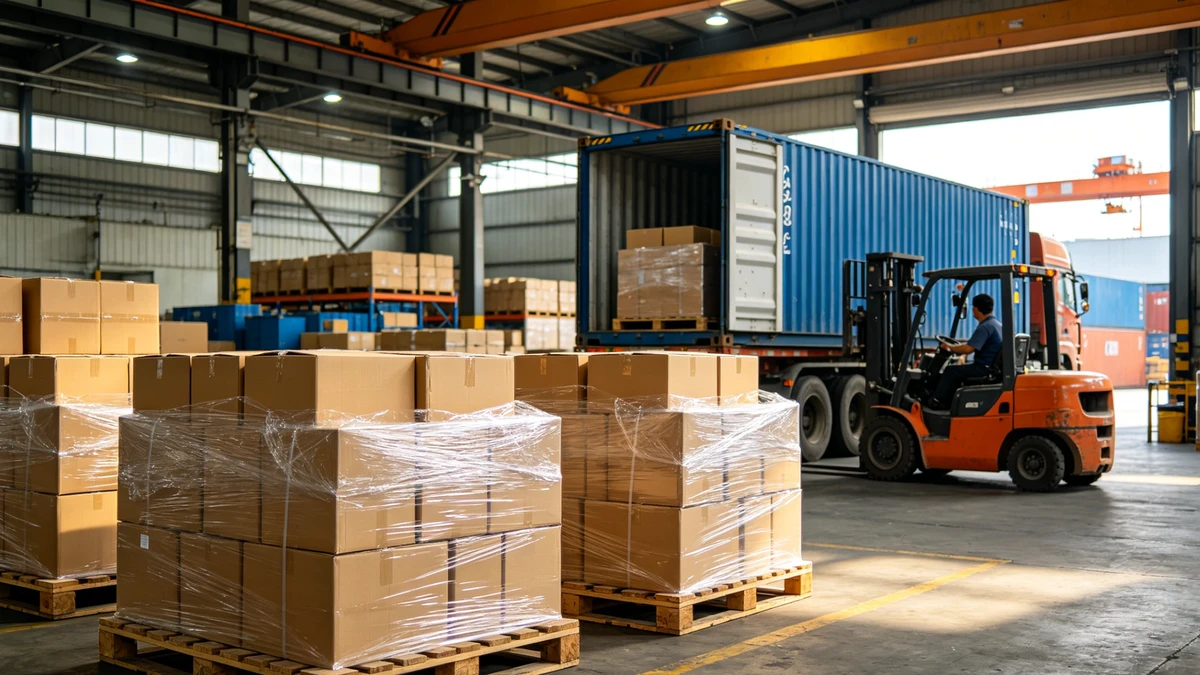
Options for Container Shipping from China to France: FCL vs. LCL
When shipping containers from China to France, you can choose between Full Container Load (FCL) for large shipments over 15 CBM, or Less than Container Load (LCL) for smaller volumes where you share container space and costs with other importers.
Understanding your volume is the first step in optimizing your freight strategy.
Full Container Load (FCL)
FCL means you rent the entire container for your goods. It is the most cost-effective and secure method if you have a large volume of cargo (typically over 15 cubic meters). Because the container is sealed at the factory in China and only opened upon arrival at your warehouse in France, the risk of damage or loss is significantly reduced.
- 20ft Container: Holds up to 33 CBM. Ideal for heavy, dense cargo like machinery or tiles.
- 40ft Container: Holds up to 67 CBM. Better for lighter, bulkier goods.
- 40ft High Cube (HQ): Holds up to 76 CBM. The standard choice for most e-commerce and Amazon FBA sellers due to the extra height.
Less than Container Load (LCL)
If your shipment is smaller than 15 CBM, LCL is your go-to option. Your freight forwarder will consolidate your goods with those of other importers into a single container. While this saves money on smaller shipments, it usually takes 5-7 days longer than FCL because of the time required to consolidate at the origin port and de-consolidate upon arrival in France.
| Feature | FCL (Full Container Load) | LCL (Less than Container Load) |
|---|---|---|
| Best Volume | > 15 CBM | < 15 CBM |
| Cost Efficiency | High for large shipments | High for small shipments |
| Security | Very High (Sealed container) | Moderate (Shared space) |
| Transit Time | Faster (Direct routing) | Slower (Consolidation time) |
How Much Does It Cost to Ship a Container from China to France?
As of early 2026, shipping a 20ft container from China to France costs approximately $1,800 to $2,500, while a 40ft container ranges from $2,500 to $3,800. LCL rates generally sit between $80 and $150 per CBM, fluctuating based on seasonality and fuel surcharges.

Ocean freight rates are notoriously volatile. The prices mentioned above are baseline estimates and will vary based on several crucial factors:
- Seasonal Fluctuations: Rates spike significantly during the Peak Season (August to October) and right before the Chinese New Year (usually January or February) as importers rush to stock up.
- Fuel Surcharges and Fees: Carriers apply a Bunker Adjustment Factor (BAF) based on global oil prices. Additionally, port congestion at major European hubs can lead to unexpected surcharges. You can monitor global freight trends via indices like the Shanghai Containerized Freight Index (SCFI).
- Incoterms: The trade terms you agree on with your supplier dictate your costs and risk transfer points. According to the official International Chamber of Commerce (ICC) Incoterms® 2020 rules, FOB (Free on Board) means your supplier covers costs and risks up to the Chinese port, while you pay for the ocean freight. EXW (Ex Works) means you shoulder maximum responsibility from the factory door in China.
Expert Tip: For SME importers and Amazon FBA sellers, DDP (Delivered Duty Paid) is becoming increasingly popular. Under DDP, your freight forwarder handles all transportation, customs clearance, and import duties, giving you a single, predictable landed cost without any surprise bills from French customs.
Transit Times for Container Shipping from China to France
Ocean freight from China to France typically takes 28 to 45 days port-to-port, depending on the specific departure and arrival ports. Alternatively, rail freight via the China-Europe Railway Express offers a faster transit time of 15 to 20 days.
Time is money in supply chain management. Here is what you need to expect:
Ocean Freight (Port to Port)
Ocean freight is the slowest but most economical method. The journey from major Chinese ports (like Shanghai or Shenzhen) to French ports (like Le Havre or Marseille) takes an average of 28 to 45 days. Add another 5 to 10 days for customs clearance and inland delivery to your final destination in France.
Alternative: Rail Freight
If 40 days is too slow, but air freight is too expensive, the China-Europe Railway Express is an excellent middle ground. Trains departing from cities like Chongqing or Xi’an can reach Europe in 15 to 20 days. This method is highly reliable and less susceptible to weather delays than ocean shipping.
Variables Affecting Delivery: Always buffer your lead times. For example, during recent labor actions at French ports, our team had to swiftly reroute several urgent FCL shipments from Le Havre to Dunkirk to avoid a 14-day backlog. Typhoons in the South China Sea and random customs holds can also add unexpected days to your transit time.

Major Ports in China and France
The primary origin ports for shipping from China are Shanghai, Shenzhen, Ningbo, and Qingdao. In France, the top destination ports handling these inbound containers are Le Havre in the north and Marseille in the south.

Choosing the right port combination can shave days off your transit time and lower your inland trucking costs.
Top Origin Ports in China:
- Shanghai & Ningbo: The busiest ports in the world, ideal for suppliers located in Eastern China (Zhejiang, Jiangsu).
- Shenzhen & Guangzhou: The main gateways for goods manufactured in Southern China’s Pearl River Delta.
- Qingdao: Best for heavy industries and suppliers in Northern China.
Top Destination Ports in France:
- Port of Le Havre: Located in northern France, this is the premier port for container traffic heading to Paris and the northern industrial regions.
- Port of Marseille (Fos-sur-Mer): Situated on the Mediterranean coast, this is the strategic entry point for southern France and neighboring southern European markets.
- Port of Dunkirk: A solid alternative to Le Havre, often experiencing less congestion, suitable for specific industrial shipments.
French Customs Clearance and Import Duties
Clearing French customs requires an EORI number, a Commercial Invoice, a Packing List, and a Bill of Lading. Importers must also pay a standard Value Added Tax (VAT) of 20% alongside specific import duties determined by the product’s HS code.
Customs clearance is where inexperienced importers face the most severe delays and penalties. To import goods into France legally, you must prepare meticulously.
Essential Documents
- Bill of Lading (B/L): The official receipt of your cargo issued by the carrier.
- Commercial Invoice: Must clearly state the value of the goods, the Incoterms, and the HS (Harmonized System) codes.
- Packing List: A detailed breakdown of the container’s contents, weights, and dimensions.
- Certificate of Origin: Proves where the goods were manufactured.
EORI Number and ICS2 Compliance
Before you import anything into France (or any EU country), you must obtain an EORI number (Economic Operators Registration and Identification number). Furthermore, with the mandatory rollout of the EU’s Import Control System 2 (ICS2), all maritime cargo entering France requires detailed advance cargo information (Entry Summary Declaration) submitted before loading in China. Failing to comply with ICS2 data requirements will result in your containers being denied loading or stopped at the EU border.
Upon arrival, French customs will assess two main charges:
- Import Duty: Calculated based on the HS code of your product. Rates vary wildly from 0% (for certain electronics) to over 10% (for textiles and footwear). You can check official rates via the French Customs Authority (Douane).
- VAT: France applies a standard VAT rate of 20% on the total value of the goods, plus the shipping costs, plus the import duty.
Warning: Never under-declare the value of your goods on the commercial invoice to save on taxes. French customs are strict, and under-declaration can result in heavy fines, cargo confiscation, and bans on future imports.
(Disclaimer: Customs regulations, VAT rates, and import duties are subject to frequent changes. Always consult with a licensed customs broker or refer to official Douane updates for real-time compliance advice.)
Step-by-Step Process for Container Shipping from China to France
The container shipping process involves six key steps: requesting a freight quote, preparing and loading the cargo, clearing export customs in China, navigating the ocean transit, clearing French import customs, and finally, managing inland delivery.

For a smooth operation, follow this workflow:
- Request a Quote and Book: Provide your freight forwarder with your packing list, supplier address, and destination in France to get an accurate quote.
- Cargo Preparation: Your supplier manufactures the goods. If FCL, the container is brought to the factory for loading. If LCL, the goods are sent to a consolidation warehouse at the Chinese port.
- Export Customs Clearance: Your forwarder handles the paperwork to legally export the goods out of China.
- Ocean Transit: The container is loaded onto the vessel and sails to Europe.
- Import Customs Clearance: Upon arrival in Le Havre or Marseille, your customs broker submits the paperwork to French customs and pays the necessary duties and VAT.
- Inland Delivery: Once cleared, the container is loaded onto a truck or train for final delivery to your warehouse or Amazon FBA center in France.
FAQ: Container Shipping from China to France
Importers frequently ask whether DDP or FOB is cheaper, how to track their ocean containers, and what happens during a customs inspection. Proper insurance and choosing the right Incoterms are critical to mitigating risks.
Is it cheaper to ship DDP or FOB to France? FOB usually looks cheaper on paper because you are only paying for the ocean freight. However, DDP is often more cost-effective and much less stressful for SME importers because the forwarder bundles all origin, ocean, destination, and customs fees into one flat rate, preventing unexpected charges upon arrival.
Do I need insurance for my container? Absolutely. Under international maritime law, carriers have minimal liability (often just a few dollars per kilogram) if a container falls overboard or is damaged. Comprehensive cargo insurance is cheap (usually 0.1% to 0.3% of the commercial value) and essential.
How can I track my ocean container? Your freight forwarder will provide you with a Bill of Lading (B/L) number or a container number. You can use this number on the carrier’s website (e.g., Maersk, CMA CGM) or a universal tracking portal to monitor your shipment’s progress.
What happens if my cargo is selected for a customs inspection? Customs inspections are random but more frequent for new importers or specific product categories. If selected, your cargo will be delayed by a few days to a week. You will also be responsible for the inspection fees charged by the port authorities. Having accurate paperwork minimizes this risk.
Why Choose Sinoshipment for Your France Imports?
Sinoshipment provides expert, end-to-end container shipping services from China to France, offering transparent pricing, guaranteed container space, and comprehensive customs clearance support for both B2B importers and Amazon FBA sellers.
Navigating the complexities of international logistics shouldn’t be your full-time job—it’s ours. As your trusted freight forwarding partner, SinoShipment offers:
- End-to-End Solutions: We handle everything from EXW factory pickup in China to final DDP delivery at your doorstep or Amazon FBA center in France.
- Transparent Pricing: No hidden fees. We provide a clear, itemized breakdown of ocean freight, port charges, and estimated customs duties upfront.
- Local Customs Expertise: Our bilingual team understands both strict Chinese export regulations and complex EU/French import rules, ensuring smooth, delay-free clearance.
- Guaranteed Space: Thanks to our strong, long-standing partnerships with major ocean carriers like CMA CGM, Maersk, and COSCO, we secure container space for our clients even during the chaotic peak seasons.
You may be interested in the following related articles:
- freight shipping from china to austria
- freight shipping from china to spain
- freight shipping from china to germany
- freight shipping from china to canada
- freight shipping from china to uae
Conclusion
Shipping a container from China to France requires strategic planning, a clear understanding of FCL versus LCL volumes, and strict adherence to French customs compliance. By anticipating costs, choosing the right ports, and preparing your documentation flawlessly, you can build a resilient and highly profitable supply chain.
Ready to import from China to France without the headache? Contact SinoShipment today for a customized, competitive quote, and let our seasoned logistics experts handle your shipments end-to-end.