FCL Shipping from China to Australia: The Ultimate Guide for Importers (2026 Updated)
· By SinoShipment
Are you tired of hidden destination fees and unpredictable transit times eroding your profit margins when freight shipping from China to Australia? FCL (Full Container Load) shipping is the backbone of the China-Australia trade route, but without a clear understanding of the costs, customs regulations, and optimal routing, Australian businesses often struggle with supply chain disruptions.
In this comprehensive guide, we break down the true cost of FCL shipping, provide accurate transit times, and explain essential Australian customs regulations like ChAFTA and BMSB. Whether you are an established enterprise or a growing Amazon FBA seller, you will learn exactly how to choose the right shipping route and optimize your logistics strategy for 2026.
Key Takeaways
- Volume Rule: FCL is highly recommended for shipments exceeding 15 CBM.
- Cost: Port-to-port ocean freight typically ranges from $1,500 to $4,000 USD, depending on container size and seasonality.
- Time: Direct sailings take between 12 and 24 days.
- Compliance: The ChAFTA Certificate of Origin and BMSB fumigation are critical for avoiding high taxes and border holds.
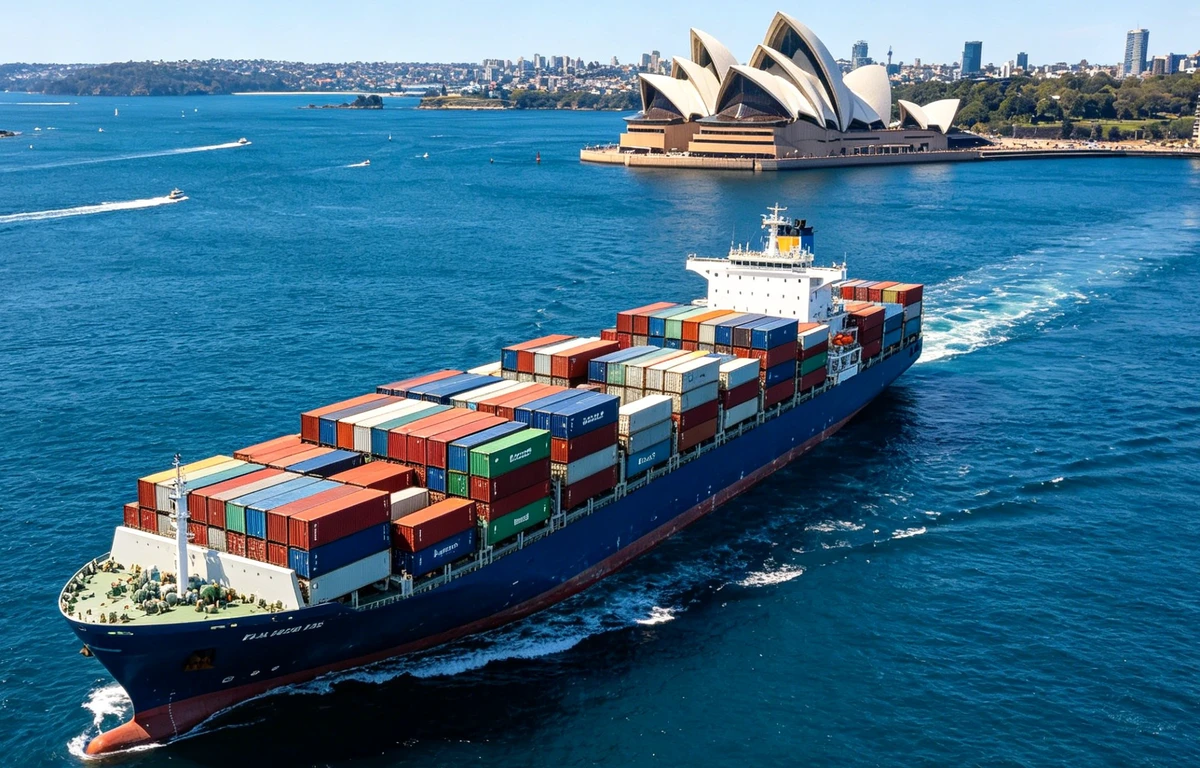
What is FCL Shipping and When Should Australian Buyers Use It?
FCL (Full Container Load) shipping gives your business exclusive use of a 20GP, 40GP, or 40HQ container, meaning your goods are not consolidated with other shippers’ cargo. This method is the standard for importers who require security, speed, and cost-efficiency for bulk orders.
We generally advise Australian buyers to switch from LCL (Less than Container Load) to FCL once their cargo volume exceeds 15 CBM (Cubic Meters). At this threshold, the economics shift. FCL provides a lower per-unit shipping cost because you avoid the hefty unpacking and handling fees associated with LCL at Australian destination ports like Sydney and Melbourne.
Furthermore, FCL guarantees faster handling times since there is no need for consolidation at the origin CFS (Container Freight Station) or deconsolidation upon arrival. Having a dedicated, sealed container also significantly reduces the risk of cargo damage and pilferage during transit.
Cost of FCL Shipping from China to Australia (2026 Estimates)
The total cost of FCL shipping from China to Australia involves base ocean freight, destination port charges, and Australian import taxes. For a standard 40HQ container, expect port-to-port sea freight to range from $2,500 to $4,000 USD, plus local Australian fees.
Understanding the freight cost breakdown is crucial for protecting your margins. Here are the estimated base ocean freight rates (Port-to-Port) as of early 2026:
| Container Type | Estimated Freight Cost (USD) | Best Used For |
|---|---|---|
| 20GP (General Purpose) | $1,500 – $2,500 | Dense, heavy goods (e.g., machinery, tiles) |
| 40GP / 40HQ (High Cube) | $2,500 – $4,000 | Bulky, lighter goods (e.g., furniture, apparel) |
Note: Sea freight rates are highly volatile and subject to seasonality, carrier capacity, Peak Season Surcharges (PSS), and Bunker Adjustment Factors (BAF).

Beyond the sea freight, Australian importers must prepare for significant Destination Charges. These are billed in AUD and include Terminal Handling Charges (THC) at major ports (Sydney, Melbourne, Brisbane), Port Infrastructure Fees, and Delivery Order (DO) fees.
Lastly, do not forget Taxes & Duties. Most imports are subject to an Import Duty (typically 0-5%) and a 10% Goods and Services Tax (GST). The GST is calculated on the Value of the Taxable Importation (VoTI), which includes the customs value of the goods, duty paid, and international transport/insurance costs.
How Long Does FCL Shipping from China to Australia Take?
Port-to-port transit time for FCL shipping from China to Australia generally ranges from 12 to 24 days. The exact duration heavily depends on your chosen port pairing and whether the vessel operates on a direct or transshipment route.
In our daily operations at SinoShipment, we route thousands of containers annually across this corridor. Below is a breakdown of the most popular routes and their estimated transit times:
| Origin Port (China) | Destination Port (Australia) | Estimated Transit Time | Route Characteristics |
|---|---|---|---|
| Shenzhen (Yantian) | Sydney | 12 – 16 Days | Fastest direct route, ideal for urgent retail goods. |
| Shanghai | Melbourne | 15 – 21 Days | High frequency of sailings, stable cost balance. |
| Ningbo | Brisbane | 16 – 22 Days | Consistent capacity for East Coast deliveries. |
| Qingdao | Fremantle (Perth) | 18 – 24 Days | Standard route for Western Australia bound cargo. |
Keep in mind that these are port-to-port estimates. Variables such as extreme weather, port congestion (including potential industrial action at Australian terminals), and customs holds can add days to your total lead time.
(Need faster delivery? Check out our guide on Air Freight from China to Australia for expedited options.)

Step-by-Step Process for FCL Shipping from China to Australia
The FCL shipping process from China to Australia involves five critical steps: from factory booking and export clearance in China, through ocean transit, to Australian import clearance and final delivery.
- Booking & Empty Container Dispatch: The process begins when you or your freight forwarder books space with a shipping line. An empty container is then dispatched to your supplier’s factory in China for loading.
- Chinese Export Customs Clearance: Once loaded and sealed, the container is returned to the departure port (e.g., Shanghai or Shenzhen). The export customs clearance is processed before the container is loaded onto the vessel.
- Ocean Freight: The container embarks on its journey. Depending on your budget and urgency, this could be a direct sailing or involve transshipment through hubs like Singapore.
- Australian Import Customs Clearance: To prevent delays, experienced forwarders like SinoShipment will lodge the Import Declaration while the cargo is still on the water (pre-clearance).
- Final Inland Delivery: Upon arrival and clearance at the Australian port, the container is discharged and transported via trucking or rail to your final warehouse or distribution hub.

Essential Documentation & Australian Import Regulations
To successfully clear Australian customs, importers must provide standard shipping documents along with specific compliance certificates like the ChAFTA Certificate of Origin and BMSB fumigation records.
Australia has some of the strictest biosecurity and customs regulations in the world. Missing a single document can result in your container being held at the border, incurring daily demurrage charges.
- Core Shipping Documents: You must have a Commercial Invoice, a detailed Packing List, and the Bill of Lading (B/L).
- ChAFTA Certificate of Origin: The China-Australia Free Trade Agreement (ChAFTA) allows Australian importers to claim zero or significantly reduced import duties on eligible goods. As customs experts, we always advise our clients to obtain this certificate from their Chinese supplier well before the cargo arrives to ensure a seamless pre-clearance process.
- BMSB (Brown Marmorated Stink Bug) Regulations: Between September 1 and April 30, the Australian Department of Agriculture, Fisheries and Forestry (DAFF) enforces mandatory fumigation for high-risk goods. In our experience, non-compliance during this peak biosecurity window is the leading cause of containers being exported back to origin or destroyed at the importer’s expense.
- Timber Packaging Declaration: If your cargo is packed on wooden pallets, they must be treated and stamped according to ISPM 15 standards.

Why Choose Sinoshipment for FCL Shipping from China to Australia?
Sinoshipment provides end-to-end FCL shipping solutions from China to Australia, offering direct carrier contracts, expert customs clearance, and real-time tracking to ensure your supply chain remains uninterrupted.
As an international logistics expert, Sinoshipment understands the pain points of Australian importers.
- Direct Carrier Contracts: We secure competitive, transparent pricing and guarantee space even during peak seasons, meaning your cargo won’t be rolled.
- Expert Australian Customs Clearance: Our dedicated customs team ensures absolute compliance with ChAFTA and BMSB regulations. We handle the paperwork proactively, preventing costly border holds.
- End-to-End Visibility: From the factory floor in China to your warehouse in Sydney, Melbourne, or Brisbane, our digital tracking systems and localized support give you complete control over your inventory.
You may be interested in the following related articles:
- Freight Shipping from China to Oman
- Freight Shipping from China to Panama
- Freight Shipping from China to Brazil
- Freight Shipping from China to Fiji
- Freight Shipping From China to Netherlands
FAQs on FCL Shipping from China to Australia
Is FCL cheaper than LCL for shipping to Australia?
Yes, if your cargo volume exceeds 15 CBM. While LCL might seem cheaper initially for small volumes, FCL becomes significantly more cost-effective on a per-unit basis for larger orders because it avoids the high LCL destination unpacking and handling fees charged at Australian ports.
Do I need to pay GST on FCL imports to Australia?
Yes, a 10% Goods and Services Tax (GST) applies to most goods imported into Australia. The GST is calculated on the Value of the Taxable Importation (VoTI), which is the sum of the goods’ customs value, the import duty, and the international transport and insurance costs.
Can I clear Australian customs before the container arrives?
Yes, you can. Sinoshipment routinely lodges the Import Declaration with the Australian Border Force prior to the vessel’s arrival. This “pre-clearance” process ensures that your container is available for immediate release and inland delivery as soon as it is discharged from the ship.
Conclusion
Successfully shipping FCL from China to Australia requires a delicate balance of managing transit times, securing stable freight costs, and strictly adhering to Australia’s stringent biosecurity and customs laws. By understanding the cost breakdown, optimizing your routes, and preparing documents like the ChAFTA certificate in advance, you can protect your margins and avoid supply chain disruptions.
Ready to optimize your supply chain and reduce your China-to-Australia shipping costs? Contact Sinoshipment today for a customized FCL freight quote and expert logistics consultation. Our team is ready to ensure your next shipment is seamless.