FCL Shipping from China to Spain: The Ultimate Guide for Importers
· By SinoShipment
Are you tired of hidden fees and unpredictable transit times eroding your profit margins when freight shipping from china to spain?
As trade between China and Spain continues to surge in 2026, finding a secure, cost-effective, and reliable logistics solution is paramount for importers, brands, and e-commerce sellers. In our team’s experience managing thousands of TEUs on the Asia-Europe route, the core problem for most buyers is navigating fluctuating ocean freight rates, capacity crunches, and complex European Union customs procedures.
In this comprehensive guide, we will break down exactly what you need to know about FCL shipping costs, 2026 transit times, shipping routes, customs requirements, and actionable risk management tips. By the end of this article, you will have a clear blueprint to optimize your supply chain and protect your bottom line.
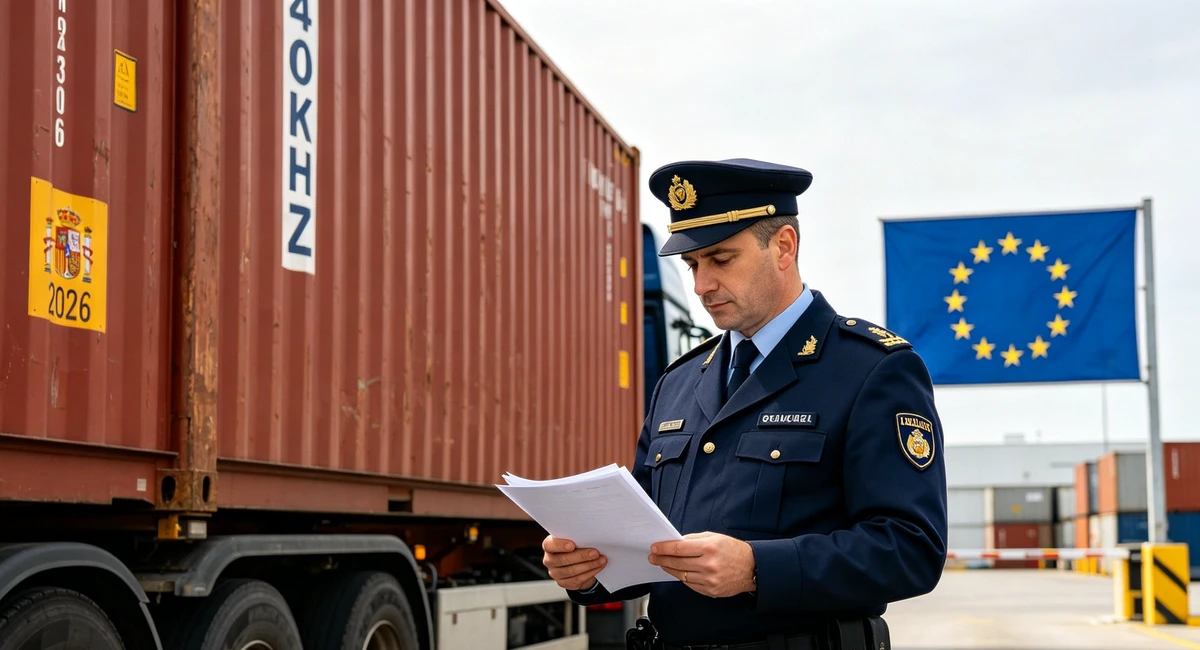
Key Takeaways:
- FCL is optimal for cargo over 15 CBM, offering better security and lower per-unit costs than LCL.
- Average transit time from major Chinese ports to Spain is 28–35 days (port-to-port).
- Customs compliance is strict: An EORI number and a commercial invoice are non-negotiable for Spanish import clearance.
- Freight rates fluctuate, but booking under FOB terms typically gives buyers more control over ocean costs than EXW.

2. Understanding FCL Shipping from China to Spain: Is It Right for Your Cargo?
FCL (Full Container Load) shipping means you rent an entire container (typically 20FT, 40FT, or 40HQ) exclusively for your goods. It is the most secure and cost-effective method for shipments exceeding 15 CBM, offering faster processing times compared to LCL (Less than Container Load).
When deciding between FCL, LCL, and Air Freight, importers must weigh volume, budget, and urgency. If your supplier in China is producing high-value goods, heavy machinery, electronics, or large retail orders, FCL is generally the superior choice.
Key Advantages of FCL:
- Enhanced Security: Because the container is sealed at the origin factory in China and only opened at your warehouse in Spain, the risk of damage, theft, or loss is drastically reduced. There is no mixing of your cargo with other importers’ goods.
- Faster Processing Times: FCL bypasses the time-consuming consolidation and deconsolidation processes required for LCL at both the departure and arrival ports.
- Lower Per-Unit Costs: Once your cargo volume reaches roughly 15 cubic meters (CBM), paying the flat rate for a 20FT container becomes cheaper per unit than paying the CBM-based rates of LCL.
3. Key Shipping Routes and Major Ports for China-Spain Trade
The primary maritime routes connect major Chinese export hubs like Shanghai, Ningbo, and Shenzhen directly to Spain’s busiest ports, including Valencia, Barcelona, and Algeciras, typically via the Suez Canal and Mediterranean Sea.
Understanding the port infrastructure helps in planning inland logistics.
Major Origin Ports in China:
- Shanghai & Ningbo: Ideal for suppliers located in Eastern China (Zhejiang, Jiangsu). These are the busiest ports globally, offering the most frequent sailings.
- Shenzhen & Guangzhou: The go-to hubs for electronics and consumer goods manufactured in Southern China.
- Qingdao & Xiamen: Strategic choices for goods originating in Northern or Central China.
Major Destination Ports in Spain:
- Port of Valencia (ESVLC): The busiest container port in the Mediterranean. It is highly efficient and serves central and southern Spain.
- Port of Barcelona (ESBCN): The best choice for cargo destined for Catalonia, northern Spain, and even southern France.
- Port of Algeciras (ESALG): A massive transshipment hub connecting Europe, Africa, and the Americas.
- Port of Bilbao (ESBIO): Excellent for industrial cargo heading to the northern regions.
Routing Options: Direct Mediterranean services are the fastest, taking 28-32 days. Transshipment routes (e.g., vessels stopping in Singapore or Port Klang before heading to Europe) may add 3-7 days to the journey but can sometimes offer cheaper freight rates.
4. How Long Does FCL Shipping from China to Spain Take? (2026 Transit Times)
As of early 2026, port-to-port FCL transit times from China to Spain average between 28 and 35 days depending on the specific departure and arrival ports. Door-to-door delivery typically requires an additional 3 to 7 days for customs clearance and inland trucking.
Transit time is a critical factor for inventory planning. Below is a realistic breakdown of average sailing times based on direct vessel schedules:
| Origin Port (China) | Destination Port (Spain) | Average Transit Time (Days) |
|---|---|---|
| Shanghai | Valencia | 28 - 32 |
| Ningbo | Barcelona | 28 - 30 |
| Shenzhen | Algeciras | 27 - 31 |
| Qingdao | Bilbao | 32 - 36 |
| Xiamen | Valencia | 30 - 33 |
Note: The transit times above are port-to-port estimates as of Q2 2026. Actual times may vary.
Delay Factors to Consider:
- Weather & Congestion: Typhoons in the South China Sea or labor strikes at European ports can cause unexpected delays.
- Peak Seasons: The weeks leading up to Chinese New Year (usually January/February) and the Q4 holiday rush (September/October) often see severe vessel space shortages, leading to rolled cargo.
- Geopolitical Events: Any rerouting of vessels away from the Red Sea (around the Cape of Good Hope) adds approximately 10-14 days to the transit time.

5. FCL Shipping Costs from China to Spain: Container Rates and Breakdown

Ocean freight rates fluctuate based on market demand, but as of April 2026, a 20FT container from China to Spain typically costs between $2,200 and $2,800, while a 40HQ ranges from $4,100 to $4,800. Your final cost heavily depends on your chosen Incoterms (FOB vs. EXW) and seasonal surcharges.
To budget accurately, you must understand that the “ocean freight rate” is only one part of the total cost.
Estimated Freight Rates (As of Q2 2026):
- 20FT Container: $2,200 – $2,800 (Best for dense, heavy goods like machinery or tiles).
- 40FT Container: $3,800 – $4,600 (Best for standard consumer goods).
- 40HQ (High Cube): $4,100 – $4,800 (Best for light, voluminous cargo like furniture or toys).
Cost Breakdown:
- Ocean Freight: The base rate charged by the carrier (e.g., MSC, COSCO) to move the box from Port A to Port B.
- Origin & Destination Charges (THC): Terminal Handling Charges for lifting the container onto and off the vessel.
- Documentation Fees: Bill of Lading issuance, export/import customs declarations.
- Inland Transport: Trucking costs from the Chinese factory to the port, and from the Spanish port to your final warehouse.
Variables Impacting Your Price: Choosing FOB (Free On Board) means your Chinese supplier pays for the transport to the origin port and export customs. Choosing EXW (Ex Works) means you pay for everything from the factory door. We generally recommend FOB for better control over ocean freight costs. Additionally, be prepared for General Rate Increases (GRI) or Peak Season Surcharges (PSS) during busy months.
Disclaimer: Freight rates and surcharges fluctuate continuously based on carrier capacity, bunker fuel prices, and global events. The figures provided are Q2 2026 estimates for reference only. Always request a real-time, binding quote before finalizing your shipment budget.
6. Spanish Customs Clearance for FCL Shipments from China

To successfully clear Spanish customs, EU importers must possess a valid EORI number and provide a Bill of Lading, Commercial Invoice, and Packing List. Importers are also subject to Spain’s standard 21% VAT and applicable EU Common Customs Tariffs based on the product’s HS code.
Customs clearance is where many inexperienced importers face delays and unexpected fines. Spain strictly enforces European Union customs regulations. According to the Agencia Tributaria (Spanish Tax Agency), compliance is mandatory.
Essential Paperwork:
- Bill of Lading (B/L): The official contract of carriage and receipt of goods.
- Commercial Invoice: Must detail the exact value, currency, and description of the goods for tax assessment.
- Packing List: Specifies the weight, dimensions, and packaging of the cargo.
- Certificate of Origin: Proves the goods were manufactured in China.
- EORI Number: An Economic Operators Registration and Identification number is legally required for any business importing into the EU. In our team’s experience, applying for a Spanish EORI can take several days, so we strongly advise initiating this process before your cargo departs from China.
Taxes & Duties:
- VAT (Value Added Tax): Spain’s standard IVA (Impuesto sobre el Valor Añadido) is 21%, calculated on the CIF (Cost, Insurance, and Freight) value plus the import duty.
- Customs Tariffs: Dictated by the EU Common Customs Tariff (TARIC). The rate depends entirely on your product’s 10-digit HS Code. We highly recommend consulting the official TARIC database during your product sourcing phase to prevent unexpected duties from eroding your margins.
- CE Marking: If you are importing electronics, toys, or medical devices, the products MUST bear the CE mark, proving they meet EU safety, health, and environmental protection requirements.
7. Common Pitfalls and Risk Management in FCL Shipping

The most common FCL shipping pitfalls include improper weight distribution during loading and minor documentation errors that trigger costly customs holds. Purchasing comprehensive cargo insurance is the most effective way to mitigate these financial risks.
Even with a full container, things can go wrong. Here is how our team advises clients to manage risks:
- Loading Issues: An unevenly loaded container can be rejected by the port or cause damage to the goods during rough seas. Ensure your supplier follows proper weight distribution guidelines and secures the cargo with dunnage or lashing.
- Documentation Errors: A simple typo on the Commercial Invoice (e.g., mismatched quantities or incorrect HS codes) can result in customs detaining the container. This leads to daily Demurrage and Detention (D&D) charges, which can quickly wipe out your profit margins. Always double-check documents before the vessel departs.
- Risk Mitigation & Insurance: Carrier liability is severely limited by international maritime law (often just a few dollars per kilogram). We strongly recommend purchasing all-risk cargo insurance. It typically costs less than 0.5% of your cargo’s commercial value and covers total loss, theft, or severe damage.
8. Why Choose Sinoshipment for FCL Shipping from China to Spain?
Sinoshipment offers over a decade of expertise in China-Europe logistics, providing competitive FCL rates, stable carrier space, and seamless end-to-end solutions. Our team handles everything from booking to complex EU customs clearance.
Navigating the complexities of international trade requires a reliable partner.
- Expertise & Experience: We have successfully managed thousands of TEUs from China to Europe. We understand the nuances of Spanish ports and EU customs regulations.
- Competitive Pricing: Thanks to our direct, long-standing partnerships with major ocean carriers like COSCO, MSC, and Maersk, we secure stable space allocations and highly competitive rates, even during peak seasons.
- End-to-End Solutions: We don’t just move boxes. We offer a comprehensive service suite including factory pickup, export clearance, ocean freight, Spanish import customs, and final inland delivery to your warehouse.
- Dedicated Support: You receive proactive tracking updates and a dedicated account manager to ensure your supply chain remains uninterrupted.
You may be interested in the following related articles:
9. FAQ about FCL Shipping from China to Spain
What is the difference between FCL and LCL shipping to Spain? FCL gives you exclusive use of an entire container, making it faster and safer for large volumes (15+ CBM). LCL means your goods share a container with other shippers, which is cheaper for small volumes but takes longer due to consolidation.
When is the cheapest time to ship FCL from China to Spain? Ocean freight rates are typically lowest during the post-Chinese New Year slump (March to May) and the mid-summer lull (July to August). Rates peak from September to November as companies stock up for the holidays.
Can I ship hazardous materials or batteries via FCL? Yes, but they require strict compliance with the IMDG (International Maritime Dangerous Goods) Code. You must provide an MSDS (Material Safety Data Sheet), and the carrier must approve the booking in advance. In our operations, lithium battery shipments face the highest scrutiny, so prepare for additional documentation and hazardous surcharges.
How do I track the exact location of my FCL container? Once your container is loaded onto the vessel, your freight forwarder will provide a Bill of Lading or container number. You can use this number on the specific carrier’s tracking portal to monitor its journey in real-time.
10. Conclusion
Importing goods via FCL shipping from China to Spain remains the most stable, secure, and cost-effective strategy for businesses dealing in bulk cargo. By understanding the transit times, cost breakdowns, and strict EU customs requirements, you can build a resilient supply chain that withstands market volatility.
Success in international trade hinges on partnering with the right experts.
Ready to optimize your 2026 shipping strategy? Contact the Sinoshipment team today for a customized FCL quote, transparent pricing, and personalized supply chain consultation tailored to your Spanish import needs.