Freight Costs from China to Germany: 2026 Complete Guide
· By SinoShipment
Disclaimer: The freight rates, transit times, and compliance regulations outlined in this guide are based on Q2 2026 market data. Global logistics are subject to volatility; always consult with a licensed forwarder for real-time quotes.
Are you tired of hidden destination fees and unexpected customs delays eroding your profit margins when importing from Asia?
Germany remains China’s top European trading partner, handling hundreds of billions of dollars in bilateral trade annually, according to the Federal Statistical Office of Germany (Destatis). However, volatile ocean freight rates, capacity constraints, and strict new 2026 compliance rules like CBAM (Carbon Border Adjustment Mechanism) and ICS2 Release 3 are making supply chains more complex than ever before. Importers are frequently hit with unexpected Terminal Handling Charges (THC) or find their shipments delayed at Hamburg because of improper EORI registration.
In this comprehensive guide, our team breaks down the true freight costs from China to Germany across sea, air, and rail modes. If you are looking for a complete overview of services on this lane, you can also explore our dedicated guide on freight shipping from china to germany. We will expose the hidden fees that most forwarders won’t tell you about, clarify the latest German Zoll (customs) requirements, and provide actionable strategies to optimize your import logistics.
Key Takeaways
- Sea Freight: The most cost-effective mode for bulk cargo (>15 CBM), ranging from $1,500 to $3,500 for a 40ft container, taking 25–40 days.
- Air Freight: Best for urgent, high-value goods under 500kg, costing $4–$10/kg and arriving in 3–7 days.
- Rail Freight: The perfect middle ground, offering transit times of 12–18 days at $2.80–$5.00/kg.
- 2026 Compliance: All shipments must comply with ICS2 Release 3 (advanced ENS filing) and CBAM for carbon-intensive products.
- Hidden Costs: Unplanned destination fees (THC, DDO, inspection) can easily add $300–$800 to your landed cost if not negotiated upfront.
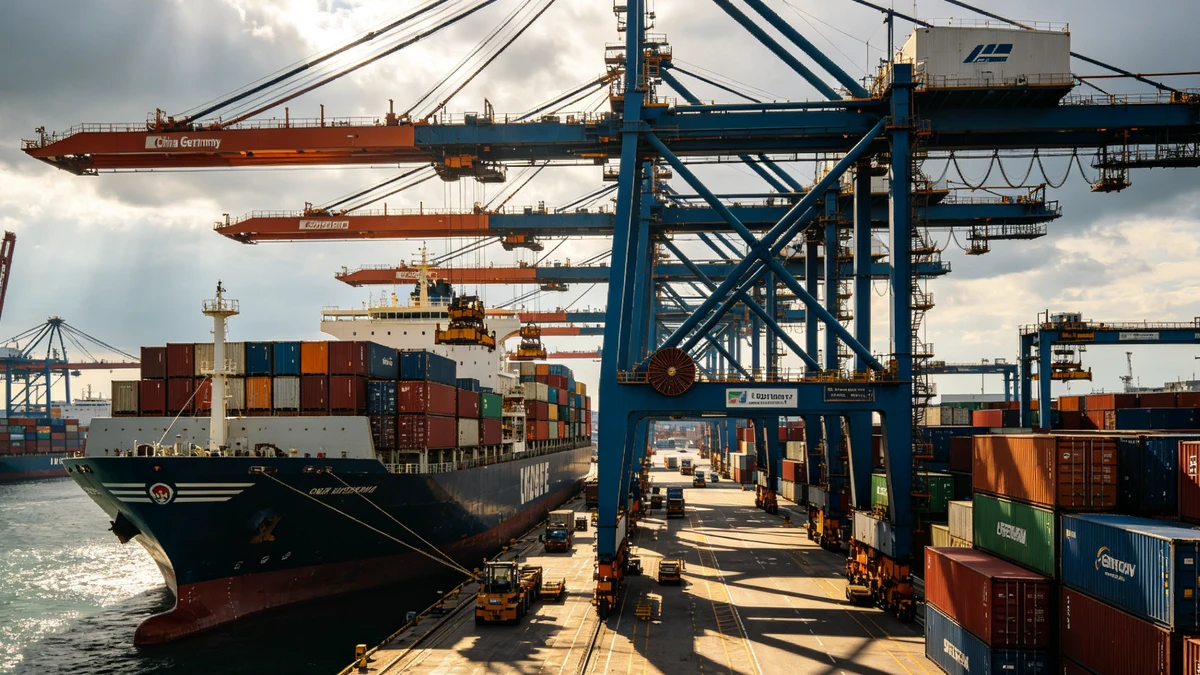
Overview of Freight Costs from China to Germany by Mode
In 2026, freight costs from China to Germany range from $40–$120 per CBM for ocean LCL, up to $4–$10 per kg for air freight. Sea freight takes 25–40 days, rail freight takes 12–18 days, and air freight takes 3–7 days. Choosing the right mode depends entirely on your budget, cargo volume, and delivery urgency.
When planning your supply chain, understanding the baseline costs and transit times of each transport mode is critical. Below is a comparison table reflecting the latest 2026 market benchmarks:
| Shipping Mode | 2026 Cost Range | Estimated Transit Time | Best For |
|---|---|---|---|
| Sea Freight (FCL) | $1,500 – $3,500 / Container | 25 – 40 days | Large shipments (>15 CBM), steady production runs |
| Sea Freight (LCL) | $40 – $120 / CBM | 30 – 45 days | Medium shipments (1–15 CBM), mixed supplier loads |
| Rail Freight | $2.80 – $5.00 / kg | 12 – 18 days | Mid-value, time-sensitive cargo (5–25 CBM) |
| Air Freight | $4.00 – $10.00 / kg | 3 – 7 days | Urgent, high-value goods (<500 kg), electronics |
| Express Courier | $6.00 – $12.00 / kg | 3 – 5 days | Small parcels (<30 kg), document samples |
Note: Rates fluctuate based on seasonality, port congestion, and fuel surcharges. Always request an updated quote before booking.

Sea Freight Costs from China to Germany (The Cost-Effective Choice)
Sea freight from China to Germany typically costs between $1,500 and $3,500 for a full 40ft container, and $40 to $120 per CBM for LCL shipments. With a transit time of 25 to 40 days port-to-port, it remains the most economical choice for bulk cargo exceeding 15 CBM, especially when routed through major hubs like Hamburg or Bremerhaven.
FCL (Full Container Load) vs. LCL (Less than Container Load)
For the vast majority of German importers, ocean freight is the backbone of their supply chain. The first decision you must make is whether to ship FCL or LCL.
- FCL: You rent an entire 20ft or 40ft container. It is safer, faster (no consolidation delays), and more cost-effective if your cargo volume exceeds 13–15 CBM. In our experience, 40ft High Cube (HQ) containers offer the best value per cubic meter.
- LCL: Your goods share a container with other shippers. You pay strictly for the volume you use (per CBM). This is ideal for smaller trial orders but requires additional days for consolidation at the origin port and deconsolidation upon arrival.
Major Ports and Routes
The efficiency of your sea freight largely depends on the port pairs selected:
- Major China Origin Ports: Shanghai (the busiest), Ningbo (great for Zhejiang manufacturers), and Shenzhen/Guangzhou (ideal for electronics and Pearl River Delta goods).
- Major Germany Destination Ports: Hamburg handles approximately 40% of all China-Germany container traffic. Bremerhaven is a major hub for automotive parts, while Wilhelmshaven serves mega-vessels as Germany’s only deep-water port.
According to data from the World Shipping Council, optimizing your port pairs can shave 3 to 5 days off your total transit time.
Air Freight Costs & Transit Times (Speed vs. Cost)
Air Freight from China to Germany costs an average of $4 to $10 per kilogram, depending on whether you choose standard or express service. Transit times range from a rapid 3 to 7 days. This mode is the premium choice for high-value electronics, urgent samples, or fashion apparel that must reach Frankfurt or Leipzig immediately.
Standard vs. Express Air Freight
When your inventory is facing a stockout crisis or you are launching a high-margin tech product, air freight is your lifeline.
- Standard Air Freight ($4–$8/kg): Goods are loaded onto commercial passenger flights or scheduled cargo planes. This typically takes 5–7 days door-to-door, factoring in customs clearance.
- Express Courier ($8–$12/kg): Services like DHL, FedEx, or UPS handle everything end-to-end. It is the fastest method (3–5 days) and is highly recommended for parcels under 30kg or urgent manufacturing spare parts.
Key Aviation Hubs
Most air cargo from China (departing from PVG, SZX, or CAN) will land at Frankfurt Airport (FRA), Europe’s busiest cargo airport, or Leipzig/Halle Airport (LEJ), a major European express hub.

Rail Freight via the New Silk Road (The Middle Ground)
Rail freight from China to Germany costs between $2.80 and $5.00 per kilogram, with a transit time of 12 to 18 days. It serves as the perfect middle ground, being approximately 50% faster than sea freight and 30% cheaper than air freight, with Duisburg acting as the primary European railway intermodal hub.
In 2026, the China-Europe Railway Express (New Silk Road) continues to be a highly reliable alternative. For mid-volume importers who cannot wait 40 days for a ship but cannot afford the premium of air freight, rail is the optimal solution.
Trains typically depart from inland Chinese hubs like Yiwu, Xi’an, or Chongqing, cross through Kazakhstan and Russia/Belarus, and terminate in Duisburg or Hamburg. As the world’s largest inland port, Duisport (Port of Duisburg) processes a significant portion of these New Silk Road trains, making it a highly efficient distribution point for Western Europe.
The SinoShipment Advantage: We offer dedicated rail consolidation services (LCL and FCL) for German importers, ensuring stable capacity even during peak seasons when ocean vessels are overbooked.
Hidden Factors Affecting Freight Costs from China to Germany
Hidden destination charges, such as Terminal Handling Charges (THC) and BAF/GRI surcharges, can unexpectedly increase your freight costs from China to Germany by 20% to 30%. To accurately calculate your final landed cost, importers must account for origin/destination documentation fees, customs brokerage, and the specific Incoterms used.
We have managed thousands of TEUs routing into Europe, and we frequently see first-time importers caught off guard by invoices that are significantly higher than the initial “port-to-port” quote. For instance, in Q1 2026, we audited a Berlin-based client’s historical shipments and found they were overpaying by 18% simply because their previous forwarder wasn’t optimizing DTHC and customs brokerage fees. Here is where the real complexity lives:
- Terminal Handling Charges (THC): You will pay THC at the origin port in China and Destination THC (DTHC) at the German port. In Hamburg, DTHC can range from $150 to $250 per container.
- BAF & GRI: Bunker Adjustment Factor (fuel surcharge) and General Rate Increases can be applied by ocean carriers with minimal notice.
- Customs Brokerage & Inspection Fees: Hiring a German customs broker typically costs $80–$150 per entry. If customs decides to physically inspect your container, expect to pay hundreds of dollars in x-ray or un-stuffing fees.
- Incoterms Impact (FOB vs. EXW vs. DDP):
- FOB (Free on Board): The Chinese supplier pays to get the goods onto the ship; you pay for the ocean freight and everything thereafter. This is the most transparent method.
- DDP (Delivered Duty Paid): The supplier handles everything to your door. While convenient, it is highly risky for VAT reclaim in Germany if the forwarder does not declare the goods under your EORI number.

Germany Customs Clearance & 2026 Compliance (Zoll)
Clearing German customs in 2026 requires an active EORI number, precise HS codes, and payment of the standard 19% Import VAT plus applicable duties (0-17%). Furthermore, importers must now strictly comply with the new ICS2 Release 3 for advanced safety declarations and the Carbon Border Adjustment Mechanism (CBAM) for carbon-intensive goods.
Navigating the German Zoll (Customs) is notoriously strict. A single documentation error can result in weeks of storage fees (demurrage). We highly recommend checking the official German Customs (Zoll) website for the latest tariff schedules.
Mandatory Requirements
- EORI Number: An Economic Operators Registration and Identification number is legally required for all businesses importing into the EU.
- Commercial Invoice & Packing List: Must perfectly match the physical cargo.
- Accurate HS Codes: Determines your exact import duty rate.
New 2026 Regulations You Must Know
The European Union has tightened its borders in 2026 with two critical regulations:
- ICS2 Release 3: The Import Control System 2 now applies to maritime and rail freight. You (or your forwarder) must submit an Entry Summary Declaration (ENS) with detailed cargo data at least 24 hours before the goods are loaded in China. For full details, refer to the EU ICS2 portal.
- CBAM: If you are importing iron, steel, aluminum, cement, or fertilizers, you are subject to the Carbon Border Adjustment Mechanism. You must report the embedded emissions of your imports and purchase CBAM certificates, effectively adding a carbon premium to your costs. Learn more via the European Commission’s CBAM guidelines.
Why Choose SinoShipment for China-to-Germany Logistics?
At SinoShipment, we don’t just move boxes; we engineer transparent, end-to-end supply chain solutions tailored for the European market.
- Transparent Pricing: We guarantee no hidden destination fees. Our quotes are itemized so you know exactly what you are paying for THC, documentation, and customs clearance.
- Local German Expertise: Our team deeply understands German Zoll requirements and keeps you fully compliant with complex 2026 EU regulations like CBAM and ICS2.
- Amazon FBA Specialists: Selling on Amazon.de? We provide direct-to-warehouse delivery across Germany, including FBA prep, labeling, and palletization services.
- Multi-Modal Flexibility: Whether you need a 40ft container to Hamburg, an express air shipment to Frankfurt, or a balanced rail solution to Duisburg, we seamlessly switch modes based on your urgency and budget.
You may be interested in the following related articles:
FAQ on Freight Costs from China to Germany
Do I need an EORI number to import from China to Germany? Yes. An EORI number is mandatory for any commercial entity importing goods into Germany or any other EU member state. Without it, your goods cannot clear customs.
What is the cheapest way to ship from China to Germany? Sea freight (specifically FCL if you have enough volume) is the cheapest method. If your volume is small (under 2 CBM), sea freight LCL is the most cost-effective, though it takes longer than FCL.
How does the CBAM regulation affect my shipping costs in 2026? If you import specific carbon-intensive goods (like steel or aluminum), CBAM requires you to purchase carbon certificates based on the emissions generated during manufacturing in China. This acts as an additional indirect tax, increasing your total landed cost.
Can I reclaim the 19% import VAT on my shipment? Yes, if you are a VAT-registered business in Germany and the goods are imported for your business operations, you can reclaim the 19% Import VAT (Einfuhrumsatzsteuer) on your regular VAT return. However, this requires the customs declaration to be filed correctly under your EORI and VAT number.
Conclusion
Balancing cost, speed, and compliance is the key to successfully importing goods into Germany in 2026. Whether you are leveraging the cost-efficiency of sea freight to Hamburg, the speed of air freight to Frankfurt, or the balanced transit of the New Silk Road railway, understanding the true freight costs from China to Germany empowers you to protect your profit margins.
Ready to optimize your supply chain? Stop letting hidden fees and customs delays disrupt your business. Contact SinoShipment today for a customized, 100% transparent quote tailored to your China-to-Germany logistics needs.