Comprehensive Guide to Freight Costs from China to UAE (2026)
· By SinoShipment
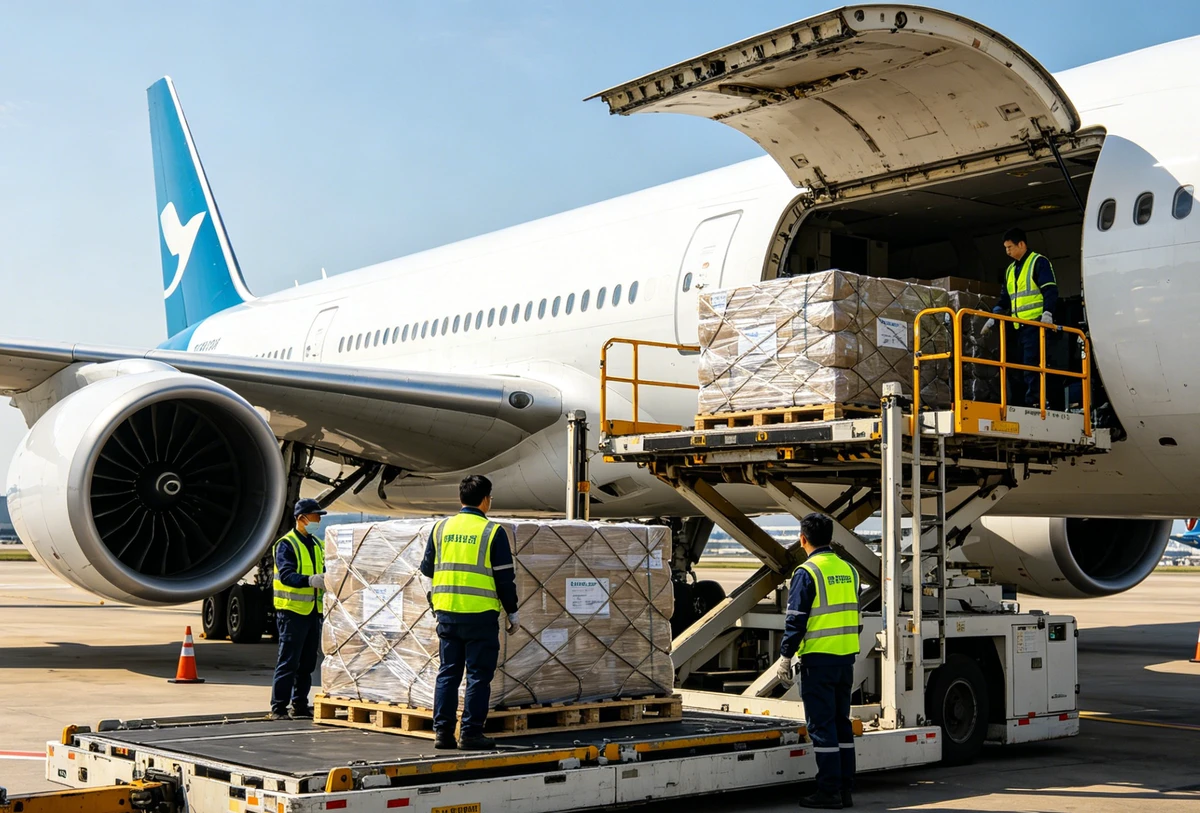
Are you tired of hidden fees eroding your profit margins when freight shipping from China to UAE? In the fast-paced world of international trade, unpredictability in logistics costs is the number one threat to a buyer’s bottom line. As bilateral trade between China and the UAE continues to soar, reaching record highs, businesses must optimize their supply chains to maintain competitive pricing in the Middle Eastern market.
This article addresses the critical challenge of forecasting and managing freight costs from China to the UAE in 2026. We will provide a complete, transparent breakdown of sea and air freight rates, explain exact transit times, decode complex customs duties, and share actionable strategies to lower your expenses. Whether you are an Amazon FBA seller, a procurement manager, or a brand distributor, you will gain the exact knowledge needed to secure the best rates and eliminate supply chain surprises.
Shipping from China to the UAE typically costs between $850 and $1,800 for a 20ft sea container, while air freight ranges from $4.50 to $10.00 per kilogram. Sea freight takes 18 to 35 days, whereas air freight delivers in 3 to 7 days, depending on the service level.
In our team’s 10+ years of experience managing thousands of TEUs (Twenty-foot Equivalent Units) along the China-Middle East trade lane—especially amidst the ongoing Middle East Shipping Crisis—we know firsthand that quick decisions require accurate baseline data. Here is a rapid overview of what you need to know for 2026:
- Price Baseline: Ocean FCL (Full Container Load) starts around $850, while Air Freight baseline is approximately $4.50/kg.
- Timeframe: Ocean freight requires a 3 to 5-week lead time; Air freight is an expedited 3 to 7-day window.
- Core Process: The journey involves booking cargo space, export customs clearance in China (e.g., Shenzhen or Shanghai), main leg transit, and import customs clearance at a UAE port (like Jebel Ali or DXB).
- Major Risks: The biggest cost traps include dimensional weight miscalculations, unexpected peak season surcharges (PSS), and demurrage fees at the destination port.
- Responsibility: Choosing the right Incoterm (e.g., FOB vs. DDP) dictates exactly who pays for the main freight, insurance, and import duties.
Detailed Freight Costs from China to UAE: A Complete Breakdown
Sea freight remains the most economical option, with LCL shipments costing $50–$150 per CBM and 40ft FCL containers ranging from $1,800 to $3,200. Air freight is significantly faster but more expensive, averaging $4.50–$10.00 per kg for standard services and up to $20.00 per kg for express couriers.
When planning your logistics budget, understanding the exact cost structures of different transport modes is vital. Rates fluctuate based on carrier capacity, fuel prices, and global economic conditions. We strongly advise referencing indexes like the Shanghai Containerized Freight Index (SCFI) for macro trends, but here is our detailed operational breakdown for 2026.
Sea Freight Costs
Ocean transport is the backbone of China-UAE trade. It is ideal for bulky, heavy, or non-urgent goods.
- LCL (Less than Container Load): If your cargo is between 1 and 15 CBM (Cubic Meters), LCL is your best choice. You share container space with other buyers. In 2026, expect to pay $50 to $150 per CBM.
- FCL (Full Container Load) - 20ft: For cargo volumes around 15 to 28 CBM, a dedicated 20ft container is optimal. Current rates hover between $850 and $1,800.
- FCL (Full Container Load) - 40ft/40HQ: Designed for high-volume shipments up to 68 CBM, a 40-foot container provides the best economy of scale. Prices range from $1,800 to $3,200.
| Shipping Method | Volume / Weight Suitability | Estimated Cost (2026) | Best For |
|---|---|---|---|
| Sea LCL | 1 - 15 CBM | $50 - $150 / CBM | Small to medium-sized non-urgent shipments |
| Sea FCL (20ft) | 15 - 28 CBM | $850 - $1,800 / Container | Heavy goods, machinery, dense inventory |
| Sea FCL (40ft) | 29 - 68 CBM | $1,800 - $3,200 / Container | Voluminous goods, furniture, textiles |
Air Freight Costs
When time is money, air freight is the necessary alternative. It is strictly priced based on weight or volumetric weight (whichever is greater).
- Standard Air Freight: Typically used for cargo over 100 kg. Costs range from $4.50 to $10.00 per kg.
- Express Courier (DHL, FedEx, UPS): Ideal for samples, urgent documents, or highly valuable small parcels under 100 kg. This door-to-door service costs between $12.00 and $20.00 per kg.
DDP (Delivered Duty Paid) Shipping
For many e-commerce sellers and Amazon FBA merchants in the UAE, DDP is the ultimate hassle-free solution. Under DDP terms, your freight forwarder handles all shipping, customs clearance, duties, and final last-mile delivery. DDP rates usually combine ocean or air freight with local logistics, offering a flat per-kg or per-CBM rate (e.g., $2.50 - $4.00/kg by sea-to-door).

Key Factors Influencing Freight Costs from China to UAE
Your final shipping bill is determined by chargeable weight calculations, seasonal demand spikes, your chosen Incoterms, and hidden port surcharges. Mastering these variables is essential to prevent budget overruns and ensure accurate landed cost calculations.

Shipping quotes are rarely flat numbers. To avoid sticker shock, you must understand the underlying mechanics that forwarders and carriers use to calculate your final invoice.
Chargeable Weight: Actual vs. Volumetric
In air freight and express shipping, space is just as valuable as weight. Carriers charge based on “Chargeable Weight,” which is the greater of the Actual Gross Weight or the Volumetric (Dimensional) Weight.
- Air Freight Formula: Volume (CBM) × 167 = Volumetric Weight (kg).
- Express Courier Formula: Length × Width × Height (in cm) / 5000 = Volumetric Weight (kg). If you ship 1 CBM of lightweight cotton actually weighing 50 kg by air, you will be billed for 167 kg because the volume takes up significant space in the aircraft.
Seasonality & Peak Periods
Freight rates are highly sensitive to supply and demand. Major holidays cause severe port congestion and rate spikes:
- Chinese New Year (Jan/Feb): Factories rush to ship goods before a 2-4 week shutdown. Rates peak in the weeks prior.
- Ramadan & Eid: Surges in consumer demand in the UAE lead to increased shipping volumes in the months leading up to these holidays.
- Q4 Holiday Season: Global peak season pushes both sea and air rates to their annual highs.
Incoterms Selection
The International Chamber of Commerce (ICC) defines Incoterms, which dictate the transfer of risk and costs between buyer and seller.
- EXW (Ex Works): You pay for everything from the factory floor in China to your UAE warehouse. Maximum control, but maximum responsibility.
- FOB (Free On Board): The supplier pays to get the goods loaded onto the ship in China. You pay for the ocean freight and UAE customs. This is the most common and recommended term for sea freight.
- CIF (Cost, Insurance, and Freight): The supplier pays for shipping and insurance to the UAE port. However, buyers often face inflated destination charges at Jebel Ali.
Hidden Fees & Surcharges
Always read the fine print of your quotation. Common surcharges include:
- BAF (Bunker Adjustment Factor): Fuel surcharges that fluctuate with global oil prices.
- THC (Terminal Handling Charges): Fees levied by port operators like DP World at Jebel Ali for loading and unloading containers.
- Demurrage & Detention: Severe daily penalties applied if you do not pick up your container from the port or return the empty equipment within the allotted free days (typically 5-7 days).
Transit Times: How Long Does It Take to Ship to the UAE?
Sea freight from major Chinese ports to the UAE typically takes 18 to 30 days. Air freight drastically reduces this timeframe to 3 to 7 days, while express couriers offer the fastest door-to-door delivery in just 2 to 5 days.
Time-to-market is critical for inventory planning. The distance from the eastern coast of China to the Arabian Peninsula is substantial, and the chosen transport mode dictates your supply chain agility.
Sea Freight Routing and Schedules
The majority of ocean freight enters the UAE via the Jebel Ali Port in Dubai, one of the largest and most efficient ports globally.
- South China (Shenzhen/Guangzhou) to Jebel Ali: 18 – 25 days.
- East China (Shanghai/Ningbo) to Jebel Ali: 22 – 30 days.
- North China (Qingdao/Tianjin) to Jebel Ali: 25 – 35 days. Note: LCL shipments generally take 3 to 7 days longer than FCL due to the time required for consolidation at the origin and deconsolidation at the destination.
Air Freight and Express Timelines
- Direct Air Freight: Flights from hubs like Shanghai Pudong (PVG) or Guangzhou (CAN) to Dubai International (DXB) or Abu Dhabi (AUH) take about 8-10 hours of flight time. Including customs processing, expect a total transit time of 3 to 5 days.
- Transit/Indirect Air Freight: Cheaper air options route through secondary hubs, extending the timeline to 5 to 7 days.
- Express Delivery: Door-to-door services via DHL or FedEx bypass standard freight terminals, achieving delivery in 2 to 5 days.
| Origin Region (China) | Destination Port (UAE) | Sea Freight (FCL) | Air Freight | Express Courier |
|---|---|---|---|---|
| Shenzhen / Guangzhou | Jebel Ali / DXB | 18 - 25 Days | 3 - 5 Days | 2 - 5 Days |
| Shanghai / Ningbo | Jebel Ali / DXB | 22 - 30 Days | 3 - 6 Days | 2 - 5 Days |
| Qingdao / Tianjin | Jebel Ali / DXB | 25 - 35 Days | 4 - 7 Days | 2 - 5 Days |

UAE Customs Duties, Taxes, and Clearance Costs
Importing goods into the UAE generally incurs a 5% customs duty on the CIF value, plus a 5% Value Added Tax (VAT). Accurate documentation, including a Commercial Invoice, Packing List, and Certificate of Origin, is strictly required for clearance.
The UAE boasts a highly digitized and efficient customs framework (utilizing platforms like Mirsal 2), overseen by the Federal Tax Authority (FTA) and local entities such as Dubai Customs. However, non-compliance—such as using outdated 8-digit HS codes instead of the newly mandated 12-digit format—can lead to severe delays and costly fines.
Import Duties and VAT Structure
For most commercial goods imported into the UAE mainland, a standard 5% Customs Duty is applied. This duty is calculated based on the CIF (Cost, Insurance, and Freight) value of the shipment. In addition, a 5% VAT is levied on the total value (CIF + Customs Duty).

Example Calculation: If your goods cost $10,000, shipping is $1,500, and insurance is $100 (CIF = $11,600):
- Customs Duty (5%): $580
- VAT Base ($11,600 + $580): $12,180
- VAT (5%): $609
- Total Import Taxes: $1,189
Essential Documentation Requirements
To ensure a frictionless customs clearance process, your Chinese supplier and freight forwarder must prepare:
- Commercial Invoice: Must clearly state the HS codes, value, and description of goods.
- Packing List: Detailed breakdown of weights, dimensions, and packaging types.
- Bill of Lading (B/L) or Air Waybill (AWB): The official transport contract and receipt of cargo.
- Certificate of Origin (CO): Proving the goods were manufactured in China.
Free Trade Zones (FTZs)
The UAE is famous for its Free Trade Zones, such as the Jebel Ali Free Zone (JAFZA) and Dubai Multi Commodities Centre (DMCC). If you import goods directly into an FTZ for re-export or storage, you are entirely exempt from the 5% customs duty and 5% VAT until the goods cross into the local UAE mainland market. This is a massive cash flow advantage for regional distributors.
Actionable Strategies to Reduce Freight Costs from China to UAE
To lower your shipping expenses, consolidate LCL shipments into FCL, optimize your product packaging to reduce volumetric weight, and book cargo 3-4 weeks ahead of peak seasons to secure lower baseline rates.
In our operational experience, proactive planning is the ultimate cost-saving tool. Here are proven strategies to protect your profit margins.
- Consolidate Your Shipments: If you are buying from multiple suppliers in China, use a freight forwarder’s warehouse (e.g., in Shenzhen) to consolidate several small LCL shipments into one FCL container. This drastically reduces per-unit handling fees and destination charges.
- Optimize Packaging: Work with your Chinese manufacturers to eliminate “dead space” in cartons. Since air freight heavily penalizes volume, compressing packaging or using custom-fit boxes can slash your air freight bill by 20% or more.
- Strategic Timing and Forecasting: The ocean freight market operates on a spot-rate basis. By forecasting your inventory needs and booking cargo space 3 to 4 weeks in advance, you avoid premium spot rates and guarantee equipment availability before peak season crunches.
- Audit Your HS Codes: Incorrect Harmonized System (HS) codes can result in overpaying customs duties in the UAE. Have a licensed customs broker verify your product classifications to ensure you are legally paying the lowest applicable tariff.
FAQ (High-Frequency Search Queries)
What is the cheapest way to ship from China to the UAE?
Sea freight is universally the cheapest method. For small volumes (under 15 CBM), LCL (Less than Container Load) is the most cost-effective. For larger volumes, booking a dedicated 20ft or 40ft FCL container offers the lowest cost per unit.
How much does it cost to ship a 20ft container from China to Dubai?
As of 2026, shipping a 20ft container (FCL) from major Chinese ports to Dubai (Jebel Ali) costs an average of $850 to $1,800. This rate fluctuates based on the specific origin port, carrier demand, and seasonal peak surcharges.
Are there any hidden costs when importing to the UAE?
Yes, importers often overlook destination charges. Beyond the main freight, you must account for UAE customs duties (5%), VAT (5%), Terminal Handling Charges (THC) at Jebel Ali, delivery order fees, and potential demurrage if the container is not returned promptly.
Is DDP better than FOB for UAE shipments?
DDP is better for businesses seeking predictability and a hands-off experience, as the forwarder handles all logistics and taxes. However, FOB provides experienced importers with greater control over shipping choices and often results in lower overall costs if managed correctly.
Why Choose Sinoshipment for Your China-UAE Supply Chain?
Sinoshipment offers over a decade of specialized expertise in the China-Middle East trade lane, providing transparent pricing, end-to-end DDP solutions, and flawless customs clearance to protect your margins and guarantee timely delivery.
Navigating the complexities of international logistics requires a partner who understands the granular details of both the Chinese export market and UAE import regulations. At Sinoshipment, we don’t just move boxes; we engineer supply chain solutions.
- End-to-End Solutions: Whether you need economical Sea FCL, urgent Air Freight, or Amazon FBA DDP delivery straight to Dubai, our infrastructure supports your exact needs.
- Transparent Pricing: We believe in radical transparency. Our quotes comprehensively outline freight, origin charges, and destination fees—meaning zero hidden costs upon arrival at Jebel Ali.
- Expert Customs Clearance: With profound knowledge of the UAE Federal Tax Authority rules and local FTZ regulations, our dedicated clearance teams ensure your cargo clears customs swiftly, avoiding costly demurrage and compliance fines.
- Reliable Service: Trusted by over 5000+ global clients, our 24⁄7 customer support and proactive tracking keep you in absolute control of your inventory at every step of the journey.
You may be interested in the following related shipping routes:
- Freight Shipping from China to Afghanistan
- Freight Shipping from China to Yemen
- Freight Shipping from China to Oman
- Freight Shipping from China to Qatar
- freight shipping from china to uganda
Conclusion
Understanding freight costs from China to the UAE is no longer just a logistics task; it is a critical business strategy. By mastering the differences between sea and air freight, calculating volumetric weight accurately, navigating the UAE’s 5% duty and VAT structure, and choosing the right Incoterms, you can significantly enhance your landed profit margins in 2026.
Do not let unpredictable logistics erode your competitive edge in the Middle Eastern market. Take control of your supply chain today. Contact the experts at Sinoshipment for a customized, obligation-free freight quote, and let our team secure the most reliable and cost-effective shipping routes for your business.