How Long Does Shipping Take from China to Canada? (2026 Updated Guide)
· By SinoShipment
Are you tired of losing sales or missing critical inventory windows because of unpredictable shipping delays from China to Canada? In global trade, time is money. Whether you are an Amazon FBA seller, a distributor, or a brand importing from China to Canada, knowing your exact transit time is critical for inventory planning and cash flow.
Shipping from China to Canada takes anywhere from 3 to 45 days, depending heavily on the chosen transport mode (Air vs. Sea), the departure/arrival ports, and customs clearance efficiency.
In this guide, our Sinoshipment logistics team breaks down exact transit times for air freight, sea freight, and express courier services as of early 2026. Having managed thousands of TEUs and air charters along the China-Canada corridor, we will also share insider insights on the hidden factors that could delay your cargo and provide actionable strategies to avoid them.
Transit Times by Shipping Method from China to Canada
The fastest way to ship from China to Canada is via Express Courier (3-5 days), followed by standard Air Freight (5-9 days). For bulk shipments, Sea Freight is the most economical but takes the longest, ranging from 25 to 45 days depending on whether you are shipping to the West Coast (Vancouver) or the East Coast (Toronto/Montreal).
When planning your supply chain, selecting the right shipping method is a balancing act between speed and cost. Here is a clear comparison of the primary shipping methods to help you make an informed decision:
| Shipping Method | Estimated Transit Time | Cost Level | Best Use Case |
|---|---|---|---|
| Express Courier (DHL/FedEx/UPS) | 3 - 5 Days | Highest | Urgent documents, samples, or high-value, low-volume goods. |
| Standard Air Freight | 5 - 9 Days | High | Time-sensitive inventory replenishment, electronics, and fashion. |
| Sea Freight (FCL) | 25 - 40 Days | Lowest | Bulk cargo, large orders, and predictable supply chains. |
| Sea Freight (LCL) | 28 - 45 Days | Low-Medium | Medium-sized shipments that don’t fill a whole container. |

Sea Freight Transit Times: Shipping from China to Canada
Sea freight from major Chinese ports (like Shenzhen or Shanghai) to Canada’s West Coast (Vancouver or Prince Rupert) takes approximately 25-30 days. Shipping to the East Coast (Toronto or Montreal) adds another 5-10 days due to inland rail transfers or longer ocean routes via the Panama Canal.
As the backbone of international trade, ocean freight offers the most cost-effective solution for importing goods. However, the exact duration heavily depends on your specific logistics setup, port pairs, and whether you choose Full Container Load (FCL) or Less than Container Load (LCL).
FCL vs. LCL Transit Differences
FCL (Full Container Load) is generally 3 to 7 days faster than LCL (Less than Container Load). Because LCL involves sharing container space with other shippers, your freight forwarder must consolidate the cargo at the origin port and deconsolidate it at the destination port. This extra handling naturally extends the transit time. In our experience managing thousands of TEUs, FCL provides much more predictable scheduling.
Major Port-to-Port Estimates
Here is a breakdown of typical port-to-port transit times for sea freight in 2026:
| Origin Port (China) | Destination Port (Canada) | Estimated Transit Time (FCL) |
|---|---|---|
| Shanghai | Vancouver | 25 - 28 days |
| Shenzhen (Yantian) | Toronto (via Rail) | 30 - 35 days |
| Ningbo | Montreal | 32 - 38 days |
| Qingdao | Halifax | 35 - 40 days |
If you are shipping to inland cities like Calgary or Edmonton, expect an additional 3-5 days for rail or truck freight from the Port of Vancouver.
Air Freight and Express Transit Times from China to Canada
Standard air freight from China to Canada takes 5 to 9 days, accounting for flight time, airport handling, and customs clearance. Express courier services (like DHL, FedEx, UPS) offer door-to-door delivery in just 3 to 5 days, making them the ultimate choice for urgent, high-value, or low-volume goods.
While sea freight is economical, sometimes you need your cargo yesterday. Air transit is the premium solution, but it is important to distinguish between standard air freight and express courier services.
Standard Air Freight vs. Express Courier
- Standard Air Freight (Airport-to-Airport): This method involves flying your cargo from a major Chinese hub (like PVG or CAN) to a Canadian airport (like YYZ or YVR). You or your customs broker must handle the clearance and final-mile delivery. It typically takes 5-9 days total.
- Express Courier (Door-to-Door): Companies like DHL, UPS, and FedEx handle the entire process, including expedited customs clearance. It is highly efficient and takes only 3-5 days from the supplier’s factory to your warehouse.
Major Air Freight Routes
Typical flight routing times (excluding ground handling and customs) include:
- Guangzhou (CAN) to Toronto (YYZ): 1-2 days (Direct or 1 stop)
- Shanghai (PVG) to Vancouver (YVR): 1 day (Direct flight)
- Shenzhen (SZX) to Montreal (YUL): 2-3 days (Connecting flights)

5 Hidden Factors That Delay Shipping from China to Canada
Even with the best planning, transit times can be disrupted by peak season congestion, incomplete customs documentation, severe weather, and port strikes. Working with a reliable freight forwarder mitigates these risks by ensuring proactive routing and compliance.
In international logistics, the estimated time of arrival (ETA) is never a 100% guarantee. Based on our operational data at Sinoshipment, here are the top five factors that commonly cause delays:
1. Peak Seasons & Holidays
The shipping industry experiences massive volume spikes during specific times of the year. According to global logistics patterns observed by the World Shipping Council, the weeks leading up to Chinese New Year (CNY) in January/February, Golden Week in October, and the Black Friday/Christmas rush almost always result in rolled cargo, space shortages, and delays of 7-14 days.
2. Customs Clearance Holds
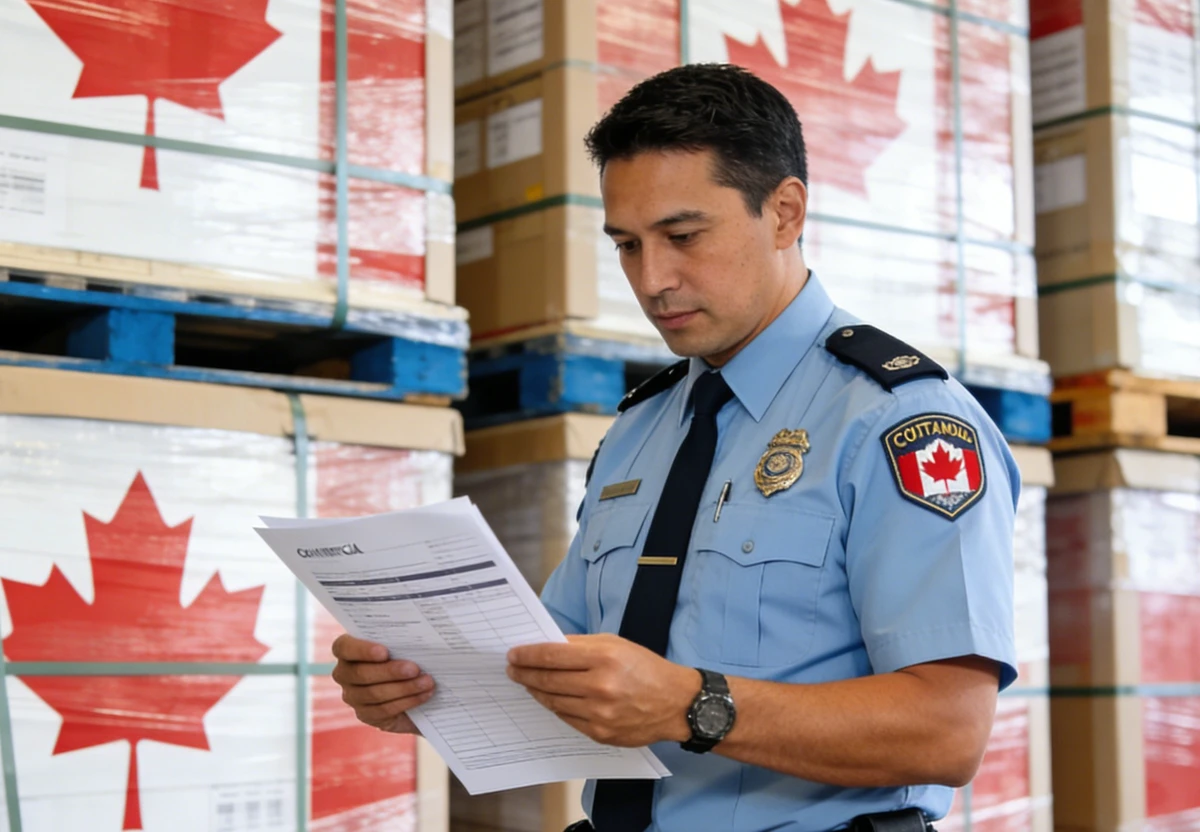
The Canada Border Services Agency (CBSA) strictly regulates all imports. If your Commercial Invoice is inaccurate, or if you use the wrong HS codes, your shipment will be flagged for inspection. A standard customs exam can delay your cargo by 3 to 10 days, accumulating expensive storage fees (demurrage).
3. Port Congestion
Labor shortages or high import volumes frequently cause bottlenecks at major ports. When terminals are overwhelmed, vessels may wait at anchorage for days before they can berth and unload containers.
4. Weather Conditions
Mother Nature plays a significant role in ocean and air freight. Typhoons in the South China Sea during the summer or severe winter storms in the Canadian Rockies can halt vessel operations, ground flights, and block inland rail routes.
5. Inland Transportation Issues
Once your cargo arrives at a Canadian port, it still needs to reach your warehouse. Transport Canada regulations regarding driver hours of service, combined with shortages in truck chassis or rail car availability, can add unpredictable delays to the final-mile delivery.
Customs Clearance in Canada: How Long Does It Take?
Standard customs clearance in Canada typically takes 1 to 3 days if all documentation is accurate and submitted electronically in advance. However, missing paperwork or random CBSA inspections can delay shipments by weeks and incur heavy storage fees.
To ensure your goods clear Canadian customs swiftly, preparation is everything. The CBSA requires specific paperwork to assess duties and taxes accurately.
Essential Customs Documents
Make sure your supplier and freight forwarder provide the following documents accurately:
- Bill of Lading (B/L) or Air Waybill (AWB): The official transport contract.
- Commercial Invoice: Must detail the exact value, currency, and description of the goods.
- Packing List: A breakdown of weights, dimensions, and packaging types.
- Certificate of Origin: Required to claim any preferential tariff treatments.
- Canada Customs Invoice (CCI): Mandatory for commercial shipments valued at over CAD $3,300. You can review the exact CCI formatting requirements provided by the CBSA.
Expert Tip from Our Operations Team: In our daily management of hundreds of cross-border shipments, we notice that nearly 30% of initial clearance holds stem from improperly formatted CCIs or mismatched HS codes. At Sinoshipment, our in-house customs experts audit your paperwork and pre-clear goods while they are still in transit using PARS (Pre-Arrival Review System). This proactive approach means your cargo is often cleared before the vessel even docks in Canada, saving you thousands in potential demurrage fees.
How to Choose the Best Shipping Method from China to Canada
To choose the best shipping method, weigh your cargo’s urgency against your budget. If your goods are high-value and needed in under a week, choose Air Freight or Express; if you have heavy, bulk cargo and a lead time of over a month, Sea Freight is your best option.
Making the right choice protects your profit margins. Use this simple decision matrix to align your logistics strategy with your business goals:
- Urgent (< 1 week) + High Value / Low Weight: Opt for Express Courier or Air Freight. The higher cost is justified by preventing stockouts.
- Non-Urgent (1 month+) + Bulk / Heavy Cargo: Opt for Sea Freight (FCL or LCL). This is the only financially viable way to move large volumes of goods like furniture, machinery, or building materials.
- Amazon FBA Sellers: Look for specialized DDP (Delivered Duty Paid) Sea/Air solutions. As defined by the official Incoterms® rules by the ICC, DDP places the maximum responsibility on the forwarder to clear customs and pay all import taxes. This ensures your goods arrive at Canadian FBA fulfillment centers smoothly, without unexpected border invoices.
Why Choose Sinoshipment for Your China to Canada Shipping?
Partnering with a trusted freight forwarder like Sinoshipment for your freight shipping from China to Canada guarantees not only competitive rates but also predictable transit times. We offer end-to-end logistics solutions tailored to your business needs, minimizing delays and maximizing efficiency.
Navigating the complexities of international shipping doesn’t have to be a headache. Sinoshipment acts as an extension of your supply chain team:
- Competitive Pricing: We hold direct contracts with top ocean carriers and airlines, passing volume discounts directly to you.
- Fast & Reliable Transit: We optimize routing to avoid congested ports and hubs, ensuring your cargo takes the most efficient path.
- In-House Customs Clearance: Our experts handle all CBSA requirements and HS code classifications to prevent costly border holds.
- Amazon FBA Expertise: We provide seamless, end-to-end DDP solutions from your Chinese supplier’s factory directly to Canadian FBA fulfillment centers, taking the stress out of Amazon logistics.
FAQ
What is the fastest way to ship from China to Canada? The absolute fastest method is Express Courier (DHL, UPS, FedEx), which provides door-to-door delivery in just 3 to 5 days. Standard air freight takes slightly longer at 5 to 9 days.
Why is my sea freight shipment to Toronto taking over 40 days? If your cargo arrives via the West Coast (Vancouver), it must be loaded onto a freight train for the inland journey to Toronto. Rail congestion, weather delays, and chassis shortages can extend the total transit time to 35-45 days.
How long does Amazon FBA shipping take from China to Canada? Using a DDP Air Freight service, Amazon FBA shipments take about 7-10 days. If you use a DDP Sea Freight service, expect a transit time of 30-40 days, which includes customs clearance and final delivery appointments at the Amazon warehouse.
Conclusion
In summary, shipping from China to Canada takes between 3 and 45 days. Your choice of transport—Express (3-5 days), Air Freight (5-9 days), or Sea Freight (25-45 days)—will dictate both your speed to market and your landed costs. By understanding transit times, preparing your customs documents, and accounting for seasonal delays, you can build a highly resilient supply chain.
Disclaimer: The transit times and regulations mentioned in this guide are based on early 2026 data and our active operational experience. Global shipping is subject to volatility from weather, geopolitical events, and carrier schedule changes. Always consult with a licensed freight forwarder for the most current routing information.
Ready to ship from China to Canada? Don’t let delays eat into your profit margins. Partner with an expert team who manages this exact route daily. Contact Sinoshipment today for a real-time freight quote, tailored logistics plans, and guaranteed space on our next vessel or flight.