How Long Does Shipping Take from China to Saudi Arabia? (2026 Ultimate Guide)
· By SinoShipment
Are you tired of hidden delays and unpredictable transit times disrupting your supply chain when shipping from China to Saudi Arabia? As Saudi Arabia rapidly expands under Vision 2030, importing from China is more lucrative than ever. However, importers frequently ask, “how long does shipping take from china to Saudi Arabia?” to plan their inventory, but delays from customs compliance or choosing the wrong freight method often cause costly headaches. In this 2026 Ultimate Guide, you will learn the complete breakdown of transit times for Sea, Air, and Express freight, uncover the real factors causing delays, and gain actionable tips to speed up your China to KSA shipments.
Disclaimer: The transit times, costs, and regulations mentioned in this guide are based on early 2026 data. Global shipping conditions, fuel surcharges, and customs policies are subject to change. Always consult with your freight forwarder for real-time updates.
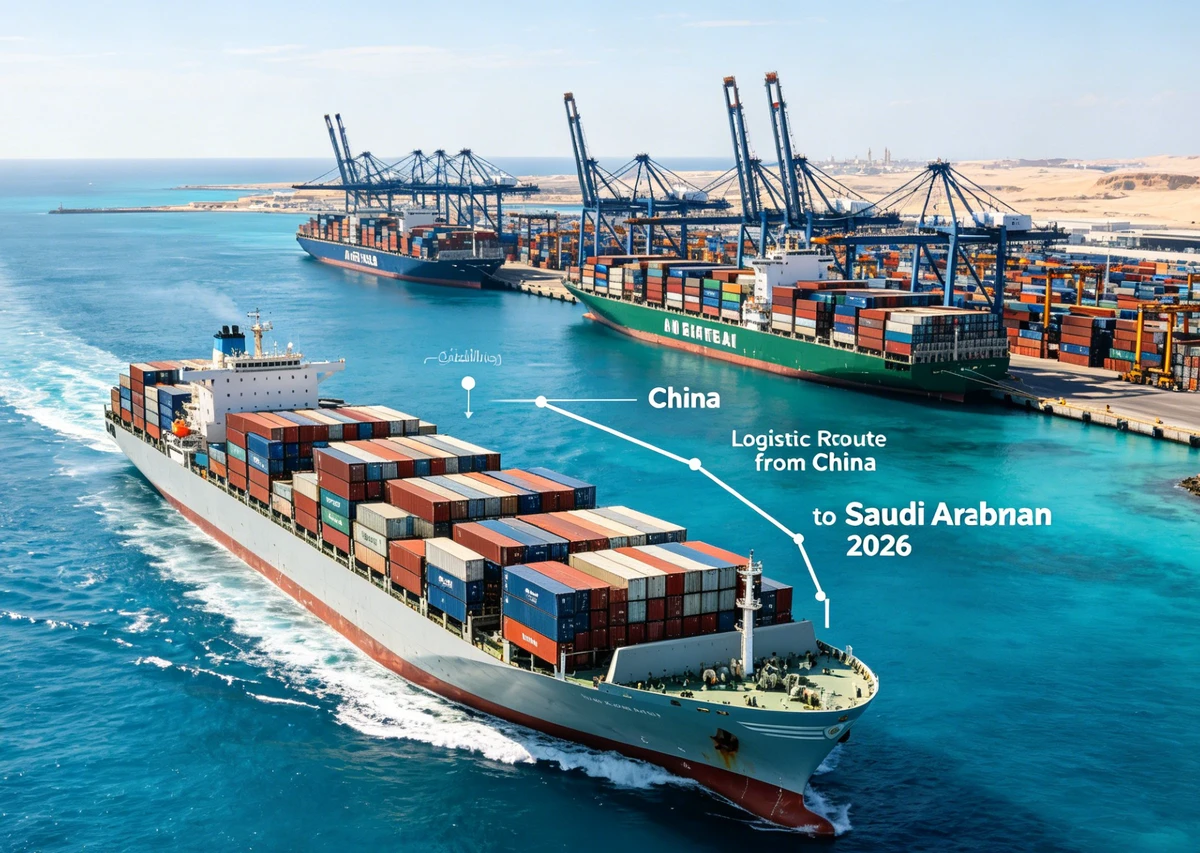
2. Overall Shipping Time from China to Saudi Arabia
Shipping from China to Saudi Arabia typically takes 4 to 8 days by air freight and 18 to 35 days by sea freight, depending on whether you choose Full Container Load (FCL) or Less than Container Load (LCL). Express courier is the fastest, taking 2 to 5 days.

| Shipping Method | Estimated Transit Time | Cost Level | Best For |
|---|---|---|---|
| Express Courier | 2 – 5 days | $$$$ | Urgent documents, high-value samples |
| Air Freight (Standard) | 4 – 8 days | $$$ | Electronics, urgent restocks, high-value cargo |
| Air Freight (DDP) | 6 – 10 days | $$$ | Amazon FBA, E-commerce sellers |
| Sea Freight (FCL) | 18 – 28 days | $$ | Bulk shipments, machinery, large orders |
| Sea Freight (LCL) | 22 – 35 days | $ | Small/medium orders not filling a container |
3. Sea Freight: Shipping Time from China to Saudi Arabia by Sea
Sea freight from China to Saudi Arabia takes 18 to 35 days on average. FCL shipments usually arrive in 18 to 28 days, making it the most cost-effective and secure method for large volumes. LCL shipments take slightly longer, about 22 to 35 days, due to cargo consolidation and deconsolidation.

When managing bulk imports like construction materials, heavy machinery, or large retail orders, ocean freight is undoubtedly the king of cost-effectiveness. In our experience handling thousands of containers on the Asia-Middle East trade lane, we have seen that your exact transit time relies heavily on your choice of departure and arrival ports, as well as the routing (direct vs. transshipment).
FCL vs. LCL Transit Times
- FCL (Full Container Load): You rent an entire 20ft or 40ft container. Because the container is sealed at the factory and only opened at the destination, it moves faster through the supply chain. Expect a timeframe of 18-28 days.
- LCL (Less than Container Load): You share a container with other shippers. This requires your forwarder to consolidate goods at the origin port (like Shenzhen or Ningbo) and deconsolidate them upon arrival in Saudi Arabia (like Jeddah or Dammam). This extra handling typically adds 4 to 7 days to your journey, bringing the total to 22-35 days.
Major Port-to-Port Routes & Times
Here is a breakdown of typical port-to-port ocean transit times as of early 2026:
- Shenzhen/Guangzhou to Jeddah Islamic Port: 18 – 25 days (Direct sailings are frequent here).
- Shanghai/Ningbo to King Abdulaziz Port, Dammam: 20 – 28 days.
- Qingdao/Tianjin to Jeddah Islamic Port: 22 – 30 days.
Pro Tip: If you are shipping to Riyadh, goods often arrive at Dammam port first and are then transported inland by truck or rail, which adds 1 to 3 days to your total delivery time.
4. Air Freight: Shipping Time from China to Saudi Arabia by Air
Air freight from China to Saudi Arabia typically takes 4 to 8 days. Standard airport-to-airport services average 4 to 6 days, while Door-to-Door (DDP) air freight takes 6 to 10 days because it includes customs clearance and last-mile delivery.
If your cargo consists of high-value electronics, perishable items, or urgent inventory restocks, air freight is the optimal choice. While it is significantly more expensive than sea freight, the speed and security it offers are unmatched.
Standard vs. DDP Air Freight
- Standard Air Freight (Airport-to-Airport): Taking 4-6 days, this method means your forwarder handles the export from China and the flight to KSA. Once it arrives at King Khalid International Airport (RUH) or King Abdulaziz International Airport (JED), you or your local customs broker must clear it and arrange pickup.
- DDP Air Freight (Door-to-Door): Delivered Duty Paid (DDP) takes 6-10 days. The freight forwarder manages everything—from picking up the goods in China to paying Saudi import taxes (VAT and customs duties) and delivering directly to your warehouse or Amazon FBA center in Saudi Arabia. This is highly recommended for e-commerce sellers to avoid unexpected customs delays.
Major Flight Routes
- Guangzhou (CAN) / Shenzhen (SZX) to Riyadh (RUH): 4 – 6 days.
- Shanghai (PVG) to Jeddah (JED): 5 – 7 days.
5. Express Courier Transit Times to KSA
Express delivery from China to Saudi Arabia is the absolute fastest option, taking only 2 to 5 days. Carriers like DHL, FedEx, UPS, and Aramex provide rapid door-to-door service with streamlined customs clearance.
For small parcels under 45kg, urgent contract documents, or product samples for quality approval, express couriers are the way to go. We frequently recommend Aramex for Middle Eastern shipments due to their extensive local network and deep integration with Saudi customs authorities.
Keep in mind: Express shipping charges based on the higher of actual weight or volumetric weight. It is the most expensive per-kilo option, so it should be reserved strictly for urgent or lightweight shipments.
6. Key Factors That Affect Your Shipping Time from China to Saudi Arabia
Shipping transit times aren’t fixed; they fluctuate based on customs compliance, seasonal peaks, and port conditions. Missing SABER certifications or shipping during Ramadan can easily add weeks to your expected delivery date.

In international logistics, delays happen. However, understanding the root causes allows you to build buffer times into your supply chain. Based on our operational data, here are the primary culprits for shipping delays to KSA:
- Customs Clearance & Compliance Holds: Saudi Arabia has strict import regulations. If your commercial invoice lacks accurate HS Codes, or if you fail to provide the mandatory SASO/SABER certificates for regulated products, your cargo will be detained at the port.
- Peak Seasons & Holidays: Capacity crunches happen globally. Shipping right before the Chinese New Year (usually January/February) or Golden Week (October) means vessels are overbooked. In Saudi Arabia, the holy month of Ramadan and Eid al-Fitr cause significant slowdowns in port operations and local trucking.
- Port Congestion & Transshipment: Not all vessels sail directly from China to KSA. If your container is routed through a transshipment hub like Singapore or Port Klang, port congestion at those hubs can cause your container to miss its connecting vessel (often called “rolled cargo”), adding 7-14 days.
- Weather Conditions: Unpredictable weather, such as typhoons in the South China Sea or severe sandstorms in the Red Sea and Gulf regions, can disrupt vessel schedules and ground cargo flights.
7. Navigating Saudi Customs (ZATCA) to Prevent Delays
Proper documentation and ZATCA (Zakat, Tax and Customs Authority) compliance can prevent 80% of clearance delays, saving you days of waiting. Ensuring your SABER certificates and FASAH registration are ready before arrival is critical.
Customs clearance is often the most daunting part of shipping to Saudi Arabia. The government is actively digitizing its borders, but strict adherence to rules is non-negotiable.
Essential Documents Required
To ensure your goods clear customs within 24-48 hours of arrival, your freight forwarder must present:
- Commercial Invoice: Must clearly state the country of origin and accurate HS codes.
- Packing List: Detailed breakdown of weights, dimensions, and materials.
- Bill of Lading (B/L) or Air Waybill (AWB).
- Certificate of Origin (COO): Often requires stamping by the local Chamber of Commerce in China.
- SASO / SABER Certificate: Saudi Arabia requires a Product Certificate (PC) and Shipment Certificate (SC) generated via the official SABER electronic platform for most consumer goods.
The FASAH Platform
FASAH is Saudi Arabia’s unified electronic window for import and export. It is mandatory for all importers in KSA to be registered on FASAH. We strongly advise our clients to upload all shipping documents to the FASAH system before the vessel even docks at Jeddah or Dammam to expedite the clearance process.
Taxes & Duties
Saudi Arabia enforces a standard 15% Value Added Tax (VAT) on imports. Additionally, import duties vary from 0% to 15%+ depending on the HS code of your product. Incorrect HS codes will trigger physical customs inspections, leading to immediate delays and potential fines.
8. Pro Tips to Speed Up Shipping from China to Saudi Arabia
To expedite your shipments to KSA, choose direct sailings over transshipment routes, prepare your SABER certificates well in advance, and partner with a forwarder offering Delivered Duty Paid (DDP) services.
After managing thousands of shipments, here is our insider advice for maintaining a resilient supply chain:
- Pay a Premium for Direct Routes: If transit time is critical, instruct your forwarder to book space on direct vessels rather than cheaper transshipment routes. The $100-$200 you save on ocean freight isn’t worth a two-week delay in Singapore.
- Pre-Clearance Preparation: Do not wait until the cargo arrives in Saudi Arabia to start your SABER certification. Begin the process while the goods are still being manufactured in China.
- Leverage DDP Shipping: If you do not have a registered entity in Saudi Arabia or want to avoid the headache of ZATCA compliance, use a DDP (Delivered Duty Paid) service. Your forwarder will use their own local importer of record to clear the goods and deliver them to your door, drastically reducing transit friction.
9. Why Choose SinoShipment for Saudi Arabia Logistics?
SinoShipment is your premier freight forwarding partner for the China-to-Saudi Arabia route. We combine deep expertise in ZATCA regulations with guaranteed vessel space to ensure your cargo arrives on time, every time.
Navigating the complexities of Middle Eastern logistics requires a partner who understands both the Chinese export market and the Saudi import landscape. At SinoShipment, we offer:
- Extensive Middle East Experience: We possess a deep understanding of ZATCA regulations, FASAH platform integration, and SABER compliance, ensuring zero friction at the border.
- Flexible & Competitive Options: Whether you need cost-effective Sea Freight (FCL/LCL) or rapid Air Freight, we secure the best rates and guaranteed space—even during peak seasons.
- End-to-End DDP Service: We offer seamless Door-to-Door DDP delivery, handling all expert customs clearance, tax payments, and local warehousing in Riyadh, Jeddah, and Dammam.
- Reliable Timelines: We don’t just quote transit times; we actively manage your supply chain to minimize delays and keep your inventory flowing.
You may be interested in the following related articles:
10. Frequently Asked Questions About Shipping Times to Saudi Arabia
Understanding DDP timelines, port comparisons, and restricted items is crucial for smooth logistics from China to Saudi Arabia.
How long does DDP shipping take from China to Saudi Arabia? DDP Air Freight takes about 6 to 10 days, while DDP Sea Freight typically takes 25 to 40 days, inclusive of customs clearance and final delivery to your door.
Is it faster to ship to Jeddah or Dammam from China? For cargo originating in South China (Shenzhen/Guangzhou), Jeddah is usually faster (18-25 days) as it is on the Red Sea coast. For shipments heading to the Eastern Province or Riyadh, Dammam (20-28 days) via the Arabian Gulf is often the preferred port.
What happens if my goods are held at Saudi customs? If goods are held due to missing documents (like a SABER certificate) or incorrect HS codes, they will incur demurrage and storage fees at the port. You must work with your customs broker to rectify the paperwork immediately to secure release.
Can I ship power banks or batteries to Saudi Arabia via air freight? Yes, but they are classified as Dangerous Goods (DG). They require special MSDS (Material Safety Data Sheet) documentation, UN38.3 testing reports, and specialized DG packaging. This can sometimes add 1-3 days to the air freight booking process.
11. Conclusion
Choosing the right shipping method from China to Saudi Arabia depends entirely on your budget, cargo size, and urgency. Air freight is best for speed (4-8 days), while sea freight offers the best value for bulk (18-35 days).
Are you ready to optimize your supply chain, avoid costly customs delays, and get accurate transit times for your next import? Contact SinoShipment today for a free, transparent quote and experience reliable logistics from China to Saudi Arabia.