How to Import and Ship Cars from China to Nigeria: The Ultimate Guide
· By SinoShipment
Author’s Note: The following guide is based on SinoShipment’s extensive hands-on experience managing auto logistics from China to West Africa. All customs regulations, tariff rates, and shipping costs reflect official legal frameworks and market conditions as of Q1 2026. However, international shipping is dynamic; always consult with our licensed customs brokers for real-time assessments before finalizing your vehicle purchase.
Are you tired of watching your competitors dominate the Nigerian auto market with affordable, high-tech vehicles while you struggle with confusing import logistics and hidden shipping fees? Navigating the logistics of international car shipping, understanding Nigeria’s strict import regulations, and calculating total landed costs can be overwhelming for first-time buyers and seasoned dealerships alike.
However, with the automotive landscape in Nigeria shifting rapidly, Chinese vehicles now offer an unbeatable combination of affordability, advanced technology, and reliability. This comprehensive guide breaks down everything you need to know about how to import and ship cars from China to Nigeria, covering critical regulations, shipping methods (RoRo vs Container shipping), transparent costs, accurate transit times, and a step-by-step process to ensure a smooth, cost-effective experience.
Why Import Cars from China to Nigeria?
Quick Answer: Chinese vehicles offer 20-40% cost savings over traditional imports, cutting-edge EV technology, and increasingly accessible spare parts and service centers across West Africa.
When our team manages freight shipping from China to Africa (particularly vehicle shipments to West Africa), the most common question we get is, “Is it really worth importing a car from China instead of the US or Europe?” The answer, overwhelmingly, is yes.
1. Unmatched Cost-Effectiveness
Chinese vehicles are often 20% to 40% more affordable than their European, Japanese, or American counterparts. For a Nigerian dealership or an individual buyer, this drastic reduction in the initial purchase price—coupled with competitive freight rates—means higher profit margins or massive personal savings.
2. The Rise of EVs and Hybrids in Africa
China currently leads the world in Electric Vehicle (EV) technology, accounting for a massive share of global EV exports. With fluctuating fuel prices in Nigeria, there is a surging demand for cost-efficient transportation. According to the National Automotive Design and Development Council (NADDC), Nigeria is actively embracing the transition towards electric mobility and expanding local charging infrastructure. Chinese auto manufacturers offer cutting-edge hybrid and fully electric models that perfectly align with this national shift, allowing modern drivers to drastically lower their daily running costs.
3. Top Brands in High Demand
The Nigerian market is increasingly receptive to popular Chinese auto brands. Manufacturers like Changan, Geely, BYD, Chery, and GWM (Great Wall Motors) have proven their durability on African roads. We have shipped thousands of these units, ranging from sleek sedans to rugged SUVs and commercial pickups, specifically tailored for the terrain.
4. Durability and Spare Parts Availability
Historically, buyers worried about finding spare parts for Chinese cars. Today, that narrative has completely flipped. There is a growing, robust availability of spare parts and dedicated service centers in Lagos, Abuja, and Port Harcourt, ensuring that maintaining a Chinese vehicle in West Africa is easier than ever.
Vehicle Import Regulations Nigeria: What You Must Know in 2026
All imported vehicles to Nigeria must be left-hand drive and under 15 years old from the date of manufacture. Essential documents like the e-Form M, PAAR, and Original Bill of Lading (OBL) are mandatory for customs clearance.
Before you purchase a vehicle, you must ensure it complies with the Nigeria Customs Service (NCS) regulations. In our experience, failure to adhere to these rules results in severe penalties, vehicle confiscation, or astronomical demurrage fees.
Age Limit Restrictions
Nigeria enforces a strict policy on the age of used vehicles allowed into the country. As of 2026, the age limit is 15 years from the date of manufacture for standard passenger vehicles. If you attempt to import a car older than this, customs will seize it at the port of entry. Always verify the manufacturing year (not just the registration year) on the vehicle’s title before initiating the purchase.
Left-Hand Drive Rule
It is a mandatory legal requirement that all imported vehicles must be left-hand drive. Right-hand drive vehicles are strictly prohibited from entering Nigeria, and no exceptions are granted. Since China is a left-hand drive country, importing cars directly from Chinese domestic markets naturally complies with this rule.
Essential Import Documentation
To clear your vehicle through Nigerian customs without delays, your clearing agent will need a specific set of documents. Missing even one can halt the entire process:
- e-Form M: A mandatory documentation process introduced by the Central Bank of Nigeria (CBN) and the Nigeria Customs Service to monitor goods imported into the country.
- PAAR (Pre-Arrival Assessment Report): Generated based on the e-Form M, this document is essential for determining the correct duties and taxes before the vessel arrives.
- Original Bill of Lading (OBL): Provided by your freight forwarder (like SinoShipment) once the vessel departs China.
- Commercial Invoice & Packing List: Detailing the purchase price and specifications of the vehicle.
- Certificate of Origin: Proving the vehicle was manufactured or exported from China.
- Vehicle Title and Export Certificate: The official deregistration and ownership documents from China.
Shipping Methods: RoRo vs Container Shipping
RoRo is the most cost-effective method for drivable cars, while container shipping (20ft or 40ft) offers maximum security and allows for loading spare parts or non-running vehicles.
Choosing the right shipping method is crucial for balancing cost, speed, and vehicle security. Here is a breakdown of the two primary ways to handle car shipping from China to Nigeria.

Roll-on/Roll-off (RoRo) Shipping
- Definition: RoRo vessels are essentially massive floating parking garages. Vehicles are driven directly onto the specialized vessel at the Chinese departure port and driven off upon arrival in Nigeria.
- Pros: It is generally the most cost-effective method. Loading and unloading are significantly faster, and terminal handling charges at ports like Tin Can Island are often lower.
- Cons: The vehicle must be in running condition (drivable with working brakes and steering). Furthermore, you are strictly prohibited from storing personal items or extra spare parts inside the vehicle.
Container Shipping (FCL - 20ft & 40ft)
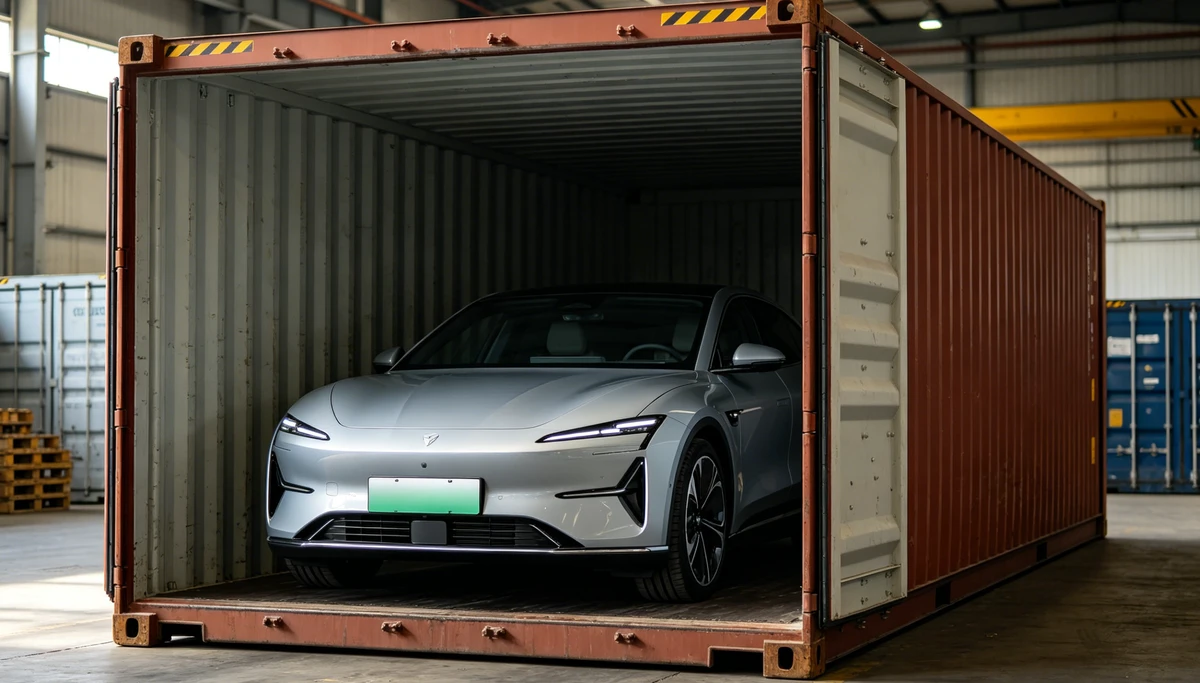
- Definition: Vehicles are loaded, securely lashed, and sealed inside a standard shipping container. A 20ft container holds one standard vehicle, while a 40ft High Cube container can hold two to three vehicles depending on their size.
- Pros: Offers maximum security and protection from weather, salt water, and potential transit damage. It is the only option if you are shipping non-running cars or if you want to load additional spare parts, tires, or other goods inside the same container.
- Cons: Slightly higher freight cost and longer loading/unloading times at the port compared to RoRo.
Comparison Table: RoRo vs Container Shipping
| Feature | RoRo Shipping | Container Shipping (FCL) |
|---|---|---|
| Cost | Lowest | Moderate to High |
| Security | Moderate (Exposed to elements during loading) | Maximum (Sealed container) |
| Vehicle Condition | Must be fully drivable | Can be non-running / damaged |
| Extra Cargo Allowed | No | Yes (Spare parts, personal items) |
| Best For | Single, working vehicles on a budget | High-value cars, multiple vehicles, or adding parts |
Cost to Ship a Car from China to Nigeria & Customs Duties Breakdown
As of early 2026, ocean freight ranges from $1,500 to $5,000+ depending on the shipping method and vehicle size. Importers must also factor in Nigeria customs duties (based on vehicle age and engine capacity), a 7.5% VAT, and terminal handling charges.
Understanding the true landed cost of your vehicle is the most critical part of the import process. If you only calculate the purchase price and ocean freight, you will be caught off guard by the final clearing costs.
Ocean Freight Costs (China to Nigeria)
Ocean freight rates fluctuate based on the season, carrier capacity, and global fuel prices (BAF). Based on our recent shipments from major Chinese ports (Shanghai, Shenzhen, Guangzhou) to Nigerian ports (Lagos Apapa, Tin Can Island), here are the estimated costs:
- RoRo Estimates: $1,500 - $3,500 per vehicle (depending on the CBM/size of the car or SUV).
- Container Estimates (20ft): $2,200 - $3,500 (fits one vehicle).
- Container Estimates (40ft): $3,500 - $5,000+ (fits two to three vehicles, drastically lowering the per-car shipping cost).
Nigeria Customs Duties for Vehicles
Import duties in Nigeria are rigorously calculated based on the vehicle’s age, make, model, and engine capacity under specific Harmonized System (HS) Codes. To verify the exact tariff classification for your vehicle type, we highly recommend cross-referencing with the official Nigeria Trade Hub, the government’s authoritative portal for trade classification and duty estimation.
- Standard Duty Rate: Typically ranges from 20% to 35% of the vehicle’s CIF (Cost, Insurance, and Freight) value.
- Surcharges and Levies: You must also pay the National Automotive Council (NAC) levy (usually around 15% to 20% for used vehicles).
- Value Added Tax (VAT): A mandatory 7.5% VAT is applied to the total sum of the CIF value, duty, and levies.
Expert Tip from Our Customs Team: Never attempt to under-declare your vehicle’s CIF value. The Nigeria Customs Service utilizes a centralized valuation database; any discrepancy between your commercial invoice and their system will trigger an immediate “Demand Notice” (DN), leading to severe clearance delays and heavy financial penalties.
Hidden Costs to Watch Out For
As your best freight forwarder for cars, we always warn our clients about local Nigerian port charges:
- Terminal Handling Charges (THC): Fees paid to terminal operators (like APM Terminals or PTML) for moving your vehicle or container.
- Clearing Agent Fees: Professional fees paid to your licensed Nigerian customs broker.
- Demurrage and Storage: If your documentation (like the PAAR) is delayed, the port will charge daily storage fees. Always start your e-Form M process early to avoid this!
(Note: All prices are estimates as of early 2026 and subject to seasonal changes. Always request a live quote from your forwarder).
Transit Times: How Long Does It Take to Ship a Car?
Shipping a car from China to Nigeria typically takes 30 to 45 days port-to-port, depending on whether it is a direct or transshipment route.
Time is money, especially if you are importing vehicles for resale.
- Major Departure Ports in China: Shanghai, Ningbo, Shenzhen, Guangzhou.
- Major Arrival Ports in Nigeria: Lagos Apapa, Tin Can Island Port (highly recommended for RoRo), Port Harcourt (Onne).
- Estimated Sea Freight Time:
- Direct Routes: 30 to 35 days port-to-port.
- Transshipment Routes: 38 to 45+ days (vessels may stop in hub ports like Singapore or Tangier before heading to West Africa).
- Factors Affecting Delays: Be mindful of the Chinese New Year (usually January/February), global weather patterns, and persistent port congestion at Lagos ports, which according to the Nigerian Ports Authority can add 5-10 days to your final delivery timeline.
Step-by-Step Process: Car Shipping from China to Nigeria
The complete process involves sourcing your vehicle, partnering with an expert freight forwarder, processing e-Form M, managing Chinese export clearance, tracking the ocean transit, and finalizing Nigeria customs clearance.
To guarantee a seamless import experience, follow this battle-tested 7-step process:

- Source the Vehicle: Purchase your car from a reputable Chinese dealer, manufacturer, or verified auto auction. Ensure they can provide the original export certificate.
- Hire the Best Freight Forwarder for Cars: Partner with an expert like SinoShipment. We handle the complex export logistics from the Chinese dealership straight to the loading port.
- Process e-Form M & PAAR: Before the ship leaves China, work with your Nigerian bank and customs agent to initiate the e-Form M and secure your PAAR.
- Export Clearance in China: Your forwarder will complete the mandatory vehicle inspection, secure the export license, and clear the car through Chinese customs.
- Ocean Transit: Once loaded, you will receive the Original Bill of Lading (OBL). You can track your vessel as it sails from China to West Africa.
- Customs Clearance in Nigeria: Upon arrival, your licensed Nigerian clearing agent will use the PAAR to pay duties and clear the vehicle through the Nigeria Customs Service (NCS).
- Final Delivery: Pay any local terminal charges and transport the vehicle safely from the port to your dealership or doorstep.
Why Choose Sinoshipment as Your Best Freight Forwarder for Cars?
Our team at SinoShipment has managed thousands of vehicle shipments from China to West Africa, offering transparent pricing, guaranteed vessel space, and end-to-end customs expertise.
Importing vehicles across continents is not a task for amateurs. At SinoShipment, we pride ourselves on being the premier logistics partner for automotive imports.
- Expertise in Auto Logistics: We have years of hands-on experience safely shipping thousands of vehicles—from luxury sedans and EVs to heavy machinery—from China directly to West Africa.
- Tailored Solutions: Whether you need a budget-friendly RoRo booking for a single SUV or a specialized 40ft container setup with custom lashing for three EVs, we tailor the solution to your exact needs.
- End-to-End Service: We provide comprehensive support, starting from Chinese export customs clearance and inland trucking to securing highly competitive ocean freight rates.
- Transparent Pricing: No hidden fees, no sudden GRI (General Rate Increase) surprises without warning. We provide clear breakdowns of freight, terminal charges, and marine cargo insurance.
- Trusted Carrier Network: Thanks to our strong, long-standing partnerships with top global carriers (such as COSCO, MSK, and MSC), we secure guaranteed vessel space for your vehicles, even during peak shipping seasons.
You may be interested in the following related articles:
- Freight Shipping from China to Libya
- Freight Shipping from China to Nigeria
- Freight Shipping from China to Pakistan
- freight shipping from china to uganda
- freight shipping from china to ghana
Frequently Asked Questions (FAQ)
Can I import a damaged or non-running car from China to Nigeria? Yes, but you cannot use RoRo shipping. Non-running vehicles must be shipped via Container shipping (FCL), where they can be loaded using forklifts or tow trucks and securely lashed inside the container.
Is it cheaper to ship via RoRo or Container? RoRo is generally cheaper and faster for single, drivable vehicles. However, if you are shipping 2 or 3 vehicles simultaneously, consolidating them into a single 40ft High Cube container often reduces the per-vehicle shipping cost.
Do I need a clearing agent in Nigeria? Absolutely. A licensed Nigerian customs agent is legally mandatory for processing your PAAR, interacting with customs officials, and handling the final port clearance at Tin Can or Apapa.
How are customs duties calculated for electric vehicles (EVs) in Nigeria? As Nigeria begins to embrace green energy, the government occasionally reviews tariff incentives for EVs. However, as of early 2026, EVs are still subject to standard import duties based on their CIF value. Always consult your clearing agent for the most up-to-date tariff codes (HS Codes) specifically for electric drivetrains.
Conclusion
Successful car shipping from China to Nigeria is a highly profitable venture for dealerships and a smart, economical choice for personal buyers—when done correctly. By understanding the strict 15-year age limit, choosing between RoRo and Container shipping, and accurately calculating your landed costs including customs duties, you hold the keys to a successful import.
Ready to ship your vehicle from China to Nigeria? Don’t let complex logistics, hidden fees, or customs delays slow you down. Contact SinoShipment today for a free, customized auto shipping quote, and let our team of experts handle the heavy lifting for you!