Middle East Conflict Air Freight Rate Surge in March 2026: What It Means for China Export Logistics
· By SinoShipment
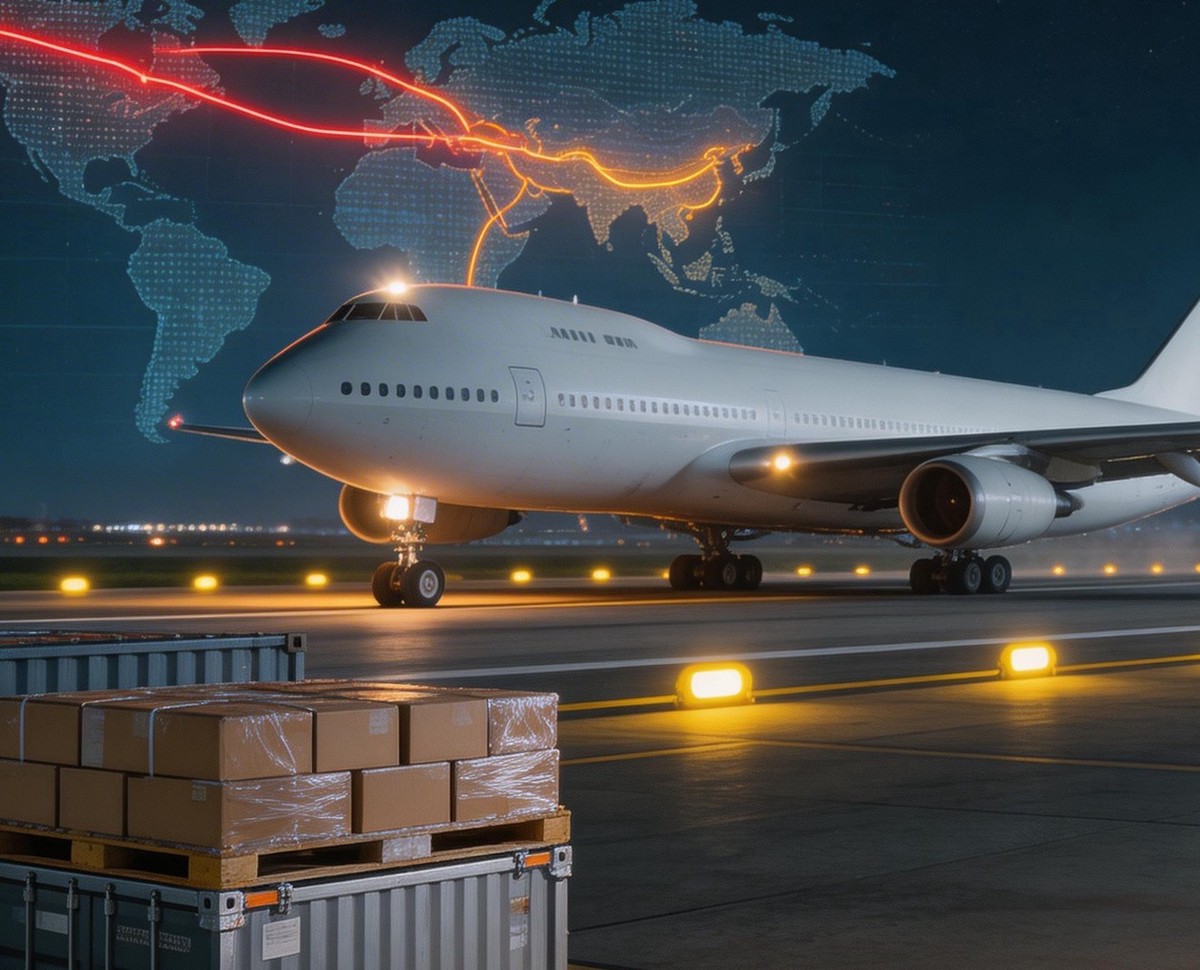 Why did some air cargo lanes become dramatically more expensive in mid-March 2026, and what should importers do before the next booking cycle? The short answer is that Middle East conflict air freight rates rose because three pressure points hit at once: tighter effective capacity, higher risk-adjusted operating costs, and demand migration from delayed ocean cargo into air channels. For importers relying on China export logistics, this was not just a freight quote problem. It quickly became a service reliability and inventory risk issue across multiple product categories, especially for buyers switching between air freight and sea freight under time pressure.
In our day-to-day planning work with overseas buyers, the biggest mistake during disruption weeks is reacting only to the price line. The better approach is to manage the full landed-cost equation: freight cost, delay probability, safety stock pressure, and downstream service penalties. This review explains the March 13 event, maps the operational mechanism, and provides practical, execution-level actions based on current market behavior.
What Happened on March 13, 2026?
The event on March 13, 2026, was a conflict-driven logistics shock in which Reuters reported that air freight prices on some routes climbed significantly as airspace restrictions, maritime disruption, and higher fuel costs reinforced one another.
The signal from the market was clear: quotation validity windows shortened, booking lead times widened, and urgent shipment premiums moved up quickly. Even shippers without direct Middle East routings felt secondary effects, because network-level adjustments reallocated aircraft and cargo flows across regions. In practical terms, capacity became less predictable exactly when demand sensitivity increased.
For importers, this kind of event matters because air freight is often the final fallback when ocean planning becomes unstable. Once more companies make that shift at the same time, spot prices can move faster than procurement planning cycles. That is why this event should be treated as a structural risk signal for planning discipline, not as an isolated one-day headline.
Key Drivers Behind the Rapid Rate Surge
Air freight rates moved up quickly because the market experienced a three-layer squeeze: effective capacity contraction, cost-side risk repricing, and sudden demand redistribution from ocean to air.
First, effective capacity fell even where headline fleet availability looked unchanged. Airspace restrictions and re-routing requirements reduce schedule efficiency and usable capacity. When aircraft spend more time per rotation, the market effectively has fewer sellable slots.
Second, cost transmission accelerated. Carriers and forwarders had to account for fuel uncertainty, operational complexity, and risk buffers in short quote cycles. In volatile windows, many participants also reduce quote validity, which increases re-pricing frequency and raises the chance that buyers face higher rates before final booking confirmation.
Third, ocean disruption pushed urgency cargo into air channels. This sea-to-air migration does not need to be massive to move the market. A moderate increase in urgent bookings can tighten premium capacity quickly, especially on lanes already operating near practical limits.
The full impact chain is straightforward:
Event shock -> capacity friction -> rate spike -> transit volatility -> inventory pressure -> fulfillment risk.
Understanding this sequence helps importers avoid one common error: optimizing for freight cost alone while ignoring delivery certainty. For those exploring alternative destinations like Europe during Middle East disruptions, understanding freight shipping from china to germany or freight shipping from china to uk can provide essential context on rerouting implications.

Which Cargo Types Are Most Exposed?
The most exposed cargo groups are high-urgency, high-value, and stockout-sensitive products where delivery timing directly affects sales performance or compliance outcomes.
From an operator perspective, three cargo profiles repeatedly show elevated vulnerability in disruption weeks:
- Consumer electronics and accessories with rapid replenishment cycles
- Medical and critical replenishment products where delay tolerance is low
- Promotion-driven seasonal items where timing windows are narrow
HS mapping should be used as a planning control, not just a customs formality. For example, electronics-related categories may combine high margin sensitivity with certification and labeling dependencies that amplify delay costs after arrival. Medical categories can face service-level risk that exceeds freight variance. Seasonal light industrial goods can lose campaign value if delivery misses launch windows by even a few days. If your team is seeing repeated declaration bottlenecks, pre-aligning documents with a dedicated customs clearance workflow usually reduces avoidable holds.
In real planning terms, “most exposed” means the cost of being late is greater than the cost of paying a freight premium. That distinction is central when deciding which SKUs go by air, which shift to multimodal options, and which should be buffered through earlier consolidation and staged dispatch. This is especially true for diverse markets; whether you are managing freight shipping from china to uae or coordinating freight shipping from china to usa, the principles of delay cost vs. premium freight remain the same.
4 Core Impacts on Importers: Cost, Transit, and Planning
For importers, the immediate implication is simultaneous pressure on per-kilogram cost, delivery predictability, and planning confidence.
A practical before-vs-during comparison illustrates what changed:
| Metric | Before Shock (Typical Weeks) | During Shock (Volatile Weeks) | Business Impact |
|---|---|---|---|
| Freight per kg | Relatively stable band | Wider and faster-moving quote range | Budget variance increases |
| Transit Days | Moderate schedule consistency | Higher probability of delay or roll-over | Inventory buffer needs rise |
| Booking Lead Time | Short and predictable | Longer and less reliable | Earlier commitment required |
| On-time Performance | Operationally manageable | Volatile by lane and week | SLA and fulfillment risk grows |
The operational impact can be summarized in three sentences. Procurement cycles are forced forward, which shortens internal approval windows and increases decision pressure. Working-capital burden rises as companies hold extra safety stock to defend service levels. Late-delivery exposure expands, especially for importers tied to retail windows or platform performance obligations.
This is why disruption management should be measured against landed cost stability, not only freight line item savings. In practice, many importers lose more from reactive decisions than from the initial rate increase itself.
To keep this discussion evidence-based, we benchmark market behavior against public institutional references: route-risk and overflight guidance from ICAO conflict-zone resources, fuel pressure signals from the IATA Jet Fuel Price Monitor, and broad rerouting impact trends from UNCTAD’s Red Sea disruption analysis.
Practical Response: Sea-Air, Split Shipment, and Booking Strategy
The most effective response in a volatile week is to combine split-shipment logic, controlled space reservation, and route optionality instead of relying on a single mode or single departure decision.
A usable action framework looks like this:
1) Split shipment by business criticality
Move must-not-fail SKUs via air freight, while routing non-urgent items through sea freight or sea-air combinations. This protects service outcomes without paying premium air rates for all cargo.
2) Lock critical-week capacity early
Secure key departure windows ahead of congestion points and maintain one fallback option by lane. Early booking becomes a risk-control tool, not just an operational step.
3) Reduce chargeable-weight pressure
Review packaging geometry and carton utilization to reduce volumetric exposure where possible. Small packaging changes can produce meaningful freight savings across repeated shipments.
4) Front-load compliance checks
In unstable transit conditions, avoid destination delays caused by documentation errors. Pre-check invoice consistency, packing list quality, product description clarity, and classification alignment, then route files through a standardized customs clearance process.
5) Add protection for high-value cargo
Use transport insurance and contractual risk buffers where margin exposure is high. In volatile periods, protection decisions should be tied to cash-flow risk tolerance, not handled as afterthoughts, and should include clear cargo insurance terms before dispatch.
6) Run weekly rolling decisions
Replace static monthly assumptions with weekly scenario reviews across procurement, logistics, and sales. This short cycle improves decision quality when freight conditions change quickly, particularly when buffer stock depends on external warehouse services.
When this framework is implemented consistently, importers usually improve both on-time control and cost visibility, even if market prices remain elevated for a period.

Sinoshipment Recommendation (Event + Three Impacts + Action Plan)
Our recommendation is to use a weekly rolling control model with dual-path transport design and transparent cost structuring so that importers can make faster, lower-risk choices during disruption periods.
One-sentence event recap:
On March 13, Reuters highlighted a conflict-linked air freight surge driven by airspace constraints, maritime pressure, and fuel-related cost escalation.
Three-sentence impact summary:
Importers faced tighter booking windows at the same time freight prices became less predictable.
Transit uncertainty increased hidden costs through buffer stock, re-planning, and possible fulfillment penalties.
Teams without pre-designed backup routing were forced into higher-cost, lower-visibility decisions.
Sinoshipment action plan:
We recommend splitting quotes into transparent line items so buyers can identify which cost layers are market-driven and which can be optimized operationally.
We recommend dual routing design before shipment handover, including primary and fallback pathways by urgency profile.
We recommend synchronized planning across pickup, customs preparation, and final-mile handoff to reduce destination-side disruption.
This is a practical execution model designed for importers who care about controllable landed cost, not just headline freight rates. It applies broadly, whether your focus is on freight shipping from china to saudi arabia amid regional tensions or expanding operations with freight shipping from china to australia.
FAQ
Is this air freight spike temporary or likely to continue?
Most event-driven spikes are not permanent, but the duration of normalization is uncertain. Planning should use scenario ranges instead of assuming immediate reversion.
Should all urgent cargo be shifted to air immediately?
Not always. A full shift can overpay and reduce margin unnecessarily. Prioritize by revenue sensitivity and stockout consequence, then assign mode by criticality. For marketplace sellers with strict inbound windows, including amazon fba, a mixed-mode plan is usually safer than all-air.
How do I estimate landed cost during disruption weeks?
Use three scenarios: base, stress, and peak. Include freight, inventory carrying cost, probable delay impact, and service-level penalty exposure in each scenario.
When should I use sea-air multimodal instead of pure air freight?
Sea-air is typically useful when pure ocean is too slow but pure air is too expensive for full volume. It is strongest for medium-urgency cargo with moderate margin elasticity.
Which Incoterm helps control risk in volatile freight markets?
There is no single universal answer. The best choice depends on operational control capability, destination handling competence, and cost visibility requirements. Many importers perform better when responsibilities are clearly allocated and measurable under the official Incoterms® 2020 framework by ICC.
Authoritative Sources Summary
To support our analysis, we rely on the following 5 authoritative sources:
- Reuters - Middle East Conflict Impact: Reporting on air freight rate surges.
- ICAO Conflict Zones: Official overflight and route-risk guidance.
- IATA Jet Fuel Price Monitor: Global fuel pressure signals.
- UNCTAD Red Sea Disruption Analysis: Broad rerouting impact trends.
- ICC Incoterms® 2020: Official framework for international trade responsibilities.
Risk Disclaimer
Freight rates, transit performance, and routing availability can change quickly during geopolitical disruption periods. This article is for operational planning reference only and does not constitute legal, tax, or financial advice. Final booking, compliance, and insurance decisions should be validated against the latest carrier, customs, and contract terms. Cost items such as emergency surcharges, storage fees, detention, and demurrage can vary by route and terminal conditions.
If you share origin city, destination country, cargo dimensions, gross weight, and required delivery date, Sinoshipment Logistics can provide a lane-specific split-shipment plan with transparent cost structure and fallback routing options across air freight, sea freight, and compliance support via customs clearance.