Sea Freight from China to Singapore: The Complete 2026 Guide (Costs, Transit Times & DDP Process)
· By SinoShipment
Every year, billions of dollars’ worth of goods travel between China and Singapore by ocean. In fact, over 82% of all imports from China to Singapore move via sea freight from China to Singapore — making it not just the most cost-effective option, but the backbone of one of Asia’s busiest trade corridors. Yet for many importers, the process still feels opaque: costs fluctuate by the week, port-to-port transit times vary dramatically depending on your origin city, and navigating Singapore’s customs clearance — while efficient — still requires careful documentation.
This guide cuts through the noise. Whether you’re a first-time importer testing a small LCL shipment from Guangzhou, or a seasoned B2B buyer moving full containers of machinery from Shanghai, you’ll find actionable 2026 pricing data, transit benchmarks, customs deep-dives, and cargo-specific tips that most freight forwarding guides leave out. By the end, you’ll know exactly what to expect — and how to save money at every step.
Why Sea Freight from China to Singapore Matters in 2026
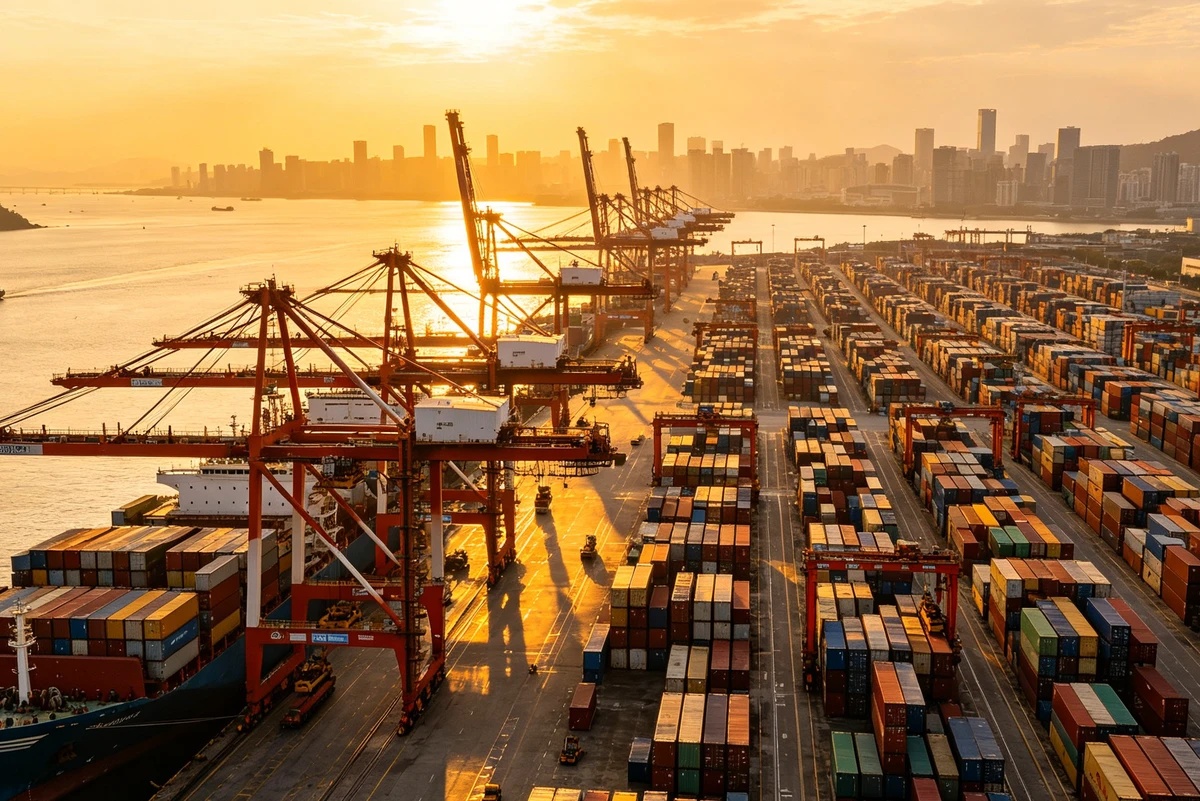
The China-Singapore shipping lane is not just another route. It is one of the shortest, most frequent, and most strategically important maritime corridors in global trade.
Singapore is the undisputed ASEAN transshipment hub. Goods arriving from China at the Port of Singapore don’t just serve Singapore’s domestic market — they are routinely re-exported to Malaysia, Indonesia, Thailand, Vietnam, and beyond. For importers targeting specific ASEAN markets from a single consolidation hub, dedicated routes like freight shipping from China to Malaysia and freight shipping from China to Vietnam offer the same short-sea transit efficiency. This makes Singapore a natural gateway for importers looking to distribute across Southeast Asia from a single, efficient entry point.
The numbers back this up. Bilateral China-Singapore trade exceeds USD 100 billion annually, with consumer electronics, machinery, furniture, textiles, and industrial components forming the bulk of imports. Singapore’s free port status means the vast majority of commercial goods enter the country duty-free — only a 9% Goods and Services Tax (GST) applies, calculated on the CIF (Cost, Insurance, Freight) value.
Compared to air freight, which costs 5–10 times more and is limited by weight and dimensional constraints, ocean shipping delivers unmatched capacity and per-unit affordability. For any shipment above 1–2 CBM, sea freight from China to Singapore is almost always the smarter commercial choice.
Industry Insight: In our experience managing weekly consolidations from Shenzhen to Singapore, we’ve seen importers reduce their landed cost by 30–40% simply by switching from frequent small air shipments to a planned bi-weekly LCL sea freight schedule. The savings compound fast when you factor in Singapore’s 9% GST — which applies to the CIF value including freight, meaning a lower freight bill also reduces your tax base.
Sea Freight Costs & Transit Times: 2026 Complete Breakdown
Understanding sea freight cost from China to Singapore starts with one key distinction: your origin port dramatically affects both price and delivery speed. South China ports benefit from geographic proximity — just 3–5 days sailing — while northern ports add a week or more.
The table below provides 2026 reference rates for FCL (Full Container Load) shipping, broken down by origin port. These are port-to-port ocean freight estimates; door-to-door or DDP services include additional charges for pickup, customs, GST handling, and final delivery.
FCL Container Rates by Origin Port (2026 Reference, USD)
| China Port | 20ft Container | 40ft / 40HQ Container | Transit Time | Sailing Frequency |
|---|---|---|---|---|
| Shenzhen (Yantian / Shekou) | $250 – $450 | $500 – $800 | 3 – 5 days | Daily |
| Guangzhou (Nansha) | $280 – $500 | $520 – $850 | 4 – 6 days | Daily |
| Xiamen | $300 – $550 | $550 – $900 | 4 – 6 days | 6× Weekly |
| Ningbo | $380 – $620 | $580 – $950 | 5 – 7 days | Daily |
| Shanghai | $400 – $660 | $600 – $1,000 | 5 – 7 days | Daily |
| Qingdao | $500 – $660 | $750 – $1,000 | 7 – 10 days | 5× Weekly |
For smaller shipments that don’t fill a full container, LCL sea freight rates from China to Singapore typically range from $15 to $60 per CBM (port-to-port). The exact rate depends on cargo volume, origin port, and seasonal demand. LCL shipments generally add 3–5 extra days for consolidation and deconsolidation at both ends.
What Drives Freight Costs?
Several factors beyond the base ocean freight rate influence your final bill:
- Bunker Adjustment Factor (BAF): A fuel surcharge that fluctuates with global oil prices and is applied by all major shipping lines.
- Carrier Selection: COSCO, Maersk, CMA CGM, MSC, and ONE all serve this route with daily sailings. COSCO often offers the fastest sailing schedule from South China (98% on-time reliability on this lane), while MSC provides competitive pricing for high-volume FCL shipments.
- Seasonal Demand: Rates spike 20–30% during the pre-Chinese New Year rush (January–February), Golden Week (late September), and Q4 holiday season.
- Container Type: A 40HQ container costs roughly 10–15% more than a standard 40ft but provides 13% extra loading height — critical for bulky but lightweight goods like furniture.
Where Your Shipment Arrives in Singapore
Your container will discharge at one of PSA Singapore’s world-class terminals:
- Tuas Port: Singapore’s newest fully automated mega-port, handling the latest generation of ultra-large container vessels.
- Pasir Panjang Terminals: The primary hub for major shipping alliances and the busiest container gateway.
- Brani / Keppel Terminals: Legacy city terminals gradually phasing out as operations shift to Tuas.
LCL vs FCL: Which Shipping Option Saves You More?
Choosing between FCL shipping from China to Singapore and LCL consolidation is the single most impactful cost decision you’ll make. Get it right, and you save 20–40% on freight. Get it wrong, and you either pay for empty container space or face unexpected destination fees.
LCL (Less than Container Load)
LCL means your goods share a container with other importers’ cargo. You pay only for the cubic meters (CBM) you occupy.
Best for:
- Shipments between 1–15 CBM
- New supplier trials and small test orders
- E-commerce sellers and SMEs with regular small-batch replenishment
- Importers who want to avoid holding excess inventory
Trade-offs:
- Additional 3–5 days for consolidation at origin and deconsolidation at destination
- Multiple handling touchpoints increase minor damage risk
- Destination CFS (Container Freight Station) charges apply
FCL (Full Container Load)
FCL means you book an entire container exclusively for your cargo — a 20ft container (approx. 28–33 CBM capacity) or a 40ft container (approx. 58–67 CBM).
Best for:
- Shipments above 15–20 CBM
- High-value or fragile goods requiring minimal handling
- Bulk commodities or heavy cargo (machinery, tiles, metal products)
- Time-sensitive shipments (no consolidation waiting time)
Trade-offs:
- Higher upfront cost if you can’t fill the container
- Less flexibility for very small, frequent orders
The Break-Even Point: When Does FCL Become Cheaper?
This is the question every importer should calculate before booking:
| Shipment Volume | Recommended Option | Estimated Cost Efficiency |
|---|---|---|
| Under 8 CBM | LCL strongly preferred | Pay per CBM; no wasted space |
| 8 – 15 CBM | LCL recommended | Still competitive; compare with 20ft |
| 15 – 20 CBM | Break-even zone | FCL 20ft starts matching LCL total cost |
| 20+ CBM | FCL strongly preferred | Lowest per-unit cost; fastest transit |
Real-Life Scenario: A Singapore-based home goods retailer we work with was shipping 12 CBM of kitchenware from Guangzhou every month via LCL, paying roughly $50/CBM — about $600 per shipment. After running the numbers, we recommended they consolidate two months’ orders into one 20ft container at approximately $400 all-in port-to-port. Their per-CBM cost dropped to under $15, and they cut their total annual freight spend by nearly 35%.
Singapore Customs Clearance: GST, TradeNet & ACFTA Benefits
Singapore has one of the world’s most efficient customs regimes, but that efficiency depends entirely on correct documentation and understanding of the system. Here is what importers need to know when shipping from China to Singapore. Working with a forwarder that offers professional customs clearance support at both origin and destination eliminates the most common bottlenecks.
TradeNet: Singapore’s Single-Window Clearance System
Singapore Customs processes all import declarations through TradeNet — an electronic single-window platform that connects traders, freight forwarders, customs, and tax authorities. Declarations can be submitted before the vessel even arrives, and most standard commercial goods clear within 24 hours of submission.
This is the system that makes Singapore the world’s premier transshipment hub: clearance speed translates directly into lower warehousing costs, faster inventory turnover, and fewer supply chain bottlenecks.
GST: What You Actually Pay
Singapore imposes a 9% GST on most imported goods, calculated on the CIF value:
GST = 9% × (Cost of Goods + Insurance + Freight)
There is no separate customs duty on the vast majority of commercial and industrial products. Only specific categories — alcoholic beverages, tobacco products, motor vehicles, and petroleum — incur additional customs duties.
ACFTA, Form E, and RCEP: How to Pay Even Less
This is where most generic freight guides fall short. If your goods qualify as China-origin products under the ASEAN-China Free Trade Agreement (ACFTA), you may be eligible for preferential tariff treatment — and in Singapore’s near-zero duty environment, this primarily means compliance certainty and smoother clearance, though certain product categories can see additional tariff concessions under RCEP as well.
To claim ACFTA benefits, you need a Form E Certificate of Origin issued by Chinese authorities. Critical requirements:
- The product must meet ACFTA origin rules (either through tariff classification change or regional value content thresholds)
- HS codes, product descriptions, and quantities on the Form E must match the Commercial Invoice exactly
- The Form E must be obtained before or shortly after shipment
Required Documentation Checklist
| Document | Purpose |
|---|---|
| Commercial Invoice | Declares transaction value and product details |
| Packing List | Specifies cargo weight, dimensions, and package count |
| Bill of Lading (B/L) | Contract of carriage between shipper and carrier |
| Form E (if applicable) | ACFTA preferential tariff claim |
| Import Permit | Required for controlled goods only (food, chemicals, electronics with specific HS codes, medical devices) |
DDP Door-to-Door Sea Freight: Step-by-Step Process
For importers who want a single point of contact, one transparent invoice, and zero hands-on customs work, DDP (Delivered Duty Paid) sea freight from China to Singapore is the gold standard. Here is exactly how the end-to-end process works.
The 7-Step DDP Journey from Factory to Doorstep
Step 1 — Factory Pickup in China: Your freight forwarder collects cargo from your supplier’s factory or warehouse anywhere in China and transports it to their consolidation warehouse — typically in Shenzhen or Guangzhou for South China suppliers.
Step 2 — Consolidation & Pre-Processing: At the warehouse, your cargo is inspected, weighed, measured, labeled, and palletized if needed. If you are shipping to Amazon FBA, this is where FBA-compliant labeling and pallet preparation happens.
Step 3 — China Export Customs Clearance: The forwarder prepares and submits the export declaration with the Commercial Invoice, Packing List, and other required supporting documents. Accurate HS code classification at this stage avoids delays downstream.
Step 4 — Ocean Freight to Singapore: Your container is loaded onto a vessel at the nearest major port. From South China ports like Shenzhen, the sea voyage to Singapore takes just 3–5 days.
Step 5 — Pre-Arrival TradeNet Declaration: Before the vessel docks, the forwarder submits the import declaration through TradeNet. This is the step where GST is calculated and import permits (if needed) are checked.
Step 6 — Singapore Import Clearance: Upon arrival, customs processes the declaration. Most shipments are released within 24 hours. If a physical inspection is required, it is usually completed within 1–2 days. GST payment is settled by the forwarder under DDP terms.
Step 7 — Last-Mile Delivery: After release, the container is trucked to a warehouse for deconsolidation (if LCL), and the cargo is delivered to your specified address — warehouse, office, retail store, or Amazon fulfillment center anywhere in Singapore.
Our Industry Insight: One of the most common mistakes we see with first-time DDP importers is assuming all costs are covered. Under a true DDP arrangement, GST, customs clearance fees, port handling, and door delivery should all be included. Always request a line-item quote from your forwarder showing exactly which charges are bundled into the DDP rate and which (if any) are separate. At Sinoshipment, every DDP quote we issue includes a full cost breakdown with no hidden destination charges.
Cargo-Specific Shipping Tips
Not all cargo behaves the same way in a container. Understanding your product category’s specific requirements prevents costly delays and compliance issues.
Electronics from Shenzhen & Dongguan
Products with lithium batteries require MSDS (Material Safety Data Sheet) documentation and UN38.3 testing certification for sea transport. Even devices without batteries may fall under controlled goods requiring an import permit from Singapore authorities. We also strongly recommend cargo insurance for high-value electronics — the cost is typically 0.3–0.5% of declared value and covers damage, theft, and total loss.
Furniture from Foshan & Dongguan
Furniture is volume-heavy but weight-light, making 40HQ containers the most cost-efficient choice. Wooden packaging — including pallets and crates — must have a valid Fumigation Certificate to enter Singapore. When shipping furniture via LCL, ensure your forwarder doesn’t consolidate heavy items (like machinery or tiles) in the same container, as crushing damage is a real risk.
Machinery & Equipment from Shanghai & Suzhou
Heavy or oversized machinery may require OOG (Out of Gauge) handling or flat-rack containers rather than standard dry containers. Confirm with your forwarder that the receiving terminal in Singapore has the necessary heavy-lift equipment and that local trucking resources can handle the cargo weight and dimensions at delivery.
Textiles & Apparel from Guangzhou & Hangzhou
Textiles are ideal for LCL consolidation due to their light weight and stackability. Ensure garment labels and care tags comply with Singapore’s consumer product labeling regulations. For large apparel brands, consolidating seasonal collections into a dedicated 40ft container is often cheaper than multiple LCL shipments.
Amazon FBA & E-Commerce Shipments
FBA-bound cargo requires specific labeling (FBA box labels, pallet labels) at origin — ideally at your forwarder’s consolidation warehouse in China before loading. Carton weight, dimensions, and labeling must match FBA receiving requirements exactly. We handle FBA prep for dozens of sellers from our Shenzhen facility, including barcode labeling, poly-bagging, and palletizing to Amazon specifications.
Peak Season Planning: When to Book for the Best Rates
Timing your shipments strategically is one of the easiest ways to cut sea freight from China to Singapore costs — yet it’s overlooked by most importers who book reactively.
Key Dates That Impact Freight Rates
| Period | Months | Rate Impact | Recommendation |
|---|---|---|---|
| Pre-Chinese New Year | Jan – early Feb | +20–30% | Book 3–4 weeks early; ship by mid-December |
| Post-CNY Lull | Late Feb – Mar | -10–20% below average | Ideal booking window |
| Spring Stable Period | Apr – Jun | Average | Good time for regular shipments |
| Pre-Golden Week | Late Sep | +15–25% | Book by early September |
| Q4 Holiday Rush | Nov – Dec | +15–25% | Book by mid-October |
| Summer Lull | Jul – Aug | -5–15% below average | Second-best booking window |
The two cheapest windows to ship are March–April (after factories fully reopen post-CNY) and August (summer demand dip). Importers who build inventory planning around these windows consistently outperform those who book at peak rates.
Choosing the Right Freight Forwarder for Your China-Singapore Route
With dozens of freight forwarders competing for China-Singapore business, how do you separate experienced operators from those simply reselling carrier space?
Look for a forwarder with:
- Local presence in South China: A forwarder based near Shenzhen or Guangzhou can coordinate factory pickups faster, access consolidation warehouses at lower cost, and leverage relationships with Yantian and Shekou terminals for priority loading.
- Proven Singapore customs expertise: Your forwarder should demonstrate familiarity with TradeNet filing, GST calculation on CIF value, Form E preparation for ACFTA benefits, and Singapore’s controlled goods import permit process.
- Transparent all-in pricing: Avoid forwarders who quote only ocean freight and then surprise you with destination terminal charges, documentation fees, and GST handling costs.
- Track record: Consistent experience on this specific route matters more than a long list of global destinations.
For comprehensive freight shipping from China to Singapore, choosing a forwarder with documented experience on this exact lane protects your cargo, your timeline, and your bottom line.
Sinoshipment has been shipping from China to Singapore since 2013. Based in Shenzhen — just 30 minutes from Yantian and Shekou ports — we have served over 5,000 clients worldwide with door-to-door DDP, FCL, and LCL sea freight solutions. Our Singapore route expertise covers TradNet clearance, GST handling, Form E certification, and final delivery across the entire island, from Jurong industrial estates to Changi Business Park. Every quote we provide includes a complete line-item cost breakdown — no hidden fees, no post-arrival surprises.
Frequently Asked Questions
How much does sea freight from China to Singapore cost in 2026?
Port-to-port ocean freight ranges from $250–$660 for a 20ft container and $500–$1,000 for a 40ft container, depending on the origin port. LCL shipments cost $15–$60 per CBM. Door-to-door DDP services cost more and include pickup, customs clearance, GST, and final delivery.
How long does sea freight take from China to Singapore?
Port-to-port transit ranges from 3–5 days (Shenzhen) to 7–10 days (Qingdao). Total door-to-door time — including pickup, consolidation, customs at both ends, and final delivery — typically ranges from 8–18 days for LCL and 7–15 days for FCL.
Is door-to-door sea freight from China to Singapore available?
Yes. Most experienced freight forwarders offer DDP door-to-door service covering factory pickup, export clearance, ocean freight, Singapore import clearance, GST payment, and final delivery to your address, warehouse, or Amazon FBA facility.
What documents do I need for customs clearance in Singapore?
You need a Commercial Invoice, Packing List, and Bill of Lading at minimum. Controlled goods require an additional Import Permit from the relevant Singapore authority. If you are claiming ACFTA tariff preferences, a valid Form E Certificate of Origin is also required.
LCL vs FCL — which is cheaper for my shipment?
LCL is cheaper for shipments under 15 CBM since you pay only for the space used. Once your shipment reaches 15–20 CBM, FCL typically becomes more cost-effective per CBM. Always compare both options at the 15 CBM threshold.
Do I need to pay import duties when shipping to Singapore?
For the vast majority of commercial goods — electronics, furniture, machinery, textiles, consumer products — there are zero customs duties. Only specific categories (alcohol, tobacco, motor vehicles, petroleum) incur duties. All imports are subject to 9% GST on CIF value.
Can I reduce taxes using ACFTA and Form E?
Yes. If your goods qualify as China-origin products under the ASEAN-China Free Trade Agreement, a properly issued Form E Certificate of Origin can secure preferential tariff treatment. While most goods already enter Singapore duty-free, Form E provides compliance certainty and may reduce tariffs on specific controlled product categories.
What is the cheapest way to ship from China to Singapore?
For shipments over 2 CBM, sea freight is almost always the cheapest option — typically 80–90% less expensive than air freight per unit. Within sea freight, LCL is cheapest for small volumes (under 15 CBM), while FCL delivers the lowest per-unit cost for larger shipments.
Start Your China-to-Singapore Sea Freight Journey
The China-Singapore sea freight corridor is one of the world’s most efficient trade lanes: 3–5 days from South China ports, nearly all goods enter duty-free, and Singapore’s TradeNet electronic clearance system processes most shipments within 24 hours of arrival. Whether you ship LCL or FCL, to a commercial warehouse or an Amazon FBA facility, success comes down to three things: accurate cost planning, advance booking during off-peak windows, and an experienced freight forwarder who knows both ends of the route.
If you’re ready to ship — or just want a transparent, no-obligation quote — reach out to Sinoshipment for a customized China-to-Singapore sea freight solution. We respond within 24 hours with a complete line-item cost breakdown covering pickup, freight, customs, GST, and delivery — with zero hidden charges.