Comprehensive Guide to Shipping from China to Kenya by Sea (2026 Updates)
· By SinoShipment
Are you tired of hidden fees, unpredictable transit times, and unexpected customs delays eroding your profit margins when shipping from China to Kenya? Importing goods from China to East Africa offers immense profitability for businesses of all sizes. However, navigating volatile ocean freight costs, seasonal port congestion at Mombasa, and strict Pre-Export Verification of Conformity (PVOC) compliance can quickly turn a lucrative deal into a logistical nightmare.
In this expert guide, our Sinoshipment team breaks down the exact sea freight costs (as of April 2026), realistic transit times, FCL vs. LCL container comparisons, and step-by-step customs procedures. By the end of this article, you will have a clear, actionable roadmap to optimize your supply chain, avoid costly demurrage at the port, and ensure your cargo clears Kenyan customs seamlessly and affordably.
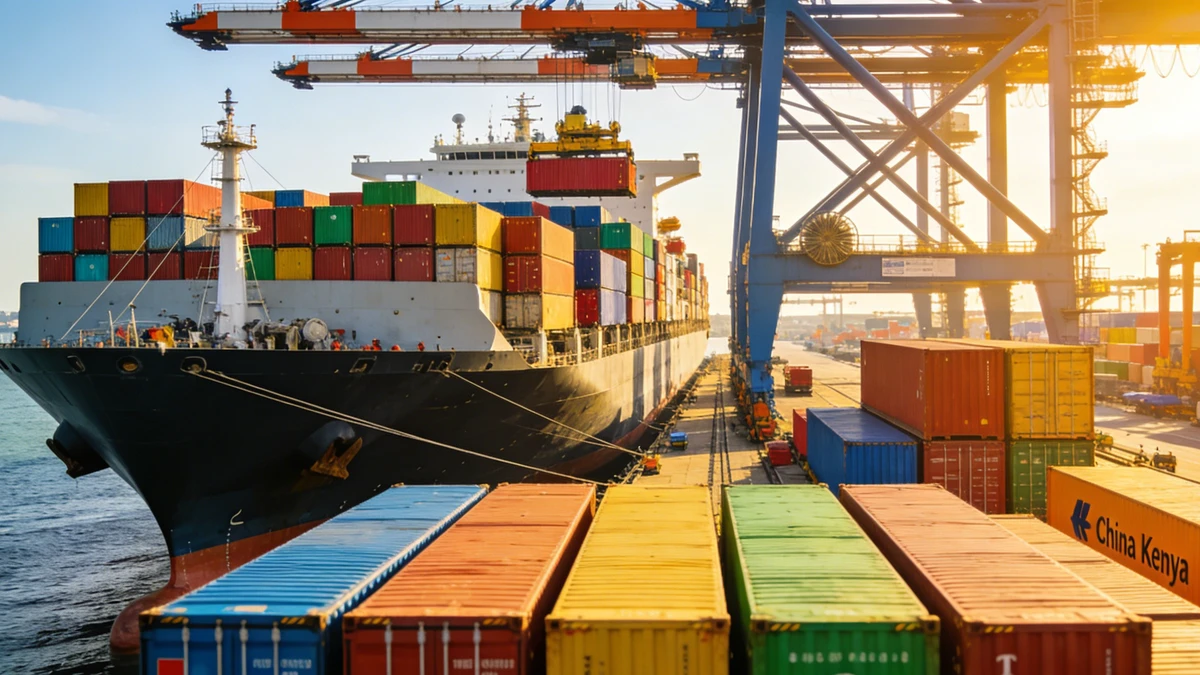
Sea Freight from China to Kenya: FCL vs. LCL Container Options
When shipping by sea to Kenya, importers must choose between Full Container Load (FCL) for volumes over 15 CBM, or Less than Container Load (LCL) for smaller, consolidated shipments. Selecting the right container type directly impacts your overall freight cost, cargo security, and the transit time from the Chinese port to Mombasa.
In our experience managing thousands of TEUs (Twenty-Foot Equivalent Units) annually, the decision between FCL and LCL dictates your entire logistics strategy. Understanding the nuances of each option allows you to scale your business efficiently without overpaying for unused container space. For related reference on large container movements, you can also see how we handle container shipping from china to usa.
FCL (Full Container Load)
FCL means you rent the exclusive use of an entire 20ft, 40ft, or 40HQ container. Your goods are loaded and sealed at the supplier’s factory in China and remain untouched until they reach your warehouse in Kenya.
- Applicable Scenarios: Heavy machinery, bulk electronics, construction materials, large furniture orders, and high-value fragile goods.
- Advantages: Lower risk of damage or theft, faster port handling since there is no need for deconsolidation, and significantly better per-unit shipping costs for large volumes.
- Container Specs: A standard 20ft container holds about 28 CBM and up to 28,000 kg. A 40HQ container holds up to 68 CBM, making it the most cost-effective choice for bulky but relatively light items like garments or plastic goods.
LCL (Less than Container Load)
LCL involves sharing container space with other importers. Your freight forwarder consolidates your cargo with others heading to Mombasa. Costs are calculated strictly per Cubic Meter (CBM) or per ton, whichever is greater.
- Applicable Scenarios: Small business imports, sample testing runs, and consolidated cargo for e-commerce sellers who do not have enough volume to fill a whole container.
- Advantages: Highly cost-effective for shipments under 15 CBM. It offers immense flexibility for regular inventory restocking without the pressure of placing massive factory orders.
- Disadvantages: Transit times are generally slightly longer (by 3-7 days) because the container must be consolidated in China and deconsolidated upon arrival at the Container Freight Station (CFS) in Mombasa.

How Much Does It Cost to Ship from China to Kenya by Sea?
As of April 2026, shipping a standard 20ft container from China to Kenya costs between $1,700 and $2,300, while a 40HQ container ranges from $3,050 to $4,050. For smaller shipments, LCL sea freight averages $100 to $140 per CBM, depending heavily on the departure port and seasonal surcharges.
Ocean freight rates are notoriously volatile. They fluctuate frequently based on global fuel prices (Bunker Adjustment Factor or BAF), peak season demand, and carrier capacity. To give you a realistic expectation for budgeting, we have compiled a breakdown of estimated port-to-port costs from major Chinese export hubs to the Port of Mombasa:
| Departure Port (China) | 20ft Container (FCL) | 40ft / 40HQ Container (FCL) | LCL (per CBM) |
|---|---|---|---|
| Shenzhen / Guangzhou | $1,700 - $2,150 | $3,050 - $3,800 | $100 - $120 |
| Shanghai / Ningbo | $1,750 - $2,200 | $3,100 - $3,950 | $110 - $130 |
| Qingdao / Tianjin | $1,800 - $2,300 | $3,200 - $4,050 | $120 - $140 |
Hidden Fees & Surcharges to Watch Out For
When budgeting your import costs, do not just look at the base ocean freight rate. Many novice importers are caught off guard by destination charges in Kenya.
- Terminal Handling Charges (THC): Fees charged by the port authorities in both China and Kenya for lifting the container on and off the vessel.
- Documentation Fees: Charges for processing the Bill of Lading, Delivery Orders (DO), and other carrier paperwork.
- Demurrage and Detention: If you fail to clear your cargo and return the empty container within the free time allotted by the shipping line (usually 7-14 days), you will incur steep daily penalties.
Expert Disclaimer: These rates are indicative as of Q2 2026 and represent port-to-port costs only. They do not include local port fees, inland transport to Nairobi, or Kenyan customs duties. Always consult our Sinoshipment team for a real-time, all-inclusive quote tailored to your specific cargo.
Transit Times: How Long Does a Cargo Ship Take from China to Kenya?
Sea freight from China to the Port of Mombasa typically takes between 25 to 35 days for port-to-port transit. If you require door-to-door delivery to inland cities like Nairobi via the Standard Gauge Railway (SGR) or truck, expect an additional 5 to 10 days for customs clearance and transport.
Transit times are heavily influenced by the specific routing of the vessel (direct vs. transshipment), weather conditions in the Indian Ocean, and potential congestion at major hubs.
| Route (China to Mombasa) | Estimated Port-to-Port Transit Time |
|---|---|
| Shenzhen / Guangzhou | 26 - 30 Days |
| Shanghai / Ningbo | 28 - 34 Days |
| Qingdao / Tianjin | 30 - 36 Days |
Factors Causing Unpredictable Delays
While carriers provide estimated times of arrival (ETAs), several real-world factors can disrupt these schedules:
- Peak Season Congestion: The weeks leading up to major holidays (like Chinese New Year in January/February or the global Christmas rush) often see “roll-overs,” where your container is bumped to the next available sailing due to overbooked vessels.
- Weather Disruptions: Typhoons in the South China Sea or rough conditions in the Indian Ocean can force vessels to slow down or reroute.
- Customs Holds: Even if the ship arrives on time, incomplete PVOC documentation or discrepancies in your commercial invoice can leave your cargo stuck at the Mombasa port for weeks, incurring massive storage fees.

Major Ports for Ocean Freight from China to Kenya
Selecting the optimal departure port in China—such as Shenzhen for electronics or Shanghai for heavy machinery—ensures efficient logistics consolidation, while Kenya’s Port of Mombasa serves as the primary and most efficient entry gateway for over 85% of East African cargo.
Understanding the strengths of different ports helps you route your cargo more intelligently, saving both time and inland trucking costs in China.
Top Departure Ports in China
- Shenzhen & Guangzhou (Southern China): Located in the manufacturing heartland of the Pearl River Delta, these ports are ideal for sourcing electronics, garments, textiles, and consolidating LCL cargo from various smaller suppliers. They offer some of the fastest direct routes to East Africa.
- Shanghai & Ningbo (Eastern China): As the world’s busiest and highest-capacity ports, they offer the most frequent sailing schedules. They are best suited for exporting heavy machinery, auto parts, solar panels, and industrial equipment manufactured in Zhejiang and Jiangsu provinces.
Arrival Ports in Kenya
- Port of Mombasa: This is the largest, busiest, and most developed seaport in East Africa. It features seamless, direct connections to the Standard Gauge Railway (SGR), allowing cleared cargo to reach the Inland Container Depot (ICD) in Nairobi in under 10 hours. It handles the vast majority of Kenyan imports and transit cargo for landlocked neighbors like Uganda and Rwanda.
- Port of Lamu: An emerging alternative port developed under the LAPSSET (Lamu Port-South Sudan-Ethiopia-Transport) corridor. While its infrastructure is still maturing compared to Mombasa, it is increasingly used for heavy project cargo and serves as a transshipment hub.

Kenya Customs Clearance & PVOC Requirements for Sea Freight Imports
To successfully clear Kenyan customs without delays, importers must provide a Bill of Lading, Commercial Invoice, Import Declaration Form (IDF), and crucially, a Pre-Export Verification of Conformity (PVOC) certificate issued before the cargo leaves China.
The Kenya Revenue Authority (KRA) and the Kenya Bureau of Standards (KEBS) enforce some of the strictest import regulations in Africa to prevent substandard, counterfeit, or hazardous goods from entering the local market. Non-compliance is not an option—it results in severe delays, destination inspection penalties, or the outright destruction/rejection of your cargo.
Crucial Documents Required for Clearance
- Bill of Lading (B/L): The official shipping contract and receipt of cargo issued by the carrier.
- Commercial Invoice & Packing List: A highly detailed breakdown of the goods, including precise descriptions, HS codes, unit values, quantities, and net/gross weights. Discrepancies here are the number one cause of KRA audits.
- PVOC / COC (Certificate of Conformity): This is mandatory for most regulated consumer products, electronics, and materials. You must arrange for a KEBS-authorized inspection agency (such as SGS, Intertek, or Bureau Veritas) to physically inspect your goods at the factory in China before they are loaded into the container.
- Import Declaration Form (IDF): The importer must apply for the IDF through the KRA’s Kentrade system prior to the goods shipping from China. It requires the proforma invoice and states the intended import.
Taxes and Duties Overview
Understanding your landed cost is critical for pricing your products in Kenya. Most imports attract a combination of the following:
- Import Duty: Varies from 0% (for raw materials and essential machinery) up to 35% (for finished consumer goods and items manufactured locally), based strictly on the harmonized (HS) code.
- Value Added Tax (VAT): A standard flat rate of 16% applied to the CIF (Cost, Insurance, and Freight) value plus the import duty.
- Railway Development Levy (RDL): As mandated by the Kenya Revenue Authority (KRA) Miscellaneous Fees and Levies Act, the standard RDL is generally set at 2% or 2.5% of the customs value, though registered manufacturers may qualify for a reduced rate of 1.5%.
- Import Declaration Fee (IDF Fee): Typically 2% to 3.5% of the customs value, depending on the specific goods and importer registration status.
If you are unsure of the exact HS codes and duty rates for your products, our customs brokerage team can classify them accurately before you ship, preventing nasty surprises upon arrival.

Door-to-Door (DDP) Sea Shipping from China to Kenya
DDP (Delivered Duty Paid) sea shipping offers a completely hands-off logistics solution where the freight forwarder manages pickup in China, ocean freight, Mombasa customs clearance, and final delivery to your Kenyan address, all for one transparent, all-inclusive price.
For many importers—especially e-commerce sellers, SMEs, or those new to international trade—handling KRA procedures, securing PVOCs, and arranging local trucking from Mombasa is overwhelming and risky. Under a DDP agreement, Sinoshipment assumes all the logistical heavy lifting.
How the DDP Process Works:
- Origin Handling: We pick up the goods directly from your supplier’s factory in China.
- Export & Freight: We handle Chinese export customs, load the container, and manage the ocean freight to Mombasa.
- Destination Clearance: Upon arrival, our local Kenyan team manages the complex KEBS and KRA clearance process, paying all applicable import duties, VAT, and port fees on your behalf.
- Final Delivery: The cleared goods are loaded onto a truck or the SGR and delivered directly to your warehouse, shop, or home in Nairobi, Kisumu, Eldoret, or any other location.
This method guarantees predictable pricing, allowing you to focus on selling your products rather than wrestling with supply chain headaches.

You may be interested in the following related articles:
- freight shipping from china to uganda
- freight shipping from china to ghana
- freight shipping from china to south africa
- freight shipping from china to mexico
- freight shipping from china to canada
- freight shipping from china to uae
FAQs
Understanding the nuances of international logistics helps you avoid common pitfalls. Below are direct, expert answers to the most frequently asked questions regarding ocean freight to Kenya.
- Is it cheaper to ship by sea or air to Kenya? Sea freight is significantly cheaper—often up to 60-70% less expensive than air freight. However, ocean transit takes roughly 25-35 days, whereas air freight takes only 3-7 days. You should choose sea freight for bulky, heavy, or non-urgent goods, and reserve air freight for high-value electronics, perishables, or emergency restocking.
- Who is responsible for customs clearance in Kenya? This depends entirely on the Incoterms agreed upon with your supplier or forwarder. If you ship FOB (Free on Board) or CIF (Cost, Insurance, and Freight), you (the buyer) are solely responsible for clearing customs and paying duties at Mombasa. If you use our DDP (Delivered Duty Paid) service, the forwarder manages and pays for the entire clearance process.
- What happens if my goods arrive in Mombasa without a valid COC? If regulated goods arrive without a Certificate of Conformity from China, you will face a steep penalty fee (usually 15% of the CIF value). Furthermore, KEBS will mandate a rigorous destination inspection, causing massive delays and accumulating expensive port storage (demurrage) charges while you wait for the results.
Why Choose Sinoshipment for Sea Freight to Kenya?
Sinoshipment is your trusted freight forwarding partner, offering direct carrier contracts, expert PVOC compliance guidance, and seamless DDP delivery to ensure your cargo reaches Kenya safely, on time, and within budget.
Over the years, our team has managed thousands of TEUs from China to East Africa. We understand that logistics is more than just moving boxes; it’s about protecting your supply chain and maximizing your profitability.
- Direct Carrier Contracts: We secure stable vessel space and highly competitive rates directly with top-tier ocean carriers like COSCO, Maersk, and MSC. This protects our clients from sudden price hikes and ensures priority loading during peak seasons.
- Expert Customs Brokerage: Our dedicated teams in both China and Kenya work in tandem to ensure swift PVOC processing before departure and rapid KRA clearance at Mombasa, minimizing the risk of costly demurrage charges.
- End-to-End Solutions: From factory pick-up in Guangzhou to final mile delivery in Nairobi via truck or the SGR, we offer a seamless, fully managed supply chain solution. We don’t just ship your goods; we act as your strategic logistics department.
Conclusion
Successful sea shipping from China to Kenya requires selecting the right FCL or LCL container strategy, ensuring strict adherence to KEBS documentation (especially the PVOC), and partnering with an experienced freight forwarder to control end-to-end costs.
By understanding the realistic transit times, port dynamics, and intricate customs requirements outlined in this guide, you can significantly reduce the risks associated with international trade and protect your profit margins. Do not let compliance errors or hidden fees derail your import business.
Are you planning your next import shipment to Mombasa or Nairobi? Contact Sinoshipment today for a customized sea freight quote, expert PVOC consultation, and a reliable logistics strategy tailored specifically to your business needs. Let our experts handle the logistics so you can focus on growing your business in East Africa.