Top 10 Ports by Volume in Asia: The Complete 2026 Guide (Choosing the Best Gateway)
· By SinoShipment
Over 60% of global container port throughput is handled in Asia, making it the undisputed engine of the world’s supply chain. In 2026, the Top 10 Ports by Volume in Asia process tens of millions of TEUs annually. However, for global buyers and e-commerce sellers, choosing the wrong port of loading can quietly add thousands of dollars in inland trucking and days of delay—especially during peak seasons. Below, we break down the latest volume rankings of Asia’s busiest container ports, show how to match China’s major export hubs with regional manufacturing clusters, and explain how to optimize your shipping strategy with expert logistics solutions from Sinoshipment.
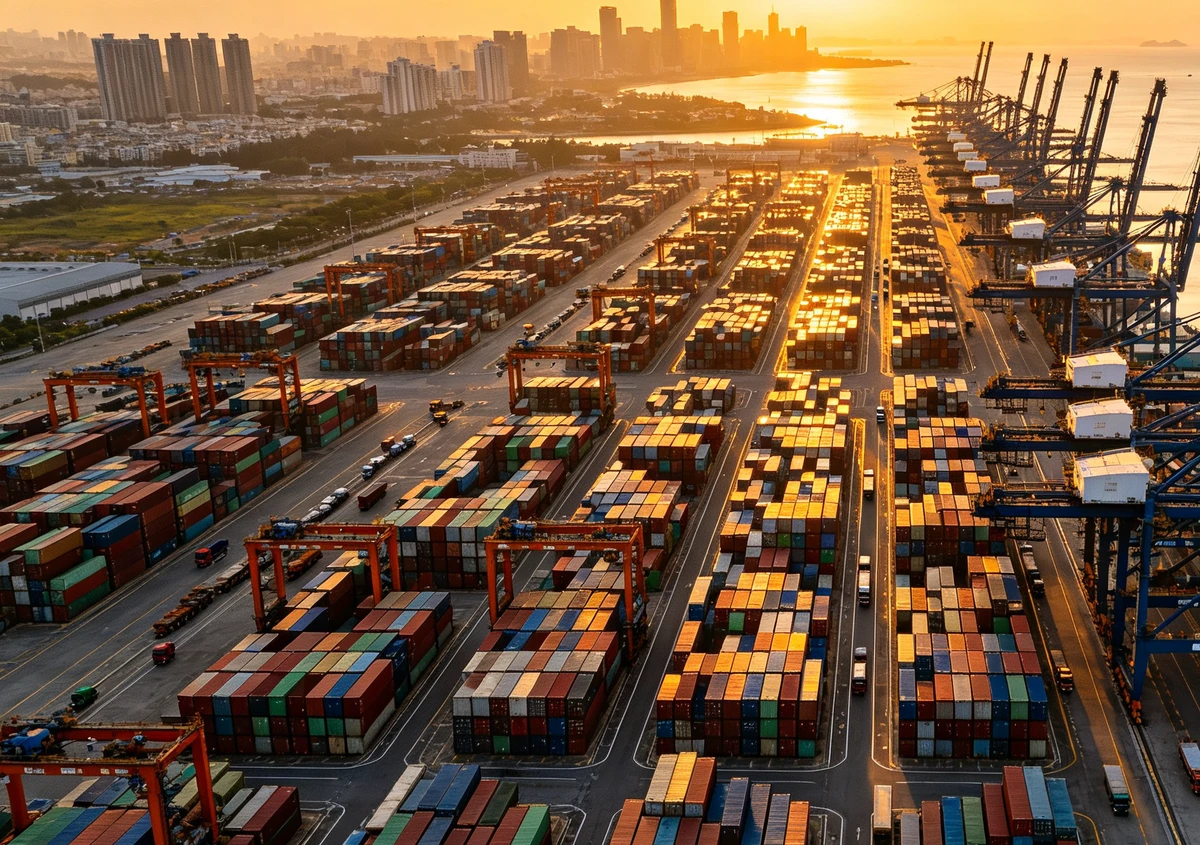
Busiest Container Ports in Asia 2026: An Overview
When evaluating the scale and efficiency of a seaport, the industry standard metric is Container throughput, typically measured in TEU (Twenty-foot Equivalent Unit). One TEU represents the cargo capacity of a standard 20-foot shipping container. Tracking these volumes helps international buyers understand trade flows, capacity bottlenecks, and the reliability of global maritime gateways.
In 2026, the Asian shipping market remains highly dynamic. Despite geopolitical shifts and supply chain disruptions, Asian ports—particularly those in China—continue to dominate the global rankings. Modernization efforts, such as the implementation of autonomous trucks and automated loading cranes, have significantly boosted operational efficiency. As a result, Chinese ports claim more than half of the spots on the top 10 list, cementing their role as the primary loading points for goods bound for North America, Europe, and beyond.
Asia Port Rankings by TEU Volume: The Official Top 10 List
Based on the latest data from maritime authorities like Alphaliner and Container Management, the hierarchy of global container ports has seen fascinating shifts. Here is the definitive list of the largest seaports in Asia by volume for 2026:
| Rank | Port Name | Country | Approx. Throughput (TEUs) | Key Function |
|---|---|---|---|---|
| 1 | Shanghai Port | China | 55.1 Million | Global #1; Gateway for East China |
| 2 | Port of Singapore | Singapore | 44.7 Million | World’s premier transshipment hub |
| 3 | Ningbo-Zhoushan Port | China | 43.9 Million | Massive growth; key for Zhejiang province |
| 4 | Shenzhen Port | China | 35.4 Million | Vital for South China electronics (Yantian/Shekou) |
| 5 | Qingdao Port | China | 32.9 Million | Northern China hub; highly automated |
| 6 | Guangzhou Port | China | 27.7 Million | Pearl River Delta manufacturing base (Nansha) |
| 7 | Busan Port | South Korea | 24.9 Million | Key trans-Pacific node |
| 8 | Tianjin Port | China | 24.0 Million | Serves the Beijing-region trade |
| 9 | Jebel Ali Port | UAE | 15.6 Million | Middle-East gateway (fluctuates due to regional routing) |
| 10 | Port Klang | Malaysia | 15.1 Million | Emerging Southeast Asian transshipment alternative |
(Note: Data reflects full-year 2025 performance—the most recent complete year available—though rankings remained stable into early 2026. The gap between #2 Singapore and #3 Ningbo-Zhoushan is less than a million TEUs, and 2026 half-year data shows the two trading places on some lists.)

Top Shipping Ports in China for Export: Matching Ports to Manufacturing Clusters
For international buyers, simply knowing the top ports isn’t enough. The real secret to reducing your logistics costs lies in matching your supplier’s location to the nearest and most efficient deep-water port. Choosing the right gateway minimizes inland trucking fees and ensures smoother export clearance.
East China: Shanghai and Ningbo-Zhoushan
If you are sourcing machinery, heavy equipment, or textiles, your suppliers are likely located in the Yangtze River Delta (Zhejiang, Jiangsu, Anhui).
- Shanghai Port: The heavyweight. Its Yangshan Deep-Water Port can handle mega-ships up to 24,000 TEUs. It offers the most frequent sailings to the US and Europe, making it a primary choice for Container Shipping from China to USA.
- Ningbo-Zhoushan Port: Located just south of Shanghai, it is a highly efficient alternative. If your factory is in Yiwu or Hangzhou, routing through Ningbo often saves hundreds of dollars in trucking costs compared to Shanghai.
South China: Shenzhen and Guangzhou
The Pearl River Delta is the world’s factory for electronics, smart home devices, furniture, and cross-border e-commerce goods.
- Shenzhen Port: Comprising Yantian, Shekou, and Chiwan terminals, Shenzhen is the ultimate hub for Amazon FBA forwarding. Yantian is particularly famous for its fast, direct routes to the US West Coast (e.g., 14-20 days transit time).
- Guangzhou Port (Nansha): An excellent choice for mid-sized buyers consolidating goods from multiple suppliers around Guangzhou, offering highly competitive weekly LCL (Less than Container Load) consolidation services.
North China: Qingdao and Tianjin
For heavy industry, automotive parts, and agricultural products, the northern ports are your best bet.
- Qingdao Port: Known for its fully automated terminals, among the fastest in Asia for both container and bulk cargo.
Our Industry Insights “In our experience managing FBA shipments, many buyers default to Shanghai simply because they recognize the name. However, for a Dongguan-based smart-home accessories client shipping two 40HQ containers monthly, we shifted their loading port to Shenzhen (Yantian). The change cut inland trucking costs by roughly 30% and shaved 3 days off the transit time to Los Angeles. Our rule of thumb: always align your port choice with your factory’s exact zip code, not the biggest name on the list.” — Sinoshipment Expert Team
Shanghai Port vs Singapore Port Volume: Direct Routing vs Transshipment Hubs
When analyzing the top tier of the list, a fascinating contrast emerges between China’s mega-ports and Southeast Asia’s hubs.
Shanghai Port and Ningbo-Zhoushan are primarily “origin/destination” ports. They are backed by massive domestic manufacturing sectors. Goods loaded here are usually embarking on a direct routing to their final destination country. This is ideal for FCL (Full Container Load) ocean freight where speed is a priority.
Conversely, the Port of Singapore (and increasingly Port Klang) functions as the world’s leading Transshipment hub. While Singapore itself doesn’t manufacture the goods, it connects Asia, Oceania, the Middle East, and Europe.
When should you use which?
- Choose Direct Routing (e.g., Shanghai/Shenzhen): When you need the fastest transit time, such as urgent e-commerce restocks to the US or Europe.
- Choose Transshipment (e.g., via Singapore): When direct routes are unavailable, or when you need flexible routing to bypass sudden bottlenecks (like the Red Sea crisis) and lower your overall freight costs for non-urgent cargo.
Largest Seaports in Asia for International Trade: Managing Port Congestion
Shipping through the busiest ports in the world comes with a major caveat: Port congestion. High volumes mean high risk of delays, especially during peak seasons.
Factors like the pre-Chinese New Year (CNY) rush, autumn typhoons in the South China Sea, or sudden geopolitical shifts can cause vessels to wait at anchor for days. For importers, port congestion translates directly to delayed inventory and unexpected demurrage/detention fees.
To build a resilient supply chain, you need flexibility. If Shanghai is heavily congested, an experienced forwarder can quickly reroute your cargo to Ningbo. If Shenzhen’s Yantian terminal is experiencing labor shortages, shifting the export to Guangzhou’s Nansha port can keep your supply chain moving. In extreme cases of ocean freight delays, having a logistics partner who can seamlessly switch critical inventory to air freight (reducing transit from 30 days to 3-7 days) is invaluable.
Major Ports in Asia for Ocean Freight: Cost Optimization and Customs Clearance
Choosing the right port also impacts your customs clearance efficiency and total landed cost. Major hubs like Shanghai and Shenzhen have highly digitized, efficient customs procedures, which is crucial when handling complex documentation like Commercial Invoices, Packing Lists, and Certificates of Origin.
Furthermore, your chosen Incoterms dictate your financial exposure to inland costs.
- Under EXW (Ex Works), you pay for the truck from the factory to the port. If the factory is in Guangzhou but you insist on shipping out of Shanghai, you will pay a fortune in domestic trucking.
- Under FOB (Free on Board), the supplier covers the cost to the port.
Real-Life Scenario: DDP Shipping Simplification “Late last year, a UK furniture retailer wanted to import from three separate suppliers in Zhejiang. Rather than juggling three FOB shipments and handling UK import clearance themselves, they sent everything to our Ningbo warehouse first. We managed the China export customs, ocean freight, UK import clearance, and VAT payments as one job, providing a seamless Door to Door Shipping from China to UK service. The client got a single DDP (Delivered Duty Paid) quote with no hidden fees, and the goods arrived at their door in Birmingham without them touching a customs form.”
Partnering with a professional Ocean freight forwarding expert like Sinoshipment ensures you navigate these complexities without the guesswork, from securing competitive freight rates to staying compliant with destination customs.
FAQ
What is the busiest port in Asia in 2026? Shanghai Port remains the busiest container port in Asia and the world, handling over 55 million TEUs annually, driven by China’s robust manufacturing and export economy.
Which port in China is best for Amazon FBA forwarding? Shenzhen Port (specifically the Yantian terminal) is highly recommended for Amazon FBA shipments. It is located in the heart of China’s electronics and e-commerce manufacturing hub and offers the most direct and fastest sea freight routes to the US West Coast.
How does port congestion affect sea freight from China? Port congestion leads to vessel delays, rolled cargo (where your container is bumped to the next ship), and increased costs such as peak season surcharges or demurrage fees. Working with an agile freight forwarder helps mitigate these risks through alternative port routing.
Conclusion
The rankings don’t lie, but neither do trucking invoices. Understanding the Top 10 Ports by Volume in Asia is more than knowing maritime trivia—it is a practical tool for optimizing your international supply chain. The key to cutting shipping costs and transit times is matching your supplier’s location with the most efficient nearby deep-water port, whether that’s Shanghai for heavy machinery or Shenzhen for e-commerce goods.
Established in 2013 and headquartered in Shenzhen, Sinoshipment is a professional freight forwarder from China. Having served over 5,000 global clients, we specialize in providing transparent, flexible, and cost-effective sea freight, air freight, and door-to-door logistics solutions. Don’t let inland trucking costs or port congestion eat into your margins. Contact Sinoshipment today for a customized shipping strategy and a free, no-obligation quote!