Air Freight from China to South Africa: 2026 Costs, Times, and Customs Guide
· By SinoShipment
Are you tired of unexpected delays and hidden customs fees eating into your profit margins when importing from China to South Africa? As South Africa solidifies its position as China’s largest trading partner on the African continent, the demand for fast, reliable logistics has never been higher. For time-sensitive shipments like consumer electronics, industrial machinery, and fast fashion, air freight is the undisputed lifeline of your supply chain.
Air freight from China to South Africa typically takes 3 to 7 days, with standard costs currently ranging between $4.50 and $8.50 per kilogram as of early 2026. However, navigating the fluctuating rates and the strict South African Revenue Service (SARS) customs clearance process requires precise planning.
In this comprehensive guide, we will break down the latest 2026 air cargo rates, accurate transit times, the step-by-step SARS customs process, and proven strategies to avoid costly delays at O.R. Tambo International Airport.
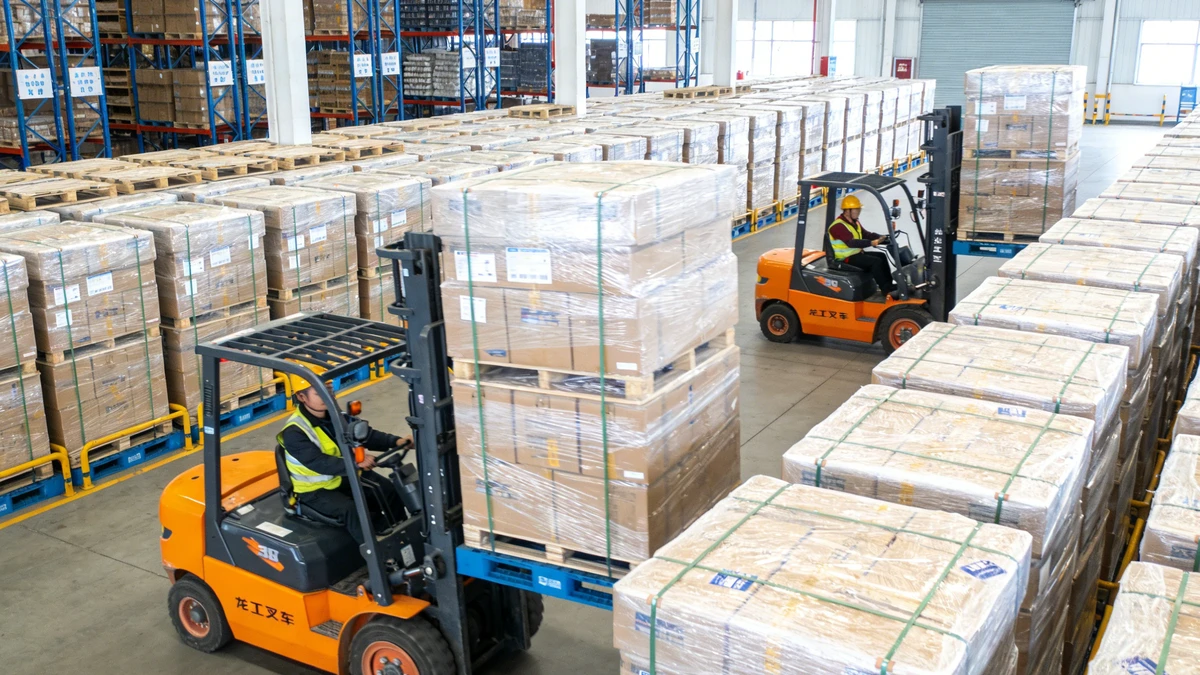
1. Air vs. Sea Freight: When to Choose Air Cargo to South Africa
Air cargo is the optimal choice when your supply chain demands high speed, strict security, or involves high-value and low-volume goods. While sea freight is cheaper for bulk commodities, air freight guarantees that your time-sensitive inventory reaches South African shelves in days rather than weeks.
In our experience managing freight shipping from China to South Africa, including thousands of TEUs and air cargo shipments to Johannesburg and Cape Town, we always advise clients to calculate their “opportunity cost.” For instance, during the recent Q4 peak season, a client importing fast-fashion apparel faced a 30-day delay in sea freight. That delay would have cost them their entire seasonal sales window. By switching to air freight, they secured their inventory in 5 days, making it the most economical choice despite the higher upfront transport cost.
Key Advantages of Air Freight:
- Unmatched Speed: Cuts transit times by over 80% compared to ocean freight.
- Strict Security: Minimal handling reduces the risk of cargo damage or theft, which is crucial for high-value electronics and luxury goods.
- Reliable Scheduling: Daily passenger and freighter flights provide flexible departure options.
Air vs. Sea Freight Comparison Table
| Feature | Air Freight | Sea Freight (Ocean) |
|---|---|---|
| Typical Transit Time | 3 – 7 Days | 25 – 35 Days |
| Cost Level | High ($4.50 - $8.50/kg) | Low ($40 - $150/CBM) |
| Best Used For | Urgent goods, electronics, medical supplies, high-value samples | Bulk cargo, heavy machinery, furniture, non-urgent inventory |
| Environmental Impact | Higher Carbon Footprint | Lower Carbon Footprint |

2. Air Freight Costs from China to South Africa (2026 Rates)
Freight rates for air cargo from China to South Africa currently range between \(4.50 and \)8.50 per kilogram, heavily depending on your cargo’s chargeable weight, fuel surcharges, and the specific departure airport in China.
When quoting air freight, airlines charge based on Chargeable Weight—which is the greater number between the actual gross weight and the volumetric (dimensional) weight (calculated at a standard 1:167 ratio). If you are shipping lightweight but bulky items (like foam packaging or large plastic components), you will be billed for the space they occupy, not just their physical weight.
Estimated 2026 Air Freight Rates (General Cargo)
| Origin Airport in China | Destination in South Africa | Estimated Rate (USD/kg) |
|---|---|---|
| Shanghai Pudong (PVG) | Johannesburg (JNB) | $4.50 – $7.50 |
| Guangzhou Baiyun (CAN) | Johannesburg (JNB) | $4.30 – $7.00 |
| Shenzhen Bao’an (SZX) | Cape Town (CPT) | $5.00 – $8.00 |
| Beijing Capital (PEK) | Johannesburg (JNB) | $4.60 – $7.20 |
(Disclaimer: These rates are estimates as of Q1 2026. Rates fluctuate weekly based on airline capacity, fuel surcharges, global events like the Middle East Conflict Air Freight Rate Surge, and seasonal peak demand.)
Understanding the Cost Breakdown A standard air freight quote is rarely just the “base rate.” To avoid budget blowouts, ensure your forwarder includes:
- Base Freight Rate: The core airline charge per kg.
- Fuel and Security Surcharges: Fluctuating fees added by the carrier.
- Origin Charges: Export customs clearance, terminal handling, and warehouse weighing in China.
- Destination Handling Fees: Unloading and terminal fees at the South African airport.
Hidden Fees to Avoid: Always account for potential storage fees (demurrage) at JNB if customs clearance is delayed. Specifically, South African airport handlers typically offer only 48 hours of free storage before steep daily demurrage penalties apply. Furthermore, strictly ensure your HS codes are accurate to prevent SARS penalty fees or cargo confiscation.
3. Air Freight Transit Times: How Long from China to South Africa?
Standard air freight from China to South Africa takes 3 to 7 days from door to door, while premium express services (like DHL, FedEx, or UPS) can deliver within 2 to 4 days. The exact timeline depends on whether your cargo flies direct or requires transshipment.
While the physical flight time between China and South Africa is roughly 14 to 18 hours, true transit time encompasses the entire logistics chain. Direct flights are faster but more expensive, whereas indirect flights (transshipping through hubs like Dubai, Doha, or Addis Ababa) offer cost savings at the expense of an extra 1-2 days.
End-to-End Timeline Breakdown:
- Factory Pickup & Consolidation (1-2 days): Transporting goods from the Chinese supplier to the forwarder’s airport warehouse for weighing and labeling.
- Export Clearance & Flight (1-3 days): Processing Chinese customs and the actual flight duration.
- SARS Import Clearance (1-2 days): Unloading at JNB or CPT and clearing South African customs.
- Last-Mile Delivery (1-2 days): Trucking the cargo from the airport to your final warehouse or distribution center.
4. Major Air Freight Airports in China and South Africa
Choosing the right departure and arrival airports is critical for optimizing both your shipping budget and transit time. South Africa’s O.R. Tambo International Airport (JNB) handles over 80% of all incoming air cargo, making it the primary hub for Chinese imports.
China Departure Hubs:
- Shanghai Pudong (PVG): The largest air cargo hub in China, ideal for electronics and high-tech goods from the Yangtze River Delta.
- Guangzhou Baiyun (CAN) & Shenzhen Bao’an (SZX): The go-to hubs for manufacturing outputs from the Pearl River Delta, including apparel, consumer goods, and hardware.
- Beijing Capital (PEK): Best for suppliers located in Northern China.
South Africa Arrival Hubs:
- Johannesburg (JNB - O.R. Tambo): The undisputed cargo capital of Africa. It offers the most frequent flights from China and the fastest customs processing infrastructure.
- Cape Town International (CPT): Ideal for final deliveries in the Western Cape, though flights may be slightly more expensive or require routing through JNB.
- Durban (DUR - King Shaka): Handles smaller volumes of air freight, typically serving the KwaZulu-Natal region.
5. Step-by-Step Guide: Shipping from China to South Africa by Air
Shipping by air requires a tightly coordinated sequence of events involving your supplier, freight forwarder, airlines, and customs authorities. A seamless process prevents terminal storage fees and ensures on-time delivery.
Here is the exact workflow our team at Sinoshipment executes to guarantee smooth logistics:

- Step 1: Booking & Cargo Consolidation: We pick up the goods from your Chinese supplier and bring them to our local warehouse. Here, the cargo is inspected, weighed, measured, and labeled with the Air Waybill (AWB).
- Step 2: Export Customs Clearance: Our licensed brokers handle all Chinese export declarations, ensuring your supplier’s paperwork complies with outbound regulations.
- Step 3: Air Transportation: The cargo is loaded onto the selected carrier (either passenger aircraft belly-hold or a dedicated freighter) and flown to South Africa.
- Step 4: South Africa (SARS) Import Customs: Upon landing at JNB or CPT, the goods are moved to a bonded warehouse. Your customs broker submits the documentation to SARS for duty and VAT assessment.
- Step 5: Last-Mile Delivery: Once duties are paid and SARS releases the cargo, it is dispatched via truck to your commercial address or an Amazon FBA fulfillment center.
6. Essential Documents for South African Customs Clearance
Missing or inaccurate paperwork is the number one cause of cargo delays and storage penalties at South African airports. To clear customs smoothly, your documentation must precisely match the physical cargo and adhere to SARS valuation rules.
South Africa has strict import regulations. For example, declaring a “zero-value” for commercial samples is strictly prohibited; all goods must reflect a realistic commercial value.
Required Document Checklist:
- Commercial Invoice: Must clearly detail the buyer, seller, accurate HS codes, and the true CIF (Cost, Insurance, and Freight) value of the goods.
- Packing List: A breakdown of weights, dimensions, and packaging types for every carton.
- Air Waybill (AWB): The official contract of carriage issued by the airline.
- Certificate of Origin (CO): Required to prove the goods were manufactured in China, which may affect specific tariff applications.
- Crucial Requirement - Importer’s Customs Code: Every South African business importing commercial goods must be registered with SARS and possess an active Importer’s Customs Code.
Expert Tip from Our Customs Team: Standard imports attract a 15% Value-Added Tax (VAT) plus applicable customs duties based on the product’s HS code. We highly recommend consulting the official South African Revenue Service (SARS) Tariff portal for the most authoritative and up-to-date duty schedules before shipping. Additionally, familiarize yourself with the International Chamber of Commerce (ICC) Incoterms® rules to clearly define buyer and seller responsibilities.
7. Common Risks in Air Freight to South Africa and How to Avoid Them
The most common risks in China-South Africa air freight include customs delays due to incorrect HS codes, capacity bottlenecks during peak seasons, and financial losses from inadequate cargo insurance.
Understanding these pitfalls allows you to proactively protect your supply chain and profit margins.
- Customs Delays & Penalties: Under-declaring cargo value to save on VAT is a severe offense under SARS regulations. It leads to cargo confiscation, heavy audits, and severe financial penalties. Always declare the true transactional value and double-check HS code classifications.
- Peak Season Bottlenecks: Air freight capacity tightens significantly before major holidays (e.g., the Q4 Christmas rush and the weeks leading up to Chinese New Year). Rates can spike by 30-50%. Book shipments at least 2-3 weeks in advance during these periods.
- Cargo Insurance: Never rely solely on the airline’s default carrier liability (which pays out pennies on the dollar based on weight, not cargo value). Always purchase comprehensive third-party cargo insurance to cover the full commercial value of your goods against damage, loss, or theft during transit.
8. FAQs
What is the cheapest way to ship by air to South Africa? To minimize costs, consolidate multiple smaller orders into one larger shipment to take advantage of lower per-kg weight breaks (e.g., +100kg or +300kg tiers). Additionally, opt for indirect flights (economy air) and avoid shipping during peak holiday seasons.
Do I need to pay customs duties on air freight? Yes. Regardless of the shipping method, all commercial imports entering South Africa are subject to a standard 15% VAT, calculated on the Added Tax Value (ATV). You will also pay specific customs duties determined by the product’s 8-digit HS code.
How is chargeable weight calculated? Airlines charge based on volume if your cargo is light but large. The standard air freight volumetric ratio is 1:167 (1 CBM = 167 kg). To calculate: Length (cm) x Width (cm) x Height (cm) / 6000. If this number is higher than the actual gross weight, you pay the volumetric weight.
9. Why Choose Sinoshipment for Air Freight from China to South Africa?
When your business relies on speed and precision, Sinoshipment is your trusted freight forwarding partner. We combine tier-one airline contracts with deep expertise in South African customs to deliver a flawless logistics experience.
- Competitive Pricing: Through our direct, long-standing contracts with major airlines flying the China-Africa route, we secure priority space and pass the volume-discounted savings directly to you.
- SARS Customs Expertise: Our dedicated compliance team has managed thousands of shipments to South Africa. We proactively audit your documentation and HS codes before the cargo leaves China, ensuring zero friction with SARS upon arrival.
- End-to-End Transparency: From the moment we pick up your goods at the Chinese factory to the final delivery at your Johannesburg warehouse, our 24⁄7 tracking systems keep you informed every step of the way.
10. Conclusion
Air freight from China to South Africa is the ultimate solution for businesses prioritizing speed, reliability, and security. While the costs are higher than ocean freight—averaging $4.50 to $8.50 per kg—the ability to restock inventory in just 3 to 7 days offers a massive competitive advantage in fast-moving industries.
By understanding chargeable weight, preparing accurate SARS-compliant documentation, and avoiding peak season bottlenecks, you can optimize your logistics budget and eliminate unexpected delays.
Ready to streamline your imports? Contact Sinoshipment today for a customized, up-to-date air freight quote tailored to your specific cargo needs. Let our experts handle the complexities so you can focus on growing your business in South Africa.
Disclaimer: The pricing, transit times, and customs regulations provided in this article are intended for general informational purposes based on conditions as of early 2026. Logistics dynamics are highly volatile; we strongly advise verifying all current regulations with official authorities or your freight forwarding partner prior to shipping.