China to Saudi Arabia LCL Container Shipping: The Complete 2026 Guide (Rates per CBM, Transit Times & SABER Customs)
· By SinoShipment
If you are importing smaller volumes into Saudi Arabia, the quoted China to Saudi Arabia LCL container shipping rate — usually stated per cubic meter (CBM) — is rarely your final landed cost. Between origin pickup, consolidation, the sea leg, Saudi customs clearance, and last-mile delivery, a “cheap” LCL quote can quietly inflate once destination charges and SABER compliance fees hit.
This guide gives you the operational detail that generic shipping pages skip: what LCL actually is, how it compares to FCL, what a realistic 2026 cost per CBM looks like from each major Chinese port, how long the door-to-door journey takes, and how Saudi customs through the SABER platform, SASO certification, and the 15% VAT affects your landed price. By the end, you will be able to compare quotes line by line and avoid the hidden fees and documentation mistakes that delay LCL imports into Jeddah, Dammam, and Riyadh. This guide focuses on consolidated LCL moves — for the complete route picture, including FCL and air options, see our freight shipping from China to Saudi Arabia page.
What Is LCL Shipping from China to Saudi Arabia?
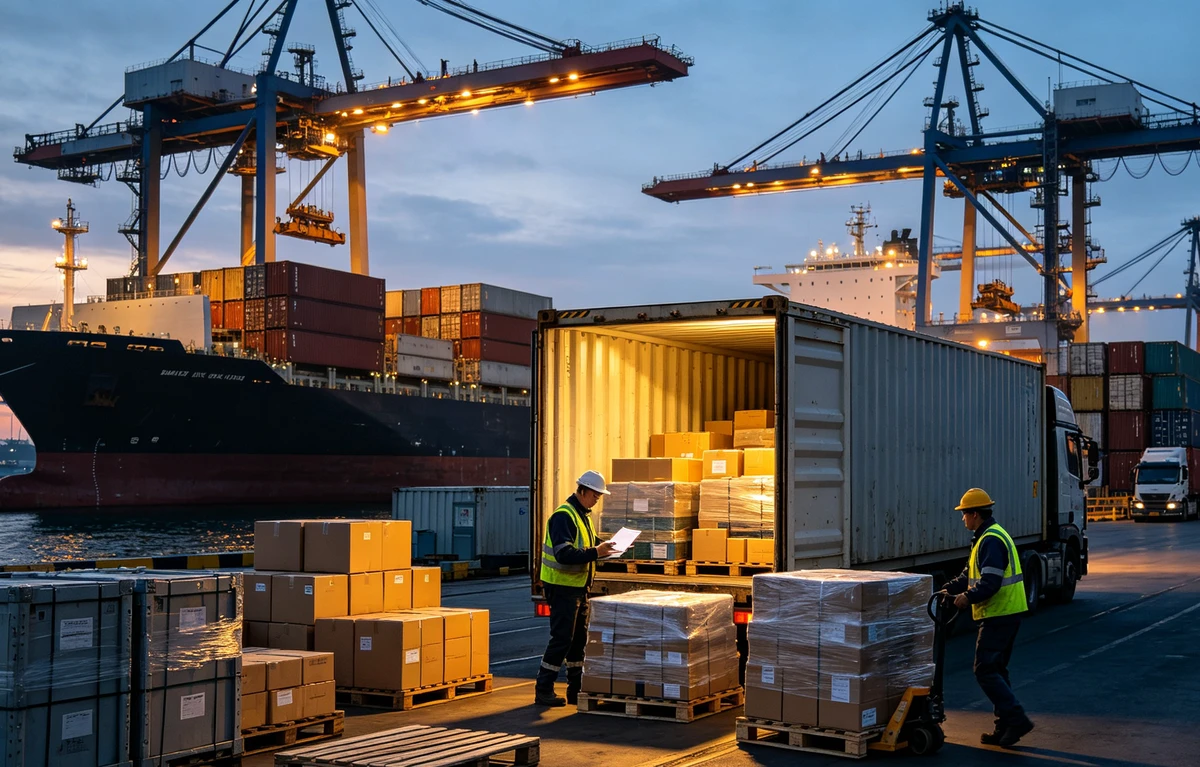
LCL (Less than Container Load) means your cargo shares a single shipping container with goods from other importers. A freight forwarder or consolidator groups several smaller shipments into one full container, ships it to the destination port, then splits everything back apart for individual delivery. You only pay for the volume your cargo actually occupies, measured in cubic meters (CBM).
This is the opposite of FCL (Full Container Load), where you book an entire container exclusively. LCL is priced per CBM, while FCL is priced as a flat container rate. For Saudi-bound cargo, LCL is usually the smart choice when your shipment is between 1 and 15 CBM — below 1 CBM, Air Freight from China to Saudi Arabia or express courier often makes more sense once fixed fees are factored in, and above 15 CBM, the economics start to favor a dedicated 20ft container.
Two concepts determine your LCL bill:
- W/M (Weight or Measure): The carrier charges on whichever is greater — the actual weight in metric tons or the volume in cubic meters. One CBM is treated as one revenue ton, and 1,000 kg is also one revenue ton.
- Minimum charge: Almost every LCL service has a 1 CBM minimum. Even a tiny shipment triggers fixed handling at both the origin and destination consolidation warehouses, so the forwarder sets a floor to cover those costs.
Our Industry Insight: The most common budgeting mistake we see is estimating CBM from the product’s retail dimensions instead of the packaged, palletized footprint. A shipment of 4.8 CBM of loose cartons can easily become 6–7 chargeable CBM once export cartons and pallets are measured. Always ask your forwarder to confirm the chargeable CBM after the warehouse receives and measures the cargo — not before.
LCL vs FCL Shipping from China to Saudi Arabia: Which Should You Choose?
The decision between LCL and FCL comes down to volume, cargo value, and handling sensitivity. As a rule of thumb, once your shipment approaches 15 CBM, a full container usually wins on cost per cubic meter — and it also skips the consolidation and deconsolidation steps that add days and handling risk to LCL.
| Factor | LCL | FCL |
|---|---|---|
| Container use | Shared with other shippers | Exclusive, sealed origin-to-destination |
| Best volume | 1–15 CBM | ~15 CBM or more |
| Pricing | Per CBM (W/M) | Flat container rate |
| Transit | Slower (consolidation + deconsolidation) | Faster, skips extra handling |
| Damage risk | Higher (more handling points) | Lower |
| Best for | Small orders, trial batches, multi-supplier consolidation | Full loads, fragile or high-value goods |
Below roughly 15 CBM, LCL is usually cheaper in absolute terms even though its per-unit rate is higher. Above that threshold, the flat FCL rate spreads across more cargo and beats LCL. But cost is not the only factor: if you are shipping fragile or high-value goods, the reduced handling of FCL may justify the higher upfront spend even at smaller volumes.
LCL Shipping Cost from China to Saudi Arabia: Rates per CBM in 2026
LCL ocean freight rates on the China–Saudi lane stayed relatively stable through 2026, but they remain sensitive to seasonal demand — especially the pre-Ramadan rush — and Red Sea routing conditions. The figures below are planning ranges as of August 2026, not binding offers.
| Cost Component | Typical Range (USD) |
|---|---|
| Ocean freight (per CBM, port-to-port) | $100 – $180 |
| Origin charges (pickup, consolidation, documentation) | $150 – $400 |
| Destination charges (THC, deconsolidation, D/O, inspection) | $200 – $500+ |
| DDP door-to-door (all-inclusive, per CBM) | $120 – $260 |
LCL Shipping Cost per CBM from China to Saudi Arabia
Most freight forwarders quote LCL as a per-CBM rate using the W/M method. A 5 CBM shipment at $150 per CBM means $750 in ocean freight — but that is only the sea leg. A complete LCL budget also includes origin haulage, consolidation warehouse fees, export documentation, destination terminal handling charges (THC), the Delivery Order (D/O) fee, deconsolidation (un-stuffing) charges, and any customs inspection costs.
Our Industry Insight: The “zero dollar LCL freight” trap is real. Some agents advertise near-free ocean freight, then recover the margin through inflated destination deconsolidation and handling fees once your cargo is already in Jeddah or Dammam and you have no leverage. We always give clients a line-item quote covering origin, ocean, and destination so the total is visible before booking.
Cheapest LCL Shipping from China to Saudi Arabia
The cheapest LCL move is not about finding the lowest per-CBM sticker — it is about reducing the CBM you are billed for and avoiding surprise destination fees:
- Optimize packaging so loose cartons are compressed into fewer, tighter master cartons; reducing 5 CBM to 3.5 CBM cuts both ocean freight and destination handling.
- Match the origin port to your factory to cut inland trucking before the cargo even reaches the water.
- Book 3–4 weeks ahead, and avoid the two-to-three-month run-up before Ramadan and the Chinese New Year shutdown.
- Consolidate multiple suppliers through our China warehouse services into a single LCL shipment instead of paying several separate minimums.
How Long Does LCL Shipping Take from China to Saudi Arabia?
LCL is slower than FCL because it adds consolidation at origin and deconsolidation at destination. Port-to-port to Jeddah typically runs 18–25 days, while the full door-to-door journey usually spans 30–40 days. For a broader view of transit expectations on this lane, see our How Long Does Shipping Take from China to Saudi Arabia guide.
| Route | Typical Port-to-Port Transit |
|---|---|
| Shanghai → Jeddah | 18 – 22 days |
| Shenzhen / Ningbo → Jeddah | 20 – 25 days |
| China main ports → Dammam | 20 – 28 days (slightly longer via Arabian Gulf) |
Port-to-port is only part of the picture. Door-to-door adds factory pickup, consolidation, Saudi customs clearance, and final delivery.
The biggest sources of delay are usually not the vessel. Missing or incorrect SABER registration documents can hold cargo for days or weeks, and Saudi customs offices operate on reduced schedules during Ramadan and Eid. Port congestion at Jeddah can add another 2–5 days during peak months. Build at least one week of buffer beyond the published sailing time and confirm your forwarder has a reliable Saudi customs broker before the cargo sails.
LCL Shipping from China to Saudi Arabia Ports: Shenzhen, Guangzhou, Ningbo & Shanghai
Choosing the right port pair is one of the most effective ways to reduce both cost and lead time. The goal is to consolidate at the deep-sea port nearest your factory, then land at the Saudi gateway nearest your final delivery location.
Major Chinese origin ports:
- Shenzhen (Yantian / Shekou): The natural choice for the Pearl River Delta — electronics, consumer goods, and e-commerce cargo from Shenzhen, Dongguan, and Huizhou.
- Guangzhou (Nansha): Ideal for furniture, ceramics, and home goods from Foshan, Shunde, and Zhongshan.
- Shanghai & Ningbo-Zhoushan: The default for Yangtze River Delta manufacturing — machinery, textiles, and auto parts.
- Qingdao: Serves northern China and Shandong industry.
Major Saudi destination ports:
- Jeddah Islamic Port: The Red Sea gateway and Saudi Arabia’s busiest container port, best for the western region (Jeddah, Mecca, Medina).
- King Abdul Aziz Port (Dammam): The Arabian Gulf gateway, best for the Eastern Province, Riyadh, and Jubail.
- King Abdullah Port: A modern Red Sea hub north of Jeddah.
- Riyadh Dry Port: An inland rail-served terminal — shipping via Dammam then railing to Riyadh is often cheaper than trucking from Jeddah.
Our Industry Insight: We routinely save clients more on the origin leg than they would ever negotiate off the ocean rate. A Shenzhen electronics supplier consolidating at Yantian pays far less inland trucking than if the same cargo were routed through a northern port. On the destination side, if your warehouse is in Riyadh, landing at Dammam and using the rail link to the dry port usually beats trucking all the way from Jeddah.
Saudi Arabia Customs Clearance for LCL Shipment: SABER, SASO, Duty & VAT
Saudi Arabia enforces one of the strictest customs regimes in the Middle East, overseen by the Zakat, Tax and Customs Authority (ZATCA) and the Saudi Standards, Metrology and Quality Organization (SASO). Getting this right before your LCL shipment sails prevents costly port holds, so many importers hand the entire process to a partner that manages end-to-end customs clearance.
The SABER electronic platform is the central clearance gate for regulated goods. It requires two certificates:
- Product Certificate of Conformity (PCoC): Valid for one year, issued through an accredited body such as Intertek, SGS, or TUV. Costs vary by product risk profile and required lab testing, typically $300–$800+ per category.
- Shipment Certificate of Conformity (SCoC): Required for every single shipment, binding your commercial invoice to a valid PCoC. The issuance fee is usually $100–$150 per shipment.
Our Industry Insight: If your cargo arrives at Jeddah or Dammam without an approved SCoC, ZATCA will refuse clearance and the shipment will sit at the port accumulating demurrage. Saudi ports typically offer only 5–7 days of free time, after which fees can exceed $150–$200 per day. We always start the PCoC process before the goods leave the factory so the SCoC is ready by the time the vessel arrives.
On top of certification, you must budget for import taxes:
- Customs duty: The standard rate for most general merchandise is 5%–15%, calculated on the CIF value (cost, insurance, and freight). Certain protected items can attract 20% or more, so confirm your exact HS code first.
- VAT: Saudi Arabia charges a 15% VAT on the sum of the CIF value plus the applied customs duty.
Worked duty and VAT example (CIF value $10,000, duty 5%):
| Item | Amount (USD) |
|---|---|
| CIF value | $10,000 |
| Customs duty (5%) | $500 |
| VAT base (CIF + duty) | $10,500 |
| VAT (15%) | $1,575 |
| Total tax liability | $2,075 |
Finally, note the “Made in China” marking rule: the origin must be physically engraved, stitched, or permanently affixed to the product itself. Removable stickers on the outer carton will trigger customs rejection or fines.
Required documents for an LCL shipment include the Commercial Invoice, Packing List, Bill of Lading (house and master), and a Certificate of Origin, alongside the SABER certificates. All documents must match each other exactly — small discrepancies between the invoice and packing list are a common cause of inspection holds.
DDP Door-to-Door LCL Shipping from China to Saudi Arabia
Your choice of Incoterm determines who controls the shipment, who files customs, and where risk and cost transfer.
| Incoterm | Supplier Handles | Buyer Handles | Best For |
|---|---|---|---|
| EXW | Minimal origin responsibility | Everything from the factory door | Experienced buyers with China-side control |
| FOB | Export delivery and loading at origin port | Main freight, Saudi import, delivery | Importers wanting balanced control |
| CIF | Ocean freight to a Saudi port | Saudi import, destination charges | Buyers wanting simple origin pricing |
| DDP | Most end-to-end charges and delivery | Limited logistics work | First-time importers and e-commerce sellers |
DDP (Delivered Duty Paid) is the most popular choice for importers who do not have their own Saudi customs broker. Under DDP, your forwarder handles factory pickup, China export clearance, LCL consolidation, ocean freight, Saudi import clearance, duty and VAT, and final delivery — all wrapped into a single all-inclusive quote.
Here is a realistic DDP LCL landed-cost example for 6 CBM of mixed goods from Shenzhen to a Riyadh warehouse:
| Cost Component | Amount (USD) |
|---|---|
| Ocean freight (6 CBM × $120) | $720 |
| Origin pickup and consolidation | $280 |
| China export clearance and documentation | $120 |
| Saudi destination handling and deconsolidation | $350 |
| Customs duty (5% on CIF) | ~$250 |
| VAT (15%) | ~$790 |
| Final delivery to Riyadh | $300 |
| Total DDP landed cost | ~$2,810 |
The appeal of DDP is predictability: one partner, one price, no surprise destination charges. The trade-off is that you rely on your forwarder’s Saudi customs compliance, so choose a provider with genuine China-side and Saudi-side experience — a partner that quotes a transparent, line-item total with no hidden fees.
LCL Shipping for Amazon FBA Saudi Arabia
For e-commerce sellers restocking Amazon.sa fulfilment centers via Amazon FBA, LCL is often the most cost-efficient way to move smaller, frequent batches from Chinese factories without committing to a full container. The workflow adds a few FBA-specific steps on top of a standard LCL move:
- Labelling and palletisation: Cartons need the correct FBA shipment labels, and pallets must meet Amazon’s size and weight rules before consolidation.
- Booking and delivery appointments: Amazon warehouses operate strict delivery windows; a missed appointment turns an on-time shipment into detention charges.
- DDP is common: Many sellers use DDP so a single partner handles SABER, duty, VAT, and delivery into the fulfilment center.
Our Industry Insight: For FBA sellers, the SABER PCoC requirement is where restocks get stuck. A seller can have the label and pallet spec perfect, but if the product category lacks an active PCoC, the whole LCL shipment is blocked at customs and every day of delay eats into the launch window. We help sellers confirm the required SABER registration for their product category before they commit to a restock.
Common LCL mistakes that inflate cost and delay delivery:
- Booking too late before the Ramadan peak, forcing a premium rate or a rollover.
- Underestimating CBM by measuring product dimensions instead of packaged, palletized dimensions.
- Ignoring destination deconsolidation and handling fees when comparing quotes.
- Shipping without an approved SCoC, triggering demurrage at the Saudi port.
- Guessing the HS code instead of confirming the correct classification.
FAQ: China to Saudi Arabia LCL Container Shipping
What is the difference between LCL and FCL shipping from China to Saudi Arabia?
LCL shares container space with other importers and is priced per CBM, suited to shipments of 1–15 CBM. FCL gives you exclusive use of a sealed container at a flat rate and is cheaper per unit above roughly 15 CBM.
How much does LCL shipping cost from China to Saudi Arabia per CBM?
As of August 2026, port-to-port LCL ocean freight typically runs $100–$180 per CBM, with origin charges of $150–$400 and destination charges of $200–$500+. A DDP door-to-door LCL rate ranges roughly $120–$260 per CBM.
How long does LCL shipping take from China to Saudi Arabia?
Port-to-port to Jeddah typically takes 18–25 days, and Dammam is slightly longer. The full door-to-door journey, including consolidation, customs, and delivery, usually runs 30–40 days.
What is the minimum CBM for LCL shipping from China to Saudi Arabia?
Most LCL services have a 1 CBM minimum charge, even if your actual volume is smaller, to cover fixed handling at the origin and destination warehouses.
Do I need a SABER certificate to ship LCL to Saudi Arabia?
Yes. Regulated goods require a SABER Product Certificate of Conformity (PCoC) and a Shipment Certificate of Conformity (SCoC) for every shipment. Missing either can block clearance at the port.
What is the cheapest way to ship a small shipment from China to Saudi Arabia?
For 1–15 CBM, LCL sea freight is usually the cheapest. Reduce total cost by optimizing packaging to lower CBM, matching the origin port to your factory, consolidating suppliers, and booking well before the Ramadan peak.
Can Sinoshipment handle DDP door-to-door LCL shipping from China to Saudi Arabia?
Yes. Sinoshipment, a Shenzhen-based freight forwarder operating since 2013 with 5,000+ customers served, provides DDP LCL from factory pickup and China export clearance through ocean freight, Saudi import clearance, duty and VAT handling, and final delivery under a single all-inclusive quote with no hidden fees.
LCL shipping from China to Saudi Arabia is a series of decisions — volume, port pair, Incoterm, and SABER compliance — that together determine your landed cost and delivery reliability. If you want a quote that reflects the full logistics picture rather than just the ocean leg, contact Sinoshipment for a tailored LCL plan based on your cargo, volume, and Saudi delivery location.
Disclaimer: Freight rates, transit times, and customs regulations change frequently. All price and timing references in this article are planning estimates as of August 2026 and should be verified against current carrier, broker, and official Saudi (ZATCA/SASO) guidance before shipment. This article is for logistics education only and does not constitute legal or tax advice.