China to US Shipping Costs in Q4 2026: Rate Outlook After Golden Week
· By SinoShipment
Golden Week 2026 is over, and the rate relief every importer was promised has arrived late, small, and possibly short-lived. China’s factories went dark on October 1–7 after a back-to-back Mid-Autumn break, and the market’s first post-holiday reading was exactly what theory predicts: down. But only 2–3%. In week two, prices steadied again. As Xeneta’s senior analyst put it on October 16: spot rates from the Far East to the US have been “almost flat for the past month, but we are now in mid-October and through Golden Week, so downward pressure is expected to intensify.”
That is the tension this guide resolves. China to US shipping costs in Q4 2026 sit near their highest levels since mid-2022 — roughly $7,400–$8,400 per 40ft container to the West Coast and $9,600–$11,000 to the East Coast — while a forecast softening, a tariff deadline on November 10, a truce review on January 10, and a Chinese New Year that lands eleven days earlier than this year’s (February 6, 2027) all squeeze the same booking window.
We run the China–US booking desk at Sinoshipment, a Shenzhen-based freight forwarder that has moved cargo from China to the world since 2013 for more than 5,000 clients. Here is what the market actually did after Golden Week, what it costs to ship right now, where rates are headed in Q4, and — the decision you actually face — whether to book now or wait.
Key Takeaways
- Post-Golden Week dip was real but shallow: Drewry’s WCI fell 3% (Shanghai→Los Angeles) and 2% (Shanghai→New York) in the first week after the holiday, then steadied; ICIS still pegs West Coast spot at $7,475–$8,300/FEU and East Coast at $9,600–$11,300/FEU as of October 16 — near mid-2022 highs.
- The base case for Q4 is a slow drift, not a collapse: expect rates to ease 10–20% into December with a hard floor set by blank sailings, congestion and bunker costs. Xeneta’s year-end forecast ($4,500–$5,500 USWC, $6,000–$7,000 USEC) is the bear case, not the base case.
- Duty is now your biggest cost line: on a $40,000 container, the 40.5% duty stack (~$16,200) is double the ocean freight — and the November 10 exclusion expiry can add another 25% on covered lines.
- Three deadlines beat the spot rate: Section 301 exclusions lapse ~November 10; the US–China truce review is January 10, 2027; Chinese New Year falls February 6, 2027 — 11 days earlier than 2026.
- Air is not the escape valve it usually is: post-holiday air rates rose two to three rounds since October 8 (reversing the normal pattern) to $5.85–$8.00/kg.
1. What Happened to China–US Freight Rates After Golden Week 2026?
Rates peaked into the holiday, dipped modestly in the first week after factories reopened on October 8, and steadied in the second week — because carriers withdrew capacity through the holiday rather than letting it flood back.
Here is the week-by-week record from Drewry’s World Container Index (WCI), the assessed spot rate per 40ft container:
| Week (2026) | Shanghai → Los Angeles | Shanghai → New York | What happened |
|---|---|---|---|
| Sep 3 | $7,185 | $9,587 | Peak-season run-up begins |
| Sep 10 | $7,352 | $9,726 | Typhoon congestion builds |
| Sep 17 | $7,712 | $10,394 | Xeneta market average to USEC hits $10,948 |
| Sep 24 | $7,838 | $10,373 | Pre-holiday peak; FBX USWC hit $8,411 — its 2026 high — in the week to Sep 30 |
| Oct 1 (holiday starts) | $7,835 | $10,428 | Rates flat into Golden Week |
| Oct 8 (first post-holiday week) | $7,624 (−3%) | $10,220 (−2%) | The Loadstar: Golden Week “marked the end of the protracted transpacific peak season” |
| Oct 16 (latest) | ~$7,352–7,712 | ~$9,726–10,220 | Steady; Xeneta: downward pressure “expected to intensify” |
Sources: Drewry WCI weekly assessments; Xeneta (17 Sep, 16 Oct); Freightos Baltic Index. Readings are port-to-port spot and exclude surcharges — see Section 6 for the all-in stack.
Two details matter more than the averages. First, the dip is being managed: carriers blanked 58,200 TEU of Far East–US West Coast capacity in the week of October 16 alone (plus 35,500 TEU to the East Coast, per Xeneta data reported by ICIS). Drewry counted announced transpacific blank sailings falling from eleven in the October 5–11 week to four in October 12–18 — and then rising again to eight. Second, the trade is diverging: the same indexes show Asia–Europe rates falling up to 9% as some services return to the Suez Canal, while the transpacific holds. Your relief valve is someone else’s discount lane.
From our desk: factories resumed October 8, and the bookings that missed the pre-holiday cut-offs are now competing for the October 8–16 sailings — the single most contested capacity window of the year. US forwarder Freight Right reports standard China–US West Coast rates holding around $8,000/FEU, with volume commitments clearing at $6,900–$7,000 and spot floor deals as low as $6,400; East Coast standard sits above $9,000 with blended volume rates near $8,450.
2. How Much Does It Cost to Ship from China to the US Right Now?
Expect roughly $7,400–$8,400 per 40ft container to the US West Coast and $9,600–$11,000 to the East Coast on the spot market (mid-October 2026), LCL around $120–$165 per CBM plus destination CFS charges, and air freight at $5.85–$8.00 per kilogram and rising. Every figure below moves weekly — treat them as planning ranges as of October 21, 2026, not quotes.
| Mode | Typical all-in range (Oct 2026) | Transit time | Best for |
|---|---|---|---|
| FCL 20GP (West Coast) | $6,900–$8,300 | 14–20 days port-to-port | Dense cargo, ~28 CBM |
| FCL 40HC (West Coast) | $7,400–$8,400 | 14–20 days | Most Q4 replenishment |
| FCL 40HC (East Coast, all-water) | $9,600–$11,000 | 25–35 days | East/inland destinations without rail |
| LCL | $120–$165 per CBM + destination CFS | 10–17 days port-to-port (15–30 door) | 1–13 CBM test lots |
| Air freight | $5.85–$8.00/kg (100–1,000 kg+) | 3–7 days | Urgent, high-value recovery cargo |
| Express courier | $12–$16/kg door-to-door | 2–5 days | Samples, documents, small parcels |
Sources: ICIS/Drewry blended ranges (Oct 16), Freight Right TFX week 41, DTFU and Sino-Shipping published lane guides (October 2026). East Coast premium over West Coast: ~$2,500–$2,600 per FEU (about 33% on the Drewry assessment of October 1).
Why the East Coast premium? All-water routings via Panama carry canal surcharges (~$500/TEU implemented by CMA CGM from September 10 and MSC from September 12) and tie vessels up roughly ten days longer. If your warehouse is in the Midwest, don’t pay it blindly: an IPI rail move from a West Coast gateway runs about 20–25 days inland and is typically one to two weeks faster than all-water to the East Coast plus trucking. For the full service scope on the ocean leg — FCL, LCL and door-to-door — see our sea freight from China services.
Three rules for reading these numbers:
- Compare all-in quotes, never base rates. Published FAK base rates as low as $2,500–$3,500/FEU exist; nobody moves a peak-season box at that number. The surcharge stack (Section 6) can equal the base rate.
- Pick your gateway by inland destination, not headline freight. Los Angeles/Long Beach for West and rail-served inland points; New York/New Jersey or Savannah for the East and Southeast.
- Quote validity is measured in days. In a market moving 2–7% a week, spot quotes are typically valid 7–14 days — a quote older than that is an intention, not a booking.
3. Why Post-Golden Week Rates Haven’t Collapsed
Four forces are holding a floor under transpacific rates — capacity discipline, bunker costs, congestion, and a late-running demand peak — and three of them do not reverse just because the holiday ended.
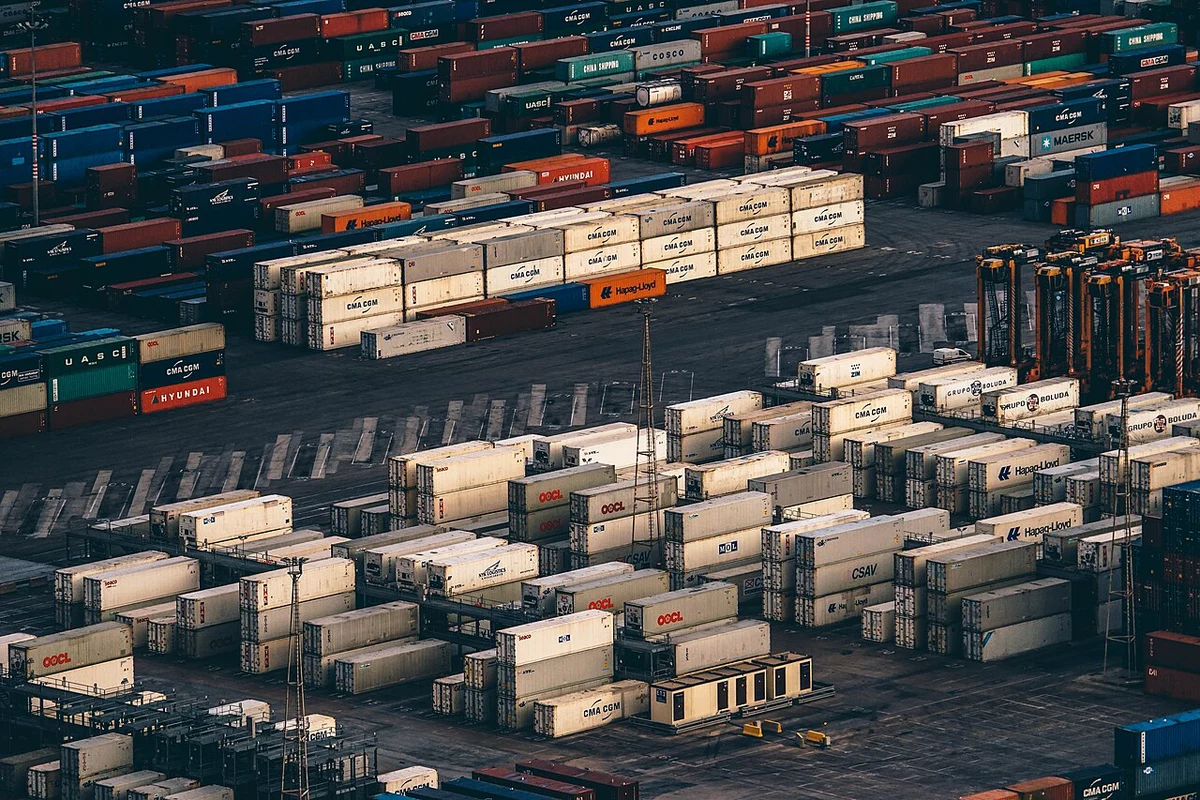
1. Carriers are metering capacity on purpose. Going into the holiday, carriers blanked just under 13% of planned October capacity from Asia to the US and Europe (Xeneta/eeSea data) — lighter than last year’s ~18% on the transpacific and 2023’s ~24%. But the cuts were aimed at the weeks after the holiday: Maersk blanked TP8 voyage 640E (Busan, Oct 9) and TP12 641E (Ningbo, Oct 9) and suspended its Transpacific Loader service after September 29; MSC blanked its week 40 Orient and week 41 Pearl sailings; Hapag-Lloyd trimmed WC2 and US2. Drewry counted 79 of 721 scheduled sailings blanked across east-west trades between September 14 and October 18, with the transpacific absorbing 52% of the cuts. The fleet orderbook is large — capacity on the dominant trade legs has grown roughly 25% since mid-2023 — but the injection is being rationed by cancellations rather than allowed to flood the lane.
2. Bunker fuel has doubled since January. Singapore VLSFO, the benchmark grade for most of the fleet, has been assessed between roughly $820 and $910 per tonne through the autumn against $433.50 on January 1, 2026. The Strait of Hormuz has been effectively closed to normal commercial traffic since the US–Iran conflict began in late February, and Brent sits near $110 a barrel. Carriers recover this through BAF and emergency bunker surcharges — lines that sit outside the base rate and outside most quotes importers compare.
3. Congestion is eating capacity carriers never withdrew. Linerlytica counts more than 4.3 million TEU of container capacity stuck in port congestion worldwide — above the pandemic peak — with Shanghai and Ningbo waiting times reaching 12 days at the worst, and Sea-Intelligence estimates port delays are absorbing more than 8% of global vessel capacity, a backlog that could take up to ten months to unwind. Typhoon season compounded it: 157 vessels were waiting at berth in Shanghai in mid-September.
4. US demand peaked later than anyone forecast. NRF and Hackett Associates revised September US container imports up to 2.31 million TEU — up 9.6% year on year and the busiest month of 2026, arriving about three weeks later than any model expected. October is forecast at 2.11 million TEU (+1.7%) and November at 2.00 million (−0.9%): decelerating, but from a record base. Los Angeles handled 955,907 TEU in August and Long Beach 919,992 — both records for the month.
The nuance everyone misses: some normalization is happening — Maersk indicated in August that roughly one-third of its Asia–Europe traffic was again moving through the Suez Canal, and Asia–Europe spot rates have fallen for weeks. But that capacity release lands on Europe lanes first. The transpacific keeps its premium until either carriers stop blanking or the congestion backlog clears.
4. Will China–US Rates Fall in Q4 2026? The Forecast
Yes, gently — the base case is a 10–20% drift lower into December with a floor set by blank sailings and bunker costs, not a collapse. Xeneta’s own rest-of-2026 forecast is for US East Coast spot of $6,000–$7,000/FEU and West Coast of $4,500–$5,500/FEU; if that lands in full, it implies a 30–45% decline from today — which is why we treat it as the bear case, not the plan.
| Scenario | What it looks like | What it means for your rates | What you should do |
|---|---|---|---|
| Base case (our plan) | Golden Week backlog keeps vessels full into late October; the peak fades through November as arrivals normalize; some Suez-routed capacity returns to the wider network | Rates hold near current levels into early November, then drift down 10–20% into year-end; the floor holds at blank-sailing and bunker economics | Book late-October sailings now; leave November–December volume on spot or short contracts; do not sign annual commitments at peak rates |
| Faster normalization | Demand falls harder after the holiday, carriers stop blanking to protect utilization, bunkers retreat | Rates fall sooner and further, especially US West Coast | Stay flexible, keep only needed volume under contract, re-tender in mid-November |
| Second shock | The November 10 exclusion lapse triggers front-loading, the pending 7.5% “structural excess capacity” Section 301 action lands, Hormuz or Bab el-Mandeb escalates, or suspended port fees on Chinese vessels are reinstated | Rates spike with little notice; surcharges reappear; rollovers climb | Hold allocations on two carriers, keep a bonded-warehouse option open, stage cargo so a two-week slip does not break a commitment |
The honest summary of the data: DHL’s market desk expects transpacific rates to “soften into Q4” from resilient-but-stabilizing levels; Xeneta sees the downward pressure intensifying now that the holiday is past; Yang Ming’s chairman calls Q4 — starting with the National Day holiday — “a turning point” that depends on US policy and the Middle East. Weigh the asymmetry: being wrong about the base case costs a few hundred dollars a container; being wrong about the second-shock case, with cargo mid-Pacific and a December retail commitment, costs the season.
Our Industry Insight: We are planning our clients’ Q4 on the base case and pricing the risk case. This week that meant splitting a furniture importer’s program — three 40HC booked immediately for the last reliable pre-Black-Friday sailings, with the remaining five boxes left on spot for mid-November loading, when we expect the post-peak market to show itself. A freight forwarder that has shipped from China since 2013 through trade wars, pandemic spikes and this year’s conflict earns its keep exactly here — in the booking calendar, not the rate negotiation.
5. The Three Deadlines That Matter More Than the Spot Rate
Freight is what is expensive this month; the calendar is what is dangerous this quarter. Three dates sit inside the booking window you are about to fill, and none of them move with the ocean rate.
Clock 1 — November 10, 2026: the exclusion cliff. The 178 remaining Section 301 product exclusions (heading 9903.88.69) expire in early November. When they lapse, the underlying list rates return on entry or warehouse withdrawal on or after November 10: 25% on Lists 1–3, 7.5% on List 4A — stacked on top of the 12.5% forced-labor tariff that has applied to Chinese goods since July 24, 2026. More than 200 industry organizations, including the World Shipping Council and the International Chamber of Shipping, have asked USTR to extend the suspension of Section 301 maritime service fees on Chinese-built and Chinese-operated vessels before it lapses in the same window. Treat both as live cliffs, not settled outcomes. The trap most importers miss: duty is assessed at the rate in effect on the date of withdrawal for consumption, not the date of entry — covered inventory sitting in a bonded warehouse on November 10 loses the exclusion at withdrawal.
Clock 2 — January 10, 2027: the truce review. At the September 24 Washington summit, the US–China truce was extended by two months — from November 10 to January 10, 2027 — alongside mutual tariff cuts on about $30 billion of bilateral imports and a deferral of threatened port-call fees on Chinese vessels. The extension suspends new retaliatory measures; it does not lower any rate you pay today, and it does not move the exclusion date. January 10 sits squarely inside the pre-Chinese New Year rush — the worst possible week to be pulling volume forward. If you need to front-load ahead of a tariff date, the cheap window is October and November, not the second week of January.
Clock 3 — February 6, 2027: the earliest CNY since 2025. Chinese New Year falls eleven days earlier than in 2026, compressing the entire pre-holiday runway. Working the standard planning chain backwards: finalize production orders by November 28–December 12 (8–10 weeks out), hit the rush-order cut-off in early-to-mid January, book ocean space 3–4 weeks before departure, and have cargo sailing by mid-to-late January. Factories begin winding down around January 9–16, go fully dark roughly January 30–February 14, restart at partial capacity, and only return to normal output around early-to-mid March.
| Date | Milestone | Booking consequence |
|---|---|---|
| ~Oct 18 | Last US East Coast sail for Black Friday | Passed — East Coast BF stock must now fly |
| ~Oct 28 | Last US West Coast sail for Black Friday | Book this week if stock matters |
| First week of Nov | Withdraw exclusion-eligible bonded stock | Before the Nov 10 cliff |
| Nov 10 | Section 301 exclusions expire; port-fee suspension lapses | List rates return on covered lines |
| ~Nov 15 / ~Nov 25 | Last USEC / USWC sails for Christmas stock | Final holiday bookings |
| Nov 27 | Black Friday | US retail season opens |
| Nov 28–Dec 12 | Finalize CNY production orders | 8–10 weeks before Feb 6 |
| Jan 10, 2027 | US–China truce review | Inside the pre-CNY rush |
| Mid–late Jan | Last pre-CNY ocean sailings | Book 3–4 weeks ahead |
| Feb 6, 2027 | Chinese New Year (Year of the Goat) | Factories dark ~2–4 weeks |
Our Industry Insight: A furniture client of ours held three containers of exclusion-eligible hardware in a bonded warehouse last month, planning to withdraw after arrival normality returned. We pulled the withdrawal into the first week of November instead — ahead of the cliff — saving a 25-percentage-point reinstatement on roughly $180,000 of entered value. The calendar is part of the booking file. Our customs clearance team manages it alongside the sailing plan, because a container that clears on the wrong side of a deadline costs more than the freight on it.
6. The Real Cost of a Container: The Surcharge Stack and Duty Math
On a $40,000 FOB 40ft container from Shanghai to Los Angeles, expect roughly $27,000 of costs above the goods value — of which about $16,200 is import duty and only about $8,000 is ocean freight. Duty, not freight, is now the single biggest line on a China–US container.
Here is what actually sits on top of the base rate in October 2026:
| Line item | Typical range (Oct 2026) | Notes |
|---|---|---|
| Base ocean freight (FAK) | $2,500–$3,500/FEU USWC | The number that gets quoted — nobody pays it alone |
| General rate increase (GRI) | $300–$1,200 per container | Announced roughly monthly |
| Peak season surcharge (PSS) | $300–$1,000 per FEU | CMA CGM filed $4,000/FEU from Oct 1 — the outlier that breaks budgets |
| Bunker / emergency bunker (BAF) | $100–$400 per container | VLSFO has roughly doubled since January |
| Equipment imbalance surcharge | $150–$500 per container | Often under two weeks’ notice |
| Port congestion surcharge | $250–$500 per container | Where berth delays are worst |
| Origin charges | $350–$600 per 40ft | Export clearance, THC, docs, trucking from PRD/YRD |
| Destination charges | $500–$900 per 40ft USWC | THC, DDC, chassis, ISF/AMS |
| Brokerage & entry | $125–$300 per entry | Formal entry, bond, filing |
| MPF + HMF | 0.3464% + 0.125% of value | MPF reset Oct 1 to $34.58 floor / $670.86 cap (FY2027) |
| Inland delivery | $300–$1,800 | Drayage, rail or IPI by distance |
Worked example — $40,000 FOB, 40HC, ~700 units, Shanghai → Los Angeles, mid-October market:
| Component | Amount |
|---|---|
| Ocean freight (all-in assessed spot) | $8,000 |
| Peak season surcharge (typical) | $600 |
| Origin + destination charges | $1,150 |
| Brokerage, MPF, HMF | ~$390 |
| Inland delivery to SoCal warehouse | $650 |
| Cargo insurance (~0.4% of CIF) | $160 |
| Import duty at 40.5% stack | $16,200 |
| Total above goods value | $27,150 |
| Per unit (700 units) | $38.79 |
The duty stack assumed here — 3% MFN + 25% Section 301 (original lists) + 12.5% forced-labor layer — applies to a typical covered consumer good; your own rate ranges from ~15% to over 100% depending on HTS classification. For the full tariff picture, see our US Import Tariffs 2026 guide. And remember what changed this year: the $800 de minimis exemption is gone for all origins, so every commercial shipment — including samples — needs a formal entry (Type 11 up to $2,500, formal Type 01 above), and ISF 10+2 late-filing penalties have been stepped up to $5,000–$10,000.
The takeaway that changes behavior: hunting a 5% better ocean rate saves a few hundred dollars per container; correct HTS classification, first-sale valuation, an exclusion strategy and the right Incoterm save thousands. A container that arrives on the wrong side of the November 10 cliff costs more than the freight on it.
7. Should You Book Now or Wait? The Decision Framework
Book now if your cargo is ready or committed to a Q4 retail date — the last reliable West Coast sailings for Black Friday leave around October 28. Wait-and-tender if the cargo is flexible November–December replenishment: re-quote in mid-November against the post-peak market rather than rolling October rates forward. Never sign an annual contract at peak rates.
| Your situation | Book now or wait | Why |
|---|---|---|
| Cargo ready; stock must hit shelves for Black Friday | Book this week (USWC sail ~Oct 28; East Coast option is now air) | Space on late-October sailings is the last controllable window |
| Cargo ready; no hard retail date | Book 2–3 weeks ahead of target sailing | Quote validity (7–14 days) and rollover risk make earlier speculative |
| Flexible replenishment, Nov–Dec arrivals | Wait; re-tender mid-November | The post-peak market should show itself by then (base case: −10–20%) |
| Exclusion-eligible goods under bond | Act before Nov 10 | Withdraw covered stock or plan partial withdrawals |
| Pre-CNY 2027 volume | Finalize orders Nov 28–Dec 12; sail by mid-January | Feb 6 CNY compresses the runway; Jan 10 truce date sits in the rush |
Whatever you choose, the rollover math is the hidden cost: in this market a rolled container plus a slipped departure costs close to two weeks — and the first post-holiday sailings (October 8–16) were the most contested of the year. That is why the cheapest quote is worthless if there is no slot.
Put these five questions to any forwarder, in writing, on every Q4 quotation:
- What is the all-in figure, itemized — base, GRI, PSS, BAF, equipment imbalance, origin, destination, inland — and which lines are fixed for the validity period versus “subject to change at time of shipment”?
- Which carrier, service, vessel and voyage — and has that voyage been blanked? With eight-plus cancellations announced in a week, a rate without a voyage number is an intention, not a booking.
- How many days is the quote valid, and what happens on a rollover — does the box keep its rate or get repriced at the next GRI?
- What are the free time, detention and demurrage terms? After free time, US terminals run $255–$575 per day on a 40ft box, plus chassis at $22–$55 per day.
- If routing changes — a Panama restriction, a rotation shift, a discharged port omitted — what happens to transit time and rate?
At Sinoshipment we quote China–US cargo with the surcharge stack itemized line by line, book across multiple carriers so a blanked sailing means a rebooking rather than an explanation, and treat the tariff calendar as part of the booking file — no hidden fees, no surprises after sailing. For the full lane playbook, see our guides to freight costs from China to USA and FCL vs LCL shipping from China to the USA.
8. Air Freight After Golden Week: The Safety Valve Costs More Too
China–US air freight is running $5.85–$8.00 per kilogram in late October — and instead of the usual post-holiday dip, rates have risen two to three rounds since factories resumed on October 8, reversing the seasonal pattern. Middle East airspace disruption has removed an estimated 12–20% of global air cargo capacity through longer routings and cancelled frequencies, and jet fuel is up around 90% this year.
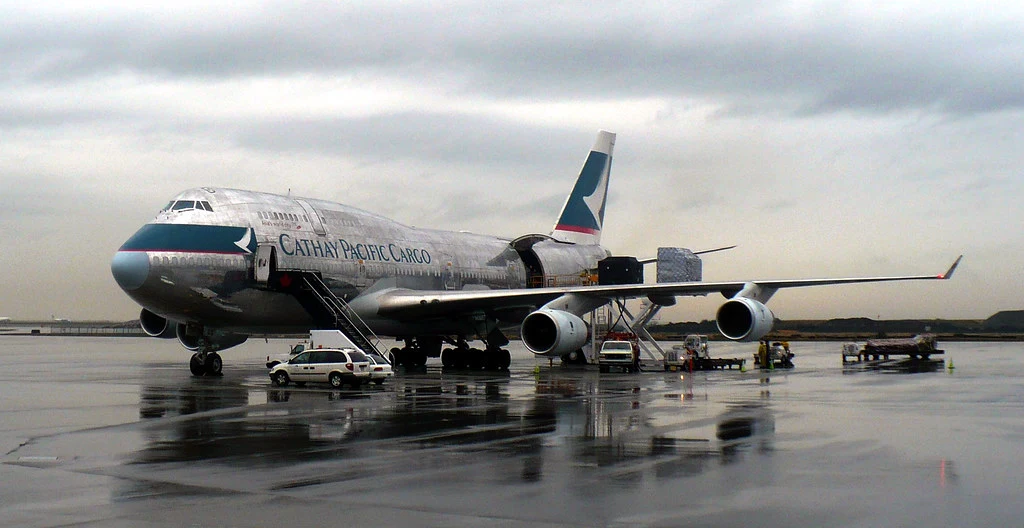 Photo: Cathay Pacific 747 freighter on the ramp — FlickrFlyr via Flickr, CC BY 2.0
| Gateway (from China) | Indicative rate (Oct 2026) | Notes |
|---|---|---|
| Los Angeles (LAX) / San Francisco | $5.85–$7.69 per kg | Standard-density cartons, week 41 sheets |
| New York (JFK) | $6.88–$8.00 per kg | Direct Shanghai service at the top of the band |
| Chicago (ORD) / Dallas (DFW) | ~$6.00–$8.50 per kg | Faster climb than West Coast |
| 1,000 kg+ consolidations | $6.50–$7.20 per kg | Fuel/security surcharges add 18–24% on top of base |
Sources: Freight Right TFX week 41, DTFU lane guide, BSI reference rates (RMB 39–50/kg, Oct 13). Rates are charged on chargeable weight — the greater of actual weight or volumetric weight (L×W×H in cm ÷ 6,000).
When does air actually pay in Q4? Recovery, not routine. If your ocean box is stuck behind a blanked sailing and your buyer needs stock, the comparison is not air versus ocean — it is air versus a lost season. Run the unit math first: on a typical 15-kg-per-unit consumer product, ocean costs roughly $17 per unit of freight; air at $7–9 per kg costs $105–135. That is rational for launch stock, high-value electronics and promotion-critical lines, and irrational for anything with retail margins below about 40%. Book air space five to seven days ahead of uplift now, and expect to commit two to three weeks ahead from mid-November as capacity tightens into the holiday. For lane details, see our air freight from China services.
9. Amazon FBA and E-Commerce Sellers: Your Q4 2026 Playbook
With the de minimis exemption gone, FBA intake lead times of 7–14 days, and the last West Coast Black Friday sailings leaving around October 28, holiday replenishment is now a countdown — and batch consolidation with DDP customs handling is the default model for sellers without US import status.
Work the chain backwards from your in-warehouse date: 14–20 days ocean to the West Coast, 3–5 days to deconsolidate and dray, then 7–14 days of fulfillment-center intake. Inventory that misses Black Friday does not simply arrive late — it arrives into a promotion you can no longer run.
| If you need stock… | Last ocean sailing | Practical deadline |
|---|---|---|
| On shelves for Black Friday (Nov 27) | ~Oct 28 (USWC) / passed (USEC) | Book this week; otherwise air |
| Selling through early December | ~Nov 15 (USEC) / ~Nov 25 (USWC) | Mid-November, pre-CNY build |
| Restocked before CNY 2027 gap | Mid–late January | Orders finalized by Dec 12 |
Three compliance points specific to 2026: every inbound consignment now requires a proper customs entry (Type 11 for shipments up to $2,500; formal Type 01 with a continuous bond above that); most China-based sellers lack US importer-of-record status, which is exactly what a DDP lane solves — the forwarder clears under its own bond and delivers duty-paid; and accurate HS codes decide both duty and whether your lines are exposed to the November 10 exclusion lapse. We cover the mechanics in our Amazon FBA and FCL shipping from China to USA guides — consolidation at our Shenzhen warehouse, labeling and palletizing to Amazon’s spec, and direct loading at Yantian or Shekou.
FAQ: China to US Shipping Costs in Q4 2026
Will shipping rates from China to the US drop after Golden Week 2026? They already dipped slightly — Drewry’s WCI fell 3% (Los Angeles) and 2% (New York) in the first post-holiday week — then steadied. The base case for Q4 is a further 10–20% drift lower into December, held up by blank sailings, bunker costs and congestion. A deeper collapse to Xeneta’s year-end range ($4,500–$5,500 USWC) requires carriers to stop managing capacity.
How much does a 40ft container cost from China to the US right now? As of mid-October 2026, roughly $7,400–$8,400 all-in to the West Coast and $9,600–$11,000 to the East Coast per FEU, with volume commitments clearing lower ($6,900–$7,000 USWC). Add origin/destination charges, and duty at your HTS-specific stack.
Why are East Coast rates so much higher than West Coast? All-water East Coast routings run ~33% above West Coast (about $2,500–$2,600 more per FEU) because they tie vessels up ten days longer and carry Panama Canal surcharges of roughly $500/TEU since September. For Midwest destinations, West Coast discharge plus IPI rail is usually faster.
Should I book Q4 ocean freight now or wait for rates to fall? Book now if cargo is ready or tied to Black Friday dates (last USWC sailings ~Oct 28). Wait and re-tender in mid-November for flexible replenishment. Do not sign annual contracts at peak rates — the asymmetry favors securing space over chasing the last 5%.
What happens when Section 301 exclusions expire on November 10, 2026? The 178 remaining exclusions lapse, and list rates return on covered lines — 25% on Lists 1–3, 7.5% on List 4A — stacked on the existing MFN and 12.5% forced-labor duties. Goods in bonded warehouses are assessed at withdrawal-date rates, so pull covered stock out before the cliff. See our US Import Tariffs 2026 guide for the full stack.
Is there a risk of an East Coast port strike in Q4 2026? No. The ILA and USMX master contract ratified in early 2025 runs through September 30, 2030, covering all 36 East and Gulf Coast ports. There is no contract-expiry strike risk this quarter — one less variable than 2024–25.
How much does air freight cost from China to the US in Q4 2026? $5.85–$8.00 per kilogram on standard-density cargo to LAX/JFK as of late October, with rates rising since the holiday (the normal post-GW dip was reversed by Middle East airspace disruption). Budget 18–24% on top of base rates for fuel and security surcharges.
How long does shipping from China to the US take in Q4? Ocean: 14–20 days port-to-port to the West Coast, 25–35 days all-water to the East Coast (congestion can add several days). Air: 3–7 days door-to-door. Add 3–5 days destination handling and 7–14 days FBA intake for total lead time. See our How Long Does Shipping Take from China to USA guide for the day-by-day breakdown.
When should I ship before Chinese New Year 2027? CNY falls on February 6, 2027 — eleven days earlier than 2026. Finalize production orders by November 28–December 12, book ocean space 3–4 weeks ahead, and have cargo sailing by mid-to-late January. Factories go dark from late January and normalize around early-to-mid March.
What’s the cheapest way to ship from China to the US in Q4? A consolidated LCL or FCL booking through a forwarder’s China-side consolidation, timed for mid-November–December loading if your dates allow — after the post-peak softening but before the pre-CNY rate build from mid-December. For small urgent lines, DDP air avoids customs-bond setup for sellers without US import status.
Conclusion: Plan the Quarter, Don’t Chase the Rate
The transpacific gave importers a textbook Golden Week in 2026 — a run-up, a factory shutdown, a modest post-holiday dip — and then refused to follow the textbook’s next chapter. Rates are rolling over slowly, from levels near mid-2022 highs, with a floor built from blank sailings, $820-plus bunker fuel, 4.3 million TEU of congestion, and a demand peak that arrived three weeks late. The base case is a 10–20% drift into December. The risks that matter are calendar risks: November 10’s exclusion cliff, January 10’s truce review, February 6’s early Chinese New Year.
That is why the winners this quarter will not be the importers who snagged the best headline rate — they will be the ones who matched each shipment to the right sailing, the right gateway and the right side of each deadline. Since 2013, Sinoshipment has moved China–US cargo for more than 5,000 clients through trade wars, pandemic spikes, and this year’s conflict — with multi-carrier booking that survives blank sailings, itemized all-in quotes with no hidden fees, DDP and Amazon FBA lanes from our Shenzhen base, and a customs team that manages the tariff calendar as part of the booking file.
Send us your cargo-ready dates and your HTS list. We will come back within one business day with the sailing plan, the all-in landed cost per container, and a straight answer on which of your shipments should fly. Get your Q4 quote from Sinoshipment.