DDP Sea Freight from China to Indonesia: The Complete 2026 Guide (Costs, Process & Customs)
· By SinoShipment
Indonesia is ASEAN’s largest economy with over 280 million consumers — and China has been its import source for 11 consecutive years, supplying everything from electronics and machinery to furniture and textiles. For importers, the question isn’t whether to source from China, but how to get goods through Indonesia’s notoriously complex customs without surprises. Between CEISA 4.0 electronic filings, SNI certification requirements, API licensing, and LARTAS restricted-goods regulations, a single missing document can hold your container at Tanjung Priok for weeks — eating into your margins with daily demurrage fees.
That’s where DDP sea freight from China to Indonesia changes the game. Under DDP (Delivered Duty Paid), your freight forwarder handles the entire journey: factory pickup in China, export clearance, ocean freight, Indonesia import customs, all duties and taxes (Bea Masuk, PPN 11%, PPh 22), and last-mile delivery to your doorstep. You pay one all-in price and receive your goods without lifting a finger on the compliance side. In this guide, we break down exactly how Freight Shipping from China to Indonesia works under DDP terms — what it costs in 2026, the step-by-step process, how ACFTA Form E can bring your import duty to 0%, and how to choose a reliable DDP forwarder for Indonesia.
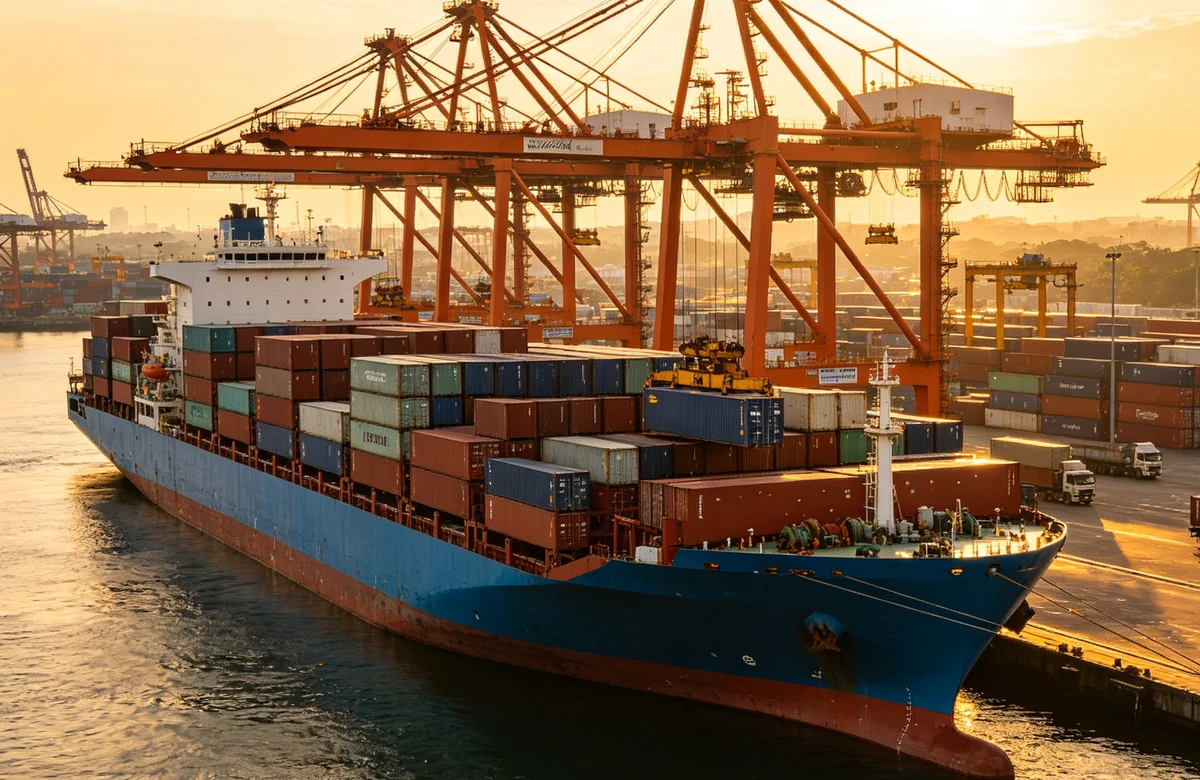
What Is DDP Sea Freight? Incoterms 2020 Explained for Indonesia
Under Incoterms 2020, DDP (Delivered Duty Paid) represents the maximum obligation for the seller — or in freight forwarding practice, your logistics provider. The forwarder bears all costs and risks: factory pickup, China export customs clearance, sea freight, Indonesia import customs clearance, payment of all import duties and taxes, and final delivery to your specified address.
This is fundamentally different from DAP (Delivered at Place), where the seller delivers to a named place but the buyer handles import clearance and pays duties. It is also far more comprehensive than FOB (Free on Board) or CIF (Cost, Insurance & Freight), both of which leave import customs, duties, and last-mile delivery as the buyer’s responsibility.
In the China-Indonesia trade lane, DDP has become the dominant term for a practical reason: most Indonesian buyers — especially small-to-medium importers, e-commerce sellers, and first-time buyers — do not hold an API (Import Identification Number) or a registered NIB (Business Identification Number). Without these, appearing as the formal consignee on an Indonesian customs declaration is legally impossible. DDP solves this by having the forwarder act as the Importer of Record (IOR) through a licensed Indonesian entity.
Our Industry Insight: Over the past decade handling China-Indonesia shipments, we’ve seen a clear pattern: importers who start with CIF or FOB almost always switch to DDP after their first customs hold. The reason is simple — indonesia’s regulatory landscape is not designed for casual importers. The CEISA 4.0 electronic customs system, mandatory since 2023, requires precise HS code classification, real-time PIB (Import Declaration) filing before vessel arrival, and licensed PPJK customs broker credentials. One misfiled document and your container sits at Tanjung Priok accruing $30–$80/day in demurrage. DDP transfers that entire compliance burden to someone who does it daily.
When should you choose DDP sea freight over DDP air freight? Sea freight is the right choice when your shipment exceeds 2–3 CBM, is not urgently time-sensitive, and cost efficiency matters. Air freight DDP delivers in 4–7 days door-to-door, but at 6–10× the per-kg cost. For comparison, Air Freight from China to USA runs on a similar premium — fast, but reserved for high-value or time-critical cargo. For the vast majority of commercial imports — furniture, machinery, consumer goods, textiles, auto parts — DDP sea freight offers the best balance of cost and reliability.
DDP Sea Freight Costs from China to Indonesia in 2026
Understanding DDP sea freight China to Indonesia rates requires knowing what is and isn’t included in your all-in quote. A legitimate DDP quotation from a reputable forwarder should transparently list every cost component.
What’s Included in a DDP Quote
| Cost Component | Description |
|---|---|
| Factory pickup (China) | Trucking from your supplier’s factory to the forwarder’s consolidation warehouse or port |
| China export customs clearance | Export declaration filing, document preparation, customs inspection (if required) |
| Ocean freight | Container booking, B/L issuance, port charges at origin |
| Indonesia import duty (Bea Masuk) | HS-code-specific duty rate; 0% for most goods under ACFTA Form E |
| PPN 11% (VAT) | Applied on CIF value + import duty |
| PPh 22 2.5% (Income Tax) | Applied on CIF value; 7.5% if no API is available |
| Indonesia customs brokerage | PIB filing via CEISA 4.0, document submission, customs liaison |
| Port handling (destination) | THC, container stripping (for LCL), bonded warehouse fees |
| Last-mile trucking | Delivery to your door in Jakarta, Surabaya, Bandung, or other major cities |
What’s Typically NOT Included
- Storage or demurrage charges beyond the standard free time (usually 3–5 days at Tanjung Priok)
- Customs physical inspection fees if your shipment is flagged for red-channel examination
- Quarantine or fumigation costs for regulated goods (e.g., wooden packaging requiring IPPC certification)
- Inter-island shipping surcharges for non-Java destinations (Bali, Sumatra, Sulawesi, Kalimantan — typically add $150–$400 and 3–7 extra days)
2026 Reference DDP Rates
| Service | All-In DDP Price Range | Best For |
|---|---|---|
| LCL DDP (per CBM) | $90–$160/CBM (general cargo) | 1–14 CBM, small orders, trial shipments |
| LCL DDP (sensitive cargo) | $170–$240/CBM | Battery products, cosmetics, food items |
| 20GP FCL DDP | $1,300–$2,000 per container | 15–28 CBM, medium-volume B2B |
| 40GP FCL DDP | $1,800–$2,800 per container | 28–58 CBM |
| 40HQ FCL DDP | $2,000–$3,200 per container | 28–68 CBM, bulky goods (furniture, textiles) |
Rates are indicative for Shenzhen/Guangzhou → Jakarta (Tanjung Priok) routes as of mid-2026. Actual pricing depends on cargo HS code, Form E eligibility, destination city, and seasonal demand. Always request a current quote.
Cost Factors That Impact Your DDP Rate
Several variables determine where your shipment falls within the price ranges above. The most significant is your cargo’s HS code — this determines both the base import duty rate and whether SNI or LARTAS compliance is required. Products eligible for Form E (ACFTA Certificate of Origin) enjoy 0% import duty, dramatically lowering your total landed cost. The departure port also matters: Shenzhen and Guangzhou are typically $100–$300 cheaper than Shanghai or Ningbo for FCL shipments due to shorter sailing distances. Finally, your destination city affects last-mile trucking costs — Jakarta is cheapest, Surabaya and Bandung moderately higher, and Semarang or Medan the most expensive for final delivery.
Our Industry Insight: We always recommend requesting a line-item DDP quote rather than a single lump-sum figure. A transparent forwarder will break down the freight, duty estimate, tax calculation, and handling fees separately. If a forwarder refuses to do this, they may be inflating the “tax” component to pad their margin — or worse, under-declaring your cargo value to Indonesian customs, which risks severe penalties if caught.
The DDP Sea Freight Process: Step-by-Step Timeline
Here’s exactly what happens when you ship DDP sea freight from China to Indonesia, from factory to doorstep. The total DDP shipping time from China to Indonesia ranges from 18–30 days for LCL and 15–25 days for FCL.
Stage 1: Factory Pickup & China Consolidation (Day 1–3)
Your forwarder arranges truck pickup from your supplier’s factory — whether in Guangdong, Zhejiang, Fujian, or elsewhere — and transports the cargo to their consolidation warehouse in Shenzhen or Guangzhou. At the warehouse, the team performs a basic inspection: quantity verification, packaging integrity check, and shipping mark compliance. For LCL shipments, this is also when your cargo is grouped with other Indonesia-bound shipments from different suppliers.
Stage 2: China Export Customs Clearance (Day 3–5)
The forwarder prepares export documentation — Commercial Invoice, Packing List, and export customs declaration — and files through China Customs’ electronic system. For most general cargo, export clearance is routine and completes within 1–2 days. Regulated goods (batteries, chemicals, machinery with certifications) may require additional documentation such as MSDS or UN38.3 test reports.
Stage 3: Container Loading & Port Departure (Day 5–8)
For LCL, cargo is consolidated into a shared container at the warehouse. For FCL, an empty container is positioned at the factory or warehouse for direct loading. The loaded container is trucked to the departure port — Yantian or Shekou (Shenzhen) are the most cost-effective gateways for Indonesia, while Nansha (Guangzhou) is also common. Vessels typically depart 1–3 times per week on the China-Indonesia route.
Stage 4: Ocean Transit (Day 8–15)
| Route | Port-to-Port Transit |
|---|---|
| Shenzhen/Yantian → Jakarta (Tanjung Priok) | 7–10 days |
| Guangzhou/Nansha → Jakarta | 8–11 days |
| Shanghai/Ningbo → Jakarta | 9–12 days |
| Shenzhen → Surabaya (Tanjung Perak) | 9–12 days |
| Shanghai → Surabaya | 11–14 days |
Stage 5: Indonesia Import Customs Clearance (Day 15–22)
This is the most critical stage — and the one DDP exists to handle for you. Upon vessel arrival at Tanjung Priok (or Surabaya), the forwarder’s licensed PPJK customs broker files the PIB (Pemberitahuan Impor Barang) through the CEISA 4.0 electronic platform. Required documents include the Bill of Lading, Commercial Invoice, Packing List, Form E (for preferential tariff), and insurance certificate. Indonesian Customs then assesses the shipment:
- Green channel: Auto-release — no inspection, cargo clears in 1–3 days. This applies to compliant shipments with accurate documentation and standard cargo types.
- Red channel: Physical inspection triggered — adds 7–20 days. Common triggers: HS code mismatch, value discrepancy, missing SNI certificate, or random selection.
Once cleared, the forwarder pays Bea Masuk (import duty), PPN 11% (VAT), and PPh 22 2.5% (income tax) on your behalf. You owe nothing at this stage.
Stage 6: Port Release & Deconsolidation (Day 22–25)
For FCL, the sealed container is released directly from the terminal and trucked to your address. For LCL, the container is moved to a bonded warehouse where it is stripped, and your cargo is separated for individual delivery. If wooden packaging is declared, a quarantine inspection (Karantina) may occur at this stage.
Stage 7: Last-Mile Delivery (Day 25–30)
Your cargo is trucked to your specified address in Jakarta, Surabaya, Bandung, Semarang, or other major cities on Java. For destinations outside Java (Bali, Medan, Makassar), inter-island shipping adds approximately 3–7 days and a surcharge of $150–$400 depending on the island.
Indonesia Customs & DDP: Duties, Taxes & How Form E Saves You Money
Understanding how Indonesia PPN import tax and other charges are calculated under DDP helps you verify that your forwarder’s quote is accurate. Indonesia applies a layered tax structure on all imports:
| Tax Type | Rate | Applied On |
|---|---|---|
| Bea Masuk (Import Duty) | 0–40% (HS-dependent) | CIF value |
| PPN (VAT) | 11% | CIF + Import Duty |
| PPh 22 (Income Tax) | 2.5% (with API) / 7.5% (without) | CIF value |
| PPnBM (Luxury Tax) | 0–95% (category-specific) | CIF + Import Duty |
The Tax Calculation Formula
For a practical example, let’s break down a furniture shipment (HS 9403) with a FOB value of $15,000:
- CIF Value = FOB ($15,000) + Freight ($800) + Insurance ($150) = $15,950
- Import Duty = $15,950 × 0% (Form E) = $0
- PPN 11% = 11% × ($15,950 + $0) = $1,755
- PPh 22 = 2.5% × $15,950 = $399
- Total Tax = $0 + $1,755 + $399 = $2,154
Without Form E, the same shipment would attract 5–10% import duty ($798–$1,595), adding $88–$175 extra in cascading PPN — Form E saves $886–$1,770 on this one shipment alone.
The Form E Advantage: ACFTA 0% Duty
Under the ASEAN-China Free Trade Agreement (ACFTA), over 90% of product categories shipped from China to Indonesia qualify for 0% import duty when accompanied by a valid Form E Certificate of Origin. Issued by CCPIT (China Council for the Promotion of International Trade), Form E certifies that the goods meet the 40% regional value content rule — meaning at least 40% of the product’s value originates from China or ASEAN countries.
| Product Category | HS Code Example | Duty Without Form E | Duty With Form E |
|---|---|---|---|
| Furniture | 9403.50 | 5–10% | 0% |
| Electronics | 8517.12 | 0–15% | 0% |
| Textiles & Garments | 6204.62 | 15–25% | 0% |
| Machinery | 8479.89 | 0–5% | 0% |
| Ceramic Tiles | 6907.21 | 0–5% | 0% |
Most Chinese-made products automatically satisfy the 40% rule, making Form E broadly applicable. Your DDP forwarder handles the entire Form E application process through CCPIT on your behalf — you simply need to provide the commercial invoice and packing list.
RCEP (Regional Comprehensive Economic Partnership) also offers 0% tariffs on most categories via Form RCEP. A competent forwarder evaluates both certificates and applies the more favorable one for your specific HS codes.
DDP vs FOB/CIF: Why DDP Wins for Indonesia Imports
When importing from China, you can choose between several Incoterms. Here’s how DDP vs FOB shipping from China to Indonesia compares across the dimensions that matter most:
| Aspect | DDP | FOB/CIF | EXW |
|---|---|---|---|
| Export clearance (China) | Forwarder handles | Forwarder handles | Buyer arranges |
| Ocean freight | Included | Included | Buyer arranges |
| Import duty & taxes | Included (forwarder pays) | Buyer pays | Buyer pays |
| Indonesia customs clearance | Included | Buyer arranges | Buyer arranges |
| Last-mile delivery | Included | Buyer arranges | Buyer arranges |
| Need your own API/NIB? | No | Yes | Yes |
| Predictable total cost? | Yes — one all-in quote | No — variable import costs | No — each step separately priced |
| Customs risk exposure | Near-zero | High — all on you | Very high |
The appeal of DDP lies not just in convenience, but in risk transfer. Under FOB or CIF, you — the importer — bear the consequences if something goes wrong at Indonesian customs. Here’s what those consequences look like in practice:
- Demurrage at Tanjung Priok: $30–$80 per container per day after the 3-day free period. A 14-day customs hold costs $420–$1,120 just for container storage.
- Red-channel inspection: Triggers 7–20 days of delay plus $200–$500 in inspection fees. Your cargo sits in a customs examination area while demurrage keeps accruing.
- Missing API/NIB: Goods cannot be released — they accumulate storage charges indefinitely until a compliant IOR is provided.
- SNI non-compliance: Regulated goods (electronics, appliances) without valid SNI certificates are seized and face mandatory return or destruction at the importer’s cost.
- Value under-declaration penalties: Indonesian customs may impose fines of 100–500% of the underpaid duty amount.
Our Industry Insight: We recently handled a case where a Jakarta-based furniture importer tried CIF on their first shipment — a 20GP of wooden furniture from Foshan. The container arrived at Tanjung Priok, but customs rejected the PIB because the importer’s API had expired and they hadn’t realized it. Three weeks and $980 in demurrage later, they called us to take over the clearance under our DDP IOR arrangement. The lesson: Indonesia doesn’t give second chances on paperwork. If you don’t do this every day, DDP is almost always the safer, cheaper choice in the long run.
When might FOB or CIF still work? If you are an established Indonesian company with a valid API, a dedicated in-house logistics team, and a long-standing relationship with a licensed PPJK customs broker, you can potentially save 8–15% on logistics costs by managing import clearance yourself. But for everyone else — first-time importers, e-commerce sellers without an Indonesian entity, and small-to-medium B2B buyers — DDP eliminates the single biggest risk in the entire import process.
Indonesia Import Compliance: What DDP Handles for You
One of the most valuable aspects of customs clearance under DDP is that the forwarder shoulders the entire compliance burden. Here’s what they handle on your behalf so your goods don’t get stuck at the port.
CEISA 4.0 & the Indonesia National Single Window (INSW)
Since 2023, all Indonesian import declarations must be filed through CEISA 4.0 (Customs-Excise Information System and Automation), Indonesia’s electronic customs platform integrated with the INSW (Indonesia National Single Window). The PIB (Import Declaration) must be submitted before the vessel arrives. Late filing means clearance suspension and accumulating port storage charges. Your DDP forwarder’s PPJK-licensed customs broker handles this entire electronic workflow.
Importer of Record: How Undername Import Works
Under a DDP arrangement, your forwarder — or their Indonesian partner — acts as the Importer of Record (IOR) on the PIB. This is a legal practice known in Indonesia as Jasa Undername (undername import). The forwarder’s API-U (general import license) and NIB appear on customs documentation, eliminating the requirement for you to hold these credentials. This is the single mechanism that makes DDP accessible to foreign buyers and unregistered Indonesian importers alike.
SNI Certification: Which Products Need It?
SNI (Standar Nasional Indonesia) certification is mandatory for specific regulated product categories — but not for everything. A good DDP forwarder verifies SNI requirements before your cargo ever leaves China.
| Requires SNI | Typically Exempt from SNI |
|---|---|
| Electronics & electrical appliances | General (non-electrical) furniture |
| Household appliances | Clothing & fashion accessories |
| Building materials (steel, cement) | Everyday consumer goods |
| Footwear | Toys (unless electronic) |
| Textiles & fabrics | Promotional items & giveaways |
| Children’s toys | Stationery |
If your product requires SNI, the forwarder either ensures the supplier holds valid SNI certification or guides you through obtaining it before shipping — avoiding the costly scenario where uncertified goods are seized at Tanjung Priok.
LARTAS: Restricted & Prohibited Goods
LARTAS (Larangan dan Pembatasan) refers to Indonesia’s list of goods subject to import restrictions or prohibitions. Common LARTAS categories include lithium batteries (require UN38.3 and MSDS), cosmetics (require BPOM registration), food products (require BPOM and quarantine permits), and medical devices (require Ministry of Health approval). Your DDP forwarder identifies any LARTAS triggers for your cargo, advises on required permits, and ensures all documentation is in place before shipment — so your cargo is compliant when it arrives, not rejected afterward.
Real DDP Cost Scenarios: Three Examples
To make the numbers concrete, here are three DDP sea freight from China to Indonesia cost scenarios across different shipment sizes — all assuming valid Form E coverage for 0% import duty.
Scenario 1: Small E-Commerce Order via LCL DDP
A Shopee seller orders 3 CBM of clothing and accessories from a Guangzhou supplier.
| Cost Item | Calculation | Amount |
|---|---|---|
| FOB value | — | $5,000 |
| LCL DDP freight (all-in base) | $120/CBM × 3 | $360 |
| CIF basis for tax | $5,000 + $360 × 0.8 (freight portion) | ~$5,288 |
| Import duty (Form E) | 0% | $0 |
| PPN 11% | 11% × $5,288 | $582 |
| PPh 22 2.5% | 2.5% × $5,288 | $132 |
| Total DDP Landed Cost | ~$1,074 | |
| Effective all-in rate | ~$358/CBM | |
| Door-to-door timeline | 22–28 days |
Scenario 2: Mid-Sized B2B Furniture via 20GP FCL DDP
A Jakarta furniture retailer imports a 20GP container from Foshan (25 CBM, HS 9403).
| Cost Item | Calculation | Amount |
|---|---|---|
| FOB value | — | $15,000 |
| 20GP FCL DDP freight (all-in base) | Quoted rate | $1,500 |
| CIF basis for tax | $15,000 + $1,500 × 0.7 | ~$16,050 |
| Import duty (Form E) | 0% | $0 |
| PPN 11% | 11% × $16,050 | $1,766 |
| PPh 22 2.5% | 2.5% × $16,050 | $401 |
| Total DDP Landed Cost | ~$3,667 | |
| Effective all-in rate | ~$147/CBM | |
| Door-to-door timeline | 18–22 days |
Scenario 3: Large Wholesale via 40HQ FCL DDP
A distributor consolidates 65 CBM of mixed consumer goods from Yiwu through Ningbo port.
| Cost Item | Calculation | Amount |
|---|---|---|
| FOB value | — | $40,000 |
| 40HQ FCL DDP freight (all-in base) | Quoted rate | $2,800 |
| CIF basis for tax | $40,000 + $2,800 × 0.7 | ~$41,960 |
| Import duty (Form E) | 0% | $0 |
| PPN 11% | 11% × $41,960 | $4,616 |
| PPh 22 2.5% | 2.5% × $41,960 | $1,049 |
| Total DDP Landed Cost | ~$8,465 | |
| Effective all-in rate | ~$130/CBM | |
| Door-to-door timeline | 20–25 days |
LCL vs FCL: The Break-Even Point
Notice the effective per-CBM cost drops from ~$358 (Scenario 1, LCL) to ~$147 (Scenario 2, FCL 20GP). The break-even point where FCL becomes cheaper per CBM than LCL is approximately 12–15 CBM. If your shipment volume is approaching this threshold, consolidating orders into a 20GP FCL shipment delivers significantly better unit economics.
While this guide focuses on the Indonesia trade lane, the same FCL vs LCL cost dynamics apply across other major routes. For context, importers moving larger volumes to North America often find that FCL Shipping from China to USA follows similar economies of scale — the larger the consolidated volume, the lower the per-unit logistics cost.
How to Choose a DDP Sea Freight Forwarder for Indonesia
Not all DDP forwarders are equal — especially for Indonesia, where local customs expertise is the difference between smooth clearance and expensive delays. Here are six criteria to evaluate any forwarder before booking.
1. Indonesia Customs Expertise. Does the forwarder employ a licensed PPJK customs broker in Indonesia? Can they demonstrate CEISA 4.0 filing competence and familiarity with Tanjung Priok and Surabaya port procedures? Ask about their average clearance time and green-channel success rate.
2. IOR (Importer of Record) Legitimacy. A legitimate DDP forwarder either holds their own API-U and NIB through an Indonesian subsidiary, or has a verified, long-term partnership with a compliant Indonesian IOR. If they cannot explain their undername import setup clearly, walk away.
3. Form E Processing Capability. Can they prepare ACFTA Form E certificates through CCPIT? Do they proactively check whether your HS codes qualify for preferential duty? A forwarder who doesn’t mention Form E is leaving money on the table — yours.
4. Pricing Transparency. Request an all-in quote with clear line-item separation: freight, estimated duty, estimated PPN, estimated PPh 22, port handling, and trucking. A single lump-sum figure without breakdown is a red flag.
5. China-Side Infrastructure. Do they have their own consolidation warehouse near major departure ports (Shenzhen, Guangzhou)? Can they handle factory pickup across Guangdong, Zhejiang, and Fujian? Proximity to Yantian and Shekou ports means faster loading and lower domestic trucking costs.
6. Track Record & Communication. How many China-Indonesia shipments do they handle monthly? Do they provide real-time tracking? Can they communicate in English, Indonesian, and Chinese — ensuring no language barrier between your Chinese supplier and Indonesian customs broker?
Red Flags to Avoid
- Quotes significantly below market rates — likely excluding tax components or under-declaring cargo value
- No verifiable Indonesian office or partner entity
- Refusal to provide past customs clearance documentation as reference
- Inability to identify the correct HS code duty rate for your product category
Sinoshipment fits the China-Indonesia DDP lane on all six criteria. Based in Shenzhen — minutes from Yantian and Shekou ports — we have handled over 5,000 international shipments since 2013, with dedicated Indonesia trade lane expertise covering CEISA 4.0 compliance, Form E processing, SNI verification, and LARTAS pre-screening. Every DDP quote we provide is line-item transparent with no hidden fees after quotation.
FAQ
How long does DDP sea freight take from China to Indonesia?
18–30 days door-to-door for LCL, 15–25 days for FCL. The fastest route is Shenzhen/Yantian → Jakarta (Tanjung Priok), with 7–10 days port-to-port. Surabaya and Semarang add 2–4 days. Inter-island delivery to Bali or Sumatra adds an additional 3–7 days.
What taxes do I pay under DDP from China to Indonesia?
Under DDP, all taxes are included in your all-in quote and paid by the forwarder: Bea Masuk (import duty, 0–40% before Form E), PPN 11% (VAT on CIF + duty), and PPh 22 2.5% (income tax with API). With a valid Form E, most product categories achieve 0% import duty, significantly lowering total landed cost.
Do I need an API or NIB to import from China via DDP?
No. Your DDP forwarder acts as the Importer of Record using their own API and NIB. This is known as undername import (Jasa Undername) and is standard practice in Indonesia for importers who do not hold local business registration.
Is SNI certification required for all goods shipped via DDP?
No. SNI is mandatory only for regulated categories: electronics, household appliances, building materials, footwear, and textiles. General furniture (non-electrical), everyday clothing, and consumer goods are typically exempt. A competent DDP forwarder will verify SNI requirements for your specific products before shipping.
Can Form E really bring my import duty to 0%?
Yes — for over 90% of product categories under the ACFTA agreement. Goods must meet the 40% China/ASEAN regional value content rule, which most Chinese-manufactured products satisfy. Your forwarder applies for Form E through CCPIT at no additional cost beyond the certificate fee.
What happens if my DDP shipment gets held at Indonesian customs?
Under DDP, your forwarder — not you — is responsible for resolving customs holds. They bear the demurrage, inspection, and storage costs. This risk transfer is one of the strongest arguments for using DDP when importing to Indonesia.
What’s the cheapest DDP shipping option from China to Indonesia?
For shipments under 12–15 CBM, LCL DDP is cheapest at $90–$160/CBM. For larger volumes, FCL DDP offers better per-unit economics — 20GP at $1,300–$2,000 all-in, or 40HQ at $2,000–$3,200 all-in. The LCL-to-FCL break-even point is around 12–15 CBM.
DDP sea freight is the simplest, lowest-risk way to import from China to Indonesia — one price, one provider, no customs surprises at Tanjung Priok. With ACFTA Form E, 90%+ of goods from China enter Indonesia at 0% import duty, and a reliable DDP forwarder handles the entire compliance chain — CEISA 4.0, SNI, LARTAS, and undername IOR — so you can focus on growing your business, not navigating bureaucracy. The same principles apply for importers targeting other major markets — for instance, Container Shipping from China to USA follows a parallel logistics structure where DDP can similarly simplify compliance and cost predictability.
Ready to get a transparent, all-in DDP sea freight quote from China to Indonesia? Contact Sinoshipment today — 10+ years of China export expertise, 5,000+ clients served worldwide, with a Shenzhen-based team that handles everything from factory pickup to your doorstep in Jakarta, Surabaya, or anywhere across the archipelago.