FCL Shipping from China to Italy: The Complete 2026 Guide (Cost, Transit Time & Ports)
· By SinoShipment
Freight Shipping from China to Italy remains the most cost-effective way to move bulk cargo between Asia and Southern Europe—but the quote you receive is rarely the full story. By the time you add port handling, fuel surcharges, Italian VAT, customs brokerage, and possible demurrage, the lowest ocean freight rate can end up costing far more than a transparent, all-in quote.
At Sinoshipment, we have managed Full Container Load (FCL) shipments from Shenzhen, Shanghai, Ningbo, and other major Chinese ports to Genoa, La Spezia, Naples, and Trieste since 2013. In this guide, we break down real 2026 FCL shipping from China to Italy cost ranges, transit times, port pairings, Incoterms, customs requirements, and a step-by-step workflow so you can plan your next container shipment without surprises.
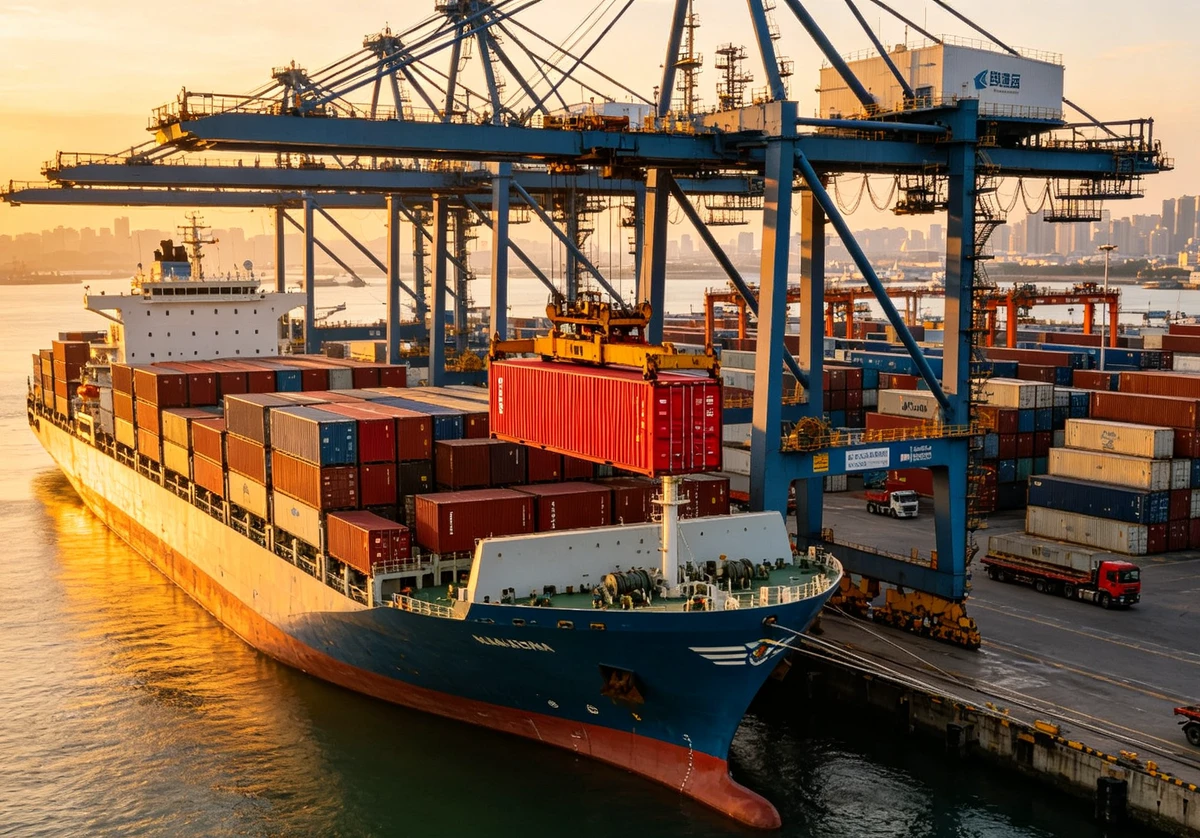
Editorial note: This guide is updated for Q3 2026 and reflects market conditions, carrier routing decisions, and Italian customs rules we are actively working with. Rates are reference ranges only; your actual quote depends on cargo details, sailing date, and Incoterm.
1. What Is FCL Shipping from China to Italy?
FCL (Full Container Load) means one shipper books an entire container—usually a 20ft, 40ft, or 40ft High Cube (40HQ)—for cargo traveling from a Chinese port to an Italian destination port.
Unlike LCL (Less than Container Load), where your goods share container space with other shippers, FCL gives you:
- Exclusive use of the container.
- Less handling and a lower damage risk.
- Faster departure and arrival because there is no consolidation or deconsolidation.
- One Bill of Lading (B/L) for the whole shipment, simplifying customs.
For most importers, FCL becomes the better choice once cargo volume reaches roughly 13–15 CBM. Common goods moving by FCL from China to Italy include furniture, machinery, electronics, textiles, ceramics, auto parts, lighting, and building materials.
Our Industry Insight: In our experience, first-time importers often assume FCL is only for huge orders. In reality, a 20ft container has a nominal capacity of about 33 CBM, but practical usable volume is roughly 28–30 CBM depending on packaging. If your cargo is bulky or fragile, booking FCL at 12–14 CBM can already be safer and more predictable than LCL.
2. FCL Shipping from China to Italy Cost: 2026 Rate Breakdown
When buyers search for FCL shipping from China to Italy cost, they usually want a single number. The honest answer is that every shipment is different. Rates change weekly with vessel space, fuel prices, and routing decisions around the Suez and Red Sea.
Below are Q3 2026 reference ranges for port-to-port FCL ocean freight only:
| Port Pair | 20ft Container | 40ft / 40HQ Container | Typical Transit |
|---|---|---|---|
| Shanghai → Genoa | $2,600 – $3,300 | $3,400 – $4,800 | 28–35 days |
| Shenzhen (Yantian) → Genoa | $2,700 – $3,460 | $3,500 – $5,200 | 28–36 days |
| Ningbo → La Spezia | $2,500 – $3,200 | $3,300 – $4,600 | 26–34 days |
| Qingdao → Naples | $2,600 – $3,400 | $3,400 – $4,900 | 30–40 days |
These figures cover the base sea freight rate. Your total landed cost also includes:
- Origin charges: trucking to the port, terminal handling charges (THC), documentation, and China export customs clearance.
- Ocean freight: the container slot from China to Italy.
- Destination charges: Italian THC, port fees, customs clearance, inspection fees if selected.
- Duties and taxes: Italian customs duty (0%–25% depending on HS code) plus 22% VAT on CIF value plus duty.
- Inland delivery: trucking or rail from the Italian port to your warehouse.
- Detention and demurrage: charges if the container sits too long at the port or is not returned on time.
Our Industry Insight: We have seen importers choose a forwarder with the lowest ocean freight rate, only to discover the destination agent charged inflated THC or the container sat in Genoa for two weeks because the B/L had a typo. Always ask for an all-in quote with a clear list of what is—and is not—included.
At Sinoshipment, we quote FCL shipments with transparent origin, ocean, and destination components so you can compare real total landed cost rather than a misleading base rate. In our experience, the importers who save the most money long term are the ones who compare all-in quotes—not just the headline ocean freight number.
Our Pricing Insight: A 40HQ from Shenzhen to Genoa might show a $3,800 ocean rate, but a poorly structured quote can leave out $400–$700 in THC, documentation, and delivery. We always itemize these so you know exactly what you are paying for before the container sails.
3. FCL Shipping from China to Italy Transit Time & Sailing Schedules
If you are wondering how long does FCL shipping take from China to Italy, the short answer is usually 25 to 40 days port-to-port, depending on the origin port, destination port, and whether the service is direct or transshipped. If your cargo is time-critical, air freight from China to Italy can reduce transit to roughly 5–8 days for urgent shipments.
2026 Transit Time Reference by Port Pair
| Departure Port | Destination Port | Average Transit | Sailing Frequency |
|---|---|---|---|
| Shanghai | Genoa | 28–35 days | Weekly |
| Shenzhen (Yantian/Shekou) | Genoa / La Spezia | 25–32 days | Weekly |
| Ningbo | La Spezia / Trieste | 26–34 days | Weekly to bi-weekly |
| Guangzhou (Nansha) | Genoa / Naples | 27–34 days | Weekly |
| Qingdao | Naples | 35–40 days | Weekly |
Direct services are generally faster and safer because the container stays on the same vessel. Transshipment through hubs like Singapore, Port Said, or Colombo can add 5–10 days and increases handling risk. In our experience, a direct Shenzhen–Genoa service is usually the most predictable option for time-sensitive cargo, while a transshipment service through the Suez may be cheaper but harder to guarantee during periods of Red Sea disruption.
In 2026, several factors are affecting schedules:
- Red Sea / Suez disruptions have pushed some carriers to route around the Cape of Good Hope, adding transit time on affected sailings.
- Peak-season space tightens in the weeks before Chinese New Year and again in Q3 before the holiday retail rush.
- Italian port congestion can delay unloading at Genoa and Naples during busy months.
To protect your schedule, book 3–4 weeks in advance, confirm whether the service is direct, and make sure documents are ready before the sailing cut-off.
4. Top Ports for FCL Shipping from China to Italy
Choosing the right port pair can cut both cost and inland transit time.
Major Chinese Origin Ports
| Port | Best For | Nearby Manufacturing Hubs |
|---|---|---|
| Shenzhen (Yantian / Shekou) | South China electronics, furniture, e-commerce | Dongguan, Shenzhen, Guangzhou |
| Shanghai | East China industrial cargo, large-volume FCL | Suzhou, Hangzhou, Zhejiang |
| Ningbo-Zhoushan | Machinery, textiles, consumer goods | Ningbo, Shaoxing, Yiwu |
| Guangzhou (Nansha) | Home goods, lighting, ceramics | Foshan, Zhongshan |
| Qingdao | North China machinery, textiles, agricultural products | Shandong, Tianjin region |
Major Italian Destination Ports
| Port | Best For | Inland Connections |
|---|---|---|
| Genoa | Northern Italy industrial imports | Milan, Turin, Bologna |
| La Spezia | Northern/Central Italy, fast rail links | Florence, Milan, Parma |
| Naples | Central and Southern Italy | Rome, Bari, Campania |
| Trieste | Northeastern Italy, Central Europe gateway | Venice, Austria, Slovenia |
| Venice | Northeastern Italy and Adriatic corridor | Padua, Verona, Vicenza |
| Livorno | Tuscany and Central Italy | Florence, Pisa, Siena |
For example, if your supplier is in Dongguan and your final warehouse is near Milan, Shenzhen → Genoa or Shenzhen → La Spezia is usually the most efficient pairing. If your supplier is in Ningbo and you need cargo in Austria or Slovenia, Ningbo → Trieste often makes more sense than routing through Northern Italy. For businesses that also distribute into neighboring EU markets, Sinoshipment supports dedicated lanes such as freight shipping from China to France and freight shipping from China to Germany, so you can align Italian arrivals with broader European distribution plans.
5. FCL vs LCL: When Is a Full Container Worth It?
Not every shipment needs a full container. The decision usually comes down to volume, cargo type, and how much control you want.
| Factor | FCL | LCL |
|---|---|---|
| Best volume | 15+ CBM | 1–15 CBM |
| Damage risk | Lower (less handling) | Higher (consolidation/deconsolidation) |
| Transit time | Faster, more predictable | Usually 5–10 days longer |
| Cost per CBM | Lower at high volume | Higher per unit, but cheaper for small shipments |
| Control | You control the whole container | Shared space with other shippers |
| Customs | One B/L, simpler | More complex if multiple products mix |
A 20ft container is ideal for heavy cargo like machinery or stone because it has a lower tare weight and a solid payload capacity. A 40HQ container is better for bulky but lighter cargo like furniture, textiles, or foam products because it offers roughly 68–70 CBM of volume. For a similar FCL breakdown on another Mediterranean route, see our guide to FCL Shipping from China to Spain.
Our Industry Insight: We often advise furniture importers to switch from LCL to 40HQ once they hit about 45–50 CBM on a regular order. The per-unit savings and reduced damage risk usually pay for the extra space.
6. Door-to-Door FCL Shipping from China to Italy (DDP Service)
Door-to-door FCL shipping from China to Italy means the forwarder handles everything from your supplier’s factory to your final delivery address. Under DDP (Delivered Duty Paid), the forwarder also pays Italian import duty and 22% VAT on your behalf.
A DDP quote typically includes:
- Factory pickup in China.
- China export customs clearance.
- Ocean freight to the Italian port.
- Italy import customs clearance.
- Duty and VAT payment.
- Inland trucking to your warehouse.
- Cargo tracking throughout.
DDP is especially useful if:
- You do not have an Italian VAT number or EORI registration.
- You are a first-time importer.
- You sell on Amazon FBA or run an e-commerce store and need a single invoice.
- You want predictable cash flow without surprise customs bills.
Real-Life Scenario: One of our clients, a lighting wholesaler in Milan, switched from FOB to DDP with Sinoshipment after their previous forwarder left a 40HQ container stuck at Genoa for ten days. We now pick up the goods in Foshan, load the container at Nansha, clear both sides of customs, and deliver directly to their Milan warehouse. They get one quote, one invoice, and one point of contact.
At Sinoshipment, we provide transparent DDP quotes for FCL shipments to Italy with no hidden destination charges. That said, DDP is not always the cheapest option on paper; if you have your own Italian import agent and are comfortable paying duty and VAT directly, FOB or CIF can sometimes give you more control over carrier choice and inland delivery.
7. How to Choose the Right Incoterms for Your FCL Shipment
Incoterms 2020, published by the International Chamber of Commerce (ICC), define who pays for transport, insurance, and customs at each stage. Choosing the wrong term can shift risk and cost in ways you did not expect.
| Incoterm | Seller Pays | Buyer Handles | Best For |
|---|---|---|---|
| EXW | Makes goods available at factory | Everything from factory pickup to Italy delivery | Experienced buyers with China logistics resources |
| FOB | Loads goods on vessel at Chinese port | Ocean freight, insurance, Italy clearance, delivery | Buyers who want control over ocean carrier and agent |
| CIF | Freight + insurance to Italian port | Import clearance, duty/VAT, inland delivery | Buyers with a trusted Italy customs broker |
| DAP | Delivery to named place in Italy | Import duty and VAT | Buyers with VAT/EORI who want simple logistics |
| DDP | Everything including duty and VAT | Almost nothing (unloading at destination) | Buyers who want minimum admin and predictable cost |
For most small and mid-sized importers without a strong Italy-side customs partner, DDP is the safest Incoterm. It removes the risk of unexpected duty bills, storage fees, and customs delays. If you already have an Italian import agent, FOB or CIF may give you more control over carrier selection.
8. Italian Customs, VAT, Duties & Compliance Essentials
Italian customs, managed by Agenzia delle Dogane e dei Monopoli, can be strict—especially with China-origin goods in categories that face anti-dumping or product-safety scrutiny. Having a reliable customs clearance partner on both sides of the route is one of the simplest ways to avoid unnecessary inspections and storage fees.
Required Documents for FCL Import into Italy
- Commercial Invoice.
- Packing List.
- Original Bill of Lading (B/L) or Telex Release.
- EORI number (mandatory for businesses importing into the EU).
- Italian Partita IVA if you are reclaiming VAT.
- Accurate HS code for every product line.
- Certificate of Origin (if required for preferential duty).
- CE marking / product compliance certificates for regulated goods.
Taxes and Duties
- Customs duty: typically 0%–25%, depending on HS code and product category.
- VAT: 22% on CIF value plus customs duty.
- Anti-dumping duties: may apply to Chinese ceramics, solar panels, certain steel products, and selected aluminium products. Note that EU anti-dumping duties on Chinese ceramic tableware and kitchenware were raised to 79% in February 2026.
- EU ICS2: advance cargo information must be submitted before arrival. According to the European Commission, carriers and freight operators must provide advance cargo data for goods entering the EU before loading.
- CBAM: the EU Carbon Border Adjustment Mechanism increasingly affects steel, cement, aluminum, fertilizers, and hydrogen imports. The European Commission CBAM page explains which product categories must report embedded emissions and purchase CBAM certificates.
Our Industry Insight: Italian customs often inspect textile, footwear, and ceramic shipments more closely because these categories have a history of misdeclared values and anti-dumping cases. We always recommend that clients prepare accurate commercial invoices and clearly mark cartons before loading to reduce the chance of a physical inspection.
At Sinoshipment, we run a pre-shipment document review for Italy-bound FCL cargo, check HS code classification, and coordinate with our Italy-side customs broker to reduce clearance delays.
9. Step-by-Step FCL Process: From Quote to Delivery
Here is the end-to-end workflow we follow for FCL shipping from China to Italy.
Stage 1: Request a Quote
Send the forwarder your product name, HS code, cargo volume and weight, number of cartons or pallets, supplier address, delivery address, preferred Incoterm, and target shipping date.
Stage 2: Confirm Booking and Sailing Schedule
Once you accept the quote, the forwarder books space with the carrier. You receive a booking confirmation with the sailing cut-off, ETD, and ETA.
Stage 3: Pickup, Loading, and Sealing
The empty container is delivered to the supplier’s warehouse or loaded at the port container yard (CY). After loading, the container is sealed and the seal number is recorded.
Stage 4: China Export Customs Clearance
The forwarder submits the export declaration to Chinese customs. This usually takes 1–2 working days if documents are correct.
Stage 5: Ocean Transit
The vessel sails. You can track progress using the container number, B/L number, or carrier website.
Stage 6: Italy Import Customs Clearance
The forwarder or customs broker submits the import declaration, duty, and VAT payment.
Stage 7: Devanning and Final Delivery
After customs release, the container is trucked to a warehouse for unpacking (if LCL-style devanning is needed) or delivered directly to your door if you booked FCL delivery.
Stage 8: Container Return
The empty container is returned to the carrier depot within the allowed free time to avoid demurrage and detention charges.
Our Industry Insight: Demurrage and detention are two of the most common hidden costs in Italy. We help clients plan container return within the free window, and our DDP quotes include predictable destination handling so you are not hit with unexpected port storage fees.
10. FAQ
How long does FCL shipping take from China to Italy?
Most FCL shipments take 25 to 40 days port-to-port, depending on the port pair and whether the service is direct or transshipped. Door-to-door DDP usually adds 3–7 days for customs and inland delivery.
How much does a 20ft or 40ft container cost to ship from China to Italy?
As of Q3 2026, expect roughly $2,500–$3,500 for a 20ft container and $3,300–$5,500 for a 40ft/40HQ container on common routes. Final cost depends on route, carrier, fuel surcharges, and Incoterm.
Is FCL cheaper than LCL for Italy shipments?
Yes, once your cargo exceeds roughly 13–15 CBM. Below that, LCL is usually cheaper per shipment even though the cost per CBM is higher.
What documents do I need for FCL shipping to Italy?
You need a Commercial Invoice, Packing List, Bill of Lading, EORI number, HS code, and—depending on the product—Certificate of Origin or CE compliance certificates.
Do I need an Italian VAT or EORI number to import by FCL?
An EORI number is required for customs clearance. You do not necessarily need an Italian VAT number if you use DDP service, since the forwarder handles VAT payment on your behalf.
Which port in Italy is best for delivery to Milan?
Genoa and La Spezia are the closest major ports to Milan and have the best rail and trucking links to Northern Italy.
Can Sinoshipment handle DDP door-to-door FCL from China to Italy?
Yes. Sinoshipment offers DDP door-to-door FCL shipping from China to Italy, covering pickup, ocean freight, customs clearance, duty/VAT, and final delivery.
How do I avoid demurrage and detention charges in Italy?
Return the empty container within the carrier’s free time, prepare import documents before the vessel arrives, and choose a forwarder with a reliable Italy-side agent.
What is the best time to book FCL before Chinese New Year?
Book at least 4–5 weeks before Chinese New Year. Space becomes tight and rates rise sharply in the final two weeks before the holiday.
Conclusion
FCL shipping from China to Italy is the most cost-effective choice for bulk cargo when you match the right container size, port pair, Incoterm, and customs strategy. The key is not to chase the lowest ocean freight rate, but to understand the total landed cost—from origin pickup to final delivery.
At Sinoshipment, we have helped over 5,000 clients move cargo from China to Europe, the Middle East, the Americas, and beyond since 2013. If you need a transparent, all-in FCL shipping from China to Italy quote, contact our team today and let us build a route that fits your budget and timeline.
Ready to ship? Request a free FCL quote from Sinoshipment and get current rates, sailing schedules, and DDP options tailored to your cargo.