FCL Shipping from China to Kenya: The Complete 2026 Guide (20ft, 40ft & DDP)
· By SinoShipment
FCL shipping from China to Kenya is the backbone of East Africa’s import trade. Whether you are moving a full container of electronics from Shenzhen, machinery from Shanghai, or furniture from Guangzhou, choosing the right sea freight solution directly affects your landed cost, lead time, and customs experience. Yet most importers still struggle with conflicting rate quotes online, hidden destination charges at Mombasa Port, and unclear KRA/KEBS compliance requirements.
In this guide, we break down exactly what freight shipping from China to Kenya costs in 2026, how long it takes, and how to navigate Kenyan customs without surprises. You will learn how to budget, choose the right Incoterms, and work with a freight forwarder that manages the entire China-to-Kenya corridor.
What Is FCL Shipping? (And When It Beats LCL)
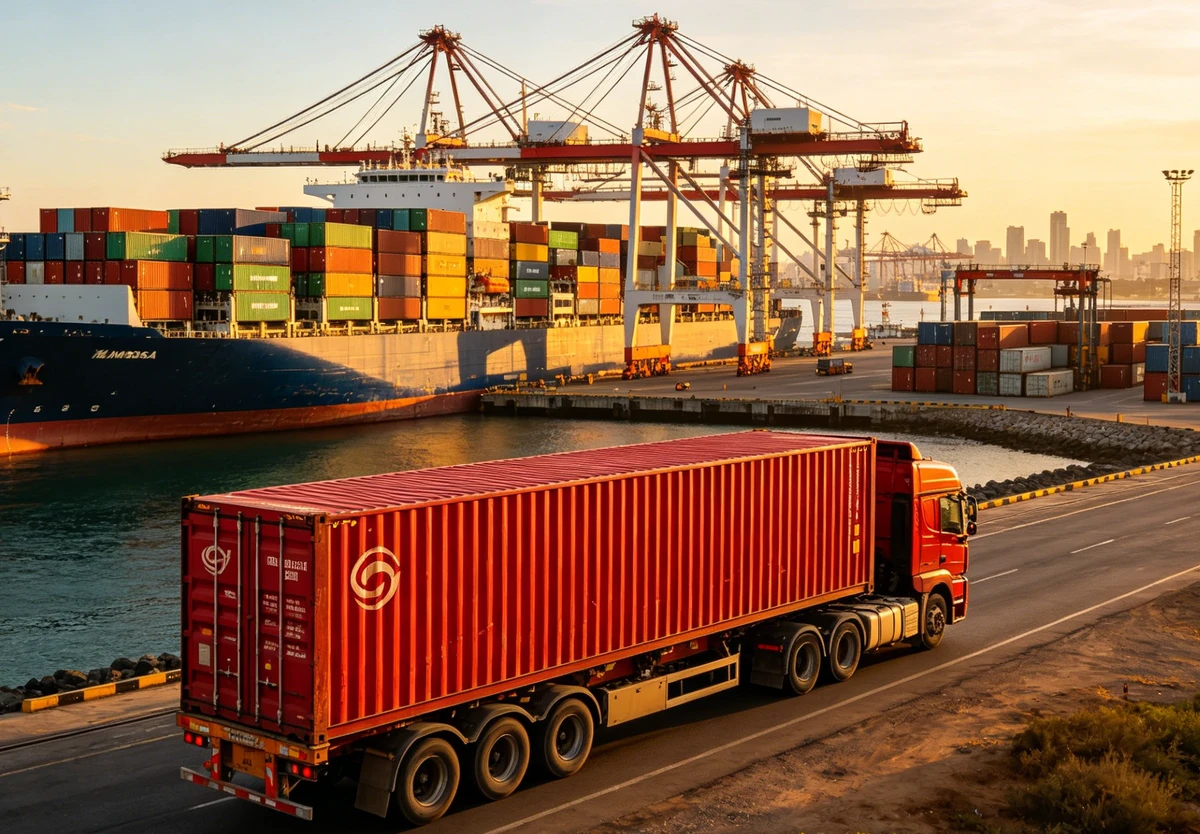
FCL (Full Container Load) means you book an entire shipping container exclusively for your cargo. The container is loaded, sealed at your supplier’s facility or at a warehouse services facility in China, and delivered to you with minimal handling along the way. You receive one Bill of Lading (B/L), one customs entry, and one release process at destination.
This is different from LCL (Less than Container Load), where your cargo shares container space with shipments from other importers. LCL requires consolidation at origin and deconsolidation at destination, which adds handling time, cost, and risk.
| Factor | FCL Shipping | LCL Shipping |
|---|---|---|
| Pricing model | Per container (flat rate) | Per cubic meter (CBM) |
| Best volume | Above 14–18 CBM | 1–13 CBM |
| Handling risk | Lower — minimal touches | Higher — shared cargo handling |
| Transit speed | Faster — no CFS waiting | Slower — consolidation/deconsolidation |
| Customs complexity | Single importer, simpler | Shared container, more complex |
| Security | Container sealed at origin | Cargo exposed during handling |
When should you choose FCL?
- Your cargo exceeds roughly 14–18 CBM.
- You ship regularly and want predictable unit economics.
- Your goods are fragile, high-value, or sensitive to extra handling.
- You want faster port-to-port transit and simpler customs clearance.
If your shipment is small, experimental, or infrequent, LCL or Air Freight from China to Kenya may still make sense. But for most established importers sourcing from China, FCL becomes the cheaper and safer option once volumes reach the break-even point.
Container Types, Sizes & Load Planning for Kenya-Bound Cargo
Choosing the right container is about more than just length. Weight, volume, and cargo shape all affect your final cost.
| Container Type | Internal Dimensions | Payload | Loadable Volume | Best For |
|---|---|---|---|---|
| 20ft GP (TEU) | 5.9 m × 2.35 m × 2.39 m | ~28,000 kg | ~33 CBM | Dense, heavy cargo: tiles, machinery, metal parts |
| 40ft GP (FEU) | 12.03 m × 2.35 m × 2.39 m | ~30,480 kg | ~67 CBM | Bulky cargo: furniture, textiles, plastics |
| 40ft HC | 12.03 m × 2.35 m × 2.69 m | ~30,480 kg | ~76 CBM | Bulky, lightweight cargo: furniture, packaging, consumer goods |
The 40ft High Cube (40HC) is often the most cost-effective choice for bulky shipments because the extra foot of height adds roughly 9 CBM of space without a proportionate increase in freight cost. For example, a shipment of plastic furniture or mattresses may fill a 40HC at a much lower cost per CBM than a 40GP.
For special cargo, you may need:
- Reefer containers for temperature-sensitive goods like food or pharmaceuticals.
- Open-top containers for cargo that must be loaded from above.
- Flat-rack containers for oversized machinery.
A common mistake is assuming the container’s total cubic capacity equals usable space. In reality, poor stacking, pallet overhang, or awkward cartons can waste 10–15% of capacity. Planning your load with accurate carton dimensions helps you avoid paying for air inside the container.
FCL Shipping Rates from China to Kenya (June 2026)
If you have searched for FCL shipping rates from China to Kenya, you have probably seen confusing numbers. One source quotes $1,500 for a 20ft container; another quotes $3,600. Both can be correct at different times, on different carriers, or under different Incoterms.
Rates vary because of:
- Carrier allocation and vessel utilization
- Bunker Adjustment Factor (BAF) and fuel surcharges
- Peak Season Surcharge (PSS) during high-demand months
- Direct sailing vs. transshipment routing
- Origin port demand — southern ports often have more competitive pricing and frequency
The table below shows indicative port-to-port FCL rates to Mombasa for June 2026. These are freight-only ranges and do not include origin charges, insurance, duties, or inland delivery.
| Origin Port (China) | 20ft GP (USD) | 40ft GP (USD) | 40ft HC (USD) | Transit Time |
|---|---|---|---|---|
| Shenzhen / Yantian | $2,400 – $3,400 | $3,800 – $5,200 | $4,400 – $5,600 | 23–36 days |
| Guangzhou / Nansha | $2,500 – $3,500 | $3,900 – $5,400 | $4,500 – $5,700 | 24–37 days |
| Shanghai | $2,500 – $3,600 | $3,900 – $5,300 | $4,500 – $5,700 | 25–38 days |
| Ningbo-Zhoushan | $2,450 – $3,500 | $3,850 – $5,200 | $4,400 – $5,600 | 25–38 days |
| Qingdao | $2,900 – $3,900 | $4,200 – $5,600 | $4,800 – $6,000 | 28–40 days |
| Tianjin | $3,000 – $4,000 | $4,300 – $5,800 | $4,900 – $6,100 | 30–42 days |
| Xiamen | $2,650 – $3,550 | $4,000 – $5,300 | $4,600 – $5,700 | 26–39 days |
Important: Always request an itemized, all-in quote with 2–3 week validity. A quote that only shows ocean freight can hide significant costs at origin and destination.
What a Freight Quote Usually Includes vs. Excludes
| Included | Often Excluded |
|---|---|
| Ocean freight | Origin THC and handling |
| Bill of Lading fee | China export customs clearance |
| Basic carrier service | Cargo insurance |
| Destination THC and port handling | |
| KRA duties, IDF, RDL, VAT | |
| Kenya customs clearance | |
| Inland delivery to Nairobi or other cities |
Sinoshipment provides itemized, transparent quotes so you can see every line item before booking. That is how importers avoid the surprise bills that often arrive after the container has already reached Mombasa.
Transit Times: How Long Does FCL Shipping Take from China to Kenya?
Port-to-port transit time for FCL shipping from China to Mombasa typically ranges from 23 to 42 days, depending on the origin port and whether the service is direct or transshipment.
| Origin Port | Direct Sailing | With Transshipment |
|---|---|---|
| Shenzhen / Yantian | 23–28 days | 28–36 days |
| Guangzhou / Nansha | 24–29 days | 29–37 days |
| Shanghai | 25–30 days | 30–38 days |
| Ningbo | 25–30 days | 30–38 days |
| Qingdao | 28–34 days | 34–40 days |
| Tianjin | 30–36 days | 36–42 days |
| Xiamen | 26–31 days | 31–39 days |
Transshipment usually happens through Singapore, Colombo, Jebel Ali, or Salalah. While it may add 3–7 days, it also offers more sailing options and sometimes lower rates. Direct sailings are faster and involve less handling risk.
The full door-to-door timeline is longer:
| Stage | Typical Duration |
|---|---|
| Factory pickup + consolidation | 2–5 days |
| China export customs clearance | 1–3 days |
| Ocean transit to Mombasa | 23–42 days |
| Vessel discharge + port handling | 1–3 days |
| KNRA radiation screening | 1–2 days (mandatory from May 2026) |
| KRA customs clearance | 3–7 days |
| Inland delivery to Nairobi | 1–2 days |
| Total door-to-door | 35–55 days |
Seasonal and External Delays
Several factors can stretch these timelines:
- Chinese New Year (January/February): factories close and port space becomes tight. Book at least 3–4 weeks in advance.
- Indian Ocean monsoon (May–September): rougher seas can cause schedule deviations.
- Mombasa port congestion: peaks around mid-year and pre-holiday seasons, adding berth waiting time.
- KNRA radiation screening: mandatory for all imports since May 2026. Add 1–2 days to clearance planning.
Major Ports and Carriers on the China–Kenya Lane
Your choice of origin port affects both cost and speed. Here is how the main Chinese ports compare for Kenya-bound FCL cargo.
| Origin Port | Strengths | Best Cargo Types |
|---|---|---|
| Shenzhen / Yantian | Closest to manufacturing hubs, fastest sailings, competitive rates | Electronics, e-commerce goods, high-tech products |
| Guangzhou / Nansha | Pearl River Delta access, strong textile and furniture base | Textiles, garments, furniture, consumer goods |
| Shanghai | Highest frequency, largest port capacity | General cargo, machinery, mixed containers |
| Ningbo-Zhoushan | Competitive rates for industrial cargo | Machinery, auto parts, industrial inputs |
| Qingdao | Northern China gateway | Steel, heavy machinery, chemicals |
| Tianjin | Beijing/Tianjin manufacturing access | Automotive parts, industrial equipment |
| Xiamen | Southeastern China manufacturing | Ceramics, electronics, building materials |
Most cargo arrives at Mombasa Port, East Africa’s largest maritime gateway. From there, containers move by road or rail to Nairobi and other inland destinations, or transit by bonded truck to Uganda, Rwanda, Burundi, South Sudan, and the DRC.
The main carriers serving this lane include MSC, Maersk, COSCO, and CMA CGM. Each has different sailing frequencies, free-time policies, and reliability records. An experienced freight forwarder can match your cargo to the carrier and schedule that best fits your budget and deadline.
Incoterms for FCL Shipping from China to Kenya
Your Incoterms 2020 term determines who pays for what, and who bears the risk at each stage. Choosing the wrong term can leave you with unexpected bills in Mombasa.
| Incoterm | Seller Pays For | Buyer Pays For | Best For |
|---|---|---|---|
| EXW | Goods only | Pickup, export, freight, insurance, duties, delivery | Experienced buyers with full control |
| FOB | Goods + delivery to Chinese port + export clearance | Ocean freight, insurance, destination charges, duties | Buyers with a freight forwarder and customs broker |
| CIF | Goods + ocean freight + insurance to Mombasa | Destination THC, clearance, duties, inland delivery | Buyers comfortable managing Kenya import formalities |
| DAP | Goods + freight + delivery to named destination (e.g., Nairobi ICD) | Import duties, VAT, customs formalities | Buyers who want logistics handled but prefer to pay duties directly |
| DDP | Everything — pickup, freight, duties, delivery | Nothing upfront | First-time importers, e-commerce sellers, or buyers wanting fixed costs |
DDP (Delivered Duty Paid) is increasingly popular for door-to-door FCL shipping from China to Kenya because it gives the importer one fixed price with no hidden duties or clearing-agent fees. However, it requires a forwarder with strong China-side coordination and Kenya customs expertise.
At Sinoshipment, we offer FOB, CIF, DAP, and DDP options, and we help clients choose the term that matches their experience level and cash-flow needs.
Kenyan Customs, KRA Requirements & KEBS Compliance for FCL Cargo
Kenyan customs is strict, and compliance errors are expensive. Before your container leaves China, make sure the following are in order.
Import Declaration Form (IDF)
The IDF must be applied for through the Kenya Revenue Authority (KRA) before your cargo ships. Without it, customs clearance cannot begin when the vessel arrives. The IDF fee is typically around 2.5% of the customs value.
KRA PIN Certificate
Every Kenyan importer needs a valid KRA PIN. Ensure your PIN is active and linked to your import activity before booking space.
HS Code Classification
The Harmonized System (HS) code determines your duty rate, inspection risk, and whether additional permits are required. Wrong classification can trigger audits, penalties, or seizure.
Mandatory Certificate of Origin (CO)
Since 2025, KRA has required a Certificate of Origin for most imports. The certificate must include exporter and importer details, port of origin, goods description, quantity, country of origin, and destination. Your supplier or forwarder in China can arrange this through the local chamber of commerce or authorized issuing body.
KEBS PVoC and Certificate of Conformity (CoC)
The Pre-Export Verification of Conformity (PVoC) program, administered by the Kenya Bureau of Standards (KEBS), requires regulated products to be inspected and certified before shipment. The resulting Certificate of Conformity (CoC) must accompany your cargo.
PVoC operates under three routes:
| Route | Description | Typical Use Case |
|---|---|---|
| Route A | Batch inspection and testing for each shipment | Occasional or new importers |
| Route B | Product registration + periodic random inspection | Regular shipments of the same product |
| Route C | Full quality-management-system certification | High-volume manufacturers |
In 2026, KEBS made significant changes to its PVoC contractor arrangements. China is not currently a designated zone for some contracted inspectors, which means many China-origin shipments without a valid CoC will face destination inspection in Kenya. This adds delays of 7–10 days or more and an inspection fee of approximately 0.6% of the approved customs value.
Bottom line: If your product falls under KEBS regulation, obtain the CoC in China before shipment. The cost typically ranges from $250–$500, while missing it can cost far more in storage, penalties, and lost sales.
KNRA Radiation Screening
Since May 2026, the Kenya Nuclear Regulatory Authority (KNRA) requires mandatory radiation screening for all imports. Factor in an extra 1–2 days for clearance.
Other Permits
- KEPHIS: required for plants, seeds, and agricultural products.
- Special licenses: required for food, chemicals, pharmaceuticals, and cosmetics.
Documents Checklist: China Export + Kenya Import
Accurate documentation is the single biggest factor in avoiding Mombasa port delays. Use this checklist for every FCL shipment.
China Export Documents
- Commercial Invoice
- Packing List
- Bill of Lading (B/L)
- China Customs Declaration / export clearance
- Certificate of Origin
- Fumigation Certificate (if wooden packaging is used)
- MSDS / Transport Safety Report (for batteries, liquids, powders, or hazardous cargo)
Kenya Import Documents
- Original Bill of Lading
- Commercial Invoice and Packing List
- Import Declaration Form (IDF)
- Certificate of Conformity (CoC) — for regulated products
- Certificate of Origin
- Importer’s KRA PIN
- Cargo Insurance Certificate (recommended)
A pre-shipment document review by your forwarder can catch discrepancies before the container sails. At Sinoshipment, we run a document check at both origin and destination to reduce the risk of customs holds.
Total Landed Cost Calculation: A Worked Example
Freight-only rates tell only part of the story. Here is the full cost stack for a typical FCL shipment from China to Kenya.
| Cost Component | What It Covers | Typical Range |
|---|---|---|
| FOB China price | Cost of goods + delivery to Chinese port | Varies |
| Origin charges | Trucking, THC, documentation, export customs | $300–$800 |
| Ocean freight | Port-to-port FCL rate | $2,400–$5,600 |
| Insurance | 0.3%–0.8% of CIF value | Varies |
| CIF value | FOB + origin + freight + insurance | Base for duty calculation |
| Customs duty | Based on HS code | 0%–35%+ |
| IDF fee | KRA processing | ~2.5% of CIF |
| RDL | Railway Development Levy | ~2% of CIF |
| VAT | 16% on CIF + duty + IDF + RDL | 16% |
| Destination THC & handling | Port charges at Mombasa | $250–$450 |
| Clearing agent fees | Customs processing, documentation | $150–$400 |
| Inland delivery | Mombasa to Nairobi | $600–$1,200 |
Worked Example: $20,000 CIF Electronics Shipment
Assume a 40ft GP container of electronics valued at $20,000 CIF, with a 25% customs duty.
| Line Item | Calculation | Amount (USD) |
|---|---|---|
| CIF value | Given | $20,000 |
| Customs duty (25%) | $20,000 × 25% | $5,000 |
| IDF fee (2.5%) | $20,000 × 2.5% | $500 |
| RDL (2%) | $20,000 × 2% | $400 |
| VAT base | $20,000 + $5,000 + $500 + $400 | $25,900 |
| VAT (16%) | $25,900 × 16% | $4,144 |
| Destination THC & handling | Estimate | $350 |
| Clearing agent fees | Estimate | $250 |
| Inland delivery (Mombasa → Nairobi) | Estimate | $850 |
| Estimated total landed cost | CIF + all above | $30,994 |
This example shows why importers must budget for taxes and local charges, not just the ocean freight rate. Taxes and levies alone added over $10,000 to the $20,000 CIF value.
Mombasa Port to Nairobi: Inland Delivery Options
Once your container clears customs at Mombasa, you still need to move it inland. The two main options are trucking and the Standard Gauge Railway (SGR).
| Option | Cost Range | Transit Time | Best For |
|---|---|---|---|
| Road trucking | $600–$1,200 per container | 1–2 days | Urgent deliveries, flexible scheduling, direct to warehouse |
| SGR + ICD Nairobi | $400–$800 per container | 1–2 days transit + handling | Cost-sensitive cargo, regular volumes, predictable schedules |
The SGR is often cheaper and works well for containerized cargo heading to the Inland Container Depot (ICD) in Nairobi. However, it requires coordination with rail schedules and last-mile trucking from the depot. Road trucking offers more flexibility but can be affected by traffic and road conditions.
Free Time, Demurrage, and Detention
Shipping lines typically offer 7–14 free days at Mombasa. After that, charges add up quickly:
| Period | Typical Demurrage Rate |
|---|---|
| Days 1–7 after free time | $50–$100 per day |
| Days 8–14 | $100–$200 per day |
| Beyond 14 days | $200+ per day |
The best way to avoid demurrage is to prepare documents before the vessel arrives, clear customs quickly, and return the empty container on time. A forwarder with strong Mombasa relationships can often negotiate extended free time or expedited release.
Common Mistakes Importers Make (And How to Avoid Them)
Even experienced buyers make costly errors on the China–Kenya lane. Here are the most common ones.
- Using the wrong HS code → Triggers inspection, reassessment, and penalties. Fix: verify codes with your forwarder or customs broker before shipment.
- Booking FCL when LCL is cheaper → Wastes money on unused container space. Fix: calculate the break-even point using CBM and weight.
- Forgetting the KEBS CoC → Causes destination inspection, delays, and extra fees. Fix: confirm product regulation status and apply for PVoC early.
- Missing the IDF deadline → Clearance cannot start. Fix: file IDF before the vessel departs China.
- Ignoring destination charges → Blows the budget. Fix: request an all-in quote covering THC, duties, and inland delivery.
- Returning containers late → Demurrage and detention compound fast. Fix: plan unloading and empty return in advance.
- Skipping cargo insurance → Leaves you exposed to total loss. Fix: insure high-value or fragile cargo at 0.3%–0.8% of value.
Sinoshipment’s operations team reviews each shipment at booking, at loading, and before arrival in Mombasa to catch these issues early.
How Sinoshipment Manages FCL Shipping from China to Kenya
Sinoshipment is headquartered in Shenzhen, the natural starting point for much of Kenya-bound cargo. Being based in the Pearl River Delta gives us direct access to Yantian and Shekou ports, a dense supplier network, and fast response times when issues arise.
Our end-to-end FCL service includes:
- Factory pickup and supplier coordination across China
- Consolidation, labeling, and quality checks at our Shenzhen warehouse
- China export customs clearance and documentation preparation
- Ocean freight booking with leading carriers including MSC, Maersk, COSCO, and CMA CGM
- KRA and KEBS compliance support, including IDF, CoC, and Certificate of Origin guidance
- Mombasa port handling and customs clearance through licensed Kenya agents
- Inland delivery to Nairobi, Kisumu, Mombasa, and regional transit to Uganda, Rwanda, Burundi, and the DRC
- Cargo cargo insurance, warehousing, and value-added services as needed
With 10+ years of experience and 5,000+ clients across Freight Shipping from China to Africa and other regions, Sinoshipment combines China-side execution with Kenya-side local knowledge. Our quotes are itemized and transparent, so you know exactly what you are paying for before the container moves.
FAQ: FCL Shipping from China to Kenya
How much does it cost to ship a 20ft container from China to Kenya? As of June 2026, port-to-port ocean freight for a 20ft container typically ranges from $2,400 to $3,600 depending on the origin port and market conditions. Total landed cost is higher after duties, taxes, and inland delivery.
How much does it cost to ship a 40ft container from China to Kenya? A 40ft container usually costs $3,800–$5,600 port-to-port, while a 40ft High Cube ranges from $4,400–$5,700. The 40HC often offers the lowest cost per CBM for bulky cargo.
How long does FCL shipping take from China to Kenya? Port-to-port transit is typically 23–42 days. Door-to-door delivery usually takes 35–55 days after factory pickup, customs clearance, and inland transport.
What is the cheapest port to ship from China to Kenya? Shenzhen/Yantian and Ningbo often offer the most competitive rates due to high sailing frequency and strong carrier competition. Guangzhou and Shanghai are close behind.
What documents do I need for FCL import from China to Kenya? You need a Commercial Invoice, Packing List, Bill of Lading, Import Declaration Form (IDF), Certificate of Origin, and KRA PIN. Regulated products also require a KEBS Certificate of Conformity (CoC).
Do I need a Certificate of Conformity (CoC) for every shipment? Only if your product falls under KEBS-regulated categories. Check the KEBS list or ask your forwarder before shipment.
What happens if my cargo arrives without a CoC? It will likely undergo destination inspection in Kenya, adding 7–10+ days, an inspection fee of about 0.6% of customs value, and possible penalties or clearance complications.
What is the difference between FOB and DDP for Kenya imports? Under FOB, the seller delivers to the Chinese port and you manage freight, insurance, and Kenya import formalities. Under DDP, your forwarder handles everything for a fixed price.
Can Sinoshipment deliver from my supplier in China to my warehouse in Nairobi? Yes. We offer door-to-door FCL and DDP services from supplier facilities across China to warehouses in Nairobi and other Kenyan cities.
Is cargo insurance necessary for FCL shipping? FCL is safer than LCL, but insurance is still recommended for high-value or fragile goods. Typical rates are 0.3%–0.8% of the insured value.
How do I avoid demurrage at Mombasa port? File your IDF and other documents before the vessel arrives, use an experienced clearing agent, and plan container unloading and empty return in advance.
What products are commonly shipped FCL from China to Kenya? Electronics, machinery, textiles and garments, building materials, vehicle parts, furniture, plastics, and consumer goods are all common FCL commodities.
Conclusion: Choose the Right FCL Partner for Your Kenya Imports
FCL shipping from China to Kenya remains the most cost-effective and secure option for importers moving large volumes. The key is to look beyond the headline ocean freight rate and plan for the full landed cost — including duties, IDF, RDL, VAT, destination charges, and inland delivery.
Compliance is equally critical. With KRA’s Certificate of Origin, KEBS PVoC requirements, and the new KNRA radiation screening in 2026, working with a forwarder who understands both China export and Kenya import procedures can save you weeks and thousands of dollars.
At Sinoshipment, we manage the entire China-to-Kenya FCL process from our Shenzhen base, combining carrier relationships, China-side coordination, and Kenya customs expertise. For a broader look at all ocean options, see our guide to Shipping from China to Kenya by Sea. If you are planning your next shipment, request a free, itemized FCL quote and let us help you move your cargo with clarity.