FCL Shipping from China to Uganda: The Complete 2026 Guide (Costs, Routes & Customs)
· By SinoShipment
If you are importing a full container of goods from China to Uganda, you are not just booking ocean freight — you are managing a 10,000-plus-kilometer multimodal supply chain that crosses two international borders before your cargo ever reaches Kampala. And if you get the details wrong — the container type, the transit corridor, the fcl shipping from china to Uganda paperwork — what should take 30 days can easily stretch past 50, eating thousands of dollars in demurrage and border storage fees.
This guide is built for importers who want to get FCL shipping right the first time. You will learn how to select the right container for your cargo, understand every leg of the journey from a Chinese factory to your Kampala warehouse, calculate your true landed cost with real-world examples, navigate Uganda Revenue Authority (URA) clearance and PVOC compliance, and choose between the Mombasa and Dar es Salaam corridors with confidence. No fluff, no generic advice — just the operational detail that separates on-time deliveries from expensive border nightmares.
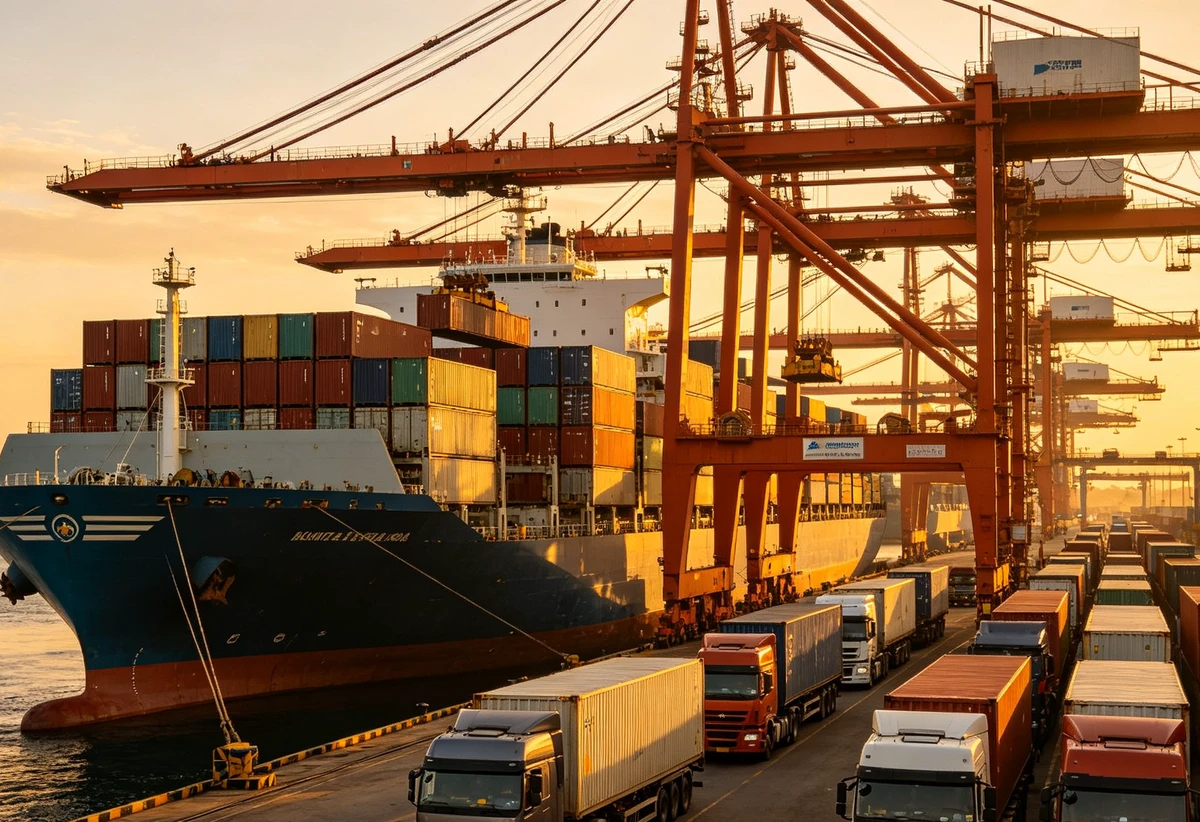
What Is FCL Shipping and Why It Matters for Uganda Importers
FCL, or Full Container Load, means you book an entire container exclusively for your shipment. The container is loaded at your supplier’s factory (or a nearby warehouse), sealed, and that seal remains intact until the container reaches its final destination. This is fundamentally different from LCL (Less than Container Load), where your cargo shares space with other shippers’ goods and must be consolidated at a Container Freight Station (CFS) before departure, then deconsolidated upon arrival.
For Uganda-bound cargo, FCL carries three specific advantages that LCL simply cannot match:
1. Faster transit across two borders. LCL shipments add 2–4 days of consolidation time at the Chinese CFS and another 3–5 days of deconsolidation at Mombasa before your individual consignment can even begin customs clearance. FCL skips both steps — your sealed container moves directly from the port onto a truck or train heading inland.
2. Lower damage risk. When your container crosses the Malaba or Busia border, stays on rough-road trucking routes for hundreds of kilometers, and potentially sits in outdoor storage at Kampala ICD, container integrity matters. An FCL container stays sealed from origin to destination. LCL cargo gets handled, unstuffed, and re-handled multiple times.
3. Better cost efficiency at scale. Once your shipment exceeds approximately 15 cubic meters (CBM), FCL becomes cheaper per cubic meter than LCL. You pay a flat container rate rather than per-CBM pricing, and the math almost always favors FCL for medium-to-large shipments.
Our Industry Insight: In our experience managing FCL shipments from Shenzhen to Kampala, we consistently see door-to-door transit times 5–10 days faster for FCL versus LCL on the same route. One construction materials client switched from LCL to 40HQ FCL once their monthly volume hit 18 CBM — not only did their per-unit freight cost drop by roughly 22%, but their inventory planning became far more predictable because they eliminated CFS deconsolidation delays at Mombasa. For importers bringing in machinery, electronics, or building materials on a regular basis, FCL is almost always the right call.
When negotiating your FCL shipment, you will encounter several Incoterms 2020 options. The three most common on the China–Uganda route are FOB (Free On Board — supplier delivers to the Chinese port), CIF Mombasa (Cost, Insurance, and Freight to Mombasa — carrier covers ocean freight and insurance), and DDP Kampala (Delivered Duty Paid — all-inclusive door-to-door with duties and taxes included). For first-time importers or businesses without a Uganda-based customs broker, DDP removes the steepest part of the learning curve.
Container Types, Specifications, and Loading Best Practices
Choosing the wrong container type is one of the costliest mistakes an importer can make. It leads to wasted space, overweight fines on the Mombasa–Kampala highway, or — worse — cargo damage after 35-plus days at sea followed by rough-road overland trucking.
Standard Container Specifications
| Container Type | Internal Dimensions (L×W×H) | Volume | Max Payload | Best For |
|---|---|---|---|---|
| 20GP (20ft General Purpose) | 5.90 × 2.35 × 2.39 m | ~33 CBM | ~28,000 kg | Heavy, dense cargo: machinery, metal products, tiles, cement |
| 40GP (40ft General Purpose) | 12.03 × 2.35 × 2.39 m | ~67 CBM | ~26,000 kg | General bulk cargo, mixed shipments from multiple suppliers |
| 40HQ (40ft High Cube) | 12.03 × 2.35 × 2.69 m | ~76 CBM | ~26,000 kg | Voluminous goods: furniture, insulation, textiles, packaged consumer goods |
The payload limits are critical on the East Africa route. Kenya enforces an axle-load limit of 8 tons per axle on the Mombasa–Kampala highway. If your container exceeds road weight limits, it will be stopped, fined, and potentially require cargo redistribution at a weighbridge — adding days of unexpected delay. Always work with your freight forwarder to confirm the gross vehicle weight before dispatching the truck from Mombasa.
Special Container Types
For cargo that does not fit standard containers, two specialized options exist:
- Open Top (OT) containers: Designed for oversized machinery, construction equipment, or any cargo too tall to load through standard container doors. A crane loads the cargo from above, and a tarpaulin cover provides weather protection.
- Flat Rack (FR) containers: Used for extremely heavy or out-of-gauge (OOG) cargo such as generators, large vehicles, steel structures, and project cargo. These have collapsible end walls and no side walls, allowing loading from any direction.
Our Industry Insight: We recently coordinated a 40ft Flat Rack shipment of a used Caterpillar excavator from Qingdao to a road construction site near Jinja. The key operational detail most guides miss: you must submit OOG cargo specifications (exact dimensions, weight, and center of gravity) at least 10 days before vessel departure. The carrier needs this to plan stowage on deck and calculate lashing requirements. We also routed the inland leg through the SGR railway from Mombasa to Naivasha ICD rather than trucking the entire highway — the rail’s smoother ride dramatically reduces stress on heavy machinery during transit.
Loading for the East Africa Route
Loading a container destined for Uganda requires more care than a standard port-to-port shipment. Three practices make the difference:
- Palletization vs. floor-loading: Palletized cargo unloads faster at Kampala ICD and reduces handling damage, but sacrifices 10–15% of container capacity. Floor-loaded (hand-stacked) cargo maximizes space but requires more labor at destination. For electronics and fragile goods, always palletize. For bulk construction materials, floor-loading is acceptable if properly secured.
- Moisture protection: Your container will spend 35-plus days at sea and may travel through East Africa’s rainy season (March–May, October–December). Place desiccant bags along container walls and under the roof. A single overlooked moisture point can ruin an entire shipment of textiles or electronics.
- Cargo securing: The Mombasa–Kampala highway includes rough stretches and mountain passes. Use heavy-duty dunnage, lashing straps, and blocking between cargo tiers. Assume the container will experience vibration and sudden braking over 1,150 kilometers of African highway.
The Complete FCL Journey: China Factory to Kampala Doorstep
Understanding where your time actually goes is the key to accurate planning. Below is the complete 9-leg breakdown — every step, every responsible party, and every delay risk — mapped from a factory floor in China to your warehouse in Kampala.
| Leg | Segment | Duration | Delay Risk | What Can Go Wrong |
|---|---|---|---|---|
| 1 | Factory cargo preparation & container loading | 1–2 days | Low | Poor loading distribution; missing fumigation certificate for wooden pallets |
| 2 | Trucking to Chinese port (Shenzhen/Shanghai/Ningbo/Guangzhou) | 1–2 days | Low | Traffic delays; incorrect port terminal assignment |
| 3 | China export customs clearance & port loading | 2–4 days | Medium | HS code misclassification; missing export documentation; random customs inspection |
| 4 | Ocean transit: China → Mombasa | 16–28 days | Medium | Shenzhen departure: 16–20 days; Shanghai: 20–25 days; Qingdao: 25–28 days. Carrier blank sailings during CNY or Q4 can add a week |
| 5 | Mombasa Port: unloading & Kenya transit clearance | 2–4 days | High | Port congestion during Q4 (Sep–Dec); documentation errors trigger physical inspection holds; strikes or equipment shortages |
| 6 | Transit Bond processing & release | 1–2 days | Medium | Bond not pre-arranged before vessel arrival; incorrect bond value calculation |
| 7 | Inland trucking: Mombasa → Malaba/Busia border (~940 km) | 2–3 days | Medium | Rainy-season road conditions; truck breakdowns; weighbridge delays |
| 8 | Kenya–Uganda border crossing: Malaba or Busia clearance | 1–3 days | High | Missing PVOC certificate (7–15 day penalty); Transit Bond verification backlog; peak-season truck queues; holiday staffing reductions |
| 9 | Final leg: border → Kampala ICD/warehouse (~220 km) | 1–2 days | Low | Local traffic; last-mile scheduling conflicts |
Total FCL door-to-door range: 28–48 days. The fastest routings (Shenzhen departure, pre-cleared documents, smooth border crossing) achieve 28 days. The slowest (Qingdao departure during Q4 peak season with border delays) can reach 48 days. The two legs marked as high risk — Mombasa port clearance and the Malaba/Busia border crossing — account for the largest variance between your best-case and worst-case scenarios. For shipments where Kenya is the final destination rather than a transit country, see our freight shipping from china to Kenya route guide.
FCL Shipping Costs from China to Uganda: 2026 Rates and Landed Cost Breakdown
Pricing FCL shipping to Uganda requires looking beyond the sea freight rate. Your real cost includes terminal handling at Mombasa, inland trucking or rail, and — most significantly — Uganda’s import duties and taxes, which often add 50–70% on top of your FOB cargo value.
2026 FCL Port-to-Door Reference Rates (August 2026)
| Container Type | Ocean Freight (China→Mombasa) | Terminal Handling (Mombasa) | Inland Transport (Mombasa→Kampala) | Total Port-to-Door |
|---|---|---|---|---|
| 20GP | $2,700 – $3,900 | $150 – $300 | $400 – $600 | $3,250 – $4,800 |
| 40GP / 40HQ | $3,900 – $5,200 | $200 – $400 | $500 – $800 | $4,600 – $6,400 |
These figures reflect the August 2026 East Africa shipping market, where demand remains elevated due to infrastructure project imports and pre-holiday inventory stockpiling. Ocean freight rates have stabilized compared to the volatility of 2024–2025, but booking 4–6 weeks in advance is still recommended to secure space and avoid last-minute premiums.
Complete Landed Cost: Two Real-World Examples
Knowing the freight cost is only half the picture. Below are two full landed cost calculations — from FOB factory gate in China to your Kampala warehouse under DDP terms. These numbers illustrate the true import burden for Uganda-based buyers.
Example 1: 20ft Container of Electronics from Shenzhen
| Cost Component | Amount (USD) |
|---|---|
| FOB Shenzhen cargo value | $50,000 |
| Ocean freight (Shenzhen → Mombasa) | $3,200 |
| Terminal handling (Mombasa) | $250 |
| Inland transport (Mombasa → Kampala) | $500 |
| Marine cargo insurance (0.3% of CIF) | $150 |
| Uganda Import Duty (25% on CIF) | $13,400 |
| VAT (18% on CIF + Duty) | $12,200 |
| Withholding Tax (6% on CIF) | $3,200 |
| Import Declaration Fee (1.5% on CIF) | $800 |
| Total Landed Cost (DDP Kampala) | ~$83,700 |
Your total import burden: approximately 67% above FOB value. Electronics carry Uganda’s highest import duty bracket (25%) plus the full 18% VAT and 6% withholding tax stack.
Example 2: 40HQ Container of Construction Materials from Shanghai
| Cost Component | Amount (USD) |
|---|---|
| FOB Shanghai cargo value | $30,000 |
| Ocean freight (Shanghai → Mombasa) | $4,800 |
| Terminal handling (Mombasa) | $350 |
| Inland transport (Mombasa → Kampala) | $700 |
| Marine cargo insurance | $120 |
| Uganda Import Duty (10% on CIF) | $3,600 |
| VAT (18% on CIF + Duty) | $7,100 |
| Withholding Tax (6% on CIF) | $2,400 |
| IDF (1.5% on CIF) | $600 |
| Total Landed Cost (DDP Kampala) | ~$49,670 |
Construction materials fall into the 10% duty bracket, resulting in a lower total import burden of approximately 66% above FOB — but the large 40HQ container and Shanghai departure add freight costs relative to a Shenzhen-based 20GP.
Hidden Costs to Watch For
Beyond the standard charges above, be aware of four potential surprise expenses:
- Demurrage: Charged by the shipping line when your container stays at Mombasa port beyond the free storage period (typically 5–7 free days). Rate: $50–$150 per day per container after free days expire.
- Detention: Charged when you hold the container beyond the agreed free time after it leaves the port. On the Uganda route, this can add up quickly if border delays extend your inland transit.
- Malaba/Busia border storage fees: If your container is held for document verification or PVOC inspection at the border, the trucking company charges daily waiting fees of $80–$150 per day.
- Fuel adjustment factors (BAF): Shipping lines adjust for fuel price fluctuations. In August 2026, BAF surcharges on the China–East Africa route are running 8–12% of base ocean freight.
Uganda Customs Clearance and Import Tax Guide for FCL Shipments
Uganda’s import procedures are managed by the Uganda Revenue Authority (URA) through its electronic customs platform, ASYCUDA World. If you are importing an FCL shipment, here is the workflow you need to follow — whether you handle it directly, work with a customs clearance broker, or go through a DDP freight forwarder.
URA Import Clearance: The 5-Step Process
Obtain a Taxpayer Identification Number (TIN). Every importer in Uganda must have a registered TIN. If you are a first-time importer, this is your very first step — without it, you cannot submit any customs declarations.
Register on ASYCUDA World. ASYCUDA World is URA’s web-based customs management system. Your customs broker (or freight forwarder, under DDP terms) submits all declarations electronically through this platform.
Submit the Import Declaration Form (IDF). The IDF must be filed before your cargo departs China. It declares the goods, their value, HS codes, and the applicable duty and tax rates. Late filing triggers processing delays.
Secure PVOC / Certificate of Conformity. The Uganda National Bureau of Standards (UNBS) requires a Pre-Export Verification of Conformity (PVOC) for all regulated products — including electronics, machinery, textiles, toys, construction materials, and food products. This certificate must be obtained before your goods leave China, through UNBS-approved inspection agents such as SGS, Bureau Veritas, or Intertek. The three-stage process is: apply for inspection → on-site verification at the supplier’s facility → certificate issuance.
Pay duties and taxes. Once URA assesses your declaration, you pay the assessed duties and taxes via the URA e-tax portal. Only after payment confirmation will your cargo be released.
Uganda Import Taxes at a Glance
| Tax Type | Rate | Applied On |
|---|---|---|
| Import Duty (EAC CET) | 0%, 10%, 25%, or 35% depending on product category | CIF value |
| VAT | 18% | CIF + Duty |
| Withholding Tax | 6% | CIF value |
| Import Declaration Fee (IDF) | 1.5% | CIF value |
| Infrastructure Levy | Varies by product | Selected goods (cement, fuel, etc.) |
| Environmental Levy | Varies by product | Vehicles, electronics, plastics |
Common Product Categories: HS Codes and Duty Rates
| Product Category | Sample HS Code | Import Duty | Key Compliance Notes |
|---|---|---|---|
| Electronics & computers | 8471.30 | 25% | Requires PVOC; avoid misclassification to lower-duty categories |
| Construction materials | 2523.29 | 10% | Subject to Infrastructure Levy; requires PVOC |
| Industrial machinery | 8479.89 | 0% | Duty-free under EAC industrial promotion; still requires PVOC |
| Furniture | 9403.60 | 25% | Requires fumigation certificate if containing wood |
| Auto parts | 8708.99 | 10% | Subject to Environmental Levy; requires PVOC |
| Textiles & garments | 6203.42 | 25% | Additional 10% EAC CET surcharge on selected textiles |
Critical Warning: Arriving at the Malaba or Busia border without a valid PVOC certificate for regulated goods triggers two mandatory consequences — a 7–15 day inspection delay while UNBS processes your case at the border, plus a penalty of 15% of the CIF value. For an electronics shipment valued at $50,000 CIF, that is a $7,500 penalty on top of the delay. At Sinoshipment, we coordinate PVOC applications with UNBS-approved agents as part of our standard China–Uganda FCL service, ensuring your certificate is issued before your container leaves the Chinese port.
Mombasa vs. Dar es Salaam: Choosing the Right Transit Corridor
Uganda is a landlocked country — every container must first arrive at a coastal port in Kenya or Tanzania before traveling hundreds of kilometers inland. Choosing the right entry point directly impacts your transit time, cost, and reliability.
The Two Corridors Compared
| Factor | Northern Corridor (Mombasa) | Central Corridor (Dar es Salaam) |
|---|---|---|
| Ocean transit (China → port) | 16–28 days | 18–28 days |
| Inland distance to Kampala | ~1,150 km | ~1,500 km |
| Border crossing | Malaba or Busia | Mutukula |
| Rail option available | Yes — SGR to Naivasha ICD | Limited |
| Vessel frequency | Weekly (multiple carriers) | Weekly (fewer sailings) |
| Total door-to-door | 30–40 days | 35–45 days |
| Relative cost | ★★ (Moderate) | ★★★ (Slightly higher) |
When to Use Which Corridor
Default choice: Mombasa. For approximately 80% of China–Uganda FCL shipments, the Northern Corridor via Mombasa is the faster, cheaper, and more predictable option. The Standard Gauge Railway (SGR) from Mombasa to Naivasha ICD adds a valuable rail option that bypasses highway congestion and reduces cargo theft risk. More carriers serve Mombasa, which means more sailing dates and better rate competition. For importers who also ship directly to Kenyan destinations, see our dedicated guide on shipping from China to Kenya by sea.
Switch to Dar es Salaam when:
- Mombasa is experiencing severe congestion (common during Q4 September–December)
- Your final destination is in southern or western Uganda — the Mutukula crossing avoids the long northern detour
- Political disruptions or port strikes affect Mombasa operations
- You are importing from Tanzania-based suppliers in parallel with your China shipment
For businesses that also serve the Tanzanian market directly, our freight shipping from china to Tanzania page covers end-to-end routing via Dar es Salaam.
Our Industry Insight: We recommend tracking Mombasa port congestion indicators — specifically vessel waiting times and yard occupancy rates — before committing to a routing decision. When Mombasa yard occupancy exceeds 80%, we proactively offer clients the Dar es Salaam alternative. In one Q4 2025 case, a client’s 40HQ machinery shipment was routed through Dar es Salaam instead of Mombasa after our Mombasa agent confirmed 5-day vessel waiting times. The slightly higher inland cost was more than offset by avoiding a week of demurrage charges at the congested Mombasa terminal.
Seasonal Risks and How to Avoid Delays on the China–Uganda FCL Route
Shipping timelines on the China–Uganda corridor are not constant across the calendar year. Three seasonal factors consistently add unpredictable delays.
| Period | What Happens | Delay Added | How to Mitigate |
|---|---|---|---|
| Chinese New Year (late Jan – mid Feb) | Factory closures for 2–4 weeks; port labor shortages; carriers cancel sailings | +7–14 days | Ship 3–4 weeks before CNY; book container space 4–6 weeks ahead |
| Q4 Peak Season (Sep – Dec) | Global freight demand surge; Mombasa port congestion peaks; container equipment shortages | +5–10 days | Book 4–6 weeks ahead; consider Dar es Salaam as backup routing; use SGR rail from Mombasa to bypass truck congestion |
| East Africa Long Rains (Mar – May) | Highway conditions deteriorate on Mombasa–Kampala route; truck speeds drop; border queues lengthen | +2–5 days (inland only) | Add buffer days to delivery estimates; monitor road conditions through your forwarder |
| East Africa Short Rains (Oct – Dec) | Overlaps with Q4 peak — compound congestion risk at both port and border | +3–7 days | Combine Q4 and rainy-season mitigation strategies; prioritize SGR rail where available |
Beyond scheduling, one investment consistently pays for itself on this route: all-risk marine cargo insurance. Unlike standard carrier liability — which is limited and excludes many real-world risks — all-risk insurance covers theft during inland transit (a known risk on the Mombasa–Nairobi–Kampala highway), rough-road cargo damage, and container loss. For FCL shipments valued above $20,000, the premium (typically 0.2–0.4% of CIF value) is negligible compared to the exposure.
FAQ: FCL Shipping from China to Uganda
How long does FCL shipping take from China to Uganda?
28–48 days door-to-door, depending on your Chinese departure port, the transit corridor you choose, and whether your documentation is fully pre-cleared. Shenzhen departures are the fastest (28–35 days); Qingdao departures are the slowest (40–48 days).
What is the cheapest way to ship a full container from China to Uganda?
Sea freight FCL via Mombasa combined with SGR rail to Naivasha ICD and truck for the final leg. Avoid booking during Q4 (September–December) when peak-season surcharges and demurrage risks drive up total costs. For cargo over 15 CBM, FCL is consistently cheaper per unit than LCL.
Can I ship FCL door-to-door (DDP) from China to Kampala?
Yes. DDP FCL covers factory pickup in China, export customs clearance, ocean freight to Mombasa, Kenya transit formalities, Uganda import customs clearance (URA), all duties and taxes, and final truck delivery to your Kampala address. For importers without a local Ugandan customs broker, DDP is the most practical option.
What documents do I need for FCL shipping to Uganda?
Six documents are mandatory: Commercial Invoice, Packing List, Bill of Lading, PVOC / Certificate of Conformity (for regulated goods), Import Declaration Form (IDF), and Certificate of Origin (Form E for preferential EAC tariff rates). Additionally, marine cargo insurance is strongly recommended.
Mombasa or Dar es Salaam — which port is better for Uganda FCL?
Mombasa is better for most shipments: faster total transit (30–40 days vs. 35–45 days), lower cost, higher vessel frequency, and the SGR rail option. Use Dar es Salaam as a backup when Mombasa is congested or if your destination is in southern Uganda.
How do I avoid delays at the Malaba border crossing?
Three actions matter most: pre-arrange your Transit Bond before the vessel docks at Mombasa, secure your PVOC before cargo leaves China, and avoid routing through Malaba during the Q4 peak (Sep–Dec) and East African holiday periods when staffing is reduced.
What happens if my FCL shipment fails PVOC inspection?
UNBS imposes a mandatory 7–15 day inspection delay at the Uganda border crossing plus a penalty of 15% of the CIF value. The simplest prevention: work with a freight forwarder who includes PVOC coordination in their China–Uganda FCL service, ensuring your certificate is issued before shipment.
Is FCL or LCL better for shipping to Uganda?
FCL is faster (5–10 days shorter transit) and cheaper per CBM once your shipment exceeds 15 CBM. FCL also eliminates the damage risk from multiple handling at consolidation and deconsolidation points, which matters significantly on a route involving two border crossings and rough-road overland legs.
Why Sinoshipment Is Your Best FCL Partner for the Uganda Route
FCL shipping from China to Uganda is not a simple port-to-port transaction — it is a meticulously coordinated multimodal operation where container selection, route planning, documentation readiness, and seasonal timing all interact to determine whether you pay your budgeted landed cost or face thousands in unplanned demurrage and border penalties.
Sinoshipment has been managing China-to-Africa logistics since 2013, with over 5,000 clients served worldwide. Headquartered in Shenzhen — the fastest departure point to Mombasa for Pearl River Delta cargo — we handle the full FCL chain: factory pickup, export clearance, ocean freight, Mombasa transit and bond processing, Malaba/Busia border crossing, URA customs clearance, and final delivery to Kampala, Jinja, Mbarara, or anywhere in Uganda.
Our standard China–Uganda FCL service includes PVOC coordination through UNBS-approved agents, Transit Bond pre-arrangement before your vessel docks, and transparent DDP pricing with no hidden demurrage, detention, or border storage fees. We maintain local agent partnerships in Mombasa, Nairobi, and Kampala — meaning when your container hits an unexpected delay, someone is on the ground to resolve it.
Ready to ship? Contact Sinoshipment today for a free FCL shipping quote from China to Uganda — including a complete landed cost breakdown tailored to your cargo type, volume, and final destination in Uganda.