Freight Costs from China to Uganda: The Complete 2026 Guide (Sea, Air & DDP Pricing)
· By SinoShipment
A Kampala-based electronics importer we worked with last year thought he had secured a bargain — a $2,200 ocean freight quote for a 20-foot container from Shenzhen to Mombasa. But when the container finally arrived, the bill had ballooned by nearly $2,800. Inland haulage from Mombasa to Kampala, terminal handling charges, demurrage, and a missing PVoC certificate had turned a “cheap” shipment into a budget nightmare. If you are researching freight costs from China to Uganda, this story probably sounds familiar.
Uganda is landlocked. Every kilogram of cargo must first touch a port in Kenya or Tanzania, then travel hundreds of kilometers overland before it reaches Kampala. That single geographic fact transforms China-to-Uganda shipping from a simple port-to-port transaction into a complex, multimodal logistics puzzle. In this guide, we break down exact 2026 pricing for sea, air, and express shipping; expose the hidden fees that inflate landed costs by 20–40%; walk through four real-world cost scenarios; and give you a complete compliance checklist so you never get caught off guard at the border. As a Shenzhen-based freight forwarder with weekly sailings to East Africa, we have helped over 5,000 clients navigate this corridor since 2013 — and we are sharing everything we have learned.
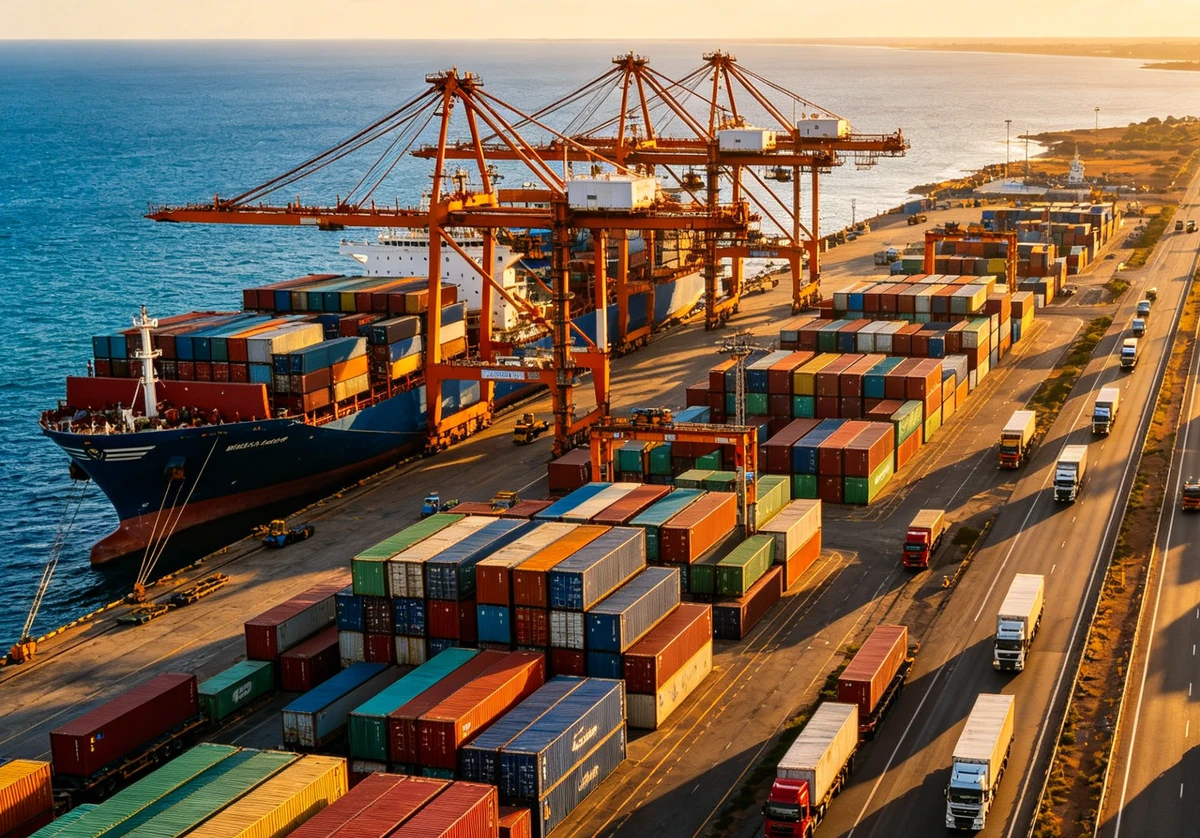
Shipping Methods at a Glance: Which One Fits Your Cargo?
The cheapest way to ship from China to Uganda depends almost entirely on what you are shipping, how fast you need it, and how much you are willing to spend. Because Uganda has no coastline, your “shipping method” is rarely just one mode — it is almost always a combination of ocean or air transit plus inland trucking.
| Method | Cost Level | Transit Time | Best For | Risk Level | Door-to-Door Available? |
|---|---|---|---|---|---|
| Sea FCL (20ft / 40ft / 40HQ) | Lowest per unit | 35–50 days | Bulk, heavy, non-urgent cargo | Medium | Yes |
| Sea LCL | Moderate per CBM | 40–55 days | 1–15 CBM shipments | Medium-High | Yes |
| Air Freight | High per kg | 3–7 days | Urgent, high-value, perishable | Low | Yes |
| Express Courier (DHL/FedEx/UPS) | Highest per kg | 2–5 days | Samples, documents, <30 kg parcels | Low | Yes |
| DDP Groupage | Premium all-in | 45–60 days | SMEs who want zero customs hassle | Low | Yes |
If you are unsure which method to choose, answer these three questions:
- How much cargo do you have? Under 1 CBM or 100 kg usually points to air or express. Over 15 CBM favors a full container.
- How urgent is it? If you cannot wait more than a week, air freight is your only realistic option.
- Do you have a local Uganda customs broker? If not, DDP shipping from China to Uganda removes the complexity by putting customs clearance in your forwarder’s hands.
Sea Freight Costs from China to Uganda: FCL vs LCL
Why “Sea Freight to Uganda” Actually Means Sea + Truck
When you book sea freight from China to Uganda, you are not buying a port-to-port service. You are buying a chain: ocean carriage from a Chinese port to Mombasa (Kenya) or Dar es Salaam (Tanzania), port handling, customs transit procedures, inland haulage by truck or rail, border crossing, and final delivery in Kampala. Any quote that ignores the inland leg is incomplete — and potentially misleading.
Two corridors dominate the market:
Related Routes: Sinoshipment also offers dedicated freight shipping from China to Kenya and freight shipping from China to Tanzania for importers with multi-country East African operations.
- Northern Corridor (Mombasa → Kampala): Used by roughly 80% of Uganda-bound cargo. Mombasa offers more frequent sailings, mature clearing infrastructure, and Kenya’s Standard Gauge Railway (SGR), which moves containers from the port to Nairobi in 8–12 hours.
- Central Corridor (Dar es Salaam → Kampala): A viable alternative when Mombasa is congested or when your final destination is in southern Uganda. The ocean leg is longer, but port delays are typically shorter.
FCL (Full Container Load) Pricing — 2026 Rates
Container shipping from China to Uganda via FCL is the most cost-effective option for large, heavy, or non-urgent shipments. Rates vary by origin port because sailing frequency, terminal efficiency, and inland China haulage all affect the bottom line.
| Origin Port | 20ft FCL (Ocean to Mombasa) | 40ft HQ (Ocean to Mombasa) | Inland Haulage to Kampala | Door-to-Door Estimate |
|---|---|---|---|---|
| Shenzhen / Guangzhou | $1,800 – $2,500 | $2,700 – $3,800 | $1,850 – $2,500 | $3,500 – $4,800 |
| Shanghai / Ningbo | $1,900 – $2,600 | $2,800 – $4,000 | $1,850 – $2,500 | $3,600 – $5,000 |
| Qingdao / Xiamen | $2,100 – $2,900 | $3,000 – $4,300 | $1,900 – $2,600 | $3,900 – $5,500 |
The rates above are market estimates based on Q2 2026 carrier tariffs and are subject to fuel surcharges, peak season adjustments, and currency fluctuations. For a binding quote tailored to your cargo, contact us with your specific shipment details.
Shenzhen and Guangzhou often offer the most competitive 20ft container shipping cost from China to Uganda because of their proximity to the Pearl River Delta manufacturing basin and the high frequency of sailings to East Africa. A 20-foot container holds approximately 28 CBM, a standard 40-foot container holds 56 CBM, and a 40-foot High Cube (40HQ) holds up to 68 CBM — ideal for bulky but lightweight cargo like furniture or plastics.
The break-even point where FCL becomes cheaper than LCL is typically around 15 CBM. Below that threshold, you are usually paying for empty container space you do not need.
LCL (Less than Container Load) Pricing — 2026 Rates
For shipments between 1 and 15 CBM, LCL shipping cost from China to Uganda is the practical choice. Your cargo is consolidated with other shipments at a Chinese port, travels in a shared container to Mombasa, and is deconsolidated at a Container Freight Station (CFS) before final delivery.
| Service Level | Rate | Notes |
|---|---|---|
| Ocean leg only (to Mombasa) | ~$80 – $130 per CBM | Excludes inland, customs, and deconsolidation |
| Door-to-door all-in | ~$150 – $280 per CBM | Includes consolidation, deconsolidation, and trucking |
| DDP groupage | ~$300 – $450 per CBM | All-inclusive with customs clearance and duties |
At our Guangzhou and Yiwu consolidation warehouses, we regularly combine orders from multiple suppliers into a single LCL shipment. That alone can reduce per-unit freight costs by 15–20% and cut destination clearance fees by nearly half compared to shipping five separate small orders.
Sea Freight Transit Times by Origin
| Origin Port | Gateway | Ocean Leg | Inland to Kampala | Total Door-to-Door |
|---|---|---|---|---|
| Shenzhen / Guangzhou | Mombasa | 20–25 days | 5–10 days | 30–38 days |
| Shanghai / Ningbo | Mombasa | 22–27 days | 5–10 days | 32–40 days |
| Any Major Port | Dar es Salaam | 25–35 days | 7–14 days | 40–50 days |
| LCL via Mombasa | Mombasa | 25–30 days | 7–14 days (incl. deconsolidation) | 40–55 days |
Air Freight Costs from China to Uganda
How Air Freight Pricing Works
Airlines do not charge by whichever number is smaller — they charge by chargeable weight, which is the greater of actual gross weight or volumetric weight. The formula is simple but costly if you ignore it:
Volumetric Weight (kg) = Length(cm) × Width(cm) × Height(cm) ÷ 6000
For example, a carton measuring 60 × 50 × 40 cm that weighs 15 kg has a volumetric weight of 20 kg. The airline charges for 20 kg, not 15. Lightweight bulky goods — plastics, textiles, foam packaging — are disproportionately expensive by air.
2026 Air Freight Rate Table
| Weight Bracket | Rate per kg (USD) | Best For |
|---|---|---|
| < 45 kg | $6.50 – $8.50 | Samples, small test orders |
| 45 – 100 kg | $5.50 – $7.50 | Electronics accessories, spare parts |
| 100 – 300 kg | $4.50 – $6.50 | Mid-value inventory restocks |
| 300+ kg | $3.80 – $5.50 | Large air consignments (negotiable) |
| Express (DHL / FedEx / UPS) | $8.00 – $14.00 | Urgent parcels < 30 kg |
Major carriers serving Entebbe International Airport (EBB) include Ethiopian Airlines Cargo, Kenya Airways Cargo, Emirates SkyCargo, Qatar Airways Cargo, and China Southern Cargo. Ethiopian Airlines often offers the most competitive rates for general cargo on this lane. Through blocked space agreements (BSA) with these carriers, experienced forwarders can secure capacity even during peak seasons when spot-market shippers are rolled. For routes terminating in Nairobi, see our dedicated Air Freight from China to Kenya guide.
When Air Freight Makes Financial Sense
To put air freight from China to Uganda cost in perspective, consider this: 1 CBM of cargo costs roughly $150–$250 by sea. The same volume by air equates to approximately 167 kg of chargeable weight. At $6.00 per kg, that is $1,000+ — roughly four to ten times more expensive than ocean freight.
Air freight is justified only when the commercial value of receiving goods 30+ days earlier outweighs the freight premium. Typical use cases include seasonal fashion restocks, critical machinery spare parts, pharmaceutical products, and high-value electronics with short product lifecycles.
Express Courier Costs: DHL, FedEx & UPS to Uganda
For parcels under 30 kg, express courier is the fastest door to door shipping from China to Uganda option — but it is never the cheapest.
| Service | Weight | Cost (USD) | Transit Time |
|---|---|---|---|
| DHL Document | 0.5 kg | $95 – $105 | 3–5 days |
| DHL Non-Document | 0.5 kg | $145 – $155 | 3–5 days |
| FedEx Envelope | ~0.5 kg | $67 – $75 | 3–5 days |
| FedEx Pak | 2 kg | $170 – $195 | 3–5 days |
| FedEx / UPS | 10 kg | $280 – $350 | 3–5 days |
Express services are ideal for samples, documents, e-commerce test orders, and urgent replacement parts. However, once you cross the 30 kg threshold, air freight almost always becomes more economical. Express carriers also handle customs clearance as part of their service, which simplifies the process for very small shipments, though low-value de minimis thresholds for duty-free entry in Uganda are limited and should not be relied upon for commercial cargo.
Real-World Cost Scenarios: What You’ll Actually Pay
Below are four realistic profiles we encounter regularly. Each scenario includes freight, handling, duties, taxes, and compliance costs — so you see the true landed price, not just the ocean or air rate.
Scenario 1: E-Commerce Seller — 200 kg Electronics via Air Freight
A Shopify seller in Kampala needs a restock of Bluetooth speakers and charging cables from a Shenzhen factory.
| Cost Component | Amount (USD) |
|---|---|
| Air freight (200 kg × $5.50/kg) | $1,100 |
| Origin handling (SZX airport) | $45 |
| Destination handling + delivery to Kampala | $180 |
| Customs duty (10% on $4,000 CIF) | $400 |
| VAT (18% on $4,400) | $792 |
| Withholding tax (6% on $4,000 CIF) | $264 |
| PVoC / COC | $300 |
| Total Landed Cost | ~$3,081 |
For electronics clients, pre-verifying HS codes and arranging PVoC inspection at the supplier’s factory in Shenzhen before departure eliminates the risk of customs delays at Entebbe.
Scenario 2: SME Importer — 5 CBM Textiles via LCL Sea
A small wholesaler sources garments from three suppliers around Guangzhou and needs them delivered to a Kampala warehouse.
| Cost Component | Amount (USD) |
|---|---|
| LCL ocean freight (5 CBM × $110/CBM) | $550 |
| Origin THC + documentation | $120 |
| Deconsolidation (Mombasa CFS) | $180 |
| Inland haulage (Mombasa → Kampala) | $850 |
| Customs duty (25% on textiles, $6,000 CIF) | $1,500 |
| VAT (18% on $7,500) | $1,350 |
| Withholding tax (6% on $6,000) | $450 |
| PVoC / COC | $300 |
| Total Landed Cost | ~$5,300 |
By consolidating all three suppliers’ orders at a Guangzhou warehouse into one LCL shipment, this importer saves roughly 20% on per-unit freight and avoids paying three separate sets of destination clearing fees.
Scenario 3: Large Wholesaler — 1×40HQ Machinery via FCL Sea
A construction equipment dealer imports a full container of machinery parts from a Ningbo manufacturer.
| Cost Component | Amount (USD) |
|---|---|
| Ocean freight (40HQ to Mombasa) | $3,500 |
| Origin THC + documentation | $200 |
| Inland haulage + border crossing | $2,800 |
| Customs duty (0% on selected machinery) | $0 |
| VAT (18% on $25,000 CIF) | $4,500 |
| Withholding tax (6% on $25,000) | $1,500 |
| PVoC / COC | $300 |
| OOG surcharge (oversized units) | $400 |
| Total Landed Cost | ~$13,200 |
Machinery shipments often require special handling. Out-of-gauge (OOG) cargo may need flat-rack containers and heavy-lift coordination at the origin port — something that should be arranged during the booking phase, not after the cargo arrives at the terminal.
Scenario 4: Urgent Spare Parts — 50 kg via Express Courier
A manufacturing plant in Jinja needs a broken machine component replaced immediately.
| Cost Component | Amount (USD) |
|---|---|
| DHL door-to-door (Shenzhen → Kampala) | $380 |
| Prepaid duties / taxes | $85 |
| Total Landed Cost | ~$465 |
For sub-30 kg urgent shipments, express DDP service is hard to beat on speed. The carrier handles customs clearance, and for low-value spare parts, a separate PVoC process is often not required.
Hidden Costs That Inflate Your Landed Price
The sticker price on a freight quote is rarely the final number. Here is where the real money goes — and where importers get caught.
Origin Costs (China Side)
| Fee | Typical Cost | Notes |
|---|---|---|
| Export customs clearance | $50 – $100 | Usually included in forwarder quotes |
| Terminal Handling Charge (THC) | $150 – $250 | Shenzhen / Yantian rates are often most competitive |
| Inland haulage (factory to port) | $100 – $500 | Varies by distance from factory to port |
| Documentation (B/L, C/O, etc.) | $60 – $150 | Essential for Uganda clearance |
| Cargo insurance | 0.3% – 0.5% of cargo value | Strongly recommended for the East Africa corridor |
Destination Costs (Uganda Side)
| Fee | Typical Cost | Notes |
|---|---|---|
| Port handling (Mombasa / Dar) | $300 – $500 | Frequently underestimated by first-time importers |
| Inland haulage to Kampala | $1,800 – $2,800 per container | The biggest variable; always negotiate in writing |
| Cross-border tolls | $100 – $150 per container | Malaba / Busia or Mutukula crossings |
| Customs duties | 0% – 35% | Determined by EAC CET tariff + HS code |
| VAT | 18% | Calculated on (CIF value + duty + other taxes) |
| Withholding tax (WHT) | 6% | Withheld by URA at import; creditable against income tax |
| Infrastructure levy | 1.5% | Applied on CIF value |
| PVoC / COC inspection | $250 – $350 | Mandatory; must be arranged in China before shipment |
| Demurrage & detention | $50 – $150 / day | Free time is often only 9–14 days at Mombasa |
Surcharges and Variables
Beyond the line items above, watch for these moving targets:
- Fuel / BAF surcharge: Typically 8–12% of base ocean freight, adjusted quarterly.
- Peak season surcharge: Expect 15–30% rate hikes in the weeks before Chinese New Year and during Q4 pre-holiday demand.
- Currency fluctuation: USD/CNY/UGX exchange rate swings can change your final invoice by several percentage points between booking and delivery.
The most effective way to eliminate surprise bills is to demand an all-inclusive DDP quote that bundles freight, handling, inland haulage, customs clearance, duties, and taxes into one upfront figure. The price quoted should be the price paid — full stop.
Uganda Compliance: Documents, PVoC, and Customs
Mandatory Documents Checklist
Before any cargo leaves China, ensure you have:
- Commercial Invoice — Must reflect accurate valuation. URA frequently uplifts declared values that appear inconsistent with market benchmarks.
- Packing List — Must match the commercial invoice line for line.
- Bill of Lading (B/L) or Sea Waybill / Air Waybill (AWB) — Required for cargo release.
- Certificate of Origin — Needed to claim EAC tariff preferences where applicable.
- Import License / Permit — Required for regulated categories including electronics, pharmaceuticals, and food products.
- Valid PVoC Certificate of Conformity (COC) — Non-negotiable for most regulated goods.
PVoC Program: The #1 Cause of Uganda Customs Delays
The Pre-Export Verification of Conformity (PVoC) program, administered by the Uganda National Bureau of Standards (UNBS), requires that most regulated products be inspected in China before shipment. The resulting Certificate of Conformity (COC) must accompany your cargo.
UNBS offers three conformity routes:
- Route A (Batch Inspection): For occasional shipments. An accredited agency inspects the specific batch before departure. This is the most common path for SMEs.
- Route B (Registered Supplier): For repeat shippers with compliant factories. Faster turnaround once the supplier is registered.
- Route C (Product Licensing): For manufacturers with certified quality management systems.
Accredited inspection agencies include Bureau Veritas, Intertek, SGS, and Cotecna. If your cargo arrives in Uganda without a valid COC, the consequences are severe: refusal of entry, mandatory destination inspection at your expense, a penalty of 15% of CIF value, or outright destruction of the goods.
Understanding Uganda’s Tax Structure
Uganda’s import tax system is layered and unforgiving if you miscalculate:
- Import Duty: 0% to 35%, based on the East African Community Common External Tariff (EAC CET) and your product’s HS code. A single digit error in classification can shift duty from zero to 25%.
- VAT: 18%, calculated on the sum of CIF value, import duty, excise duty, and any other applicable taxes.
- Withholding Tax (WHT): 6% of CIF value, withheld by the Uganda Revenue Authority (URA) at the point of import. This is not an additional cost in the long run — it is creditable against your corporate income tax — but it does affect cash flow.
- Infrastructure Levy: 1.5% of CIF value.
Transit Bond Requirements
Because your cargo passes through Kenya or Tanzania en route to Uganda, a transit bond is required to guarantee that goods exit the transit country rather than being dumped into the local market. The bond is typically arranged by your freight forwarder and its cost is usually embedded in door-to-door quotes. Kenya uses KRA transit bonds; Tanzania uses TRA transit bonds.
Choosing Your Route: Mombasa vs Dar es Salaam
Northern Corridor via Mombasa, Kenya
- Ocean time from China: 20–27 days
- Inland to Kampala: 5–10 days (truck, or SGR rail to Nairobi plus truck)
- Advantages: Higher sailing frequency, mature clearing infrastructure, SGR rail option, generally faster overall transit
- Disadvantages: Port congestion during peak season, notorious delays at the Malaba border crossing, intense competition for trucking capacity
- Best for: Time-sensitive FCL shipments, regular importers with predictable volumes, and cargo destined for central or northern Uganda. Read more about the ocean leg in our Shipping from China to Kenya by Sea guide.
Central Corridor via Dar es Salaam, Tanzania
- Ocean time from China: 25–35 days
- Inland to Kampala: 7–14 days
- Advantages: Less port congestion than Mombasa, shorter final-mile distance to southern Uganda, TAZARA rail option for certain cargo types
- Disadvantages: Fewer direct sailings from China, longer ocean leg, smaller pool of experienced clearing agents
- Best for: Large-volume FCL with flexible timelines, cargo destined for southern or western Uganda, and shippers seeking an alternative when Mombasa is gridlocked. We also provide Air Freight from China to Tanzania for urgent cargo bound for Dar es Salaam.
Route Selection Decision Matrix
| Factor | Choose Mombasa | Choose Dar es Salaam |
|---|---|---|
| Speed | Faster overall transit | Slower by 5–10 days |
| Cost | Similar for most cargo | Occasionally cheaper for large FCL |
| Sailing Frequency | More weekly sailings | Fewer options |
| Final Destination | Central / Northern Uganda | Southern / Western Uganda |
| Seasonal Congestion | Can be severely congested | Reliable alternative during peaks |
How to Reduce Your Shipping Costs from China to Uganda
Consolidate Multiple Supplier Orders
One of the fastest ways to bleed money is to ship five separate LCL orders from five different suppliers — and pay five sets of origin documentation, destination handling, and customs clearance fees. Instead, consolidate at a China-side warehouse into one FCL or LCL shipment. The savings typically run 15–20% on freight and up to 50% on clearing costs.
Optimize Packaging
Dead space is wasted money. For air freight, every centimeter of unnecessary dimensions inflates your volumetric weight. For sea freight, poor loading plans leave container capacity on the table. Work with your supplier to use carton sizes that maximize pallet and container utilization.
Book Around Peak Seasons
| Season | Rate Trend | Booking Advice |
|---|---|---|
| Pre-Christmas (Sep – Nov) | High | Book 6+ weeks ahead; space is tight |
| Chinese New Year (Jan – Feb) | Highest | Avoid if possible; rates spike 30%+ |
| Post-CNY (Mar – Apr) | Lower | Best window for rate negotiation |
| Summer (Jun – Aug) | Moderate | Good space availability; stable pricing |
Negotiate All-Inclusive Quotes
Always ask for a door-to-door figure that explicitly includes inland haulage, THC, documentation, fuel surcharges, and customs clearance. If you are shipping FCL, negotiate extended free time at Mombasa — 21 days instead of the standard 9–14 — to protect against demurrage if documentation or transit hits a snag.
Choose the Right Incoterms
These shipping terms are defined under Incoterms 2020, the latest international commercial terms published by the International Chamber of Commerce (ICC). Selecting the right term determines who pays for freight, insurance, and customs clearance.
- DDP (Delivered Duty Paid): The forwarder handles everything. Best for SMEs without a local Uganda customs broker, but typically the most expensive upfront option.
- FOB / CIF: You control the supplier relationship and international freight, but you or your Uganda agent must manage inland haulage and import clearance.
- DAP (Delivered at Place): A middle ground. The forwarder delivers to your door, but you handle import duties and taxes directly with URA.
You may be interested in the following related articles:
FAQ: Shipping from China to Uganda
How much does it cost to ship a 20ft container from China to Uganda? Expect $3,500–$4,800 door-to-door via Mombasa, excluding Uganda duties and taxes. The exact figure depends on your origin port in China, the season, and whether you need special equipment like a flat rack.
How long does sea freight take from China to Uganda? FCL via Mombasa typically takes 30–40 days door-to-door. LCL adds roughly 5–15 days for consolidation and deconsolidation. Via Dar es Salaam, add another 5–10 days to the overall timeline.
Is air freight or sea freight cheaper to Uganda? Sea freight is four to ten times cheaper per unit of volume. Air freight is justified only for urgent, high-value, or perishable cargo — generally under 300 kg — where the speed premium is outweighed by the commercial benefit of earlier delivery.
What is DDP shipping from China to Uganda? DDP means your forwarder manages the entire chain: factory pickup, export clearance, international freight, import customs clearance, duty and tax payment, and final delivery to your door in Kampala or elsewhere in Uganda. You pay one upfront price and handle none of the logistics complexity yourself.
Do I need PVoC for every shipment to Uganda? Not every shipment, but the majority of regulated consumer goods — electronics, textiles, construction materials, toys, and food contact items — require a Certificate of Conformity obtained through pre-shipment inspection in China. Check your HS code against the UNBS regulated product list before production begins.
Which is better: Mombasa or Dar es Salaam for Uganda imports? Mombasa is faster, has more sailings, and offers the SGR rail option. Dar es Salaam is a strong alternative when Mombasa is congested or when your cargo is bound for southern Uganda. Most regular importers default to Mombasa but keep Dar as a backup plan.
What documents do I need to import from China to Uganda? At minimum: commercial invoice, packing list, Bill of Lading or Air Waybill, certificate of origin, and a valid PVoC COC. Regulated goods may also require an import permit or license.
How can I avoid demurrage fees at Mombasa? Submit pre-arrival clearance documents before the vessel arrives, ensure your transit bond is active before the truck reaches the border, and negotiate extended free time (21 days) with your shipping line at the booking stage.
Can Sinoshipment handle factory pickup anywhere in China? Yes. We arrange pickups from manufacturing hubs across the Pearl River Delta — Shenzhen, Dongguan, and Guangzhou — as well as the Yangtze River Delta, including Shanghai, Ningbo, and Suzhou. For clients sourcing from multiple cities, we offer free consolidation warehousing before the main carriage.
How do I get an accurate freight quote? Provide your forwarder with five details: (1) the pickup city or factory address in China, (2) your exact delivery address in Uganda, (3) a detailed product description with HS code, (4) total weight and dimensions, and (5) the declared or commercial value of the goods. The more precise your input, the more accurate — and surprise-free — your quote will be.
Why Sinoshipment? Our Edge on the China-to-Uganda Corridor
Unlike generalist forwarders who treat East Africa as a secondary lane, we built our Uganda operation from the ground up. Our Shenzhen team coordinates directly with Mombasa and Dar es Salaam clearing agents, runs weekly consolidation at our Guangzhou warehouse, and pre-books SGR rail slots during peak season to avoid the trucking bottlenecks that delay less-prepared shipments.
We do not outsource PVoC inspections to third-party brokers in Kampala. Our compliance team arranges Bureau Veritas, Intertek, or SGS inspections directly at your supplier’s factory — before the cargo ever reaches the port. That single step has eliminated destination rejections for over 98% of the regulated goods we have handled on this lane since 2019.
If you are comparing forwarders, ask these three questions: Do they have dedicated East Africa sailings every week? Can they show you a recent COC issued for cargo identical to yours? Will they put every line item — including inland haulage, THC, and demurrage protection — in writing before you pay a deposit? If the answer to any of those is no, keep looking.
Conclusion: Ship Smarter from China to Uganda
Uganda’s landlocked geography makes freight costs from China to Uganda inherently more complex than coastal destinations. But complexity is not the same as unpredictability. With the right corridor choice — Mombasa for speed and frequency, Dar es Salaam for flexibility during congestion — plus flawless compliance documentation and a transparent all-inclusive quote, you can eliminate the surprise bills that derail so many first-time importers.
As you plan your 2026 shipments, keep these benchmarks in mind: sea FCL door-to-door runs $3,500–$7,250 depending on origin and container size; air freight ranges from $4.50 to $8.50 per kg by weight bracket; and you should always budget for inland haulage, customs duties of 0–35%, 18% VAT, and mandatory PVoC compliance costing $250–$350. If cost optimization is your priority, book during the post-Chinese New Year lull in March and April, consolidate multiple supplier orders before they reach the port, and demand a true door-to-door quote with every line item spelled out in writing.
At Sinoshipment, we have built our operation around the realities of the China-to-Uganda corridor. Our Shenzhen headquarters sits minutes from Yantian and Shekou ports, at the heart of the world’s largest manufacturing basin. We run weekly FCL and LCL sailings to Mombasa, coordinate PVoC inspections directly at supplier factories, and provide all-inclusive DDP quotes with no hidden inland or demurrage surprises. Since 2013, we have helped over 5,000 clients ship smarter from China to markets around the world — including Freight Shipping from China to Africa and East Asia.
Ready to get a precise, all-inclusive quote for your next shipment? Contact Sinoshipment today and tell us what you are shipping. We will handle the rest.