Guangzhou Port Shipping Guide 2026: Costs, Routes, Terminals & Pro Tips
· By SinoShipment
Guangzhou Port handled over 27 million TEUs in 2025, ranking sixth worldwide—yet most importers sourcing from South China still default to Shenzhen without comparing costs. If your suppliers are in Guangzhou, Foshan, Zhongshan, or the western Pearl River Delta, routing cargo through Guangzhou’s Nansha terminals can cut your total logistics spend by 15–20%.
This guide breaks down everything you need to know about shipping from Guangzhou Port in 2026: terminal selection, real freight rates, transit times, customs clearance, and how it stacks up against Shenzhen.
What Is the Port of Guangzhou?
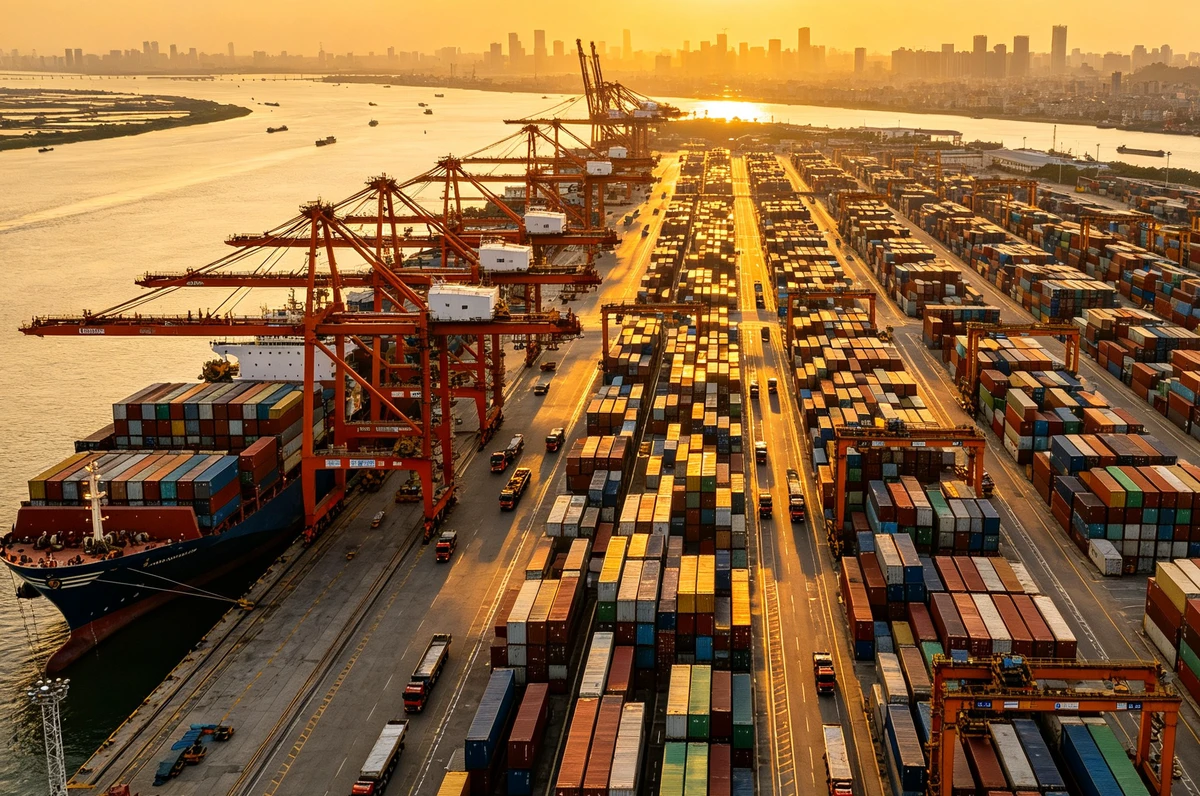
The Port of Guangzhou is a massive port cluster operated by Guangzhou Port Group, spanning four major port areas along the Pearl River estuary. With a trading history stretching back over 2,000 years, it remains the maritime gateway for Guangdong Province—China’s largest provincial economy.
| Key Fact | 2026 Data |
|---|---|
| Annual container throughput | 27+ million TEU |
| Global ranking | 6th worldwide |
| Trade coverage | 400+ ports in 100+ countries |
| Manufacturing radius | Foshan 60 km, Dongguan 70 km, Shenzhen 100 km |
| Main foreign-trade terminal | Nansha (~75% of total port volume) |
For importers sourcing from the Pearl River Delta, the port offers competitive freight rates, modern deep-water facilities, and efficient customs clearance at the Nansha Free Trade Zone.
Port Layout: Nansha vs Huangpu vs Xinsha
Choosing the wrong terminal can add drayage costs or cause missed sailings. Here is how the major terminals compare.
Nansha Port Area
Nansha is the flagship deep-water terminal and the primary international gateway. Phase IV—the Greater Bay Area’s first fully automated terminal and the world’s first river-sea-rail intermodal automated terminal—reached full operation in early 2026. Phase V, which broke ground in May 2026, will add 6.7 million TEUs of annual capacity once complete.
- Handles FCL mother-vessel calls on direct routes to Europe, the US, and the Middle East
- 200,000-tonne-class berths accommodating ultra-large container vessels
- Best for: full container loads, time-sensitive cargo, automated operations
Huangpu Port Area
Huangpu is the older port zone closer to downtown Guangzhou’s traditional industrial districts.
- Specializes in LCL consolidation, breakbulk, and certain bulk commodities
- Mature LCL stuffing operations (Wuchong terminal operated by Sinotrans)
- More flexible for customs-sensitive or chemical cargo
- May require barge transfer to Nansha for mainline connections
Xinsha and Neigang Areas
Xinsha Port focuses on RoRo vehicles, construction materials, and industrial raw materials. Neigang (Inner Harbor) handles domestic distribution via Pearl River barges.
Our Insight: By 2026, over 85% of international direct sailings have shifted to Nansha. We always confirm the latest berth deployment with carriers before locking in contracts—sailing schedules at Huangpu change faster than most rate sheets suggest.
Nansha vs Huangpu: Quick Decision Guide

| Factor | Nansha | Huangpu |
|---|---|---|
| FCL direct sailings | Extensive | Limited |
| LCL consolidation | Available | Strong specialty |
| Customs efficiency | High automation | Flexible for sensitive cargo |
| Best for | Time-critical FCL | Small-volume LCL, chemicals |
Major Shipping Routes & Transit Times from Guangzhou
Guangzhou Port maintains direct and transshipment services to every major market. Here are the 2026 benchmarks.
| Route | Destination Ports | Transit Time | Notes |
|---|---|---|---|
| US West Coast | Los Angeles, Long Beach | 14–22 days | Premium express services reach 11–14 days |
| US East Coast | New York, Savannah | 28–38 days | Via Panama Canal; Suez routing 38–48 days |
| Europe | Rotterdam, Hamburg, Antwerp | 28–35 days | Direct Nansha sailings available |
| Middle East | Jebel Ali, Dammam, Jeddah | 15–22 days | Stable weekly direct services |
| Southeast Asia | Singapore, Bangkok, Ho Chi Minh | 3–10 days | Highest frequency corridor |
| Australia | Sydney, Melbourne, Brisbane | 14–19 days | BMSB seasonal measures apply |
| Africa (East) | Durban, Mombasa | 23–35 days | Growing direct coverage |
| Africa (West) | Lagos, Tema, Abidjan | 35–45 days | Congestion surcharges may apply |
For a detailed breakdown of the transpacific corridor, see our guide to shipping from China to USA by sea, including how long shipping takes from China to the USA door to door.
Peak season surcharges typically add 20–50% during Q4 and the two months before Chinese New Year. Always confirm the cut-off date for customs declaration when booking.
Guangzhou Port vs Shenzhen Port: The Real Cost Comparison

Ask any freight forwarder in the PRD which port to use and you will start an argument. The honest answer: it depends on three variables.
By Factory Location
| Your Supplier Is In | Recommended Port | Why |
|---|---|---|
| Foshan, Zhongshan, Jiangmen, Zhuhai | Guangzhou (Nansha/Huangpu) | Save RMB 500–1,000 per container in trucking |
| Dongguan, Shenzhen, Huizhou | Shenzhen (Yantian/Shekou) | Shorter drayage, more sailing options |
| Guangzhou city / wholesale markets | Guangzhou | 30–60 minute truck to Nansha |
For western PRD factories, Guangzhou can reduce total logistics cost by 15–20% when you factor in inland transport.
By Cargo Type
- Electronics & high-tech: Shenzhen’s customs officers process electronics daily; clearance is faster for battery-powered goods with complete MSDS and UN38.3 documentation.
- Furniture, building materials, machinery: Guangzhou’s terminals handle these routinely, and Nansha’s automated systems reduce damage risk for oversized or fragile cargo.
By Route
Shenzhen leads on transpacific frequency—more weekly sailings to the US West Coast mean more flexibility when you miss a vessel. Guangzhou often wins on Middle East, Southeast Asia, and certain African routes where Nansha has competitive port-to-port rates.
FCL vs LCL from Guangzhou: 2026 Rate Tables
Here are current market ranges for guangzhou port to usa shipping cost and other major corridors. Rates exclude destination charges and fluctuate with fuel surcharges. For a full breakdown of surcharges and landed costs, see our analysis of freight costs from China to USA.
LCL Rates per CBM
| Destination | USD per CBM | Transit Time |
|---|---|---|
| US West Coast | $100–180 | 25–35 days |
| Europe (Hamburg/Rotterdam) | $90–150 | 30–40 days |
| Southeast Asia (Singapore) | $50–80 | 7–15 days |
| Middle East (Jebel Ali) | $110–145 | 15–22 days |
| Australia (Melbourne) | $85–140 | 14–19 days |
| Africa (Durban) | $100–130 | 23–35 days |
FCL Container Rates
| Destination | 20ft (USD) | 40ft (USD) |
|---|---|---|
| US West Coast | $2,000–4,000 | $3,500–5,500 |
| Northwest Europe | $2,500–5,000 | $4,000–8,000 |
| Southeast Asia | $500–1,500 | $900–2,000 |
| Middle East | $1,800–3,200 | $2,800–5,000 |
Rule of thumb: Below 15 CBM, LCL is usually cheaper. Above 15 CBM, request FCL quotes—the per-unit savings become significant.
Watch for Hidden Fees
| Fee Type | Typical Range |
|---|---|
| Terminal Handling Charge (THC) | $100–300 per container (FCL) |
| Documentation | $30–80 |
| Export customs declaration | $50–120 |
| Bunker Adjustment Factor (BAF) | 15–30% of base freight |
| Demurrage | Up to $200/day at congested ports |
Our Insight: We have seen importers lose more money to demurrage at Lagos and Jebel Ali than to the entire ocean freight bill. Accurate HS Codes and compliant documents before the vessel arrives are your best insurance.
Guangzhou Port Customs Clearance Process
The standard guangzhou port customs clearance process follows five steps:
- Booking & preparation — Confirm space, prepare Commercial Invoice, Packing List, and Bill of Lading
- Export declaration — File through China Customs with correct HS Code classification
- Inspection (if selected) — Physical or document check
- Release & loading — Container gated into terminal
- Vessel departure — Post-clearance audit possible within 3 years
Reducing Inspection Risk
Common triggers for customs holds include inaccurate HS Codes, document discrepancies, and sensitive product descriptions. Working with a forwarder holding AEO Advanced Certification can reduce inspection probability by over 70% through mutual recognition agreements with 60+ countries and regions.
Export Documentation Checklist
- Commercial Invoice
- Packing List
- Bill of Lading (B/L) or Sea Waybill
- Certificate of Origin (Form A, Form E, or RCEP certificate for preferential tariffs)
- Fumigation Certificate (for wooden packaging)
- MSDS & Transport Identification Report (for batteries, liquids, powders)
How to Ship from Guangzhou Port to Amazon FBA
Amazon FBA forwarding from Guangzhou follows this chain:
- Factory pickup or supplier delivery to a consolidation warehouse
- Quality check, labeling, and palletizing to Amazon specifications
- Export customs clearance at Nansha
- Ocean or air freight to destination
- Import clearance and duty payment (under DDP terms if arranged)
- Appointment and delivery to the Amazon fulfillment center
What makes Guangzhou particularly useful for FBA sellers is not the port itself but what surrounds it—a dense ecosystem of prep warehouses near the terminal, many offering 7–14 days of free storage for multi-supplier consolidation.
Real-Life Scenario: Earlier this year, an e-commerce client sourcing from five suppliers across Guangzhou and Foshan was shipping each order separately at $4,200 total. We consolidated everything into one 12-CBM LCL shipment at Nansha—final cost dropped to $1,850, a 56% saving. The key was aligning supplier delivery schedules to hit the same consolidation window.
Multimodal Options: Barge, Rail & Trucking to Guangzhou Port
Not every factory sits next to the port. Guangzhou’s inland waterway transport network offers real savings.
Pearl River Barge Services
Factories in Foshan, Zhongshan, Jiangmen, and Zhuhai can ship cargo via barge directly to Nansha, cutting inland costs by 30–50% compared to trucking. Barges run on fixed schedules and handle both FCL and LCL cargo.
Rail-Sea Intermodal
Nansha’s rail-sea intermodal trains connect inland provinces—Hunan, Guangxi, Guizhou, and beyond—directly to the terminal. This is increasingly popular for machinery and bulk commodities from central China.
Trucking Reference (to Nansha)
| Origin | Distance | Typical Cost (20ft) |
|---|---|---|
| Guangzhou city | 60 km | $80–120 |
| Foshan | 80 km | $100–150 |
| Dongguan | 90 km | $120–180 |
| Zhongshan | 110 km | $150–200 |
| Shenzhen | 140 km | $180–250 |
Guangzhou Port Congestion & Delays: 2026 Reality Check
Guangzhou port congestion peaks during two windows: the eight weeks before Chinese New Year and Q4 holiday stocking (September through November). During these periods, expect space shortages and peak season surcharges of $100–300 per TEU at congested destination ports.
Mitigation Strategies
- Book space 3–4 weeks ahead during peak season
- Prefer direct sailings over transshipment when time-critical
- Maintain a backup port option (Shenzhen for eastern PRD cargo)
- Ensure all certificates (SONCAP, PVoC, ECTN) are ready before departure
How to Get Cargo from Factory to Guangzhou Port: Step-by-Step
Here is the complete workflow for first-time importers.
Step 1: Request an Itemized Quote
Ask for a breakdown covering pickup, consolidation (if needed), export clearance, ocean freight, insurance, and destination charges. If a forwarder only gives you one lump-sum number, push back—that is a red flag.
Step 2: Book Space
Confirm vessel name, cut-off date, and sailing schedule in writing.
Step 3: Arrange Pickup or Delivery
Your forwarder collects from the factory, or your supplier delivers to the forwarder’s warehouse.
Step 4: Consolidate and Inspect
Multi-supplier goods are combined, measured, and checked. Request photos before sealing.
Step 5: Export Customs Declaration
Your forwarder files the declaration with correct HS Codes and supporting documents.
Step 6: Track the Shipment
Use the Bill of Lading number to monitor vessel progress.
Step 7: Destination Clearance and Delivery
Import clearance, duty payment, and final delivery to your warehouse or Amazon FBA center.
Real-Life Scenario: Last quarter, a furniture buyer in Sydney was sourcing from three Foshan factories. Instead of three separate LCL shipments, we consolidated at our Guangzhou warehouse, handled unified export clearance, and shipped one 40ft HC container to Sydney. Total savings: $1,900 on freight plus a single customs entry fee instead of three. We cover the full process in our guide to container shipping from China to Australia.
FAQ
How much does it cost to ship a container from Guangzhou Port to the USA?
A 20ft FCL container to the US West Coast runs $2,000–4,000; LCL costs $100–180 per CBM. Peak season adds 20–50%.
How long does sea freight from Guangzhou to Europe take?
Direct Nansha sailings to Rotterdam or Hamburg take 28–35 days. Transshipment via Singapore or Colombo adds 5–10 days.
Is Guangzhou Port or Shenzhen Port cheaper for shipping furniture?
For Foshan-sourced furniture, Guangzhou is typically 15–20% cheaper on total landed cost due to shorter trucking. For Dongguan furniture, the difference narrows.
Can I ship Amazon FBA cargo through Guangzhou Port?
Yes. Guangzhou has a mature FBA prep warehouse ecosystem near Nansha, and consolidation services are well-developed for multi-supplier orders.
What documents do I need to export from Guangzhou Port?
At minimum: Commercial Invoice, Packing List, Bill of Lading, and Certificate of Origin (if claiming preferential tariffs). Sensitive goods need MSDS and transport identification reports.
How do I avoid customs inspection delays at Guangzhou Port?
Use accurate HS Codes, ensure invoice-packing list consistency, and work with an AEO-certified forwarder to reduce inspection probability.
What is the cheapest way to ship small cargo from Guangzhou?
LCL consolidation through a forwarder with a physical Guangzhou warehouse. Consolidating multi-supplier orders into one shipment saves 40–60% versus fragmented shipping.
Does Guangzhou Port have direct flights to the Middle East?
Yes, Nansha offers weekly direct sailings to Jebel Ali, Dammam, and Jeddah with transit times of 15–22 days.
How do I choose between Nansha and Huangpu terminals?
Choose Nansha for FCL direct sailings and time-sensitive cargo. Choose Huangpu for LCL consolidation, chemicals, or when your supplier is in the eastern industrial zones.
What is the best freight forwarder near Guangzhou Port?
Look for an NVOCC-licensed forwarder with a physical consolidation warehouse in Guangzhou, transparent itemized quotes, and destination clearance capabilities in your country.
Conclusion
Guangzhou Port offers a compelling alternative to Shenzhen for importers sourcing from the western and central Pearl River Delta. With 27+ million TEUs of annual throughput, direct sailings to 400+ ports, and competitive FCL and LCL rates, Nansha has become the default gateway for furniture, building materials, machinery, and consolidated consumer goods.
Getting the best rate out of Guangzhou is not about finding the cheapest forwarder. It is about matching the right terminal, transport mode, and routing to your specific cargo and supplier location. Working with an experienced partner who understands both Guangzhou and Shenzhen port dynamics ensures you never overpay for inland transport or miss critical sailing windows.
At Sinoshipment, we have managed Guangzhou Port shipments for 5,000+ clients since 2013. Whether you need FCL, LCL, Amazon FBA forwarding, or door-to-door DDP solutions, our team provides transparent quotes with no hidden fees. Contact us today for a customized shipping plan from Guangzhou to your destination.