How Long Does Shipping Take from China to the Netherlands? A Complete 2026 Guide (FCL, LCL & DDP)
· By SinoShipment
How long does shipping take from China to the Netherlands? The honest answer most freight forwarders won’t give you upfront is this: it depends on what you’re measuring. Port-to-port sea freight from Shanghai to Rotterdam might take 25 days. But if your supplier is in Dongguan, you’re shipping under EXW terms, and you need delivery to an Amsterdam warehouse, the real door-to-door timeline is closer to 39 days — and that’s before customs inspections or port congestion add their share of surprises.
At Sinoshipment, we’ve managed thousands of China-to-Europe shipments from our Shenzhen headquarters since 2013. We’ve seen Dutch importers lose entire selling seasons because they budgeted 25 days for a shipment that actually needed 42. In this guide, we’ll break down the exact shipping time from China to the Netherlands for every mode — sea, air, rail, and express — with real port-to-port data, day-by-day DDP timelines, and the seasonal disruptions no one warns you about until it’s too late.
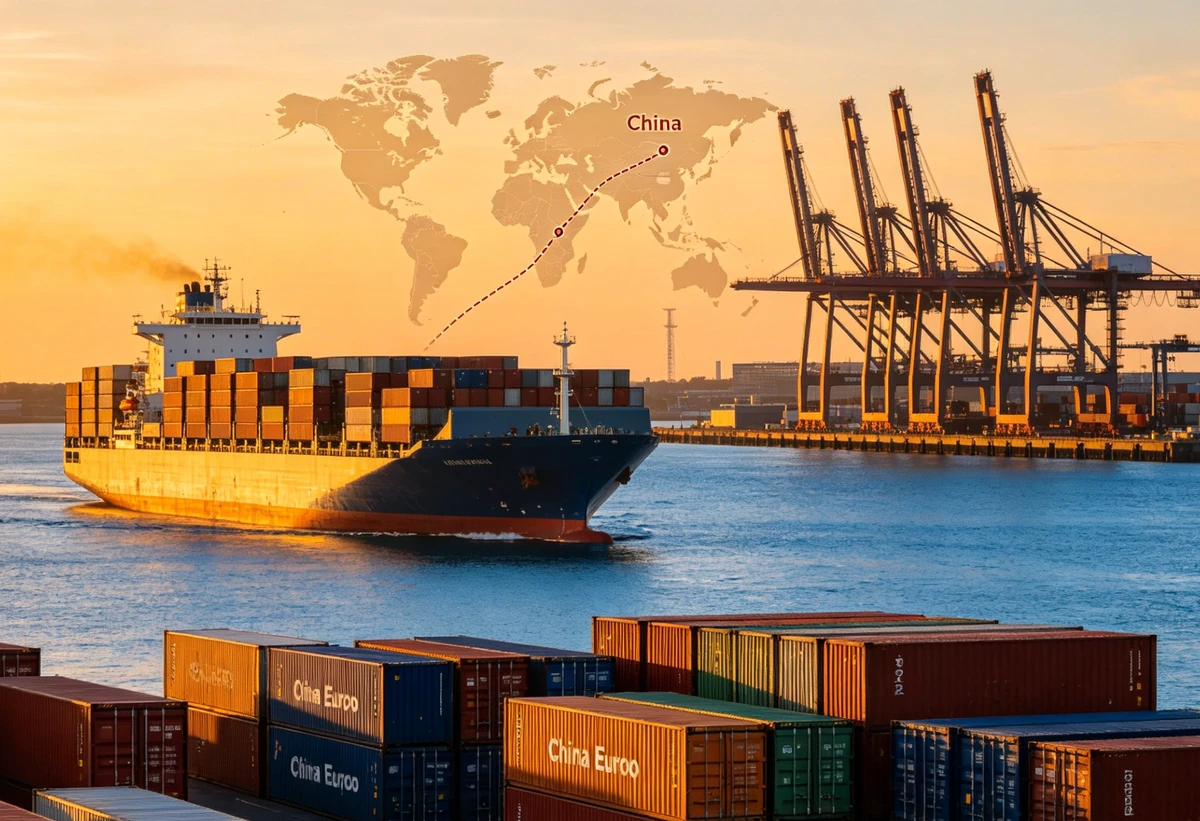
China to Netherlands Shipping Times at a Glance
If you’re skimming for a fast answer, here are the typical transit windows you can expect in 2026:
| Shipping Mode | Port-to-Port / Airport-to-Airport | Door-to-Door (DDP) | Best For |
|---|---|---|---|
| Express Courier | 2–4 days | 3–6 days | Urgent documents, samples, small parcels |
| Air Freight | 3–7 days | 5–10 days | High-value goods, urgent restocks, product launches |
| Rail Freight | 15–20 days | 18–25 days | Mid-urgency cargo where air is too expensive |
| Sea Freight (FCL) | 25–35 days | 32–42 days | Full container loads, bulk inventory, planned restocks |
| Sea Freight (LCL) | 28–38 days | 35–45 days | Smaller volumes sharing container space |
The critical distinction most guides gloss over: port-to-port times are NOT door-to-door times. The gap between what carriers quote and what you actually experience at your warehouse is usually 7–12 days. That gap is where scheduling mistakes happen, inventory runs out, and demurrage fees pile up at Rotterdam.
How We Measure Shipping Time: Port-to-Port vs. Door-to-Door
Before you compare any transit times, you need to know exactly when the clock starts and stops. Freight forwarders often quote port-to-port or airport-to-airport figures because they look faster. But as an importer, what you actually care about is when the goods leave your supplier’s factory and when they arrive at your door.
Here’s how the four most common Incoterms 2020 change your measured timeline:
| Incoterm | When the Clock Starts | When It Stops | Hidden Time Gap |
|---|---|---|---|
| EXW (Ex Works) | After factory pickup in China | Buyer’s warehouse in Netherlands | Inland China trucking: 1–5 days before port |
| FOB (Free on Board) | Cargo crosses ship’s rail at Chinese port | Buyer’s warehouse in Netherlands | Most reliable benchmark for sea freight timing |
| CIF (Cost, Insurance, Freight) | Chinese port departure | Rotterdam port only | Buyer handles import clearance + inland delivery (+5–10 days) |
| DDP (Delivered Duty Paid) | Factory pickup in China | Buyer’s warehouse in Netherlands | True end-to-end; no hidden gaps |
Why this matters in practice: A shipment from a Dongguan electronics factory under EXW will take 3–5 days longer than the same shipment under FOB from Yantian Port — before the vessel even sails. If your supplier quotes you “30 days to Rotterdam,” ask them: 30 days from when? At Sinoshipment, we always quote DDP door-to-door timelines because that’s what actually shows up in your inventory system.
Sea Freight from China to the Netherlands: A Port-to-Port Deep Dive
Sea freight remains the dominant mode for China-Netherlands trade. Rotterdam is Europe’s largest port by volume, handling over 14.5 million TEU annually, and it offers direct connections to every major Chinese export hub. If you’re moving full container loads (FCL) or sharing space via LCL, ocean shipping gives you the lowest cost per unit — but it also demands the most precise timeline planning.
Standard Route & the Suez Canal vs. Cape of Good Hope Question
Under normal conditions, a vessel sailing from China to Rotterdam follows the Suez Canal route: China → Malacca Strait → Indian Ocean → Suez Canal → Mediterranean Sea → Rotterdam. This routing typically delivers port-to-port transit of 25–32 days from major Chinese ports.
However, since late 2023, instability in the Red Sea region has forced many carriers — including Maersk, MSC, and Hapag-Lloyd — to reroute vessels around the Cape of Good Hope. This diversion adds 7–15 days to ocean transit. As of mid-2026, some Asia-Europe services have returned to Suez routing, but schedules remain volatile.
Sinoshipment experience: In early 2024, we had a client shipping automotive parts from Ningbo to Rotterdam who was quoted 28 days based on standard Suez routing. By the time the vessel sailed, the carrier had switched to Cape routing due to Red Sea security alerts. The container arrived 41 days later — 13 days over the original estimate. That single delay cost the client a production line shutdown. Since then, we monitor carrier advisories weekly and proactively pad client timelines when Cape routing is active on their booked service. We also recommend building a 10-day buffer into any Netherlands-bound sea freight schedule until Red Sea stability is fully restored.
FCL Shipping Time from China to the Netherlands by Origin Port
The Port of Loading (POL) you choose has a direct impact on transit time. Below are typical FCL port-to-port windows to Rotterdam in 2026:
| Port of Loading (China) | Port of Discharge (Netherlands) | Transit Time |
|---|---|---|
| Shanghai (Yangshan/Waigaoqiao) | Rotterdam | 25–30 days |
| Ningbo-Zhoushan | Rotterdam | 27–32 days |
| Shenzhen (Yantian) | Rotterdam | 28–33 days |
| Shenzhen (Shekou) | Rotterdam | 29–34 days |
| Guangzhou (Nansha) | Rotterdam | 28–33 days |
| Qingdao | Rotterdam | 30–35 days |
| Xiamen | Rotterdam | 29–34 days |
Sinoshipment insight: For Dutch-bound cargo originating in South China’s manufacturing belt (Dongguan, Shenzhen, Guangzhou), Yantian Port typically offers the most frequent direct sailings to Rotterdam. Shekou is an alternative, but direct Europe services are less frequent, which can add 2–3 days of waiting time. For manufacturers in the Yangtze River Delta, Shanghai remains the fastest gateway with the densest weekly schedule.
LCL Shipping Time from China to the Netherlands
LCL (Less than Container Load) shipments almost always take longer than FCL for the same origin-destination pair. Expect LCL to add 3–7 days on top of FCL transit:
- Origin consolidation: Your cargo waits at a Chinese CFS (Container Freight Station) until the forwarder has enough volume to fill a consolidated container.
- Deconsolidation at destination: At Rotterdam, the container must be stripped and your cargo separated before release.
- Multiple handling touchpoints: Every time cargo is moved, loaded, or unloaded, there’s a risk of delay — and LCL involves more hands than a sealed FCL box.
When time matters, choose FCL. Even if your cargo only fills 60–70% of a 20-foot container, the time savings and reduced handling risk often justify the extra space. If your volume is genuinely small (under 10 CBM), LCL is still practical — just budget the longer end of the timeline range.
Air Freight Shipping Time from China to the Netherlands
Air freight is your fastest option when stockouts are more expensive than freight premiums. From major Chinese airports to Amsterdam Airport Schiphol (AMS) — Europe’s third-busiest cargo hub — direct cargo flights can move goods in as little as 3 days from departure to availability.
Airport-to-Airport Transit Times
| Departure Airport (China) | Arrival Airport (Netherlands) | Transit Time |
|---|---|---|
| Shanghai Pudong (PVG) | Amsterdam Schiphol (AMS) | 3–5 days |
| Shenzhen Bao’an (SZX) | Amsterdam Schiphol (AMS) | 3–5 days |
| Guangzhou Baiyun (CAN) | Amsterdam Schiphol (AMS) | 3–6 days |
| Beijing Capital (PEK) | Amsterdam Schiphol (AMS) | 3–5 days |
| Hong Kong (HKG) | Amsterdam Schiphol (AMS) | 2–4 days |
Direct vs. connecting flights matter. Carriers like KLM Cargo, China Southern Cargo, and Cargolux operate direct freighter services on major China-AMS lanes. If your forwarder books you on a connecting service via Dubai (DXB), Doha (DOH), or Frankfurt (FRA), add 2–4 days for the transshipment handling. For a detailed breakdown of air options into Central Europe, our guide to Air Freight from China to Germany covers Frankfurt and other major EU cargo hubs.
Door-to-Door Air Freight Breakdown
A realistic DDP air freight timeline from a Shenzhen factory to an Amsterdam warehouse looks like this:
| Stage | Duration | Notes |
|---|---|---|
| Factory pickup | 1 day | Collection from Dongguan/Shenzhen |
| Export customs clearance | 1–2 days | China customs declaration |
| Flight transit | 1 day | Direct freighter to AMS |
| AMS handling & import clearance | 1–2 days | Cargo unload, customs release |
| Netherlands inland delivery | 1–2 days | Truck to Amsterdam/Rotterdam/Eindhoven |
| Total DDP | 5–10 days | End-to-end |
Express Courier Services
For documents, samples, and small parcels under 30 kg, DHL, FedEx, and UPS offer express door-to-door service from China to the Netherlands in 2–5 days. These integrators handle their own customs clearance, making them the simplest option — but also the most expensive per kilogram.
Rail Freight from China to the Netherlands: The Middle Ground
The China-Europe Railway Express has carved out a valuable niche between sea and air. Trains depart from inland Chinese cities, cross Kazakhstan and Russia, enter the EU via Poland or Belarus, and terminate at Dutch rail terminals — primarily Tilburg and Rotterdam.
Terminal-to-Terminal Transit Times
| Departure Station (China) | Arrival Terminal (Netherlands) | Transit Time |
|---|---|---|
| Xi’an | Rotterdam / Tilburg | 15–19 days |
| Chengdu | Rotterdam / Tilburg | 16–20 days |
| Chongqing | Tilburg | 16–20 days |
| Zhengzhou | Rotterdam | 17–21 days |
| Yiwu | Rotterdam | 18–22 days |
Rail freight shines for cargo that is too urgent for sea (30+ days) but too heavy or voluminous for air (cost-prohibitive above 300–500 kg). Typical sweet spots include automotive parts, consumer electronics, and seasonal retail goods where a 2-week saving over sea freight justifies the 30–50% cost premium.
Door-to-door rail freight typically adds 3–5 days for origin pickup and consolidation, plus 2–3 days for Netherlands customs clearance and final delivery — bringing total DDP to 20–28 days.
Door-to-Door (DDP) Shipping Timeline: A Day-by-Day Breakdown
Here’s where most guides stop at “35–45 days” and leave you guessing. Below is the actual milestone-by-milestone timeline we use at Sinoshipment when planning DDP sea freight from a South China factory to a Dutch warehouse.
Sea Freight DDP: Shenzhen to Amsterdam Warehouse
| Day | Milestone | What Happens |
|---|---|---|
| Day 1 | Factory Pickup | Truck collects cargo from Dongguan or Shenzhen factory |
| Day 2–3 | Origin Consolidation | Cargo arrives at our Shenzhen warehouse; packing, labeling, palletizing if needed |
| Day 4–5 | Export Customs Clearance | China export declaration submitted; possible customs inspection (random) |
| Day 6 | Port Gate-In & Loading | Container enters Yantian Port; loaded onto vessel |
| Day 7–32 | Ocean Transit | Voyage to Rotterdam via Suez (or Cape of Good Hope if rerouted) |
| Day 33 | Vessel Arrival & Discharge | Container unloaded at Rotterdam terminal |
| Day 34–36 | Import Customs Clearance | Dutch customs processing; EORI verification; VAT and duty assessment |
| Day 37 | Container Release | Customs release issued; trucking arranged for inland delivery |
| Day 38–39 | Inland Delivery | Truck from Rotterdam to Amsterdam, Eindhoven, or Utrecht warehouse |
| Day 39 | Delivery Complete | Cargo received and signed for at destination |
What can stretch this timeline:
- Customs inspection (China or Netherlands): +2–5 days
- Rotterdam port congestion (common in Q4): +1–3 days
- Documentation errors (mismatched invoice, wrong HS code): +3–7 days
- Transshipment delays (if vessel hubs through Singapore/Port Klang): +5–10 days
Air Freight DDP: Compressed Timeline
The same door-to-door logic applies to air freight, but compressed:
| Day | Milestone |
|---|---|
| Day 1 | Factory pickup |
| Day 2 | Export customs clearance |
| Day 3 | Flight departure (PVG/SZX to AMS) |
| Day 4 | Arrival at AMS; import customs clearance |
| Day 5–6 | Inland delivery to Dutch warehouse |
| Day 6 | Delivery complete |
Amazon FBA Shipping from China to the Netherlands
Amazon FBA sellers shipping inventory to EU fulfillment centers face an added layer of timing complexity: FBA prep at origin and delivery appointment scheduling at destination. No competitor guide we reviewed covers this specifically for the Netherlands — yet it’s one of the fastest-growing segments on this lane.
FBA Air Freight Timeline to Netherlands FCs
| Stage | Duration |
|---|---|
| Factory pickup + FBA prep (labeling, poly-bagging, palletizing to Amazon spec) | 2–3 days |
| Export clearance + flight to AMS | 3–5 days |
| AMS import clearance + trucking to Amazon FC (WRO1, AMS1, etc.) | 3–5 days |
| Total DDP to Amazon warehouse | 8–13 days |
FBA Sea Freight Timeline to Netherlands FCs
| Stage | Duration |
|---|---|
| Factory pickup + FBA prep | 3–5 days |
| Sea transit to Rotterdam | 28–35 days |
| Import clearance + trucking to Amazon FC | 4–7 days |
| Total DDP to Amazon warehouse | 35–47 days |
Critical compliance notes for Amazon-bound cargo:
- EORI number is mandatory for the EU importer of record.
- Pallet specs: Amazon EU requires EUR pallets (1.2m x 0.8m). Non-compliant pallets are rejected at the FC.
- Carton labeling: Each carton needs an Amazon FBA label (generated from Seller Central) plus a “Made in China” origin label.
- Delivery appointments: Amazon FCs require booked delivery slots. Walk-ins are not accepted.
At Sinoshipment’s Shenzhen warehouse services facility, we run a dedicated FBA prep line that handles inspection, labeling, palletizing, and carton strengthening before cargo even reaches the port. This compresses the origin phase and prevents costly rejections at the fulfillment center.
What Affects Shipping Time from China to the Netherlands?
Even with perfect planning, variables outside your control can shift your timeline. Here are the most common delay triggers we manage for clients:
Port Congestion Yantian and Shekou ports experience peak congestion from August through October as exporters rush to beat the Q4 holiday season and Chinese New Year pre-booking window. Rotterdam sees its own surge in Q4 as Christmas inventory arrives simultaneously.
Customs Inspections China customs performs random export spot-checks, especially on electronics and goods with potential intellectual property concerns. Netherlands customs scrutinizes EORI validity, HS code accuracy, and declared values. A mismatch between your commercial invoice and packing list can trigger a physical inspection adding 2–5 days.
Weather & Seasonal Disruptions Typhoons in South China (July–October) can suspend port operations for 1–3 days. Winter storms in the North Atlantic occasionally delay vessel arrivals at Rotterdam by 24–48 hours.
Documentation Accuracy The most preventable delays come from paperwork errors: incorrect HS codes, mismatched commercial invoice values, missing Certificate of Origin, or absent CE marking documentation for electronics. We verify every document set before cargo departs our warehouse — fixing errors in transit is expensive.
Transshipment vs. Direct Service Direct sailings from Yantian to Rotterdam are faster and more predictable. Transshipment services that hub through Singapore, Port Klang, or Colombo introduce an extra handling stage that can add 3–7 days — and increase the risk of misconnection.
Cargo Insurance While carrier liability covers loss or damage, compensation is typically calculated by weight — not by the commercial value of your goods. For high-value shipments, we always recommend separate cargo insurance to cover the full invoice value plus freight costs. It’s a small premium that eliminates catastrophic exposure during a 30-day ocean voyage.
Carrier Schedule Reliability Blank sailings (canceled weekly services due to low demand) spike during Chinese New Year and post-holiday lulls. Equipment shortages — especially for 40-foot high-cube containers — can delay bookings by 1–2 weeks during peak season.
Insider Tips: What Only a China-Based Forwarder Knows
After 12 years of loading containers at Yantian and tracking vessels to Rotterdam, here are the operational details most overseas brokers never mention:
- Tuesday sailings are usually most reliable. Most Asia-Europe strings depart Yantian on Tuesdays. Monday departures often get pushed by weekend cargo backlogs. If your factory delivers on Friday, book the Tuesday sailing — not the Monday one.
- Request a “no transshipment” clause in your booking confirmation. Many carriers default to transshipment via Singapore or Colombo to fill vessels. A direct Yantian→Rotterdam service saves 3–7 days but isn’t always the default option.
- Pre-lodge your Dutch customs declaration 48 hours before vessel arrival. Rotterdam’s port community system (PortBase) allows advance submission. Importers who pre-lodge typically clear in 24 hours. Those who wait until the container is on the quay often wait 3–5 days.
- Don’t trust factory-provided HS codes blindly. We’ve seen Chinese suppliers classify LED strips as “plastic decorations” (0% duty) when they should be “electrical lighting” (up to 14% duty). A wrong HS code doesn’t just mean duty adjustments — it means inspection, delays, and potential fines. Always verify with your forwarder or a licensed customs broker before shipment.
- The “best” route isn’t always the fastest. During Q4 2024, we found that booking via Hamburg and trucking to Amsterdam was 4 days faster than waiting for a Rotterdam berth. A forwarder with European ground-truck relationships can route around port congestion in ways that pure ocean brokers cannot.
Seasonal Shipping Calendar: When to Book
Timing your booking is as important as choosing your mode. Here’s the month-by-month planner we share with Sinoshipment clients importing from China to the Netherlands:
| Period | Event | Impact on Timing | Booking Advice |
|---|---|---|---|
| January–February | Chinese New Year (CNY) | Factories close 2–4 weeks; pre-holiday port congestion is severe | Book sea freight 4–6 weeks before CNY; air freight 2–3 weeks ahead |
| April–May | Post-CNY Normalization | Rates drop; container space opens up | Best window for non-urgent sea freight bookings |
| July–August | Peak Season Build-Up | Space tightens; carriers begin applying peak season surcharges | Book 3–4 weeks ahead; confirm equipment availability |
| October 1–7 | Golden Week | Port and customs offices in China operate on reduced schedules | Avoid shipping during this week; plan around it |
| October–November | Q4 Peak / Holiday Rush | Highest rates of the year; longest delays at both ends | Book 5–6 weeks ahead; use air freight only for urgent stock |
| December | Pre-Christmas Push | Air freight capacity is maxed out; sea freight still viable but tight | Last reliable sea cutoff for Christmas delivery: early November |
Rotterdam-specific note: The port’s annual congestion peak aligns with Q4 holiday inventory arrivals. If your cargo is scheduled to arrive in November, pre-lodge your customs declaration before the vessel berths to avoid storage fees.
Netherlands Customs & Import Essentials
Understanding Dutch import requirements won’t speed up the ocean, but it will prevent customs clearance from becoming your bottleneck.
EORI Number
An EORI (Economic Operators Registration and Identification) number is mandatory for all commercial imports into the EU. Without it, Dutch Customs (Douane) will not process your clearance. If you don’t have one, register through the Dutch Tax Authority before your cargo departs China.
Dutch VAT (21%) & Article 23 Deferment
The Netherlands applies a 21% VAT on most imported goods, calculated on the CIF value plus any applicable customs duty.
For regular importers, the Article 23 VAT deferment scheme is a game-changer. Instead of paying 21% VAT upfront at the border, you report it through your periodic VAT return. This preserves cash flow — especially valuable for businesses using the Netherlands as an EU distribution hub. To use Article 23, you’ll typically need a Dutch fiscal representative if your company is not EU-established.
Customs Duty
Duty rates depend on your product’s HS code and fall under the EU Common External Tariff. You can look up exact rates using the EU’s TARIC database. Typical duty rates for Chinese-origin goods range from 0% to 12%, depending on the product category.
Required Documents
- Commercial Invoice (matching packing list exactly)
- Packing List
- Bill of Lading (B/L) for sea freight or Airway Bill (AWB) for air freight
- Certificate of Origin (if claiming preferential rates)
- CE marking documentation for regulated products (electronics, machinery, toys). CE marking is the manufacturer’s declaration that the product meets EU safety, health, and environmental requirements. For electronics shipped from China, this typically includes a Declaration of Conformity, test reports, and technical documentation. Dutch customs will not release regulated goods without valid CE proof.
Customs Clearance Time at Rotterdam
For straightforward shipments with complete documentation, expect 1–3 days from vessel arrival to customs release. If inspection or documentation queries arise, budget 3–7 days.
How to Choose the Right Shipping Mode for Your Cargo
Use this decision matrix to match your cargo profile with the optimal mode and timeline:
| Your Situation | Recommended Mode | Expected Timeline | Why |
|---|---|---|---|
| Over 15 CBM, non-urgent, cost-sensitive | Sea FCL | 32–42 days DDP | Lowest cost per unit; predictable scheduling |
| 1–15 CBM, flexible timeline | Sea LCL | 35–45 days DDP | Pay only for space used; no container commitment |
| 300–1,000 kg, mid-urgency | Rail Freight | 20–28 days DDP | Faster than sea, 30–50% cheaper than air |
| Under 300 kg, urgent, high-value | Air Freight | 5–10 days DDP | Protects sales rank and stock availability |
| Amazon FBA restock, tight deadline | Air DDP | 8–13 days to FC | Meets Amazon inbound deadlines |
| Amazon FBA restock, planned | Sea DDP | 35–47 days to FC | Lowest landed cost per unit for FBA inventory |
The hybrid strategy most experienced importers use: Ship your baseline inventory by sea to maintain low cost, then top up with a smaller air shipment when stock runs low. This protects margins without risking stockouts.
If you’re expanding beyond the Netherlands, Sinoshipment also offers dedicated freight shipping from China to Germany, freight shipping from China to France, and freight shipping from China to Belgium — all with the same transparent DDP coverage and milestone tracking.
Shipping Documentation Checklist: Don’t Let Paperwork Delay Your Cargo
Based on our experience clearing thousands of Netherlands-bound shipments, here’s the exact document set we verify before every departure. Missing or incorrect paperwork is the #1 cause of avoidable delays on this lane.
China Export Documents:
- [ ] Commercial Invoice — must match packing list line-for-line; values must reflect actual transaction price
- [ ] Packing List — gross/net weight, dimensions, and carton count per item
- [ ] Bill of Lading (B/L) or Sea Waybill — consignee details must match EORI holder exactly
- [ ] Export Customs Declaration — China customs release note (we handle this for DDP clients)
- [ ] Certificate of Origin — required for certain product categories to determine duty rates
- [ ] MSDS / Transport鉴定报告 — mandatory for batteries, liquids, powders, or any hazardous materials
Netherlands Import Documents:
- [ ] EORI Number — valid and active in the EU database before vessel arrival
- [ ] CE Marking Documentation — Declaration of Conformity + test reports for regulated products
- [ ] Import Customs Declaration — pre-lodged via PortBase when possible
- [ ] VAT Registration (or Article 23 authorization if applicable)
Amazon FBA Additional Requirements:
- [ ] FBA Carton Labels — generated from Amazon Seller Central, applied to every carton
- [ ] Pallet Compliance — EUR pallet (1.2m x 0.8m), stackable, max height 1.8m
- [ ] Delivery Appointment — booked through Amazon Carrier Central before dispatch
Pro tip from our Shenzhen ops team: We photograph every document set and cross-check invoice values against the packing list before cargo leaves the warehouse. One mismatch between “Nitrogen Generator” on the invoice and “Gas Equipment” on the packing list cost a client 6 days in Rotterdam customs inspection last year. The 5 minutes we spend verifying documents at origin saves days — and hundreds of euros in demurrage — at destination.
You may be interested in the following related articles:
- freight shipping from china to belgium
- Freight Shipping from China to Italy
- freight shipping from china to france
- freight shipping from china to spain
- freight shipping from china to germany
FAQ: China to Netherlands Shipping Time
How long does shipping take from China to the Netherlands by sea? Port-to-port sea freight typically takes 25–35 days for FCL and 28–38 days for LCL, depending on the origin port. Door-to-door DDP adds 7–12 days for pickup, customs, and delivery. For a regional comparison, see our guide on How Long Does Shipping Take from China to the UK.
How long does sea freight take from China to the Netherlands for FCL vs. LCL? FCL is faster because your container stays sealed from origin to destination. Expect FCL at 25–35 days port-to-port and LCL at 28–38 days due to consolidation and deconsolidation handling.
What is the fastest shipping method from China to the Netherlands? Air freight is the fastest commercial option at 3–7 days airport-to-airport or 5–10 days door-to-door. Express courier (DHL/FedEx/UPS) can deliver documents and small parcels in 2–5 days.
How long does DDP door-to-door shipping take from China to the Netherlands? Sea DDP typically takes 32–42 days (FCL) or 35–45 days (LCL). Air DDP takes 5–10 days. Rail DDP takes 20–28 days. If you’re also shipping to North America, our How Long Does Shipping Take From China to USA guide offers a similar day-by-day breakdown for trans-Pacific lanes.
Does the Suez Canal crisis still affect shipping times to the Netherlands? As of 2026, some carriers have resumed Suez routing, but volatility remains. When vessels are rerouted around the Cape of Good Hope, expect 7–15 additional days. Always confirm your carrier’s current routing before locking in inventory plans.
How long does Amazon FBA shipping take from China to the Netherlands? Air freight DDP to a Netherlands Amazon FC takes 8–13 days including FBA prep. Sea freight DDP takes 35–47 days. Add 2–3 days at origin for labeling, palletizing, and inspection.
What is the cheapest way to ship from China to the Netherlands? Sea freight LCL or FCL offers the lowest cost per kilogram or cubic meter. For shipments under 1.5 CBM, air freight can sometimes compete on total landed cost when inventory carrying costs are factored in. For a full cost breakdown of Europe-bound ocean shipping, see Shipping from China to Germany by Sea.
How do Chinese New Year and peak season affect shipping times? CNY (January–February) causes factory closures and severe port congestion. Book sea freight 4–6 weeks in advance. Q4 peak season (October–November) drives the highest rates and longest delays of the year.
Do I need an EORI number to import into the Netherlands from China? Yes. An EORI number is mandatory for all commercial imports into the EU. Dutch Customs will not clear your cargo without it.
What is Article 23 VAT deferment, and does it speed up customs clearance? Article 23 doesn’t speed up physical clearance, but it defers your 21% VAT payment from the border to your periodic VAT return. This improves cash flow, especially for regular importers using the Netherlands as an EU entry hub.
How does EXW vs. FOB affect my total shipping time? Under EXW, your timeline starts after factory pickup, which adds 1–5 days of inland China trucking before the port clock begins. Under FOB, the clock starts at the Chinese port. For timeline accuracy, always clarify which Incoterm your quote is based on.
Can I track my shipment from China to the Netherlands in real time? Yes. Reputable freight forwarders provide milestone-based tracking covering pickup, export clearance, vessel departure, transit, arrival, customs release, and final delivery. At Sinoshipment, clients receive automated milestone updates at every stage.
Conclusion: Plan Smarter with a China-Based Freight Partner
If you take one thing from this guide, make it this: always ask whether a quoted transit time is port-to-port or door-to-door. The 7–12 day gap between those two numbers is where most inventory planning mistakes happen. Add seasonal events like Chinese New Year and Q4 peak into your calendar, and you’ll avoid the surprises that catch less experienced importers off guard.
At Sinoshipment, we’ve been managing China-to-Netherlands shipments from our Shenzhen headquarters since 2013. We’ve built relationships with carriers, port operators, and Dutch customs brokers that let us see delays before they happen — and adjust routes, modes, and timelines to keep your cargo moving.
We don’t just quote rates. We manage the full chain: factory pickup in Dongguan or Shenzhen, export clearance at Yantian or Shekou, ocean/air/rail booking on the most reliable services, Rotterdam customs coordination, and final delivery to your warehouse in Amsterdam, Rotterdam, or anywhere in the EU — all under one transparent DDP quote with no hidden fees. Whether you need freight shipping from China to the Netherlands or broader Freight Shipping from China to Europe, our team manages every milestone from origin to destination.
Important Disclaimers
Transit times are estimates, not guarantees. The timelines in this guide reflect typical market conditions as of mid-2026. Actual transit times vary based on carrier schedules, port congestion, customs inspection randomness, weather events, and geopolitical routing changes (such as Red Sea disruptions). Always build a 10% buffer into critical inventory plans.
Pricing is volatile. Ocean freight rates, fuel surcharges, and peak season premiums fluctuate monthly. The cost ranges mentioned in this article are indicative based on 2026 Q2 market levels. For an accurate, binding quote for your specific cargo, HS code, and Incoterms, contact us directly.
Regulatory compliance is the importer’s responsibility. While Sinoshipment assists with documentation preparation and customs coordination, the importer of record is ultimately responsible for ensuring product compliance (CE marking, accurate HS codes, valid EORI) and paying all applicable duties and VAT. This guide is for informational purposes and does not constitute legal or tax advice.
Ready to get an accurate, all-in transit time quote for your next shipment from China to the Netherlands? Contact Sinoshipment today for a free estimate. Our team typically responds within 24 hours with a timeline and rate breakdown tailored to your cargo, your budget, and your delivery deadline.