Shipping from China to Germany by Sea: The Ultimate 2026 Guide
· By SinoShipment
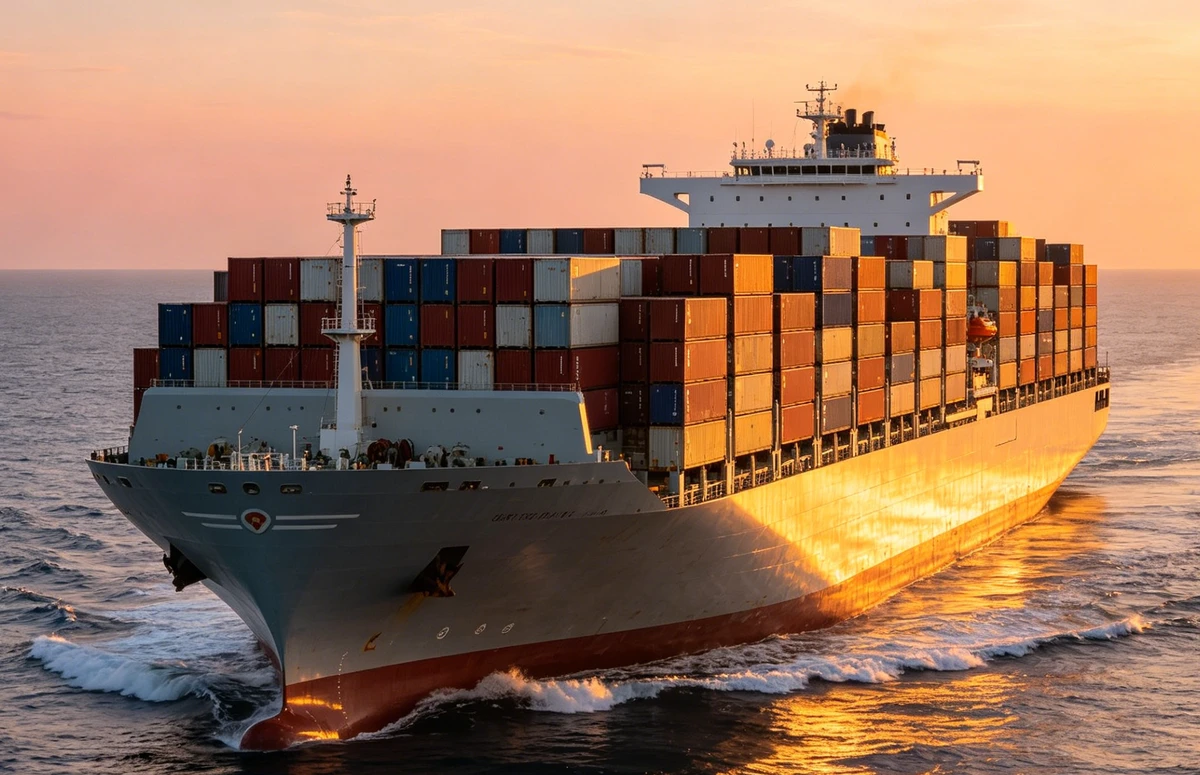 Are you tired of hidden fees and unpredictable delays eroding your profit margins when shipping from China to Germany? Germany stands as China’s largest trading partner in Europe, and sea freight remains the absolute backbone of this massive, lucrative trade lane. However, the logistics landscape is far from simple. Navigating fluctuating freight rates, complex European Union customs regulations, and choosing the right shipping mode (such as FCL vs. LCL) can be overwhelming, especially for first-time importers and Amazon FBA sellers. In our experience managing thousands of TEUs (Twenty-Foot Equivalent Units) along this route, preparation is the ultimate key to profitability. This comprehensive guide breaks down 2026 sea freight costs, accurate transit times, main shipping routes, strict customs requirements, and actionable tips for a smooth, cost-effective freight shipping from China to Germany.
Key Takeaways
- Cost-Effective: Sea freight is the cheapest method for cargo over 2 CBM.
- Transit Times: Expect 30-40 days port-to-port, and 35-55 days door-to-door.
- Customs is King: You cannot import into Germany without an EORI number and accurate HS codes.
- FCL vs. LCL: Use FCL for volume >15 CBM; use LCL for 2-15 CBM.
- DDP Solutions: Delivery Duty Paid (DDP) is highly recommended for Amazon FBA sellers to avoid customs headaches.
Why Choose Sea Freight from China to Germany?
Sea freight is the most cost-effective shipping method from China to Germany for any cargo exceeding 2 to 3 cubic meters (CBM). It offers unmatched capacity for oversized or hazardous goods and provides a highly stable supply chain schedule for businesses with steady inventory replenishment cycles.
The Unmatched Cost-Effectiveness
When comparing transportation modes, sea freight consistently wins on price for bulk shipments. While air freight is incredibly fast (5-8 days), it can be up to 10 times more expensive than ocean freight. Rail freight offers a middle ground (15-20 days), but its capacity is limited, and costs are significantly higher than sea freight. For any shipment larger than 2-3 CBM where immediate delivery is not a critical necessity, ocean freight is the most logical choice to protect your bottom line.
Capacity & Flexibility for All Cargo Types
Ocean vessels are designed to carry almost anything. Whether you are importing heavy industrial machinery, oversized manufacturing equipment, consumer electronics, or even hazardous materials (such as lithium batteries), sea freight provides the necessary infrastructure. Through Full Container Load (FCL) and Less than Container Load (LCL) options, importers have the flexibility to scale their shipping methods according to their current business size and seasonal demands.
Building a Stable Supply Chain
While sea freight takes longer, it is highly predictable. Major shipping lines operate on fixed weekly schedules from major Chinese ports to German hubs like Hamburg and Bremerhaven. For established businesses and Amazon FBA sellers with steady replenishment cycles, planning inventory around a 40-day lead time ensures a constant flow of goods without the premium price tag of Air Freight from China to Germany.
FCL vs. LCL Shipping to Germany: Which is Right for Your Cargo?
Choosing between FCL and LCL depends entirely on your cargo volume. FCL (Full Container Load) is faster and more secure, ideal for shipments over 15 CBM. LCL (Less than Container Load) is perfect for smaller shipments between 2 and 15 CBM, allowing you to share container costs.
FCL (Full Container Load)
FCL means you rent an entire container (typically 20ft, 40ft, or 40HQ) strictly for your goods.
- Best Use Case: When your cargo volume exceeds 15 CBM, FCL becomes economically viable.
- The Advantages: Because the container is sealed at the factory in China and only opened upon arrival at your warehouse in Germany, there is a significantly lower risk of damage or loss. Furthermore, FCL bypasses the consolidation and deconsolidation processes, making it slightly faster than LCL.
LCL (Less than Container Load)
LCL means your goods share container space with shipments from other buyers.
- Best Use Case: Ideal for cargo volumes between 2 CBM and 15 CBM.
- The Advantages: You only pay for the exact volume (CBM) your cargo occupies, making it incredibly cost-efficient for small to medium-sized orders. It allows small businesses to maintain cash flow without waiting to accumulate enough inventory to fill an entire container.
FCL vs. LCL Comparison

| Feature | FCL (Full Container Load) | LCL (Less than Container Load) |
|---|---|---|
| Volume Threshold | > 15 CBM | 2 - 15 CBM |
| Cost Structure | Flat rate per container | Charged per CBM |
| Transit Speed | Faster (No consolidation needed) | Slower (Requires consolidation/deconsolidation) |
| Security | Very High (Sealed container) | Moderate (More handling involved) |
| Best For | Large bulk orders, fragile goods | Small orders, testing new products |
Main Sea Freight Routes and Transit Times from China to Germany
The average sea freight transit time from China to Germany ranges from 30 to 40 days for port-to-port delivery, and 35 to 55 days for door-to-door services. Key departure ports include Shanghai and Shenzhen, arriving primarily at Hamburg or Bremerhaven.
Key Origin and Destination Ports
China boasts some of the busiest and most efficient ports in the world. Your cargo will likely depart from Shanghai, Shenzhen (Yantian), Ningbo, or Qingdao. Upon reaching Europe, the primary gateways into Germany are the Port of Hamburg (the largest port in Germany and third-largest in Europe) and the Port of Bremerhaven. In some logistics strategies, goods are routed through the Port of Rotterdam (Netherlands) or Antwerp (Belgium) and then trucked or moved by rail into Germany.
Estimated Transit Time Table (Port-to-Port)

| Origin Port (China) | Destination Port (Germany) | Estimated Transit Time | Route Characteristics |
|---|---|---|---|
| Shanghai | Hamburg | 30 - 35 Days | Most common, highly reliable year-round |
| Shenzhen | Bremerhaven | 32 - 38 Days | Ideal for electronics and southern China exports |
| Ningbo | Hamburg | 31 - 36 Days | Excellent for industrial and manufactured goods |
| Qingdao | Hamburg | 33 - 40 Days | Northern China routing |
Note: Transit times are estimates and can be influenced by variables such as extreme weather, seasonal port congestion (especially before Chinese New Year), and geopolitical events affecting the Suez Canal.
Breakdown of Sea Freight Costs from China to Germany (2026 Estimates)
As of 2026, freight costs from China to Germany by sea typically range from $4,200 to $8,400 for a 40ft container (FCL), and $85 to $140 per CBM for LCL shipments. These rates fluctuate heavily based on seasonal demand, fuel surcharges, and chosen Incoterms.

Current FCL and LCL Cost Estimates
While freight rates are notoriously volatile, having a baseline is crucial for calculating your landed costs. (Disclaimer: The rates below are estimates based on Q1 2026 market averages. Always request a real-time quote before finalizing budgets).
- FCL Costs: A 20ft container (20GP) generally costs between $2,500 and $4,500. A 40ft container (40HQ) ranges from $4,200 to $8,400.
- LCL Costs: For consolidated shipping, expect to pay between $85 and $140 per CBM. Our team frequently sees LCL costs balloon if buyers ignore destination terminal handling charges (THC)—always ask for “all-in” quotes.
Critical Factors Influencing Your Price
- Seasonality: Rates spike during Peak Season (August to November) as retailers stock up for Q4 holidays, and in the weeks immediately preceding the Chinese New Year (usually January/February) when factories rush to ship goods before shutting down.
- Surcharges: Base rates don’t tell the whole story. Look out for BAF (Bunker Adjustment Factor / Fuel Surcharge), PSS (Peak Season Surcharge), and THC (Terminal Handling Charges).
- Incoterms: Your agreement with the supplier dictates who pays for what. FOB (Free on Board) means the supplier covers costs to the Chinese port, and you pay for the ocean freight and beyond. EXW (Ex Works) means you pay for everything from the factory floor in China. DDP (Delivered Duty Paid) means the supplier/forwarder handles all costs, including German customs and delivery to your door.
Navigating German Customs Clearance for Sea Freight Imports
To successfully clear German customs, importers absolutely must have a valid EORI number, accurate HS codes for their products, and be prepared to pay the standard 19% German Import VAT. Essential documents include the Bill of Lading, Commercial Invoice, and Packing List.

Crucial Prerequisites: EORI and HS Codes
You cannot import commercial goods into Germany (or any EU country) without an EORI Number (Economic Operators Registration and Identification number). It is a unique ID used by customs authorities to track your shipments. According to the official German Customs authority (Zoll), you must apply for this well before your goods leave China to avoid immediate port holds. Equally important is the HS Code (Harmonized System Code). This 8 to 10-digit number classifies your product and dictates exactly how much import duty you will pay. In our team’s experience, HS misclassification is the #1 reason for severe delays, unexpected fines, or even cargo seizure at the Port of Hamburg.
Taxes, Duties, and Compliance
- Import VAT & ICS2: Germany applies a standard Import Value Added Tax (Einfuhrumsatzsteuer) of 19% on most goods. This is calculated based on the CIF value (Cost of goods + Insurance + Freight) plus the import duty. Additionally, be aware of the new EU ICS2 (Import Control System 2) requirements, which mandate detailed advance cargo information for enhanced security.
- Customs Duties: Rates vary wildly from 0% (for certain electronics) to over 10% (for textiles and footwear).
- EU Certifications: German customs are notoriously strict. Ensure your products have necessary compliance marks, such as the CE marking (as mandated by the European Commission) for electronics and toys, REACH/RoHS compliance for chemicals and hazardous substances, and registration under the EPR (Extended Producer Responsibility) / VerpackG for packaging materials. Failing to provide these will result in customs rejecting your cargo entry.
Step-by-Step Process for Shipping from China to Germany by Sea
The sea freight process involves five main steps: booking your cargo with a forwarder, clearing export customs in China, the 30-40 day ocean transit, clearing EU import customs in Germany, and finally, the last-mile delivery to your warehouse or Amazon FBA center.

Step 1: Booking & Cargo Pickup
The journey begins by partnering with a reliable freight forwarder like SinoShipment. Once your goods are ready at the Chinese factory, we arrange for a truck to pick up the cargo (under EXW terms) or coordinate with your supplier to deliver it to our port warehouse (under FOB terms).
Step 2: Export Customs in China
Before the cargo can be loaded onto a vessel, it must clear Chinese export customs. Your forwarder will handle the export declaration, ensuring the commercial invoice, packing list, and export licenses are in perfect order.
Step 3: Ocean Transit
Your cargo is loaded onto a container ship. For the next 30 to 40 days, the vessel will navigate through the South China Sea, typically passing through the Suez Canal, and up into the North Sea before docking at a German port.
Step 4: Import Customs in Germany
Upon arrival at Hamburg or Bremerhaven, the cargo undergoes EU customs clearance. Your customs broker will submit the entry declaration, present your EORI number, and pay the required import duties and 19% VAT on your behalf.
Step 5: Final Mile Delivery
Once customs releases the goods, they are loaded onto a truck or freight train for “last-mile” delivery. Whether it is going to a private B2B warehouse in Munich or an Amazon FBA fulfillment center in Dortmund, this step ensures your cargo reaches its ultimate destination safely.
Why Choose Sinoshipment for Sea Freight to Germany?
Sinoshipment is your trusted freight forwarding partner, offering direct carrier contracts for competitive rates, end-to-end tracking visibility, and expert in-house customs brokerage. We specialize in tailored DDP and Amazon FBA solutions to ensure seamless door-to-door delivery.
When shipping from China to Germany, you need more than just a booking agent; you need a logistics partner who protects your interests.
- Direct Carrier Contracts: We hold direct contracts with major shipping lines (like COSCO, Maersk, and Evergreen). This means we secure better rates and guaranteed container space for you, even during the chaotic Q4 peak season.
- Expert Customs Brokerage: Our team deeply understands the nuances of German and EU customs. We pre-vet your documents, HS codes, and CE certifications before the ship even leaves China, effectively eliminating costly holds at the Port of Hamburg.
- Tailored DDP/FBA Solutions: For Amazon FBA sellers, we offer seamless Delivery Duty Paid (DDP) services. We handle the ocean freight, clear German customs, pay the VAT/Duties, and deliver the cargo on perfectly formatted pallets straight to the Amazon warehouse. You don’t have to lift a finger.
You may be interested in the following related articles:
- freight shipping from china to france
- freight shipping from china to spain
- freight shipping from china-to netherlands
- freight shipping from china to canada
FAQs About Shipping from China to Germany by Sea
Importers frequently ask about transit times, cost comparisons between FCL and LCL, and customs prerequisites like the EORI number. Understanding DDP shipping is also crucial for Amazon FBA sellers looking for a hands-off logistics experience.
How long does it take to ship from China to Germany by sea? Port-to-port ocean transit typically takes 30 to 40 days. However, for a complete door-to-door service (including factory pickup, customs clearance, and final delivery), you should plan for a 35 to 55-day timeline.
Is it cheaper to ship FCL or LCL to Germany? It depends entirely on your volume. If your shipment is under 15 CBM, LCL is cheaper because you only pay for the space you use. If your shipment is over 15 CBM, booking a full 20ft or 40ft container (FCL) becomes more economical per unit.
What is DDP shipping, and is it recommended for Germany? DDP (Delivered Duty Paid) means the freight forwarder handles all transportation, import duties, and VAT, delivering the goods directly to your door. It is highly recommended for Amazon FBA sellers and small businesses that do not have their own EU customs brokers, as it provides a guaranteed, all-inclusive landed cost.
Do I need an EORI number for a one-time import? Yes. If you are importing commercial goods into Germany or any EU member state, an EORI number is a strict legal requirement, even for a single shipment.
Conclusion
Shipping from China to Germany by sea is a highly rewarding strategy for importers looking to maximize profit margins on bulk goods. While the 30 to 40-day transit time requires careful inventory planning, the immense cost savings compared to air freight make it the undeniable choice for global trade. The key to success lies in strict compliance—understanding your HS codes, securing your EORI number, and navigating German VAT—and choosing the right logistics partner.
Ready to optimize your supply chain and reduce shipping costs? Contact Sinoshipment today for a customized, highly competitive sea freight quote to Germany. Let our experts handle the logistics, so you can focus on growing your business.