How Much Does FCL Container Cost From China to Egypt? The Complete 2026 Guide (20ft, 40ft & 40HQ Rates)
· By SinoShipment
How much does FCL container cost from China to Egypt? In October 2026, you’re looking at $1,250–$2,850 for a 20ft container, $2,300–$4,850 for a 40ft, and $2,500–$5,100 for a 40ft High Cube — depending on your origin port, destination port, and booking timing. But here’s what most rate pages won’t tell you: the ocean freight is often less than half of what you’ll actually pay.
We know this because we’ve been managing FCL (Full Container Load) shipments from China to Egypt since 2013. In that time, we’ve helped 5,000+ importers navigate this exact lane — and we’ve seen the same costly mistakes repeat: importers budgeting $3,000 for a container that actually costs $4,800 landed, suppliers unfamiliar with CargoX holding up entire shipments, and 40GP quotes requested when a 40HQ would have saved $200 and added 10 CBM of capacity.
This guide gives you what we give our own clients: current rates by route and container size, a full breakdown of every charge you’ll encounter, the compliance steps that must happen before your container loads, and practical strategies we’ve used to cut client shipping costs by 15–25%.
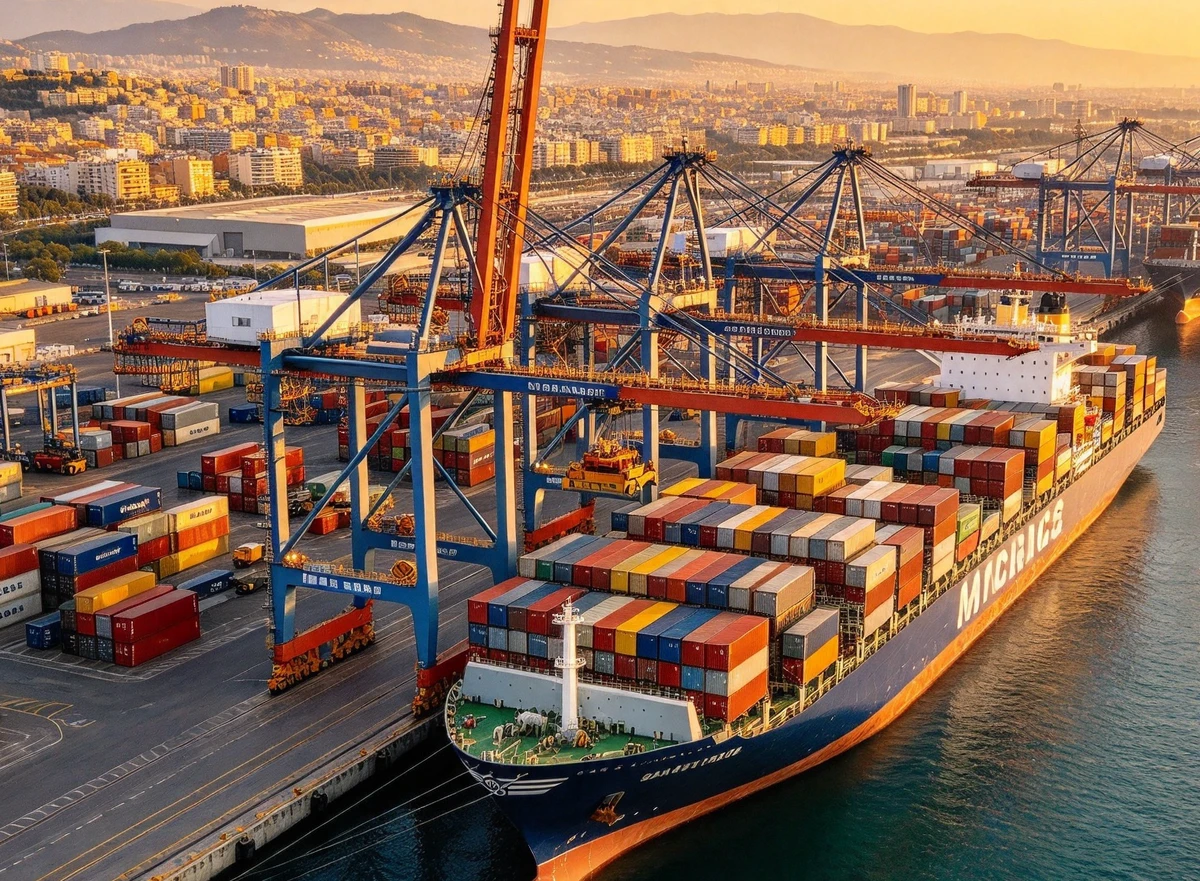
Quick Answer: Current FCL Container Costs From China to Egypt (October 2026)
Here’s the direct answer for the cost to ship a full container from China to Egypt, updated for October 2026:
| Container Size | Typical Range | Best For |
|---|---|---|
| 20ft (20GP) | $1,250–$2,850 | Dense cargo: machinery, ceramics, metals |
| 40ft (40GP) | $2,300–$4,850 | Mixed cargo, palletized goods |
| 40ft High Cube (40HQ) | $2,500–$5,100 | Light bulky cargo: furniture, plastics, textiles |
40HQ rates are derived from 40GP pricing; typically $100–$300 higher. Confirm exact rates at booking.
Rate trend: October 2026 rates are down approximately 15% from September’s peak, as carriers adjusted capacity on China–Mediterranean and China–Red Sea strings. The Drewry World Container Index for nearby Mediterranean routes confirms this softening pattern.
Critical caveat: These are port-to-port ocean freight rates only. Your total landed cost will include Egyptian customs duty (2–35% depending on HS code), 14% VAT, terminal charges, and inland delivery — typically adding 30–50% to the base rate. We’ll break this down fully in Section 3.
For a quote tailored to your specific cargo and route, contact Sinoshipment — rates are indicative and shift with market conditions. For a broader view of logistics solutions on this lane, see our dedicated freight shipping from China to Egypt service page.
FCL Shipping Rates by Route: 20ft, 40ft, and 40HQ
The 20ft container shipping cost from China to Egypt and 40ft container pricing vary significantly by origin port. Here’s what we’re seeing across major loading ports in Q4 2026.
South China Origins (Shenzhen, Guangzhou)
South China offers the most competitive rates due to dense carrier competition and direct Red Sea strings.
| Route | 20ft | 40ft | 40HQ | Transit |
|---|---|---|---|---|
| Shenzhen (Yantian/Shekou) → Sokhna | $1,250–$1,850 | $2,300–$3,300 | $2,450–$3,500 | 20–28 days |
| Shenzhen → Alexandria | $1,450–$2,150 | $2,650–$3,900 | $2,800–$4,100 | 26–34 days |
| Guangzhou (Nansha) → Sokhna | $1,280–$1,900 | $2,350–$3,400 | $2,500–$3,600 | 21–29 days |
East China Origins (Shanghai, Ningbo)
FCL shipping rates from Shenzhen to Port Said get a lot of attention, but East China origins serve different manufacturing clusters — and the 40HQ container rate from Shanghai to Alexandria reflects the textile and consumer goods density in that region.
| Route | 20ft | 40ft | 40HQ | Transit |
|---|---|---|---|---|
| Shanghai → Port Said | $1,420–$2,100 | $2,600–$3,800 | $2,750–$4,000 | 24–34 days |
| Shanghai → Alexandria | $1,480–$2,200 | $2,700–$3,950 | $2,850–$4,150 | 24–33 days |
| Ningbo → Alexandria | $1,450–$2,150 | $2,650–$3,900 | $2,800–$4,100 | 25–35 days |
North China Origin (Qingdao)
The FCL container price from Ningbo to Egypt in 2026 is generally more competitive than Qingdao, which requires relay services for most Egypt-bound strings.
| Route | 20ft | 40ft | 40HQ | Transit |
|---|---|---|---|---|
| Qingdao → Alexandria | $1,600–$2,350 | $2,900–$4,200 | $3,050–$4,400 | 28–38 days |
Why Rates Differ by Origin Port
Four factors explain the spread:
- Carrier concentration: Shenzhen and Shekou host the most direct Asia–Red Sea and Asia–Mediterranean strings. Qingdao often requires transshipment through Singapore or Jebel Ali, adding 3–10 days and $150–$400.
- Cargo type optimization: South China dominates electronics and light consumer goods; Ningbo specializes in machinery and automotive parts; Shanghai handles high volumes of textiles and finished goods.
- Inland logistics: Factory pickup costs vary significantly by distance to port. A Dongguan-to-Shenzhen pickup might cost $80; a Chengdu-to-Shanghai pickup could run $400+.
- Forwarder competition: Shenzhen’s dense forwarder ecosystem creates tighter margins than smaller port markets.
What We’ve Learned: We frequently see importers default to Shanghai because it’s “the biggest port.” But if your factory is in Guangdong, shipping from Shenzhen saves $100–$300 per container and 2–4 days of inland transit. Work backwards from your supplier’s location, not from port prestige.
What’s Included in FCL Cost: Full Breakdown
Understanding door to door FCL shipping cost from China to Egypt requires separating four cost layers. Most quote disputes happen because importers compare Layer 1 prices while forwarders quote Layer 1–4.
Layer 1: Port-to-Port (FOB/CIF Basis)
- Ocean freight (base rate)
- THC (Terminal Handling Charge) — origin and destination
- B/L fee (Bill of Lading fee)
- Export customs clearance in China
- Import customs clearance in Egypt
Layer 2: Egypt-Side Charges (Often Missed)
- ACID registration via Nafeza
- CargoX platform fees
- Delivery order fee
- Port security fee
- Storage/demurrage if free time exceeded
Layer 3: Taxes (Calculated on CIF Value)
- Customs duty (varies by HS code — see Section 6)
- 14% VAT on (CIF + duty)
- 1% advance payment for registered importers
Layer 4: Inland Logistics
- Pickup from Chinese factory
- Delivery to Egyptian warehouse
- Insurance (if CIF or requested)
Worked Example: $18,000 FOB Electronics Shipment
Here’s a real-world calculation for a 20ft container from Shenzhen to Sokhna:
| Line | Amount |
|---|---|
| Goods value (FOB Shenzhen) | $18,000 |
| Ocean freight (20ft to Sokhna) | $1,550 |
| Insurance | $70 |
| CIF value | $19,620 |
| Customs duty (10% illustrative) | $1,962 |
| VAT (14% on CIF + duty) | $3,021 |
| Advance payment (1%) | $196 |
| Subtotal at port | $24,799 |
| Destination charges (THC, DO, handling) | $200–$500 |
| Inland delivery (Sokhna → Cairo) | $250–$450 |
| Total landed cost | ~$25,200–$25,700 |
Notice: the “$1,550 container” actually costs $6,600+ in logistics and taxes before it reaches your Cairo warehouse.
20ft vs 40ft vs 40HQ: Which Container Should You Choose?
Choosing the right container is one of the easiest ways to reduce your FCL shipping cost from China to Egypt. Here’s how to decide.
Container Specifications
| Type | Internal CBM | Max Payload | Best For |
|---|---|---|---|
| 20ft (20GP) | 28–30 CBM | ~21,700 kg | Dense cargo: ceramics, machinery, metals |
| 40ft (40GP) | 55–58 CBM | ~26,500 kg | Mixed cargo, palletized goods |
| 40ft High Cube (40HQ) | 65–68 CBM | ~26,500 kg | Light bulky cargo: furniture, plastics, textiles |
Cost Efficiency Analysis
- A 40ft costs approximately 1.8x the 20ft rate, not 2x — making it significantly better value per CBM for shipments above 25 CBM.
- A 40HQ typically costs only $100–$300 more than a 40GP but offers 10+ additional CBM. If you’re shipping furniture, textiles, or any light bulky cargo, always request 40HQ quotes.
- Loading optimization: Proper pallet configuration can increase usable CBM by 5–10%. For a 40HQ, that could mean fitting 68 CBM instead of 62 — effectively shipping 10% more product for the same ocean freight.
When to Upgrade or Downsize
- Consolidating multiple suppliers? A 40HQ from Shenzhen with cargo consolidated at a warehouse often beats separate LCL shipments by 15–25%.
- Hitting weight limits? Dense cargo like tiles or machinery may reach the 21,700 kg 20ft payload before filling 28 CBM. Don’t pay for air.
- Planning future orders? Sometimes shipping one 40ft now is cheaper than two 20ft shipments a month apart — factor in your inventory carrying costs.
Field Note: We had a furniture importer in Alexandria consistently requesting 40GP quotes because “that’s what we always used.” After showing them the math — $250 more for a 40HQ with 10 extra CBM — they switched and reduced their per-unit shipping cost by 18% on their next three shipments.
FCL vs LCL: Cost Break-Even Analysis
The FCL vs LCL cost comparison for China to Egypt isn’t just about volume — it’s about total cost, risk, and timing. If you’re weighing options, our sea freight service covers both FCL and LCL with detailed pricing guidance.
The 13–15 CBM Rule
- Below 13 CBM: LCL usually cheaper
- Above 15 CBM: FCL usually cheaper
- 12–18 CBM gray zone: Get both quotes; density and destination charges often decide
Hidden Cost Comparison
| Cost Factor | LCL | FCL |
|---|---|---|
| Ocean freight | Per CBM ($85–$145) | Per container (fixed) |
| Destination charges | High (deconsolidation, CFS fees) | Lower (fixed THC, DO) |
| Damage risk | Higher (more handling) | Lower (sealed container) |
| Transit time | +7–14 days (consolidation) | Direct sailing |
| Scheduling flexibility | Weekly departures | Multiple weekly strings |
Quick Decision Matrix
| Your Situation | Recommended Mode |
|---|---|
| 1–12 CBM, non-urgent | LCL |
| 13–18 CBM, get both quotes | Compare total landed cost |
| 18+ CBM, any cargo type | FCL |
| Fragile or high-value goods | FCL (sealed container) |
| Amazon FBA restock, deadline-driven | FCL (predictable timing) |
Egypt Import Duty and 14% VAT: What You’ll Actually Pay
Understanding DDP FCL container cost from China to Egypt requires clarity on Egypt’s tax structure — this is where most budgeting errors occur.
Customs Duty by Product Category
Egypt sets customs duty by HS code, with rates varying dramatically:
| Product Category | Typical Duty Range | Common HS Codes |
|---|---|---|
| Electronics | 10–30% | 8517, 8471, 8544 |
| Textiles & garments | 5–25% | 6109, 6203, 6403 |
| Furniture | 10–20%* | 9401, 9403 |
| Machinery | 2–15% | 8428, 8479, 8486 |
| Auto parts | 10–35% | 8708, 8409 |
| Plastics | 5–15% | 3926, 3903 |
* Furniture duty rates vary significantly by HS code and material; some finished furniture items may attract higher rates. Always verify your exact classification.
Verify your exact rate through the Nafeza tariff inquiry or with a licensed Egyptian customs broker. For professional assistance with documentation and duty calculation, our customs clearance team handles both China export and Egypt import procedures.
VAT Calculation
Egypt’s standard VAT rate is 14%, calculated on the CIF value plus customs duty — not on the goods value alone.
Example: $19,620 CIF + $1,962 duty = $21,582 taxable base × 14% = $3,021 VAT.
A reduced 5% VAT rate applies to certain production machinery (excluding buses and passenger cars) under VAT Law No. 67 of 2016.
Incoterms: Who Pays What
| Incoterm | Seller Pays | Buyer Pays | Best For |
|---|---|---|---|
| FOB | China-side costs | Ocean freight, Egypt duties | Experienced importers with local broker |
| CIF | FOB + insurance | Egypt duties, clearance | Buyers wanting risk coverage to port |
| DAP | All except duties/VAT | Import duty, VAT | Buyers with broker but no logistics team |
| DDP | Everything | Nothing | First-time importers, e-commerce sellers |
ACID, NAFEZA, and CargoX: The Compliance Gate Before Loading
This is the section most rate guides skip — and where shipments most often go wrong. Egypt’s Advance Cargo Information (ACI) system requires compliance steps before your container loads in China, not upon arrival.
The Compliance Timeline
| When | Who Acts | What Happens | If Missed |
|---|---|---|---|
| Before booking | Egyptian importer | File on NAFEZA, obtain 19-digit ACID | No loading permitted |
| Before container loads | Chinese supplier | Register on CargoX, upload documents | Cargo held/returned at shipper cost |
| 48 hrs before arrival | Carrier/importer | Match ACI data to ACID | Vessel may refuse discharge |
| At release | Clearing agent | Pay duty, VAT, advance payment | Demurrage accrues |
Documents That Must Match Exactly
- Commercial invoice: ACID number, HS codes, importer tax ID
- Packing list: Matching carton count, weights, dimensions
- Bill of Lading: ACID on B/L; consignee matches NAFEZA registration
- Certificate of Origin: CCPIT-issued, with Egyptian attestation where required
- Insurance certificate: Written against CIF value
Common Failure Points
- Chinese supplier unfamiliar with CargoX: This is the #1 delay we see. Suppliers discover they need to register in the week the container is due to load.
- Invoice description mismatch: Even minor wording differences between the commercial invoice and ACID filing trigger clearance holds.
- Missing GOEIC registration: Regulated goods (textiles, footwear, appliances, lighting) require factory registration with the General Organization for Export and Import Control.
Our Industry Insight: At Sinoshipment, we verify CargoX registration and document accuracy at booking stage — before your container reaches the port. In our experience, 30 minutes of pre-checking saves an average of 4–7 days in potential clearance delays.
How to Reduce FCL Shipping Costs: 7 Proven Strategies
Here’s how to achieve the cheapest FCL shipping from China to Egypt without sacrificing reliability — strategies we’ve refined over thousands of shipments.
1. Optimize Booking Timing
Avoid Chinese New Year (late January–February) and October Peak Season Surcharge (PSS) periods if possible. Book 3–4 weeks ahead for standard periods; 4+ weeks for peak. Last-minute bookings typically add $200–$500 per container.
2. Maximize Container Utilization
Don’t pay to ship air. Proper pallet configuration and vertical space optimization in a 40HQ can add 5–10 CBM of usable capacity — often worth $300–$500 in equivalent product value.
3. Choose the Right Port
- Sokhna: Best for Cairo deliveries (120–140 km inland, no Suez Canal transit for the vessel)
- Alexandria: Best for Delta, North Coast, and Beheira deliveries
- Port Said: Best for SCZone factories and re-export cargo
4. Negotiate All-In Quotes
Ask for itemized quotes so you can compare scopes accurately. A “$2,500 all-in” quote that excludes Egyptian duties is not comparable to a “$2,800 DDP” quote.
5. Avoid Demurrage and Detention
Negotiate 14–21 days of combined free time at destination before booking. Pre-clear customs and schedule your delivery appointment in the week the vessel arrives. Egyptian terminals typically allow only 5–7 days free storage by default.
6. Optimize Your Incoterm
Start with DDP for your first 2–3 shipments while you develop local relationships. Transition to FOB once you have a trusted Egyptian customs broker — this typically saves 8–15% on total logistics costs.
7. Right-Size Your Insurance
Don’t over-insure low-value cargo. Consider warehouse-to-warehouse coverage rather than port-to-port for better risk management at minimal cost increase. Our cargo insurance team can help you find the right coverage level for your shipment value and risk tolerance.
When to Book: Seasonal Rate Patterns and Market Outlook
Understanding peak season FCL rates from China to Egypt helps you plan procurement cycles and avoid budget surprises.
Monthly Rate Pattern
| Month | Typical Pattern | Booking Advice |
|---|---|---|
| Jan–Feb | CNY peak, +20–40% | Book 4+ weeks ahead; expect delays |
| Mar–Apr | Post-CNY softening | Best value window |
| May–Jun | Stable | Standard 2–3 week booking lead time |
| Jul–Aug | Pre-peak buildup | Monitor carrier announcements |
| Sep–Oct | PSS applied, +15–25% | Book early; consider September sailing |
| Nov–Dec | Peak continues | Secure space by early November |
2026 Market Context
The Red Sea crisis continues to affect Suez Canal routings, with some carriers maintaining Cape of Good Hope diversions. This has increased transit times on some strings by 10–14 days but also created rate volatility that benefits flexible shippers. The Drewry WCI shows Mediterranean rates trending downward from Q3 peaks.
Forward Outlook
Q4 2026 rates are softening after September’s peak. For 2027, watch for new vessel capacity entering Asia–Mediterranean trades, which could further stabilize rates. However, geopolitical developments remain the primary wild card.
Real FCL Shipments: 3 Case Studies
These are actual shipments we’ve managed (client details anonymized) that illustrate common scenarios on the China–Egypt lane.
Case 1: Electronics — Shenzhen to Cairo (Amazon FBA)
A Cairo-based e-commerce seller needed 40HQ of consumer electronics ($28,000 goods value) delivered to Amazon’s Cairo fulfillment center. Three days before the vessel arrived, their supplier’s commercial invoice surfaced with an ACID mismatch — the kind of error that triggers an automatic clearance hold.
Our solution: Pre-booking document review caught the discrepancy. We corrected it within 24 hours and confirmed CargoX registration before the container loaded at Yantian.
Result: Cleared Sokhna in 3 days; delivered to the Cairo warehouse on day 28. The client has now shipped 14 containers with us over 18 months. For e-commerce sellers planning similar shipments, our Amazon FBA service includes labeling, palletization, and direct delivery to fulfillment centers.
Case 2: Furniture — Foshan to Alexandria
An Alexandria furniture importer was shipping LCL from three separate Foshan suppliers, paying $145/CBM with high destination charges. Total volume: 58 CBM across three shipments. For businesses consolidating from multiple suppliers, our warehouse services in Shenzhen provide collection, inspection, and optimized loading.
Our solution: Consolidated all three suppliers’ cargo at our Shenzhen warehouse into a single 40HQ. Optimized pallet configuration achieved 64 CBM utilization.
Result: 22% cost savings versus separate LCL shipments, plus 10 days faster transit (direct sailing versus consolidation delays).
Case 3: Machinery — Ningbo to Port Said
A Port Said industrial client needed to ship 18,000 kg of machinery — dense cargo that would underutilize a 40ft’s CBM capacity.
Our solution: Recommended a 20ft container (optimal for weight-to-CBM ratio), arranged pre-shipment inspection, and coordinated heavy-duty lashing and export compliance documentation.
Result: Zero damage, on-time delivery, and the client now ships monthly with us under a contracted rate.
FAQ
Q1: How long does FCL shipping take from China to Egypt?
Port-to-port transit is 18–38 days depending on route. Door-to-door (including pickup, clearance, and delivery) is typically 30–45 days. Shenzhen to Sokhna is the fastest routing at 20–28 days port-to-port. For detailed transit time breakdowns, see our guide on how long does shipping take from China to Egypt.
Q2: What’s the cheapest month to ship FCL from China to Egypt?
March–April (post-CNY softening) and late Q4 (after peak season) typically offer the best rates. October PSS adds 15–25%; January–February CNY surcharges add 20–40%.
Q3: Can I get 40HQ rates if I only see 40GP quotes?
Yes, and it’s usually worth requesting even if suppliers don’t quote it upfront. 40HQ typically runs $100–$300 more than 40GP but delivers 10+ additional CBM. For furniture, textiles, or any light bulky cargo, the math almost always favors the high cube.
Q4: Do I need ACID before or after booking?
Before. Your Egyptian importer must obtain the 19-digit ACID from NAFEZA before your container loads in China. No ACID means no loading.
Q5: Can I split a 40ft container between two suppliers?
Yes. The most efficient approach is consolidating at a Shenzhen warehouse, where cargo from multiple suppliers is combined, inspected, and loaded into a single container.
Q6: What’s the difference between demurrage and detention?
Demurrage hits while the container sits in the terminal past free time; detention kicks in once you’ve taken the box out but haven’t returned it empty. Both stack up daily, so push for 14–21 days combined free time before you book.
Q7: Should I choose FOB or DDP for my first Egypt shipment?
DDP (Delivered Duty Paid) for simplicity — one quote, one invoice, no surprises. Transition to FOB as you develop relationships with Egyptian customs brokers and want more control.
Q8: How much is Egypt’s import VAT on FCL shipments?
14% on the CIF value plus customs duty. A reduced 5% rate applies to certain production machinery under VAT Law No. 67 of 2016.
Q9: Can I ship batteries or electronics in FCL to Egypt?
Yes, but batteries require MSDS documentation and UN38.3 certification for lithium products. Proper HS classification is essential — misclassification can trigger fines and delays. For high-value electronics, consider adding cargo insurance to protect against transit risks.
Q10: What documents does my Chinese supplier need for Egypt FCL?
Commercial invoice, packing list, bill of lading, certificate of origin — plus CargoX registration and ACID-matched data. All documents must align character-for-character with the ACID filing.
The difference between a $2,500 quote and a $2,500 surprise usually comes down to one thing: working with a forwarder who actually knows this lane.
At Sinoshipment, we’ve managed China–Egypt FCL since 2013. Our Shenzhen team handles everything from factory pickup to Cairo delivery — with transparent pricing, no hidden fees, and the local expertise to catch compliance issues before they become costly delays. For a comprehensive overview of container options beyond FCL, see our Container Shipping from China to Egypt guide.
Get a quote that actually reflects your cargo. Request your FCL rate from Sinoshipment →