How Much Does It Cost to Ship by Truck from China to the Middle East? The Complete 2026 Guide
· By SinoShipment
How much does it cost to ship by truck from China to the Middle East? If you’re sourcing goods from Chinese factories and exploring faster alternatives to ocean freight, this question is likely at the top of your mind.
Here’s the direct answer: A full truckload (FTL) from China to Gulf destinations typically costs $7,000–$15,000 USD and takes 15–35 days, depending on your destination, cargo weight, and chosen route. Less-than-truckload (LTL) shipments start at $3–$5 per kg.
But those numbers only tell part of the story. Cross-border trucking rates fluctuate with fuel prices, border conditions, seasonal demand, and route complexity. To avoid overpaying—and to spot hidden fees before they hit your invoice—you need to understand how these rates are calculated, which routes offer the best value, and what documentation and compliance steps are required.
In this guide, we’re going to walk you through the actual numbers, real cost examples, and the mistakes that catch most importers off guard.
What Does “Truck Shipping” from China to the Middle East Actually Mean?
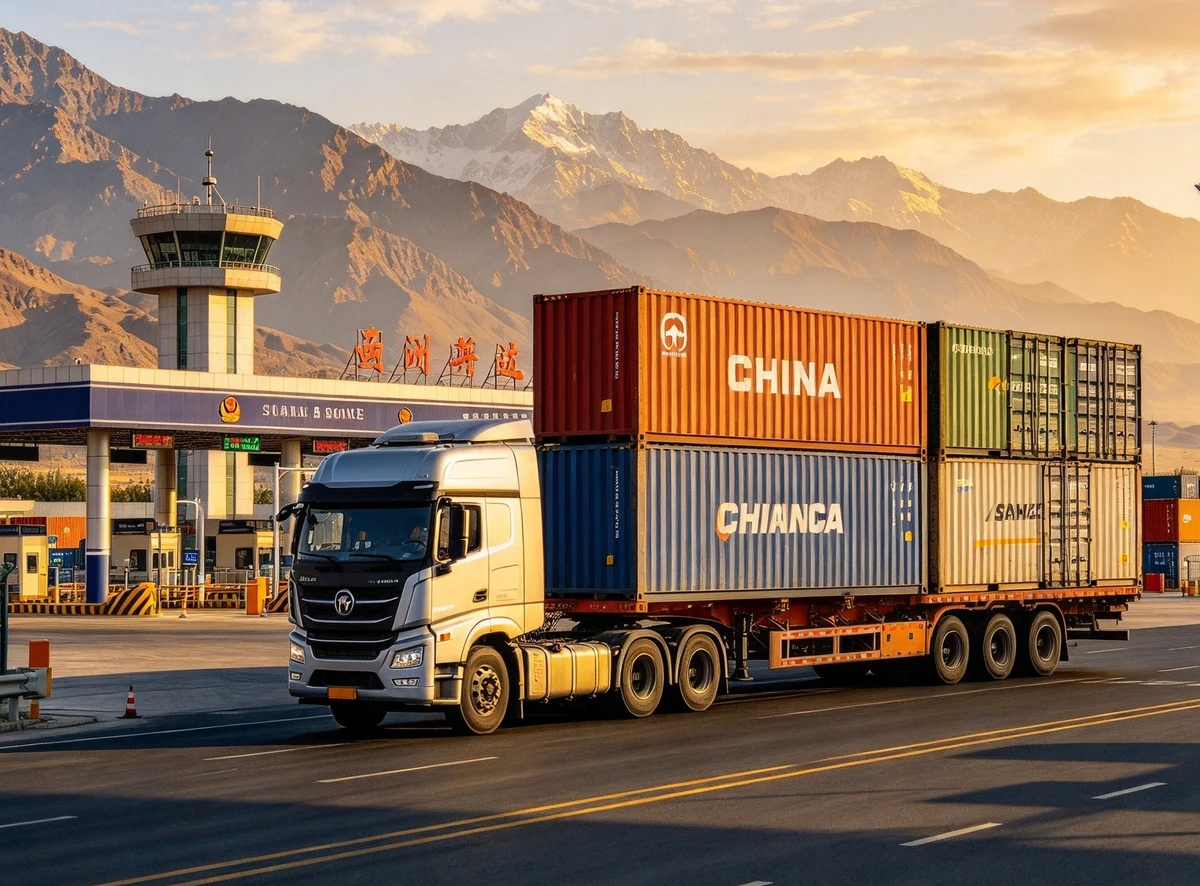
When importers search for “truck shipping” from China to the Middle East, they’re usually referring to cross-border road freight or overland freight—not last-mile domestic delivery.
This means your goods travel by heavy-duty truck or tractor-trailer across multiple international borders, typically through Central Asia and Iran before reaching Gulf destinations like Dubai, Riyadh, or Doha. In many cases, the journey is multimodal: truck segments may be combined with rail or Caspian Sea ferry crossings to optimize cost and speed.
One key concept that makes this possible is the TIR Convention (Transports Internationaux Routiers). The TIR system allows sealed containers to cross multiple customs territories with minimal physical inspections, using a standardized carnet (a customs transit document) that guarantees duties and taxes. This reduces border delays from days to hours and is essential for efficient China–Gulf road transport.
Standard equipment for FTL shipments includes 13.6-meter curtainsider or dry van trailers capable of carrying 20–22 tons of lawful commercial cargo. For specialized needs, flatbed and lowbed trailers handle oversized machinery, while reefer trucks maintain temperature control for perishables and pharmaceuticals.
China to Middle East Trucking Cost Overview: 2026 Rate Table
Let’s start with the numbers you’re here for. The table below shows indicative FTL rates (40ft equivalent / full truckload) for major China–Gulf corridors as of October 2026:
| Origin → Destination | Indicative Rate (USD) | Transit Time |
|---|---|---|
| Eastern China → UAE | $8,500–$12,500 | 25–38 days |
| Western China → UAE | $8,000–$11,500 | 22–35 days |
| Eastern China → Saudi Arabia | $9,500–$13,500 | 28–42 days |
| Western China → Saudi Arabia | $8,500–$12,000 | 24–37 days |
| Central China → Oman | $9,000–$13,000 | 27–40 days |
| Eastern China → Kuwait | $10,500–$15,000 | 32–47 days |
| Central China → Qatar | $10,000–$14,500 | 30–45 days |
Indicative rates based on market research (October 2026); actual quotes may vary significantly based on cargo details, season, and route conditions.
For smaller shipments, LTL (Less than Truckload) pricing offers a cost-effective alternative:
- Standard LTL to UAE/Saudi Arabia: $3–$5 per kg or $150–$250 per CBM
- Express truck service (urgent, small cargo): $5–$7 per kg
Our Industry Insight: These ranges are planning benchmarks, not guaranteed quotes. In our experience managing China–Gulf shipments since 2013, we’ve seen rates shift 15–30% within a single quarter due to fuel price swings, border congestion, or seasonal capacity crunches. Always request a current, itemized quote before booking.
How Are Trucking Rates from China to the Middle East Calculated?
Once you see how these costs break down, you’ll know exactly what to look for in a quote. Here’s the core formula most forwarders use:
(Distance × Base Rate/km) + Border Crossing Fees + Fuel Surcharge + Permits & TIR Carnet + Insurance + Driver Costs + Empty Return Allocation
Let’s break down each component:
Line-haul transport forms the base cost. Longer distances mean higher costs, but route efficiency matters more than raw mileage. A well-planned route through Kazakhstan and Iran may cost less than a shorter but congested alternative.
Border crossing fees are where costs add up fast. A typical China–UAE shipment crosses 4–5 borders (China→Kazakhstan, Kazakhstan→Uzbekistan, Uzbekistan→Turkmenistan, Turkmenistan→Iran, Iran→UAE). Each border incurs processing fees, document checks, and potential waiting-time charges of $100–$300 per day if inspections are triggered.
Fuel surcharge (typically 10–20%) and TIR Carnet fees ($50–$250) also factor in. The former fluctuates with diesel prices across multiple countries; the latter depends on your route’s complexity and which country issues the carnet. Insurance premium usually costs 0.3–1% of cargo value for all-risk coverage—well worth it given the long transit distances and multiple handling points.
Empty return allocation is the cost most importers miss. Trucks frequently return empty from the Gulf to China, so carriers factor return-trip costs into your quote. This alone can add 10–15% to your rate.
Finally, seasonal adjustments can add 15–30% during peak periods: pre-Chinese New Year (January–February), Ramadan, and summer months when mountain passes in Central Asia are more accessible.
Major Cross-Border Trucking Routes from China to the Middle East
Route selection significantly impacts both cost and transit time. Here are the four primary corridors:
Route 1: China–Kazakhstan–Uzbekistan–Turkmenistan–Iran–UAE/GCC (Primary Northern Corridor)
This is the most stable and widely used route. Key border crossings include Alashankou/Dostyk and Khorgos in western China. Transit time to UAE: 22–35 days. Cost: $8,000–$12,500 (FTL).
Route 2: China–Kazakhstan–Caspian Sea (Aktau/Baku Ferry)–Iran–GCC (Caspian Multimodal)
This option combines truck and ferry segments, avoiding some Central Asian borders but adding transshipment complexity at Caspian ports. Transit time: 25–40 days. Cost: $9,000–$13,500.
Route 3: China–Pakistan (CPEC)–Iran/Gwadar–GCC (Southern Corridor)
Shorter in theory (10–15 days) via the Karakoram Highway and Gwadar Port, but heavily dependent on regional stability and infrastructure conditions. Cost: $7,500–$11,000. Higher risk profile.
Route 4: China–Russia–Turkey–Saudi Arabia (Northern Bypass)
Longer route (~16–20 days transit) but useful for KSA/Qatar shipments when Iran transit is disrupted. Cost: $10,000–$14,000.
Real-Life Scenario: Last year, a client in Shenzhen needed 22 CBM of consumer electronics delivered to a Riyadh warehouse before Ramadan. We routed via Alashankou–Kazakhstan–Iran with TIR carnet support, cutting 4 days off standard border processing. The total door-to-door time was 19 days at a cost of $7,600 freight plus $400 customs fees—well within their budget and deadline.
For most shipments, we recommend Route 1—it wins on balance of stability, cost, and transit time.
Truck vs. Sea vs. Air vs. Rail: Full Cost Comparison
To put these numbers in context, here’s how trucking stacks up against your other options:
| Mode | Cost (USD) | Transit Time | Best For | Key Drawback |
|---|---|---|---|---|
| Sea Freight (FCL) | $2,000–$3,500/container | 30–45 days | Bulk, low-value, non-urgent | Slowest; port congestion risk |
| Overland Trucking (FTL) | $7,000–$15,000/truck | 15–35 days | Mid-value, time-sensitive, door-to-door | Border delay risk; limited reefer capacity |
| Rail Freight | $4,000–$6,000/container | 20–30 days | Heavy industrial cargo | Fixed terminals; requires last-mile trucking |
| Air Freight | $15,000–$25,000+ | 3–8 days | Urgent, high-value, small parcels | Prohibitively expensive for large volumes |
When trucking wins: If you need faster delivery than ocean freight but can’t justify air freight costs, trucking is the sweet spot. It’s ideal for mid-value electronics, auto parts, textiles, and inventory restocking.
When sea wins: Large-volume, low-margin cargo where time isn’t critical.
When air wins: Small, high-value, extremely urgent shipments. For example, Air Freight from China to Saudi Arabia typically costs $8–$12 per kg and delivers in 3–7 days, making it ideal for urgent restocks or high-value electronics.
Hybrid strategies: Combining sea + truck (port-to-door) or rail + truck can optimize both cost and speed for certain lanes.
DDP Truck Shipping from China to Saudi Arabia and UAE: What Does It Cost?
DDP (Delivered Duty Paid) means your forwarder handles everything—pickup, export clearance, international transport, import clearance, duty/tax payment, and final delivery. You receive cargo at your door with zero additional charges.
Here’s a realistic DDP cost breakdown for a 20-ton FTL from Shenzhen to Riyadh:
| Cost Component | Amount (USD) |
|---|---|
| Freight + fuel surcharge | $8,500 |
| Border fees (4 crossings) | $1,200 |
| TIR carnet + permits | $400 |
| Saudi import duty (5–15% of CIF) | $2,000–$3,000 |
| Saudi VAT (15%) | $1,500–$2,200 |
| Customs brokerage | $500 |
| Final delivery to Riyadh warehouse | $400 |
| Total DDP estimate | $14,500–$16,200 |
For DDP to UAE (Shenzhen → Dubai, 20-ton FTL), expect $11,000–$13,500 total, since UAE import duty is only 5% and VAT is 5%. If you’re also considering sea freight options, check our guide on freight shipping from China to UAE for detailed container shipping rates.
DDP or DAP—which should you choose? If you don’t have an established customs broker relationship in the destination country, DDP is the safer bet. If you do have local import expertise, DAP (Delivered at Place) gives you more control over duty payments and may reduce your total cost.
Hidden Costs and What to Watch For in Trucking Quotes
The lowest quote isn’t always the best value. Watch for these common hidden charges:
- Border waiting-time charges: Incomplete documentation or triggered inspections can add $100–$300 per day in demurrage.
- Storage fees at transshipment points: Cargo held at Caspian ferry ports or Iran transfer hubs may incur $50–$150 per day.
Special cargo brings additional costs. Oversized loads exceeding standard axle loads require route surveys and permits ($500–$2,000). Temperature-controlled trucking adds 20–40% to base rates. If your receiver lacks unloading equipment, expect another $200–$800 for crane or forklift rental.
And don’t overlook currency fluctuation. With transits lasting several weeks, exchange rate shifts can affect your final invoice.
Red flags: Quotes that don’t itemize border fees, exclude insurance, or lack a stated validity period.
Pro Tip: Always request a written rate breakdown with validity dates, surcharge conditions, and delay terms before booking. A reputable forwarder will provide this without hesitation.
Documentation and Middle East Import Compliance for Truck Shipments
Getting your paperwork right is the difference between a smooth transit and a week stuck at the border. Here’s what actually matters:
Core export documents:
- Commercial Invoice (valuation basis for customs)
- Packing List (dimensions, weight, cargo description)
- Certificate of Origin (CO) — required for preferential tariffs
- CMR / International Consignment Note (road transport contract)
- Export customs declaration (China)
TIR Carnet: Essential for multi-country transit. Simplifies customs procedures through sealed-container guarantees.
Saudi Arabia-specific compliance:
- SABER certification: Product conformity assessment required before import
- SASO standards: Technical regulations for electronics, chemicals, building materials
- Halal certificate: Required for food, cosmetics, pharmaceuticals
- Saudi VAT: 15% (as of 2026). Import duty: 5–15% depending on HS code
UAE-specific compliance:
- Import duty: 5% of CIF value for most goods
- VAT: 5%
- ECAS/EQM certification for regulated products (electronics, food contact materials)
HS code accuracy: Misclassification triggers delays and penalties. Provide a full HS code list to your forwarder in advance.
Real Cost Example: Shipping a Full Truckload from Shenzhen to Riyadh
Let’s walk through a complete shipment to see how all these elements come together.
Scenario: A Shenzhen-based electronics manufacturer needs to ship 22 CBM of consumer electronics (20 tons gross, $80,000 cargo value) to a distributor warehouse in Riyadh, Saudi Arabia.
Route chosen: Shenzhen → Alashankou (China-Kazakhstan border) → Kazakhstan → Uzbekistan → Turkmenistan → Iran → UAE → Saudi Arabia (via GCC road network)
Equipment: 40HQ container on a 13.6m curtainsider trailer with GPS tracking
Itemized cost breakdown (as of October 2026):
| Cost Component | Amount (USD) |
|---|---|
| Line-haul freight (Shenzhen → Riyadh) | $8,200 |
| Fuel surcharge (15%) | $1,230 |
| Border crossing fees (4 borders) | $1,100 |
| TIR carnet + transit permits | $380 |
| Cargo insurance (0.5% of $80,000 cargo value) | $400 |
| China export customs clearance | $250 |
| Saudi import clearance + SABER processing | $550 |
| Saudi import duty (10% of CIF) | $2,400 |
| Saudi VAT (15%) | $2,050 |
| Final delivery (Dammam port → Riyadh warehouse) | $350 |
| Total DDP landed cost | $16,910 |
Transit time: 24 days door-to-door (including 2 days of border processing)
Key insight: Using the TIR convention and pre-clearing SABER certification saved an estimated 3–4 days at the Saudi border compared to standard procedures.
Now consider what happens when the paperwork slips. A mismatched HS code on the commercial invoice can leave a fully loaded truck parked at the Saudi border while the classification gets corrected—five days of waiting fees, a missed retail launch window, and a bill that quietly exceeds whatever you saved negotiating the freight rate. The cargo is fine. The paperwork isn’t. That’s how most “cheap” quotes turn expensive.
Our Experience: At Sinoshipment, we’ve managed hundreds of China–Gulf trucking shipments since 2013. The single biggest cost saver? Accurate documentation. One missing seal number or incorrect HS code can trigger inspections that add $500–$1,000 in waiting fees and 2–3 days in delays. We always double-check every document against destination-country requirements before the truck leaves the factory.
How to Choose a Reliable Freight Forwarder for China–Middle East Trucking
Here’s the truth: plenty of forwarders will tell you they can handle China–Middle East trucking. Far fewer actually have the border relationships and route experience to do it well. Here’s what separates them:
Proven track record: Ask for recent shipment references on China–GCC routes. A forwarder with 10+ years of experience navigating these borders will have established relationships with customs authorities and transit-country agents.
Transparent, itemized quoting: Demand a breakdown showing exactly what’s included and excluded. Hidden fees are the #1 complaint we hear from importers who’ve had bad experiences with budget providers.
In-house customs brokerage: Both China export clearance and Middle East import clearance require specialized knowledge. A forwarder with in-house brokers can prevent costly delays.
Real-time GPS tracking: You should receive milestone updates at each border crossing, not just a final delivery notice.
Cargo insurance options: Comprehensive coverage with clear terms protects your investment against theft, damage, or loss during the long transit.
Questions to ask before booking:
- Is this quote door-to-door or border-to-border?
- What exactly is included/excluded (duties, VAT, storage, unloading)?
- What is the quote validity period?
- What happens if my cargo is held at a border crossing?
- Can you provide TIR carnet support?
At Sinoshipment Logistics, headquartered in Shenzhen since 2013, we’ve built our reputation on transparent pricing, expert route planning, and dependable execution across the China–Middle East corridor. Our location gives us direct access to major manufacturing clusters and the Alashankou/Khorgos border gateways, allowing us to offer competitive rates and faster response times. We also provide specialized freight shipping from China to Saudi Arabia and comprehensive Freight Shipping from China to Middle East services for businesses expanding into Gulf markets.
FAQ
How much does it cost to ship by truck from China to the Middle East? FTL rates range from $7,000–$15,000 depending on destination, cargo weight, and route. LTL starts at $3–$5/kg.
How long does cross-border trucking from China to the Middle East take? 15–35 days depending on destination and route. UAE is fastest (22–35 days); Kuwait and Qatar are slowest (30–47 days). For detailed sea and air transit comparisons, see our guide on How Long Does Shipping Take from China to Saudi Arabia.
Is trucking cheaper than sea freight from China to the Middle East? No. Sea freight is significantly cheaper ($2,000–$3,500/container vs. $7,000–$15,000/truck). However, trucking is 10–20 days faster and offers door-to-door flexibility.
What is the cheapest way to ship from China to the Middle East by land? LTL consolidation ($150–$250/CBM) or rail freight ($4,000–$6,000/container) are cheaper than FTL trucking. For the lowest cost overall, sea freight remains the budget choice.
Can I ship DDP by truck from China to Saudi Arabia? Yes. DDP land freight to Saudi Arabia typically costs $14,000–$17,000 for a 20-ton FTL, including duty, 15% VAT, and final delivery.
What documents do I need for truck shipping from China to the Middle East? Commercial Invoice, Packing List, Certificate of Origin, CMR/Waybill, export customs declaration, and (for Saudi Arabia) SABER certification. TIR Carnet is recommended for multi-country transit.
What is TIR and how does it reduce trucking costs? TIR is an international customs transit system that allows sealed containers to cross borders with minimal physical inspections, reducing border delays and associated costs by 2–4 days.
What are the main risks of cross-border trucking to the Middle East? Border delays due to incomplete documentation, geopolitical instability along certain routes (especially CPEC/Iran transit), weather-related mountain pass closures in winter, and cargo damage on rough road segments.
How do I track my truck shipment from China to the Middle East? Professional forwarders provide GPS-enabled tracking with milestone updates at each border crossing. Ask your provider for real-time tracking access before booking.
Can I ship oversized or refrigerated cargo by truck to the Middle East? Yes. Specialized equipment (flatbed, lowbed, reefer trucks) is available, but expect surcharges of 20–40% and longer lead times for route surveys and permits.
Conclusion
Shipping by truck from China to the Middle East costs $7,000–$15,000 for FTL and $3–$5/kg for LTL, with transit times of 15–35 days. The China–Kazakhstan–Iran–GCC corridor offers the best balance of stability, cost, and speed for most shipments.
To avoid overpaying:
- Always request itemized quotes with clear inclusions/exclusions
- Verify your forwarder’s experience on China–GCC routes
- Ensure proper documentation (including SABER for Saudi Arabia) before departure
- Consider DDP land freight if you lack local customs relationships
When we started Sinoshipment in Shenzhen back in 2013, our focus was simple: help Chinese exporters get their goods to overseas buyers without the usual customs headaches. More than a decade and 5,000+ clients later, that same principle guides every China–Middle East trucking shipment we plan.
Ready to get a customized quote for your China–Middle East truck shipment? Contact Sinoshipment today for transparent pricing, expert route planning, and door-to-door delivery you can trust.