Major Ocean Freight Shipping Routes from China to the Middle East: The Complete 2026 Guide (FCL, LCL & DDP)
· By SinoShipment
Choosing the wrong ocean corridor can add two weeks and thousands of dollars to a single shipment. For importers moving goods from China to the Middle East, the decision is not simply “ship to Dubai”; it is a calculation involving origin ports, chokepoints, carrier alliances, and country-specific compliance. This guide explains the major ocean freight shipping routes from China to Middle East corridors, compares the key destination gateways, and gives you a practical framework for selecting the right lane in 2026.
At Sinoshipment, we specialize in Freight Shipping From China To Middle East services, including FCL, LCL, and DDP, and have done so since 2013. We are a Shenzhen-based freight forwarder located in the heart of China’s export manufacturing and e-commerce logistics ecosystem. The insights below reflect what we have learned moving cargo for more than 5,000 clients through ports such as Jebel Ali, Dammam, Jeddah, Hamad, and Bandar Abbas.
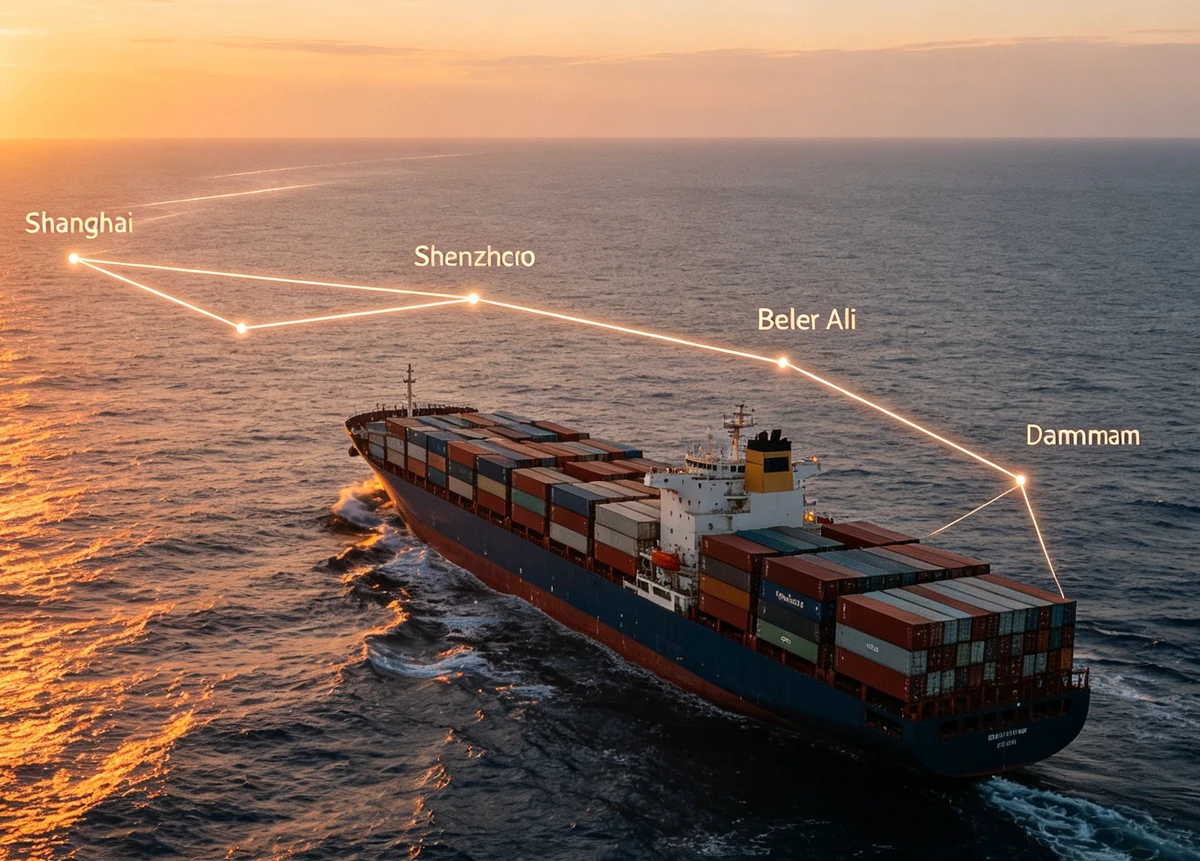
1. China-to-Middle East Ocean Freight: Route Map and Strategic Gateways
Most containerized cargo from China reaches the Middle East through one of two macro corridors. The first sails south through the Strait of Malacca, crosses the Indian Ocean, enters the Arabian Sea, and passes through the Strait of Hormuz into the Persian Gulf. The second follows a similar path but continues west of Oman, through the Gulf of Aden and the Red Sea, potentially transiting the Suez Canal before reaching ports such as Jeddah, Aqaba, or Sokhna.
Your choice of origin port in China usually depends on where your supplier is located. South China manufacturers typically load at Yantian, Shekou, or Nansha in Shenzhen and Guangzhou. Yangtze River Delta cargo moves through Shanghai or Ningbo-Zhoushan. Northern China exports leave from Qingdao, Tianjin, or Dalian.
On the destination side, the Middle East divides into three clusters. The Persian Gulf cluster includes Jebel Ali, Khalifa, Dammam, Jubail, Hamad, Shuwaikh, and Shuaiba. The Red Sea cluster is anchored by Jeddah Islamic Port. The Gulf of Oman cluster includes Sohar and Salalah, which also function as Indian Ocean transshipment hubs. A fourth, more specialized segment covers the Mesopotamia ports of Bandar Abbas and Umm Qasr.
Our Industry Insight: In 2024 and 2025 we saw a clear shift among our clients. Shippers who previously defaulted to Jeddah began splitting volumes between Dammam and Jebel Ali to avoid Red Sea uncertainty. According to the World Shipping Council, route planning around chokepoints such as the Strait of Hormuz and the Red Sea remains a central challenge for global container networks. The lesson is simple: always request quotes for at least two routing options and compare total landed cost, not just the ocean freight rate.
2. Sea Freight Shipping Routes from China to UAE: Jebel Ali, Khalifa, and Beyond
The United Arab Emirates is the busiest destination for freight shipping from China to UAE. Jebel Ali Port in Dubai is the largest man-made harbour in the world and the dominant re-export and distribution hub for the Gulf Cooperation Council (GCC). It connects to more than 150 ports globally and handles everything from electronics and consumer goods to building materials and automotive parts.
Direct services from South China to Jebel Ali are frequent and fast. A typical Yantian or Shekou to Jebel Ali sailing takes roughly 14 to 18 days. From Shanghai or Ningbo, expect 18 to 22 days. Qingdao and Tianjin usually add a few days, landing in the 20 to 24 day range. Most major carriers operate here, including MSC, Maersk, COSCO, CMA CGM, Evergreen, ONE, and Emirates Shipping Line.
Khalifa Port in Abu Dhabi is the fastest-growing alternative. Its automated terminals and proximity to the Khalifa Industrial Zone (KIZAD) make it attractive for FCL importers who want to bypass Jebel Ali congestion or deliver directly to Abu Dhabi industrial projects. For re-exporters, Dubai free zones such as JAFZA still dominate because of their warehousing, labor pool, and customs efficiency.
| China Origin | Destination UAE Port | Direct Service | Typical Transit |
|---|---|---|---|
| Yantian / Shekou | Jebel Ali | Yes | 14–18 days |
| Shanghai / Ningbo | Jebel Ali | Yes | 18–22 days |
| Qingdao / Tianjin | Jebel Ali | Yes / Transshipment | 20–24 days |
| Nansha | Jebel Ali | Yes | 16–20 days |
| Any major port | Khalifa Port | Direct / Feeder | 18–24 days |
Real-Life Scenario: A consumer electronics client in Dongguan ships 40ft high-cube containers to Jebel Ali twice a month. We consolidate their supplier pickups in Shenzhen, load at Yantian, and clear the cargo through Jebel Ali within 24 hours. From there, the goods are distributed to warehouses in Dubai, Riyadh, and Doha. By keeping the origin leg under one team and the destination customs under another Sinoshipment office, they cut average door-to-door lead time from 38 days to 29 days.
3. China-to-Saudi Arabia Shipping Routes: Jeddah vs. Dammam and the Red Sea Decision
Saudi Arabia is the largest economy in the GCC and one of the top destinations for Chinese exports. However, it has two very different maritime gateways for freight shipping from China to Saudi Arabia. Jeddah Islamic Port sits on the Red Sea and serves Mecca, Medina, and the western provinces. King Abdulaziz Port in Dammam lies on the Arabian Gulf and is the natural entry point for Riyadh, the Eastern Province, and overland distribution into Bahrain, Qatar, and Kuwait.
The choice between them has become more strategic since the Middle East Shipping Crisis and related Red Sea disruptions began. Jeddah is exposed to routing volatility around the Bab el-Mandeb strait, which can force vessels to divert around the Cape of Good Hope. Dammam avoids the Red Sea entirely but adds inland trucking distance for western Saudi destinations. For cargo ultimately bound for Riyadh, Dammam is usually the safer and often cheaper option because the overland leg is shorter.
Saudi Vision 2030 continues to drive heavy demand for construction materials, machinery, renewable energy equipment, and automotive parts. That demand makes capacity tight during peak seasons, especially in the six to eight weeks before Ramadan.
| China Origin | Saudi Gateway | Routing | Typical Transit |
|---|---|---|---|
| Shenzhen / Guangzhou | Jeddah | Red Sea / Suez | 20–26 days |
| Shanghai / Ningbo | Dammam | Strait of Hormuz | 22–28 days |
| Qingdao / Tianjin | Dammam | Strait of Hormuz | 20–25 days |
| Ningbo | Jeddah | Red Sea / Suez | 22–28 days |
4. Ocean Freight from China to Oman, Qatar, Bahrain, and Kuwait: The Smaller but Strategic GCC Lanes
Not every shipment needs to land in Dubai or Jeddah. Several smaller but highly strategic ports can reduce inland trucking, simplify project logistics, or avoid congestion.
Oman offers two interesting gateways for Freight Shipping from China to Oman. Sohar is an industrial port near the China-Oman Industrial Park and is ideal for steel, petrochemical modules, and heavy equipment. Salalah is a major Indian Ocean transshipment hub with a moderate climate, often used for consolidation and onward feeder services to Yemen, Somalia, and the Red Sea.
Qatar is served primarily by Hamad Port near Doha and is a growing destination for Freight Shipping from China to Qatar. It handles large infrastructure project volumes and enforces strict 12-digit HS code validation. Cargo bound for Qatar can also enter via Jebel Ali and truck overland, but direct Hamad services are usually simpler for Qatari importers.
Bahrain uses Khalifa Bin Salman Port, often via feeder from Jebel Ali or direct strings from China, making Freight Shipping from China to Bahrain straightforward for vehicles, building materials, and small-volume break bulk. Kuwait relies on Shuwaikh and Shuaiba, which typically receive cargo via transshipment at Jebel Ali or direct feeder services from Ningbo and Shanghai for Freight Shipping from China to Kuwait.
| Destination Port | Country | Typical Transit | Common Use Case |
|---|---|---|---|
| Sohar | Oman | 18–24 days | Industrial / heavy cargo |
| Salalah | Oman | 18–24 days | Transshipment / consolidation |
| Hamad | Qatar | 22–28 days | Infrastructure / project cargo |
| Khalifa Bin Salman | Bahrain | 24–30 days | Vehicles / building materials |
| Shuwaikh / Shuaiba | Kuwait | 25–30 days | Steel / oilfield equipment |
5. China-to-Iran Shipping Routes by Sea: Bandar Abbas and Special-Case Planning
Iran remains a distinct corridor for freight shipping from China to Iran because of sanctions, banking restrictions, and specialized documentation requirements. The primary gateway is Bandar Abbas, which handles steel, machinery, chemicals, and consumer goods from China. Secondary options include Bushehr, Bandar Imam Khomeini, and Chabahar.
Transit times from South China to Bandar Abbas are generally 18 to 24 days direct, while Shanghai or Ningbo sailings can take 22 to 32 days depending on whether the cargo transits through Jebel Ali or Port Klang for consolidation.
Payment and vessel selection require extra care. Many transactions settle in RMB, AED, or EUR to avoid USD exposure. You should also confirm that your carrier’s P&I club covers the Iran route and that your destination broker has experience with Iranian customs. Documentation typically includes a Pre-Shipment Inspection (PSI), a Certificate of Origin, and accurate HS code classification.
Our Experience: Last year we helped a machinery exporter in Shanghai reroute a project shipment to Bandar Abbas after a carrier unexpectedly dropped Iran coverage. We switched to a smaller regional operator, settled payment in RMB through an approved channel, and prepared the PSI and VOC documents before the cargo left the factory. The shipment cleared without demurrage, but it taught us to always have a backup carrier and broker approved before booking.
6. FCL vs. LCL Sea Freight from China to the Middle East: Which Fits Your Cargo?
FCL (Full Container Load) means you book an entire container for your cargo. It is usually the best choice when your shipment exceeds 13 to 15 cubic meters, is dense, or is fragile enough that you want to minimize handling. The container is sealed at the supplier’s factory in China and opened only at the destination warehouse, which reduces damage and tampering risks.
LCL (Less than Container Load) lets you share container space with other shippers. It is charged per cubic meter or per revenue ton and is ideal for shipments between 1 and 12 CBM, sample orders, or cargo consolidated from multiple suppliers. The downside is additional handling at origin and destination CFS (Container Freight Station) warehouses, which typically adds 5 to 10 days to total transit time.
Special equipment is available for unusual cargo. High-cube containers add extra volume for lightweight bulky goods. Refrigerated containers protect food, pharmaceuticals, and temperature-sensitive chemicals. Flat-rack and open-top containers handle oversized machinery and project cargo.
| Load Type | Best Volume | Typical Use Case | Speed vs. Cost |
|---|---|---|---|
| FCL 20GP | > 13–15 CBM | Dense or high-value cargo | Faster, lower per-unit cost |
| FCL 40HQ | > 55 CBM | Bulky goods, furniture, textiles | Lowest per-unit cost |
| LCL | 1–12 CBM | Samples, mixed suppliers | Lower upfront cost, slower |
| Special Equipment | Varies | OOG, reefer, heavy-lift | Premium, case-by-case |
7. How Long Does Sea Freight Take from China to the Middle East? Transit Times, Costs, and What Drives Them
Published carrier schedules often show port-to-port transit times of 16 to 28 days. In reality, door-to-door lead time from a Chinese factory to a Middle East warehouse usually falls between 25 and 45 days. The gap comes from origin pickup, export customs clearance, terminal waiting, consolidation for LCL, destination discharge, import clearance, and final-mile trucking.
Cost is driven by more than the base ocean freight rate. Importers should also expect Bunker Adjustment Factor (BAF), Low Sulphur Surcharge (LSS), peak-season surcharges, war-risk premiums, and Suez Canal transit fees when applicable. During periods of elevated Red Sea or Hormuz risk, such as the ongoing Hormuz tensions from 2025 into 2026, war-risk premiums can rise sharply and carriers may add emergency routing surcharges. You can read more about how these tensions affect planning in our analysis of how the Strait of Hormuz stalemate impacts shipping from China.
| Origin | Jebel Ali | Dammam | Jeddah | Bandar Abbas |
|---|---|---|---|---|
| Yantian / Shekou | 14–18 days | 18–24 days | 20–26 days | 18–24 days |
| Shanghai / Ningbo | 18–22 days | 22–28 days | 22–28 days | 22–32 days |
| Qingdao / Tianjin | 20–24 days | 20–25 days | 24–30 days | 24–34 days |
Indicative 2026 FCL rates from China to Jebel Ali or Dammam typically range from $2,000 to $3,500 for a 20ft container and $2,600 to $4,200 for a 40ft container, depending on season and carrier. LCL rates generally fall between $100 and $160 per CBM. Always request an itemized quote rather than a headline rate so you can compare the true landed cost.
Pricing Disclaimer: The figures above are market estimates based on our 2026 quoting experience and are subject to change with fuel prices, seasonal capacity, war-risk premiums, and carrier surcharge cycles. Contact Sinoshipment for a binding, lane-specific quote tailored to your cargo.
8. Middle East Customs, Documents, and Compliance by Destination
Documentation accuracy is the single biggest lever you have to avoid demurrage and detention. At minimum, every shipment needs a Commercial Invoice, Packing List, Bill of Lading (B/L), Certificate of Origin, and a correctly classified HS Code. Wooden packaging must meet ISPM-15 treatment and marking standards.
In the UAE, clearance is fast, often one to two days at Jebel Ali or Khalifa. Most goods face a 5 percent GCC unified customs duty plus 5 percent VAT on CIF plus duty. Regulated products may need ECAS approval.
In Saudi Arabia, compliance is stricter. SABER registration is mandatory, and many products require a SASO Certificate of Conformity or SFDA approval for food, cosmetics, and medical devices. Saudi customs integrate with the Fasah platform, and weight discrepancies between the packing list and the actual container often trigger inspections.
Qatar requires exact 12-digit HS codes and Ministry of Commerce documentation for many product categories. Kuwait, Bahrain, and Oman follow GCC customs frameworks but maintain their own port handling and document legalization rules.
9. Choosing the Best Shipping Route from China to Middle East Ports: A Decision Framework
The best route depends on four variables: final destination, cargo type, volume, and risk tolerance. Use this framework to narrow your options quickly.
Choose Jebel Ali when you need re-export flexibility, frequent LCL sailings, or fast distribution across the GCC. Choose Khalifa when your cargo is destined for Abu Dhabi industrial zones or you want to avoid Dubai terminal congestion.
Choose Jeddah when your final market is Western Saudi Arabia or the Red Sea coast and the Red Sea routing environment is stable. Choose Dammam when your cargo serves Riyadh, the Eastern Province, or GCC overland markets, or when you want to bypass Red Sea risk.
Choose Hamad, Sohar, Shuwaikh, or Khalifa Bin Salman when localized delivery, project requirements, or cost advantages make them better than landing in a larger hub and trucking onward.
On Incoterms 2020, FOB or CIF from China gives experienced importers control over carrier and insurance selection. DDP (Delivered Duty Paid) is usually the better choice for new importers or e-commerce sellers who want the freight forwarder to manage customs, duties, and final-mile delivery.
Sinoshipment Route Selection Checklist
Use this checklist before booking your next China-to-Middle East shipment:
- Confirm the final delivery address. A shipment to Riyadh should usually route to Dammam; a shipment to Mecca or Medina should route to Jeddah.
- Match the origin port to your supplier’s location. South China suppliers → Yantian/Shekou/Nansha; East China → Shanghai/Ningbo; North China → Qingdao/Tianjin.
- Calculate the FCL vs. LCL break-even. If your cargo is approaching 13–15 CBM, ask for both FCL and LCL quotes.
- Check the compliance calendar. Ramadan, Chinese New Year, and peak-season surcharges can all affect lead time and cost.
- Request an itemized quote. Separate base freight, BAF/LSS, war-risk, PSS, and destination charges so you can compare true landed cost.
- Validate documentation early. Saudi SABER, Qatar 12-digit HS codes, and Iran PSI/VOC should be confirmed before cargo leaves the factory.
- Plan a contingency port. For Red Sea-sensitive cargo, keep Dammam or Jebel Ali as a backup to Jeddah.
10. Conclusion: Ship Smarter from China to the Middle East
The major ocean freight shipping routes from China to the Middle East are not one-size-fits-all. Jebel Ali dominates re-export and high-frequency trade. Dammam and Jeddah split Saudi demand along geographic and risk lines. Oman, Qatar, Bahrain, and Kuwait offer specialized alternatives. Iran remains a niche corridor requiring careful compliance planning.
At Sinoshipment, we help importers compare these lanes side by side with transparent, itemized quotes and end-to-end documentation support. Whether you need FCL, LCL, or DDP door-to-door service, our team in Shenzhen can match your cargo to the right origin port, carrier, and destination gateway.
Get in touch today for a lane-specific quote. Share your supplier city, cargo details, CBM or weight, destination port, and delivery requirement, and we will recommend the most reliable and cost-effective route for your next shipment.
FAQ
How long does sea freight take from China to the Middle East? Port-to-port transit usually ranges from 16 to 28 days. Door-to-door lead time is typically 25 to 45 days depending on origin, destination, and whether you use FCL or LCL.
What is the cheapest sea freight route from China to the Middle East? For most general cargo, Yantian or Shekou to Jebel Ali offers the best balance of frequency and rate. However, the cheapest option depends on your final destination and volume.
What is the fastest ocean freight route from China to the Middle East? Direct services from South China to Jebel Ali are usually fastest, with transit times as low as 14 to 18 days.
Should I ship to Jeddah or Dammam for Riyadh? Dammam is generally better for Riyadh because the inland trucking distance is shorter and the route avoids Red Sea volatility.
Can I ship DDP from China to the UAE or Saudi Arabia? Yes. DDP is a mature option across the GCC. Sinoshipment handles origin pickup, ocean freight, customs clearance, duty payment, and final delivery under a single quote.
What documents are required for Saudi SABER? You typically need a SABER product certificate, a shipment certificate of conformity, commercial invoice, packing list, B/L, and Certificate of Origin. Specific products may also need SASO or SFDA approval.
Is it still possible to ship from China to Iran by sea? Yes, primarily through Bandar Abbas. You will need a freight forwarder experienced in sanctions-aware routing, non-USD payment channels, and Iranian import documentation.