Sea Freight from China to Iraq: The Complete 2026 Guide (Costs, Routes & Customs Compliance)
· By SinoShipment
A Baghdad-based construction materials wholesaler decided to try sea freight from China to Iraq for the first time — switching from air freight to a 40ft container and cutting his logistics spend by nearly 30%. The victory lasted exactly twelve days. Because nobody had warned him about Umm Qasr’s strict 7-day free time policy — or the fact that Iraq’s mandatory Certificate of Conformity (CoC) takes at least two weeks to obtain — his container sat at the port accruing demurrage charges while paperwork was processed. By the time his cargo was released, the penalties had wiped out almost half of his ocean-freight savings.
Stories like this are exactly why we wrote this guide. Whether you are a seasoned B2B importer replenishing inventory from Chinese factories, an e-commerce seller testing the Iraqi market, or an SME booking your first container, you will learn how to budget realistic 2026 sea freight from China to Iraq costs, choose between FCL and LCL, navigate Iraq’s unique customs requirements without surprises, and select a freight forwarder who actually understands the Umm Qasr port system.
Why Sea Freight from China to Iraq?
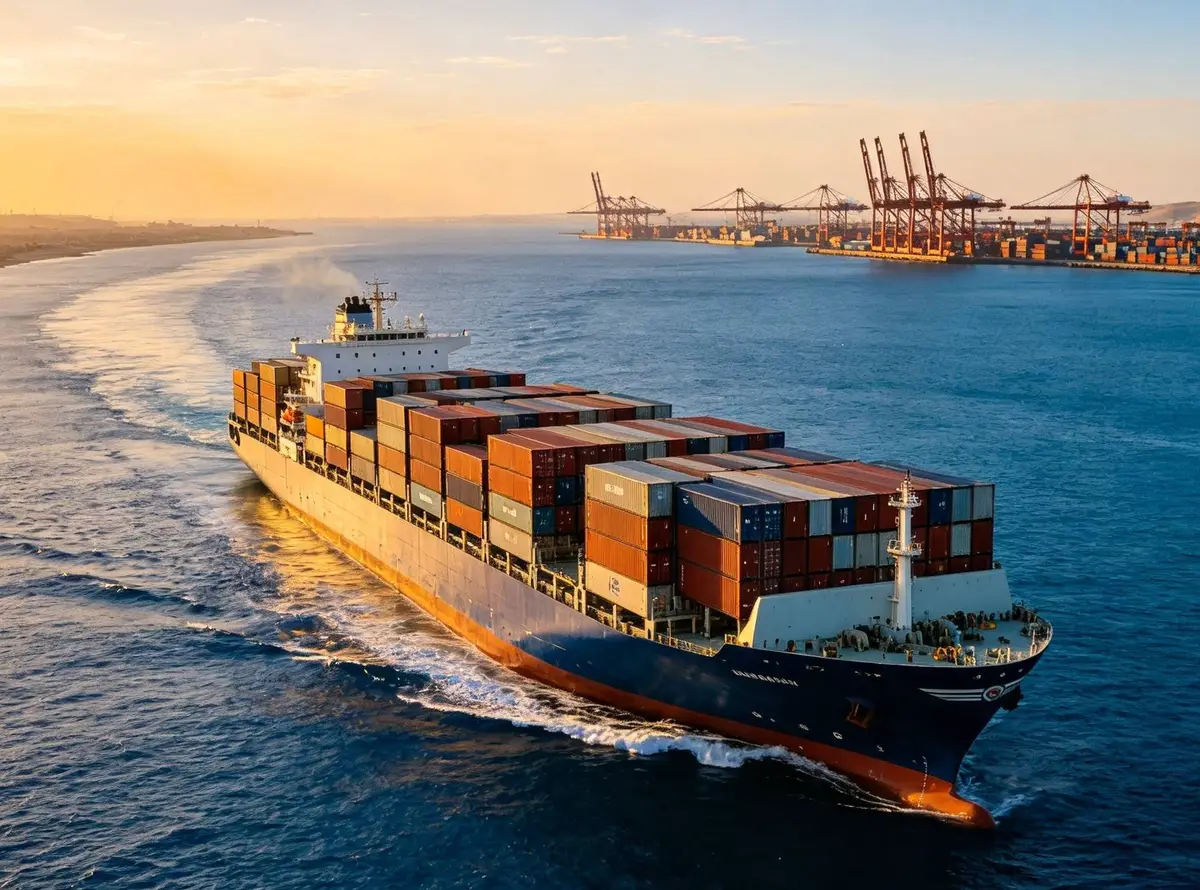
For most importers moving goods from China to Iraq, ocean freight is not just an option — it is the default. The cost comparison alone tells the story: sea freight typically costs $0.10 to $0.30 per kilogram, while air freight on the same lane averages $4 to $9 per kilogram. When you are shipping several tons of construction materials, automotive parts, or consumer electronics, that gap translates into thousands of dollars saved per shipment.
| Mode | Cost per kg (Typical) | Transit Time | Best For |
|---|---|---|---|
| Sea Freight (FCL) | $0.10 – $0.30 | 25–35 days port-to-port | Bulk cargo, heavy goods, cost-sensitive shipments |
| Sea Freight (LCL) | $0.25 – $0.60 | 30–45 days port-to-port | Small-volume shipments (2–15 CBM) |
| Air Freight | $4.00 – $9.00 | 4–7 days airport-to-airport | Urgent, high-value, or perishable goods |
| Express Courier | $8.00 – $16.00 | 2–5 days door-to-door | Samples, documents, small e-commerce parcels |
Beyond raw cost, sea freight offers volume flexibility that air simply cannot match. A standard 20ft container holds roughly 28–33 CBM, a 40ft container swallows up to 67 CBM, and a 40ft High Cube accommodates approximately 76 CBM of cargo. Whether you are moving a single pallet of trial inventory or ten containers of seasonal stock, ocean carriers have the capacity.
China is Iraq’s largest import partner, supplying a diverse range of goods — from electronics, machinery, and textiles to construction materials and consumer goods. This trade corridor handles billions of dollars in cargo annually, and sea freight moves the vast majority of it. Per ton-kilometer, ocean freight also emits significantly less CO₂ than air cargo — an increasingly relevant consideration for sustainability-conscious supply chains. For a complete overview of Iraq-specific logistics, visit our freight shipping from china to iraq route page, or explore our Freight Shipping from China to Middle East hub for regional rate trends and multi-country distribution strategies.
That said, honesty matters. If your shipment is urgent — medical equipment needed in Baghdad within ten days — sea freight is the wrong tool. In those cases, air freight or a sea-air hybrid via Jebel Ali makes more sense. The key is matching the mode to the mission.
China→Iraq Sea Freight Routes & Ports: The Complete Map
Understanding the actual physical route your container travels is fundamental to logistics planning — and it surprises many first-time importers.
The standard ocean freight route from China to Iraq traverses: South China Sea → Strait of Malacca → Indian Ocean → Arabian Sea → Strait of Hormuz → Persian Gulf → Umm Qasr. Unlike China-to-Europe routes, this lane does not pass through the Suez Canal. The critical maritime chokepoint is the Strait of Hormuz, through which all vessels must transit to enter the Persian Gulf. Any geopolitical disruption in this waterway directly impacts Iraq-bound cargo — a risk factor worth building into your supply chain timeline.
Here is the reality most guides gloss over: there are no direct container services from China to Iraq. Virtually every container transships through a regional hub before reaching Umm Qasr.
| Transshipment Hub | Location | Feeder Connection Time | Notes |
|---|---|---|---|
| Jebel Ali | Dubai, UAE | 3–7 days | Dominant hub; most carriers relay from here to Umm Qasr |
| Singapore | Southeast Asia | 5–8 days | Alternative relay point used by some carriers |
| Bandar Abbas | Iran | 4–6 days | Occasionally used for Kurdish region cargo via overland transfer |
The transshipment reality adds 5 to 10 days to the overall journey, depending on feeder vessel frequency and port congestion at Jebel Ali. Major carriers serving this lane — COSCO, MSC, CMA CGM, Maersk — all operate on transshipment schedules. Notably, COSCO resumed Middle East route bookings in 2026, increasing capacity on the China-Iraq lane and offering importers additional schedule options. Importers distributing goods across the Gulf often pair their Iraq-bound shipments with freight shipping from china to uae for regional hub-and-spoke distribution via Jebel Ali.
The Northern Alternative: Via Turkey to Kurdistan
If your final destination is Erbil, Sulaymaniyah, or anywhere in the Kurdistan Region of Iraq, there is a lesser-known alternative worth considering: shipping to Mersin Port (Turkey), then trucking overland through the Zakho (Ibrahim Khalil) border crossing into northern Iraq. Total transit via this route runs 35–45 days, but it can actually be faster to Erbil than clearing at Umm Qasr and trucking north through Baghdad — especially when southern Iraqi ports are congested.
Our Industry Insight: In our experience managing China-to-Iraq shipments since 2013, we have seen the Turkey routing consistently deliver goods to Erbil 5–7 days faster than the standard Umm Qasr + overland trucking approach during peak import months (Ramadan and Q4). The trade-off is slightly higher total freight cost — roughly $400–$600 more per 40ft container — but for time-sensitive Kurdistan-bound cargo, the savings in inventory carrying cost often justify the premium.
China Origin Ports: Which Is Best for Your Iraq Shipment?
Where your cargo starts in China affects both cost and transit time. The right port choice depends on your supplier’s location, the sailing frequency to the Middle East, and the container availability at your time of booking.
| Origin Port | Transit to Umm Qasr | Typical Cargo Types | Cost Position |
|---|---|---|---|
| Shanghai | 25–32 days | Bulk goods, machinery, mixed B2B cargo | Moderate |
| Shenzhen (Yantian/Shekou) | 26–34 days | Electronics, furniture, textiles, consumer goods | Competitive |
| Ningbo | 27–35 days | Construction materials, plastics, furniture | Moderate |
| Guangzhou (Nansha) | 26–34 days | Light industrial goods, multi-supplier consolidation | Competitive |
| Qingdao | 30–38 days | Heavy industrial equipment, Shandong province goods | Slightly higher |
Shenzhen deserves special attention. As our home base since 2013, we have seen Shenzhen consistently offer the most competitive combination of sailing frequency and terminal costs for Iraq-bound cargo. The port’s location at the heart of the Pearl River Delta manufacturing cluster — the world’s largest — means shorter domestic trucking distances for electronics, furniture, textiles, and consumer goods destined for Iraq. Yantian terminal in particular handles high volumes of Middle East-bound containers and generally offers faster export customs clearance than northern alternatives during peak season.
Our Industry Insight: If you source from multiple suppliers across Dongguan, Foshan, and Zhongshan, consolidating cargo at our Shenzhen warehouse before loading a single FCL container at Yantian can cut your per-unit logistics cost by 15–20% compared to booking separate LCL shipments from each factory. This is especially impactful for Iraqi importers who typically source across multiple product categories in a single buying trip. Our warehouse services include inspection, repacking, labeling, and fumigation preparation — everything your cargo needs before export.
Iraq Destination: Umm Qasr, Basra & Inland Delivery to 7 Cities
Understanding Iraq’s Port Infrastructure
Umm Qasr Port is Iraq’s only deep-water seaport, handling approximately 90% of all maritime imports through its 21+ berths. It is divided into two terminals — North Terminal and South Terminal — each served by different carriers and customs broker networks. Knowing in advance which terminal your carrier uses prevents costly last-minute trucking reroutes.
| Port | Location | Primary Role |
|---|---|---|
| Umm Qasr (North & South) | Basra Governorate | Iraq’s primary container gateway; handles ~90% of sea imports |
| Khor Al-Zubair | Near Umm Qasr | Bulk cargo, project shipments, oil-field equipment |
| Al Maqal | Basra city center | Regional barge traffic; minimal container volume |
Inland Trucking: From Umm Qasr to Your Door
Once your container clears customs at Umm Qasr, overland trucking delivers it to your warehouse. The distances — and costs — vary significantly by destination. This is a layer of detail no competitor guide provides.
| Destination | Distance from Umm Qasr | Truck Transit | Estimated Cost (USD) | Notes |
|---|---|---|---|---|
| Basra City | ~50 km | 1–2 hours | $150 – $250 | Shortest haul; minimal cost |
| Najaf | ~380 km | 5–7 hours | $600 – $900 | Straightforward highway route |
| Baghdad | ~550 km | 6–10 hours | $800 – $1,200 | Security checkpoints may add delays |
| Kirkuk | ~700 km | 10–14 hours | $1,000 – $1,500 | Route via Baghdad or direct |
| Sulaymaniyah | ~800 km | 12–16 hours | $1,200 – $1,800 | Mountainous final leg |
| Erbil | ~900 km | 12–18 hours | $1,500 – $2,200 | KRG checkpoint coordination required |
| Mosul | ~950 km | 14–20 hours | $1,800 – $2,500 | Longest northern route |
Critical warning: Umm Qasr offers only 7–14 days of free storage time before demurrage penalties begin accruing. A container held up by delayed CoC documentation can easily generate $50–$150 per day in storage charges. This is the single most common cause of unexpected costs for first-time importers to Iraq — plan your paperwork timeline around this deadline.
FCL vs. LCL Shipping to Iraq: Container Guide & Decision Matrix
Choosing the wrong container strategy is one of the most expensive mistakes an importer can make. Here is how to decide.
Container Types at a Glance
| Container Type | Capacity | Pallet Count | Best For |
|---|---|---|---|
| 20ft GP | 28–33 CBM | 9–10 pallets | Dense, heavy cargo (tiles, steel products, machinery) |
| 40ft GP | ~67 CBM | 20–21 pallets | Standard B2B mixed cargo; best cost-per-CBM |
| 40ft HQ | ~76 CBM | 20–24 pallets | Volumetric/light cargo (furniture, plastics, textiles) |
| Reefer | Varies by model | — | Temperature-sensitive goods (Iraq’s 50°C+ summers make this critical) |
For specialized cargo, Open-Top containers (oversized machinery), Flat Rack containers (heavy equipment, pipes), and RoRo vessels (vehicle imports via Jebel Ali to Umm Qasr) are also available on this lane.
FCL vs. LCL Decision Matrix
| Criteria | FCL (Full Container Load) | LCL (Less than Container Load) |
|---|---|---|
| Best Volume | Above 13–15 CBM | 2–15 CBM |
| Cost per CBM | Lower at scale | Higher per unit; no minimum volume |
| Security | Sealed at origin, opened at destination | Multiple handling touchpoints (consolidation/deconsolidation) |
| Transit Time | 25–35 days port-to-port | 28–45 days (extra 5–10 days for handling at Jebel Ali) |
| Flexibility | Fixed container space | Pay only for space used |
| Ideal For | Bulk orders, fragile goods, repeat B2B | Trial orders, small batches, multi-supplier consolidation |
The break-even rule of thumb: Once your shipment exceeds approximately 13–15 CBM, FCL typically becomes more economical than LCL on a per-unit basis. For Iraq-bound LCL shipments specifically, the extra consolidation and deconsolidation at Jebel Ali adds 5–10 days to transit — a detail that catches many first-time importers off guard when their “30-day” shipment arrives at day 42. If you are ready to commit to full container loads, our dedicated guide on fcl shipping from china to Iraq walks through container selection, loading optimization, and cost-saving strategies in detail.
2026 Sea Freight Costs: Complete FCL, LCL & DDP Pricing Breakdown
The ocean freight base rate you see on a carrier’s website is rarely what you actually pay. Here is the full picture.
FCL Port-to-Port Rates (2026 Q2–Q3 Estimates)
| Origin → Destination | 20GP | 40GP | 40HQ |
|---|---|---|---|
| Shanghai → Umm Qasr | $2,050 – $3,200 | $3,400 – $5,000 | $3,600 – $5,200 |
| Shenzhen → Umm Qasr | $2,000 – $3,100 | $3,200 – $4,800 | $3,400 – $5,000 |
| Ningbo → Umm Qasr | $2,100 – $3,300 | $3,300 – $5,100 | $3,500 – $5,300 |
| Guangzhou → Umm Qasr | $2,100 – $3,300 | $3,400 – $5,000 | $3,600 – $5,200 |
LCL pricing: $80–$175 per CBM, port-to-port, with transit times of 30–45 days.
Rates are volatile and subject to seasonal demand, fuel prices, and carrier capacity. These are Q2–Q3 2026 market estimates. Always request a binding, itemized quote before booking.
Your Total Landed Cost: Every Component
Ocean freight is only 50–70% of what you actually pay. Here is every component:
| Cost Component | Typical Range | Notes |
|---|---|---|
| Ocean Freight (Base Rate) | $2,000 – $5,000 (40GP) | Varies by season, carrier, and origin port |
| Terminal Handling Charges (THC) | $150 – $400 | Loading/unloading at origin and destination |
| Bunker Adjustment Factor (BAF) | 10–25% of base rate | Fuel surcharge; fluctuates monthly with oil prices |
| Documentation Fee | $50 – $150 | Bill of Lading preparation, telex release |
| Certificate of Conformity (CoC) | $300 – $1,500+ | Mandatory; varies by product complexity |
| Iraq Import Duties | 0–30% of CIF value | Depends on HS code (see Section 7) |
| Iraqi VAT | 15% on (CIF + Duties) | Applied at customs clearance |
| Customs Broker Fee | $200 – $500 | In-country broker service at Umm Qasr |
| Cargo Insurance | 0.4–0.6% of cargo value | Strongly recommended for Iraq-bound cargo |
| Inland Trucking | $150 – $2,500 | Varies dramatically by destination city (see Section 4) |
DDP Door-to-Door Benchmarks
For importers who prefer an all-inclusive option, DDP (Delivered Duty Paid) sea freight from China to Iraq typically ranges from $100–$300 per CBM or $4–$12 per kilogram, depending on the destination city and product category. DDP eliminates uncertainty — one fixed price covers factory pickup, export clearance, ocean freight, CoC arrangement, Iraq customs clearance, duty and VAT payment, and final delivery to your door.
Our Industry Insight: We estimate that roughly 60% of the unexpected costs our Iraq-bound clients faced before working with us came from three sources: (1) demurrage at Umm Qasr caused by late CoC filings, (2) customs broker fees that were not disclosed in the original quote, and (3) inland trucking surcharges for destinations beyond Baghdad. We address all three upfront in every quote we provide.
Iraq Customs Clearance Playbook: CoC, COSQC, Duties & Documentation
This is the section where most competitor guides go surface-level — and where the real cost of unpreparedness lives. Iraq’s customs regime is among the most document-intensive in the Middle East. Successful customs clearance requires advance preparation, precise documentation, and a clear understanding of COSQC requirements. Getting it wrong means your container sits, and you pay.
The #1 Rule: Certificate of Conformity Is Mandatory
Under the oversight of the Central Organization for Standardization and Quality Control (COSQC) per Iraqi Law No. 54, all regulated commercial imports to Iraq require a Certificate of Conformity (CoC). Without it, your container will not clear customs — period. The CoC must be issued by an accredited third-party inspection body before your goods leave China.
Authorized issuing bodies: Bureau Veritas, SGS, Intertek, TÜV.
The CoC process, step by step:
- Submit documents (Commercial Invoice, Packing List, product test reports) to your chosen inspection body
- Pre-Shipment Inspection (PSI) — an inspector visits your supplier’s factory or forwarder’s warehouse in China to verify product quality, labeling, and compliance with Iraqi national standards
- Lab testing (if required) — electronics, for example, may require testing at 45°C ambient temperature to comply with Iraqi climate conditions
- CoC issuance — typically 5–7 working days after successful inspection
- CoC accompanies shipping documents — Iraqi customs at Umm Qasr verifies authenticity against their database before releasing cargo
Timing is everything. Apply for your CoC at least two weeks before vessel departure. Every day your CoC is delayed after the container arrives at Umm Qasr is a day you pay demurrage.
Product categories that require CoC: Electronics and electrical appliances, vehicles and automotive parts, construction materials (steel, cement, tiles), toys and children’s products, food contact materials, cosmetics and personal care products.
2026 Regulatory Update: Mandatory Pre-Clearance
Effective January 1, 2026, Iraq requires all imports to be pre-declared before vessel arrival through the Iraqi Customs Transit System. Documents must be submitted 3–5 days in advance. This means your CoC, Commercial Invoice, Packing List, and Certificate of Origin all need to be finalized before your container even reaches the Persian Gulf — adding urgency to the pre-shipment documentation timeline.
Product-Specific Iraq Import Duty Rates
No competitor guide provides this level of detail. Use this table to estimate your customs liability before you ship.
| Product Category | Typical HS Chapter | Import Duty | VAT | CoC Required? |
|---|---|---|---|---|
| Electronics (consumer) | Ch. 84–85 | 5–15% | 15% | Yes |
| Machinery & industrial equipment | Ch. 84 | 0–5% | 15% | Yes |
| Construction materials (tiles, steel) | Ch. 68–73 | 10–20% | 15% | Yes |
| Furniture | Ch. 94 | 15–20% | 15% | Yes (wood packaging: fumigation cert) |
| Textiles & garments | Ch. 61–63 | 15–20% | 15% | Yes |
| Automotive parts | Ch. 87 | 5–15% | 15% | Yes |
| Food products | Ch. 16–21 | 5–30% | 15% | Yes |
| Medical devices & supplies | Ch. 90 | 0–5% | 15% | Yes (additional MoH approval) |
Note: Specific duty rates are subject to exact HS code classification. The 15% Iraqi VAT applies on top of (CIF value + duties). Always confirm with your customs broker before shipment.
Required Documentation Checklist
- Commercial Invoice — must include FOB value, HS code, and country of origin
- Packing List — itemized weights, dimensions, and packaging details
- Bill of Lading (Ocean B/L) — issued by the shipping line
- Certificate of Origin — CO or Form A/E, verifying Chinese origin
- Import License — required for certain regulated product categories
- Certificate of Conformity (CoC) — issued by BV, SGS, Intertek, or TÜV
- Fumigation Certificate — required for any shipment containing wooden packaging materials
Common Customs Pitfalls
1. Incorrect HS code classification. Misclassification can result in double duties or outright shipment rejection. Always work with a forwarder who validates HS codes against Iraq’s customs tariff database before export.
2. CoC application too late. We have seen containers accrue $1,500+ in demurrage because the importer waited until after loading to begin the CoC process. Apply at least two weeks before vessel departure.
3. Invoice value discrepancy. Iraqi customs cross-references declared values against market data. Undervaluing goods to reduce duty triggers red-flag inspections and penalties. Declare accurate transaction values.
4. Missing fumigation certificate for wooden pallets. If your packaging includes any wood — pallets, crates, dunnage — you need a fumigation certificate. Without it, your cargo is held. Period.
Our Industry Insight: Over the past decade of handling Iraq-bound shipments, the single most preventable delay we see is importers treating the CoC as an afterthought. In our workflow, we initiate the CoC application the moment the Commercial Invoice is finalized — typically 3–4 weeks before vessel departure. This buffer has saved our clients hundreds of thousands of dollars in avoided demurrage charges across thousands of containers.
Seasonal Planning, Risk Management & Choosing a Freight Forwarder
The China→Iraq Seasonal Booking Calendar
| Period | Impact | Action |
|---|---|---|
| Chinese New Year (Jan–Mar) | Factory shutdowns, port congestion, container shortages | Book 3–4 weeks ahead; ship before the rush if possible |
| Ramadan (dates vary) | Reduced customs working hours in Iraq | Add 3–5 days to clearance timeline |
| Canton Fair (April & October) | Post-fair shipping spikes tighten Middle East lane capacity | Lock in rates before the fair closes |
| Q4 Peak Season (Oct–Dec) | Global demand surge; rates jump 20–40% | Book at least 4 weeks in advance; confirm container availability |
Risk Management Essentials
Strait of Hormuz exposure. Every Iraq-bound vessel transits this chokepoint. Regional tensions periodically cause insurance premium spikes and minor schedule disruptions. Mitigation: build a 5–7 day buffer into your supply chain timeline and ensure your cargo insurance policy covers war risk and strikes. For a comprehensive analysis of how geopolitical tensions in this waterway affect freight rates and routing, see our How the Strait of Hormuz Stalemate Impacts Shipping from China report.
Umm Qasr congestion. During high-import months, berthing delays of 2–4 days are common. Combined with the port’s strict 7–14 day free time limit, this makes documentation readiness critical.
cargo insurance — non-negotiable for Iraq. With multiple handling points (Jebel Ali transshipment + Umm Qasr port + extended inland trucking through checkpoint zones + 50°C summer temperatures), Iraq-bound cargo faces more risk touchpoints than most lanes. All-Risk marine cargo insurance costs approximately 0.4–0.6% of the declared cargo value. One claim pays for decades of premiums.
How to Vet a Freight Forwarder for the China-Iraq Lane
Red flags to watch for:
- Quotes only the base ocean freight rate and cannot provide a line-by-line total landed cost breakdown
- Cannot explain Iraq’s CoC certification process or COSQC requirements
- Claims 20-day door-to-door delivery to Baghdad (unrealistic — expect 32–47 days)
- Has no experience distinguishing between Umm Qasr North and South terminal operations
Questions every importer should ask:
- “Do you have experience clearing cargo at both Umm Qasr North and South terminals?”
- “Can you provide an itemized cost breakdown including THC, BAF, CoC inspection, and estimated Iraq import duties?”
- “What is your process for handling CoC certification delays?”
- “Do you offer DDP door-to-door service with fixed, all-inclusive pricing?”
- “Can you provide references from other importers shipping to Iraq on a regular basis?”
Why Sinoshipment? Based in Shenzhen since 2013, we have built our reputation on the China-Iraq lane through transparent, itemized quotes with no hidden fees. Our complete DDP door-to-door service handles factory pickup in China, export clearance, sea freight, CoC arrangement, Iraq customs clearance, duty and VAT payment, and final delivery to any Iraqi city — all under a single, fixed price. With 5,000+ clients served globally and real-time shipment tracking from loading to delivery, we make China-to-Iraq logistics predictable.
Get Your Customized China→Iraq Sea Freight Quote →
FAQ: Sea Freight from China to Iraq
How long does sea freight take from China to Iraq?
Port-to-port: 25–35 days via the standard Jebel Ali transshipment route. Door-to-door: 32–47 days total, including factory pickup, export clearance, ocean transit, transshipment connection, Iraq customs clearance (including CoC verification), and inland trucking to your final destination.
How much does a 20ft container cost from China to Iraq?
Approximately $2,000–$3,200 for FCL port-to-port, depending on the origin port (Shenzhen vs. Shanghai vs. Ningbo), season, and carrier. Your total landed cost — including duties, VAT, CoC, and inland delivery — typically ranges from $3,500 to $6,000+ for a 20ft container.
How much does a 40ft container cost from China to Iraq?
Approximately $3,200–$5,200 for FCL port-to-port. A 40ft High Cube typically costs $200–$400 more than a standard 40GP. Always request an itemized quote that includes all ancillary charges — the base ocean freight is only part of the picture.
Is the Certificate of Conformity (CoC) mandatory for shipping to Iraq?
Yes — absolutely. All regulated commercial imports to Iraq require a CoC issued by an authorized body (Bureau Veritas, SGS, Intertek, or TÜV) under COSQC oversight. Without it, your container will be held at Umm Qasr and you will accrue demurrage charges. Apply at least two weeks before vessel departure.
What documents do I need to ship from China to Iraq?
Commercial Invoice (with FOB value, HS code, country of origin), Packing List, Bill of Lading (Ocean B/L), Certificate of Origin, Import License (product-dependent), Certificate of Conformity (CoC), and Fumigation Certificate (for any wooden packaging). Missing any one of these can halt clearance.
What is the cheapest way to ship from China to Iraq?
Sea freight FCL is the most cost-effective method for shipments exceeding 13–15 CBM. For smaller volumes, LCL at $80–$175 per CBM. If you want all-inclusive pricing without managing customs yourself, DDP door-to-door provides predictable, fixed costs and is often the best overall value when you factor in the hidden costs of self-managed clearance.
How much import duty will I pay in Iraq for Chinese goods?
Import duties range from 0% to 30%, depending on your product’s HS code. Electronics and machinery are typically 5–15%, construction materials 10–20%, furniture and textiles 15–20%. Iraqi VAT of 15% is applied on top of (CIF value + duties). See the full product-specific table in the customs section above.
Can I ship directly from China to Erbil without going through Umm Qasr?
Yes, via the Turkey alternative route: China → Mersin Port (22–30 days ocean) → Zakho border crossing → Erbil (5–8 days overland). Total transit: 35–45 days. This route can be faster for Kurdistan Region destinations than clearing at Umm Qasr and trucking north through Baghdad — especially during periods of southern port congestion.