Sea Freight From China to Turkey: The Complete 2026 Guide (FCL, LCL & DDP)
· By SinoShipment
Sea freight from China to Turkey is the backbone of one of Asia’s busiest westbound trade corridors. In 2024, China–Turkey trade moved close to $45 billion, with most of that volume inside 20ft and 40ft containers crossing the Indian Ocean and Suez Canal. For machinery, electronics, textiles, furniture, or auto parts, ocean freight is usually the most cost-effective way to move bulk cargo from Chinese factories to Turkish buyers.
Yet the lane is full of uncertainty. Transit times quoted online range from 18 to 40 days. Rates change weekly. Turkish customs can be strict on valuation and HS codes. And many first-time importers are unsure whether DDP is worth the premium.
This guide answers the five questions every importer asks: price, transit time, process, risk, and responsibility. You will get July 2026 rate benchmarks, port-pair transit times, an FCL vs. LCL decision framework, Turkey customs compliance essentials, worked landed-cost examples, and a forwarder checklist.
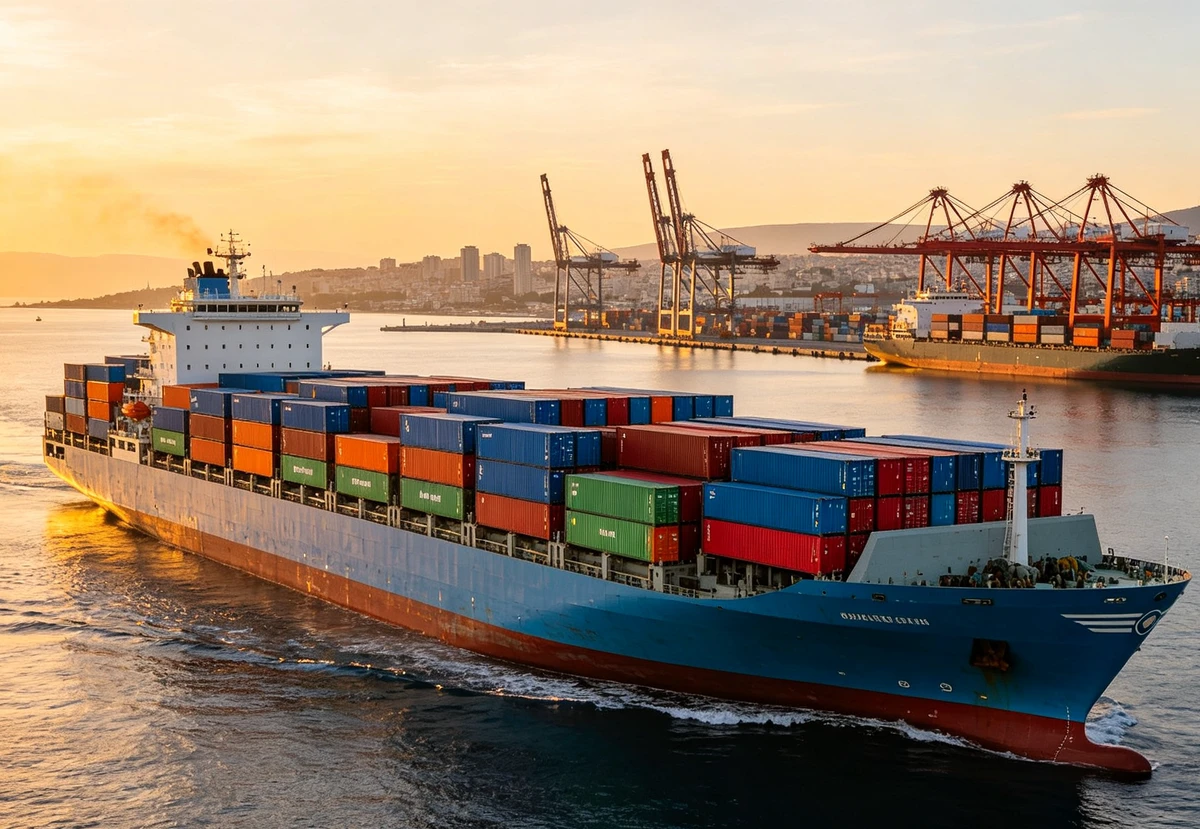
What Is Sea Freight From China to Turkey?
Sea freight moves goods by container vessel from a Chinese port to a Turkish port — the standard choice for heavy, bulky, or non-urgent cargo.
Two container modes dominate the lane:
- FCL (Full Container Load) gives you exclusive use of one container (20GP, 40GP, or 40HQ).
- LCL (Less than Container Load) lets you share container space. You pay for the volume or weight you use, whichever is greater.
The China–Turkey Trade Corridor: Ports, Routes & Manufacturing Clusters
Turkey sits at the crossroads of Europe, Asia, and the Middle East. For Turkish importers, China is the largest Asian source of manufactured goods; for Chinese exporters, Turkey is a consumer market and re-export gateway into Europe and the Middle East. As part of our wider China-export network, we provide dedicated Freight Shipping from China to Middle East solutions and route coverage into Europe through Freight Shipping from China to Europe.
Major Chinese Origin Ports
| Chinese Port | Best For | Manufacturing Region |
|---|---|---|
| Shanghai | Machinery, textiles, auto parts | Yangtze River Delta |
| Ningbo-Zhoushan | Industrial goods, machinery | Zhejiang province |
| Shenzhen | Electronics, consumer goods | Pearl River Delta |
| Guangzhou | Furniture, home goods, textiles | Pearl River Delta |
| Qingdao | Machinery, industrial equipment | Shandong province |
Major Turkish Destination Ports
| Turkish Port | Location | Best For |
|---|---|---|
| Istanbul (Ambarlı / Haydarpaşa) | Marmara Sea | ~60% of container traffic; western Turkey |
| Mersin International Port (MIP) | Mediterranean coast | Southern and central Anatolia |
| İzmir (Alsancak / Nemrut Bay) | Aegean coast | Western Turkey, automotive parts |
| Gemlik | Sea of Marmara | Automotive, industrial cargo |
Typical Route and Transit Hubs
Most sailings follow this path:
Chinese port → Malacca Strait → Indian Ocean → Suez Canal → Mediterranean → Turkish port
Some services transship through Singapore, Colombo, Jebel Ali, or Port Said. Transshipment can save cost but usually adds 3–7 days.
Sea Freight Cost From China to Turkey (July 2026)
Ocean freight rates are volatile. The numbers below are indicative market ranges based on July 2026 bookings into Istanbul/Ambarlı.
FCL Container Shipping Rates China to Turkey
| Container Type | Capacity (Approx.) | Port-to-Port Rate (USD) |
|---|---|---|
| 20GP | 28–30 CBM | $1,314 – $1,606 |
| 40GP | 58–60 CBM | $2,295 – $2,805 |
| 40HQ | 68–70 CBM | $2,350 – $2,900 |
LCL Shipping Rates China to Turkey
| Basis | Indicative Rate |
|---|---|
| Base ocean freight | ~$38 / CBM |
| All-in landed cost (with CFS, handling, docs) | $80 – $150+ / CBM |
LCL base rates look cheap, but the all-in cost is often two to three times higher after CFS fees, handling, documentation, and fuel surcharges.
What Affects Sea Freight Cost?
- Port pair: High-volume lanes like Shanghai–Istanbul are usually cheaper.
- Peak seasons: Rates rise before Chinese New Year, Golden Week, and Q4.
- Transshipment vs. direct: Direct sailings cost more but are faster.
- Cargo type: Reefer, OOG, and dangerous goods require special equipment.
FCL vs. LCL: When to Switch
| Cargo Volume | Recommended Mode | Why |
|---|---|---|
| Under 12–15 CBM | LCL | Lower upfront cost; pay only for space used |
| 15–28 CBM | Compare both | Gray zone; depends on density, handling fees, and urgency |
| Over 28 CBM | FCL | Lower cost per CBM, less handling, lower damage risk |
Shipping Time From China to Turkey by Sea
One of the most confusing topics online is transit time. Some sources quote 18–25 days; others quote 25–40 days. The difference usually comes from whether the quoted time is port-to-port or door-to-door, direct or transshipment, and FCL or LCL.
Port-to-Port Transit Times (FCL)
| From (China) | To (Turkey) | Transit Time |
|---|---|---|
| Shanghai → Istanbul (Ambarlı) | 23–30 days | |
| Shenzhen → Istanbul (Ambarlı) | 25–30 days | |
| Ningbo → İzmir | 26–32 days | |
| Shenzhen → Mersin | 25–32 days | |
| Qingdao → Istanbul | 26–33 days | |
| Guangzhou → Mersin | 26–33 days |
LCL Transit Times
LCL usually takes 5–10 days longer than FCL port-to-port because cargo must consolidate at the origin CFS and deconsolidate at the destination CFS before customs release.
Door-to-Door Time Estimates
Add the following to port-to-port sailing time:
- Origin side: 3–7 days for pickup, consolidation (LCL), and China export customs.
- Destination side: 3–7 days for Turkey import clearance and inland delivery.
A realistic door-to-door range for most shipments is 30–50 days, with FCL direct services on the shorter end and LCL or inspected cargo on the longer end. For a neighboring corridor comparison, see our guide on How Long Does Shipping Take from China to Saudi Arabia.
Factors That Affect Transit Time
- Transshipment: Each hub transfer adds 2–5 days.
- Suez Canal / Red Sea routing: Cape rerouting can add 10–14 days.
- Port congestion: Shanghai, Shenzhen, and Istanbul can back up during peak season.
- Holidays: Chinese New Year, Golden Week, Ramadan, and Eid reduce staffing.
- Customs inspection channel: Turkey’s TAREKS system assigns green, yellow, or red channels.
FCL Shipping From China to Turkey: When and How to Book a Full Container
FCL shipping from China to Turkey is the right choice when your cargo exceeds roughly 15 CBM, when you want a sealed container, or when damage/security is a concern.
Container Specifications
| Type | Internal Volume | Typical Payload | Best For |
|---|---|---|---|
| 20GP | 28–30 CBM | 21–28 tons | Heavy, dense cargo |
| 40GP | 58–60 CBM | 26–30 tons | General palletized cargo |
| 40HQ | 68–70 CBM | 26–30 tons | Volumetric, light cargo |
FCL Loading Tips From a China Forwarder
- Maximize cube utilization. Empty space is wasted money.
- Use dunnage and moisture protection for furniture, textiles, and wooden goods.
- Seal and photograph the container after loading.
- Submit VGM (Verified Gross Mass) on time.
- Distribute weight evenly to avoid overweight fines.
For cargo that does not fit a standard dry container, ask about 40HQ, open-top, flat-rack, reefer, and OOG options.
LCL Shipping From China to Turkey: Consolidation for Smaller Volumes
LCL shipping from China to Turkey is designed for shipments between roughly 1 and 12 CBM. It lets you share container space with other shippers, so you do not pay for a full container you cannot fill.
LCL is usually priced per CBM or per 1,000 kg, whichever is greater. There is almost always a minimum charge, so very small shipments may be better suited to express courier.
The LCL Process
- Supplier delivers cargo to the forwarder’s consolidation warehouse.
- Cargo is consolidated with other shipments into one container bound for Istanbul, Mersin, or İzmir.
- The container sails to Turkey.
- At the destination CFS, cargo is deconsolidated before customs release and final delivery.
LCL Pros and Cons
| Pros | Cons |
|---|---|
| Lower cost for small volumes | Longer transit than FCL |
| Flexible for mixed SKUs | More handling, higher damage risk |
| No need to fill a container | CFS fees at both ends |
| Good for trial shipments | Less control over loading |
To reduce LCL cost and risk, pack cargo on pallets, label clearly, share supplier details early, and request all-in CFS-to-CFS or DDP pricing.
DDP Shipping From China to Turkey: All-Inclusive Door-to-Door
DDP shipping from China to Turkey — Delivered Duty Paid — means your forwarder handles pickup, China export customs, ocean freight, Turkey import clearance, duty/VAT payment, and final delivery to your door.
Who Should Use DDP?
- First-time importers unfamiliar with Turkish customs.
- SMEs and e-commerce sellers without a Turkish tax number.
- Buyers who want a predictable, all-in landed cost.
DDP vs. DAP vs. FOB/CIF
| Term | Freight | Customs Clearance | Duties / VAT | Turkish Tax Number Needed? |
|---|---|---|---|---|
| DDP | Forwarder | Forwarder | Forwarder | No |
| DAP | Forwarder | Buyer / buyer’s broker | Buyer | Yes |
| FOB | Buyer arranges main carriage | Buyer | Buyer | Yes |
| CIF | Seller to Turkish port | Buyer | Buyer | Yes |
| EXW | Buyer arranges everything | Buyer | Buyer | Yes |
Under DDP, the forwarder or its Turkish agent often acts as the importer of record, which is why DDP works without a Turkish tax number.
What to Watch With DDP Quotes
Ask whether the price includes ocean freight, origin charges, Turkey import customs clearance, all duties and VAT, customs inspection fees, inland delivery, and cargo insurance. Exclusions can make the final cost much higher.
Turkey Import Customs Clearance From China: Documents, Duties & Compliance
Turkish customs, administered through the Turkish Customs Administration (TCA) and the TAREKS risk-analysis system, is generally efficient but strict on documentation and valuation.
Required Documents Checklist
- Commercial Invoice — description, unit price, total value, Incoterm, HS code.
- Packing List — net/gross weight, dimensions, carton count, marks and numbers.
- Bill of Lading (B/L) or Sea Waybill.
- Certificate of Origin — Form A, EUR.1, or A.TR where applicable.
- Product-specific certificates — CE marking, test reports, MSDS, sanitary certificates, import licenses.
Duties and Taxes in Turkey
| Charge | Typical Rate / Notes |
|---|---|
| MFN Customs Duty | 0% – 20%+ depending on HS code |
| Additional Customs Duty (ACD) | May apply to certain Chinese-origin products |
| VAT (KDV) | 18% – 20% on CIF value + duty + certain fees |
| Anti-Dumping Duty | Product-specific |
| Special Consumption Tax | Vehicles, fuel, tobacco, alcohol |
TAREKS Risk Channels
Every shipment is assigned a risk channel:
- Green: automatic clearance.
- Yellow: document review.
- Red: physical inspection.
Accurate HS codes, realistic declared values, and consistent documents reduce the chance of yellow or red channel assignment. Working with a forwarder that provides professional customs clearance support can further reduce delays and inspection risk.
How to Avoid Customs Delays
- Classify products with the correct 10-digit Turkish HS code.
- Declare realistic market values.
- Ensure invoice, packing list, and B/L match perfectly.
- Submit documents to your broker at least 3 days before arrival.
- Include all required product certificates upfront.
Incoterms 2020 for China–Turkey Sea Freight: Which One Should You Choose?
Incoterms 2020 define who pays for transport, insurance, and customs at each stage. For Turkey-bound importers, the most common terms are:
| Incoterm | Seller Responsibility | Buyer Responsibility | Best For |
|---|---|---|---|
| EXW | Makes goods available at factory | Everything from pickup to Turkey delivery | Experienced importers with China logistics resources |
| FOB | Delivers goods on board vessel at Chinese port | Ocean freight, insurance, Turkey import | Buyers who want control of main carriage |
| CIF | Pays freight and insurance to Turkish port | Import clearance, duties, inland delivery | Buyers who prefer supplier to arrange shipping |
| DAP | Delivers to buyer’s premises (unpaid) | Buyer clears customs and pays duties/VAT | Experienced buyers with a Turkish broker |
| DDP | Handles everything including duties/VAT | Nothing; receives goods at door | First-time importers, SMEs, e-commerce sellers |
If you do not have a Turkish tax number or a trusted local customs broker, DDP is usually the safest choice.
Landed Cost Calculation: Worked Examples
Comparing freight quotes without calculating the full landed cost is a common mistake. Below are two realistic examples for Turkey.
Landed Cost Formula for Turkey
Landed Cost = Product Cost
            + Origin Charges
            + Ocean Freight
            + Destination Charges
            + Customs Duty
            + VAT (KDV)
            + Inland Delivery
            + Cargo Insurance (optional)
Example A — FCL Shipment
| Item | Cost (USD) |
|---|---|
| Machinery value (EXW Shenzhen) | $30,000 |
| Origin trucking + export customs | $450 |
| Origin THC + documentation | $320 |
| Ocean freight (20GP to Ambarlı) | $1,450 |
| Destination THC + handling | $380 |
| Customs duty (8%) | $2,400 |
| VAT / KDV (20% on CIF + duty) | $6,086 |
| Customs brokerage | $180 |
| Inland delivery to Istanbul warehouse | $280 |
| Cargo insurance (0.4%) | $120 |
| Total Landed Cost | $41,666 |
Example B — LCL Shipment
| Item | Cost (USD) |
|---|---|
| Electronics accessories value (EXW Guangzhou) | $8,000 |
| Origin pickup + export customs | $180 |
| Origin CFS + documentation | $120 |
| LCL ocean freight (4 CBM @ $95/CBM all-in) | $380 |
| Destination CFS + handling | $160 |
| Customs duty (5%) | $400 |
| VAT / KDV (20% on CIF + duty) | $1,680 |
| Customs brokerage | $150 |
| Inland delivery | $220 |
| Cargo insurance (0.4%) | $32 |
| Total Landed Cost | $11,322 |
For the LCL example, a hypothetical 20GP FCL would cost around $3,000+ in ocean freight alone, making LCL the clear winner at 4 CBM.
Hidden Fees to Watch
- Demurrage: charges for keeping a container at the port beyond free time.
- Detention: charges for keeping a container outside the port beyond free time.
- Storage: daily warehouse or yard fees during customs holds.
- Customs inspection fees: especially if TAREKS assigns a red channel.
- Currency adjustment factor (CAF): can appear when exchange rates move.
How Sea Freight From China to Turkey Works: Step-by-Step Process
Understanding the full workflow helps you plan inventory and avoid surprises.
- Request a quote. Share product name, HS code, weight, dimensions, Incoterm, pickup city, and delivery address.
- Confirm booking. Choose FCL, LCL, or DDP and lock the sailing schedule.
- Factory pickup or supplier delivery. Cargo is collected or delivered to the forwarder’s warehouse.
- China export customs declaration. The forwarder submits the export declaration and loads the container (FCL) or consolidates cargo (LCL).
- Ocean transit. Cargo sails to Turkey; track via carrier or forwarder portal.
- Turkey import clearance. The broker submits documents through TAREKS, pays duty/VAT, and arranges release.
- Delivery. Container is discharged, deconsolidated if LCL, and delivered to your warehouse.
Optional services such as warehousing, labeling, inspection, repacking, and cargo insurance can be added at origin or destination.
How to Choose the Best Freight Forwarder From China to Turkey
The right forwarder can save you money, time, and customs headaches. The wrong one can turn a simple shipment into a costly delay.
7-Point Forwarder Evaluation Checklist
- China presence. Staff or partners in Shenzhen, Shanghai, Guangzhou, or Ningbo.
- Turkey lane experience. Regular shipments to Ambarlı, Mersin, and İzmir with licensed brokers.
- Transparent, all-in quoting. Itemized origin THC, destination THC, CFS, duty/VAT, and inland delivery.
- Service range. FCL, LCL, DDP, air, rail, warehouse services, and insurance under one roof.
- Tracking and communication. Real-time tracking and proactive pre-arrival alerts.
- Value-added services. Labeling, palletizing, inspection, or Amazon FBA prep.
- Responsiveness. Fast replies across time zones when issues arise.
Red Flags
- Quotes that are vague or “too good to be true.”
- No physical presence or partner network in China.
- Inability to explain Turkish customs, TAREKS, or VAT calculation.
- No cargo insurance option.
- Poor communication during the quotation stage.
At Sinoshipment, we have been a professional freight forwarder from China since 2013. Based in Shenzhen, we have served more than 5,000 customers across the Middle East, Europe, the Americas, Africa, Asia, and Oceania. For China–Turkey sea freight, we provide FCL, LCL, DDP door-to-door, warehousing, quality inspection, and cargo insurance. Visit Sinoshipment.
Risks, Peak Seasons & Contingency Planning
Chinese Peak Seasons to Watch
| Period | Impact | Booking Advice |
|---|---|---|
| Chinese New Year (Jan/Feb) | Factory shutdowns, space crunch | Book 3–4 weeks ahead |
| Golden Week (early October) | Reduced customs/port operations | Plan around the holiday |
| Q4 Pre-Christmas Peak | Tight space and equipment | Book early; expect surcharges |
Suez Canal and Red Sea Contingency
Political instability or security issues in the Red Sea region can force carriers to reroute around the Cape of Good Hope, adding 10–14 days. Ask your forwarder about current routing and contingency plans. For ongoing regional updates, see our Middle East Shipping Crisis briefing.
Cargo Insurance
Marine cargo insurance typically costs 0.3%–0.5% of cargo value. It covers total loss and damage from accidents but usually excludes inherent vice, inadequate packaging, and delay-related losses. For high-value or fragile cargo, insurance is strongly recommended.
Demurrage and Detention
- Demurrage applies when a container stays in the port terminal beyond free time.
- Detention applies when a container is out of the terminal beyond free time.
Avoid both by preparing customs documents early, pre-booking trucks, and returning empty containers promptly.
FAQ: Common Questions About Sea Freight From China to Turkey
How long does sea freight take from China to Turkey? Port-to-port FCL usually takes 23–35 days. Door-to-door typically ranges from 30–50 days, depending on routing and customs clearance.
How much does sea freight cost from China to Turkey? As of July 2026, indicative FCL rates to Istanbul are $1,314–$1,606 for a 20GP and $2,295–$2,805 for a 40GP. LCL base freight is around $38/CBM, but all-in costs are usually $80–$150+/CBM.
Is FCL or LCL better for my shipment? Choose FCL for shipments above 15–28 CBM or when security and handling control matter. Choose LCL for smaller volumes, typically 1–12 CBM.
What documents are needed to import from China to Turkey? At minimum: commercial invoice, packing list, bill of lading or sea waybill, and certificate of origin. Product-specific certificates may also be required.
Do I need a Turkish tax number to import? Not if you use DDP. Under DDP, the forwarder can act as importer of record. For DAP, FOB, CIF, or EXW, you usually need a Turkish tax number and a licensed customs broker.
What is the cheapest way to ship from China to Turkey? For bulk cargo, FCL sea freight usually offers the lowest cost per unit. For very small shipments, express courier may be cheaper than LCL due to minimum charges.
Can my forwarder handle customs clearance in Turkey? Yes. A good forwarder will coordinate with a licensed Turkish customs broker, especially under DDP terms.
Are duties and VAT included in the freight quote? Only under true DDP quotes. FOB, CIF, and standard FCL/LCL quotes do not include Turkish customs duty or VAT.
Can I ship lithium batteries or hazardous goods from China to Turkey? Yes, but they require special packaging, labeling, and documentation compliant with the IMDG Code for sea freight. Air freight has much stricter limits.
How do I track my sea freight shipment? Your forwarder or shipping line will provide a container number or booking reference. Track through the carrier’s website or the forwarder’s portal.
Conclusion: Plan Your China–Turkey Sea Freight With Confidence
Sea freight from China to Turkey is the most cost-effective way to move bulk, non-urgent cargo across one of Asia’s busiest westbound trade corridors. Success comes down to five fundamentals:
- Choose FCL for larger volumes and LCL for smaller shipments.
- Budget 23–35 days port-to-port and 30–50 days door-to-door.
- Calculate the full landed cost, not just ocean freight.
- Prepare accurate documents and HS codes for Turkish customs.
- Partner with a forwarder who understands both the Chinese export side and the Turkish import side.
If you are planning your next shipment and want a transparent, all-in quote, Sinoshipment can help. As a Shenzhen-based freight forwarder with more than a decade of China-export experience, we handle FCL, LCL, DDP, air freight, warehousing, and cargo insurance for China–Turkey shipments. Request a quote at Sinoshipment.