Sea Shipping from China to Italy: The Complete 2026 Guide (Cost, Transit Times, Ports & Customs)
· By SinoShipment
In February 2026, a Milan-based fashion importer watched helplessly as her container sat anchored off Genoa for five extra days. A nationwide dockworker strike had shut down the port entirely, and she missed her Milan Fashion Week delivery window — losing a €30,000 order in the process. Stories like this are far too common for importers navigating sea shipping from China to Italy without the right preparation.
Between fluctuating container shipping rates, complex Italian customs procedures, and unpredictable port disruptions, getting a clear picture can feel impossible. Yet with bilateral trade reaching $71.7 billion in 2023 (UN Comtrade) and over 80% of China-Italy containerized goods moving by ocean, sea freight remains the backbone of this trade corridor. What follows is the practical version: 2026 Q4 FCL and LCL rates, real transit times by port pair, the Italian customs checklist we run through on every booking, and five client cases that show how it all fits together.
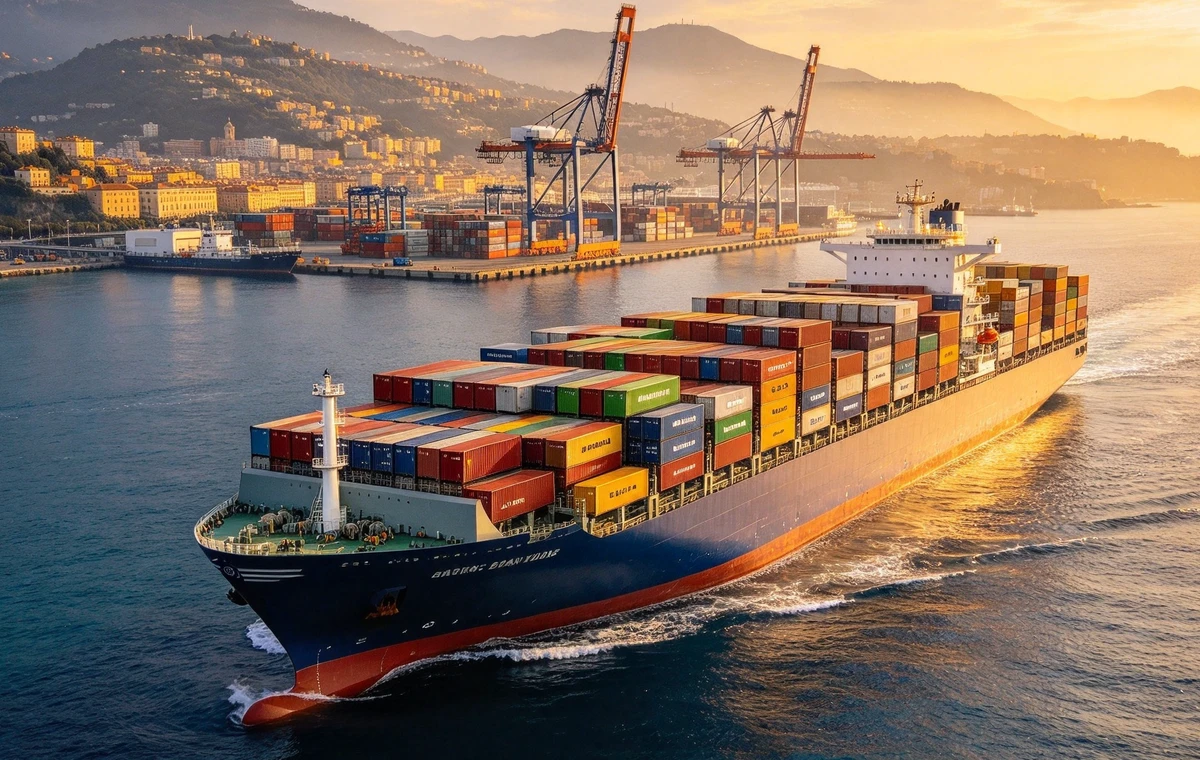
Why Choose Sea Shipping from China to Italy?
Sea freight is not just the cheapest option — for most cargo types, it is the only economically rational one. Understanding when and why to choose sea freight over air or rail helps you make smarter supply chain decisions.
Cost Efficiency: The Biggest Lever
Ocean freight costs roughly one-eighth to one-tenth of air freight per kilogram. For a typical 40HQ container holding 68 CBM of cargo, you are looking at $3,200–$4,500 in ocean freight versus $15,000+ for equivalent air cargo. FCL (Full Container Load) gives you a fixed-cost advantage that shrinks per-unit shipping cost as volume grows. LCL (Less than Container Load) offers flexible entry with as little as 1 CBM, making it ideal for trial orders and small-batch restocking.
Mature Routes and Reliable Capacity
The China-Italy corridor is one of the busiest Asia-Europe trade lanes. Weekly direct sailings connect Shenzhen Yantian and Shekou to Genoa, Shanghai to Naples, and Ningbo to La Spezia. Most vessels transit the Suez Canal directly into the Mediterranean, avoiding unnecessary transshipment delays at intermediate ports like Piraeus or Valencia.
Which Cargo Types Suit Sea Freight Best?
- Furniture and home goods — bulky, non-urgent, ideal for 40HQ containers
- Building materials and tiles — heavy cargo suited to 20GP containers
- Machinery and equipment — large-scale industrial shipments
- Textiles and garments — fashion restocking with 30-45 day lead times
- Consumer electronics — high-volume, non-urgent replenishment
Choosing the Right Incoterm
| Incoterm | Who Handles What | Best For |
|---|---|---|
| EXW | Buyer handles everything from factory | Experienced importers with China agents |
| FOB | Seller delivers to ship; buyer handles ocean freight | Most common; gives buyer freight control |
| CIF | Seller pays freight + insurance to Italian port | Buyers with existing customs broker in Italy |
| DAP | Seller delivers to named place; buyer pays duties | Buyers with EORI but no logistics partner |
| DDP | Seller handles everything including duties and delivery | First-time importers without EORI number |
Our Industry Insight: In our decade of managing China-Italy shipments from Shenzhen, we have found that FOB gives importers the best balance of control and cost transparency. However, for SMEs without an Italian EORI number, DDP is usually the smarter choice. The slight premium eliminates customs headaches entirely and lets you focus on selling, not paperwork.
2026 Sea Shipping Costs: FCL & LCL Rates
The ocean rate is only the beginning. Surcharges, destination charges, and inland delivery can add 20–40% to the figure you first see, so let’s price the whole journey rather than just the crossing. For a broader comparison across shipping modes, see our freight costs from China to Italy analysis.
FCL Container Rates
For a detailed breakdown of full-container pricing, see our dedicated guide on FCL shipping from China to Italy.
| Container Type | Estimated Cost (USD) | Volume | Best For |
|---|---|---|---|
| 20GP | $2,000 – $3,200 | ~28 CBM | Heavy goods: tiles, hardware, dense machinery |
| 40GP | $3,000 – $4,800 | ~56 CBM | Standard cargo: textiles, consumer goods, auto parts |
| 40HQ | $3,300 – $5,500 | ~68 CBM | Bulky items: furniture, appliances, lightweight volume cargo |
LCL Rates
| Origin Port | Destination Port | Rate per CBM |
|---|---|---|
| Shenzhen / Shanghai | Genoa | $40 – $95 |
| Shenzhen / Shanghai | Naples | $45 – $100 |
| Guangzhou | La Spezia | $50 – $105 |
LCL rates cover Chinese export clearance, ocean freight, and destination deconsolidation. They typically do not include destination THC, customs brokerage, or last-mile delivery.
Hidden Charges to Watch For
Your final invoice will include several surcharges beyond the base ocean freight:
- BAF (Bunker Adjustment Factor) — fuel surcharge, fluctuates with oil prices
- PSS (Peak Season Surcharge) — applies September through January, can add $200–$600 per container
- THC (Terminal Handling Charge) — charged at both origin and destination ports
- DOC Fee — documentation fee, typically $50–$100
- VGM Fee / Seal Fee / Booking Fee — miscellaneous charges totaling $30–$80
Expect total surcharges to add $150–$400 to your base rate. Always request an all-in quote before confirming a booking.
FCL vs LCL: When to Switch
The break-even point sits around 12 to 15 CBM. Below that threshold, LCL is cheaper. Above it, FCL wins on cost per unit just about every time.
Real-Life Scenario: A client shipping home decor from Ningbo to Milan was paying approximately $1,350 for 15 CBM via LCL at $90/CBM. We ran the numbers for a 20GP FCL at $2,200 all-in — just $850 more for a full 28 CBM container. They consolidated two months of orders into one FCL shipment and cut their per-unit freight cost by nearly 40%. If you are consistently shipping above 10 CBM per quarter, run this calculation every three months.
Door-to-Door Cost Reference
| Service Level | 20ft Container | 40ft Container |
|---|---|---|
| DDP Sea Freight (all-in) | $4,500 – $7,000 | $5,500 – $8,500 |
| China inland pickup (factory to port) | $150 – $400 | $200 – $500 |
| Italy inland delivery (Genoa to Milan) | $400 – $800 | $500 – $900 |
| Italy inland delivery (Naples to Rome) | $300 – $600 | $400 – $700 |
Transit Times: How Long Does Sea Shipping Take?
Port-to-Port Transit Times by Route
| Departure Port (China) | Arrival Port (Italy) | Transit Time (Days) | Service Type |
|---|---|---|---|
| Shenzhen (Yantian) | Genoa | 25 – 30 | Direct |
| Shanghai | Genoa | 28 – 32 | Direct |
| Ningbo | La Spezia | 30 – 35 | Direct |
| Shanghai | Trieste | 30 – 34 | Direct |
| Guangzhou (Nansha) | Genoa | 25 – 32 | Direct |
| Qingdao | Naples | 32 – 37 | Transshipment |
| Shenzhen (Yantian) | Naples | 20 – 25 | Direct |
Door-to-Door Timeline
| Stage | Duration | Notes |
|---|---|---|
| China pickup and export | 3 – 5 days | Factory pickup, loading, export customs |
| Ocean transit | 25 – 35 days | Suez Canal routing |
| Italy import customs | 2 – 7 days | Varies by cargo complexity |
| Inland delivery | 1 – 3 days | Truck or rail from port |
| Total door-to-door | 30 – 45 days | Plan inventory accordingly |
Suez Canal vs Cape of Good Hope
The standard routing via the Suez Canal takes approximately 25–35 days from major Chinese ports to Italian destinations. However, ongoing Red Sea tensions have led some carriers to reroute via the Cape of Good Hope, adding 10–15 days to transit times. When booking, always confirm which routing your carrier is using and plan buffer time accordingly.
How to Shorten Transit Time
- Choose direct sailings over transshipment services
- Book 2–4 weeks in advance to secure preferred sailings
- Avoid peak periods (pre-CNY, pre-Christmas) when delays compound
- Consider Sea+Truck (海卡) or Sea+Courier (海派) hybrid models for faster last-mile delivery
Choosing Your Ports: China & Italy Port Guide
Major Chinese Departure Ports
| Port | Region Served | Specialization |
|---|---|---|
| Shenzhen (Yantian/Shekou) | South China (Guangdong) | Electronics, furniture, consumer goods; highest sailing frequency to Italy |
| Shanghai | East China (Zhejiang, Jiangsu) | Widest route coverage; industrial goods and textiles |
| Ningbo-Zhoushan | East China manufacturing belt | Machinery, hardware, auto parts; strong FCL availability |
| Guangzhou (Nansha) | South China | Textiles, garments, footwear |
| Qingdao | North China (Shandong) | Heavy industry, chemicals, building materials |
| Xiamen | Fujian province | Apparel, electronics, consumer goods |
Major Italian Arrival Ports
| Port | Annual Volume | Best For | Inland Connections |
|---|---|---|---|
| Genoa | >2.1M TEUs | Northern Italy industrial imports | Milan, Turin, Bologna |
| La Spezia | >1.2M TEUs | Northern/Central Italy; efficient LCL | Florence, Milan, Parma |
| Trieste | Growing | Central/Eastern Europe gateway | Austria, Hungary, Southern Germany |
| Naples | >500K TEUs | Southern Italy and Mediterranean | Rome, Bari, Sicily |
| Venice (Marghera) | >1.4M TEUs | Veneto manufacturing region | Padua, Verona, Treviso |
| Ancona / Savona / Ravenna | Regional | Niche cargo and regional distribution | Central/Northeast Italy |
Port Pair Decision Matrix
| Your Destination | Recommended Italian Port | Recommended China Port |
|---|---|---|
| Milan / Turin / North | Genoa or La Spezia | Shanghai, Ningbo, Shenzhen |
| Bologna / Florence / Central | La Spezia or Livorno | Shenzhen, Ningbo |
| Rome / Naples / South | Naples | Shenzhen, Shanghai |
| Austria / Hungary / South Germany | Trieste | Shanghai, Qingdao |
| Venice / Veneto region | Venice | Shenzhen, Guangzhou |
The Complete Sea Shipping Process: Step-by-Step
Understanding the full journey helps you identify where delays happen and who is responsible at each stage.
The 8-Step Process
Step 1 — Booking & Container Pickup (1–2 days): Your freight forwarder reserves space with the shipping line and arranges an empty container delivery to your supplier’s factory.
Step 2 — Loading & Export Documentation (1 day): The container is loaded and sealed. Your supplier prepares the Commercial Invoice (with HS codes and declared value) and Packing List (with weight and CBM details).
Step 3 — China Export Customs Clearance (1–2 days): The forwarder submits the customs declaration. Once cleared, the container is released to port and the Bill of Lading (B/L) is issued as your proof of ownership.
Step 4 — Port Loading & Ocean Transit (25–35 days): The vessel departs, transiting the South China Sea → Indian Ocean → Red Sea → Suez Canal → Mediterranean Sea.
Step 5 — Arrival at Italian Port (1 day): The ship docks. Under the ICS2 regulation, all EU-bound cargo must have pre-arrival security data submitted electronically.
Step 6 — Italian Import Customs Clearance (2–7 days): Your broker submits the import declaration, pays applicable duties and VAT, and obtains customs release. For complex shipments, professional customs clearance services can reduce this window significantly.
Step 7 — Inland Transport (1–3 days): The container is trucked or railed from port to your warehouse or designated facility.
Step 8 — Final Delivery (1 day): Goods arrive at the final destination. For DDP shipments, the forwarder handles everything through this final step.
Service Model Options
- Port-to-Port: Best if you have your own customs broker and trucking partner in Italy.
- DDP Door-to-Door: Forwarder handles everything including duties, VAT, and delivery. Ideal for SMEs without an Italian EORI number.
- Sea + Truck (海卡): FCL container delivered directly by truck from port to your warehouse.
- Sea + Courier (海派): LCL cargo deconsolidated at destination, then handed to DHL, DPD, or GLS for last-mile delivery — the preferred method for Amazon FBA sellers.
Italian Customs Clearance: What You Need to Know
Italian customs is smooth for some importers and a nightmare for others, and the split comes down to one thing: how well the paperwork was prepared.
Required Documents Checklist
| Document | Purpose |
|---|---|
| Commercial Invoice | Declares goods value, HS code, Incoterms |
| Packing List | Itemizes quantity, gross/net weight, CBM |
| Bill of Lading (B/L) | Proof of ownership and contract of carriage |
| EORI Number | Mandatory EU economic operator identifier |
| Certificate of Origin | Required for preferential duty rates |
| CE / REACH / RoHS | Compliance certificates for regulated products |
| Fumigation Certificate | Required for wooden packaging (IPPC mark) |
| MSDS / UN38.3 | For battery-powered, liquid, or powder cargo |
2026 Compliance Updates
Three regulatory changes matter for every importer this year:
- ICS2 (Import Control System 2): All cargo entering the EU must have pre-arrival security data submitted electronically. No filing means no clearance.
- CBAM (Carbon Border Adjustment Mechanism): Since October 2025, carbon fees apply to Chinese steel, aluminum, cement, and fertilizer imports.
- De-minimis removal: Effective July 2026, the EU eliminates the €150 duty-free threshold. All imports will be taxed from the first euro.
Common Customs Pitfalls
| Pitfall | Consequence | How to Avoid It |
|---|---|---|
| Incorrect HS code classification | Back-taxes and penalties | Verify HS codes with your forwarder before shipping |
| Under-declared cargo value | Customs inspection, fines, seizure | Always declare actual transaction value |
| Mismatched documents | 3–7 day clearance delays | Ensure invoice, packing list, and B/L data match exactly |
| No EORI number | Cannot clear customs | Use a DDP forwarder’s EORI or register your own |
| No fumigation certificate | Cargo rejection or destruction | Ensure all wooden packaging has IPPC marking |
Our Industry Insight: We’ll be honest: a few years back we watched an entire container sit in Genoa for a week because a supplier’s invoice carried an HS code the customs system disagreed with. The goods were fine. The paperwork wasn’t. That single mismatch cost the client a week of demurrage we couldn’t get back. Today, every booking we take goes through a code check before the container ever reaches the port.
Understanding Italian Import Duties and VAT
| Product Category | HS Code Examples | Import Duty | VAT | Special Notes |
|---|---|---|---|---|
| Electronics | 8471, 8504 | 1–6% | 22% | CE marking required |
| Apparel / Textiles | 6104, 6203 | 8–12% | 22% | Rules of origin checked |
| Machinery | 8479, 8501 | 2–4% | 22% | CE + technical documentation |
| Steel / Aluminum | 7208, 7606 | Up to 9% | 22% | CBAM + anti-dumping may apply |
| Furniture | 9403, 9401 | 0–5% | 22% | Fumigation certificate for wood |
For businesses also importing into neighboring markets, our freight shipping from China to France and freight shipping from China to Spain guides cover route-specific duty structures for those destinations.
Calculation example: For €10,000 worth of electronics (4% duty):
- Import duty: €10,000 × 4% = €400
- VAT: (€10,000 + €400) × 22% = €2,288
- Total landed cost: €12,688
Risk Management: Delays, Strikes & Insurance
Italian Port Disruption: A Real and Present Risk
Italy has one of Europe’s most active labor union environments. In February 2026, a coordinated 24-hour national dockworker strike shut down Genoa, La Spezia, Trieste, Venice, Livorno, and Ravenna simultaneously — La Spezia alone reported a 78% activity drop. In June 2026, a 72-hour trucking strike at Genoa and Savona stranded an estimated 14,000 TEU of cargo.
Real-Life Scenario: During the February 2026 strike, one of our clients had an FCL shipment scheduled to arrive at Genoa on the strike date. Because we flagged the risk three weeks in advance, we re-routed the booking to Trieste instead. The container cleared customs two days after arrival while competing shipments sat at Genoa anchorage for five additional days. A simple port switch saved a full week and avoided demurrage charges entirely.
As of October 2026, PSA Genova Prà continues facing congestion from labor shortages. Carriers are increasingly omitting Genoa calls in favor of La Spezia or Vado. If your cargo is time-sensitive, discuss alternative port options with your forwarder before booking.
Peak Season Planning Calendar
| Peak Period | Timing | Book Ahead By | Expected Rate Increase |
|---|---|---|---|
| Pre-Chinese New Year | December – mid-January | 4–6 weeks | 20–40% |
| Christmas restocking | August – October | 3–4 weeks | 15–30% |
| Autumn peak | September – November | 2–3 weeks | 10–20% |
Marine Insurance: All Risks vs FPA
| Coverage Type | What It Covers | Cost | Recommendation |
|---|---|---|---|
| All Risks | Physical loss or damage from virtually any external cause | 0.3–0.5% of cargo value | Recommended for most shipments |
| FPA (Free of Particular Average) | Total losses only (e.g., container overboard) | 0.1–0.2% of cargo value | Only for low-value, non-fragile cargo |
For a $20,000 shipment, All Risks insurance costs approximately $60–$100. For high-value electronics, fragile goods, or first-time shipments, All Risks is strongly recommended. Learn more about coverage options on our cargo insurance page.
How to Lock In Rates and Avoid Surcharges
- Sign annual or quarterly contracts with carriers or forwarders to lock in rates
- Consolidate multiple smaller shipments into FCL to improve negotiating leverage
- Monitor market indices like Drewry WCI and SCFI to time your bookings
- Book early for known peak periods rather than waiting for spot rates
Industry-Specific Shipping Tips
Fashion and Textiles
Italy’s fashion calendar drives shipping patterns. Plan shipments to arrive at least two weeks before Milan Fashion Week or Pitti Uomo. Textile imports require accurate HS classification, and some synthetic fabrics face anti-dumping duties. Use LCL for sample runs and FCL for full seasonal collections.
Furniture and Home Goods
Furniture is the classic 40HQ cargo: high volume, relatively low weight, and brutally sensitive to how it’s packed. In our experience, the biggest cost swing on furniture has nothing to do with the ocean rate. It’s loading. We’ve watched the same order fill 52 CBM in one container and 68 CBM in another, purely because of how it was arranged on the floor. That 16 CBM gap shows up as wasted dollars on every unit you sell. Before your supplier loads, ask for a loading plan and check it against the container’s usable volume. The Salone del Mobile (Milan Furniture Fair) in April creates significant pre-event congestion at Genoa and La Spezia, so book that window early.
Machinery and Equipment
Oversized or heavy machinery may require Open Top or Flat Rack containers. All machinery imported into the EU requires CE marking and technical documentation. Precision instruments should always be insured under All Risks coverage.
Electronics
Battery-powered products need MSDS (Material Safety Data Sheet) and UN38.3 certification. Moisture-proof and shock-resistant packaging is essential for ocean transit. For electronics bound for Central European distribution, Trieste offers excellent rail connections.
Building Materials and Tiles
Tiles and dense building materials are ideal 20GP cargo due to weight concentration (maximum payload approximately 28 tons). Be aware that ceramic tiles from China face anti-dumping duties in the EU, so accurate HS classification and duty calculation are critical before shipping.
Amazon FBA Sea Shipping from China to Italy
Amazon FBA sellers represent a growing segment of China-Italy sea freight. Our Amazon FBA first-leg service covers Italy’s primary FBA warehouses, including MXP5 (Castel San Giovanni, Piacenza), MXP6 (Novara), FCO1 (Passo Corese, Rome), BLQ1 (San Bellino, Rovigo), and NAP1 (Naples area).
FBA First-Leg Options
- Sea+Truck (海卡): FCL container delivered directly to the FBA warehouse by truck. Best for large-volume sellers.
- Sea+Courier (海派): LCL cargo deconsolidated in Italy, then handed to local couriers for final delivery. Ideal for smaller, frequent shipments.
- DDP FBA Line: Full customs clearance and tax handling by the forwarder. No EORI required.
FBA Preparation Checklist
- Apply FNSKU labels to every unit
- Include Made in China origin labels
- Palletize to Amazon specifications with shrink wrap and corner protectors
- Book delivery appointments through Seller Central in advance
- Total timeline: 30–42 days from China factory to Italian FBA warehouse
Sea Freight vs Rail Freight: Which Is Right for You?
For Italy-bound cargo, the China-Europe Railway Express (New Silk Road) sits between sea and air: faster than a container ship, cheaper than a plane.
| Factor | Sea Freight | Rail Freight |
|---|---|---|
| Transit time | 25–35 days port-to-port | 16–21 days |
| Cost (40HQ) | $3,200–$4,500 | ~$8,400 |
| Carbon footprint | Lower per unit | Higher than sea, lower than air |
| Route stability | Subject to Red Sea disruptions | Stable via Kazakhstan and Russia |
| Best for | Cost-sensitive bulk cargo | Time-sensitive inland cargo |
Our Industry Insight: We recommend rail freight for high-value fashion cargo heading to Milan during tight seasonal windows, or for machinery deliveries tied to installation schedules. For standard replenishment inventory, sea freight remains the clear winner on cost. Some of our clients use a hybrid approach — rail for initial launch inventory, sea for ongoing replenishment.
How to Choose a Reliable Freight Forwarder
Not every forwarder knows this lane. Before you hand over a booking, ask five questions — the answers separate the operators who have run it a hundred times from the ones who haven’t:
- Do they have dedicated China-Italy experience? A forwarder focused on transpacific routes may not understand Genoa’s congestion patterns or Italian customs nuances.
- Is their pricing fully transparent? A low ocean rate means nothing if destination THC, customs fees, and delivery charges appear as surprises.
- Can they handle DDP? Without an Italian EORI, you need a forwarder who clears under their own credentials.
- Do they offer real-time tracking? You should see your container’s status without sending an email.
- Can they guarantee space during peak season? Contracted allocation versus spot market booking makes a significant difference in September and January.
Why Choose Sinoshipment
Sinoshipment has been managing sea freight from China to Italy since 2013. Based in Shenzhen — China’s logistics and cross-border e-commerce hub — we have served over 5,000 clients across Europe, the Middle East, the Americas, Africa, and Asia. Our team maintains stable partnerships with major carriers including MSC, COSCO, Maersk, and CMA CGM, ensuring reliable space allocation even during peak seasons.
We handle the full chain: FCL and LCL ocean freight, export and import customs clearance, warehouse services, cargo insurance, and Amazon FBA first-leg delivery. Our pricing is transparent with no hidden fees, and our customer support team responds quickly to keep your supply chain moving.
Real Client Cases
Fashion & Textiles: A Milan-based womenswear brand sourced fabrics from Guangzhou suppliers. We consolidated three LCL shipments into a single 20GP FCL from Nansha to Genoa under DDP terms, clearing Italian customs in 2 days and delivering to their Milan warehouse in 32 days total.
Furniture & Home Goods: A Foshan furniture manufacturer needed weekly 40HQ shipments to La Spezia for distribution across Northern Italy. We optimized their loading plans, improving container utilization from 82% to 94% and reducing per-unit freight cost by 15%.
Machinery: A Qingdao machine tool builder shipped a CNC machining center to Trieste using an Open Top container. We managed the CE documentation review, secured DDP delivery to the end customer’s facility in Vienna, and handled all Austrian import formalities.
Electronics / Amazon FBA: A Shenzhen 3C accessories seller needed weekly replenishment to Amazon MXP5. Our Sea+Courier (海派) DDP line delivers in 35 days door-to-warehouse with all customs duties prepaid, eliminating their need for an Italian EORI.
Building Materials: A Foshan tile exporter shipping 20GP containers to Naples needed guidance on EU anti-dumping duties. We provided HS code optimization advice that legally reduced their duty exposure by 3.2 percentage points per shipment.
Frequently Asked Questions
How much does sea shipping from China to Italy cost?
FCL rates range from $2,000–$3,200 for a 20GP, $3,000–$4,800 for a 40GP, and $3,300–$5,500 for a 40HQ. LCL costs $40–$95 per CBM depending on the route. DDP door-to-door service runs $4,500–$7,000 for a 20ft container.
How long does sea shipping take from China to Italy?
Port-to-port transit takes 22–35 days depending on the route. Door-to-door delivery including customs clearance and inland transport takes 30–45 days total.
What documents do I need for sea shipping from China to Italy?
You need a Commercial Invoice, Packing List, Bill of Lading, EORI number, Certificate of Origin (for preferential rates), and product compliance certificates (CE, REACH, RoHS) for regulated goods.
What is the import duty from China to Italy?
Import duties range from 0–17% depending on product category, plus 22% VAT calculated on the CIF value plus duty. From July 2026, all imports will be taxed from the first euro as the EU eliminates the €150 de-minimis exemption.
Do I need an EORI number to import into Italy?
Yes, an EORI number is mandatory for customs clearance in Italy. If you do not have one, choose a DDP service where the freight forwarder clears customs under their own EORI.
What is CBAM and does it affect my shipment?
CBAM (Carbon Border Adjustment Mechanism) is the EU’s carbon border tax, effective since October 2025. It applies to Chinese steel, aluminum, cement, and fertilizer imports. If your cargo falls into these categories, factor in additional carbon-related costs.
Can I ship Amazon FBA cargo by sea to Italy?
Yes. Sea+Truck (FCL direct to warehouse), Sea+Courier (LCL with local delivery), and DDP FBA lines are all available. Total transit time from China factory to Italian FBA warehouse is approximately 30–42 days.
How do Italian port strikes affect my shipment?
Strikes can cause 3–7 day delays at affected ports. A proactive forwarder will monitor labor announcements and re-route your cargo to alternative ports (e.g., Trieste instead of Genoa) when strikes are announced in advance.
Is my cargo insured during sea shipping?
Basic carrier liability is limited and often insufficient. We recommend purchasing All Risks marine insurance at 0.3–0.5% of cargo value for comprehensive protection against physical loss or damage during transit.
Final Thoughts
Sea shipping from China to Italy remains the cheapest realistic way to move bulk cargo across this corridor — and the importers who get it right tend to share the same habits. They ignore the headline ocean rate and price the whole journey, from factory gate to final warehouse. They match the Italian port to where the goods actually need to be. And they lock in a forwarder before peak season, not after.
First LCL shipment or weekly FCL program, the playbook holds: know your true landed cost, prepare the paperwork before the container moves, and build in a buffer for the days when a port goes quiet. Get those right and the savings follow.
Ready to ship from China to Italy? Contact Sinoshipment today for a free, no-obligation quote. With over a decade of experience, 5,000+ satisfied clients, and transparent pricing with no hidden fees, we are your trusted partner for sea freight from Shenzhen, Shanghai, Ningbo, and Guangzhou to Genoa, Naples, La Spezia, and Trieste. Let us handle the logistics while you focus on growing your business.
Last updated: October 2026. Rates and regulations are subject to change. Always confirm current pricing with your freight forwarder before booking.