Sea Shipping from China to UAE: The Complete 2026 Guide (Rates, Transit Time & Landed Cost)
· By SinoShipment
Sea shipping from China to UAE remains the backbone of trade between the world’s largest manufacturer and the Middle East’s busiest re-export hub. The UAE imported more than USD 72 billion of Chinese goods in 2025, and most of that volume moved by ocean freight. Yet the same 20-foot container can be quoted anywhere from $2,100 to $4,100 depending on origin port, sailing date, and Incoterms — and hidden charges regularly inflate the final invoice by 20–40%.
This guide gives you the real 2026 picture: FCL and LCL rate benchmarks, transit times from every major Chinese port, a full landed-cost breakdown, UAE customs clearance rules, and cost-saving strategies we use daily at our Shenzhen office. If you are importing to Dubai, Abu Dhabi, Sharjah, or re-exporting across the GCC, these are the details that separate an accurate budget from an expensive surprise. For a direct service quote, see our freight shipping from China to UAE route page.
Editorial note: This guide is updated for Q3 2026 and reflects the market rates, carrier routings, and UAE customs rules we handle daily at our Shenzhen office. All figures are reference ranges — your quote depends on cargo, sailing date, and Incoterms, and typically stays valid for about 2–3 weeks.
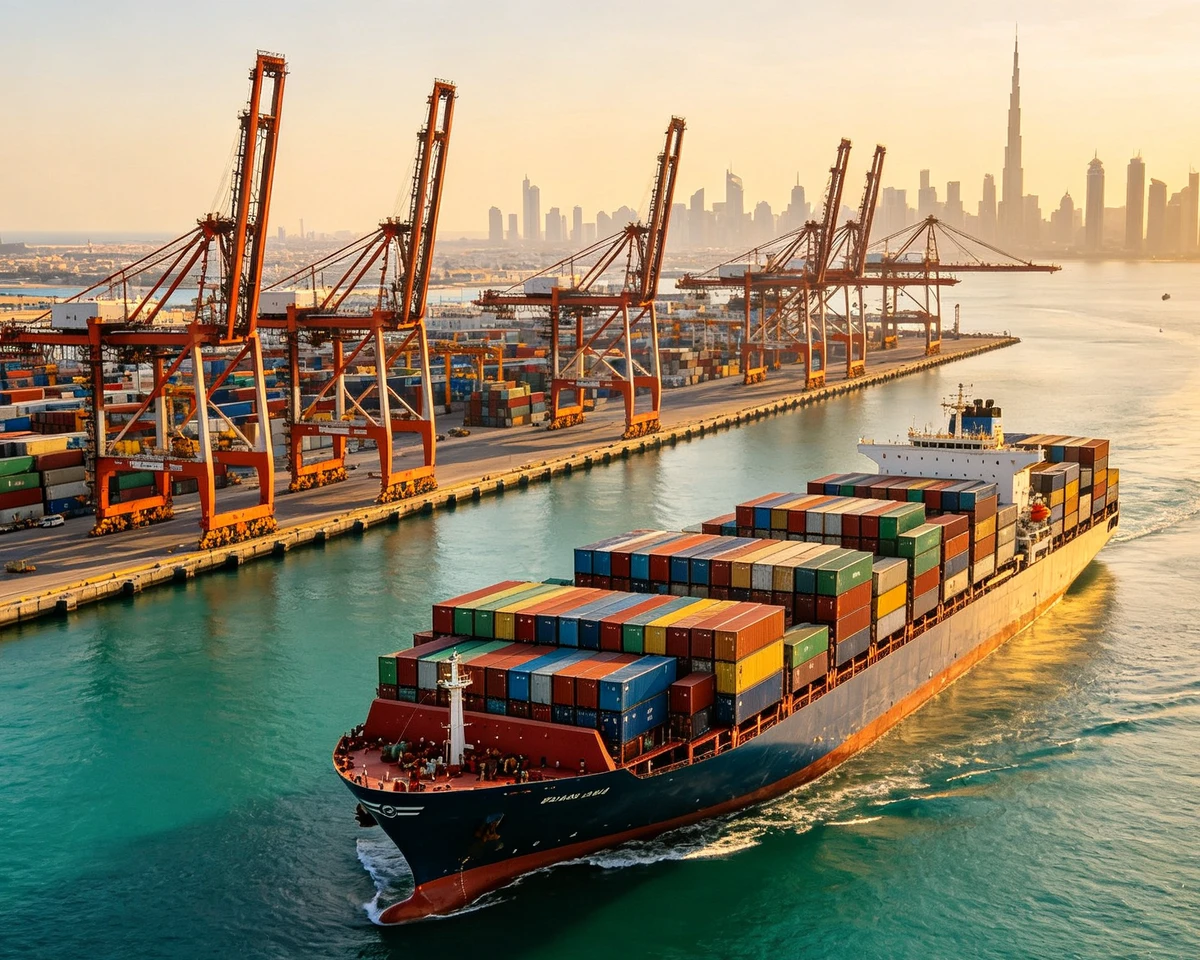
1. Sea Freight from China to UAE: FCL vs LCL Basics
Before comparing rates, you need to understand the two ways to move cargo by sea.
FCL (Full Container Load) means you book an entire container — usually a 20ft, 40ft, or 40ft High Cube (40HQ) — exclusively for your goods. The container is sealed in China and opened only at your UAE destination, which means less handling, lower damage risk, and a single Bill of Lading (B/L). If you are considering other trade lanes, our sea freight overview covers FCL and LCL fundamentals globally.
LCL (Less than Container Load) means your cargo shares space with other shippers’ goods. You pay per cubic meter (CBM) or per metric ton, whichever is greater. LCL is ideal for sample orders and small shipments, but it adds consolidation and deconsolidation steps that extend lead time and raise handling risk.
At Sinoshipment, we have coordinated China–UAE ocean shipments from our Shenzhen base since 2013, booking weekly FCL and LCL sailings out of Yantian, Nansha, Shanghai, and Ningbo. The breakdown below comes from those live bookings, not from a rate sheet.
Our Industry Insight: The LCL/FCL break-even point on the China–UAE lane sits around 12–14 CBM. When a shipment is close to that threshold, we almost always recommend FCL. The slightly higher ocean rate is offset by lower destination handling, fewer touchpoints for fragile cargo, and a more predictable arrival date.
| Factor | FCL (20ft GP) | LCL (per CBM) |
|---|---|---|
| Cost basis | Flat per container | Per CBM or weight |
| Transit time | 14–20 days (South China) | 18–25 days |
| Handling risk | Low | Higher (consolidation/deconsolidation) |
| Best for | 15+ CBM, regular orders, fragile goods | 1–14 CBM, samples, trial orders |
2. How Much Does Sea Freight from China to UAE Cost in 2026?
August 2026 market rates to Jebel Ali sit at $2,100–$4,086 for a 20GP and $3,500–$6,563 for a 40GP, depending on origin port and carrier. LCL runs $55–$180 per CBM. These benchmarks are drawn from our live carrier contracts on the China–Middle East corridor and cross-checked against World Shipping Council lane data, so you can budget with confidence. Quotes are typically valid for only 2–3 weeks as fuel prices and regional risk (Strait of Hormuz) keep shifting. For a deeper dive into pricing across all modes, read our guide to Freight Costs from China to UAE.
| Origin Port | 20ft FCL | 40ft FCL / 40HQ | Transit Time |
|---|---|---|---|
| Shenzhen / Yantian | $2,100–$2,600 | $3,500–$4,400 | 15–18 days |
| Guangzhou / Nansha | $2,200–$2,800 | $3,650–$4,700 | 18–22 days |
| Shanghai | $2,400–$3,200 | $3,850–$5,000 | 20–25 days |
| Ningbo | $2,350–$3,100 | $3,750–$4,900 | 22–28 days |
| Qingdao | $2,450–$3,400 | $3,900–$5,200 | 25–30 days |
| Tianjin / Xingang | $2,550–$4,086 | $4,050–$6,563 | 28–32 days |
The Full Landed Cost Breakdown
The ocean rate is only one line item. A realistic UAE import budget also includes:
| Cost Component | Typical Range | Notes |
|---|---|---|
| Ocean freight (base) | $2,100–$6,563 | By origin, container, carrier |
| Bunker Adjustment Factor (BAF) | +10–20% | Fuel surcharge, fluctuates monthly |
| Peak Season Surcharge (PSS) | $100–$400 | Oct–Nov and pre-Ramadan |
| Origin THC + documents | $150–$300 | Terminal handling at the Chinese port |
| MOFAIC invoice attestation | from ~AED 150 | Required above AED 10,000; higher tiers may apply |
| UAE customs duty | 5% of CIF | Most commercial goods |
| UAE VAT | 5% of (CIF + duty) | Recoverable for VAT-registered importers |
| Destination THC + delivery | $200–$500 | Jebel Ali to your warehouse |
| Demurrage / detention | $50–$150/day | After free time expires |
Real-World Scenario: In May 2026, one of our Shenzhen clients booked a 40HQ from Yantian to Jebel Ali at $2,150 ocean freight. After BAF ($310), destination THC ($185), MOFAIC attestation, 5% duty + 5% VAT on CIF value, and last-mile trucking to a Dubai prep center, the true landed cost reached about $4,980 — more than double the quoted ocean rate. This is why we always quote all-in and itemize every charge.
3. How Long Does Sea Shipping Take from China to UAE?
Port-to-port transit from South China ports (Shenzhen, Guangzhou) to Jebel Ali averages 14–20 days; from East China (Shanghai, Ningbo) it runs 18–24 days; from North China (Qingdao, Tianjin) expect 24–32 days. LCL shipments add 4–7 days for consolidation and deconsolidation.
Our Industry Insight: Shenzhen is usually the fastest origin for UAE-bound cargo because direct weekly sailings from Yantian cut 3–5 days versus northern ports that rely on transshipment via Singapore or Hong Kong. If your factory is in the Pearl River Delta, routing through Shenzhen can save nearly a week of total lead time.
4. Shipping to Jebel Ali vs Khalifa Port: Which UAE Port Should You Choose?
Jebel Ali (Dubai) is the Middle East’s largest container port and the default gateway for China shipments. As the operator DP World notes, Jebel Ali offers deep-water access plus road, rail, and inland-waterway links across the Gulf — which is why it sees frequent direct calls from all major Chinese ports and connects directly to the Jebel Ali Free Zone (JAFZA). It is the right choice for consumer goods, electronics, e-commerce inventory, and GCC re-export trading.
Khalifa Port (Abu Dhabi) is a modern deep-water port operated by AD Ports, handling containers, general cargo, RoRo, and project cargo, with a direct link to the Etihad Rail network. It suits project cargo, heavy machinery, industrial goods, and deliveries to KEZAD or Abu Dhabi mainland, where routing through Khalifa reduces inland trucking distance.
| UAE Destination | Recommended Port | Why |
|---|---|---|
| Dubai mainland / Dubai South | Jebel Ali | Frequent direct sailings, short trucking |
| JAFZA company | Jebel Ali | Port connects directly to the free zone |
| Sharjah / Ajman | Jebel Ali | Best carrier coverage |
| Abu Dhabi mainland | Khalifa Port | Closer, cheaper inland delivery |
| KEZAD industrial cargo | Khalifa Port | Built for industrial supply chains |
| Re-export to Saudi / Qatar | Jebel Ali | Hub for GCC transshipment |
Fujairah and Khor Fakkan sit outside the Strait of Hormuz and serve as backup gateways during regional tensions — useful to know if you are shipping in a high-risk window. If your final market is Saudi Arabia, our freight shipping from China to Saudi Arabia route page explains the SABER and customs steps that follow a Jebel Ali transit.
5. UAE Customs Clearance for China Sea Freight: Duty, VAT & the ECAS Checklist
UAE customs clearance applies a 5% import duty on the CIF value for most non-GCC goods, plus 5% VAT. The Federal Tax Authority sets the VAT framework, and VAT-registered importers can reclaim the tax with correct documentation — but the duty is a real cost unless your product qualifies for exemption. Import declarations are processed through Dubai Customs’ e-Mirsal electronic platform, so document accuracy before submission matters more than most buyers expect.
Required documents include the commercial invoice, packing list, Bill of Lading, certificate of origin, and a valid UAE trade license or import code for the consignee. Two compliance points catch most importers off guard:
- ECAS certification: The Emirates Conformity Assessment Scheme (ECAS) applies to low-voltage electrical equipment, electronics, toys, building materials, and food-contact materials; cosmetics run through a separate registration track at the Ministry of Health (MoHAP). Without the required certificate, cargo can be held, tested, or rejected at Jebel Ali. Confirm your product category and arrange certification before the container sails.
- MOFAIC invoice attestation: Invoices above AED 10,000 must be attested before customs release. The official fee starts around AED 150 per invoice — check the current MoFA schedule, as higher value tiers may be charged more. Build this into your landed-cost math.
Our Industry Insight: Most delays we see at Jebel Ali are documentation problems, not customs policy. HS code mismatches between the invoice, packing list, and bill of lading are the number one cause of container holds. Have your forwarder audit all three documents before the vessel departs China — it costs nothing and prevents demurrage bills.
Buyers without a UAE trade license can still import through a licensed consignee arrangement or a bonded warehouse, where duty is deferred until goods are released for the local market.
6. China–GCC FTA: The Duty-Cut Opportunity to Watch in 2026
The China–GCC Free Trade Agreement (FTA) has been under negotiation for more than two decades, and 2026 is the year officials on both sides expect it to close. According to the Gulf Research Center, a finalized deal is expected to eliminate or sharply reduce tariffs on up to 98% of traded goods between China and the GCC states, including the UAE.
What this means for your imports right now:
- Until the FTA formally enters into force, China-origin goods still pay the standard 5% duty — budget for it today, do not assume a discount yet.
- Once signed, products that previously paid 5% duty could qualify for zero or reduced duty, depending on the HS code and the agreement’s rules of origin (typically a regional value-content threshold or a tariff-shift test).
- To claim any preferential rate you will need a Certificate of Origin (CO), and the HS classification on your invoice must match exactly — build that documentation discipline now so you are ready the day the deal lands.
- The saving is direct: on a $20,000 CIF shipment, a 5% duty elimination saves $1,000 before you even negotiate freight.
Our Industry Insight: Free-trade benefits only work if your forwarder checks eligibility before booking. At Sinoshipment we run a quick HS-code screening on every UAE shipment to confirm the applicable duty rate — and we flag the moment the GCC FTA unlocks preferential treatment for your products.
7. Door to Door Sea Shipping from China to UAE: DDP vs FOB vs CIF
The Incoterms 2020 rule you choose decides who controls cost and risk. Under EXW, you handle everything from the factory door. Under FOB, the supplier loads at the Chinese port and you own the ocean freight onward. Under CIF, freight and insurance are included to the UAE port. Under DDP (Delivered Duty Paid), one partner handles pickup, export customs, ocean freight, UAE import clearance, duty, VAT, and final delivery for a single all-in price.
For importers without a local customs broker or UAE entity, door-to-door DDP sea shipping is the lowest-stress option. Typical 2026 DDP ranges: $3,500–$5,500 for a 20ft container and $120–$180 per CBM for LCL, covering pickup in China, sea freight, customs, duty, VAT, and last-mile trucking. For a full walkthrough of all-inclusive service, see our customs clearance page.
That said, DDP is not always the cheapest route. Buyers who already run a UAE entity with a licensed importer and customs broker can often save by booking FOB or CIF and handling clearance themselves — the trade-off is control versus convenience, and we will give you an honest recommendation either way.
| Incoterm | Who clears UAE customs | Who pays duty & VAT | Cost control |
|---|---|---|---|
| FOB | Buyer | Buyer | Lowest quoted rate, most hidden costs |
| CIF | Buyer | Buyer | Freight + insurance included, clearance still yours |
| DDP | Forwarder | Forwarder (billed all-in) | Highest transparency, no surprises |
8. Sea vs Air Freight from China to UAE: Which Should You Choose?
Air freight from Shenzhen or Shanghai to Dubai takes only 2–4 days at $3.80–$6.50 per kg, while express couriers run $6.50–$12.00 per kg. The 8–10 hour flight is fast, but your cargo pays for every minute of it. For urgent shipments, our Air Freight from China to UAE guide breaks down rates, chargeable weight, and booking tips.
| Mode | Cost | Transit Time | Best For |
|---|---|---|---|
| Sea FCL | $2,100–$6,563 / container | 14–32 days | 15+ CBM, non-urgent |
| Sea LCL | $55–$180 / CBM | 18–35 days | 1–14 CBM, non-urgent |
| Air freight | $3.80–$6.50 / kg | 2–4 days | 100–1,000 kg, urgent restock |
| Express courier | $6.50–$12.00 / kg | 2–5 days | Samples, documents, <100 kg |
Most importers we work with use a hybrid: sea freight for regular inventory, air freight for emergency restocks during sales seasons. If a shipment is worth more than the difference in cost, air pays for itself. E-commerce sellers shipping to Amazon UAE fulfillment centers should also confirm Amazon FBA prep, labeling, and booking rules before the vessel departs — our Amazon FBA service handles labeling, palletizing, and delivery as part of one DDP package.
9. Cheapest Sea Shipping from China to UAE: 6 Cost-Saving Tips
- Ship from Shenzhen or Guangzhou. Southern origins are 3–5 days faster and typically $100–$300 cheaper per container than northern ports.
- Use 40HQ instead of multiple 20ft boxes. GCC equipment shortages pushed 20ft rates up about 11% in mid-2026. Above 28 CBM, one 40HQ usually beats two 20ft containers on cost per CBM.
- Book around peak season. Avoid the pre-Ramadan rush, October–November, and the weeks before Chinese New Year. Book 4–6 weeks ahead and lock rates for 2–3 weeks of validity.
- Verify your HS code and track the GCC FTA. A correct classification keeps you compliant today and ready for duty relief the moment the China–GCC FTA enters into force.
- Compare free zone vs mainland entry. Importing into JAFZA or KIZAD can defer duty and VAT, which is powerful if you plan to re-export within the GCC.
- Demand an itemized all-in quote. Ask for BAF, THC, PSS, MOFAIC, and delivery broken out line by line. Forwarders who hide charges today will add them at the port tomorrow. If you are shipping high-value goods, also confirm cargo insurance early — coverage usually costs 0.3%–0.5% of CIF but prevents expensive disputes.
Our Industry Insight: We have seen importers save $800–$1,500 per container simply by consolidating volume into a 40HQ and routing through Yantian instead of a northern port. On four containers a year, that is real money — and it requires no compromise on transit time.
10. FAQ
How long does sea freight take from China to Dubai? Direct FCL transit from Shenzhen or Guangzhou is 14–20 days; from Shanghai or Ningbo, 18–24 days. LCL adds 4–7 days for consolidation.
What is the cheapest way to ship from China to UAE? For volumes above 15 CBM, FCL from Shenzhen or Guangzhou to Jebel Ali offers the lowest cost per CBM. For small shipments, LCL is cheaper in absolute terms.
Do I need a UAE trade license to import? Yes, the consignee needs a valid UAE trade license or free zone company. Without one, a forwarder can clear cargo under a licensed consignee arrangement.
Which products need ECAS certification in the UAE? Low-voltage electrical equipment, electronics, toys, building materials, cosmetics, and food-contact materials commonly require ECAS or a certificate of conformity.
What is the difference between DDP and DAP? DDP includes duty, VAT, and final delivery. DAP delivers to the port or terminal, with the buyer handling import clearance and taxes.
How much is UAE customs duty and VAT? Most imports pay 5% customs duty on the CIF value plus 5% VAT. VAT is recoverable for registered importers.
Will the China–GCC FTA reduce my import duty? Potentially. The FTA is expected to eliminate or sharply reduce tariffs on up to 98% of traded goods, but it has not entered into force yet. Budget for the standard 5% duty today and track the agreement’s ratification.
Is sea freight still safe given Strait of Hormuz tensions? Jebel Ali services continue to operate on the standard Hormuz routing, with carriers adding war-risk surcharges during tensions. Fujairah and Khor Fakkan offer alternate gateways outside the strait.