US Import Tariffs 2026: Complete Guide to Current Rates & Real Costs from China
· By SinoShipment
How much will you actually pay in duties when shipping from China to the United States right now? Ask ten importers and you may get ten different answers — and most of them are outdated. US import tariffs 2026 have shifted dramatically: the old $800 duty-free threshold is gone, and after the Supreme Court ruled the IEEPA tariffs exceeded presidential authority, Executive Order 14389 terminated the fentanyl and reciprocal tariffs on February 24, 2026. In their place, a new Section 301 “forced labor” tariff took effect on July 24, 2026, adding another 12.5%.
At Sinoshipment, we’ve managed freight shipping from China to USA since 2013 for more than 5,000 clients — including through the 145% tariff spike of April 2025. In this September 2026 update, we break down the current four-layer tariff structure, show you real dollar examples by product category, and explain five legitimate ways to lower your duty bill.
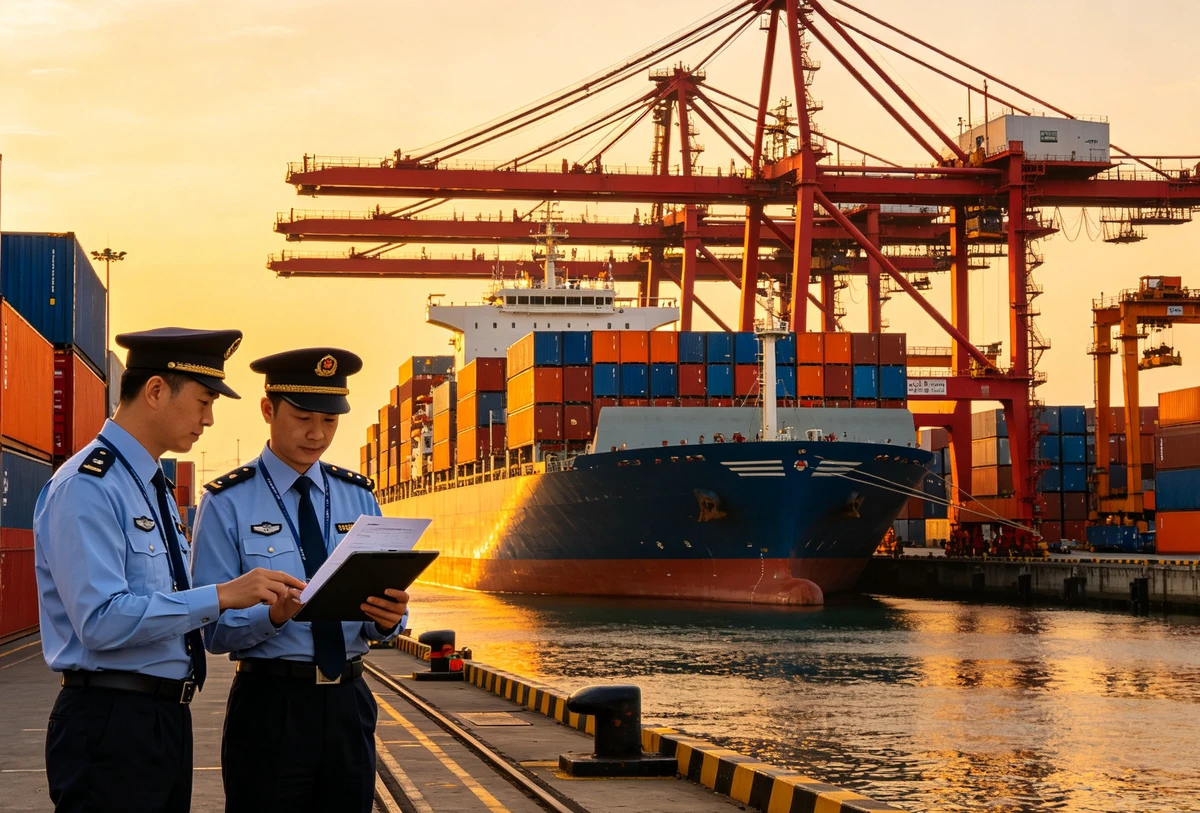
US Import Tariffs on Chinese Goods 2026: The Current Landscape
As of September 2026, Chinese-origin goods face multiple overlapping tariff layers. Understanding each one is the first step to controlling your landed cost.

| Layer | Name | Rate | Applies To | Status |
|---|---|---|---|---|
| 1 | MFN Base Duty | 0%–48% (by HTS code) | All imported goods | Permanent |
| 2 | Section 301 (original lists) | 7.5%–100% (by list) | Chinese goods on covered lists | Active since 2018 |
| 3 | Section 301 forced labor (new) | 12.5% | 60 economies incl. China, HK | Effective Jul 24, 2026 |
The combined nominal rate reaches roughly 37.5% for many Chinese products. However, the effective average rate on Chinese goods was 22.8% in July 2026 (per the Penn Wharton Budget Model, updated September 9, 2026), because exclusions, lower-tier classifications, and exempt product categories reduce what most importers actually pay. The lesson: don’t panic over headlines — verify your specific HTS code. Note that the IEEPA-based fentanyl (10%) and reciprocal (10%) tariffs that drove rates higher in late 2025 were terminated by Executive Order 14389 on February 24, 2026, following the Supreme Court’s ruling that IEEPA did not authorize them.
Our Industry Insight: During the April 2025 tariff spike, one of our electronics clients faced a sudden 145% duty on Bluetooth speakers. By re-verifying the HTS classification, we found the correct subheading carried only a 25% Section 301 rate — saving the client over $18,000 on a single shipment. Accurate classification is not paperwork; it is profit protection.
Section 301 Tariffs China 2026 List: Which Products Are Hit Hardest
Section 301 covers roughly 60% of Chinese exports to the US. Rates vary sharply by category:
| Product Category | Section 301 Rate |
|---|---|
| Electric vehicles | 100% |
| Solar cells & modules | 50% |
| Semiconductors | 50% |
| EV batteries, critical minerals, steel/aluminum | 25% |
| Most goods (Lists 1–3) | 25% |
| Consumer goods (List 4A) | 7.5% |
To check whether your SKU is covered, search your 10-digit code at hts.usitc.gov and look for Chapter 99 notes.
The De Minimis Exemption 2026: Gone for Good
The $800 de minimis threshold was eliminated for China/Hong Kong on May 2, 2025, extended to all countries on August 29, 2025, and confirmed suspended indefinitely in 2026. Every commercial parcel now pays duties and requires formal entry with a full 10-digit HTSUS code. The dropshipping era of duty-free small parcels is over.
US Tariff Changes Timeline 2025–2026
- 2018–2019: Section 301 tariffs introduced (Lists 1–4A)
- 2024: Expanded to 100% on EVs, 50% on solar and semiconductors
- Apr 2025: IEEPA “reciprocal” tariffs peak at 145% for China
- Oct 2025: Trump–Xi meeting in South Korea
- Nov 2025: Executive Order lowers the fentanyl tariff from 20% to 10% effective November 10; 178 product exclusions extended
- Feb 20, 2026: Supreme Court rules in Learning Resources v. Trump that IEEPA does not authorize the president to impose tariffs
- Feb 24, 2026: Executive Order 14389 terminates the IEEPA fentanyl and reciprocal tariffs; a temporary 10% Section 122 surcharge replaces them
- Jul 24, 2026: Section 301 forced-labor tariff (12.5% for China) takes effect for 60 economies, replacing the expired Section 122
- Nov 10, 2026: Key deadline — 178 exclusions expire and the US-China truce reaches its review date
The July 2026 tariff is a direct product of UFLPA (Uyghur Forced Labor Prevention Act) enforcement. USTR initiated investigations into 60 economies in March 2026, and China’s 12.5% rate reflects its classification among countries with the least effective forced-labor import prohibitions. In practice, we now spend as much time on documentation as on rate negotiation — and the forwarders who haven’t adapted are the ones causing clearance delays for their clients.
How Much Is the Tariff on Imports from China to USA 2026? Real Numbers
There is no single answer — rates range from 23% to over 145% depending on your product. Here are realistic ranges as of September 2026:
| Category | Shipment Value | Combined Rate | Estimated Duty |
|---|---|---|---|
| Apparel & textiles | $5,000 | 20–28% | $1,000–$1,400 |
| Consumer electronics (non-strategic) | $8,000 | 15–25% | $1,200–$2,000 |
| Furniture | $10,000 | 28–35% | $2,800–$3,500 |
| Lithium batteries / EV parts | $10,000 | 45–100% | $4,500–$10,000 |
| Steel & aluminum products | $6,000 | 40–60% | $2,400–$3,600 |
Rates above reflect MFN + Section 301 (original + new forced-labor layer) as of September 2026. Actual duty depends on your HTS classification and any applicable exclusions.
Warning: Anti-dumping duties (ADD) apply separately on furniture, mattresses, solar panels, and other products. These are case-specific rates that can exceed 100% — check the USITC AD/CVD database before committing to a purchase order.
How to Calculate US Import Duty from China 2026
The full landed cost formula most guides skip:
Landed Cost = FOB value + MFN duty + Section 301 (original) + Forced labor (12.5%)
              + Section 232 (if applicable) + MPF + HMF + broker fees + freight + insurance
Hidden fees to budget:
| Fee | Amount | Notes |
|---|---|---|
| MPF (Merchandise Processing Fee) | 0.3464% (min $33.58 / max $651.50) | Per entry, FY2026 |
| HMF (Harbor Maintenance Fee) | 0.125% of ocean cargo value | Sea freight only |
| ISF filing | $25–$50 | Due 24 hours before loading |
| Customs bond | $50–$100 single / $500–$2,000 annual | Required for entry |
Worked example — $20,000 furniture shipment (FOB Shenzhen):
| Component | Calculation | Amount |
|---|---|---|
| FOB value | — | $20,000 |
| MFN duty (2.5%) | $20,000 × 2.5% | $500 |
| Section 301, original list (25%) | $20,000 × 25% | $5,000 |
| Section 301 forced labor (12.5%) | $20,000 × 12.5% | $2,500 |
| MPF (capped) | — | $651.50 |
| HMF (0.125%) | $20,000 × 0.125% | $25 |
| Total duty & fees | $8,676.50 | |
| Effective rate | ~43% |
Your HTS code is the single biggest lever. Two similar codes can differ by 20+ percentage points.
Who Pays US Import Tariffs: Importer or Exporter?
Legally, the US importer of record pays. Economically, Incoterms decide who bears the cost:
| Incoterm | Who Pays Tariffs | Best For |
|---|---|---|
| EXW | Buyer (all costs) | Buyers with full US logistics setup |
| FOB | Buyer (US-side duties) | Importers with their own broker |
| CIF | Buyer (seller pays freight) | Buyers who trust seller’s carrier choice |
| DAP | Buyer (seller controls transport) | Buyers without a US broker |
| DDP | Seller/forwarder (all-inclusive) | E-commerce sellers, first-time importers |
With DDP shipping from China, the forwarder quotes one price covering duties, taxes, and delivery — the importer has zero obligation to CBP.
Real-Life Scenario: A Shopify seller in Austin sourcing phone accessories from Shenzhen had no US import license. We set up a DDP lane through Sinoshipment — factory pickup in Dongguan, ocean freight, customs clearance under our bond, and final delivery to his 3PL in Texas. One invoice, zero surprises, and his landed cost per unit dropped 14% versus his previous parcel-shipping approach.
How to Reduce Import Tariffs When Shipping from China: 5 Legal Strategies
We do not recommend transshipment schemes or undervaluation — CBP actively pursues these and penalties can exceed the shipment’s value. Here are legitimate paths:
1. Optimize Your HTS Classification
A customs broker or experienced freight forwarder offering customs clearance services can review whether a more favorable — and fully legal — subheading applies. This matters most for products that sit near category boundaries: a Bluetooth speaker and a smart home hub may look identical on a warehouse shelf but carry duties 15 points apart. For ambiguous products, request a free CBP binding ruling (60–90 days, and worth the wait if your SKU ships in volume).
2. Apply for Section 301 Exclusions
178 exclusions are currently extended through November 10, 2026. Monitor USTR’s Federal Register notices for new comment windows. Approval can be retroactive.
3. Use First Sale Valuation
For multi-tier supply chains, the first sale rule lets you declare duty on the factory-to-intermediary price rather than the marked-up resale price — legally reducing your duty base. It requires a genuine, arm’s-length middle transaction with real risk transfer, so documentation must be airtight. CBP audits these arrangements; a paper intermediary with no independent function will not survive scrutiny.
4. Leverage Foreign-Trade Zones (FTZs)
Importing into an FTZ defers duty payment, can reduce rates through in-zone processing, and allows duty-free re-export.
5. Rethink Your Sourcing Mix
China+1 doesn’t mean leaving China. Shift only your highest-tariff SKUs to Vietnam, India, or Mexico. Note: origin only changes if goods undergo substantial transformation in the third country — simple transshipment is circumvention.
Amazon FBA Import Tariffs from China 2026: Seller’s Checklist
With de minimis gone, FBA forwarding has fundamentally changed:
- Batch shipping is mandatory. Consolidate at a Shenzhen warehouse, ship FCL Shipping from China to USA or LCL, and clear customs as one entry.
- IOR (Importer of Record) — most Chinese sellers lack US import status. A DDP forwarder clears under its own bond. Ask any forwarder: “Is your IOR compliant, and what is your bond capacity?”
- Budget duties upfront. Tariffs are now a pre-shipment cost, not a retail-stage surprise.
- Build in buffer time. Clearance delays cause missed FBA appointments and storage fees. Ship 60 days ahead of Prime Day or Black Friday.
At Sinoshipment, our Amazon FBA forwarding service covers labeling, palletizing, and duty-paid delivery directly to Amazon fulfillment centers across the US — with cargo consolidation at our Shenzhen warehouse and direct loading at Yantian or Shekou port.
Shipping from China to USA Cost with Tariffs 2026: Full Timeline
| Stage | Step | Location | Duration | Key Document |
|---|---|---|---|---|
| 1 | Factory pickup | Pearl River Delta / Yangtze Delta | 1–2 days | Pickup order |
| 2 | China export clearance | Yantian / Shekou / Shanghai / Ningbo | 1–2 days | Commercial invoice, packing list |
| 3 | Ocean freight | China → LA/Long Beach | 14–20 days (West Coast) | Bill of Lading |
| 4 | ISF 10+2 filing | Before vessel loading | — | ISF (due 24h prior) |
| 5 | US import clearance | LA/LB / New York | 3–10 business days | Entry summary (Form 7501), bond |
| 6 | Duty payment | — | Immediate | All layers + MPF + HMF |
| 7 | Final delivery | → Warehouse / FBA | 2–5 days | Delivery appointment |
Top three clearance delays: wrong HTS codes, late ISF (up to $5,000 penalty), and UFLPA holds. A forwarder that files ISF early and pre-checks documentation prevents most issues. For a detailed breakdown of ocean and air rates, see our guide to Freight Costs from China to USA.
Our Industry Insight: A furniture client shipping LCL from Guangzhou to New York was hit with a UFLPA documentation request in early 2026. Because we maintain complete supplier traceability files — factory audits, material source declarations, and shipping records — we responded within 48 hours and the cargo released in 5 days instead of the typical 3–4 week detention.
FAQ: US Import Tariffs 2026 Quick Answers
Are Section 301 tariffs still active in 2026? Yes. The original 2018–2019 lists remain in effect, and the new 12.5% forced-labor layer has applied to Chinese goods since July 24, 2026.
What is the current total tariff rate on Chinese goods? Nominal combined rates are roughly 20–40% depending on the product, but your effective rate depends entirely on your HTS classification. The Penn Wharton Budget Model put China’s average effective rate at 22.8% in July 2026. See the tables above.
Does the de minimis exemption still apply? No — suspended for all countries since August 2025, and the suspension has been renewed twice. There is no announced restoration date.
Who pays tariffs under DDP shipping from China? The seller or their freight forwarder. The buyer has no obligation to US Customs.
How long does US customs clearance take in 2026? Normally 3–10 business days after arrival. Exams or PGA reviews can extend this.
When do current tariff exclusions expire? The 178 active exclusions run through November 10, 2026. Plan Q4 purchases accordingly.
What is the Section 301 12.5% forced labor tariff? Effective July 24, 2026, USTR imposed additional Section 301 duties on imports from 60 economies found to inadequately prohibit forced-labor goods. China faces a 12.5% rate; others range from 10–12.5%. It stacks on top of all existing duties.
Conclusion
The US import tariff landscape in 2026 is complex but navigable. Importers who thrive in 2026 tend to get the basics right: accurate HTS classification, the right Incoterm for their situation, and a forwarder who treats compliance as a cost-saving tool rather than overhead.
Tariffs will keep evolving. A freight partner that has shipped from China since 2013 — through trade wars, pandemics, and policy whiplash — is the closest thing to stability you can buy.
If you have a SKU list or a stack of HTS codes and want to know what your actual landed cost looks like, send them over. We’ll come back with a DDP quote that breaks down every layer — no hidden fees, no surprises.