Best Ports & Gateways for Iran Shipping: The Complete 2026 Guide to Choosing Your Cargo Entry Point
· By SinoShipment
Most importers spend weeks negotiating freight rates from China to Iran — only to discover their cargo is stuck at the wrong port, 1,200 kilometers from their warehouse, facing customs delays they never anticipated. Choosing the right best ports & gateways for Iran shipping is not a secondary decision. It determines your total landed cost, your delivery timeline, your customs risk exposure, and — in the Iran lane especially — whether your cargo moves at all under the current sanctions landscape.
In this guide, we map every viable entry point for China-to-Iran cargo: the dominant Persian Gulf ports, the strategic Chabahar alternative on the Gulf of Oman, the overlooked Caspian Sea gateways, the transshipment hubs that keep supply chains running when direct routes tighten, plus air and rail corridors. For a broader regional perspective, see our comprehensive overview of freight shipping from China to the Middle East. You will walk away with a concrete decision framework for matching your cargo type, destination city, budget, and risk tolerance to the right Iranian gateway. This analysis is built on Sinoshipment’s operational experience on the China-Iran lane since 2013, including our local customs clearance team at Shahid Rajaee Port in Bandar Abbas.
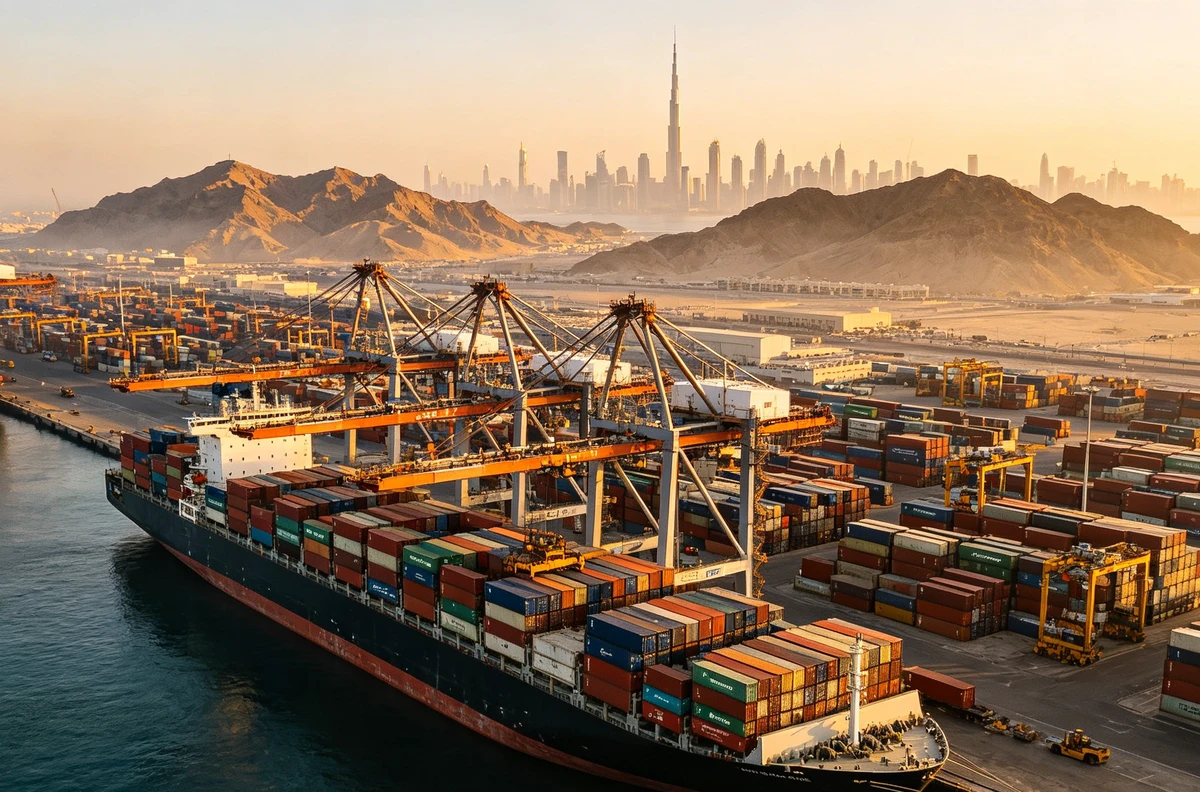
Iran’s Gateway Ecosystem: The Geography That Shapes Your Shipping Strategy
Iran’s international cargo gateways are distributed across four distinct zones — and understanding the geography before you book a container will save you from costly routing mistakes.
| Gateway Zone | Key Entry Points | % of Iran’s Seaborne Trade | Primary Cargo Types | Avg. Transit from China (Sea) |
|---|---|---|---|---|
| Persian Gulf | Bandar Abbas, Bandar Imam Khomeini, Bushehr, Khorramshahr | ~90% | Containers, bulk, general cargo, petrochemicals | 18–35 days |
| Gulf of Oman | Chabahar | ~5% (growing) | Bulk, project cargo, transit goods | 25–32 days |
| Caspian Sea | Bandar Anzali, Amirabad | ~3% | General cargo, Russia/CIS transit | N/A (multimodal) |
| Transshipment Hubs | Jebel Ali (UAE), Sohar/Salalah (Oman) | Indirect via feeder | All types via re-export | +7–14 days vs direct |
The Strait of Hormuz Factor
Over 90% of Iran’s seaborne trade passes through one 21-nautical-mile-wide chokepoint: the Strait of Hormuz. Every container discharged at Bandar Abbas, Bandar Imam Khomeini, or Bushehr transits this narrow passage — which handles approximately 21% of global petroleum consumption daily. For shippers, this creates a concentrated geopolitical risk. Any military escalation or naval disruption in the strait directly threatens cargo already en route to Persian Gulf ports — a risk that materialized during the events covered in our analysis of the Iran war supply chain impact and the 2026 Strait of Hormuz Crisis.
Our Industry Insight: In our decade of managing China-Iran shipments, we have seen three distinct Hormuz tension cycles that temporarily froze or rerouted cargo. For clients with high-value or time-critical supply chains, we now structure hybrid routing: 70% of volume through Bandar Abbas for cost efficiency, with 30% contingency capacity pre-positioned via Chabahar or the rail corridor. This dual-gateway approach kept one automotive parts client’s production line running through the July 2026 disruptions without a single missed delivery. For deeper analysis of the routing implications, read our report on how the Strait of Hormuz stalemate impacts shipping from China.
The China Departure Side
Your Iranian gateway decision also depends on where your cargo originates in China. Shenzhen (Yantian/Shekou) and Guangzhou (Nansha) in the Pearl River Delta offer the shortest sailings to Bandar Abbas (20–26 days). Shanghai and Ningbo-Zhoushan in the Yangtze Delta add 4–6 days. Qingdao and Tianjin in northern China require the longest transit (28–35 days) but may be closer to your factory. Align your departure port with your destination gateway — Shenzhen to Bandar Abbas is the most mature and competitive lane for freight shipping from China to Iran.
Persian Gulf Ports: Iran’s Primary Maritime Workhorses
Bandar Abbas (Shahid Rajaee Port Complex) — The Undisputed Gateway
Bandar Abbas, specifically the Shahid Rajaee Port Complex, handles approximately 85% of Iran’s containerized imports — roughly 2.2 million TEUs annually. Located on the northern shore of the Strait of Hormuz, it is the default destination for most shipping from China to Iran. Its container terminals feature modern quay cranes, extensive warehousing, and direct road/rail connections to Tehran, Isfahan, and Shiraz.
Transit times from major Chinese ports to Bandar Abbas:
| Origin Port (China) | Transit Time (Days) |
|---|---|
| Shenzhen (Yantian/Shekou) | 20–24 |
| Guangzhou (Nansha) | 22–26 |
| Shanghai / Ningbo | 24–28 |
| Qingdao / Tianjin | 28–35 |
Best for: FCL containerized general cargo, electronics, consumer goods, auto parts — the cost-competitive workhorse for high-volume China-Iran trade.
Carriers serving Bandar Abbas: IRISL (Islamic Republic of Iran Shipping Lines) operates the most consistent direct service. COSCO and SINOTRANS provide stable transshipment connections via Singapore or Dubai. Note: major European carriers (Maersk, MSC) have largely withdrawn from direct Iran service due to sanctions compliance concerns — read our breakdown of how the May 2026 US-Iran tensions impact shipping costs from China for the latest rate and routing dynamics.
Limitations to know: Bandar Abbas experiences congestion spikes during Nowruz (Persian New Year, late March). It also faces the heaviest customs scrutiny of any Iranian port — the IRICA inspection rate here exceeds 30%. And it sits roughly 1,000 km from Tehran, adding 12–15 hours of inland trucking to your total door-to-door timeline.
Our Industry Insight: We pre-file customs documentation at Shahid Rajaee 72 hours before vessel arrival. The key document most importers overlook is the TSC Certificate (Trade Specific Certificate) — it replaced the old COI system and must be obtained by the Iranian importer before the vessel docks. Without it, your container moves to the Red Channel automatically. Our Bandar Abbas clearance team has cut average processing from 5 days to under 2 by front-loading this step.
Bandar Imam Khomeini (BIK) — The Bulk & Industrial Gateway
If you are importing bulk cargo — steel coils, construction materials, grain, minerals, or petrochemical equipment — Bandar Imam Khomeini (BIK) is often the better choice. Located in the northwestern Persian Gulf near the Khuzestan industrial zone, BIK is significantly closer to Ahvaz (120 km) and Isfahan (550 km) than Bandar Abbas. It specializes in breakbulk, dry bulk, and liquid bulk handling rather than containerized cargo. Transit from Chinese ports averages 18–25 days.
Our Industry Insight: One Isfahan-based steel fabricator we work with saved approximately $680 per container load in inland trucking costs simply by switching from Bandar Abbas to BIK for their monthly raw material shipments from Qingdao. The port choice alone cut 450 km off the inland leg.
Bushehr Port — The Flexible Secondary Option
Bushehr serves as a useful alternative for LCL shipments, general cargo, refrigerated goods, and food products. Its smaller scale often translates to faster customs processing than Bandar Abbas — a practical advantage for importers shipping under 15 CBM who want to avoid the congestion and scrutiny of the main gateway.
Khorramshahr Port — The Iraq Border Gateway
Located at the northern tip of the Persian Gulf near the Iraq border, Khorramshahr is a niche port best suited for cargo destined to western Iran or cross-border transit into Iraq. It handles limited container traffic but can be useful for specific project cargo scenarios.
Chabahar Port: Iran’s Oceanic Escape Route from Hormuz Dependency
Chabahar Port is Iran’s only deep-water oceanic port outside the Strait of Hormuz — and that single geographic fact is reshaping how strategic importers think about Strait of Hormuz shipping risk and Iran gateway alternatives. Located on the Gulf of Oman near the Pakistan border, cargo discharged at Chabahar never transits the Hormuz chokepoint.
Infrastructure Transformation
Chabahar has transformed significantly. The 634-kilometer Chabahar-Zahedan railway is over 84% complete and expected to connect the port to Iran’s national rail grid by late 2026. The Phase 2 expansion of Shahid Beheshti Port is increasing annual capacity toward 130,000 TEUs. In August 2025, Chabahar received its first megasize container ship operated by IRISL — a milestone signaling the port’s readiness for larger-scale China-Iran container traffic.
India has invested $370 million under a 10-year operating agreement through India Ports Global Limited, driving a 650% surge in container activity in 2024 alone. China has also funded infrastructure through Belt and Road corridor investments, and IRISL expanded its operations to Chabahar by 153%.
Chabahar vs Bandar Abbas: When Each Makes Sense
| Dimension | Bandar Abbas | Chabahar |
|---|---|---|
| Hormuz risk exposure | High (direct) | Zero (Gulf of Oman) |
| Transit from China (sea) | 20–28 days | 25–32 days |
| Container infrastructure | Mature (2.2M TEU) | Developing (~130K TEU target) |
| Customs processing speed | 3–5 days (standard) | Improving, lighter volumes |
| Best inland reach | Tehran, Isfahan, Shiraz | Zahedan, Mashhad, Afghanistan |
| Rail connectivity | Established | Imminent (2026) |
| Best cargo types | General containerized | Bulk, project, transit, contingency |
Best for: Cargo destined for eastern Iran (Zahedan, Mashhad), Afghanistan transit, Central Asian markets via the INSTC (International North-South Transport Corridor), and any shipper seeking a Hormuz-independent contingency routing.
Our Industry Insight: For clients importing machinery or project cargo to northeastern Iran, we increasingly recommend Chabahar as the primary gateway rather than a backup. The slightly longer sea transit (25–32 days vs 20–28) is offset by shorter inland trucking to Mashhad and zero Hormuz disruption risk. One construction equipment importer we serve switched entirely to Chabahar in early 2026 and has not experienced a single customs hold — compared to a 15% hold rate at Bandar Abbas the previous year.
Alternative Gateways: Caspian Ports & Transshipment Hubs
Caspian Sea Ports — The Northern Corridor
For cargo destined to northern Iran or neighboring CIS markets, the Caspian Sea offers gateways entirely outside the Persian Gulf geopolitical zone. Bandar Anzali, Iran’s primary Caspian port, connects via the INSTC to Russia, Kazakhstan, Turkmenistan, and Azerbaijan. It sits just 370 km from Tehran (4–5 hours by truck) and 310 km from Tabriz. Amirabad Port adds bulk cargo and multimodal rail-sea connectivity.
These ports are especially valuable for importers serving Russia or Central Asian markets through Iran as a transit hub — a growing segment under the INSTC framework.
UAE & Oman Transshipment Hubs — The Sanctions Buffer Strategy
When direct China-Iran routing faces carrier restrictions or payment hurdles, freight shipping from China to UAE with subsequent transshipment via Dubai Jebel Ali port to Iran becomes the strategic fallback.
Jebel Ali (Dubai, UAE) is the world’s largest man-made harbor, with 80+ weekly services connecting 150+ global ports. For Iran-bound cargo, Jebel Ali offers three critical capabilities:
- Cross-stuffing and re-export handling: Goods are discharged in Dubai, repacked or relabeled, then re-exported to Iran via feeder vessels or dhows
- Switch Bill of Lading: Documentation is reissued in Dubai, separating the China-origin record from the Iran-destination leg
- AED payment corridor: Transactions settle in UAE Dirhams, avoiding USD restrictions
Sohar Port (Oman) provides a less congested alternative with competitive feeder connections to Bandar Abbas. Salalah Port (Oman), located on the Arabian Sea outside Hormuz, serves as an additional relay point. Khalifa Port (Abu Dhabi) complements Jebel Ali with advanced deep-water container handling.
Our Industry Insight: The Dubai transshipment route adds 7–14 days to total transit and approximately 15–25% to freight cost. We recommend it selectively — for cargo categories that face heightened direct-route scrutiny, for clients who need a Switch B/L to satisfy their banking requirements, or when direct IRISL space is fully booked. For routine general cargo from Shenzhen to Tehran, direct Bandar Abbas remains the most cost-effective choice.
Air Cargo Gateways to Iran: When Speed Dictates Your Entry Point
When sea freight’s 20–35 day timeline is too slow, Iran’s air cargo network provides delivery in days. Air freight to Iran through the Imam Khomeini airport gateway (IKA) in Tehran handles approximately 99% of all China-to-Iran air cargo.
| Airline Type | Carrier Examples | Transit Time | Best For |
|---|---|---|---|
| Direct | Mahan Air, Iran Air | 3–5 days | Time-critical general cargo |
| Indirect (Middle East hub) | Emirates (DXB), Qatar Airways (DOH) | 5–8 days | Cargo requiring reliable connectivity |
| Indirect (European hub) | Turkish Cargo (IST) | 7–10 days | Specialized cargo routing |
Regional air gateways beyond Tehran include Shiraz (SYZ) for southern Iran, Mashhad (MHD) for the northeast, Isfahan (IFN) for central industrial zones, and Tabriz (TBZ) for the northwest. These secondary airports reduce the final-mile delivery time to regional destinations.
Sanctions note: Major Western express carriers (DHL, FedEx, UPS) have severely limited direct Iran service. Regional carriers — Mahan Air, Iran Air, Emirates SkyCargo, Qatar Airways Cargo, and Turkish Cargo — are the primary air freight operators on this lane. For context on how regional instability affects pricing, see our analysis of the Middle East conflict air freight rate surge.
The China-Iran Rail Corridor: An Emerging Land Gateway
China rail freight to Iran via the Sarakhs border gateway offers a middle ground: faster than sea, cheaper than air. The route runs from Xi’an or Chongqing through Kazakhstan and Turkmenistan, crossing into Iran at Sarakhs or Incheh Borun, then continuing to Tehran.
| Mode | Transit Time | Relative Cost | Best Cargo |
|---|---|---|---|
| Sea (Bandar Abbas) | 20–35 days | Baseline | Bulk, heavy, non-urgent |
| Rail (Sarakhs) | 18–25 days | +15–20% vs sea | Machinery, industrial parts, medium-weight |
| Air (IKA) | 3–10 days | 5–8x sea | Urgent, high-value, lightweight |
The Chang’an Express now offers weekly departures from Xi’an with FCL, LCL, and door-to-station service options. The rail corridor is particularly advantageous for cargo destined to northern Iran — Mashhad and Tehran are directly on the rail line, eliminating the 1,000 km+ trucking leg required from Bandar Abbas.
Gateway Selection Decision Matrix: Match Your Cargo to the Right Entry Point
Use this framework to choose your best port or gateway for Iran shipping based on what you are shipping, where it is going, and what matters most to your supply chain.
| Your Priority | Recommended Gateway | Why |
|---|---|---|
| Lowest cost (FCL) | Bandar Abbas | Highest sailing frequency, most competitive ocean rates |
| Fastest delivery | IKA Air Freight (Tehran) | 3–5 days vs 20–35 days by sea |
| Bypass Hormuz risk | Chabahar or Caspian ports | Zero Strait of Hormuz exposure |
| Sanctions-sensitive routing | Jebel Ali transshipment | Switch B/L, AED settlement, re-export flexibility |
| Bulk/industrial goods | Bandar Imam Khomeini (BIK) | Specialized bulk terminals, closer to western industrial zones |
| Central Asian transit | Chabahar or Bandar Anzali | INSTC corridor, direct land bridge to Afghanistan/CIS |
| Northern Iran delivery | Caspian ports or rail corridor | Avoid 1,000+ km inland trucking from Persian Gulf |
| DDP door-to-door simplicity | Shenzhen → Bandar Abbas (DDP) | Most mature DDP lane, Sinoshipment local clearance team |
Real-World Scenario Walkthroughs
Scenario 1: Electronics importer in Tehran. Your 40HQ container of consumer electronics from Shenzhen reaches Tehran fastest and cheapest via direct Bandar Abbas service (20–24 days sea + 12–15 hours trucking). For urgent restocking, air freight to IKA delivers in 3–5 days.
Scenario 2: Machinery to an Isfahan factory. Your 20GP of industrial machinery from Shanghai should route through Bandar Imam Khomeini — 550 km to Isfahan vs 900 km from Bandar Abbas, saving roughly $400–500 in trucking costs per shipment.
Scenario 3: Construction materials to Mashhad. The China-Iran rail corridor to Sarakhs, then short-haul trucking to Mashhad, avoids 1,700 km of road transport from Bandar Abbas and delivers in 18–25 days door-to-door.
Scenario 4: Afghanistan transit cargo. For freight shipping from China to Afghanistan via Iran, Chabahar is the only logical choice — 200 km to the Afghanistan border, with developing rail connectivity to Zahedan and beyond.
Scenario 5: Russian/CIS market entry. Ship through Bandar Anzali on the Caspian Sea, leveraging INSTC corridor connectivity to Baku, Astrakhan, and Aktau.
Customs Clearance & Compliance at Each Gateway
Iran customs clearance varies significantly by gateway. Understanding these differences prevents the most expensive line item on any Iran shipment: demurrage and storage charges from held cargo.
IRICA: The Gatekeeper
The Islamic Republic of Iran Customs Administration (IRICA) operates an electronic declaration system with a Red/Yellow/Green channel framework. Green means your documents are accepted and cargo releases within 1–2 days. Yellow triggers a document review (3–5 days). Red means physical inspection — and at Bandar Abbas, the Red Channel rate exceeds 30%.
Gateway-Specific Clearance Profiles
- Bandar Abbas: Highest scrutiny and inspection rates, but also the fastest processing when documentation is perfect — our pre-filed shipments clear in under 2 days
- Bushehr: Often faster for LCL and general cargo due to lower volumes
- Bandar Imam Khomeini: Moderate scrutiny; well-established procedures for bulk cargo documentation
- Chabahar: Developing customs infrastructure with growing efficiency; currently lighter inspection loads
Critical Documentation for Every Gateway
Every China-to-Iran shipment requires these documents, several of which demand pre-shipment preparation:
- TSC Certificate (Trade Specific Certificate): Replaced the old COI system. Must be obtained by the Iranian importer before vessel arrival
- VOC Certification: Required for 55 regulated product categories including electronics and auto parts
- Commercial Invoice + Packing List: Must be dual-attested by CCPIT (China Council for the Promotion of International Trade) and the Iranian Embassy — allow 1–2 weeks for this process
- Certificate of Origin (COO): CCPIT-issued, Iranian Embassy-attested
- Bill of Lading (B/L): Must display the TSC number in the consignee field. Never reference Israel or Israeli ports anywhere on the document — IRICA rejects these outright
Our Industry Insight: The single most common clearance failure we see is Iranian importers who book shipping before securing their TSC certificate and import license (Sabt-e-Sefaresh). The vessel arrives at Bandar Abbas, the TSC is still pending, and the container sits accruing storage charges at $50–80 per day. Always sequence your documentation before your booking — not the other way around.
Sanctions-Compliant Payment and Carrier Selection
Sanctions shape every aspect of China-Iran shipping. Major European carriers (Maersk, MSC, CMA CGM) have largely withdrawn from direct Iran service. Your carrier options on this lane are: IRISL (direct state-owned carrier), COSCO and SINOTRANS (Chinese state-owned), and regional feeder services via UAE/Oman.
Payment must avoid USD channels. Preferred methods include RMB settlement via Kunlun Bank, AED transfers through Dubai, and EUR settlement through compliant European banking channels.
Inland Distribution: From Gateway to Final Destination
Your gateway decision is only half the equation. The inland leg determines your true door-to-door timeline and cost.
| Origin Gateway | Destination | Distance | Trucking Time |
|---|---|---|---|
| Bandar Abbas | Tehran | ~1,000 km | 12–15 hours |
| Bandar Abbas | Isfahan | ~900 km | 8–10 hours |
| Bandar Abbas | Shiraz | ~560 km | 6–8 hours |
| Bandar Abbas | Mashhad | ~1,700 km | 16–18 hours |
| Bandar Imam Khomeini | Ahvaz | ~120 km | 2 hours |
| Bandar Imam Khomeini | Isfahan | ~550 km | 6 hours |
| Bandar Imam Khomeini | Tehran | ~900 km | 10–12 hours |
| Chabahar | Zahedan | ~700 km | 8–10 hours (rail imminent) |
| Chabahar | Mashhad | ~1,400 km | 14–16 hours |
| Bandar Anzali (Caspian) | Tehran | ~370 km | 4–5 hours |
| Bandar Anzali (Caspian) | Tabriz | ~310 km | 3–4 hours |
For long-haul corridors like Bandar Abbas to Mashhad (1,700 km), rail freight increasingly competes with trucking on both cost and reliability. For the Bandar Abbas to Tehran corridor, trucking remains the dominant mode, but rail is growing as an alternative for bulk and heavy cargo.
Our Industry Insight: At Bandar Abbas, we pre-book inland trucking capacity before vessel arrival. The 48–72 hours immediately after cargo discharge is when truck availability tightens and rates spike. Pre-booking locks in both capacity and price, saving clients an average of 8–15% on the inland leg compared to spot-booking after discharge.
FAQ
Which is the safest Iranian port for my first shipment from China? Bandar Abbas (Shahid Rajaee) is the safest starting point for first-time shippers. It has the most frequent sailings from China, the most established customs procedures, the widest carrier choice, and the most experienced freight forwarders on the ground. Once you have completed a few shipments through Bandar Abbas and understand the documentation rhythm, you can evaluate alternatives like BIK or Chabahar for specific cargo types.
How do I decide between direct Bandar Abbas service vs transshipment via Dubai? Choose direct Bandar Abbas if your cargo is general commercial goods, your payment is settled in RMB or EUR, and you are working with an Iran-experienced forwarder who can pre-clear documentation. Choose Dubai transshipment if your cargo category faces heightened sanctions scrutiny, you need a Switch B/L for banking compliance, or direct IRISL space is unavailable during peak season.
Is Chabahar Port ready for regular container shipments from China in 2026? Chabahar handles container traffic and is growing rapidly, but its container infrastructure (targeting ~130,000 TEUs annually) is still a fraction of Bandar Abbas’ 2.2 million TEU capacity. It is fully viable for project cargo, bulk, and smaller container volumes — especially to eastern Iran. For large-scale regular container shipments, Bandar Abbas remains the primary option, with Chabahar as your strategic contingency.
What are the actual DDP costs to different Iranian ports — and which gateway is cheapest for DDP? Bandar Abbas offers the most competitive DDP shipping to Iran door-to-door rates because of high sailing frequency and mature local broker networks. DDP sea freight from Shenzhen to Bandar Abbas typically runs lower per-CBM than to Bushehr or BIK. Air DDP to IKA Tehran commands a premium but delivers in 6–12 days door-to-door. Always request an all-in DDP quote that includes destination THC, storage, customs brokerage, duties, and final delivery — not just the ocean freight line.
How do I handle customs clearance if my goods arrive at Bandar Abbas but are destined for Mashhad? Clear the cargo at Bandar Abbas customs, then arrange inland transport to Mashhad (~1,700 km, 16–18 hours by truck). Alternatively, consider the rail corridor (Xi’an to Sarakhs, then short-haul trucking to Mashhad) for future shipments — it lands cargo much closer to the final destination, reducing inland costs significantly.
What happens to my cargo if the Strait of Hormuz is disrupted? If you use Bandar Abbas or other Persian Gulf ports, cargo already in transit would likely be held at the nearest safe port (potentially Jebel Ali or Sohar) until the situation stabilizes. Cargo routed through Chabahar or Caspian ports is unaffected. This is why we recommend importers with supply chain continuity requirements maintain at least one alternative gateway in their routing plan — Chabahar for eastern/northeastern Iran, or Caspian ports for northern destinations.
Can I use Caspian Sea ports for goods shipped from southern China? Yes, but it requires a multimodal routing: sea freight from Shenzhen/Guangzhou to a Caspian-connected hub (often via the INSTC corridor through Russia or Kazakhstan), then Caspian Sea feeder to Bandar Anzali. This is slower and more complex than direct Persian Gulf routing. Caspian ports are most practical when the final destination is in northern Iran, the Caucasus, or Russia — not as a general alternative to Bandar Abbas for southern-China-origin cargo.