China to Afghanistan via Pakistan: The Complete 2026 Shipping Guide (Costs, Routes & Transit Times)
· By SinoShipment
China to Afghanistan via Pakistan is the backbone corridor for over 80% of all containerized cargo moving from Chinese factories to Afghan importers. But here’s the problem: Afghanistan is landlocked, every shipment must cross a foreign border, and the rules governing that crossing — APTTA permits, bonded carrier requirements, BIETC certificates — can stall your cargo for weeks if you get them wrong.
If you’re a Kabul wholesaler sourcing electronics from Shenzhen, a Kandahar importer moving construction materials, or an e-commerce seller testing this market — this guide gives you a clear, step-by-step roadmap. We’ll cover every route option, realistic 2026 costs, required documents, and proven risk-mitigation strategies — so you can ship with confidence, not guesswork.
For a broader overview of all shipping options to this landlocked market, see our complete guide to freight shipping from China to Afghanistan.
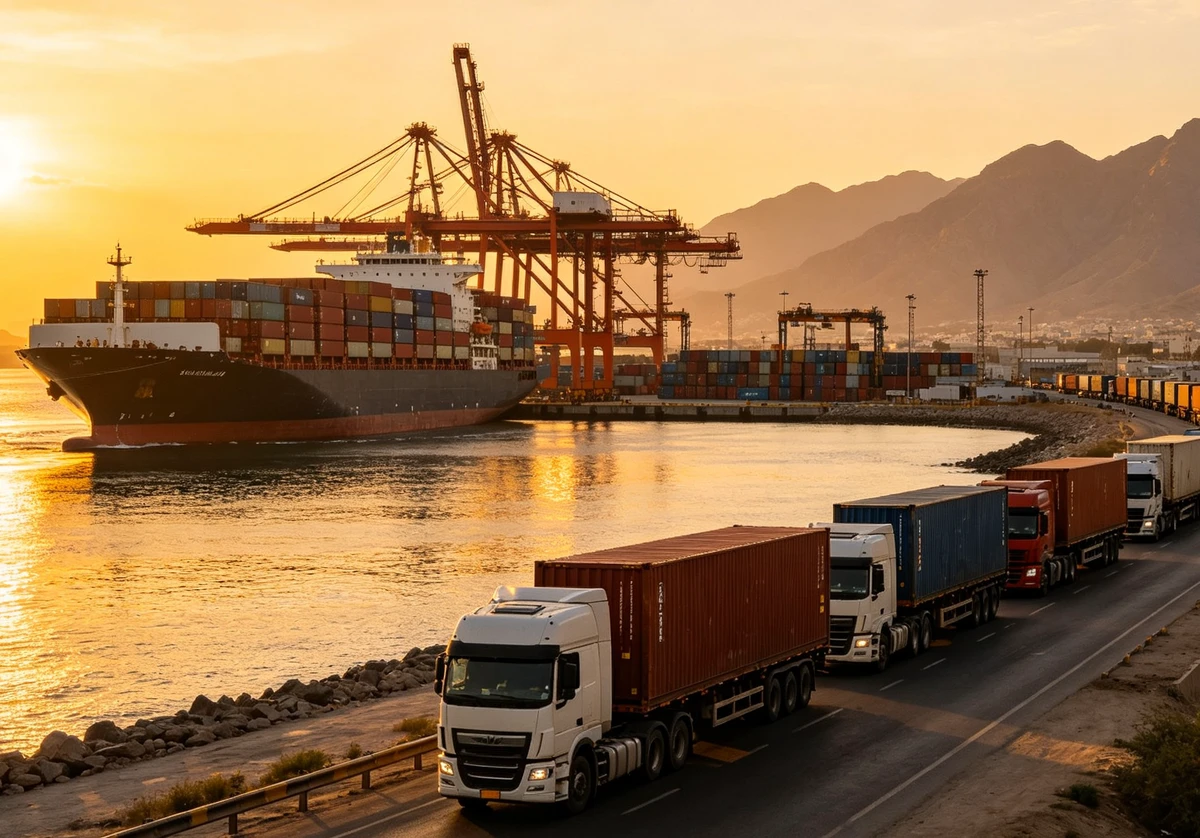
1. Why Ship from China to Afghanistan via Pakistan?
Afghanistan has no seaport. Every ocean container, every pallet, every carton must transit through a third country. While Iran’s Bandar Abbas and Central Asia’s rail networks offer alternatives, the Pakistan corridor remains the default for one simple reason: it works best for most cargo, most of the time. If you’re also moving goods to other South Asian markets, our freight shipping from China to Pakistan guide covers the first leg of this journey in detail.
| Factor | Pakistan Corridor | Iran Corridor | Central Asia Rail |
|---|---|---|---|
| Share of China-Afghanistan cargo | 80%+ | 10-15% | 5-10% |
| Best for | Kabul, Kandahar, Jalalabad | Herat, western Afghanistan | Mazar-i-Sharif, north |
| Typical door-to-door time | 25-40 days | 30-45 days | 20-30 days |
| Cost level | Lowest | Medium | Medium |
| Infrastructure maturity | High | Medium | Growing |
Geographic advantage is decisive. Karachi Port sits roughly 2,010 km from Kabul — a 3-5 day truck journey. Chaman Border is approximately 740 km (straight-line) from Karachi, or about 810 km by road, with the final 100 km to Kandahar taking just 1-2 hours. No other corridor offers this combination of proximity, sailing frequency from China, and established customs infrastructure.
China has been one of Afghanistan’s top three trading partners for years, accounting for approximately 15-16% of total trade volume as of 2025. That volume sustains competitive freight rates, reliable weekly sailings from Shanghai, Shenzhen, Ningbo, and Guangzhou, and a deep bench of experienced forwarders and bonded carriers who know this route inside out.
Our Industry Insight: In our decade managing China-Afghanistan shipments, the Pakistan corridor’s biggest advantage isn’t cost — it’s flexibility. When Torkham clogs, we pivot to Chaman. When Karachi congests, we reroute through Port Qasim. That operational agility simply doesn’t exist yet on the Iran or Central Asia routes.
2. How the Pakistan Transit Corridor Works: APTTA Explained
The Afghanistan-Pakistan Transit Trade Agreement (APTTA) is the legal framework that allows your cargo to cross Pakistan without paying Pakistani import duties — provided you follow the rules. Miss a step, and your container sits in Karachi while storage fees pile up.
Here’s the step-by-step flow:
- Arrival at Karachi or Port Qasim. Your container is discharged and moved to a designated transit area.
- Pakistan transit clearance. Your forwarder submits the APTTA transit declaration, Pakistan Route Permit, and supporting documents to Pakistan Customs. The BIETC certificate (Border Inspection and Entry Tracking Certificate) is issued — this is mandatory for all road transit to Afghanistan.
- Bonded carrier loading. Only licensed bonded carriers — trucking companies authorized to move transit cargo under seal — may transport your goods. The container is sealed and cannot be opened on Pakistani soil.
- Overland transport. Trucks travel via the Peshawar-Torkham highway (for Kabul) or the Quetta-Chaman route (for Kandahar).
- Border crossing. At Torkham or Chaman, Pakistani customs exits the container, and Afghan customs enters it. The Afghan importer files the Ilm-o-Khabar (customs declaration) through the ASYCUDA system.
- Final delivery. After Afghan clearance and duty payment, domestic trucking completes delivery.

One critical detail: every package must be clearly marked “GOODS IN TRANSIT TO AFGHANISTAN VIA KARACHI/PAKISTAN.” Missing this label has caused border rejections even when all other documents were perfect.
Real-Life Scenario: A client once shipped 200 cartons of LED lights with correct Route Permits but forgot the transit marking. Pakistani border officials refused exit clearance. We had to dispatch a local agent to physically relabel every carton at the border — a $1,200 delay that could have been avoided with a 30-second packaging check.
3. Karachi Port vs Port Qasim: Which Gateway Should You Choose?
Both ports handle China-Afghanistan transit cargo, but they serve slightly different needs.
| Factor | Karachi Port | Port Qasim |
|---|---|---|
| Sailing frequency from China | Highest — weekly from all major ports | Slightly lower |
| Congestion level | Moderate to high | Lower |
| Infrastructure | Older but comprehensive | Newer, more efficient |
| Best for | Time-sensitive cargo, flexible routing | Avoiding peak-season congestion |
Your choice of Chinese departure port matters more than the Pakistani arrival port. For a deeper comparison of ocean transport options, see our guide to sea freight from China. Here’s how the major options compare:
| Origin Port | Transit to Karachi | Strengths | Best Cargo Types |
|---|---|---|---|
| Shanghai | 17-23 days | Most frequent sailings | Electronics, textiles, machinery |
| Ningbo-Zhoushan | 18-24 days | Strong LCL consolidation | Garments, auto parts, furniture |
| Shenzhen (Yantian/Shekou) | 18-22 days | Fastest for South China | Electronics, solar, mobile phones |
| Guangzhou (Nansha) | 18-23 days | Consumer goods hub | Apparel, footwear, toys |
| Qingdao | 21-26 days | Best for North China | Machinery, chemicals, tires |
For most importers, the decision is straightforward: ship from the port closest to your supplier, and let your forwarder optimize the Karachi/Qasim routing based on current congestion.
4. Torkham vs Chaman: Choosing the Right Border Crossing
This is where route planning gets tactical. The two main crossings serve different Afghan destinations and carry different risk profiles.
| Factor | Torkham | Chaman |
|---|---|---|
| Serves | Kabul, Jalalabad, Mazar-i-Sharif (via Kabul) | Kandahar, Helmand, Zabul |
| Distance from Karachi | ~2,010 km (road) | ~810 km (road) |
| Typical land transit | 3-4 days | 2-3 days |
| Congestion frequency | High (especially May-October) | Moderate |
| Road conditions | Mountainous (Khyber Pass) | Flatter, generally better |
| Seasonal risk | Winter snow closures | Lower weather risk |
Choose Torkham if your final destination is Kabul or anywhere in eastern/northern Afghanistan. It’s the most established crossing with the deepest agent network.
Choose Chaman if you’re shipping to Kandahar or southern Afghanistan. The shorter distance, lower congestion, and better road conditions often make it faster and cheaper — even for Kabul-bound cargo when Torkham is severely backed up.
Our Industry Insight: During the Afghan agricultural export season (May-August), Torkham wait times can stretch from hours to days. We routinely route Kabul-bound FCL through Chaman during this window, then cross from Kandahar northward. It adds 200-300 km of driving but saves 4-7 days of border queuing. Knowing when to make that switch is the difference between a 30-day and a 40-day transit.
5. Shipping Methods: FCL, LCL, Air Freight & Rail+Truck
FCL (Full Container Load)
Best for shipments 15 CBM or 10+ metric tons. Your goods stay sealed in the same container from the Chinese factory gate to your Afghan warehouse, minimizing handling damage. Standard options are 20ft, 40ft, and 40HQ (high cube).
LCL (Less than Container Load)
Ideal for 1-15 CBM. Your forwarder consolidates cargo from multiple suppliers at a Chinese warehouse (Shenzhen, Guangzhou, or Yiwu are the main hubs), ships to Karachi, then transloads onto bonded trucks. Minimum charge is typically 1 CBM. Watch for per-CBM rates plus fixed fees — always ask for the all-in number.
Air Freight
When speed matters more than cost, air freight to Kabul (KBL) delivers in 3-7 days via Dubai, Doha, or Istanbul. For detailed routing options and carrier comparisons, see our dedicated guide to air freight from China. Chargeable weight uses the greater of actual weight or volumetric weight (L×W×H/6000). Minimums run 45-100 kg depending on the carrier.
Rail + Truck (Central Asia Alternative)
For northern destinations like Mazar-i-Sharif, the Central Asia route (China → Kashgar → Kyrgyzstan → Hairatan) takes ~20-21 days and avoids Pakistan border risks entirely. It’s worth comparing quotes when Torkham conditions deteriorate.
| Your Priority | Recommended Method | Why |
|---|---|---|
| Lowest cost, 15+ CBM | FCL via Karachi | Best per-unit economics |
| Small volume, 1-15 CBM | LCL consolidation | Pay only for your space |
| Urgent, high-value | Air freight via KBL | 3-7 days, minimal handling |
| Northern Afghanistan | Rail + truck via Hairatan | Avoids Pakistan entirely |
6. Transit Times: China to Afghanistan via Pakistan
Let’s break down what to expect, leg by leg:
| Leg | Typical Duration | Key Variables |
|---|---|---|
| Chinese port → Karachi | 17-23 days | Direct vs. transshipment, sailing frequency |
| Karachi handling + transit clearance | 3-5 days | Document accuracy, port congestion |
| Karachi → Torkham (bonded truck) | 3-4 days | Road conditions, security checks |
| Karachi → Chaman (bonded truck) | 2-3 days | Road conditions |
| Border clearance (either crossing) | 1-2 days | Inspection rate, document completeness |
| Afghan domestic delivery | 1-3 days | Destination distance |
| Total door-to-door (sea + land) | 25-40 days | All of the above |
| Origin | To Kabul (via Torkham) | To Kandahar (via Chaman) |
|---|---|---|
| Shanghai | 28-38 days | 27-34 days |
| Shenzhen | 27-35 days | 26-32 days |
| Ningbo | 29-39 days | 28-35 days |
| Guangzhou | 28-37 days | 27-33 days |
Plan for a 7-10 day buffer beyond the quoted transit time. This corridor has more moving parts than a standard port-to-port route. The buffer absorbs those shocks so your supply chain doesn’t break.
7. Shipping Costs: Full Breakdown
Understanding where your money goes helps you negotiate better and spot hidden fees before they appear.
| Cost Component | Reference Range | Notes |
|---|---|---|
| China pickup + export clearance | $150-400 | Varies by distance from port |
| Ocean freight to Karachi (20ft) | $1,500-2,500 | Market-driven, fluctuates |
| Ocean freight to Karachi (40ft) | $2,200-3,500 | Book 4-6 weeks ahead for best rates |
| Karachi port charges + transit clearance | $300-600 | THC, documentation, handling |
| BIETC certificate | $100-200 | Mandatory |
| Pakistan Route Permit | $100-300 | Varies by commodity |
| Bonded trucking Karachi → Torkham (20ft) | $2,000-3,000 | Includes fuel, security surcharge |
| Bonded trucking Karachi → Chaman (20ft) | $1,200-2,000 | Shorter distance, lower cost |
| Border clearance (Torkham/Chaman) | $200-500 | Includes inspection fees |
| Afghan import duties + BRT | 5%-30% of CIF | Depends on HS Code |
| Afghan domestic delivery | $100-500 | Based on final destination |
Typical all-in door-to-door FCL rates:
| Route | 20ft Container | 40ft Container |
|---|---|---|
| Shanghai → Kabul | $4,500-6,500 | $6,000-9,000 |
| Shenzhen → Kabul | $4,300-6,300 | $5,800-8,700 |
| Shanghai → Kandahar | $4,200-6,000 | $5,500-8,000 |
LCL runs $130-260 per CBM door-to-door (1 CBM minimum). Air freight costs $3-10/kg for shipments over 100 kg.
Watch for hidden charges: container detention ($8-10/day after ~10 free days), empty container return fees (Afghanistan hasn’t signed international container transport conventions), and border demurrage during unexpected delays.
DDP vs DAP vs CIF: Which Incoterm?
| Incoterm | What It Covers | Best For |
|---|---|---|
| DDP | Everything: transport, duties, taxes, delivery | Importers without Afghan import licenses |
| DAP | Transport to destination; buyer clears customs | Importers with local clearance capability |
| CIF | Cost + insurance + freight to Karachi only | Experienced importers with Pakistan transit resources |
For most Afghan importers, DDP offers the simplest experience — one quote, one invoice, no surprises at the border. To understand how DDP works in practice and when it makes sense for your cargo, read our detailed guide on China to Afghanistan DDP shipping.
8. Required Documents & Compliance Checklist
Missing paperwork is the #1 cause of delays on this corridor. Here’s your complete checklist:
China export:
- Commercial Invoice
- Packing List
- Bill of Lading
- China Customs Declaration
- Certificate of Origin
- Fumigation Certificate (for wooden packaging)
- MSDS + transport appraisal report (for batteries, liquids, powders)
Pakistan transit:
- APTTA transit declaration
- Pakistan Route Permit
- BIETC certificate
- Bonded carrier authorization
- Package marking: “GOODS IN TRANSIT TO AFGHANISTAN VIA KARACHI/PAKISTAN”
Afghanistan import:
- Commercial Invoice + Packing List (ACCI or consulate verified)
- Certificate of Origin
- B/L or AWB
- Afghan transit permit
- Jawaznama (Afghan business license, held by consignee)
- Ilm-o-Khabar (customs declaration via ASYCUDA)
- Import License (for restricted goods)
Critical warning: Pakistan restricts transit for 18 categories of goods without a special import license, including certain electronics, refrigerators, air conditioners, televisions and parts, telephones, and specific chemicals. Verify your HS Code against this list before booking — discovering the restriction at Karachi costs days and hundreds of dollars in storage. If you’re unsure about your product classification, our customs clearance specialists can help you navigate both Chinese export and Afghan import requirements.
Afghanistan applies 0-30% import duties depending on HS Code, plus a Business Receipt Tax (BRT). As of July 2025, steel and rebar tariffs increased to 30%. Textile shipments now require detailed fabric composition declarations.
Real-Life Scenario: An importer shipped consumer electronics with an HS Code that classified them under a restricted category. The shipment cleared Chinese export and Pakistani transit, but Afghan customs flagged the code mismatch. We worked with a local broker to reclassify and paid a reduced duty — but the process added 12 days and $1,800 in storage and penalty fees. A 5-minute HS Code check at the quoting stage would have prevented everything.
9. Risk Management & Disruption Mitigation
The Pakistan corridor rewards preparation. Experienced shippers stay ahead by mapping risks before they become problems.
| Risk | Likelihood | Impact | Mitigation |
|---|---|---|---|
| Torkham congestion | High | 3-10 day delay | Route via Chaman; ship off-peak |
| Border closure (political) | Medium | Severe delay | Pre-plan Iran corridor alternative; maintain buffer |
| Cargo theft or damage | Medium | Financial loss | Full insurance; GPS tracking; sealed containers |
| Documentation errors | Medium | Clearance failure | Dual-review system; pre-clearance check |
| Sudden policy changes | Low-Medium | Unexpected costs | Real-time agent communication; flexible routing |
Cargo Insurance: Non-Negotiable
We recommend All Risks coverage plus War Risk extension, insured at 110% of CIF value. Standard marine insurance often excludes conflict-zone transit; the War Rider closes that gap for a modest premium (typically 0.3-0.8% of insured value). Learn more about coverage options in our complete guide to cargo insurance.
Real-Time Tracking
Professional forwarders now provide GPS tracking on bonded trucks, with automated notifications at key milestones: departure from Karachi, border approach, clearance completion, and final delivery. This visibility transforms a black-box journey into a managed process.
Your Emergency Playbook
If Torkham closes unexpectedly, the decision tree is simple: Can the cargo reach its destination via Chaman within your deadline? If yes, redirect immediately. If no, evaluate the Iran corridor via Bandar Abbas. Your forwarder should present both options with cost and time comparisons within 24 hours.
10. Seasonal Disruption Calendar 2026
Timing your shipment around known disruption windows saves money and stress.
| Months | Event | Impact | Recommendation |
|---|---|---|---|
| January-February | Pre-Chinese New Year rush | Space tight; rates up 20-40% | Book 4-6 weeks ahead |
| March-April | Pakistan agricultural export season begins | Torkham congestion starts | Consider Chaman |
| May-June | Afghan agricultural export peak | Severe Torkham delays | Prioritize Chaman or air freight |
| July-August | Pakistan monsoon + extreme heat | Road disruptions; truck delays | Add 7-10 day buffer |
| September-October | Relatively stable period | Best shipping window | Maximize volume now |
| November-December | Khyber Pass winter snow | Torkham possible closures | Ship early or route via Chaman |
Pakistan holidays that halt customs and trucking for 3-7 days: Eid al-Fitr and Eid al-Adha. Afghan holidays reducing border efficiency: Nowruz (March 21) and Eid observances. And don’t forget China’s Golden Week (October 1-7) — factories shut down entirely.
11. Frequently Asked Questions
How long does shipping from China to Afghanistan via Pakistan take? Door-to-door ranges from 25-40 days for sea+land combinations. Air freight delivers in 3-7 days. The variation depends on border congestion, document accuracy, and seasonal factors.
What is the cheapest way to ship from China to Afghanistan? For volumes over 5 CBM, sea freight to Karachi plus bonded trucking offers the lowest cost. LCL starts around $85-130 per CBM. Air freight under 100 kg is rarely economical unless urgency justifies it.
What documents do I need for transit through Pakistan? You’ll need an APTTA transit declaration, Pakistan Route Permit, BIETC certificate, bonded carrier arrangement, and proper package marking. Your forwarder typically handles these, but confirm before booking.
Can I ship electronics or lithium batteries via the Pakistan route? Yes, but lithium batteries require MSDS and UN38.3 documentation. Verify your product isn’t on Pakistan’s 18-category restricted list before committing to this corridor.
Is DDP shipping available for Afghanistan? Yes, through experienced forwarders with Afghan tax payment capabilities. However, DDP feasibility depends on your specific commodity and current Afghan regulations — confirm with your provider before assuming it’s available.
What happens if Torkham border is closed? Professional forwarders monitor border conditions in real time and will redirect via Chaman or, if necessary, through Iran’s Bandar Abbas corridor. The key is having a forwarder with pre-established alternative routing agreements.
Do I need cargo insurance for shipping to Afghanistan? Strongly recommended. Standard coverage plus War Risk extension protects against damage, theft, and transit delays. Budget 0.5-1% of cargo value for comprehensive protection.
What’s the difference between DDP and DAP for Afghanistan shipments? DDP includes all duties, taxes, and customs clearance — the forwarder handles everything. DAP delivers to your location but requires you (or your local agent) to clear Afghan customs and pay applicable duties.
Can I ship to Kandahar via the Pakistan route? Absolutely. The Chaman/Spin Boldak border crossing is the standard gateway to Kandahar, with bonded trucking from Karachi taking just 2-3 days.
How do I choose a reliable freight forwarder for this corridor? Look for 10+ years of China-Afghanistan experience, owned (not subcontracted) agents in Karachi and Kabul, a zero-claims track record, DDP capability, and FIATA or CIFA membership. Ask for references from Afghan importers in your industry. For urgent shipments that can’t wait for ocean transit, our air freight from China to Pakistan guide covers rapid transport options to the region.
12. How Sinoshipment Manages Pakistan Corridor Shipments
Sinoshipment has managed China-Afghanistan logistics since 2013, serving 5,000+ customers across global markets from our Shenzhen headquarters — minutes from Yantian and Shekou ports.
Our Pakistan corridor capabilities include:
- Owned agent network in Karachi and Kabul — no subcontractor handoffs, no communication gaps
- Dual-border clearance expertise at both Torkham and Chaman, with real-time condition monitoring
- Long-term bonded carrier agreements ensuring capacity even during peak disruption periods
- GPS-tracked shipments with milestone notifications in English, Chinese, and Pashto
- DDP, DAP, and CIF flexibility matched to your import capabilities and risk tolerance
Case Study 1: A Shenzhen electronics manufacturer needed three 40HQ containers delivered to a Kabul wholesaler before Ramadan. Torkham was experiencing severe summer congestion with 7-day projected delays. We pre-filed Route Permits, redirected through Chaman, and cross-loaded to northbound trucks in Kandahar. Total transit: 31 days. The client avoided an estimated $2,400 in detention fees and met their Ramadan deadline.
Case Study 2: A Yiwu trading company shipped 12 CBM of consumer goods to a Kandahar retailer with no Afghan import license. We arranged full DDP service, managed Jawaznama compliance through our local partner, prepaid duties, and delivered door-to-door in 28 days. The client’s total involvement: one email and one payment.
We quote transparently — no hidden fees, no surprise surcharges. Every quote itemizes ocean freight, transit charges, border fees, duties, and delivery so you know exactly where every dollar goes.
Ready to ship? Contact Sinoshipment for a corridor-specific quote tailored to your cargo, destination, and timeline.