China to Uganda via Kenya: The Complete 2026 Shipping Guide (Mombasa Route, Costs & Transit Times)
· By SinoShipment
China to Uganda via Kenya is the corridor that carries more than 80% of Uganda’s sea-borne imports, and it’s the route nearly every importer sourcing from Chinese factories eventually has to learn. Uganda has no coastline, so “shipping to Uganda” really means ocean freight to Kenya’s Port of Mombasa, followed by a 1,150–1,200 km overland haul up the Northern Corridor to Kampala.
That geography hides the real cost and risk, and most quotes never explain it. If your transit bond, PVoC certificate, or border paperwork is off, your container sits at Mombasa or the Malaba crossing while storage and demurrage charges pile up. This guide walks the whole journey: how Kenya transit works under the Single Customs Territory (SCT), realistic 2026 costs and transit times, which border to use, and how to protect the long overland stretch.
1. Why Ship from China to Uganda via Kenya?
Because Uganda is a landlocked country, every ocean container reaches it through a seaport in a neighboring nation. In practice, that means Kenya. The Northern Corridor, running from Mombasa through Nairobi to the Malaba or Busia border, handles roughly 80% of Uganda’s containerized imports. The reasons are simple: more sailings from China, shorter ocean transit, and better clearing infrastructure than any alternative. The Kenya gateway leg itself is covered in depth in our freight shipping from China to Kenya route guide.
The one genuine rival is the Central Corridor through Tanzania’s Port of Dar es Salaam. It’s a useful relief valve when Mombasa backs up, but it adds 40% more inland distance and 5–7 extra days. If you’re weighing that option, our freight shipping from China to Tanzania guide breaks it down.
| Corridor | Gateway Port | Share of Uganda’s Sea Imports | Best For | Typical Door-to-Door |
|---|---|---|---|---|
| Northern Corridor | Mombasa, Kenya | ~80%+ | Most cargo; central & eastern Uganda | 30–45 days |
| Central Corridor | Dar es Salaam, Tanzania | ~15–20% | Southwestern Uganda (Mbarara, Kabale) | 38–50 days |
China is one of Uganda’s biggest suppliers, shipping electronics, textiles, machinery, and building materials week after week. That volume is what keeps the sailings full and the Mombasa freight rates competitive.
Our Industry Insight: After more than a decade moving China–Uganda cargo, we treat the inland stretch, not the ocean, as the real project. The sea is predictable. The 1,150–1,200 km from Mombasa to Kampala is where good planning (or the lack of it) shows up on your final invoice.
2. How the Kenya Transit Corridor Works: SCT & Transit Bond Explained
Most importers get this wrong: when your container lands at Mombasa, it isn’t imported into Kenya. Under the Single Customs Territory (SCT) framework of the EAC Customs Union, it’s declared as transit cargo, and final customs clearance happens in Uganda. That’s why you pay a transit bond instead of Kenyan import duty.
The Kenya transit flow runs like this:
- Mombasa discharge & transit declaration. Your container comes off the ship and your forwarder files a Transit Goods Declaration with the Kenya Revenue Authority (KRA).
- Uganda-side entry. The goods are captured under a WT8 / T1 transit entry headed for a destination bond in Uganda.
- Bond execution. A customs or transit bond (a regional bond guarantee) is lodged to ensure the goods leave Kenya and aren’t sold locally.
- RECTS sealing. A Regional Electronic Cargo Tracking System (RECTS) seal goes on the truck so both revenue authorities can follow it in real time.
- Border crossing. At Malaba or Busia, Kenya exits the container and Uganda enters it.
- Conversion to import. At the Ugandan ICD or bonded warehouse, the WT8/T1 converts automatically into an IM7 warehousing entry, and final clearance with the Uganda Revenue Authority (URA) begins.

Two systems carry all of this: Kenya’s Simba / ICMS and Uganda’s ASYCUDA World. When either one goes down, border queues build within hours. A forwarder who watches both is worth more than a cheaper quote.
Real-Life Scenario: One September, a Kampala hardware importer landed at Mombasa without a transit bond pre-arranged, assuming we could sort it on the spot. The container sat three extra days while the bond cleared, and the demurrage ran about $600, which wiped out the saving from the lower ocean rate they’d negotiated. Arrange the bond before the vessel docks.
3. China to Uganda Sea Freight via Mombasa: Routes & Origin Port Options
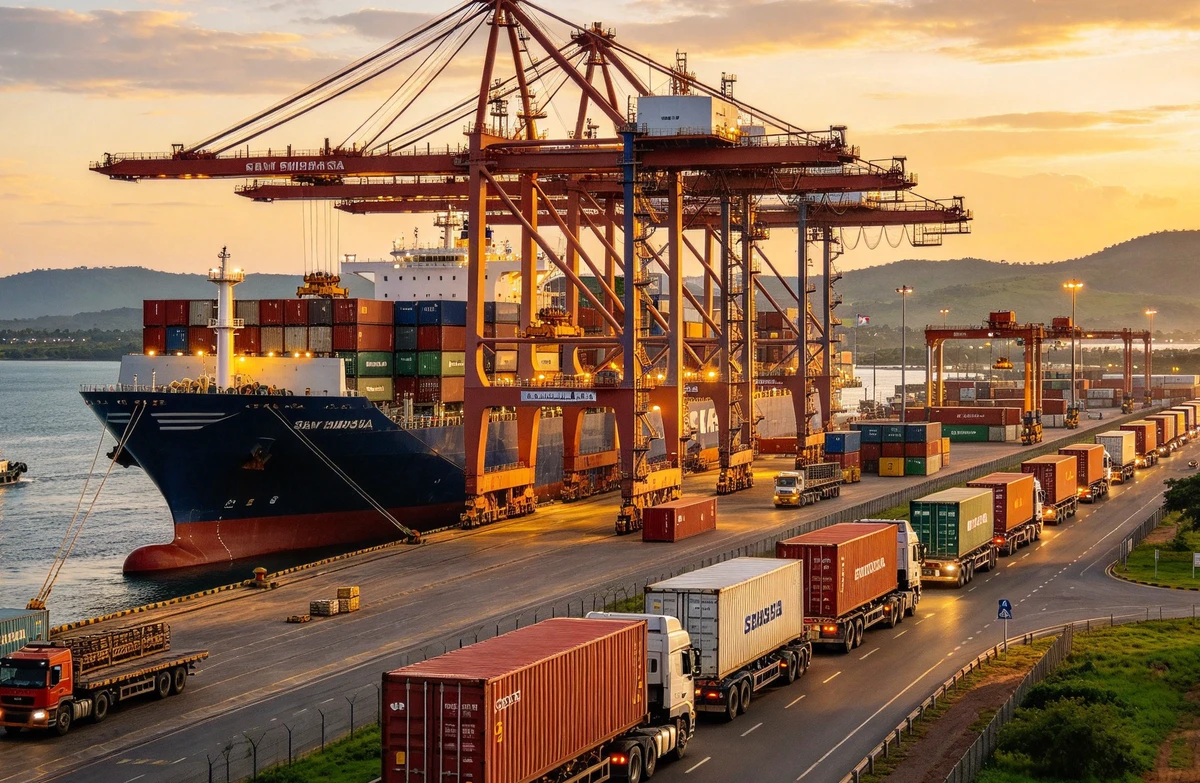
The full route is easy to picture: a Chinese port, across the Indian Ocean to the Port of Mombasa (operated by the Kenya Ports Authority), then roughly 1,150–1,200 km inland through the Malaba or Busia border to Kampala.

Your choice of Chinese departure port matters more than most importers expect. Ship from the port closest to your supplier and you can save $300–600 per container in domestic trucking before the sea portion even starts.
| Origin Port | Ocean Transit to Mombasa | Sailing Frequency | Best Cargo / Region |
|---|---|---|---|
| Shenzhen (Yantian/Shekou) | 18–24 days | High (multiple weekly) | South China electronics, e-commerce, furniture |
| Guangzhou (Nansha) | 19–25 days | Moderate–High | Guangdong consumer goods |
| Shanghai (Yangshan) | 21–28 days | High | Yangtze Delta machinery, textiles |
| Ningbo-Zhoushan | 22–28 days | High | Zhejiang exports, heavy LCL |
| Qingdao | 24–31 days | Moderate | North China machinery, chemicals, tires |
| Tianjin (Xingang) | 25–32 days | Moderate | North China cargo (slowest) |
For volume, FCL usually makes sense above roughly 15 CBM (see our FCL shipping from China to Uganda guide), while LCL suits 1–15 CBM with a 1 CBM minimum. Not sure where your break-even sits? Compare the all-in FCL rate against the per-CBM LCL quote before you commit. For a dedicated overview of this lane, see our freight shipping from China to Uganda route guide.
4. Mombasa to Kampala Freight: Trucking, SGR Rail & Border Crossings
Once your container clears Kenya transit, three options carry it the rest of the way.
| Inland Method | Typical Time | Reference Cost | Best When |
|---|---|---|---|
| All-road trucking (Mombasa → Kampala) | 5–10 days | $1,500–2,500 (20ft) / $2,200–3,500 (40ft) | Default; flexible routing |
| SGR rail + truck (Mombasa → Naivasha/Nairobi) | Comparable to road | $1,800–2,500 | FCL cargo; schedule reliability matters |
| LCL via Mombasa CFS | Slower (+3–5 days) | Per CBM | Small consolidated shipments |
The Standard Gauge Railway (SGR) has quietly changed this stretch. Containers now move from Mombasa to the Naivasha or Nairobi inland container depot in hours instead of a day, skipping the congested highway. Our rule of thumb: take SGR plus truck for full containers when reliability matters, or during the East African long rains; stay on all-road when you need maximum routing flexibility.
The border choice is just as tactical. Malaba is East Africa’s busiest crossing and the default for Kampala and eastern Uganda. Busia handles lighter volumes. Mutukula only comes into play if you’re routing via the Tanzanian corridor to southwestern Uganda.
| Border Post | Corridor | Typical Clearance | Best For |
|---|---|---|---|
| Malaba | Kenya (Northern) | <12 hrs (smooth) to 3–7 days (peak) | Kampala, eastern Uganda |
| Busia | Kenya (Northern) | Moderate | Southeast Uganda |
| Mutukula | Tanzania (Central) | Moderate | Southwest Uganda (Mbarara, Kabale) |
5. China to Uganda Transit Time via Kenya: A Realistic Timeline
Ask ten forwarders how long shipping from China to Uganda takes and you’ll get ten answers. The spread comes down to two choke points: Mombasa port clearance (Leg 4) and the Malaba/Busia border (Leg 7).
| Leg | Segment | Typical | Fastest | Slowest (Peak) | Delay Risk |
|---|---|---|---|---|---|
| 1 | Factory → Chinese port | 1–2 days | 0.5 days | 3 days | Low |
| 2 | China export customs & loading | 2–4 days | 1 day | 5 days | Medium |
| 3 | Ocean transit: China → Mombasa | 18–28 days | 16 days | 32 days | Medium |
| 4 | Mombasa discharge & transit clearance | 2–4 days | 1 day | 7 days | High |
| 5 | Transit bond processing | 1–2 days | 0.5 days | 3 days | Medium |
| 6 | Mombasa → Malaba (~940 km) | 2–3 days | 1.5 days | 5 days | Medium |
| 7 | Malaba / Busia border clearance | 1–3 days | 0.5 days | 7 days | High |
| 8 | Malaba → Kampala (~220 km) | 1–2 days | 0.5 days | 3 days | Low |
| — | Total (FCL door-to-door) | 30–45 days | 22 days | 61 days | — |
Air freight to Entebbe (EBB) runs 5–10 days end-to-end, and express courier 3–7 days. If you’re benchmarking the longer Tanzanian routing instead, our how long does shipping take from China to Tanzania timeline is a useful reference. Build a 7–10 day buffer into your planning, especially for shipments landing during the Q4 peak season (September–December) or China’s pre–Chinese New Year rush.

6. Shipping Costs: Complete Breakdown from China to Uganda via Kenya
The sea freight portion is only 40–55% of your true end-to-end cost. The inland trucking is the largest non-ocean item, and it’s the number most quotes leave out.
| Cost Component | Typical Range | Notes |
|---|---|---|
| Ocean freight (China → Mombasa), 20ft | $1,900–2,900 | Varies by origin port and season |
| Inland trucking (Mombasa → Kampala) | $1,500–2,500 (20ft) / $2,200–3,500 (40ft) | 25–35% of total |
| China THC | $150–350/container | At loading port |
| Mombasa import THC | $200–400/container | At discharge port |
| China export customs | $50–100 | Documentation & brokerage |
| Bill of Lading fee | $30–70 | Issued by the carrier |
| Certificate of Origin | $20–50 | For COMESA/EAC preferential rates |
| Kenya transit bond | $200–500 | Mandatory for Kenya transit |
| Uganda customs brokerage | $100–300 | URA clearance |
| IDF (Import Declaration Form) | $50–100 | Filed before shipment |
| PVoC certificate | $200–600 | Mandatory pre-export inspection |
| Destination delivery | $200–500 | Last-mile within Kampala |
| Demurrage / detention | $50–150/day | After free time (≈7–14 days at Mombasa) |
| Cargo insurance | 0.3%–0.7% of cargo value | Strongly recommended |
For a mode-by-mode price breakdown, see our freight costs from China to Uganda guide. All in, a 20ft container typically lands between $4,200 and $5,500 door-to-door, and a 40ft between $6,500 and $9,500, excluding Ugandan duties and taxes. LCL runs roughly $80–280 per CBM, and air freight $4–10 per kilogram above 100 kg.
On trade terms, DDP bundles the lot (freight, clearance, Ugandan duties, delivery) into one price. That suits first-time importers without a local customs broker. DAP leaves duties and taxes with you, and CIF stops at Mombasa, which means you arrange the Kenya transit and overland stretch yourself.
7. Required Documents & Compliance: Transit Bond, PVoC & HS Codes
Missing paperwork is the single biggest cause of “unexpected” delays on this lane. One absent document can add a week.
China export documents: Commercial Invoice, Packing List, Bill of Lading or Airway Bill, China customs declaration, Certificate of Origin, fumigation certificate (for wood packaging), and MSDS plus a transport appraisal report for sensitive cargo such as batteries, liquids, or powders.
Kenya transit documents: the Transit Goods Declaration, the WT8/T1 entry, the regional bond guarantee, and the RECTS electronic tracking seal. Cartons should be marked “GOODS IN TRANSIT TO UGANDA VIA KENYA / MOMBASA.”
Uganda import documents: Commercial Invoice and Packing List, Certificate of Origin, B/L or AWB, the Import Declaration (URA form), and a PVoC / Certificate of Conformity (COC) for regulated goods. UNBS has tightened PVoC enforcement, so work with a forwarder who coordinates the inspection before your goods leave China. A missing COC typically triggers 7–15 days of inspection plus a penalty of up to 15% of CIF value.
Uganda’s tax stack is worth budgeting precisely: EAC CET import duty (0/10/25% by HS code, up to 35% on some sensitive items), VAT at 18%, withholding tax at 6%, and an infrastructure levy. Before you accept any DDP quote, check that it includes the VAT and withholding tax, not just the freight.
8. Risk Management & When to Choose Air Freight
| Risk | Likelihood | Impact | Mitigation |
|---|---|---|---|
| Mombasa port congestion (Q4) | High | 3–7 day delay | Book early; divert to SGR; add buffer |
| Malaba/Busia border queues | High | 1–7 day delay | Pre-clear; pre-arrange bond; ensure RECTS accuracy |
| Inland cargo damage / rains | Medium | Financial loss | All-Risks insurance; sealed containers; GPS |
| Missing PVoC certificate | Medium | 7–15 days + 15% penalty | Coordinate inspection before shipment |
| Documentation errors | Medium | Clearance failure | Double-check invoice, packing list & B/L |
When goods are high-value, urgent, or under 150–200 kg, air freight to Entebbe is the sensible call. There are no direct China–Entebbe flights, so cargo transits via Addis Ababa, Dubai, or Nairobi on carriers like Ethiopian Airlines, Emirates, or Kenya Airways. For bulk machinery and low-value commodities, sea freight stays far cheaper.
Skip cargo insurance on this lane and you’re carrying the overland risk yourself. The long drive inland is where claims come from, so arrange cargo insurance at CIF + 10% and make sure the policy covers the whole journey, not just the sea portion.
9. Frequently Asked Questions
How long does shipping from China to Uganda via Kenya take? Sea freight FCL takes 30–45 days end-to-end, LCL 35–50 days, and air freight 5–10 days. Plan a 7–10 day buffer in peak seasons.
What is the cheapest way to ship from China to Uganda? Above 15 CBM, FCL via Mombasa is the lowest cost per unit. Smaller loads go LCL at roughly $80–280 per CBM. Choose air only when speed is worth the premium.
Do I need a transit bond to ship through Kenya? Yes. Cargo moving through Kenya to Uganda needs a customs transit bond, and it must be in place before your container reaches Mombasa.
Is my cargo “imported” into Kenya under the SCT? No. Under the Single Customs Territory it’s declared as transit cargo, and final clearance happens in Uganda through the WT8/T1 to IM7 conversion.
What is RECTS, and why does it matter? RECTS is the Regional Electronic Cargo Tracking System. A mandatory electronic seal monitors the Kenya–Uganda leg, and any mismatch between the seal data and your documents can trigger a hold.
Should I use SGR rail or road from Mombasa? For full containers where reliability matters, especially during the long rains, SGR plus a truck leg is usually the better bet. All-road stays the most flexible.
Is DDP shipping available to Kampala, and what does it cover? Yes. A DDP quote should include ocean freight, Kenya transit, Ugandan customs clearance, duties, VAT, and final delivery to your Kampala address.
10. How Sinoshipment Manages China to Uganda via Kenya Shipments
Sinoshipment is a freight forwarder headquartered in Shenzhen, founded in 2013 and trusted by more than 5,000 clients worldwide. We sit at the origin, next to Yantian and Shekou, so our edge on this lane starts long before your cargo reaches Mombasa.
We consolidate cargo from multiple suppliers at our Shenzhen, Guangzhou, and Yiwu warehouses, handle one China export clearance, and issue a single Kenya transit bond for the whole consignment. On the Kenya side, our partner agents at Mombasa and the Malaba/Busia border run the SCT transit declarations and RECTS compliance, and we’ll book SGR rail when speed and reliability matter more than cost.
Real-Life Scenario: A Shenzhen electronics seller had two 40ft containers bound for a wholesaler in Kikuubo, Kampala, right as Q4 congestion threatened a five-day border delay. We moved the inland stretch onto SGR rail to Naivasha, pre-arranged the transit bond and RECTS seal, and reconnected trucking for the final mile. Both containers arrived on schedule, and the client dodged a demurrage bill entirely.
Need DDP, warehouse consolidation, or just cargo insurance? Sinoshipment handles it with transparent quotes and no hidden fees, backed by responsive support across Africa, the Middle East, Europe, and beyond. Rates on this corridor shift monthly with fuel surcharges and seasonality, so request a current quote for your cargo profile and we’ll map the fastest, most cost-effective China to Uganda via Kenya plan for your business.