The Ultimate Guide to FCL Shipping from China to Canada (2026 Updated)
· By SinoShipment
Are you tired of hidden fees and unpredictable delays eating into your profit margins when importing goods from China? You are not alone. Trade between China and Canada is booming, but securing stable, cost-effective container shipping remains a persistent challenge for North American importers. Fluctuating ocean freight rates, potential port congestion at Vancouver or Montreal, and complex CBSA (Canada Border Services Agency) customs clearance can severely disrupt your supply chain.
In this comprehensive guide, our team—having managed thousands of TEUs on the Transpacific route and navigated recent supply chain bottlenecks firsthand—breaks down current FCL shipping costs, transit times, essential documents, and actionable strategies to optimize your freight shipping from China to Canada in 2026.
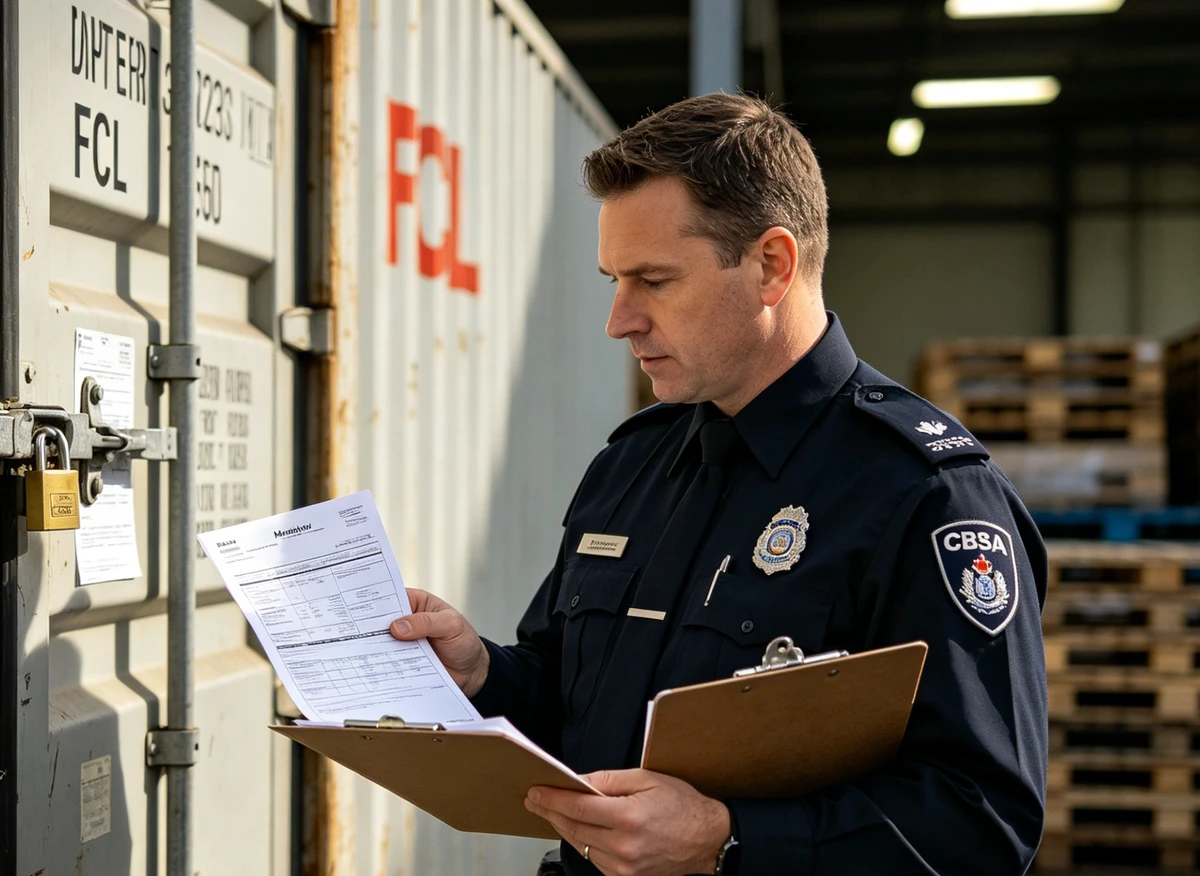
What is FCL Shipping and Why It’s Best for Importing to Canada
FCL (Full Container Load) shipping means you have exclusive use of an entire 20ft, 40ft, or 40HQ container. Unlike LCL (Less than Container Load) where your cargo shares space with other shippers’ goods, your container is sealed at the factory in China and remains unopened until it reaches its destination in Canada—unless flagged for a CBSA inspection.
When importing from China to Canada, FCL offers three decisive advantages:
- Cost-efficiency: FCL becomes cheaper than LCL once your shipment exceeds approximately 15 CBM. Because FCL charges a flat rate per container rather than per cubic meter, the cost per unit drops significantly as volume increases.
- Security & Reduced Damage: No sharing means fewer touchpoints. Your container is loaded once, sealed, and only handled again at final delivery, dramatically lowering the risk of cargo damage, loss, or contamination.
- Faster Transit: FCL skips the consolidation and deconsolidation stages required for LCL shipments at both origin and destination ports, typically saving 5–10 days end-to-end.
FCL is ideal for manufacturers, e-commerce retailers, Amazon FBA sellers, and importers dealing with bulk electronics, furniture, machinery, or palletized goods.

FCL Shipping Cost from China to Canada (2026 Freight Rates)
The average cost of shipping a 40HQ FCL container from China to Canada currently ranges from $3,500 to $4,500 USD, depending on the specific port pairs, seasonal demand, and carrier routing.
Port-to-Port Freight Rate Estimates
| Origin Port (China) | Destination Port (Canada) | 20FT Container (USD) | 40FT Container (USD) | 40HQ Container (USD) |
|---|---|---|---|---|
| Shanghai / Ningbo | Vancouver | $2,300 – $2,800 | $3,500 – $4,200 | $3,700 – $4,500 |
| Shenzhen / Guangzhou | Vancouver | $2,200 – $2,700 | $3,400 – $4,100 | $3,600 – $4,400 |
| Shanghai / Ningbo | Montreal | $3,800 – $4,500 | $5,500 – $6,500 | $5,800 – $6,800 |
| Shenzhen / Guangzhou | Toronto (via Rail) | $4,000 – $4,800 | $6,000 – $7,200 | $6,200 – $7,500 |
Note: These are estimated market rates as of 2026 and are subject to change. Always request a real-time quote for your specific shipment.
Door-to-Door Total Cost Breakdown (Beyond the Ocean Freight Rate)
A common mistake first-time importers make is comparing quotes based solely on ocean freight and getting surprised by the total landed cost. Below is a realistic door-to-door breakdown for a 40HQ container from China to Canada (excluding customs duties and GST):
| Cost Component | What It Covers | Approx. Range (USD) |
|---|---|---|
| Ocean Freight (Port-to-Port) | Container transport from origin port to Canadian port | $3,500 – $4,500 |
| Origin Charges (THC + Docs) | Terminal handling at Chinese port + export customs filing | $300 – $500 |
| Bunker Adjustment Factor (BAF) | Fuel surcharge; fluctuates with oil prices | $200 – $500 |
| Destination THC (Canadian Port) | Terminal handling on arrival at Vancouver/Montreal | $400 – $600 |
| Customs Brokerage | CBSA filing, HS code classification, duty/GST calculation | $300 – $600 |
| Inland Delivery — Metro Vancouver | Local drayage from Vancouver port to warehouse | $350 – $700 |
| Inland Delivery — Toronto (Rail + Drayage) | Intermodal CN/CP rail + final-mile truck delivery | $1,500 – $2,500 |
| Estimated Door-to-Door Total (Vancouver) | All above excluding duties and GST | $5,000 – $7,400 |
| Estimated Door-to-Door Total (Toronto) | All above excluding duties and GST | $6,300 – $9,400 |
Several critical factors influence these prices:
- Peak Season: Rates typically surge between August and November as retailers stock up for the holiday season.
- GRI (General Rate Increases): Shipping lines implement GRIs based on market demand and capacity.
- External Disruptions: Container shortages, port strikes, or geopolitical events can cause sudden price spikes.
What Your Incoterm Means for Your FCL Cost
The Incoterms® 2020 rule you negotiate with your Chinese supplier determines exactly which costs you are responsible for:
| Incoterm | What the Seller Pays | What You (the Buyer) Pay |
|---|---|---|
| EXW (Ex Works) | Nothing beyond making goods available at factory | Everything: inland trucking in China, export clearance, ocean freight, import clearance, Canadian delivery |
| FOB (Free on Board) | Inland transport + export clearance + loading at Chinese port | Ocean freight + insurance + Canadian import clearance + inland delivery |
| CIF (Cost, Insurance & Freight) | Ocean freight + insurance to Canadian port | Import clearance + duties/GST + inland delivery in Canada |
| DDP (Delivered Duty Paid) | Everything door-to-door, including import duties and GST | Nothing — goods arrive at your door ready to unload |
Most experienced importers prefer FOB or CIF for their first shipments, as these terms give you control over the freight forwarder and customs broker selection while keeping the supplier responsible for export formalities in China.
Transit Time: How Long Does FCL Ocean Freight Take from China to Canada?
FCL ocean freight from China to Canada’s West Coast (Vancouver) typically takes 14 to 22 days, while reaching the East Coast or inland destinations (Montreal/Toronto) via rail connections can take 25 to 40 days.
Understanding transit times is crucial for inventory planning. If you are wondering how long does shipping take from China to Canada, the time it takes for your FCL container to arrive depends heavily on the chosen routing and the final destination.
| Routing | Average Transit Time | Mode |
|---|---|---|
| Shanghai/Shenzhen to Vancouver | 14 – 22 Days | Direct Sea Freight |
| Shanghai/Shenzhen to Prince Rupert | 14 – 20 Days | Direct Sea Freight |
| Ningbo/Shenzhen to Montreal | 26 – 35 Days | Sea Freight (via Panama Canal) |
| Shanghai/Ningbo to Toronto | 28 – 40 Days | Sea Freight + Inland Rail |
While port-to-port transit is relatively predictable, door-to-door delivery involves additional steps that can cause delays:
- Severe Weather: Typhoons in the Pacific or harsh winter storms in Canada can disrupt vessel schedules and rail networks.
- CBSA Customs Inspections: Random or targeted examinations by the Canada Border Services Agency will add 2–5 business days—or more—to your timeline.
- Inland Congestion: Shortages of truck chassis or rail car delays at major hubs like Vancouver can slow down final delivery, particularly during winter months when rail capacity tightens.

Best Seaports for Container Shipping from China to Canada
Choosing the right combination of origin and destination seaports is the most effective way to balance costs and transit times for your container shipping from China to Canada.
China boasts some of the busiest ports in the world, while Canada offers strategic entry points on both coasts.
Top Chinese Ports of Origin:
- Shanghai: The world’s largest container port, offering the most frequent sailings and route options.
- Shenzhen (Yantian/Shekou): The primary hub for electronics and manufactured goods from Southern China. Yantian alone handles over 13 million TEUs annually with 29 regular routes to North America.
- Ningbo-Zhoushan: An excellent alternative to Shanghai, often with slightly lower local fees.
- Qingdao: The best choice for heavy industry and agricultural exports from Northern China.
Top Canadian Ports of Destination:
- Vancouver: The fastest entry point for West Coast and Western Canada deliveries. As the largest port in the country, the Port of Vancouver handles the vast majority of Asian imports. However, in our operational experience managing peak season volumes, it is highly susceptible to seasonal congestion, requiring proactive drayage scheduling.
- Prince Rupert: Located further north in British Columbia, this port is often a less congested, highly efficient alternative to Vancouver, with excellent rail links to the US Midwest and Central Canada. Ocean transit can be 2–4 days shorter than Vancouver on some routes.
- Montreal & Halifax: The best options for direct sea freight destined for Eastern Canada, though transit times are longer. Montreal is accessible year-round via the St. Lawrence Seaway.
- Toronto: While not a seaport, it is the primary inland hub for central Canada, typically reached via rail from Vancouver or Prince Rupert. Final destinations in the Greater Toronto Area (Mississauga, Markham, Brampton) are all served through this corridor.
The Step-by-Step FCL Shipping Process to Canada
Navigating international logistics requires a clear understanding of the operational flow. Here is the step-by-step process for FCL shipping from China to Canada:

- Booking & Container Placement: We reserve space with ocean carriers (such as COSCO, Maersk, ONE, or MSC) based on your schedule. An empty container is then picked up from the port depot and positioned at the Chinese factory for loading. Pro tip: Always work backwards from your desired Canadian arrival date to determine your cargo cut-off date at the Chinese port. Missing a cut-off can delay your shipment by a full week.
- Loading & Export Clearance: The supplier loads the cargo, and the container is sealed. The freight forwarder or supplier handles export customs clearance via China’s Single Window system. The Commercial Invoice, Packing List, and export declaration must match exactly—discrepancies in HS codes or declared values are the cause of export delays.
- Ocean Transit: The container is loaded onto the vessel for Transpacific sailing to the designated Canadian port. During this phase, your freight forwarder or customs broker submits the ACI eManifest to CBSA at least 24 hours before the vessel arrives in Canada.
- Canada Customs Clearance: Before or upon arrival, customs brokers file the necessary documentation with the CBSA, determine the correct HS (Harmonized System) Codes, and calculate applicable duties plus the 5% GST and any provincial taxes (HST/PST). Standard clearance takes 1–3 business days; inspections add 2–5+ business days.
- Inland Delivery (Drayage): Once cleared, the container is transported via truck (drayage) or rail to your final warehouse, distribution center, or Amazon FBA facility.
Essential Customs Documents & Canada Import Compliance
Accurate documentation is critical; missing or incorrect paperwork like the Bill of Lading, Commercial Invoice, or Canada Customs Invoice can result in severe CBSA delays and fines. Beyond documents, there are several compliance prerequisites every first-time importer must address before their container leaves China.
Mandatory Customs Documents
- Bill of Lading (B/L): The primary contract of carriage and receipt of goods issued by the carrier. Ensure the consignee information matches exactly what your customs broker will use for the CBSA declaration.
- Commercial Invoice & Packing List: Details the transaction, cargo value, dimensions, weight, and packaging type. Accuracy here is critical—CBSA cross-references declared values against industry norms.
- Certificate of Origin: Required to verify the manufacturing origin. Important: China and Canada do not have a free trade agreement. Goods of Chinese origin are assessed at MFN (Most-Favored Nation) tariff rates, not preferential rates. The Certificate of Origin is still required to confirm the country of origin for tariff classification.
- Canada Customs Invoice (CCI): Mandatory for commercial shipments valued over $2,500 CAD. It provides the CBSA with detailed information to assess duties and taxes.
- eManifest (ACI): Advance Commercial Information must be transmitted electronically to the CBSA by the freight forwarder or carrier at least 24 hours before the vessel arrives in Canada. Late or missing filings can result in container holds and monetary penalties.

Pre-Shipment Compliance Checklist
Before your first FCL shipment departs China, ensure you have completed the following:
- Obtain a Canada Business Number (BN) and Import/Export Account: Register for free through the Canada Revenue Agency (CRA) online portal. Without a BN and RM account, your shipment cannot clear customs in your name. The process takes only minutes but must be done before your goods arrive.
- Engage a Licensed Canadian Customs Broker: A licensed broker files the B3 customs entry, calculates duties and GST/HST, and communicates with CBSA on your behalf. Your freight forwarder can recommend one or include brokerage in their door-to-door service.
- Correctly Classify Your HS Codes: The Canadian Customs Tariff assigns a specific duty rate to every product category. Misclassification can lead to overpayment, penalties, or CBSA audits. Cross-reference your products with the official Canadian Customs Tariff and have your broker verify before filing.
Understanding GST, HST, and PST on Imports
Most commercial goods imported into Canada are subject to the 5% federal Goods and Services Tax (GST). Depending on the destination province, additional provincial taxes apply:
| Destination Province | Tax Type | Combined Rate | Notes |
|---|---|---|---|
| British Columbia | GST + PST | 12% (5% + 7%) | PST applies to most goods |
| Ontario | HST | 13% | Harmonized; single rate |
| Quebec | GST + QST | 14.975% (5% + 9.975%) | QST is calculated on the GST-inclusive value |
| Alberta | GST only | 5% | No provincial sales tax |
| Manitoba | GST + RST | 12% (5% + 7%) | Retail Sales Tax applies |
| Saskatchewan | GST + PST | 11% (5% + 6%) | — |
These taxes are calculated on the CIF value (cost of goods + insurance + freight) plus any applicable customs duties. For budget planning, a shipment of $20,000 USD in goods delivered to Ontario could face approximately $2,600 in HST alone, plus any tariff duties based on the HS code rate.
FBA vs B2B Delivery: What Changes
If your cargo is destined for an Amazon FBA warehouse in Canada, there are additional operational requirements beyond standard B2B delivery:
- Liftgate Service: Amazon FBA facilities and many commercial locations require a truck equipped with a liftgate (hydraulic tailgate) for unloading, as they may not have a loading dock accessible to container trucks. Your freight forwarder must specify liftgate delivery when booking the final mile.
- Delivery Appointments: Amazon warehouses require pre-scheduled delivery appointments. Missing a booked window can mean waiting several days for the next available slot. Plan inland delivery with this buffer in mind.
- Palletization & Labeling: FBA inbound shipments must meet Amazon’s pallet specifications, FBA box labeling, and carton content requirements before the container is loaded in China. Failure to comply results in warehouse rejection at the destination.
- FBA-Specific Customs: The importer of record for FBA shipments must be your Canadian business entity with a valid BN. Amazon does not act as the importer of record for FBA inbound freight.
For the most up-to-date regulatory requirements, always refer to the official Canada Border Services Agency (CBSA) guidelines.
Common Pitfalls and Risk Management in Sea Freight to Canada
Failing to correctly classify HS codes, ignoring container free time, and relying solely on carrier liability are the three most costly mistakes importers make.
In our experience managing supply chains, avoiding these common pitfalls will save you thousands of dollars:
- Incorrect HS Code Classification: Using the wrong tariff code can lead to overpaying duties or facing severe CBSA penalties and audits. We strongly recommend cross-referencing your products with the official Canadian Customs Tariff and consulting with a licensed Canadian customs broker before shipping. Once an HS code history is established with CBSA, correcting it later is far more difficult.
- Ignoring D&D (Demurrage and Detention): Shipping lines provide a limited “free time” window for using their containers—typically 3–5 calendar days at Canadian ports. Demurrage (container sitting at terminal beyond free time) and detention (container not returned to depot on time) can rack up $100–$300 per day per container. During peak season or when inspections delay release, these fees escalate rapidly.
- Inadequate Cargo Insurance: The ocean carrier’s liability is strictly limited by international conventions (Hague-Visby Rules) to approximately $500 per package or roughly $2 per kilogram—whichever is less. Comprehensive marine cargo insurance covering 110% of the CIF value is essential to protect against loss, theft, container damage at sea, or catastrophic events like containers lost overboard.
Why Choose Sinoshipment as Your Freight Forwarder from China to Canada?
Sinoshipment provides tailored FCL solutions, leveraging direct carrier contracts and deep expertise in CBSA regulations to ensure your cargo arrives in Canada on time and on budget.
Navigating the complexities of international shipping requires a reliable partner. Here is why North American importers trust Sinoshipment:
- Proven China-Canada Route Expertise: Since 2013, our Shenzhen-based team has managed thousands of TEUs on the Transpacific corridor. We have navigated port strikes at Vancouver, peak-season container shortages, and complex customs examinations—so you don’t have to learn the hard way. Our operations team knows the sailing schedules, cut-off dates, and congestion patterns at every major Chinese and Canadian port.
- Competitive & Transparent Rates: We leverage direct contracts with premium ocean carriers (COSCO, Maersk, CMA CGM, ONE) to secure space and stable pricing, even during volatile peak seasons. Every quote includes a complete door-to-door breakdown with no hidden fees—you see exactly what you are paying for, from origin THC to final drayage.
- Seamless Canadian Customs Clearance: Our dedicated customs brokerage partners understand CBSA regulations inside out. We coordinate your BN registration, HS code classification, eManifest filing, and duty/GST calculation so that clearance happens smoothly at Vancouver, Prince Rupert, Montreal, or Toronto.
- End-to-End Visibility & FBA-Ready Delivery: We provide complete container tracking from the factory floor in Shenzhen directly to your warehouse or Amazon FBA facility in Canada—including liftgate-equipped final-mile delivery and FBA appointment scheduling.
Frequently Asked Questions (FAQ)
How much does it cost to ship a 40ft container from China to Canada?
The port-to-port ocean freight for a 40ft FCL container from China to Canada typically ranges from $3,500 to $4,500 USD in 2026, depending on the specific port pair, carrier, and season. The total door-to-door cost—including origin charges, BAF, destination terminal handling, customs brokerage, and inland delivery—ranges from approximately $5,000 to $7,400 for Metro Vancouver deliveries and $6,300 to $9,400 for Toronto deliveries, excluding duties and GST/HST.
Is FCL cheaper than LCL when shipping from China to Canada?
Yes—FCL becomes cheaper than LCL when your shipment volume exceeds approximately 15 cubic meters (CBM). Because FCL charges a flat rate per container rather than per CBM, larger shipments benefit from a significantly lower cost per unit and avoid LCL consolidation and deconsolidation fees.
How long does it take for a container to clear Canadian customs (CBSA)?
Standard CBSA customs clearance for an FCL container usually takes 1 to 3 business days if all documentation is accurate and the eManifest was filed on time. If your container is flagged for a random or targeted inspection, clearance can be delayed by 2 to 5 business days—or longer for complex examinations.
Do I need to pay GST on imported goods from China to Canada?
Yes. All commercial imports into Canada are subject to the 5% federal GST. Depending on the destination province, you may also pay HST (Ontario: 13%), PST (BC: 7%), QST (Quebec: 9.975%), or other provincial taxes. These are calculated on the CIF value plus any applicable customs duties.
What documents do I need for FCL customs clearance into Canada?
The essential documents are: Bill of Lading (B/L), Commercial Invoice, Packing List, Certificate of Origin, and Canada Customs Invoice (CCI) for shipments over $2,500 CAD. Additionally, an ACI eManifest must be filed electronically with CBSA at least 24 hours before vessel arrival. We also recommend preparing a cargo insurance certificate.
Do I need a business number to import into Canada?
Yes. You must have a Canada Business Number (BN) with an RM (Import/Export) account registered through the CRA. This is free, takes only minutes online, and is required before your goods can clear CBSA customs in your name.
What is the cheapest port to ship FCL from China to Canada?
Shenzhen (Yantian/Shekou) and Shanghai typically offer the most competitive FCL rates to Vancouver due to high sailing frequency and strong carrier competition. For East Coast destinations, Shanghai and Ningbo generally have more direct service options than southern Chinese ports, which may require transshipment.
Which Canadian port is fastest for FCL from China?
Vancouver is the fastest gateway, with direct sailings from Shanghai or Shenzhen arriving in 14–22 days. Prince Rupert, further north in BC, can be 2–4 days faster on some routes and is often less congested than Vancouver. For Eastern Canada, Montreal is the fastest direct ocean option.
Does China have a free trade agreement with Canada?
No. There is no free trade agreement between China and Canada. Goods of Chinese origin are subject to Canada’s MFN (Most-Favored Nation) tariff rates. Do not assume preferential or duty-free treatment—check your specific HS code against the Canadian Customs Tariff to determine the applicable duty rate.
Can Sinoshipment deliver FCL to Amazon FBA warehouses in Canada?
Yes. We provide end-to-end FCL service to Amazon FBA facilities across Canada, including YVR, YYZ, and YOW fulfillment centers. Our service includes FBA-compliant palletization and labeling in China, liftgate-equipped final-mile delivery, and FBA delivery appointment scheduling.
Conclusion
Shipping from China to Canada by sea, particularly via FCL, remains the most scalable, secure, and cost-effective method for importing large volumes of goods. By understanding the full door-to-door cost structure, optimizing your port choices, securing the right Incoterms with your supplier, and ensuring meticulous customs compliance—from BN registration to HS code classification—you can build a highly resilient supply chain.
Ready to optimize your logistics and lock in the best FCL rates for your next shipment? Contact Sinoshipment today for a customized logistics plan and a free, no-obligation door-to-door quote. Let our experts handle the heavy lifting while you focus on growing your business.
Disclaimer: Freight rates and transit times are dynamic and subject to change based on market conditions as of 2026. Always consult with our logistics experts and refer to the CBSA for the most current regulatory updates.