FCL Shipping from China to South Africa: The Complete 2026 Cost & Transit Time Guide
· By SinoShipment
Are you paying more than you should for FCL shipping from China to South Africa? Many importers compare headline ocean freight rates, only to discover weeks later that demurrage at Durban Port, unquoted destination charges, and misclassified duties have quietly eaten their margins. In this complete 2026 guide, Sinoshipment—a China-based freight forwarder operating since 2013—walks you through real container rates, port-to-port transit times, SARS customs requirements, and the exact steps to calculate your true landed cost before you book a single box.
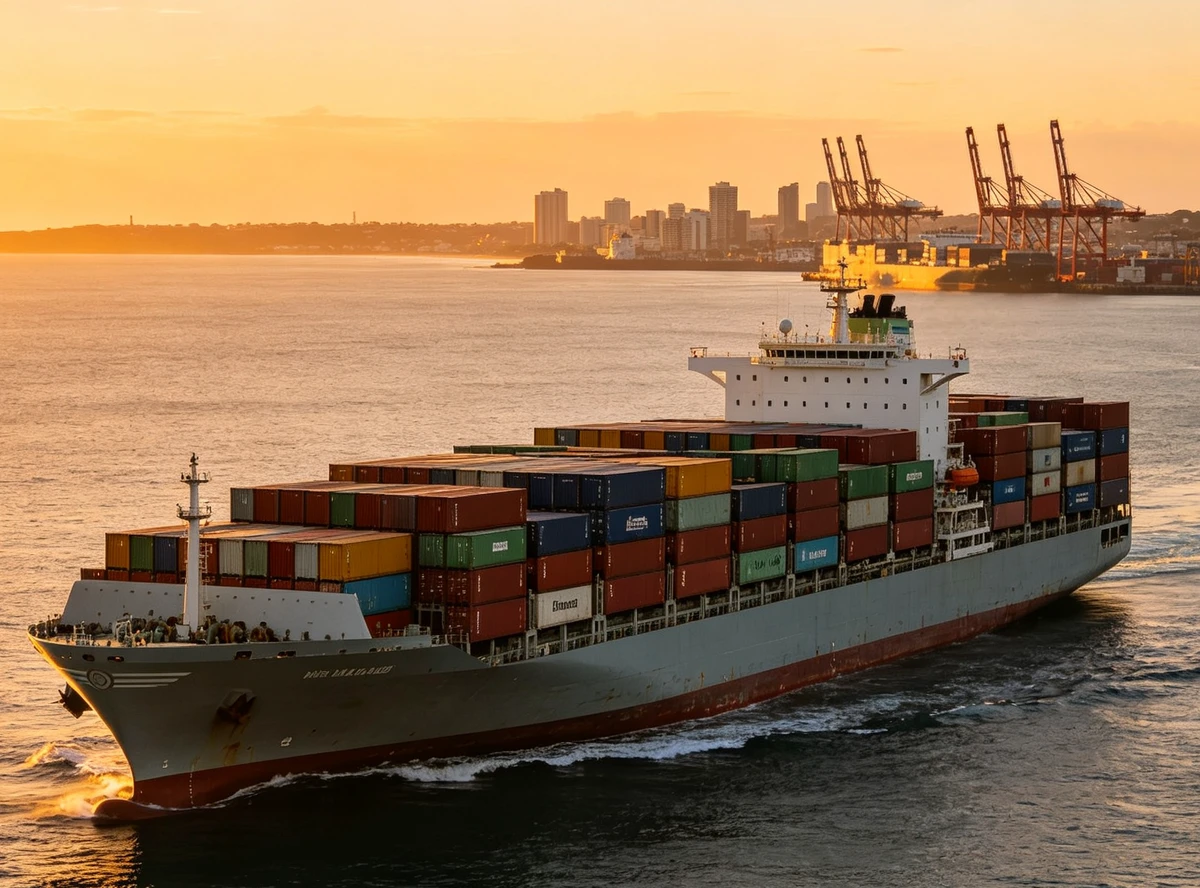
What Is FCL Shipping from China to South Africa?
FCL (Full Container Load) means you reserve an entire shipping container for your exclusive use. Your cargo is loaded and sealed at the supplier’s facility in China, moves untouched through the ocean leg, and stays sealed until it reaches your destination in South Africa. This contrasts with LCL (Less than Container Load), where your goods share container space with other shippers and must be consolidated and deconsolidated at each end.
For most shipments above 15 cubic meters (CBM), or whenever cargo security, faster transit, and predictable handling matter, FCL sea freight from China to South Africa is the smart default. You choose the container that matches your cargo:
| Container Type | Usable Volume | Best For |
|---|---|---|
| 20GP (20ft General Purpose) | ~28 CBM | Heavy, dense cargo: machinery, tiles, steel, auto parts |
| 40GP (40ft General Purpose) | ~58 CBM | General-volume shipments with the best cost per CBM |
| 40HQ (40ft High Cube) | ~68 CBM | Bulky, lightweight goods: furniture, packaging, tall items |
| Flat Rack / Open Top / Reefer | Custom | Oversized equipment, project cargo, temperature-sensitive goods |
A standard 20ft or 40ft container has a maximum gross weight of roughly 30,480 kg, so heavy industrial goods often “weigh out” before they “cube out.” Load optimization—distributing weight evenly and filling every cubic meter—is where many importers quietly save hundreds of dollars. Beyond FCL, importers also move South Africa-bound goods by air, rail, and door-to-door services. For a complete overview of every option, visit our freight shipping from China to South Africa route page.
Our Industry Insights: Over a decade of arranging South Africa-bound FCL shipments, the most common pricing mistake we see is comparing only ocean freight. On this lane, the freight line is typically just one-fifth to one-quarter of the total landed cost once import duties, 15% VAT, clearing fees, and inland trucking are added. Always ask for a full landed-cost breakdown, not a single rate.
FCL vs LCL Shipping from China to South Africa: Which Fits Your Cargo?
Choosing between FCL vs LCL shipping from China to South Africa is one of the first decisions that shapes your total cost and transit time. Use this volume-based rule of thumb:
| Cargo Volume | Recommended Option |
|---|---|
| 1–12 CBM | LCL is usually more economical |
| 13–15 CBM | Compare LCL against a 20ft FCL quote |
| 16–28 CBM | 20ft FCL container |
| 30–58 CBM | 40ft FCL container |
| Bulky but light | 40HQ often beats 40GP per CBM |
The tipping point matters. LCL from China to South Africa typically runs $100–$220 per CBM, plus deconsolidation and destination handling charges at the container freight station. Once your volume reaches roughly 13–15 CBM, a dedicated 20ft box frequently becomes cheaper per CBM—and you also avoid mixing risks, shared-container delays, and deconsolidation fees at Durban or Cape Town.
| Factor | FCL | LCL |
|---|---|---|
| Cost structure | Flat rate per container | Per CBM plus handling fees |
| Transit time | Faster, fewer hand-offs | +5–10 days for consolidation/deconsolidation |
| Cargo security | Sealed, untouched | Shared with other shippers |
| Damage risk | Lower | Higher due to extra handling |
| Best for | 15+ CBM, regular volumes | Samples, trial orders, small batches |
For a closer look at all sea freight options on this lane, see our Shipping from China to South Africa by Sea guide.
FCL Shipping from China to South Africa Cost: 2026 Rate Guide
Ocean freight rates on the China–South Africa lane move weekly, driven by vessel supply, fuel surcharges, and seasonality. The indicative FCL shipping from China to South Africa cost ranges below reflect market levels in mid-2026 and cover freight-only rates—the base ocean leg plus standard origin charges, before destination costs.
| Route | 20GP (USD) | 40GP (USD) | Transit (Days) |
|---|---|---|---|
| Shanghai → Durban | $2,138 – $2,500 | $2,475 – $2,950 | 22–28 |
| Ningbo → Durban | $2,200 – $2,550 | $2,550 – $3,000 | 23–30 |
| Shenzhen → Durban | $2,250 – $2,580 | $2,580 – $3,000 | 22–28 |
| Guangzhou (Nansha) → Durban | $2,250 – $2,580 | $2,580 – $3,000 | 24–31 |
| Shenzhen → Cape Town | $2,300 – $2,613 | $2,650 – $3,025 | 25–32 |
| Qingdao → Cape Town | $2,350 – $2,650 | $2,750 – $3,150 | 27–35 |
| Xiamen → Durban | $2,250 – $2,600 | $2,600 – $3,050 | 25–32 |
| Any major port → Port Elizabeth (Gqeberha) | $2,400 – $2,750 | $2,800 – $3,300 | 28–36 |
Rates above are indicative mid-2026 market estimates. Ocean freight moves weekly, so treat these figures as a planning range—always confirm the current quote before booking.
How do fluctuating ocean freight rates from Shenzhen and Shanghai affect your sourcing margins from China? When you understand exactly which cost layers move each week, you can negotiate better FOB or CIF terms with your suppliers and time your bookings to avoid peak-season spikes.
How Much Does FCL Shipping from China to South Africa Really Cost?
A 20ft container shipping cost from China to South Africa typically lands between $2,100 and $3,500 for the freight leg; a 40ft container shipping cost from China to South Africa ranges from $2,500 to $4,500, depending on origin port, season, and routing. But freight-only quotes are incomplete. Your true fcl shipping price depends on these layers:
- Ocean freight — base rate plus BAF (Bunker Adjustment Factor) and any peak season surcharge.
- Origin charges — terminal handling at the Chinese port, documentation, and customs declaration fees.
- Destination charges — THC (Terminal Handling Charge) at Durban, Cape Town, or Port Elizabeth.
- Duties and VAT — SACU import duty plus 15% VAT on (CIF value + duty).
- Clearing and port fees — SARS clearing agent, inspection, and port release costs.
- Inland delivery — trucking to Johannesburg, Pretoria, or your warehouse.
- Demurrage/detention risk — fees if the container sits past its free time.
- Cargo insurance — optional but strongly recommended for high-value shipments; learn more about our cargo insurance services.
A Worked Example: What a $15,000 Cargo Actually Costs
Here is a realistic landed-cost example for a 20ft container of consumer goods shipped from Shanghai to Durban:
| Cost Element | Calculation | Amount |
|---|---|---|
| Ocean freight (20GP, mid-2026) | Market rate | $1,300 – $2,200 |
| Import duty (SACU tariff, 20% example) | $15,000 × 20% | $3,000 |
| VAT (15% on ATV: customs value + 10% upliftment + duty) | ($15,000 × 1.10 + $3,000) × 15% | $2,925 |
| SARS clearing agent & port fees | Fixed | $300 – $500 |
| Total delivered to Durban port gate | — | $7,525 – $8,625 |
| Inland trucking to Johannesburg (optional) | — | +$600 – $1,200 |
Notice how a $1,300 freight quote becomes a $7,500+ landed cost. Any forwarder quoting “shipping from China to South Africa” without walking you through duties and VAT is quoting an incomplete number. Sinoshipment’s sea freight solutions include FCL, LCL, and door-to-door services—all quoted with transparent itemization and no hidden fees.
FCL Shipping Time from China to South Africa: Port-to-Port & Door-to-Door
FCL shipping time from China to South Africa depends on your load port, destination port, and whether the vessel sails direct or transships. Typical sea freight transit time China to South Africa runs 22–35 days port-to-port, and 30–45 days door-to-door.
| Origin Port | Destination | FCL Transit | Service Type |
|---|---|---|---|
| Shenzhen (Yantian/Shekou) | Durban | 22–28 days | Direct |
| Shenzhen (Yantian/Shekou) | Cape Town | 22–28 days | Direct |
| Shanghai | Durban | 24–30 days | Direct / Transshipment |
| Ningbo | Durban | 25–30 days | Direct / Transshipment |
| Guangzhou (Nansha) | Durban | 25–33 days | Direct |
| Guangzhou (Nansha) | Cape Town | 28–35 days | Transshipment |
| Qingdao | Durban | 28–35 days | Transshipment |
| Qingdao | Cape Town | 30–36 days | Transshipment |
Direct vs. Transshipment: The 3–7 Day Trap
A direct service sails from your Chinese port straight to South Africa. A transshipment service unloads your container at a hub—typically Singapore, Port Klang, or Colombo—and reloads it onto a connecting vessel. That hand-off routinely adds 3 to 7 days and increases rollover risk. In our experience, many first-time importers unknowingly book transshipment because it is quoted at a lower rate without the time penalty being explained. If speed matters, always ask for the direct sailing schedule.
Routing also affects reliability. Most Asia–South Africa services transit the Suez Canal; since the Red Sea disruptions, some carriers have rerouted around the Cape of Good Hope, adding 7–10 days on affected services. Confirm whether your quote assumes Suez routing or a rerouted service.
One operational detail most guides skip: build a 48-hour buffer before the vessel cut-off—the deadline for your cargo to reach the terminal. Miss it by a single day and you wait for the next weekly sailing. Likewise, carriers typically allow only 3–7 free days at the destination before demurrage (the container sitting at the port) and detention (the container away from the terminal) begin accruing daily charges.
The Door-to-Door Timeline, Stage by Stage
| Stage | Duration | Notes |
|---|---|---|
| Factory pickup to forwarder warehouse | 1–2 days | Shorter if your supplier is near the port |
| China export customs clearance | 1–2 days | Faster with pre-declaration and accurate documents |
| Port waiting / vessel loading | 2–4 days | Depends on cut-off time and schedule |
| Ocean transit (port-to-port) | 22–35 days | See table above |
| South Africa import clearance (SARS) | 2–7 days | Standard 2–5 days; inspections extend this |
| Last-mile delivery | 2–5 days | Durban → Johannesburg ~1–2 days; Cape Town inland ~3–5 days |
| Total door-to-door (FCL) | 30–45 days | Best case with smooth clearance |
Our Industry Insights: One of our clients in Johannesburg saved roughly a week by switching a container from a transshipment service via Singapore to a direct Shenzhen–Durban sailing. The direct vessel cleared SARS before the connecting ship even left Asia. On a lane like China–South Africa, routing choices often matter more than the last $100 in the rate.
Need your cargo faster than sea freight allows? Air Freight from China to South Africa reaches Johannesburg’s O.R. Tambo or Cape Town in roughly 5–10 days airport-to-airport, or 8–15 days door-to-door. For a deeper dive into timing across every shipping method, see How Long Does Shipping Take from China to South Africa.
Best Origin Ports for FCL Shipping from China to South Africa
Your supplier’s location should dictate your Port of Loading (POL). Hauling cargo across China to save on ocean freight rarely makes sense—domestic trucking eats the savings. Match your suppliers to the port that serves them best:
| Supplier Region | Typical Cargo | Best Load Port |
|---|---|---|
| Yangtze River Delta (Shanghai, Jiangsu, Zhejiang, Anhui) | Machinery, electronics, textiles, household goods | Shanghai / Ningbo |
| Pearl River Delta (Shenzhen, Dongguan, Guangzhou, Foshan) | Electronics, furniture, apparel, e-commerce goods | Shenzhen (Yantian/Shekou) / Guangzhou (Nansha) |
| North China (Shandong, Beijing–Tianjin–Hebei) | Machinery, steel, industrial goods | Qingdao / Tianjin |
| Fujian & coast-facing suppliers | Apparel, shoes, hardware | Xiamen |
Shanghai offers the most frequent direct sailings to South Africa and the largest carrier density (MSC, Maersk, CMA CGM, COSCO, ONE, Hapag-Lloyd, and PIL all run Asia–South Africa loops). Durban receives the most direct calls of any South African port, making it the most competitive destination—and the natural gateway to the Johannesburg/Gauteng market, the largest consumer hub in the country. For importers distributing across the wider region, Sinoshipment also provides freight shipping from China to Africa with dedicated lane expertise.
Door-to-Door FCL Shipping from China to South Africa: DDP & DDU Explained
Door-to-door FCL shipping from China to South Africa bundles the entire chain under one provider: supplier pickup, China export clearance, ocean freight, South Africa import clearance, duty and VAT payment, and final inland delivery. Your Incoterms 2020 choice decides who owns each cost and risk:
| Incoterm | Seller Covers | Buyer Covers |
|---|---|---|
| EXW | Goods at factory gate | Everything else |
| FOB | Up to onboard the vessel at origin | Ocean freight, insurance, destination costs |
| CIF | Freight + insurance to destination port | Import clearance, duties, inland delivery |
| DAP | Delivery to destination (uncleared, unpaid) | Duties and VAT |
| DDU / DDP | Transport, clearance, and (DDP) duties | (DDU) duties; (DDP) nothing extra |
DDP (Delivered Duty Paid) is the “worry-free” option: you pay one all-in price and the cargo arrives at your door. It suits first-time importers, e-commerce sellers, and buyers without a local customs broker. FOB or CIF can reduce your landed cost if you have an established clearing agent in South Africa and are comfortable managing compliance yourself—but they demand more coordination on your end.
A transparent DDP quote should itemize ocean freight, origin and destination handling, SARS duty, VAT, clearing fees, and last-mile delivery. If a quote arrives as a one-line “all-inclusive” number with no breakdown, treat it as a red flag.
SARS Customs Clearance, Duties & VAT for FCL Imports
South African customs is administered by SARS (South African Revenue Service). Every FCL import must be declared on a SAD500 form, filed by the importer or an appointed clearing agent. Cargo clears once duties and VAT are paid, and the container is released for pickup or inland delivery. Our customs clearance team handles SAD500 filing, duty and VAT payment, and permit coordination end to end.
Required Documents for FCL Imports
- Commercial invoice — detailed goods description, declared value, and HS codes
- Packing list — quantity, gross/net weight, volume, packaging type
- Bill of Lading (B/L) — or telex release for faster turnaround
- Certificate of Origin — verify any preferential rate eligibility
- SAD500 declaration — filed by the importer or clearing agent
- SARS importer customs code — registration required for all importers
Duties and VAT: How South Africa Taxes Your Cargo
South Africa applies the SACU (Southern African Customs Union) tariff schedule. Duty is ad valorem—a percentage of the customs value—ranging from 0% to over 45% depending on the HS code. Most consumer goods fall in the 10–30% band; machinery and industrial inputs are often lower; vehicles, alcohol, and textiles sit at the top end.
VAT is a flat 15%, calculated by SARS on an Added Tax Value (ATV)—the customs value plus a mandatory 10% upliftment plus the duty. Using the earlier example: $15,000 of cargo at 20% duty gives a $3,000 duty and an ATV of ($15,000 × 1.10) + $3,000 = $19,500, so VAT is $2,925. Duty plus VAT together typically add 35–40% of the cargo value on top of freight. If your business is VAT-registered in South Africa, you can claim the input VAT back; if not, it is a genuine cost to budget for.
Compliance Requirements Most Guides Miss
- ITAC permits — required for controlled goods such as second-hand goods, used vehicles, certain textiles, and steel. Applications take 2–6 weeks, so start before the container sails. Check eligibility on the International Trade Administration Commission (ITAC) website.
- NRCS compliance / LOA — regulated categories (electronics, appliances, automotive components) must meet South African compulsory specifications managed by the National Regulator for Compulsory Specifications (NRCS).
- ISPM 15 fumigation — mandatory if your cargo uses wooden pallets or crates; Durban and Cape Town enforce this strictly.
Our Industry Insights: The most common delay on this lane isn’t the ocean—it’s paperwork. A single incorrect HS code can hold a container at Durban for two weeks and run up demurrage. We advise clients to send us full packing lists before booking so we can pre-check HS classification, permit requirements, and ISPM 15 compliance before the vessel even departs China.
How to Choose a Reliable FCL Freight Forwarder from China to South Africa
Your forwarder is the difference between a smooth 35-day delivery and a 60-day, cost-exploding headache. Vet candidates against this checklist:
- China-based operations with a real pickup and consolidation network near your suppliers
- South Africa capability — own office or trusted clearing partners at Durban, Cape Town, and Johannesburg
- Transparent, itemized quoting — every charge visible, no hidden destination fees
- Real-time tracking — milestone updates at departure, transit, arrival, and customs
- Cargo-type experience — machinery, electronics, and furniture each carry different risks
Cargo-Specific FCL Advice
- Machinery: Confirm HS classification early; oversized items may need flat-rack or open-top containers. For heavy industrial goods, a 20GP usually wins on weight economics.
- Electronics: Watch for anti-dumping duties on certain Chinese-origin goods, verify NRCS compliance, and keep declared values consistent across all documents.
- Furniture & building materials: Use a 40HQ for tall items, distribute weight during loading, and ensure ISPM 15-compliant packaging to avoid rejection at the port.
As a freight forwarder from China with more than a decade on the China–South Africa lane, Sinoshipment combines local Chinese pickup networks, direct carrier relationships, and South Africa clearing partnerships to deliver transparent, itemized FCL quotes—with no surprise surcharges after booking. Our team in Shenzhen has served over 5,000 customers across Africa, the Middle East, Europe, the Americas, Asia, and Oceania, and we treat every container as if it were our own.
FAQ
How much does FCL shipping from China to South Africa cost? Freight-only rates in 2026 range from roughly $2,100–$3,500 for a 20ft container and $2,500–$4,500 for a 40ft container, depending on origin port and season. Total landed cost—including SACU duty, 15% VAT (with the 10% upliftment), clearing fees, and inland delivery—is typically 4–5 times the freight figure.
How long does FCL shipping from China to South Africa take? Port-to-port transit runs 22–35 days; door-to-door delivery takes 30–45 days, depending on routing and customs clearance speed.
What is the cheapest South African port for FCL imports? Durban is the cheapest and busiest container port, receiving the most direct services and offering strong inland connections to Johannesburg and Gauteng.
Do I need a customs broker in South Africa? Legally, an importer or licensed clearing agent must file the SAD500 declaration. A DDP forwarder handles this for you; otherwise, appoint a local clearing agent before the cargo arrives.
What documents are required for FCL shipping from China to South Africa? Commercial invoice, packing list, Bill of Lading, certificate of origin, SAD500 declaration, and a registered SARS importer customs code. ITAC permits and ISPM 15 certificates are required conditionally.
When should I choose 40HQ over 40GP? Choose a 40HQ for bulky, lightweight cargo that needs extra height (up to ~68 CBM). For dense or heavy cargo, a 40GP is usually sufficient and cheaper.
Is direct or transshipment service better for China–South Africa FCL? Direct is faster (saving 3–7 days) and more predictable, though sometimes slightly pricier. Transshipment via Singapore or Colombo is cheaper but adds time and rollover risk.
Conclusion
FCL shipping from China to South Africa is a powerful, cost-efficient way to move volume—if you plan for the full picture. Choose the container that matches your cargo, book the right origin port for your suppliers, compare direct versus transshipment routing, model your total landed cost, and vet your forwarder before signing. The cheapest ocean-freight quote is rarely the cheapest total solution.
Ready for a transparent, itemized quote on your next full container to Durban, Cape Town, or Johannesburg? Contact the Sinoshipment team today—we’ll break down every cost line so there are no surprises between your factory in China and your warehouse in South Africa.