How Much Does It Cost to Ship from China to Brazil: The Complete 2026 Guide (Sea, Air, DDP & Landed Cost)
· By SinoShipment
How much does it cost to ship from China to Brazil? Here is the short answer. A 20ft container runs roughly $1,800 to $4,600 by sea, LCL freight starts near $80 per CBM, and air freight sits between $4.50 and $10.50 per kilogram. But that headline number is not what empties your bank account. Once you add Brazil’s import duty, IPI, PIS/COFINS, state ICMS and the AFRMM surcharge, your total landed cost is often one and a half to two times the freight rate — sometimes more.
This is where most cost guides fail you. Search for rates and you will find the same 20ft container quoted anywhere from $1,800 to $9,680 across different websites, with no date, no origin port and no Incoterms basis attached. That gap is not random — it is the difference between a port-to-port rate and an all-in door-to-door price. This guide attaches its basis to every figure, corrects one cost line most competitors get wrong, and walks you through the full landed-cost formula, port and city pricing, and the compliance rules that decide whether your goods clear or sit at Santos.
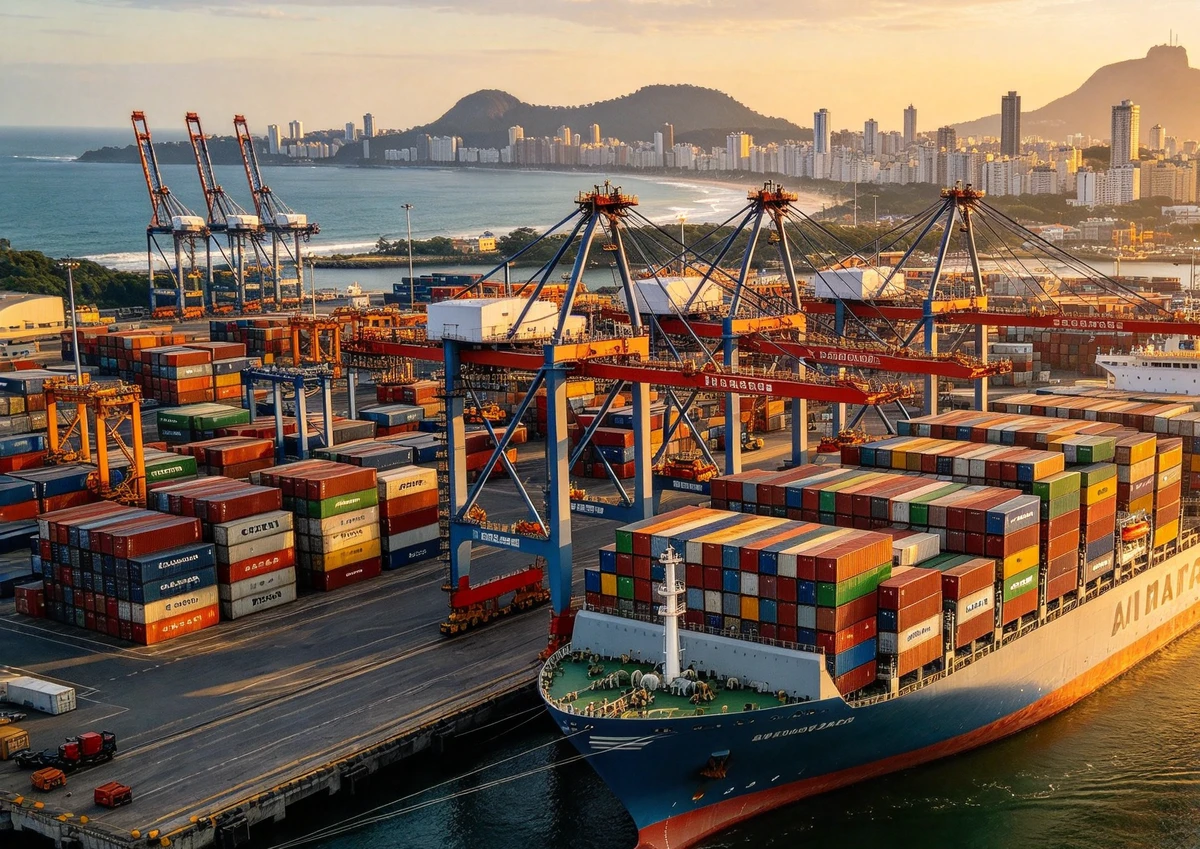
Quick Answer: How Much Does It Cost to Ship from China to Brazil in 2026?
Sea freight on this lane runs about $1,800–$4,600 for a 20ft container and $2,500–$5,600 for a 40HQ. LCL prices at $80–$220 per CBM, air freight at $4.50–$10.50 per kg, and all-inclusive DDP at $7–$14 per kg by air or $120–$260 per CBM by sea.
| Shipping Method | 2026 Cost Range | Transit Time | Best For |
|---|---|---|---|
| Sea Freight FCL (20ft) | $1,800 – $4,600 / container | 35–55 days door-to-door | Dense, heavy cargo: machinery, tiles, hardware |
| Sea Freight FCL (40ft / 40HQ) | $2,500 – $5,600 / container | 35–55 days door-to-door | Bulky, lighter cargo: furniture, home goods |
| Sea Freight LCL | $80 – $220 / CBM | 40–60 days door-to-door | Loads under 13 CBM from one or more suppliers |
| Air Freight | $4.50 – $10.50 / kg | 5–12 days door-to-door | High-value electronics, urgent restocks, spare parts |
| Express Courier (DHL/UPS/FedEx) | $8 – $20 / kg | 3–8 days door-to-door | Samples, documents, parcels under 30 kg |
| DDP Air (all-in) | $7 – $14 / kg | 7–14 days door-to-door | Amazon FBA / e-commerce, no Brazilian CNPJ |
| DDP Sea (all-in) | $120 – $260 / CBM | 40–60 days door-to-door | Bulk cartons, repeat inventory |
Every container figure above is a port-to-port ocean base rate on a September 2026 market basis unless labelled DDP, and excludes Brazilian duty and taxes. Air figures are airport-to-airport unless marked DDP. This lane repriced sharply through 2026, so treat these as planning benchmarks, not firm quotes. For the full range of services we operate on this corridor, see our freight shipping from China to Brazil route overview.
As a quick guide, under 100 kg use express or air. Between 100 and 500 kg, compare air against Sea DDP. Above 13–15 CBM, FCL beats LCL on unit cost. No Brazilian CNPJ? Go DDP.

How long does it take to ship from China to Brazil?
Sea freight takes 30–40 days port to port to Santos and 35–55 days door-to-door; LCL adds 5–10 days for consolidation and deconsolidation. Air freight reaches São Paulo’s GRU (Guarulhos) or VCP (Viracopos) airports in 3–4 days airport-to-airport, or 5–12 days door-to-door. Express courier delivers in 3–8 days.
Cost to Ship from China to Brazil by Sea: FCL vs LCL Explained
sea freight moves roughly 90% of China–Brazil trade, and it is the cheapest option for anything above about 2 CBM with a tolerable lead time. The cost depends heavily on your origin port, because North China ports (Shanghai, Ningbo, Qingdao) run direct weekly sailings to Santos, while South China ports (Shenzhen, Guangzhou) often route via Singapore or Hong Kong, adding 2–5 days.
Shipping cost from China to Brazil for a 20ft container
| Origin Port (China) | Destination Port | 20ft Container | 40ft / 40HQ | Typical Transit |
|---|---|---|---|---|
| Shanghai | Santos | $2,200 – $3,600 | $3,800 – $6,200 | 32–38 days (direct) |
| Ningbo | Santos | $2,000 – $3,400 | $3,500 – $5,800 | 32–38 days (direct) |
| Shenzhen (Yantian/Shekou) | Santos | $2,400 – $3,800 | $4,000 – $6,500 | 34–42 days |
| Qingdao | Santos | $2,300 – $3,700 | $3,900 – $6,300 | 36–44 days |
| Shanghai / Ningbo | Navegantes | $2,300 – $3,800 | $3,900 – $6,400 | 36–45 days |
Santos is Brazil’s default gateway and the largest container port in Latin America, handling roughly a third of the country’s containerized trade. But for cargo headed to southern Brazil, Navegantes and Itajaí in Santa Catarina can cut inland trucking time and cost.
LCL shipping cost from China to Brazil per CBM
For shipments under 15 CBM, LCL (Less than Container Load) lets you pay only for the space your cargo occupies in a shared container.
| Volume Tier | Rate per CBM (USD) | Notes |
|---|---|---|
| 1–3 CBM | $110 – $150 | Highest per-unit cost; fine for samples and trial orders |
| 3–8 CBM | $85 – $115 | Sweet spot for small businesses and first-time importers |
| 8–15 CBM | $80 – $100 | Approaching FCL economics — consider switching at ~13 CBM |
LCL is billed on the greater of volume or a volume-equivalent weight (typically 1 CBM = 1,000 kg), so dense cargo such as hardware or auto parts can be charged on weight instead of space. Watch the destination side too: Brazilian CFS (deconsolidation) and terminal fees are frequently underestimated, and a cheap per-CBM quote can look very different once they land.
Is it cheaper to ship to Brazil by LCL or FCL?
The crossover on this lane sits at roughly 13 to 15 CBM. Below it, LCL is cheaper per shipment. Above it, a 20ft container wins on unit cost and brings side benefits, such as exclusive use of the box, less handling, and a lower risk that another shipper’s cargo in the same container triggers a customs inspection of yours.
Our Industry Insights — the consolidation play that saves the most. A mid-sized buyer sourcing from four different suppliers around Guangzhou was paying four separate LCL bills, each carrying its own origin handling and documentation. By consolidating all four orders at our Shenzhen warehouse into a single 20ft container, we eliminated three sets of fixed charges and delivered one clean shipment. The freight line barely moved, but the total bill dropped noticeably, and the goods arrived together, which cut their inland distribution cost in São Paulo. Consolidation before booking is almost always the single biggest saving on this lane.
Air Freight Cost from China to Brazil per Kg (and Express Courier)
When lead time matters more than money (restocking bestsellers, urgent spare parts, high-value electronics), air freight moves cargo from PVG (Shanghai), CAN (Guangzhou), SZX (Shenzhen) or HKG (Hong Kong) to GRU or VCP in 2–4 days airport-to-airport. Door-to-door adds 3–5 days for pickup, import clearance and final delivery.
| Weight Band | Rate per KG (USD) | Example: 300 kg Shipment |
|---|---|---|
| 21–45 kg | $6.50 – $8.00 | — |
| 45–100 kg | $5.80 – $7.20 | — |
| 100–300 kg | $5.00 – $6.50 | $1,500 – $1,950 |
| 300–500 kg | $4.50 – $5.80 | $1,350 – $1,740 |
| 500–1,000 kg | $4.20 – $5.40 | — |
| 1,000+ kg | $3.80 – $5.00 | — |
The heavier your shipment, the lower the per-kilogram rate. Note that Brazil-bound air freight is structurally pricier than US or EU lanes: there is less belly-hold capacity to South America, and the return leg is heavily agricultural, so carriers price the outbound leg to cover the round trip.
Airlines charge for the greater of actual weight and dimensional (volumetric) weight, calculated as (L × W × H in cm) ÷ 6,000. A carton measuring 60 × 50 × 50 cm that weighs 18 kg actually bills at 25 kg, a 39% premium caused purely by box dimensions. On a lane with high per-kg rates, packaging optimization is one of the fastest ways to cut cost.
Express courier (DHL, UPS, FedEx) handles parcels under about 30 kg in 4–8 days at $8–$20 per kg. Since 2024, Brazil has applied a 20% import tax on cross-border e-commerce parcels valued up to $50 under the Remessa Conforme program, so budget for it on small shipments. If your cargo is consumer electronics, our guide to how to ship electronics and gadgets from China covers battery declarations and packaging in detail.
How Much to Ship from China to Brazil DDP: Door-to-Door All-In Price
DDP (Delivered Duty Paid) is the option most first-time importers and e-commerce sellers want: one price, one point of accountability, goods delivered with all taxes paid. Under a genuine DDP quote, the forwarder carries factory pickup in China, export clearance, main freight, Brazilian import clearance, payment of duty and taxes, and final delivery to your warehouse, office, or an Amazon FBA / Mercado Livre fulfillment center.
| Incoterm | Who Pays Freight | Who Pays Duty & Taxes | Importer of Record | Best For |
|---|---|---|---|---|
| EXW | Buyer | Buyer | Buyer | Buyers with a full local setup |
| FOB | Buyer | Buyer | Buyer | Experienced importers controlling cost |
| CIF | Seller (to port) | Buyer | Buyer | Buyers who want the supplier to book freight |
| DAP / DDU | Seller | Buyer | Buyer | Buyers who can clear customs locally |
| DDP | Seller / forwarder | Seller / forwarder | Managed partner | SMEs, e-commerce, no local CNPJ |
DDP air runs about $7–$14 per kg in 7–14 days; DDP sea runs about $120–$260 per CBM in 40–60 days. Choose by value density (USD per CBM), not habit.
One honest limitation: DDP in Brazil still requires a legal importer of record on the Brazilian side, and not every product can move this way. Regulated categories (ANVISA-controlled goods, batteries, certain branded items, food and cosmetics) must be reviewed before booking. A forwarder who tells you “everything can go DDP” is either inexperienced or cutting corners.
What’s Really Inside Your Quote: The Landed Cost Formula, Import Tax & ICMS
Most cost guides skip this part, and it is the one that decides whether your order is profitable.
The landed-cost formula, line by line:
Base ocean/air freight → origin THC + documentation + ISPS → AFRMM → destination THC + CFS → Siscomex / DI fees → II (Import Duty) → IPI → PIS/COFINS → ICMS (state VAT) → customs broker fees → inland delivery → insurance
Brazil’s import tax structure is among the most complex in the world: Custo Brasil.
| Tax | Full Name | Typical Rate | Calculation Base |
|---|---|---|---|
| II | Imposto de Importação (Import Duty) | 0–35% (average ~11–14%) | CIF value, by NCM code |
| IPI | Imposto sobre Produtos Industrializados | 0–50% (varies by product) | CIF + II |
| PIS/COFINS | Federal social contributions | ~11.75% (PIS 2.1% + COFINS 9.65%) | CIF value |
| ICMS | Imposto sobre Circulação de Mercadorias e Serviços (State VAT) | 17–20% (18% in São Paulo; higher for some goods/states) | CIF + federal taxes |
| AFRMM | Merchant Marine Renewal Surcharge | 8% of ocean freight | Freight value only |
A correction worth knowing: several ranking guides still quote AFRMM at “25% of ocean freight.” That was the old long-haul rate. Under BR do Mar (Lei 14.301⁄2022), the long-haul AFRMM dropped to 8%. Budget the lower figure, and treat a 25% line item on a quote as a red flag.

The duty rate itself is set by your product’s NCM code, Brazil’s 8-digit extension of the international HS code, not by the generic HS digits. Get it wrong and you invite a customs hold of 5–15 days, plus storage fees and fines on top of paying the wrong tax.
Real-Life Scenario — why “freight” is the wrong number to focus on. We moved 9 CBM of home textiles from Ningbo to a distributor in São Paulo. The LCL freight itself was about $810. The full picture was very different: origin handling, destination THC, customs clearance with a Brazilian broker, II at 18%, ICMS at 18%, and last-mile delivery brought the all-in figure to roughly $4,540. Freight was less than a fifth of the landed cost. On the China–Brazil lane, the freight rate is rarely where the money is — the tax stack is.
Freight Cost from China to Santos, São Paulo & Rio: Port & City Landed Cost
Most guides name Brazilian ports but never price a destination city. Since inland trucking and port congestion materially change your total, the port you choose matters as much as the rate you negotiate.

| Destination | Gateway Port | Inland/Clearance Note | Relative Landed Cost |
|---|---|---|---|
| São Paulo | Santos | Largest consuming market; heaviest congestion in peak season | Baseline |
| Rio de Janeiro | Rio de Janeiro / Itaguaí | Direct port access; urban delivery surcharges apply | Similar to São Paulo |
| Curitiba / South | Navegantes / Itajaí / Paranaguá | Southern gateway cuts inland cost vs trucking from Santos | Often lower |
| Belo Horizonte | Santos + inland trucking | No port; priced on inland distance from Santos | Higher |
| Manaus | Manaus (via transshipment) | Free-trade zone (Zona Franca de Manaus); longest transit | Highest, longest lead time |
As a rule of thumb, discharge nearest your final delivery region, then price inland trucking from two or three ports before booking. Santos is the default, but for the south, Navegantes or Itajaí frequently wins; Paranaguá can be faster for agricultural and industrial cargo; Suape serves the northeast.

Cheapest Way to Ship from China to Brazil: Self-Estimate & 7 Cost Levers
You can estimate your own all-in cost in two minutes before requesting quotes:
Landed cost ≈ (freight + origin charges + AFRMM + destination charges) + II on CIF + IPI + PIS/COFINS + ICMS + clearance + inland delivery
Then apply seven proven levers:
- Consolidate multiple supplier orders at a Shenzhen or Guangzhou warehouse before booking.
- Cross the 13–15 CBM threshold — switch from LCL to FCL once you reach it.
- Choose the right gateway port by inland-destination math, not habit.
- Time your booking away from the July–November peak-season surcharge window and the pre-Chinese New Year rush.
- Validate your NCM code to avoid over-classification and duty overpayment.
- Optimize packaging to cut volumetric weight on air cargo.
- Match the mode to value density instead of defaulting to sea or air.
Be realistic about what cannot be avoided: legitimate duty, ICMS, and peak-season surcharges. A forwarder who promises to make them disappear is a risk, not a bargain.
Amazon Brazil FBA & Customs Clearance Cost: CNPJ, RADAR, ANVISA & INMETRO
Here is where foreign sellers get caught out: only a company registered with a CNPJ (Brazilian tax ID) and enrolled in RADAR (the Siscomex import system) can act as the importer of record. A foreign company without a Brazilian entity cannot clear customs directly.
Your practical options are:
- Use a Brazilian import agent (importador por conta e ordem), a licensed local company that imports on your behalf for a fee, typically 2–5% of cargo value plus costs. You keep ownership.
- Use DDP. The forwarder arranges a licensed Brazilian partner and delivers with taxes paid. This is the most common route for SMEs and e-commerce sellers without a local subsidiary.
- Establish a Brazilian entity, the right long-term move for regular importers, but with real compliance obligations.
Sellers who fulfil through Amazon FBA or Mercado Livre ship into local warehouses, which makes the DDP route above the most practical starting point.
For e-commerce sellers, the Remessa Conforme framework governs cross-border parcels; a 2026 policy change reported to remove the 20% federal import tax on parcels under $50 was introduced on a temporary basis, while state ICMS still applies — confirm the current rules at the time of shipping, as they have moved repeatedly.
Product certification adds cost and lead time. Goods under ANVISA (health, medical, food-contact) or INMETRO (certified electrical and safety goods) need registration before import — plan 2 to 8 weeks. Brazil also maintains anti-dumping duties on a range of Chinese products, including certain ceramics, steel fasteners, bicycle parts and textiles, so verify your NCM against current measures before you ship.
With complete documentation, sea freight clears in roughly 3–7 days and air freight in 1–2 days. Reliable customs clearance is what keeps that window short. The documents that prevent charges are the Commercial Invoice, Packing List, Bill of Lading or Airway Bill, Certificate of Origin, and the Import Declaration (DI, or the newer DUIMP) filed through Siscomex.
Frequently Asked Questions
How much does it cost to ship a 20ft container from China to Brazil in 2026?
A 20ft container runs about $1,800–$4,600 port-to-port on a September 2026 basis. A full DDP door-to-door price including duty and taxes is higher; budget one and a half to two times the freight rate depending on your product’s NCM and ICMS rate.
How much does it cost to ship from China to Brazil per kg?
Express courier runs $8–$20 per kg, air freight $4.50–$10.50 per kg, and sea freight is far cheaper per kg once you fill a container. Per-kg pricing only makes sense for air and express; for larger volumes, price per CBM or per container.
Is it cheaper to ship LCL or FCL to Brazil?
Below 13 CBM, LCL is usually cheaper per shipment. Above 15 CBM, a 20ft container delivers a lower unit cost and avoids the deconsolidation and inspection risk that comes with shared containers.
What is the cheapest way to ship from China to Brazil?
Sea freight wins either way: FCL for volumes above the crossover point, LCL for smaller loads. Consolidating multiple suppliers into one shipment and timing your booking outside peak season cut the bill further.
What is AFRMM and do I have to pay it?
AFRMM is Brazil’s Merchant Marine Renewal surcharge, applied to ocean freight. On long-haul imports it is 8% of the freight value under BR do Mar (Lei 14.301⁄2022), not the 25% some guides still quote, and must be factored into the total.
What duties and taxes will I pay on imports from China to Brazil?
II (import duty), IPI, PIS/COFINS and state ICMS, plus the AFRMM surcharge on sea freight. Together they routinely add 60–100% of CIF value, so always compare landed cost, never the freight quote alone.
Can I ship to Brazil without a CNPJ?
Not as the direct importer of record, but you can import through a Brazilian import agent (conta e ordem), via DDP with a licensed partner, or by establishing a local entity.
Do I need ANVISA or INMETRO certification to import into Brazil?
Only for regulated product categories: health, medical, food-contact, and certified electrical and safety goods. Registration takes 2–8 weeks, so factor it into your lead time before booking.
Why Importers Choose Sinoshipment for China–Brazil Shipping
Shipping from China to Brazil rewards preparation over luck: accurate NCM codes, a realistic cost model, the right gateway port, and a forwarder who shows you what is inside the price.
Sinoshipment has worked China-origin trade since 2013 and served 5,000+ importers, with a network spanning the Middle East, Europe, the Americas, Africa, Asia and Oceania.
From our base in Shenzhen, we handle the full chain on this lane: factory pickup, consolidation at our warehouse, export clearance, ocean or air freight, Brazilian import clearance, duty and tax payment, and final delivery. We offer flexible multi-modal options including sea FCL and LCL, air freight, and door-to-door DDP, and every quote is itemized with its basis stated and no hidden fees after the quote.
We publish the same transparent, itemized cost breakdown for other major lanes, such as freight costs from China to USA.
Get a free, itemized delivered-cost estimate for your cargo. Share your commodity, NCM or HS code, volume or weight, supplier city in China, and final destination in Brazil, and we will return a transparent door-to-door price.