LCL Shipping from China to Germany: The Complete 2026 Guide (Costs, Transit Times & Customs)
· By SinoShipment
Are you paying more than you should for LCL shipping from China to Germany? The headline rate you see online—often $45–$130 per CBM—never tells the full story. Once deconsolidation fees at Hamburg, German customs clearance, 19% import VAT, and final-mile delivery are added, a small shipment’s landed cost can easily reach two to four times its ocean freight—and even an “all-in” quote can end up 30–50% higher once storage and clearance surprises land.
In this complete 2026 guide, Sinoshipment—a Shenzhen-based freight forwarder operating since 2013—breaks down real LCL costs by port pair, door-to-door transit timelines, German customs requirements, and how to choose between LCL and FCL, so you can calculate your true landed cost before you book. For a one-stop overview of every mode on this corridor, see our freight shipping from China to Germany route page.
What Is LCL Shipping from China to Germany?
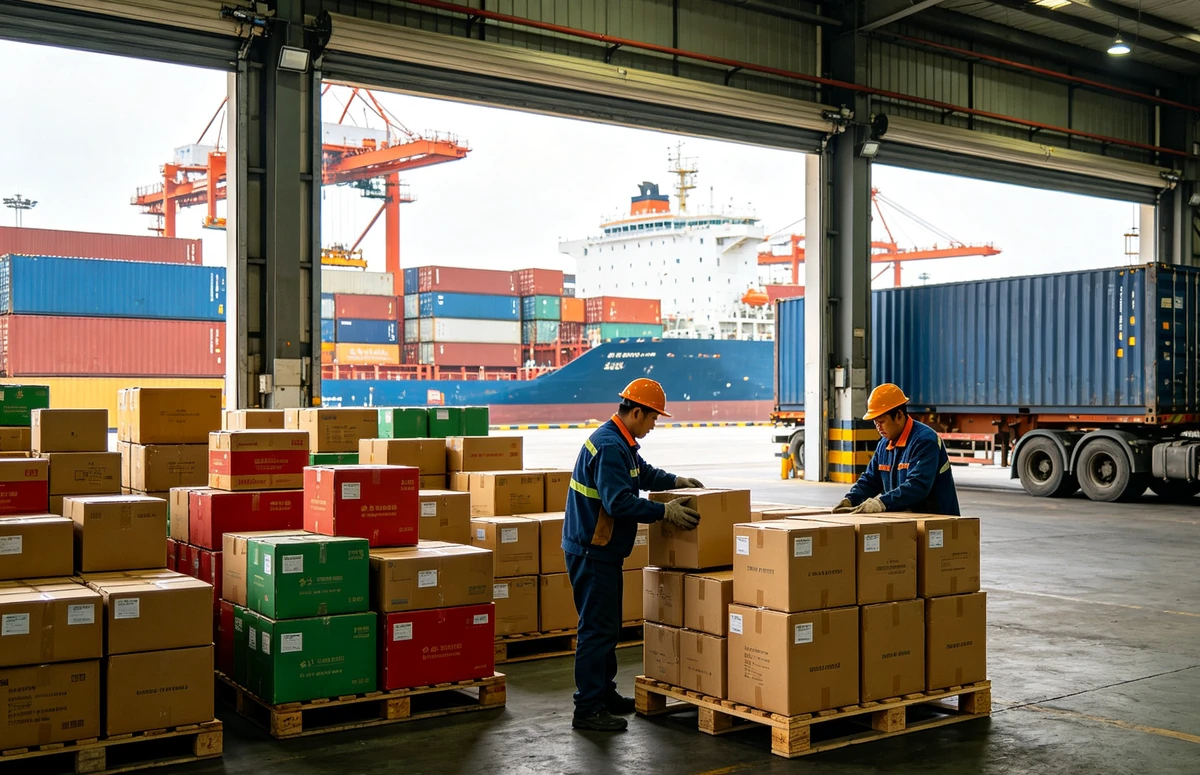
LCL (Less than Container Load)—also called groupage in Europe—means your cargo shares container space with other importers. Your goods are collected at the origin CFS (Container Freight Station), consolidated into a standard 20ft or 40ft container, sail to a German port, and are deconsolidated before delivery. You pay only for the volume you occupy, which makes LCL the default for shipping small cargo from China to Germany by sea—typically between 1 and 15 cubic meters—and the most affordable way to use sea freight when you do not yet fill a container.
Here is how a typical LCL shipment moves, step by step:
- Factory pickup — cargo is trucked to a consolidation warehouse near the port of loading.
- Consolidation — cartons are palletized and loaded into a shared container at the origin CFS.
- China export clearance — your forwarder files the export declaration and issues the House Bill of Lading (HBL) for your share of the container.
- Ocean transit — the vessel sails from Shenzhen, Shanghai, or Ningbo toward Germany.
- Deconsolidation — at the destination CFS, your cargo is separated from the rest of the consignment.
- German import clearance — duties and VAT are settled through the ATLAS customs system.
- Final-mile delivery — your goods are trucked to your warehouse or Amazon fulfillment center.
How LCL Pricing Works: CBM and the 1:1,000 Rule
Forwarders quote LCL in CBM (cubic meters)—length × width × height in meters. But weight matters too. The standard conversion rule is 1 CBM = 1,000 kg. If your cargo is denser than that (for example, 1.2 CBM weighing 1,800 kg), you are charged by weight instead of volume. This is one of the most common sources of surprise charges, so confirm your chargeable volume before booking.
Our Industry Insights: The most frequent pricing surprise we see in our Shenzhen consolidation warehouse is the volume-versus-weight calculation. A shipper who assumes “I only have 3 CBM” can discover their heavy palletized goods are billed at 4,500 kg equivalent. Ask your forwarder to confirm both the CBM rate and the weight threshold in writing.
How Much Does LCL Shipping from China to Germany Cost? (2026 Rates)
The honest answer to how much does LCL shipping from China to Germany cost is: it depends on your port pair, cargo density, season, and how many fee layers your forwarder includes. As a September 2026 planning range, LCL freight rates from China to Germany sit between $45 and $130 per CBM, plus per-shipment charges that do not scale with volume.
| Origin Port (China) | Destination Port (Germany) | Rate per CBM (USD) | Ocean Transit (Days) |
|---|---|---|---|
| Shanghai | Hamburg | $60 – $95 | 30 – 34 |
| Shenzhen | Hamburg | $55 – $90 | 29 – 33 |
| Shenzhen | Bremerhaven | $55 – $90 | 28 – 32 |
| Ningbo | Hamburg | $65 – $100 | 31 – 35 |
| Qingdao | Wilhelmshaven | $85 – $115 | 35 – 40 |
Rates are indicative September 2026 planning ranges, freight-only. Ocean rates move weekly with fuel, capacity, and peak-season demand—always confirm a current quote before booking.
The Four Cost Layers Every LCL Quote Contains
A complete LCL quote is built from four layers. Understanding each one prevents the classic “headline rate” trap:
| Cost Layer | Typical Cost (USD) | What It Covers |
|---|---|---|
| Ocean freight | $45 – $130 per CBM | Sea leg and origin consolidation |
| Origin charges | $80 – $150 per shipment | CFS handling, THC, export documentation |
| Destination handling | $60 – $150 per shipment | Deconsolidation and delivery order at Hamburg/Bremerhaven |
| German clearance + taxes | $80 – $200 + duty/VAT | Broker filing, customs duty, 19% import VAT |
Beyond these four layers, watch for hidden LCL fees: a minimum charge (typically 1 CBM even if you ship less), peak-season surcharges (PSS) around August–October and before Chinese New Year, and demurrage or storage charges if you miss the free-time window at the destination CFS.
Real-World LCL Budget Examples
Here are three indicative door-to-door budgets for September 2026 (Shenzhen → Hamburg, standard consumer goods). In our experience, one client importing 4 CBM of consumer electronics from Shenzhen cut their landed cost by roughly 15% simply by booking three weeks before the August peak-season surcharge landed—a window most online rate tables never show you:
| Cargo Volume | Freight (CBM) | Origin + Destination Fees | Customs Duty + VAT (est.) | Rough Door-to-Door Total |
|---|---|---|---|---|
| 1 CBM / 400 kg | ~$70 | ~$250 | ~$180 | ~$500 |
| 3 CBM / 900 kg | ~$210 | ~$300 | ~$450 | ~$960 |
| 6 CBM / 1,800 kg | ~$420 | ~$380 | ~$850 | ~$1,650 |
Figures are illustrative planning estimates, not quotes. Actual totals depend on HS code, customs value, and season. For a full comparison of every mode on this lane—FCL, rail, and air—see our guide to freight costs from China to Germany.
LCL Shipping Time from China to Germany: Port-to-Port vs. Door-to-Door
The answer to how long does LCL sea freight take from China to Germany depends on which timeline you measure. Port-to-port LCL shipping time from China to Germany runs 28–40 days, while door-to-door—the number that matters for inventory planning—runs 40–55 days:
| Stage | Typical Time |
|---|---|
| Factory pickup + consolidation | 3 – 7 days |
| Export clearance | 1 – 2 days |
| Ocean transit | 28 – 35 days |
| Deconsolidation at destination | 2 – 4 days |
| Import clearance | 1 – 3 days |
| Last-mile delivery | 2 – 5 days |
| Total door-to-door | 40 – 55 days |
LCL is inherently slower than FCL by 5–10 days because your cargo is handled twice—consolidated at origin and deconsolidated at destination—and forwarders often wait for a weekly sailing to fill the container. For context: air freight from China to Germany reaches Frankfurt in 5–8 days, the China–Europe railway in 12–18 days, and FCL ocean in 25–35 days. If your lead time is flexible and your volume small, the LCL cost savings usually outweigh the extra two weeks.
LCL Sea Freight from China to Hamburg, Bremerhaven & German Inland Hubs
Every major Chinese port runs weekly LCL consolidation services to Germany. Shenzhen (Yantian and Shekou) is the gateway for Pearl River Delta manufacturers—electronics, furniture, and cross-border e-commerce—while Shanghai and Ningbo serve the Yangtze Delta’s machinery and textile exporters, and Qingdao covers northern China’s industrial cargo.
- Hamburg — Germany’s largest port and the primary China-trade hub, handling roughly 40% of container traffic between the two countries, with the strongest rail and road connections across Germany and Europe.
- Bremerhaven — a leading auto-cargo port with efficient CFS facilities, ideal for vehicle-related freight.
- Wilhelmshaven — Germany’s deepest harbor, increasingly used by ultra-large vessels; suits shippers closer to northern Germany.
If your final destination is inland, plan for the feeder leg: cargo arriving in Hamburg typically reaches northern German warehouses within 1–3 days, while Munich, Frankfurt, or Stuttgart add 2–5 days by truck or domestic rail. When choosing between Hamburg and Bremerhaven, compare the total cost of the sea leg plus inland trucking—a slightly higher ocean rate via Hamburg can be cheaper overall if your warehouse sits near its rail hub. For importers distributing across Western and Central Europe, Sinoshipment also provides freight shipping from China to Europe with door-to-door coverage in the Netherlands, France, and beyond.
Our Industry Insights: Many first-time importers assume “Hamburg delivery” means the port. In practice, most German buyers need the cargo trucked 300–700 km inland. When we quote door-to-door for clients in Bavaria or Baden-Württemberg, the inland leg often costs more than the ocean leg per CBM—always get a quote that includes your final German address.
LCL vs FCL Shipping from China to Germany: Which Is Cheaper?
Choosing between LCL vs FCL shipping from China to Germany comes down to one question: how much cargo do you move, and how often?
| Factor | LCL | FCL |
|---|---|---|
| Pricing | Per CBM + per-shipment fees | Flat rate per container |
| Ideal volume | 1 – 15 CBM | 15+ CBM |
| Ocean transit | 28 – 40 days | 25 – 35 days |
| Door-to-door | 40 – 55 days | 35 – 50 days |
| Cargo security | Shared container, more handling | Sealed container, fewer touchpoints |
| Minimum booking | As low as 0.5 CBM | Full container regardless of fill |
| Best for | Samples, trial orders, small batches, multi-SKU | Regular bulk imports, high-value goods |
The 13–15 CBM Breakeven Point
The crossover sits around 13–15 CBM. Below it, LCL is almost always cheaper; above it, a dedicated 20ft container wins on cost per CBM and gives faster, more secure transit. Compare a full landed-cost estimate, not just the per-CBM rate:
| Cargo Volume | LCL Estimate (est.) | 20ft FCL All-in (est.) | Winner |
|---|---|---|---|
| 6 CBM | $800 – $1,000 | $2,400+ (under-utilized) | LCL |
| 10 CBM | $1,100 – $1,400 | $2,400+ | LCL |
| 12 CBM | $1,300 – $1,600 | $2,400 – $2,900 | Toss-up — compare quotes |
| 15 CBM | $1,600 – $1,900 | $2,400 – $2,900 | FCL |
| 18 CBM | $1,900 – $2,200 | $2,400 – $2,900 | FCL |
Use LCL when your monthly volume is under 13 CBM, your SKUs are mixed, or you need frequent small replenishments. Switch to FCL when volume exceeds 13–15 CBM, cargo is high-value or fragile, or speed matters. If you source from multiple factories across the Pearl River Delta, a forwarder with a strong consolidation network can collect from each supplier and ship a single LCL consignment—often the smartest structure for importers moving 8–14 CBM per month. For a complete breakdown of every sea freight option on this lane, including FCL transit times and door-to-door DDP, see our Shipping from China to Germany by Sea guide.
Door-to-Door & DDP LCL Shipping from China to Germany
Door-to-door LCL shipping from China to Germany bundles everything under one roof: factory pickup, export clearance, ocean freight, German customs clearance, duty and VAT payment, and final delivery to your German address. The most convenient variant is DDP (Delivered Duty Paid), where the forwarder handles—and prepays—all import taxes so your total cost is fixed before shipment.
| Incoterm 2020 | Who Handles Import Clearance? | Who Pays German Duty/VAT? | Best For |
|---|---|---|---|
| EXW | You | You | Full control, experienced importers |
| FOB | You (via your broker) | You | Standard sea-freight buying |
| CIF | You | You | Simpler origin-side handling |
| DDP | Forwarder | Forwarder (billed to you) | First-time importers, Amazon FBA sellers |
Our Industry Insights: DDP on this lane hides one big tax pitfall. If your forwarder declares the shipment under their own EORI number instead of yours, you cannot reclaim the 19% German import VAT even if you are VAT-registered. Always get written confirmation that the import declaration will be filed under your EORI.
While DDP is the most hassle-free route for first-time importers and Amazon FBA sellers, if you already work with a German customs broker and hold your own VAT registration, FOB or CIF may give you more control over your supply chain—and often a lower headline cost. The right choice depends on your setup, not on what is easiest to invoice.
German Customs Clearance for LCL Shipments: Documents & Compliance (2026)
Germany operates one of Europe’s strictest customs regimes. Every commercial LCL consignment must be declared through ATLAS, the German customs e-filing system run by Zoll, Germany’s federal customs authority, using a valid EORI number—without it, no clearance. Here is the complete document checklist:
| Document | Required For | Notes |
|---|---|---|
| Commercial Invoice | All shipments | Must show HS codes, CIF value, accurate descriptions |
| Packing List | All shipments | Accurate weights and dimensions |
| Bill of Lading / Sea Waybill | All shipments | Original or telex release |
| EORI Number | All commercial importers | Mandatory EU registration |
| ATLAS Import Declaration | All shipments | German customs e-filing |
| Certificate of Origin | Preferential duty claims | May qualify for reduced tariffs |
| CE Declaration of Conformity | Electronics, machinery, toys | Required for EU market access |
Duties, Import VAT, and 2026 Rule Changes
Import duties depend on the product’s HS code under the EU TARIC tariff—typically 0–12% for consumer goods, higher for textiles and footwear. Import VAT is 19% (7% for some books and food), calculated on the CIF value plus customs duty. Example: a $10,000 CIF shipment at 4% duty owes $400 in duty, and 19% VAT on $10,400 = $1,976—$2,376 in import taxes alone.
Three 2026 changes matter for LCL shippers:
- ICS2/ENS pre-arrival declaration — under the European Commission’s ICS2 program, all cargo entering the EU by sea requires an Entry Summary Declaration filed before loading; missing it means holds at origin.
- EU ETS surcharges — ocean shipping is covered by the EU Emissions Trading System, which reached 100% of verified emissions in 2026 after 40% in 2024 and 70% in 2025; carriers pass this on as a per-container line item.
- €150 duty exemption phase-out — the EU has proposed ending the €150 low-value duty exemption and, since 1 July 2026, applies a flat €3 customs duty per item on consignments valued up to €150; relevant if you route e-commerce parcels through LCL.
Import VAT Deferment is a lesser-known lever: businesses approved for a VAT deferment account can postpone import VAT payment to their periodic return, improving cash flow. Finally, verify packaging compliance—Germany’s packaging law (VerpackG, replaced by the VerpackDG in August 2026) requires importers to register in the LUCID database; unregistered importers face fines and customs delays that commonly catch first-time e-commerce sellers.
How to Choose an LCL Freight Forwarder from China (Amazon FBA & Money-Saving Tips)
A reliable LCL freight forwarder from China is the difference between a clean delivery and a warehouse of headaches. Evaluate candidates on five criteria: origin CFS network coverage, German destination agent quality, quote transparency (itemized vs. all-in), Amazon FBA experience, and response speed. Red flags include forwarders who quote only a per-CBM rate with no breakdown, cannot confirm the declaration EORI in writing, or have no local presence near your origin port.
Amazon FBA LCL Shipping from China to Germany
Germany hosts Europe’s largest Amazon marketplace, and much of the LCL volume on this lane is FBA-bound. Amazon FBA LCL shipping from China to Germany adds three requirements: pre-labeled boxes, palletized and stretch-wrapped freight, and an appointment slot at the German fulfillment center. The cheapest LCL shipping from China to Germany is rarely the best for FBA—what you need is a forwarder who coordinates customs timing with the Amazon delivery appointment. Most FBA sellers choose DDP so the entire tax-and-clearance process happens before the truck arrives.
Money-Saving Tips for 2026
- Book 3–4 weeks ahead of peak season (August–October and before Chinese New Year) to lock in space and avoid 10–15% surcharges.
- Control your chargeable volume — reduce packaging and standardize carton sizes to maximize pallet density.
- Consolidate multi-supplier orders — one combined LCL shipment from several factories almost always beats several small ones.
- Compare all-in quotes — ask for the full door-to-door landed cost, not the ocean headline rate.
Planning LCL, FCL, or air freight from China to Germany? Sinoshipment’s Shenzhen team consolidates and ships this lane daily, with 10+ years of experience and 5,000+ customers served worldwide—and we quote with no hidden fees.
FAQ: LCL Shipping from China to Germany
How is the LCL shipping rate calculated from China to Germany? Rates are based on cargo volume in CBM, or weight when density exceeds 1 CBM per 1,000 kg—whichever is higher. Per-shipment fees (origin, destination, clearance) are added on top.
How long does LCL sea freight take from China to Germany? Port-to-port takes 28–40 days; door-to-door typically 40–55 days, including consolidation, deconsolidation, customs, and final delivery.
What is the minimum volume for LCL shipping? Most forwarders accept from about 0.5 CBM, with a minimum charge typically equal to 1 CBM. For shipments over 2–3 CBM, LCL generally beats air freight on cost.
Is LCL cheaper than FCL from China to Germany? Below roughly 13–15 CBM, yes—LCL is usually cheaper. Above that threshold, a dedicated 20ft container becomes more cost-effective and faster.
Do I need an EORI number to import into Germany? Yes. Every commercial importer into the EU needs a valid EORI number, and all imports must be declared through the ATLAS system.
Does DDP cover German import VAT? DDP includes payment of import duty and 19% VAT, but confirm in writing that the declaration is filed under your EORI so you can reclaim the VAT if you are registered.
Conclusion: Ship LCL from China to Germany with Confidence
LCL shipping from China to Germany remains the most cost-effective way to move 1–15 CBM of cargo between two of the world’s great trading partners. The essentials: budget $45–$130 per CBM plus per-shipment fees, plan for 28–40 days at sea and 40–55 door-to-door, use LCL below 13–15 CBM and switch to FCL above it, and prepare your EORI, ATLAS declaration, and ICS2 filing before your cargo leaves China. Share your cargo volume, product type, and German destination with a reliable China-based forwarder, and you can get a transparent, all-in quote in hours. Ready to ship? Sinoshipment’s team is here to handle your China–Germany LCL, FCL, and Amazon FBA shipments end to end. Note: all figures in this guide are September 2026 planning estimates and can shift with market conditions—always verify a fresh quote before booking.