Sea Freight from China to Kuwait: The Complete 2026 Guide (FCL, LCL & DDP)
· By SinoShipment
Few trade lanes reward careful planning as well as sea freight from China to Kuwait — and few punish guesswork as harshly. Kuwait is one of the Gulf’s wealthiest import markets, and the overwhelming majority of its containerized imports from China arrive by ocean. Yet the same three problems surface on almost every first shipment: landed costs that only become clear after the container has sailed, conflicting information about Kuwait’s import taxes, and cargo held at Shuwaikh Port because a Certificate of Origin was never legalized or the load arrived unpalletized.
This guide gives you the operational picture behind China-to-Kuwait ocean shipping in 2026. You will find current FCL and LCL rate ranges by origin port, realistic transit times, a full breakdown of Kuwait’s customs duty structure, the cheapest ways to cut your landed cost, and how DDP door-to-door shipping solves the import-license problem for overseas sellers. Sinoshipment Logistics (a Shenzhen-based freight forwarder established in 2013, with more than 5,000 clients served) runs this lane end to end, and everything below reflects how we quote and operate it in practice. Explore our dedicated Freight Shipping from China to Kuwait route for the full picture.
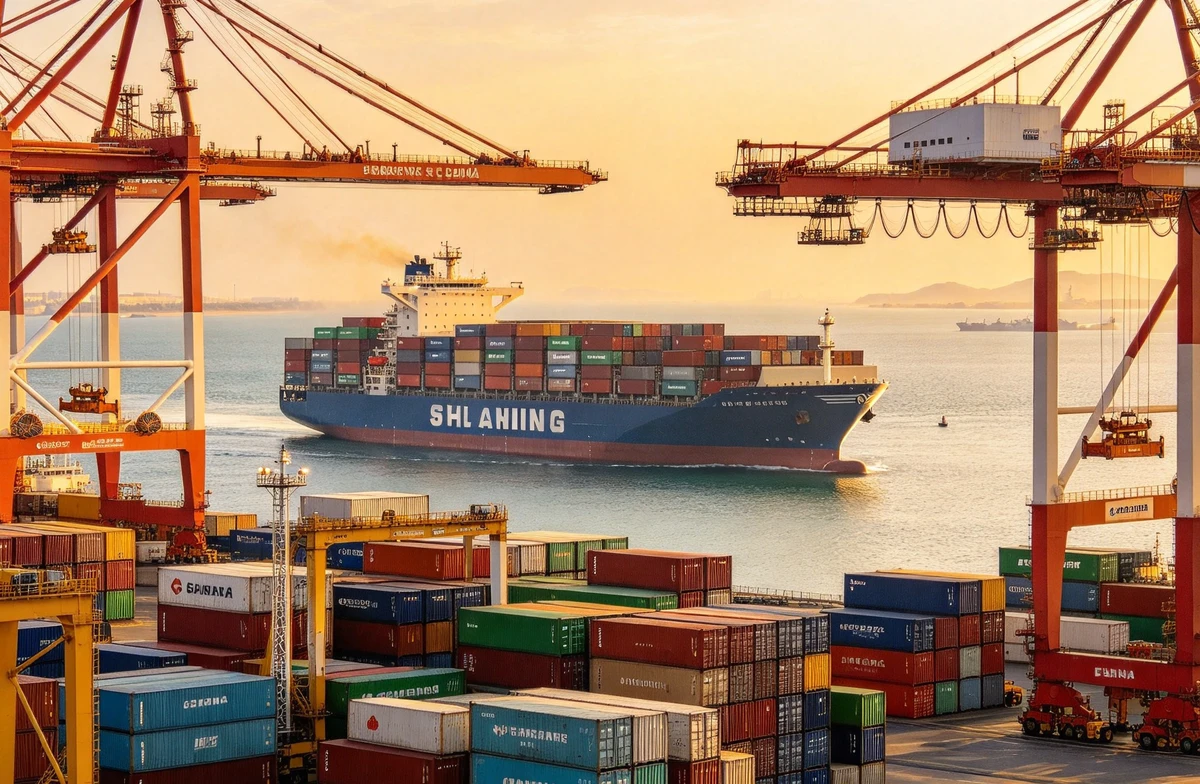
Why Ship Sea Freight from China to Kuwait?
Cost is the headline. Ocean shipping to Kuwait runs roughly 50–70% less than air freight per kilogram, and a single 40HQ container carries up to 76 CBM. Air freight wins on speed alone, delivering to Kuwait International Airport (KWI) in 3–7 days versus two to four weeks by sea.
For importers moving furniture, building materials, machinery, electronics, or automotive parts into Kuwait, ocean shipping is the only economically viable option. A 40HQ holds about 76 CBM — a volume that would cost a small fortune to move by air. If your cargo is heavy, bulky, or non-urgent, the sea lane wins decisively.
| Factor | Sea Freight | Air Freight |
|---|---|---|
| Transit Time | 18 – 28 days | 3 – 7 days |
| Cost per kg | Lowest | 5 – 10x higher |
| Best For | Bulk, heavy, non-urgent cargo | Urgent, high-value, lightweight cargo |
| Capacity | Up to 76 CBM per 40HQ | Limited by aircraft hold |
Two structural advantages matter on this specific lane. First, China has been Kuwait’s largest trading partner for 11 consecutive years, so weekly sailings from South China are frequent and reliable. Second, Kuwait’s Vision 2035 infrastructure program keeps demand for machinery, steel, and construction materials high. This is cargo that simply cannot fly. The same logic drives the wider region; see our breakdown of shipping from china to Saudi Arabia by sea for a neighboring-Gulf comparison.
Our Industry Insights: Across a decade of moving China–Gulf cargo, the single most expensive mistake we see is unplanned air freight. A container that misses its sailing because documents were submitted late often converts into an air shipment at 8–10x the cost. Ocean freight is cheap only when the booking is protected, so start your documentation early instead of paying a premium to fix a delay you could have seen coming.
FCL vs. LCL Shipping from China to Kuwait: Which Fits Your Cargo?
This one decision shapes your cost, your transit time, and your cargo risk. The rule of thumb is simple: below 15 CBM, ship LCL; above it, switch to FCL.
FCL Shipping from China to Kuwait
With FCL (Full Container Load), you book an entire container, load it at the supplier’s factory, and open it only at destination. Your cargo never mixes with anyone else’s.
| Container | Internal Capacity | Best Used For |
|---|---|---|
| 20GP | ~33 CBM | Dense, heavy cargo such as tiles, machinery, or canned goods |
| 40GP | ~67 CBM | General cargo in large volumes |
| 40HQ | ~76 CBM | Light, bulky goods like furniture and homeware |
LCL Shipping from China to Kuwait
With LCL (Less than Container Load), you pay only for the cubic meters your goods occupy inside a shared container. It is the ideal entry point for smaller orders, first-time importers testing a product line, or businesses that ship modest quantities frequently. It isn’t free, though. LCL adds 3–5 days for consolidation and deconsolidation, and you pay more per cubic meter. For a closer look at how consolidation works on a similar lane, see our China to Saudi Arabia LCL Container Shipping guide.
The 15 CBM Decision Rule
| Shipment Volume | Recommended Method | Why |
|---|---|---|
| 1 – 10 CBM | LCL | Pay only for the space you use |
| 10 – 15 CBM | LCL or 20GP | Compare both quotes before deciding |
| 15 – 25 CBM | FCL 20GP | Usually cheaper and safer than LCL |
| 25 – 55 CBM | FCL 40GP | Best cost-per-CBM balance |
| 55+ CBM | FCL 40HQ | Maximum capacity at the lowest unit cost |

A common myth is that you must fill a container before FCL makes sense. In practice, once you pass roughly 15 CBM, a half-empty 20GP is often cheaper than LCL because you avoid consolidation fees and multiple handling points. Sinoshipment runs weekly LCL consolidation at our Shenzhen warehouse, so your goods move without waiting weeks for a container to fill.
Sea Freight Cost from China to Kuwait: 2026 Rates & Landed Cost Breakdown
(Rate Snapshot): For 2026, expect roughly $1,450–$2,500 for a 20GP, $2,150–$3,800 for a 40GP/40HQ, and $70–$150 per CBM for LCL. These are port-to-port ranges and move with origin port, carrier, and season. Because much Kuwait-bound cargo transships via Jebel Ali, UAE rates are a useful benchmark; compare them in our freight costs from china to UAE analysis.
| Origin Port (China) | 20GP (USD) | 40GP / 40HQ (USD) | Notes |
|---|---|---|---|
| Shenzhen / Guangzhou | $1,450 – $2,300 | $2,150 – $3,500 | Lowest ocean freight, fastest sailing |
| Shanghai / Ningbo | $1,550 – $2,500 | $2,300 – $3,800 | Most carrier options |
| Qingdao / Tianjin | $1,700 – $2,600 | $2,500 – $3,900 | Northern-port premium |

China to Kuwait Container Shipping Price: A Worked Example
Rate tables only get you so far. Here is the comparison that matters on the ground:
- 12 CBM as LCL at ~$100/CBM: $1,200 ocean freight, plus three sets of origin handling and separate destination fees, with an LCL transit of 24–32 days.
- A dedicated 20GP: ~$1,900. It looks pricier upfront, but it removes several handling points, cuts transit by roughly a week, and keeps your cargo out of a shared container.
For dense, high-value, or fragile goods, the FCL option usually pays for itself even at 12–15 CBM.
What the Full Landed Cost Actually Includes
Shipping cost is never just the ocean freight. Your real landed cost includes:
- Inland transport in China (factory to port)
- Origin port charges (stuffing, documentation, terminal handling)
- Ocean freight
- Cargo insurance (recommended for high-value goods)
- Destination terminal handling and delivery order
- 5% GCC customs duty on CIF value
- Clearance and brokerage fees, including KUCAS inspections
- Inland delivery to your Kuwait warehouse

Our Industry Insights: Beware of the widely repeated claim that Kuwait charges VAT. As of 2026 Kuwait has not implemented VAT. What applies is the 5% GCC common customs duty on most goods. Kuwait has not yet implemented an excise tax either — a 50%/100% selective excise schedule has been proposed in draft legislation, but as of 2026 it is not in force. A forwarder who quotes your landed cost accurately, and who knows there is no VAT or excise tax yet, understands this lane.
Sea Freight Transit Time from China to Kuwait: Port-by-Port Guide
(Transit Snapshot): Port-to-port ocean transit runs 18–22 days from South China, 22–28 days from East China, and 25–32 days from northern ports. LCL adds 3–5 days, and a DDP door-to-door sea shipment totals 25–40 days.
| Origin Port (China) | Destination | FCL Transit | LCL Transit |
|---|---|---|---|
| Shenzhen (Yantian/Shekou) / Guangzhou (Nansha) | Shuwaikh / Shuaiba | 18 – 22 days | 23 – 30 days |
| Shanghai / Ningbo | Shuwaikh / Shuaiba | 22 – 28 days | 27 – 34 days |
| Qingdao / Tianjin (Xingang) | Shuwaikh / Shuaiba | 25 – 32 days | 30 – 38 days |
Most containers to Kuwait transit through Jebel Ali (UAE), where a feeder vessel completes the final leg into Shuwaikh. That routing is common and reliable, but it means an extra port call, and every extra transfer adds dwell time. Several factors can stretch these windows: the pre-Chinese New Year capacity crunch, Ramadan and Eid peaks, Gulf port congestion, and periodic disruption around the Red Sea and Strait of Hormuz, which we track in our Middle East Shipping Crisis analysis. Accurate documentation remains the single largest lever you control.
Cheapest Sea Freight from China to Kuwait: 6 Ways to Cut Your Landed Cost
- Plan ahead. Book two to three weeks early to secure space and better rates; last-minute bookings pay a premium.
- Use the nearest China port. Shenzhen or Guangzhou for South China suppliers; Ningbo or Shanghai for East China. Domestic trucking across China usually erases a cheaper ocean rate.
- Optimize packaging. Uniform cartons and zero dead space cut your billed CBM — critical for LCL, where every cubic meter costs money.
- Consolidate multi-supplier cargo. A shared FCL or a single LCL from our Shenzhen warehouse beats several separate LCL shipments.
- Choose DDP wisely. A pre-calculated landed cost removes customs surprises and destination-side fees.
- Avoid peak seasons — and mind your free time. Ship before CNY, Ramadan, and Eid, and return containers within the free period to avoid demurrage and detention.
Real-Life Scenario: A buyer in Kuwait City sourcing from four separate Guangzhou suppliers was paying four sets of LCL handling fees every month. By consolidating all four orders at a Shenzhen warehouse into one 20GP, origin handling costs fell by roughly 60% and total transit shortened by five days. The load skipped multiple deconsolidation cycles and arrived as one sealed container.
DDP & Door-to-Door Sea Freight from China to Kuwait
DDP Sea Shipping from China to Kuwait
DDP (Delivered Duty Paid) means your freight forwarder manages everything from the factory floor in China to the final delivery address in Kuwait, all under one invoice. The flow is:
- Factory pickup anywhere in China
- China export customs clearance
- Ocean freight to Shuwaikh or Shuaiba
- Kuwait import clearance and 5% duty payment
- Truck delivery to your warehouse in Kuwait
DDP is ideal for importers who prefer one predictable landed cost rather than juggling separate freight, broker, and trucking contracts. The model works the same way across the Gulf — see how it applies in DDP Shipping from China to Saudi Arabia.
Door to Door Sea Freight China to Kuwait for E-commerce & FBA
Kuwait requires the importer of record on the Bill of Lading to be a licensed Kuwaiti entity. If you are an overseas seller without a local license, that is a real barrier — and it is exactly where door to door DDP earns its place. Under DDP, we clear the shipment, settle duty, and deliver straight to Amazon, Noon, or a third-party fulfillment center, or to a private warehouse.
Sinoshipment’s Amazon FBA head-haul service covers labeling, palletizing, and delivery into Kuwaiti fulfillment centers, with DDP options for sea, air, and express.
Real-Life Scenario (from our Shenzhen desk): A Dongguan electronics seller shipping to Kuwait faced two problems at once: multi-supplier sourcing and no local import license. Our team consolidated three suppliers’ orders into a single 40HQ, palletized the cargo at origin to satisfy Kuwait Ports Authority rules, and delivered DDP to a Kuwait City warehouse on one quote. One broker, one invoice, and no pallet penalty at the gate.
Kuwait Customs Clearance & Documentation Checklist
Kuwait is one of the stricter Gulf states on documentation. A missing legalization stamp can leave your container sitting at Shuwaikh while storage charges accumulate. Handing that paperwork to a specialist customs clearance partner instead of preparing it in-house is the surest way to avoid that.
Essential documents:
- Commercial Invoice — detailed description, HS codes, metric weights, country of origin
- Packing List — weights, dimensions, package count, and shipping marks
- Bill of Lading / Airway Bill — consignee must be a licensed Kuwaiti entity
- Certificate of Origin (COO) — legalized, not just issued
- Insurance Certificate — when required
- KUCAS / TIR — for regulated products
Three rules catch first-time exporters:
- COO legalization is a two-step process. The Certificate of Origin must be certified by CCPIT and then attested by the Kuwait Embassy, typically 7–10 business days (3–5 expedited). Without an embassy-legalized COO, the shipment cannot clear.
- The commercial invoice must be legalized within 30 days of issuance, a window widely cited by brokers; always confirm the current validity period with your own broker. The COO is typically valid for six months.
- All sea cargo must be palletized. Kuwait Ports Authority levies a penalty, reported at roughly KWD 80 per non-compliant pallet, and wooden packaging needs ISPM 15 fumigation. Consumer goods also carry Arabic labeling.
KUCAS (the Kuwait Conformity Assurance Scheme), run by Kuwait’s Public Authority for Industry, covers regulated goods such as low-voltage electricals, toys, tires, and selected cosmetics and chemicals. These require a Technical Inspection Report (TIR) from a recognized body such as TÜV Rheinland, Intertek, or SGS. Declarations are then filed through Kuwait Customs’ KACS (Kuwait Automated Customs System) platform. Here, an accurate pre-arrival declaration matters more than anything: keep the invoice, packing list, and COO data perfectly consistent, because mismatched filings trigger holds and manual inspection.

Our Industry Insights: On the Kuwait lane, the most common clearance failure is not a missing document but an inaccurate one — a vague goods description or an HS code that differs between the invoice and the bill of lading. Kuwait’s cross-verification can hold a container for days over a small mismatch, and each day adds storage cost. Reconcile description, weights, and HS codes across every document before the container sails. It takes twenty minutes at origin and saves thousands at destination.
FAQ
How much does sea freight from China to Kuwait cost?
For planning, budget on the order of $1,500–$2,500 for a 20GP and $2,200–$3,800 for a 40-foot (GP or HQ), with LCL in the $70–$150/CBM band. Your origin port and sailing date move the number most; if a quote lands well below these ranges, it almost always leaves destination charges off the sheet.
How long does sea freight take from China to Kuwait?
Count on roughly three weeks out of Shenzhen or Guangzhou, and three to four weeks from Shanghai, Ningbo, or the northern ports. Allow another 3–5 days if you ship LCL, and 25–40 days all-in for DDP door to door.
Is there VAT in Kuwait?
No. As of 2026 Kuwait has not implemented VAT. Importers pay a 5% GCC common customs duty on CIF value for most goods, and Kuwait has not yet implemented an excise tax either — a selective excise schedule remains proposed but not enacted.
Do I need a local company or import license to import into Kuwait?
Under standard FOB or CIF terms, yes. The consignee on the Bill of Lading must be a licensed Kuwaiti entity. With a DDP service, your forwarder handles clearance and duty on your behalf, which is what makes DDP the go-to option for foreign e-commerce sellers.
Should I ship to Shuwaikh or Shuaiba Port?
Choose Shuwaikh for general cargo and deliveries near Kuwait City; it is the country’s primary container gateway. Use Shuaiba for bulk, industrial, and project cargo. Both connect via the same Jebel Ali feeder routing.
Can I ship batteries or dangerous goods to Kuwait?
Built-in batteries are accepted with an MSDS. Pure lithium batteries and other dangerous goods require proper UN certification and DG handling. Always declare battery content in advance.
Conclusion
Sea freight from China to Kuwait remains the most cost-effective way to move bulk, heavy, or non-urgent cargo into the Gulf. Decide between FCL and LCL on volume, confirm your rates against current origin-port pricing rather than last year’s figures, and build the 5% customs duty into your landed-cost model before you commit. Get the details right (an embassy-legalized COO, a correctly filed KACS declaration, and compliant palletization), and Kuwait turns out to be one of the smoother import markets in the region.
If your COO still needs that CCPIT-plus-Embassy stamp while the vessel is already rolling, that’s the kind of fire our Shenzhen desk puts out most weeks. Send Sinoshipment your packing list and port pair, and we’ll tell you plainly whether you can still make the sailing, or whether it’s cheaper to hold the order and consolidate.