Sea Shipping from China to Iran: The Ultimate 2026 Guide (FCL, LCL & DDP)
· By SinoShipment
Sea shipping from China to Iran remains one of the most cost-effective ways to move commercial cargo, industrial equipment, and consumer goods across the Middle East. But with complex customs regulations, mandatory Pre-Shipment Inspections (PSI), and high import duties, the process can feel overwhelming if you don’t have the right freight partner on the China side.
Editor’s note: This guide is written by the logistics team at Sinoshipment, a Shenzhen-based freight forwarder with over 10 years of hands-on experience managing sea freight, air freight, and door-to-door shipments from China to Iran and the broader Middle East. The insights below reflect real operational challenges we’ve encountered and solved for 5,000+ clients since 2013.
In this guide, we break down everything you need to know about freight shipping from China to Iran — including FCL and LCL shipping from China to Iran — including 2026 freight rates, transit times from major Chinese ports like Shenzhen and Guangzhou, and a step-by-step customs clearance checklist. Whether you’re importing machinery to Bandar Abbas or restocking raw materials for a Tehran warehouse, this article will help you avoid costly delays and find the cheapest sea freight from China to Iran without sacrificing reliability.
Last Updated: June 2026. Freight rates, transit times, and customs regulations change frequently. For a real-time quote tailored to your cargo, contact Sinoshipment.
What Is Sea Shipping from China to Iran?
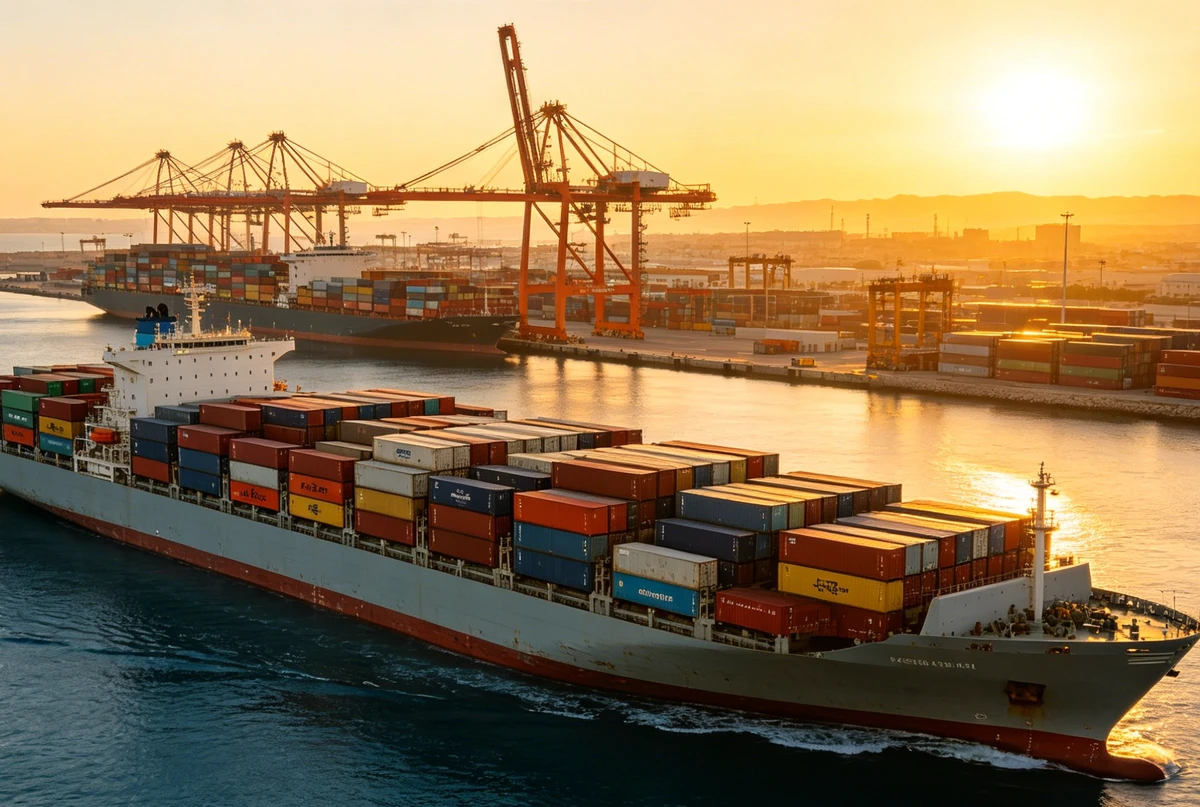
Sea shipping from China to Iran refers to the ocean freight transportation of goods from major Chinese ports (such as Shenzhen, Guangzhou, Shanghai, Ningbo, or Qingdao) to Iranian seaports, primarily Bandar Abbas, Bushehr, or Chabahar (Imam Khomeini Port). It is the dominant mode of transport for China-Iran trade due to its high capacity and lower cost per unit compared to air freight.
Most cargo moves via standard dry containers (20ft or 40ft), though specialized equipment like flat-rack or open-top containers may be required for oversized cargo (OOG) or heavy machinery. For smaller shipments that don’t fill a full container, LCL (Less than Container Load) consolidation services allow multiple shippers to share container space, making sea freight accessible even for low-volume importers.
From the field: In our experience managing Iran-bound shipments from Shenzhen, we’ve seen electronics clients save 20–30% on total logistics costs by switching from air freight to LCL sea freight for non-urgent restocks — even after factoring in Iran’s import duties and PSI fees. The key is accurate HS code classification upfront, which determines both duty rates and whether your goods require a special import license.
FCL vs. LCL: Choosing the Right Container Load for Iran
When planning FCL and LCL shipping to Bandar Abbas or other Iranian ports, your choice depends on cargo volume, budget, and urgency.
FCL (Full Container Load)
FCL means you book an entire container exclusively for your cargo. It is the most economical option when you have enough goods to fill (or nearly fill) a 20ft or 40ft container.
| Feature | 20ft Container (TEU) | 40ft Container (FEU) |
|---|---|---|
| Payload | ~21,000 kg | ~26,000 kg |
| Volume | ~33 CBM | ~67 CBM |
| Best For | Medium-sized shipments | Large-volume or bulky cargo |
| Cost Per Unit | Lower than LCL | Lowest per-unit cost |
| Security | Sealed at origin, minimal handling | Sealed at origin, minimal handling |
FCL is ideal for industrial equipment, electronics, furniture, or raw materials shipped in bulk. Because the container is sealed at the supplier’s factory in China and only opened at the destination warehouse in Iran, the risk of damage or tampering is significantly lower.
LCL (Less than Container Load)
LCL is a shared-container service where your cargo is consolidated with other shipments at a warehouse in China (often Shenzhen or Shanghai) and deconsolidated upon arrival in Iran.
| Feature | LCL Shipping |
|---|---|
| Minimum Volume | 1 CBM (cubic meter) |
| Cost Structure | Charged per CBM or per 1,000 kg (whichever is greater) |
| Transit Time | Typically 3–7 days longer than FCL due to consolidation |
| Best For | Small to medium shipments, sample orders, or mixed SKUs |
| Flexibility | Allows shipping from multiple suppliers into one consolidated load |
LCL is perfect for importers testing new products or sourcing from multiple Chinese suppliers. However, because your cargo is handled more frequently (loaded, unloaded, and sorted), the risk of minor damage is slightly higher — which is why proper packing and cargo insurance are essential.
Case in point: A Tehran-based importer recently sourced furniture from three different factories around Guangzhou. Instead of booking three separate LCL shipments, we consolidated everything at our Shenzhen warehouse, performed a unified loading inspection, and shipped as a single FCL 40ft container to Bandar Abbas. The result? Lower per-unit cost, reduced handling damage, and one streamlined customs clearance process.
Quick Decision Framework
| If Your Shipment Is… | Choose |
|---|---|
| Over 15 CBM or 10,000 kg | FCL |
| Under 15 CBM or fragile/high-value | LCL (with insurance) |
| From multiple suppliers | LCL (consolidation) |
| Time-sensitive | FCL (faster, direct) |
Major Seaports for China to Iran Shipping Routes
Understanding the port pair you use directly impacts both cost and transit time. Not all Chinese ports offer the same sailing frequency to Iran, and not all Iranian ports handle the same cargo types.
Top Export Ports in China
| Port | Location | Strengths for Iran Trade |
|---|---|---|
| Shenzhen (Yantian/Shekou) | South China | Fastest access for electronics, 3C products, and e-commerce cargo from the Pearl River Delta |
| Guangzhou (Nansha) | South China | Major furniture, textiles, and machinery export hub; competitive LCL consolidation rates |
| Shanghai | East China | Largest container volume in China; best for industrial equipment and oversized cargo |
| Ningbo-Zhoushan | East China | Strong alternative to Shanghai with lower congestion and competitive FCL pricing |
| Qingdao | North China | Ideal for shipments originating from Shandong or northern manufacturing zones |
Top Import Ports in Iran
| Port | Location | Key Features |
|---|---|---|
| Bandar Abbas | Strait of Hormuz | Iran’s largest and busiest container port; handles ~80% of Iran’s seaborne imports |
| Bushehr | Persian Gulf | Growing alternative to Bandar Abbas; less congestion for certain cargo types |
| Chabahar (Imam Khomeini Port) | Gulf of Oman | Strategic for access to eastern Iran and Central Asia; government-backed expansion |
For most importers, Bandar Abbas is the default destination due to its massive throughput and established customs infrastructure. However, if your final destination is closer to Bushehr or you’re shipping project cargo bound for eastern Iran, routing through Chabahar may reduce inland trucking costs. Businesses with multi-destination supply chains in the Middle East may also find our Freight Shipping from China to Middle East hub useful for comparing regional routing options.
2026 Sea Freight Costs from China to Iran
Finding the cheapest sea freight from China to Iran requires more than comparing base ocean rates. You need to account for origin charges, destination handling, customs duties, and the mandatory Pre-Shipment Inspection (PSI).
Estimated Freight Rates (2026)
The following table provides indicative all-in freight rates for sea shipping from major Chinese ports to Bandar Abbas. Actual quotes vary based on cargo type, seasonality, and fuel surcharges (BAF).
Disclaimer: The rates below are indicative estimates based on market conditions in June 2026. Ocean freight rates fluctuate weekly due to fuel costs, carrier capacity, and seasonal demand. For an accurate, binding quote for your specific cargo, request a customized quote from Sinoshipment.
| Service Type | Rate Range (USD) | Notes |
|---|---|---|
| FCL 20ft (TEU) | $1,800 – $2,800 | Best for dense, heavy cargo; rates spike before CNY |
| FCL 40ft (FEU) | $3,200 – $4,500 | Most cost-effective per CBM for large shipments |
| FCL 40ft High Cube | $3,500 – $4,800 | Extra volume for light, bulky cargo like furniture |
| LCL (per CBM) | $55 – $95 | Based on chargeable weight (1 CBM = 1,000 kg) |
| LCL (per 1,000 kg) | $65 – $110 | Applied when cargo is dense/heavy |
Pro Tip: Rates from Shenzhen and Guangzhou to Bandar Abbas are often 5–10% lower than from Shanghai or Ningbo due to higher sailing frequency and competition among South China carriers.
Hidden Costs to Factor Into Your Budget
Beyond the ocean freight rate, Iranian importers must prepare for the following:
| Cost Item | Estimated Range | Description |
|---|---|---|
| Iran Import Duty | 20% – 100%+ | Varies by HS code; consumer goods often face the highest rates |
| VAT (Value Added Tax) | 9% | Applied to CIF value + duty |
| Pre-Shipment Inspection (PSI) | $250 – $600 | Mandatory for most commercial goods; arranged before shipment leaves China |
| Port Handling (THC) | $150 – $350 | Terminal handling charges at Bandar Abbas or Bushehr |
| Customs Broker (Tarkhis Kar) | $200 – $500 | Local Iranian agent fee for clearance and documentation |
| Inland Trucking | $300 – $800+ | From port to Tehran, Shiraz, or other inland cities |
How to Reduce Your Total Shipping Cost
- Book FCL instead of LCL when your cargo exceeds 15 CBM — the per-unit savings are substantial.
- Consolidate multiple suppliers at a Shenzhen or Guangzhou warehouse before shipping.
- Avoid peak seasons like the weeks before Chinese New Year (late January 2026) when rates surge and space is tight.
- Work with a direct China-based forwarder like Sinoshipment to eliminate middleman markups and access carrier-direct contracts.
If you’re also shipping to Western markets, our guide on Container Shipping from China to USA explains how FCL and LCL pricing models differ on trans-Pacific routes.
Shipping Time from China to Iran: What to Expect in 2026
Transit time is one of the first questions importers ask when evaluating sea shipping from China to Iran. While ocean freight is slower than air freight, it offers unmatched cost efficiency for non-urgent cargo.
Estimated Transit Times by Port Pair
| Route | Transit Time (Days) | Notes |
|---|---|---|
| Shenzhen → Bandar Abbas | 18 – 28 days | Frequent direct sailings; fastest South China option |
| Guangzhou → Bandar Abbas | 20 – 30 days | Slightly longer due to Nansha port scheduling |
| Shanghai → Bandar Abbas | 22 – 32 days | Major hub with multiple carrier options |
| Ningbo → Bandar Abbas | 22 – 32 days | Competitive alternative to Shanghai |
| Qingdao → Bandar Abbas | 25 – 35 days | Northern origin; fewer direct strings |
| Any China Port → Bushehr | 20 – 35 days | Slightly less frequent than Bandar Abbas sailings |
| Any China Port → Chabahar | 25 – 40 days | Longer route via Gulf of Oman |
Factors That Can Delay Your Shipment
- Chinese New Year (CNY): Factories and ports slow down significantly in late January 2026. Book space at least 3–4 weeks in advance.
- Port Congestion: Bandar Abbas can experience backlog during peak import seasons, adding 3–7 days to unloading and customs processing.
- Weather Conditions: Monsoon season in the Indian Ocean (June–September) may cause minor routing adjustments.
- Customs Inspections: Random inspections by Iranian customs or incomplete documentation can add several days to clearance.
- Transshipment: Some routes involve a transshipment hub (e.g., Jebel Ali or Singapore), adding 5–10 days to total transit.
Geopolitical Note: Given the strategic importance of the Strait of Hormuz for Iran-bound cargo, importers should stay informed about regional developments. Read our analysis on the Strait of Hormuz Reopens and how the Iran War Supply Chain Impact could affect your shipping schedules.
For a broader perspective on international transit planning, see our breakdown of How Long Does Shipping Take From China to USA, which covers similar variables on trans-Pacific lanes.
Navigating Customs Clearance for Shipping to Iran from China
Iranian customs is notoriously complex. Importers face strict documentation requirements, high tariffs, and mandatory inspections. Getting this wrong can result in cargo being held for weeks — or worse, confiscated.
Mandatory Documents for Iran Import Clearance
Before your cargo leaves China, ensure the following documents are prepared accurately and in compliance with Iranian standards:
| Document | Purpose | Key Details |
|---|---|---|
| Commercial Invoice | Declares value for duty assessment | Must match the PSI report exactly; discrepancies trigger delays |
| Packing List | Details cargo dimensions, weight, and packaging | Required for customs inspection and warehouse handling |
| Bill of Lading (B/L) | Contract of carriage and title of goods | Original B/L required for cargo release at Bandar Abbas |
| Certificate of Origin (CO) | Confirms goods are manufactured in China | Issued by China Chamber of Commerce; required for preferential duty rates |
| Pre-Shipment Inspection (PSI) Certificate | Verifies quantity, quality, and value before shipment | Mandatory for most goods; conducted by approved third-party inspectors in China |
| Import License (if applicable) | Required for restricted goods | Electronics, pharmaceuticals, and automotive parts often need special permits |
Pre-Shipment Inspection (PSI): Why It Matters
The PSI is one of the most critical — and most overlooked — steps when shipping from China to Iran. An approved inspection agency must verify your cargo’s quantity, quality, and value before it is loaded onto the vessel.
If the PSI certificate does not match the Commercial Invoice or Packing List upon arrival, Iranian customs will likely reject the shipment or impose heavy fines. This is why coordination between your Chinese supplier, your freight forwarder, and the PSI agency is essential.
The Role of a Local Customs Broker (Tarkhis Kar)
In Iran, a licensed customs broker — known locally as a “Tarkhis Kar” (ترخیص کار) — is almost mandatory for smooth clearance. They handle:
- Submitting documents to Iranian customs
- Calculating and paying duties and VAT
- Coordinating cargo release from the port
- Arranging inland trucking to your warehouse
Your China-side freight forwarder should work hand-in-hand with your Tarkhis Kar, ensuring all export documents are formatted correctly and delivered on time.
Compliance and Banking Considerations
Due to international sanctions, payment and banking channels between China and Iran require extra care. Many transactions are handled through:
- Chinese banks with Iranian correspondent relationships
- Third-party payment structures in neutral jurisdictions
- Letter of Credit (L/C) arrangements for large shipments
A reliable freight forwarder from China to Iran will advise you on compliant routing and documentation practices without crossing regulatory boundaries. For businesses also exploring Freight Shipping from China to Middle East corridors beyond Iran, working with a forwarder who understands regional sanctions and banking complexities is equally critical.
Compliance insight: According to the General Administration of Customs of China (GACC), all export declarations must accurately reflect the cargo’s HS code, value, and destination. For Iran-bound shipments, discrepancies between the export declaration and the PSI certificate are one of the leading causes of customs delays at Bandar Abbas. We always cross-check these documents before the vessel sails to prevent costly hold-ups at destination.
Step-by-Step Guide to Door-to-Door Sea Shipping from China to Iran
For importers who want a hands-off experience, door-to-door sea shipping from China to Iran bundles every step into a single service. Here’s how it works when you partner with an experienced forwarder like Sinoshipment.
If your business also serves markets across the Gulf, you may be interested in our Air Freight from China to Saudi Arabia service for time-sensitive cargo to Jeddah or Riyadh.
Phase 1: Factory Pickup & Cargo Consolidation
- Your forwarder arranges pickup from your supplier’s factory in Shenzhen, Dongguan, Guangzhou, or any major Chinese city.
- If you’re sourcing from multiple suppliers, cargo is consolidated at a Sinoshipment warehouse near the port, reducing handling and saving on LCL costs.
- Optional loading inspection ensures packaging is export-ready and compliant with Iranian standards.
Phase 2: China Export Customs Clearance
- Your forwarder prepares the Commercial Invoice, Packing List, Booking Confirmation, and Export Declaration.
- The cargo is declared to China Customs (GACC) and cleared for export.
- For sensitive goods (e.g., battery-powered electronics), additional certifications like MSDS or UN38.3 are verified.
Phase 3: Ocean Freight & Vessel Tracking
- The container is loaded onto the vessel at Yantian, Nansha, Shanghai, or another designated port.
- You receive a Bill of Lading (B/L) and vessel tracking link to monitor progress across the Indian Ocean.
- Estimated arrival at Bandar Abbas or Bushehr is confirmed based on the carrier’s schedule.
Phase 4: Iran Import Clearance & Final Delivery
- Upon arrival, your forwarder’s Iranian partner (or your designated Tarkhis Kar) submits the B/L, Commercial Invoice, Packing List, Certificate of Origin, and PSI Certificate to customs.
- Import duties (20–100%+), 9% VAT, and port handling fees are calculated and paid.
- Once cleared, the cargo is loaded onto a truck for inland delivery to Tehran, Mashhad, Shiraz, or any other destination.
Why Choose Sinoshipment for Sea Shipping from China to Iran?
With over a decade of hands-on experience, Sinoshipment has built a reputation as a reliable freight forwarder from China to Iran — not just because we move cargo, but because we anticipate problems before they happen.
10+ Years of China-Iran Logistics Expertise
Founded in 2013 and headquartered in Shenzhen, Sinoshipment has managed sea freight, air freight, and door-to-door shipments for over 5,000 clients across the Middle East, Europe, and beyond. Our team understands the nuances of Iranian customs, PSI coordination, and compliant routing — so you don’t have to learn them the hard way.
Direct Carrier Relationships
We maintain strong partnerships with leading carriers including COSCO, OOCL, APL, EMC, MSK, and HMM. This means:
- Guaranteed container space, even during peak season
- Stable, competitive pricing without middleman markups
- Flexible routing options — direct or transshipment — based on your budget and timeline
Transparent, All-Inclusive Quotes
We believe in no hidden fees. Whether you need FOB China, CIF Bandar Abbas, or a full DDP (Delivered Duty Paid) solution, we provide a single, transparent quote covering:
- Origin pickup and warehousing
- China export customs clearance
- Ocean freight to Bandar Abbas, Bushehr, or Chabahar
- Iran import customs support
- Inland delivery to your final warehouse
Proactive Risk Management
We don’t wait for problems to arise. Our team monitors:
- Port congestion at Bandar Abbas and alternative ports
- CNY and holiday schedules to avoid delays
- Sanctions and compliance updates to ensure your shipment stays on the right side of regulations
- Cargo insurance options to protect high-value goods against damage or loss
Ready to ship? Contact Sinoshipment today for a customized, competitive quote on your next sea shipment from China to Iran. We’ll handle the complexity — you focus on growing your business.
FAQ: Sea Shipping from China to Iran
How long does it take to ship from China to Iran by sea?
Sea shipping from China to Iran typically takes 18 to 35 days depending on the port of origin and whether the route is direct or involves transshipment. Shenzhen and Guangzhou offer the fastest sailings to Bandar Abbas, usually in the 18–28 day range.
What is the cheapest way to ship goods from China to Iran?
For most importers, FCL (Full Container Load) is the cheapest per-unit option when shipping large volumes. For smaller shipments, LCL (Less than Container Load) consolidation from a Shenzhen or Guangzhou warehouse reduces costs compared to booking separate small loads. Working with a direct China-based freight forwarder also eliminates unnecessary broker markups.
Can I ship battery-powered electronics or oversized cargo to Iran?
Yes, but both require special handling. Battery-powered electronics need MSDS and UN38.3 certifications for safe transport. Oversized cargo (OOG) — such as heavy machinery or project equipment — requires flat-rack or open-top containers and may need route surveys. Sinoshipment’s project cargo team can coordinate these requirements end-to-end.
What is a Pre-Shipment Inspection (PSI), and do I need one?
A PSI is a mandatory inspection conducted by an approved third-party agency in China before your cargo is shipped. It verifies the quantity, quality, and value of your goods. For most commercial imports into Iran, a PSI certificate is required for customs clearance. Without it, your cargo may be rejected or held indefinitely at Bandar Abbas.
Do I need a customs broker in Iran?
While not legally mandatory, hiring a licensed Iranian customs broker — known as a Tarkhis Kar — is strongly recommended. Iranian customs clearance procedures are complex, and a local expert ensures your documents are filed correctly, duties are calculated accurately, and your cargo is released without unnecessary delays.
For businesses expanding into East Africa, similar customs complexities apply. Our guide to Shipping from China to Kenya by Sea covers port procedures at Mombasa and how a local clearing agent can streamline your import process.
What Incoterm should I use for shipping to Iran?
The most common Incoterms for China-Iran trade are:
- FOB (Free On Board): The supplier delivers cargo to the Chinese port; you (or your forwarder) handle ocean freight and Iran-side costs.
- CIF (Cost, Insurance, and Freight): The supplier pays for ocean freight and insurance to Bandar Abbas; you handle import clearance and inland delivery.
- DDP (Delivered Duty Paid): Your forwarder handles everything — shipping, customs, duties, and final delivery — giving you a single, predictable cost.
- DAP (Delivered at Place): Similar to DDP, but the buyer pays import duties and VAT upon arrival. This can be useful if you have a local Iranian accounting team that prefers to manage tax payments directly.
For first-time importers or those without a local Iran agent, DDP is often the safest and most transparent choice. However, if you already have an established Tarkhis Kar and want more control over duty calculations, DAP or CIF may offer better visibility into your landed costs.
Pro tip: Under Incoterms 2020, DDP places maximum obligation on the seller (your forwarder), while DAP splits the responsibility at the destination port. Always confirm which version of Incoterms your supplier is quoting — older versions (like Incoterms 2010) may have slightly different risk transfer points.
Conclusion
Sea shipping from China to Iran is a powerful, cost-effective solution for businesses importing everything from industrial machinery to consumer goods. But success depends on more than just booking a container — it requires understanding FCL vs. LCL, navigating Iranian customs and PSI requirements, and partnering with a reliable freight forwarder who knows the China side inside and out.
At Sinoshipment, we’ve spent over 10 years helping importers move cargo smoothly from Shenzhen, Guangzhou, Shanghai, and beyond to Bandar Abbas, Bushehr, and Chabahar. With transparent pricing, direct carrier relationships, and deep expertise in Iran-bound logistics, we take the guesswork out of international shipping.
Get your free quote today and discover why 5,000+ clients trust Sinoshipment for their China-to-Iran sea freight needs.