Shipping from China to Australia by Sea: The Complete 2026 Guide (FCL, LCL & DDP)
· By SinoShipment
As Australia’s largest trading partner, China supplies everything from electronics and furniture to industrial machinery. For businesses moving these goods, Freight Shipping from China to Australia by sea remains the ultimate weapon for keeping logistics costs low. However, navigating the volatile freight market, unpredictable delays, and hidden customs fees can quickly eat into your profit margins. Many importers and e-commerce sellers find themselves frustrated by complex regulations like wood fumigation, the notorious Brown Marmorated Stink Bug (BMSB) season, and confusing door-to-door timelines.
Written by a senior ocean freight forwarder China expert at Sinoshipment, this comprehensive 2026 guide will demystify the entire process. With over 10 years of hands-on experience and having successfully served 5,000+ global clients since 2013, our team has seen every bottleneck imaginable. In this guide, we will break down the latest sea freight rates, provide a realistic timeline for door-to-door delivery, and reveal how you can leverage the China-Australia Free Trade Agreement (ChAFTA) to achieve zero-tariff customs clearance. We believe in providing transparent logistics solutions without hidden fees, so we won’t sugarcoat the risks.
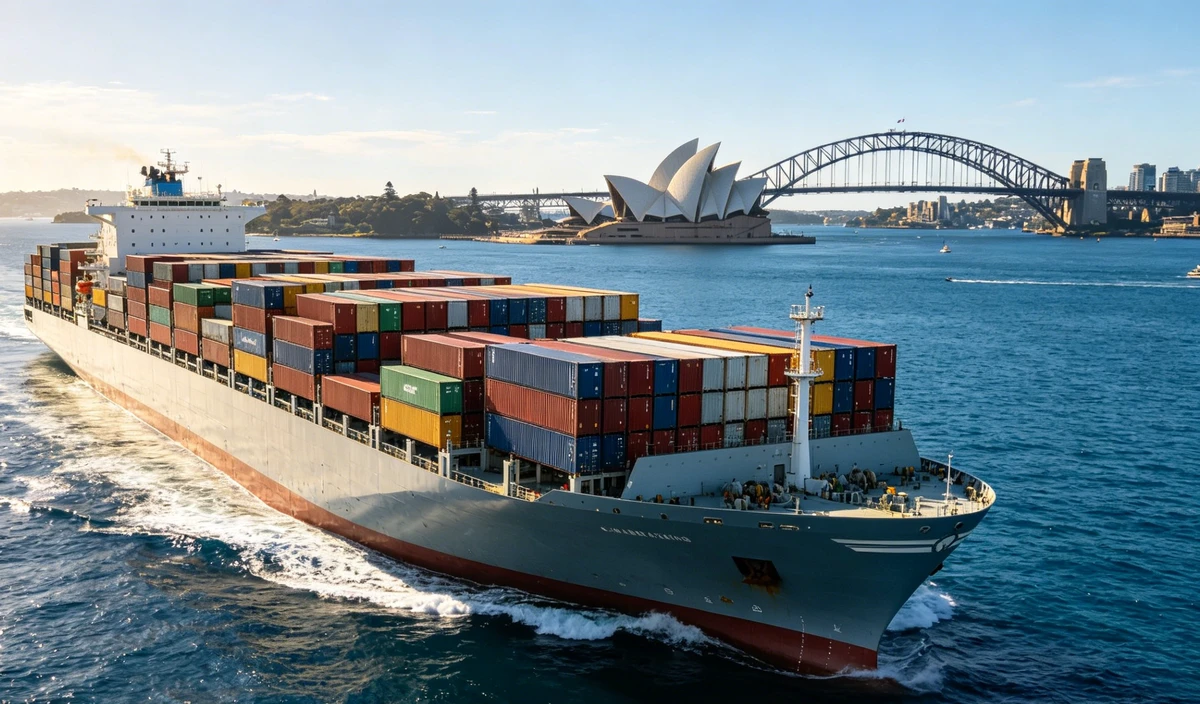
FCL vs LCL Shipping to Australia from China: Which is More Cost-Effective?
When planning your ocean freight, the first major decision is choosing between FCL and LCL. Understanding the difference is key to finding the cheapest sea freight from China to Australia for your specific cargo volume.
FCL (Full Container Load)
FCL (Full Container Load) means you rent an entire 20-foot or 40-foot container exclusively for your goods. For a deep dive into this method, our guide on FCL Shipping from China to Australia explains that it does not necessarily mean the container must be filled to the brim. FCL is highly recommended for shipments exceeding 15 cubic meters (CBM).
- Pros: Enhanced security (less handling), faster transit times, and lower cost per unit for large volumes.
- Cons: You pay for the whole container regardless of how much space you use.
LCL Consolidation
LCL consolidation (Less than Container Load) is designed for smaller shipments, typically between 1 and 15 CBM. Your cargo shares container space with goods from other importers.
- Pros: You only pay for the exact volume (CBM) you occupy, making it highly economical for small batches.
- Cons: Transit times are generally 3-5 days longer due to the consolidation process in China and the deconsolidation process in Australia.
Decision Framework: If your cargo volume is small but not urgent, LCL is your best bet. If you are shipping bulk inventory, furniture, or heavy machinery, FCL offers better security and long-term cost efficiency.
Real-Life Scenario: A mid-sized buyer sourcing furniture from multiple suppliers around Guangzhou benefits greatly from our weekly LCL consolidation service at Nansha Port. Instead of managing separate small shipments, we consolidate their cargo at our Shenzhen warehouse, handle unified export clearance, and deliver a single consolidated shipment to Melbourne, saving them nearly 20% in destination handling fees.
Sea Freight Rates from China to Australia 2026
Budgeting accurately is critical. Ocean freight rates fluctuate based on seasonality, port congestion, and fuel surcharges. Below is a realistic breakdown of the shipping container from China to Australia cost in 2026.
FCL Container Shipping Costs
The following table provides estimated port-to-port FCL rates from major Chinese origin ports to key Australian destinations.
| Origin Port (China) | Destination Port (Australia) | 20ft Container (USD) | 40ft Container (USD) |
|---|---|---|---|
| Port of Shenzhen / Guangzhou | Port of Sydney | $1,200 - $1,800 | $2,200 - $2,800 |
| Port of Shanghai / Port of Ningbo | Port of Melbourne | $1,300 - $1,900 | $2,400 - $3,000 |
| Qingdao / Tianjin | Port of Brisbane | $1,400 - $2,100 | $2,600 - $3,300 |
(Note: Rates are estimates for Q1/Q2 2026 and do not include destination port charges or customs duties.)
LCL Consolidation Costs
For LCL shipments, the ocean freight is calculated per CBM. In 2026, the average rate ranges from $50 to $120 per CBM, depending on the specific route and carrier.
Beware of Hidden Costs
When searching for the cheapest rates, do not just look at the ocean freight. Your chosen Incoterms 2020 (FOB, CIF, EXW) heavily impact the final bill. For example, under CIF terms, the supplier pays the ocean freight, but you might be hit with exorbitant Destination Delivery Charges (DDC) and Terminal Handling Charges (THC) upon arrival. To avoid surprises, always ask your freight forwarder for a transparent, all-inclusive door-to-door quote. We always objectively evaluate different trade terms to recommend the most cost-effective solution for your specific supply chain.
Sea Freight Transit Time from China to Australia: The 7-Step Breakdown
Many online calculators promise a 12-day transit time. However, this is strictly the port-to-port sailing time. If you often wonder How Long Does Shipping Take from China to Australia, to manage your supply chain effectively, you must understand the realistic door to door sea freight China to Australia timeline, which typically spans 28 to 35 days.
Here is a detailed breakdown of the 7 stages involved:
- Origin Pickup & Export Customs (1-3 Days): Transporting goods from the Chinese factory to the departure port warehouse and clearing Chinese customs.
- Container Loading & Waiting (3-7 Days): Loading the goods into the container (FCL) or consolidating them (LCL) and waiting for vessel departure. Note: Expect severe space constraints and delays of 7-14 days if shipping right before Chinese New Year (CNY).
- Ocean Transit Time (11-16 Days): The actual sailing time on the water. For instance, the transit time Shenzhen to Sydney by sea is usually 11 to 14 days, while Shanghai to Melbourne takes about 14 to 16 days.
- Port Arrival & Unloading (2-4 Days): The vessel arrives in Australia, and containers are unloaded at the terminal.
- Australian Customs Clearance (1-3 Days): Processing import documents, paying duties, and undergoing quarantine inspections if required.
- Deconsolidation (LCL Only, 3-5 Days): Moving the container to a bonded warehouse to unpack and sort individual LCL shipments.
- Last-Mile Delivery (2-5 Days): Trucking the cargo from the port or warehouse to your final destination in Australia.
Customs Clearance for Sea Freight to Australia: Compliance & Tax Guide
Navigating Australian customs is arguably the most complex part of importing. Ensuring compliance will save you from hefty fines and storage demurrage fees.
Calculating Import Taxes and Duties
Understanding import taxes and duties from China to Australia is essential. The Australian government levies a 10% GST (Goods and Services Tax) Australia on most imported goods. GST is calculated based on the Value of Taxable Importation (VoTI), which includes the customs value of the goods, international transport and insurance costs, and any applicable import duties.
The ChAFTA Advantage (Zero Tariffs)
Under the China-Australia Free Trade Agreement (ChAFTA), many products manufactured in China can enter Australia duty-free. According to the Australian Department of Foreign Affairs and Trade (DFAT), to claim this exemption, you must present a valid certificate of origin issued by authorized Chinese agencies and ensure your goods are classified under the correct HS Codes. Without this certificate and accurate classification, you may be subject to a standard 5% import duty.
Strict Biosecurity Regulations
Australia has some of the strictest biosecurity laws in the world, enforced by the Australian Border Force (ABF) and the Department of Agriculture, Fisheries and Forestry (DAFF):
- Wood Packaging (ISPM 15): Any wooden pallets or crates must be properly treated and stamped with the ISPM 15 mark, or accompanied by a valid fumigation certificate.
- BMSB (Brown Marmorated Stink Bug) Season: From September 1st to April 30th, certain high-risk goods (like machinery, vehicles, and metal parts) shipped from or passing through target risk countries must undergo mandatory BMSB treatment before arriving in Australia.
Essential Documentation
To ensure smooth processing by your customs broker Australia, you must prepare a complete set of documents, including the Commercial Invoice, Packing List, Bill of Lading (B/L), and the Certificate of Origin. For sensitive items like battery-powered electronics, a valid MSDS (Material Safety Data Sheet) is also mandatory to avoid costly delays.
Amazon FBA Sea Freight from China to Australia
For e-commerce sellers, shipping directly from Chinese manufacturers to Amazon fulfillment centers (such as BWU1 in Sydney or MEL1 in Melbourne) requires a specialized approach.
The most popular solution is DDP (Delivered Duty Paid) shipping. With a DDP sea freight service, your freight forwarder handles everything: ocean freight, Australian customs clearance, paying import duties and GST, and the final truck delivery to the Amazon warehouse. This allows you to focus purely on marketing and sales.
FBA Compliance Requirements:
- Palletizing: Amazon Australia strictly requires goods to be delivered on standard Australian pallets (1165mm x 1165mm) that are ISPM 15 compliant.
- Labeling: Every carton must have correct FNSKU labels and Amazon shipment labels. Working with a forwarder like Sinoshipment ensures these requirements are met before the goods leave China, avoiding expensive reworking fees in Australia.
In our experience managing FBA shipments from Shenzhen to Amazon warehouses in Australia (like BWU1), combining our local consolidation and labeling services with direct container loading at Yantian Port drastically reduces handling damage and avoids Amazon rejection.
You may be interested in the following related shipping routes:
- Freight Shipping from China to Qatar
- Freight Shipping from China to Israel
- Freight Shipping from China to Bahrain
- Freight Shipping from China to Kuwait
- Freight Shipping from China to Brazil
FAQ
What is the cheapest way to ship goods from China to Australia? For shipments under 15 CBM, sea freight LCL consolidation is the most cost-effective. For volumes larger than 15 CBM, FCL (Full Container Load) provides the lowest cost per unit.
How long does a cargo ship take from China to Australia? While the vessel sailing time is 11-16 days, you should plan for a total door-to-door transit time of 28 to 35 days to account for origin handling, customs clearance, and last-mile delivery.
Who is responsible for customs clearance in Australia? If you ship under FOB or EXW terms, you (the buyer) are responsible for Australian customs clearance and must hire a local customs broker. If you use a DDP service, your freight forwarder handles the clearance on your behalf.
Do I need to pay GST on imports under $1,000? Yes. Since 2018, the Australian government requires overseas vendors (or freight forwarders acting as redeliverers) to collect 10% GST on low-value imported goods (under AUD 1,000) sold to Australian consumers.
Conclusion
Mastering shipping from China to Australia by sea requires more than just finding the lowest freight rate. By accurately calculating door-to-door timelines, leveraging ChAFTA for tax exemptions, and strictly adhering to Australian biosecurity laws, you can build a highly efficient and profitable supply chain.
Founded in 2013 and headquartered in Shenzhen, Sinoshipment is a professional freight forwarding brand that has successfully served over 5,000 global clients. Whether you need standard FCL/LCL ocean freight, complex Amazon FBA DDP solutions, or expert customs clearance assistance, our team provides reliable, customized services from China to all major Australian ports.
Ready to optimize your shipping strategy and reduce your logistics costs? Contact Sinoshipment today to get a competitive, all-inclusive quote for your 2026 shipments.