Shipping from China to Iran via Land: Complete 2026 Guide for Auto Parts & New Energy Equipment (Hormuz Bypass)
· By SinoShipment
Shipping from China to Iran via land has shifted from a niche alternative to a strategic necessity in autumn 2026. Ocean carriers are charging $1,500 per TEU in war-risk surcharges for Gulf transits as of October 2026 (Hapag-Lloyd, CMA CGM, MSC unified standard), with emergency conflict surcharges adding $2,000–$4,000 per container on affected trades. Rail freight rates from China to Iran surged 40% due to capacity scarcity, pushing 40HQ rates to $6,500–$7,000. Meanwhile, the 140th Canton Fair has just opened its doors in Guangzhou, drawing thousands of Middle East buyers sourcing auto parts, lithium batteries, and solar equipment.
If you are an Iranian importer standing in a Canton Fair booth right now, you face one urgent question: how do you move these orders back to Tehran quickly, safely, and compliantly while the maritime chokepoint remains unstable? This guide gives you the answer.
Since 2013, our team has managed freight shipping from China to Iran, serving over 5,000 clients across the Middle East. Below is our field-tested playbook for shipping auto parts and new energy equipment from China to Iran by rail and road, with 2026 rates, compliance checklists, and DDP solutions that actually work.
1. Why 2026 Is Different: Hormuz Tensions and the Land Freight Advantage
The Strait of Hormuz remains one of the world’s most critical maritime chokepoints, handling roughly 20% of global oil trade. In October 2026, escalating regional tensions have triggered a cascade of disruptions:
- War-risk surcharges: Ocean carriers now add $500–$1,500 per TEU on China–Iran routes.
- Rerouting delays: Vessels avoiding the strait face 7–15 day delays or divert to alternative Gulf ports.
- Carrier cancellations: Several major lines have suspended direct calls to Bandar Abbas entirely.
For time-sensitive inventory like auto parts and project-critical new energy equipment, these disruptions make traditional sea freight unreliable. Alternative shipping routes to Iran avoiding the Strait of Hormuz have become essential, not optional. For a deeper analysis of how the current situation affects regional logistics, see our guide on the 2026 Strait of Hormuz Crisis and its shipping impact.
Sea vs. Land vs. Air: October 2026 Comparison
| Transport Mode | Transit Time | 40HQ Cost (USD) | Risk Level | Best For |
|---|---|---|---|---|
| Sea (via Hormuz) | 25–45 days | $1,050–$3,200 + war risk | High | Non-urgent bulk cargo |
| Rail (Central Asia corridor) | 14–18 days | $4,500–$7,000 | Low | Medium-high value, time-sensitive |
| Road (truck direct) | 18–25 days | 10–20% below rail | Low | Door-to-door LCL, urgent samples |
| Air (to IKA Tehran) | 3–7 days | $4.50–$8.50/kg | Medium | Emergency, high-value, small parcels |
From Our Experience: Routing FCL and LCL cargo from Xi’an, Changsha, and Shenzhen to Tehran, we’ve found rail freight delivers the optimal balance when inventory carrying costs and stock-out risks are factored in. A 15-day rail transit can reduce your total landed cost by 20–30% compared to 45-day sea freight, even at current elevated rates.
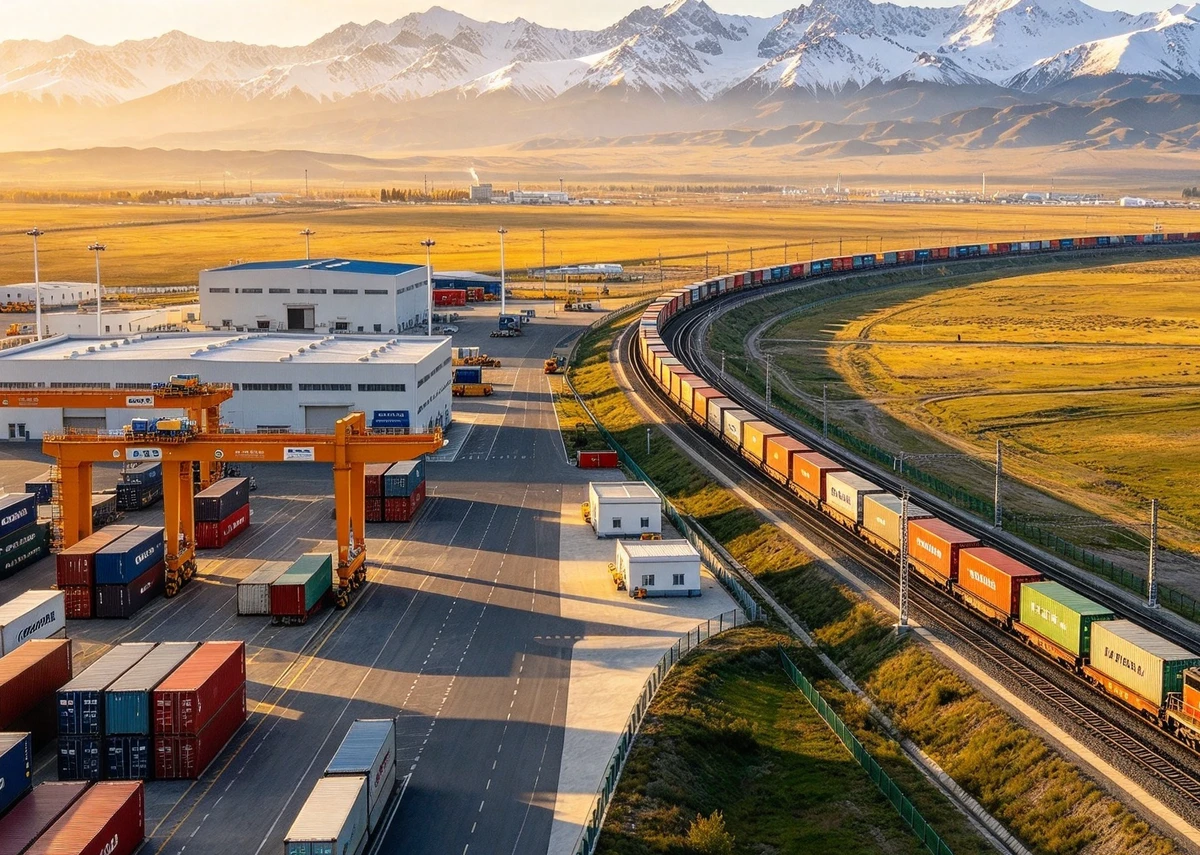
The China–Central Asia–West Asia rail corridor completely bypasses maritime chokepoints. Cargo moves overland through politically stable Kazakhstan and Turkmenistan, entering Iran at the Sarakhs or Incheh Burun border crossings—no sea leg whatsoever.
Understanding the Multi-Operator Challenge
Unlike a single-country truck move, the China–Iran rail corridor involves multiple railway operators and two gauge changes: China’s standard gauge (1,435 mm) gives way to the broad gauge (1,520 mm) used in Kazakhstan and Turkmenistan, then back to standard gauge at the Iranian border. This means containers must be physically lifted from one set of wagons to another at Khorgos/Altynkol, Dostyk, and Sarakhs.
For shippers, this creates two practical implications:
- Documentation complexity: Your cargo moves under a CIM/SMGS consignment note, the international rail waybill governing carriage across both European/Asian (CIM) and former Soviet bloc (SMGS) networks. A forwarder familiar with both systems is essential.
- Delay risk at transshipment points: Each gauge change adds 1–2 days. During peak seasons, congestion at Sarakhs—the primary China–Iran rail gateway with volumes up 80% year-on-year—can add another 1–2 days. A professional forwarder pre-books transshipment slots to minimize idle time.
The April 2024 Four-Party Rail Tariff Agreement between China, Kazakhstan, Turkmenistan, and Iran established unified through-rates and a benchmark 15-day transit from Khorgos to Tehran. This is why block train frequency surged sixfold in 2025 and transit times became more predictable in 2026. For complete details on schedules and border procedures, see our dedicated guide to rail freight from China to Iran via Central Asia.
2. Canton Fair 2026: Timing Your Shipment from Guangzhou to Iran
The 140th Canton Fair runs in three phases from October 15 to November 4, 2026. For Middle East importers, this creates a compressed logistics window that requires precise planning.
Post-Fair Shipping Timeline
| Date | Milestone | Action |
|---|---|---|
| Oct 15–19 | Phase 1 (Advanced Manufacturing) | Auto parts, machinery, new energy exhibitors |
| Oct 23–27 | Phase 2 (Quality Home Life) | Consumer goods, building materials |
| Oct 31–Nov 4 | Phase 3 (Better Life) | Textiles, food, medical products |
| Nov 5–10 | Sample dispatch | Small parcels via road LCL or rail LCL |
| Nov 15–30 | Mass production completion | Bulk FCL rail bookings |
| Dec 5–15 | Tehran arrival | Inventory ready before Nowruz (Mar 2026) |
Case Study: A Dubai-based trading company attending Phase 1 collected orders from three Guangzhou auto parts suppliers on October 18. By October 22, Sinoshipment had consolidated the cargo at our Shenzhen warehouse, completed export clearance, and loaded it onto a block train departing Xi’an on October 25. The containers cleared Sarakhs on November 5 and arrived at the client’s Tehran warehouse on November 8—13 days total, well before the client’s target date.
Booth-to-Door Workflow
Coordinating post-Fair shipments requires moving cargo from scattered Guangdong factories to rail hubs efficiently:
- Supplier pickup: We collect from factories in Guangzhou, Foshan, Dongguan, Shenzhen, and Zhongshan.
- Consolidation: Cargo is sorted, labeled, and consolidated at our Shenzhen or Yiwu warehouse.
- Rail hub transfer: Full containers are drayed to Xi’an, Changsha, or Yiwu rail terminals.
- Export clearance: GACC filing with commercial invoice, packing list, and HS codes.
Pro tip: Confirm your supplier’s Incoterms (EXW vs. FOB vs. DDP) before the Fair closes. Under EXW, your forwarder handles everything from the factory gate; under FOB, you only manage ocean/rail legs from the port.
3. How to Ship Auto Parts from China to Iran 2026 via Land
Auto parts represent one of the fastest-growing categories for Iran-bound land freight. Chinese suppliers in Guangdong, Zhejiang, and Jiangsu provinces offer competitive pricing on brake systems, suspension components, engine parts, and electrical systems.
Best Routes for Auto Parts
| Shipment Size | Recommended Mode | Transit Time | Rationale |
|---|---|---|---|
| Full container (20ft/40HQ) | Rail FCL | 14–18 days | Cost-effective, fixed schedule, lower damage risk |
| 1–15 CBM | Road LCL or Rail LCL | 18–25 days | Flexible, consolidates multi-supplier orders |
For smaller shipments combining multiple suppliers, our LCL consolidation from China to Iran service offers weekly departures with unified export clearance.
Client Story: In September 2026, a Tehran-based auto parts distributor ordered 3×40HQ containers of brake pads and suspension assemblies from three Foshan factories. We collected from all three suppliers, consolidated at Shenzhen, and moved the cargo via Xi’an–Khorgos–Sarakhs rail. Total transit: 16 days. Total cost under DDP: $6,200 per 40HQ including duties, clearance, and delivery—no hidden fees.
HS Codes and Iran Import Duties
| Product Category | HS Code | Iran Import Duty | VAT | Notes |
|---|---|---|---|---|
| Motor vehicle parts | 8708 | 15–40% | 9% | Standard Certificate required for regulated items |
| Complete vehicles | 8703 | 40%+ | 9% | Additional homologation may apply |
| Batteries (lead-acid) | 8507 | 20–30% | 9% | Distinguish from lithium-ion |
| Lithium-ion batteries | 8544 | 10–20% | 9% | UN38.3 and MSDS mandatory |
Pro Tip: The most frequent delay we see at Sarakhs is invoice–manifest mismatches. Ensure your commercial invoice, packing list, and certificate of origin (CO) show identical values, weights, and descriptions. A $100 discrepancy can trigger a 2–4 day inspection.
Packaging Standards for Multi-Week Land Transit
- Anti-rust coating on metal components (VCI paper or oil film).
- Shock-absorbing foam for sensitive parts like sensors and ECUs.
- Vacuum-sealed bags for electronic components.
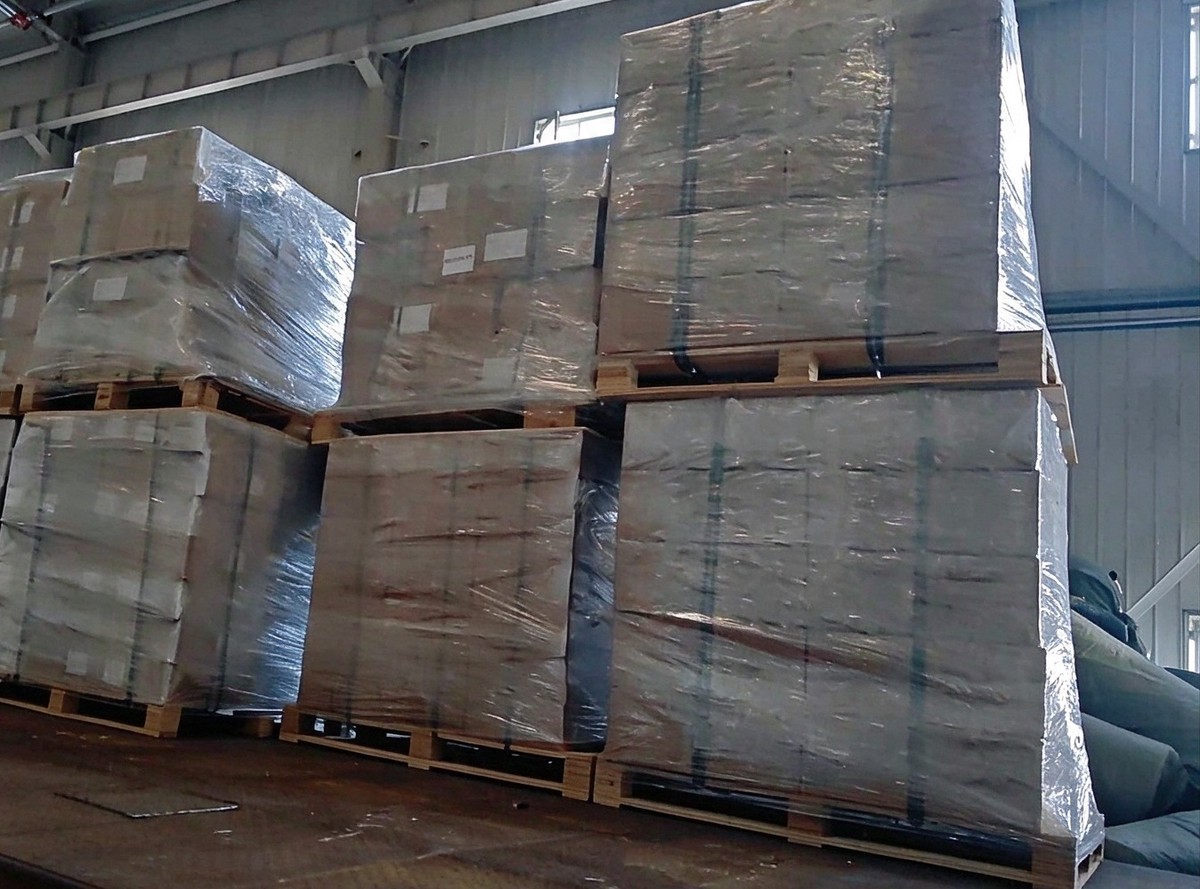
- ISPM 15-compliant wooden pallets with fumigation certificates.
4. Shipping EV Batteries and Solar Equipment from China to Iran
New energy equipment—solar panels, energy storage systems (ESS), and lithium batteries—is surging at Canton Fair 2026. However, these products face strict transport regulations that many importers underestimate.
Lithium Battery Compliance Checklist
| Requirement | Specification | Notes |
|---|---|---|
| UN38.3 Test Summary | Mandatory for all lithium cells/batteries | Must be issued by accredited lab |
| MSDS | Material Safety Data Sheet | Sections 14 (transport info) critical |
| Class 9 DG Label | Lithium battery handling label | Affixed to each package |
| Watt-hour Limit | No general Wh ceiling for rail (RID-approved DG packaging required) | The widely cited 100 Wh per battery limit applies to air transport (IATA PI965/966), not rail—rail accepts higher capacities |
| State of Charge (SoC) | ≤30% for rail transport per 2023 joint guidance (National Railway Administration, MIIT, China Railway) | Prevents thermal runaway |
Field Example: A Yiwu-based new energy company shipped 50 cartons of portable power stations (each containing lithium cells) to Mashhad in August 2026. We pre-cleared UN38.3 documentation, labeled all cartons as Class 9, and loaded them into a rail LCL container at Yiwu. The cargo cleared Sarakhs without inspection and arrived in 14 days—two days faster than standard due to pre-cleared documentation.
Solar Panels and Energy Storage Systems
- HS Code 8541.43 covers photovoltaic cell modules. Iran applies 10–20% import duty plus 9% VAT.
- Packaging: Use wooden crates with corner protectors. Glass breakage is the most common insurance claim on this route.
- Certifications: IEC 61215⁄61730 for solar panels; IEC 62619 or UL 1973 for ESS batteries. While not always mandatory for customs, they are essential for utility-scale project acceptance in Iran.
Oversized and Project Cargo Considerations
Large-scale energy storage systems (ESS) and industrial solar inverters often exceed standard container dimensions. For these shipments:
- Flat-rack containers (20ft or 40ft) accommodate cargo up to 2.4 meters wide and 2.1 meters high with fixed or collapsible ends.
- Open-top containers allow top-loading via crane for items that cannot fit through standard doors.
- Route surveys: For extremely heavy or wide loads, we conduct route surveys to confirm bridge weight limits and tunnel clearances through Kazakhstan and Turkmenistan.
- Permits: Oversized cargo requires special transport permits in each transit country. Processing takes 5–7 business days—factor this into your Canton Fair order timeline.
For detailed specifications on handling non-standard cargo, see our guide to shipping oversized cargo (OOG) from China to Iran.
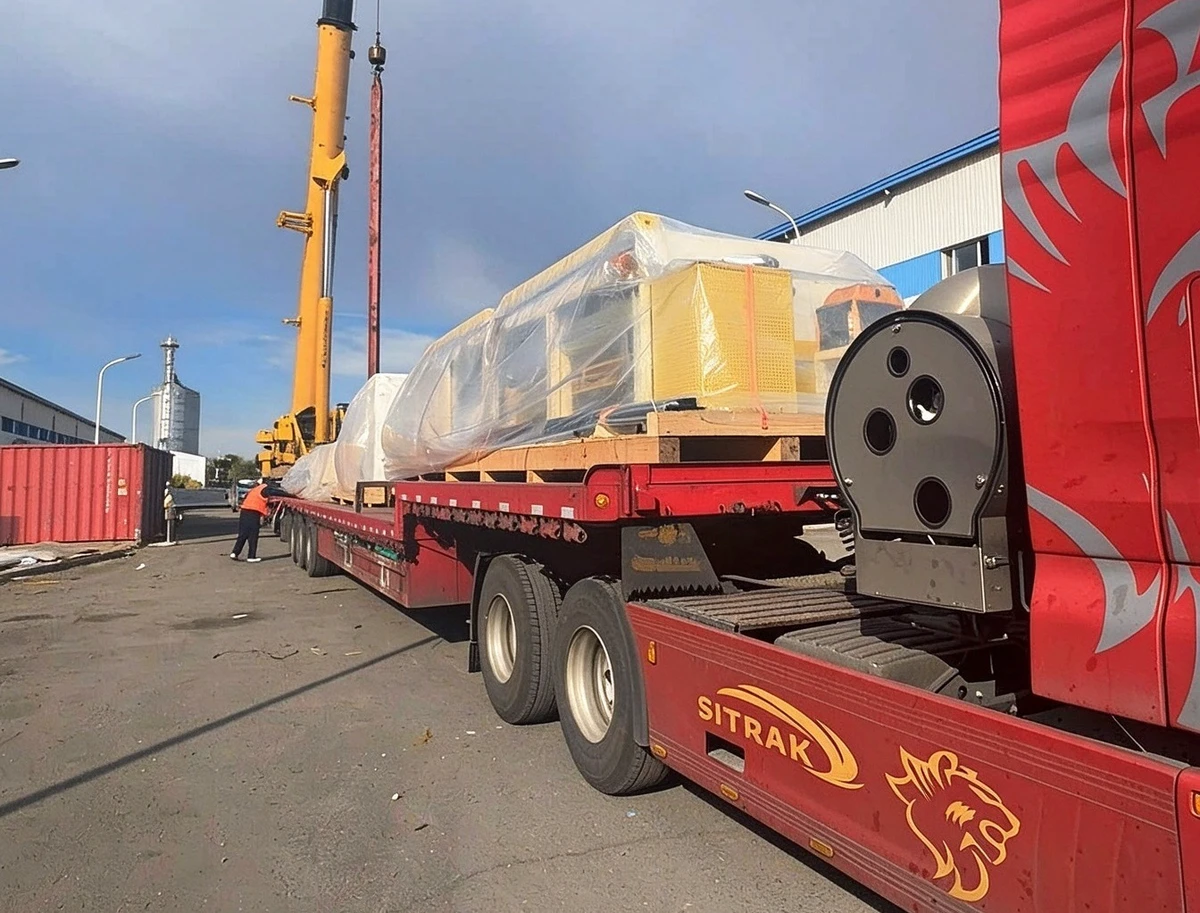
Recent Shipment: In June 2026, a project developer ordered six 20-foot energy storage containers (each weighing 28 tons) for a grid stabilization project near Isfahan. We coordinated flat-rack containers, heavy-lift cranes at Xi’an rail yard, and route clearances through Turkmenistan. Total transit time was 19 days, including 3 days for permit processing at Sarakhs.
Road vs. Rail for Dangerous Goods
Some Central Asian road segments restrict lithium battery transport by truck due to mountain pass regulations. Rail is generally more stable and predictable for DG cargo. If road transport is necessary, confirm your forwarder has DG-certified vehicles and drivers.
5. Trucking vs Rail Freight China to Iran Comparison
Choosing between road and rail depends on your cargo profile, urgency, and budget.
Side-by-Side Comparison Matrix
| Dimension | Rail (Central Asia Corridor) | Road (Truck Direct) |
|---|---|---|
| Transit Time | 14–18 days | 18–25 days |
| Cost | 40HQ: $4,500–$7,000 | 10–20% below rail |
| Flexibility | Fixed weekly departures | Daily departures, door-to-door |
| Tracking | Rail operator system | GPS truck tracking |
| Documentation | CIM/SMGS consignment note | CMR road waybill |
| Transshipment | Two gauge changes (1435mm→1520mm→1435mm) | None |
| Best Cargo Fit | FCL, bulk, project cargo | LCL, samples, urgent parcels |
Route Details
Rail main corridor: Xi’an / Yiwu / Changsha → Khorgos or Alashankou → Kazakhstan → Turkmenistan → Sarakhs → Tehran (Aprin Dry Port / Shahyar Yard).
Road dual corridors:
- Northern route: Khorgos → Almaty (Kazakhstan) → Tashkent (Uzbekistan) → Turkmenistan → Mashhad → Tehran.
- Southern route: Kashgar → Kyrgyzstan → Tashkent → Turkmenistan → Mashhad → Tehran.
Field Note: During Sarakhs congestion peaks (typically late November), we reroute time-sensitive LCL cargo via Incheh Burun or split shipments between rail and road. A hybrid strategy—rail for the long-haul trunk, truck for final-mile delivery in Iran—often saves 2–3 days and 10–15% in cost.
6. China-Iran Rail Freight Cost Transit Time 2026
Understanding the full cost structure prevents budget surprises.
FCL Station-to-Station Reference Rates (October 2026)
| Container Type | Normal Period | Hormuz Crisis Period |
|---|---|---|
| 20ft GP | $3,000–$3,800 | $4,000–$5,000 |
| 40ft GP / 40HQ | $4,500–$5,000 | $6,500–$7,000 |
| LCL per CBM | $150–$280 | $200–$350 |
Typical Add-On Costs
| Cost Item | Range (USD) | Notes |
|---|---|---|
| Gauge change fee | $500–$800 per container | Applied at Dostyk and Sarakhs |
| China export customs + haulage | $200–$500 | Depends on inland distance |
| Iran import clearance (IRICA) | $300–$600 | Varies by HS code and cargo value |
| Duties and VAT | 9%–40%+ of CIF | Depends on HS code; VAT generally 9% |
| Terminal handling (Aprin/Shahyar) | $150–$350 | Storage, lift, de-stuffing |
| Final-mile trucking in Iran | $200–$800 | Tehran vs. provincial cities |
What Actually Happened: A client shipping a 40HQ of auto parts under DDP received a single quote of $8,200 from our team. This included $6,200 base freight, $600 duties/VAT advance, $400 clearance fees, and $200 Tehran delivery. The alternative—managing each leg separately—would have cost $9,500+ with 3–5 days additional coordination time.
Cost Optimization Tips
- Book early: Lock rates 2–3 weeks before departure, especially before Chinese New Year (CNY) space crunches.
- Consolidate LCL: Combine orders from multiple suppliers to fill a container.
- Avoid peak surges: Late November and pre-CNY see 20–30% rate spikes.
Reality Check: Many importers focus solely on base freight rates and overlook the total landed cost. A $4,500 rail quote with $1,200 in duties and $400 in clearance fees often beats a $3,200 sea quote with $800 war-risk surcharge, 45 days of inventory carrying cost, and 15 days of delayed revenue. Always calculate your total landed cost per unit sold, not just the freight line item.
Payment and Currency Considerations
Iran’s banking sector remains under international sanctions, making direct USD/EUR wire transfers difficult. Most China–Iran trade settles through:
- Bank of Kunlun: A Chinese bank specializing in Iran-related transactions.
- Third-country intermediaries: UAE, Turkey, or Hong Kong entities that facilitate payment flows.
- Barter arrangements: Less common but used for large commodity trades.
Under a DDP (Delivered Duty Paid) structure, your Chinese forwarder handles all customs clearance and duty payment in Iran. This eliminates the need for the Iranian consignee to manage complex currency conversion or hold large IRR reserves. The forwarder quotes a single all-in price, and the Iranian buyer receives goods at their warehouse with no additional payments due. For a complete overview of this service model, see our door to door shipping from China to Iran guide.
7. Step-by-Step: China Factory to Iran Door
A successful land shipment follows eight distinct stages. Missing any one creates delay or extra cost. For specialized support at any stage, our customs clearance team handles both Chinese export and Iranian import formalities.
The 8-Stage Process
- Supplier pickup or CY delivery: Cargo collected from factory or delivered to rail terminal.
- China export customs declaration: GACC filing with invoice, packing list, HS codes.
- Block train loading: Containers loaded at Xi’an, Changsha, or Yiwu.
- Khorgos / Alashankou border crossing: Exit China, reload to Kazakh broad-gauge wagons.
- Kazakhstan + Turkmenistan transit: Movement under T1 transit bond; no import duty paid in transit countries.
- Sarakhs / Incheh Burun gauge change: Transfer to Iranian wagons, enter IRICA control.
- Iran import clearance: Form T1 review, HS validation, duty/VAT assessment, possible inspection.
- Inland delivery: Trucking from Aprin/Shahyar to final destination.
Required Documents Checklist
| Category | Documents |
|---|---|
| China Export | Commercial Invoice, Packing List, Export Customs Declaration, Certificate of Origin (CO), Fumigation Certificate (wood packaging), MSDS/Transport Identification (batteries/chemicals) |
| International Transport | CIM/SMGS Rail Consignment Note or CMR Road Waybill |
| Iran Import | IRICA Form T1, HS Code Validation (Iran Single Window), Iranian Importer Commercial ID (Kart-e Bazargani), Standard Certificate (regulated products) |
Common Pitfalls and How to Avoid Them
| Pitfall | Consequence | Solution |
|---|---|---|
| Invoice–manifest mismatch | 2–4 day inspection at Sarakhs | Reconcile all documents before departure |
| Missing UN38.3 for batteries | Rail refusal or fines | Pre-clear battery documentation 1 week before loading |
| Unfumigated wooden pallets | Seizure at Iranian border | Ensure ISPM 15 stamp and certificate |
| No Iranian importer ID | Clearance failure | Confirm consignee’s Kart-e Bazargani in advance |
Transit Time Breakdown: Where the Days Go
Understanding where transit time is spent helps you plan buffer days and communicate realistic ETAs to your customers:
| Leg | Activity | Estimated Time |
|---|---|---|
| China origin to Khorgos/Alashankou | Haulage + export customs | 2–4 days |
| Khorgos–Kazakhstan broad-gauge entry | Gauge change + border formalities | 1–2 days |
| Kazakhstan + Turkmenistan rail transit | Mainline movement under customs bond | 6–8 days |
| Dostyk / Sarakhs gauge changes | Reloading containers onto new wagons | 2–3 days |
| Iran entry + IRICA clearance | Form T1, inspection, duty assessment | 1–3 days |
| Tehran yard to final destination | Last-mile trucking | 1–2 days |
| Total | 14–18 days |
Note that these are terminal-to-terminal estimates. Door-to-door timelines add 2–3 days for factory pickup in China and 1–2 days for final delivery in Iran.
8. FAQ: Middle East Importers’ Top Questions
Q: How significant is the Hormuz Strait closure impact on China-Iran trade in 2026? A: October 2026 data shows ocean freight rates up 40%+, with 7–15 day delays. Land routes (rail/road) have become the stable alternative, offering 14–25 day transit with zero exposure to maritime chokepoints.
Q: If I ship immediately after Canton Fair, when is the earliest my cargo can reach Tehran? A: For cargo picked up around October 20, rail FCL arrives November 5–10; road LCL arrives November 10–15. If you need inventory before late November sales events, lock your booking before October 31—space fills quickly post-Fair.
Q: Can lithium battery products travel by rail? What are the restrictions? A: Yes, but UN38.3, MSDS, and Class 9 labels are mandatory. SoC must be ≤30% per Chinese rail regulations. While there’s no general watt-hour ceiling for rail (unlike air transport), larger energy storage cabinets require custom project cargo solutions and advanced coordination with the rail operator.
Q: Is DDP shipping to Iran legal and compliant? A: Yes. Through Bank of Kunlun or third-country payment channels, professional forwarders provide compliant trade documentation and double-clearance services. The key is working with a forwarder who understands both Chinese export regulations and Iranian import requirements—this is where experience matters.
Q: Does the railway pass through war-torn areas? Is it safe? A: No. The route transits politically stable Kazakhstan and Turkmenistan. The entire line is inland with dedicated security, completely bypassing conflict zones and the Strait of Hormuz.
Q: Is Iranian customs clearance complex? Does it require a local importer? A: With DDP, your forwarder handles all clearance and tax payment. The Iranian consignee only needs to provide a Commercial ID (Kart-e Bazargani).
Q: How much does rail freight from China to Tehran cost in 2026? A: Current rates range from $3,000–$3,800 for a 20ft container and $4,500–$7,000 for a 40HQ, depending on market conditions. For detailed cost breakdowns including shipping cost from Khorgos Port to Iran, see our dedicated pricing guides.
Q: How can I track my shipment? A: Rail shipments are tracked via operator systems; road shipments via GPS. We provide milestone updates at every node.
Q: What insurance coverage do I need for Central Asia transit? A: Standard cargo insurance (ICC A or B) covers rail and road transit. Given the multi-operator nature of the route, ensure your policy covers transshipment damage and war/strike risks. We arrange comprehensive coverage for all shipments.
Q: Can I ship personal effects or commercial samples via this route? A: Commercial samples and personal effects are acceptable, but personal effects require additional documentation (packing list with itemized values, passport copy). We recommend DDP for commercial samples to simplify Iranian customs.
Q: What happens if my cargo is inspected at Sarakhs? A: IRICA inspections are routine. If your documents are accurate, clearance takes 1–2 days. If discrepancies are found, storage fees of $50–$100 per day apply. Pre-clearing Form T1 and reconciling documents minimizes inspection risk.
9. Your Canton Fair 2026 Iran Shipping Checklist
Use this actionable checklist to execute your post-Fair shipments without delays:
- [ ] Confirm supplier Incoterms (EXW / FOB / DDP)
- [ ] Collect factory addresses and cargo details at the Fair
- [ ] Book freight before October 31 to secure November space
- [ ] Obtain UN38.3 + MSDS for all lithium battery shipments
- [ ] Prepare Certificate of Origin, Commercial Invoice, and Packing List
- [ ] Confirm Iranian consignee’s Commercial ID (Kart-e Bazargani)
- [ ] Purchase cargo insurance covering Central Asia transit
- [ ] Arrange compliant payment channel (Bank of Kunlun / third country)
- [ ] Book DDP service to simplify Iranian customs clearance
- [ ] Track milestones: Xi’an departure → Khorgos exit → Sarakhs entry → Tehran arrival
Ready to move your Canton Fair orders from Guangzhou to Tehran without Hormuz-related delays? Contact our team today for a free DDP quote and a customized land freight solution tailored to your auto parts or new energy equipment.