Amazon UK FBA Shipping from China: The Complete 2026 Guide (Cost, Process & Compliance)
· By SinoShipment
Amazon UK FBA Shipping from China is not the same as sending cargo to a normal UK warehouse. In 2026, the stakes are higher than ever: a single compliance mistake — a missing UKCA certification, a folded FNSKU label, or an invalid GB EORI number — can trigger Amazon FC rejection, costing you £3,000 or more in re-delivery fees and lost sales. Unlike standard freight shipping from China to the UK, FBA shipments must satisfy Amazon’s strict inbound requirements in addition to international logistics.
Most guides bury this fact, so we’ll say it upfront: industry estimates suggest that compliance issues — not logistics problems — are the leading cause of FBA delays from China. Honestly? The paperwork matters more than the freight rate. Get your labeling wrong, and that “cheap” sea shipment becomes very expensive, very fast.
This guide covers everything you need to ship from China to Amazon FBA UK successfully in 2026 — real cost examples in GBP, a step-by-step process, shipping method comparisons, and a compliance checklist that prevents costly mistakes. New to FBA? Scaling an existing operation? The answers below apply either way.
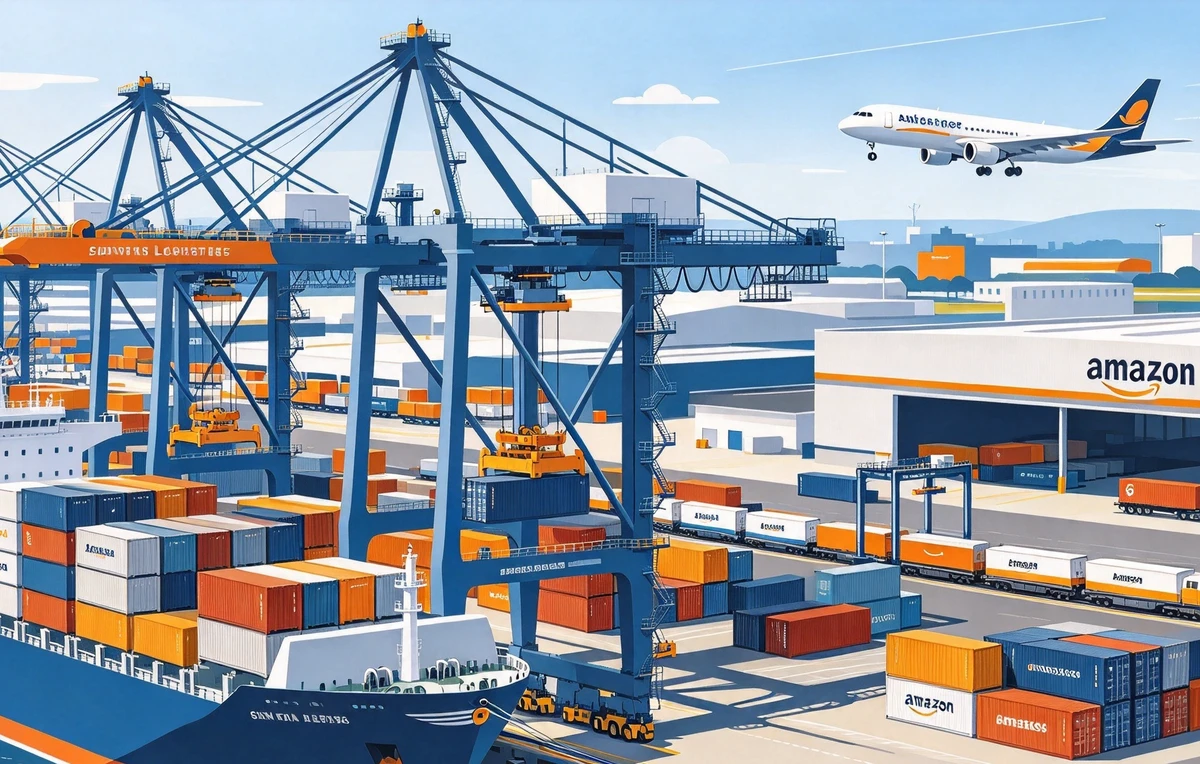
Why Amazon UK FBA Shipping from China Is Different in 2026
Shipping to Amazon FBA is nothing like standard UK delivery. You’re managing two connected processes simultaneously: international freight logistics and Amazon’s strict inbound FBA requirements. A shipment can arrive in the UK perfectly intact and still get rejected if it doesn’t meet Amazon’s current receiving standards.
2026 Amazon Barcode Policy Changes
Here’s something most 2025 guides got wrong — and it cost sellers real money:
- Commingling ended March 31, 2026. Amazon no longer mixes your inventory with identical units from other sellers.
- Brand owners with the Brand Representative role in Amazon Brand Registry can use manufacturer barcodes for eligible products.
- Resellers not enrolled in Brand Registry must apply Amazon barcode stickers (FNSKU) to every unit — even if products already have manufacturer barcodes.
- Products without manufacturer barcodes still require Amazon FNSKU labels.
Our Industry Insight: We’ll be honest — we initially assumed the March 2026 barcode changes would be a minor adjustment for most sellers. They weren’t. Our own shipment records since March show a clear jump in labeling-related rejections among sellers still following pre-2026 prep guides. The workaround is straightforward, but you can’t skip it: always check the current Seller Central instructions for your specific shipment before your goods leave China. Never assume last year’s labeling approach still applies.
UK Post-Brexit Requirements
The UK now operates its own regulatory framework separate from the EU:
| Requirement | What It Means |
|---|---|
| UKCA Certification | UK’s product safety marking. While CE marking is still recognised for many goods in Great Britain, UKCA provides a long-term UK-specific compliance route. Mandatory for electronics, toys, machinery, cosmetics, and medical devices in certain contexts. |
| UK-Based IOR | Your Importer of Record must have a UK address and valid GB EORI number. Non-UK IORs are no longer accepted. |
| CDS (Customs Declaration Service) | All UK customs filings now go through HMRC’s CDS platform — the old CHIEF system is closed. Professional customs clearance support ensures your CDS declarations are filed accurately and on time. |
| IEN (Import Entry Number) | Amazon requires an IEN for every FBA shipment. Without it, Amazon restricts your ability to create new shipments. |
Normal UK Delivery vs. Amazon FBA Shipment:
| Normal UK Commercial Delivery | Amazon FBA Shipment |
|---|---|
| Delivered to your warehouse address | Delivered to an Amazon fulfilment centre |
| You control receiving | Amazon controls receiving |
| Your warehouse requirements apply | Amazon’s current FBA requirements apply |
| You choose the delivery address | Destination assigned by Seller Central |
| Standard logistics | Logistics + Amazon inbound requirements |
How to Ship from China to Amazon FBA UK: Step-by-Step Process
This is the 9-step workflow we walk every client through, so a shipment clears both Amazon’s inbound rules and UK customs:
| Step | Action | Key Detail |
|---|---|---|
| 1 | Confirm products and cargo data | Product name, material, value, carton qty, dimensions, gross weight, CBM |
| 2 | Create Amazon inbound shipment in Seller Central | Get Shipment ID, assigned FC code, FNSKU/box label files |
| 3 | Verify UK compliance readiness | UKCA cert, GB EORI, UK VAT registration, commodity code (HS code) |
| 4 | Choose your shipping method | Compare express/air/sea/rail based on urgency, volume, budget (Shipping from China to UK by Sea vs Air Freight from China to UK) |
| 5 | Arrange China pickup or consolidation | Direct pickup or multi-supplier consolidation at Shenzhen warehouse |
| 6 | Complete FBA prep and labeling | Apply FNSKU labels, box labels, palletize if needed |
| 7 | China export clearance | Commercial invoice, packing list, export declaration |
| 8 | International freight + UK customs clearance | Transit + CDS filing + duty/VAT payment |
| 9 | Final delivery to Amazon FC | Book LMS delivery slot, deliver, Amazon inspection, receipt confirmation |
The critical rule: Your Amazon shipment must be created in Seller Central before cargo leaves China. This gives your freight forwarder the exact destination, label files, and shipment details needed to prepare everything correctly.
Why we push for Shenzhen consolidation: For sellers juggling multiple suppliers, gathering everything at one warehouse before export removes a stack of downstream risks. You can inspect cartons, verify labels against Seller Central data, repack non-compliant goods, and photograph everything for records — all before your cargo enters international transit.
Real-Life Scenario: A UK-based seller was sourcing phone accessories from three different factories in Shenzhen and Dongguan. Instead of managing three separate shipments, we consolidated everything at our Shenzhen warehouse, applied FNSKU labels, built ISPM 15 pallets, and shipped as one coordinated FCL load to BHX2. The seller saved £400 in per-shipment handling fees and avoided a labeling mismatch that would have caused rejection at the FC.
Shipping Methods Compared: Sea, Air, Rail, and Express
Which method is “right” depends on three things — inventory size, urgency, budget — and occasionally a stockout date that simply won’t move. This is how the main options stack up for Amazon UK FBA shipping in 2026:
| Method | Weight Range | Transit Time (Door-to-Door) | 2026 Cost Range | Pricing Basis | Best For |
|---|---|---|---|---|---|
| Express (DHL/FedEx/UPS) | 0.5–50 kg | 3–7 days | £12–£25/kg | Chargeable weight | Samples, urgent restocks |
| Air Freight | 50–1,000 kg | 7–14 days | £5–£9/kg | Chargeable weight | Regular replenishment, product launches |
| Sea LCL | 1–15 CBM | 28–50 days | £70–£130/CBM | CBM or revenue ton | Medium-volume budget shipping |
| Sea FCL (20GP) | 25–27 CBM | 25–40 days | £3,500–£4,800 (DDP door-to-door) | Per container | Large inventory, lowest cost/unit |
| Sea FCL (40HQ) | 55–58 CBM | 25–40 days | £4,200–£5,800 (DDP door-to-door) | Per container | Maximum volume efficiency |
| Rail Freight (DDP) | 500 kg+ | 30–35 days | £4–£7/kg | Weight or CBM | Mid-cost, avoids port congestion |
Understanding Chargeable Weight
Air freight and express couriers don’t bill by actual weight alone. They use chargeable weight, which is the greater of:
- Actual gross weight (what the scale shows)
- Volumetric weight =
(Length × Width × Height in cm) ÷ 6,000for air freight - Volumetric weight =
(Length × Width × Height in cm) ÷ 5,000for express courier
Example: You have 10 cartons, each measuring 50 × 40 × 40 cm with an actual weight of 8 kg per carton.
- Volumetric weight per carton = (50 × 40 × 40) ÷ 6,000 = 13.3 kg
- Chargeable weight = 13.3 kg (not 8 kg)
You’ll be billed for 133 kg total (10 cartons × 13.3 kg), not 80 kg. This is why optimizing carton dimensions matters — reducing empty space in your packaging directly reduces your freight cost.
Rail Freight: The Underrated Middle Option
Rail freight doesn’t get much attention, which is a shame — for the right shipment, it hits a genuine sweet spot. The China-Europe Railway Express runs from major Chinese hubs (Chengdu, Chongqing, Xi’an) to EU rail terminals like Duisburg (Germany) or Lodz (Poland), then transfers to truck for final delivery to the UK.
When rail makes sense: Shipments between 500 kg and 5,000 kg where air freight is too expensive but sea freight is too slow. Rail avoids the port congestion that plagues sea routes during peak season and offers more predictable transit times than ocean freight. In our opinion, it’s criminally underrated for UK-bound FBA cargo — though we should admit it isn’t for everyone: space is subject to cut-off dates, and a missed booking can roll over to the next departure, sometimes a week or two later.
Amazon UK FBA Shipping Costs: Real 2026 Examples
There’s no single fixed rate for Amazon UK FBA shipping. Your total cost depends on the shipping mode, cargo volume, product type, UK tax arrangement, and destination FC. For a detailed breakdown of what drives these costs, see our guide to Freight Costs from China to UK. Below is a quick visual comparison, then three cost breakdowns taken from actual 2026 shipments (rounded — real quotes always move a few percent between weeks):
Example 1: Express Courier — ~5 kg Electronics, Shenzhen → London Area FC
| Cost Item | Amount |
|---|---|
| Freight (chargeable weight: 5 kg × £18/kg) | £90 |
| FBA labeling | £10 |
| Import duty (3%, CIF value £500) | £15 |
| Import VAT (20%) | £103 |
| Total | ~£220 |
| Transit time | 5 days |
Example 2: Air Freight DDP — 100 kg Toys, Yiwu → Manchester Area FC
| Cost Item | Amount |
|---|---|
| Freight (100 kg × £7/kg) | £700 |
| Palletizing + labeling | £50 |
| Import duty (5%, CIF value £5,000) | £250 |
| Import VAT (20%) | £1,050 |
| Amazon delivery slot | £30 |
| Total | £2,080 |
| Transit time | 10 days |
Example 3: Sea Freight LCL — 10 CBM Home Goods, Shanghai → Felixstowe
| Cost Item | Amount |
|---|---|
| Freight (10 CBM × £90/CBM) | £900 |
| Palletizing (5 ISPM 15 pallets) | £250 |
| Import duty (4%, CIF value £10,000) | £400 |
| Import VAT (20%) | £2,080 |
| Port handling | £150 |
| Total | £3,780 |
| Transit time | 35 days |
Key Cost Drivers to Control
- Product type: Sensitive goods (batteries, liquids, cosmetics) cost 20–30% more due to extra certification and handling requirements.
- Peak season (Sep–Jan): Expect 10–30% rate increases. Book 4–6 weeks ahead.
- FC location: Remote FCs (GLA1 in Scotland, CWL1 in Wales) add £50–£200 in final delivery costs compared to central UK FCs.
- Hidden charges: CFS handling, documentation fees, and the dreaded demurrage or detention if a container sits too long at Felixstowe. These line items are what quietly turn a “cheap” quote into an expensive one — insist they are itemized up front, not discovered at invoice stage.
What we actually recommend for most sellers: Sea LCL or FCL for bulk inventory, rail for mid-weight shipments, and air only for genuine urgent restocks where stockout costs exceed the freight premium. For sellers shipping full containers, FCL Shipping from China to the UK offers detailed guidance on container loading and cost optimization.
UK Customs Compliance Checklist for Amazon FBA Shipments
This is where most shipments fail. Use this 9-item checklist before your cargo leaves China:
| # | Requirement | Consequence If Missing | How to Obtain |
|---|---|---|---|
| 1 | GB EORI Number | Cannot clear UK customs | Apply free via GOV.UK (instant–5 days) |
| 2 | UK VAT Registration | Cannot create FBA shipment plans | Register via HMRC (4–8 weeks lead time) |
| 3 | UKCA Certification | Amazon rejects at FC | Test + certify via UK-approved body |
| 4 | UK Responsible Person | UKCA invalid without UK RP | Appoint UK-based RP or use forwarder’s service |
| 5 | FNSKU Labels | Amazon cannot scan/receive | Generate in Seller Central |
| 6 | FBA Box Labels | Cartons misrouted/rejected | Generate in Seller Central |
| 7 | “Made in China” Label | UK customs hold | Print on product + packaging |
| 8 | IEN (Import Entry Number) | Amazon restricts new shipments | Issued by HMRC after clearance |
| 9 | ISPM 15 Pallets | Pallets rejected at FC | Use heat-treated, stamped pallets |
Key UK tax points:
- Import VAT: 20% standard rate on CIF value (cost + insurance + freight)
- Customs duty: Varies by HS code — typically 0–12% for consumer goods
- PVA (Postponed VAT Accounting): If you’re UK VAT registered, ask your forwarder to use PVA. This defers your VAT payment to your quarterly VAT return instead of paying upfront at customs — a significant cash flow advantage.
Our Industry Insight: Amazon actively cross-checks your declared customs value against your listing prices. We’ve seen sellers face HMRC holds and penalties for under-declaring values to reduce duty. The savings are never worth the risk. Always declare the actual transaction value and attach your purchase contracts.
Amazon UK FBA Warehouses: Major FC Codes and Delivery Notes
Your destination FC quietly shapes both the final bill and the delivery schedule, so confirm it in Seller Central before booking freight. These are the major UK Amazon fulfillment centers as of 2026:
| FC Code | Location | Region | Delivery Notes |
|---|---|---|---|
| BHX1 | Rugeley | Staffordshire | High-volume; accepts pallets |
| BHX2 | Coalville | Leicestershire | Large FC; pallet delivery preferred |
| BHX4 | Coventry | West Midlands | Central location |
| LTN1 | Ridgmont | Bedfordshire | Near London; high volume |
| LTN2 | Hemel Hempstead | Hertfordshire | Adjacent to LTN1 |
| LTN4 | Dunstable | Bedfordshire | Newer facility |
| MAN1 | Manchester | North West | Serves Northern UK |
| MAN2 | Manchester | North West | High-capacity |
| EMA1 | Derby | East Midlands | Central UK distribution |
| GLA1 | Gourock | Scotland | Remote; higher delivery cost |
| LBA1 | Doncaster | South Yorkshire | Serves Yorkshire/North East |
| CWL1 | Swansea | Wales | Remote; higher delivery cost |
Delivery requirements for all UK FCs:
- Delivery slots must be booked via Amazon LMS (Logistics Management System) at least 48 hours in advance (some FCs require 24–72 hours)
- No walk-in deliveries accepted
- Pallet specs: 40×48 inches, ISPM 15 certified, max height 72 inches, no overhang
- Driver must check in at security with Amazon shipment confirmation
- Non-compliant shipments are rejected on the spot; re-delivery fees apply
For complete Door to Door Shipping from China to UK solutions — including pickup, consolidation, freight, customs clearance, and final Amazon delivery under one quotation — DDP service eliminates the need to coordinate multiple logistics providers.
DDP Shipping from China to Amazon UK: What to Confirm
DDP (Delivered Duty Paid) means your freight forwarder handles everything — pickup, export, international freight, UK customs clearance, duty/VAT payment, and final delivery to Amazon — all under one quotation.
9 things to confirm before booking DDP:
| DDP Item | What to Confirm |
|---|---|
| Shipping route | Express, air, sea, rail, or combined route |
| Importer arrangement | Who provides IOR details and authorizes the customs entry |
| Customs brokerage | Is declaration + broker service included? |
| Import duty | Included or charged separately? At what rate? |
| Import VAT | How is VAT handled? Included or payable separately? |
| Destination charges | Port, airport, warehouse, handling fees — all included? |
| FBA preparation | Labeling, repacking, palletizing included? |
| Amazon delivery | Slot booking + final delivery included? |
| Conditional charges | How are inspections, storage, waiting, rejection, redelivery charged? |
DDP is not a tax-free shortcut. Roughly one in five DDP quotes we’ve been asked to review had at least one significant exclusion buried in the fine print. We’ve watched sellers lock in a rock-bottom DDP rate, only to land 20% over budget once VAT, Amazon delivery fees, and destination charges surfaced after the cargo was already at sea — at that point, you pay what they say, because your stock is already on the water. To be fair, not every forwarder plays that game. But always get a written breakdown of exactly what’s included before booking.
When DDP makes sense: Sellers without a UK customs broker, UK delivery carrier, or prep warehouse. It consolidates everything under one transparent quotation.
When to consider FOB/CIF instead: If you have your own UK import agent and want more control over the customs clearance process.
Common Mistakes and How to Avoid Them
Amazon doesn’t publish rejection statistics, so these figures come from our own records — the rejection and delay cases that passed through our Shenzhen warehouse during 2026:
| Mistake | % of Issues | Fix |
|---|---|---|
| Missing UKCA certification | 32% | Get UKCA before shipping; use forwarder with UK RP service |
| Incorrect labeling (FNSKU folded, ASIN vs FNSKU) | 27% | Have forwarder send label proofs before shipping |
| Invalid IOR/EORI | 18% of customs delays | Use forwarder with UK-based IOR + valid GB EORI |
| No delivery slot booked | 13% of failed deliveries | Book the LMS slot at least 48 hours ahead (some FCs need 24–72 hours) |
| Under-declared customs value | 10% of HMRC holds | Declare actual value; attach purchase contracts |
Additional mistakes to avoid:
- Using Amazon-branded boxes for shipping (strictly prohibited)
- Assuming old FBA labelling guides still apply after the 2026 barcode changes
- Shipping bulk inventory without testing samples first — always send 1–5 units via express to confirm FBA acceptance
- Not planning for peak season lead times — add 7–10 days to all transit estimates during Q4
- Ignoring Chinese New Year factory shutdowns — plan inventory 4–6 weeks ahead
Honestly, the biggest mistake we see isn’t technical — it’s sellers trying to save £50 on labeling and ending up with £2,000 in rejection and re-delivery fees.
Peak Season and Chinese New Year: Planning Your FBA Shipments
Ask any forwarder this side of September: on UK-bound FBA lanes, timing weighs as heavily as cost. Two windows dominate the planning calendar:
Q4 Peak Season (September–January):
- Freight costs increase 10–30% during peak season
- Book sea freight 4–6 weeks earlier than normal
- Air freight capacity tightens significantly; expect delays at LHR and MAN
- Amazon FC receiving times slow down; factor in an extra 3–5 days
- Some sellers try to dodge the rush by shipping in late August. In our experience that rarely works anymore — carriers lock in their allocation by mid-August, so what you save on rate you often pay back in rollover risk
Recommended shipping deadlines for Christmas inventory:
| Method | Ship By |
|---|---|
| Sea FCL | Mid-September |
| Sea LCL | Early September |
| Air/Rail | Late October |
Chinese New Year (CNY) Impact:
Chinese factories typically shut down for 2–4 weeks around CNY (late January–February). Ports and customs operate at reduced capacity, and quality issues often spike immediately after factories reopen.
CNY mitigation strategy:
- Place orders 6–8 weeks before CNY
- Ship inventory to the UK before CNY begins
- Consider air freight for urgent post-CNY restocks
- Build a 4–6 week safety stock buffer to cover the shutdown period
Real-Life Scenario: A home goods seller came to us in early January 2026 with an urgent need to restock before CNY. Their usual sea LCL route would take 35 days — arriving after Chinese New Year when factories were closed. We switched them to rail freight (30 days) combined with pre-CNY consolidation at our Shenzhen warehouse. The shipment cleared UK customs on February 8 and reached LTN1 before the seller’s stockout date, avoiding an estimated £8,000 in lost Q1 sales.
Frequently Asked Questions
Do I need an EORI number to ship to Amazon FBA UK?
Yes. A GB EORI number is mandatory for all commercial imports into England, Scotland, and Wales. Without it, your shipment cannot clear UK customs. Apply free on GOV.UK — processing takes anywhere from instant to 5 business days.
How long does shipping take from China to Amazon UK FBA?
Express courier takes 3–7 days. Air freight takes 7–14 days door-to-door. Sea freight takes 25–55 days depending on whether you choose LCL or FCL. Rail freight takes 30–35 days. Add 3–5 days for UK customs clearance and Amazon FC processing. For a comprehensive breakdown by shipping mode, see our guide on How Long Does Shipping Take from China to the UK.
What is the cheapest way to ship from China to Amazon FBA UK?
Sea freight LCL (£70–£130/CBM) or FCL (£3,500–£5,800/container) offers the lowest cost per unit for bulk inventory. For shipments under 100 kg, rail freight (£4–£7/kg) is often cheaper than air. Express courier is only cost-effective for samples under 20 kg.
Do I need UK VAT to ship to Amazon FBA UK?
Yes. If you store inventory in UK Amazon warehouses, you must register for UK VAT. Registration takes 4–8 weeks via HMRC. Without a UK VAT number, you cannot create FBA shipment plans in Seller Central.
Can I use DDP shipping for Amazon FBA UK?
Yes, DDP is a popular option for sellers without a UK customs broker or import agent. The freight forwarder handles everything including duty, VAT, and delivery to Amazon. However, confirm exactly what’s included in the DDP quote — some forwarders exclude VAT or Amazon delivery fees.
What is UKCA certification and do I need it?
UKCA (UK Conformity Assessed) is the UK product safety marking required for electronics, toys, machinery, cosmetics, and medical devices. Amazon scans for UKCA on arrival and rejects shipments without it. You’ll also need a UK Responsible Person (UK RP) for your UKCA to be valid.
What happens if Amazon rejects my shipment?
In our own 2026 case mix, the usual culprits are missing UKCA certification, incorrect labeling (folded or mismatched FNSKU), invalid IOR/EORI details, and arriving without a booked delivery slot. If rejected, you’ll face re-delivery fees (£50–£200+), storage charges, and potential listing delays. Always test with a small express shipment first.
Can I ship batteries or electronics from China to Amazon UK?
Yes, but with restrictions. Battery-powered products require UN38.3 test reports and MSDS (Material Safety Data Sheet) for air freight. Some couriers restrict battery shipments entirely. Your freight forwarder should confirm acceptance before booking. For detailed guidance on compliance requirements, see our article on How to Ship Electronics and Gadgets from China.
Conclusion
If there is one rule for shipping from China to Amazon FBA UK in 2026, it’s this: compliance first, cost second. The sellers who thrive aren’t the ones who find the cheapest freight rate — they’re the ones who get UKCA, EORI, VAT, and labeling right the first time.
Here’s your action plan:
- Register for GB EORI and UK VAT before you need them (4–8 weeks lead time for VAT)
- Create your Amazon shipment in Seller Central before cargo leaves China
- Choose your shipping method based on volume and urgency — sea for bulk, air for urgent, rail for the middle ground
- Confirm your DDP scope in writing — know exactly what’s included
- Plan ahead for Q4 and CNY — book early, build safety stock
At Sinoshipment, we’ve been helping e-commerce sellers navigate Amazon UK FBA shipping from our Shenzhen headquarters since 2013. With 5,000+ clients served, we offer full-service FBA prep — labeling, palletizing, inspection, and multi-supplier consolidation — plus multimodal shipping options (sea, air, rail, express) with DDP available on all routes. Our UK compliance expertise covers UK-based IOR, UKCA/UK RP support, and CDS clearance. We also provide cargo insurance for high-value shipments and warehouse services for consolidation and quality control.
Ready to ship? Contact Sinoshipment today for a free, no-obligation quote with a complete cost breakdown — no hidden fees, ever.