Canton Fair Textiles & Medical Supplies: Fast-Track Land Shipping from China to Iran for Urgent Orders Amid Strait Crisis (2026 Guide)
· By SinoShipment
Canton Fair Textiles & Medical Supplies: Fast-Track Land Shipping from China to Iran for Urgent Orders Amid Strait Crisis — if that search brought you here, you are likely sitting on a pile of fresh purchase orders from the 140th Canton Fair, staring at rising tension in the Strait of Hormuz, and wondering how on earth your cargo will reach Tehran on time.
You are not alone. Every year, thousands of Iranian buyers lock in deals for fabrics, garments, medical devices, and PPE at the Canton Fair, only to hit a wall when it comes to logistics. In 2026, that wall has become taller: escalating Hormuz tensions have made ocean freight unpredictable, air freight remains painfully expensive, and traditional routes through the Gulf feel riskier than ever.
The good news? A fast-track land shipping corridor through Central Asia now offers a reliable middle path — roughly 14 to 25 days door-to-door, at a fraction of air freight cost, and completely bypassing the Strait of Hormuz. This guide walks you through everything you need to know: route options, real cost data, Canton Fair-specific handling tips for textiles and medical cargo, compliance essentials, and how to choose a freight partner who will not leave you stranded.
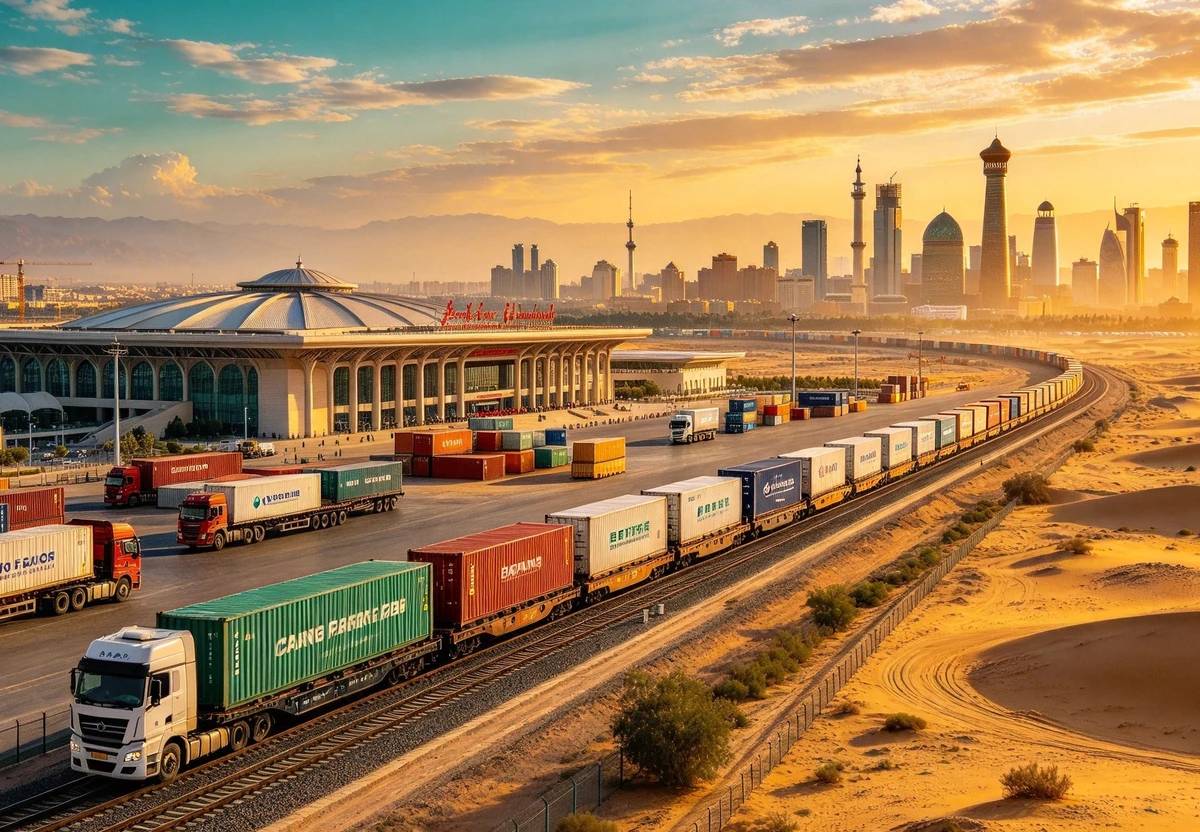
1. Why Land Shipping? Air Freight vs Sea Freight vs Land Freight from China to Iran
Deploy long-tail: air freight vs land freight cost China to Iran
Before diving into routes, let us answer the question on every importer’s mind: which transport mode actually makes sense right now?
| Factor | Air Freight | Sea Freight (via Hormuz) | Land Freight (Rail + Road) |
|---|---|---|---|
| Transit Time | 3–7 days | 25–45 days (with delays) | 14–25 days door-to-door |
| Cost Level | $5.00–$9.50/kg | $1,500–$4,000 base rate per container | $150–$280/CBM (LCL) or $3,000–$5,000 per container (FCL) |
| Hormuz Risk | None (flies over) | High — rerouting, insurance surcharges, schedule instability | None — fully overland |
| Best For | Small, ultra-urgent, high-value samples | Bulk, non-urgent, heavy cargo | Urgent mid-size orders, time-sensitive restocks |
Here is the reality. For a typical 5 CBM mixed order of textile samples and medical devices worth $30,000, air freight could easily exceed $9,000. Sea freight might cost only $3,500, but with Hormuz uncertainty, your 30-day transit could stretch to 60 days — and in retail, a two-month delay often means a lost season. Land shipping lands in the sweet spot: predictable scheduling, moderate cost, and complete insulation from maritime chokepoint risk.
Our Industry Insight: In our 10+ years moving cargo from Shenzhen and Guangzhou to Tehran, we have watched the Central Asia corridor evolve from a niche option into a mainstream solution. Since the 2024 unified rail tariff agreement between China, Kazakhstan, Turkmenistan, and Iran, block-train frequency has surged — and reliability has improved dramatically. For urgent post-Canton-Fair shipments, this is now our default recommendation.
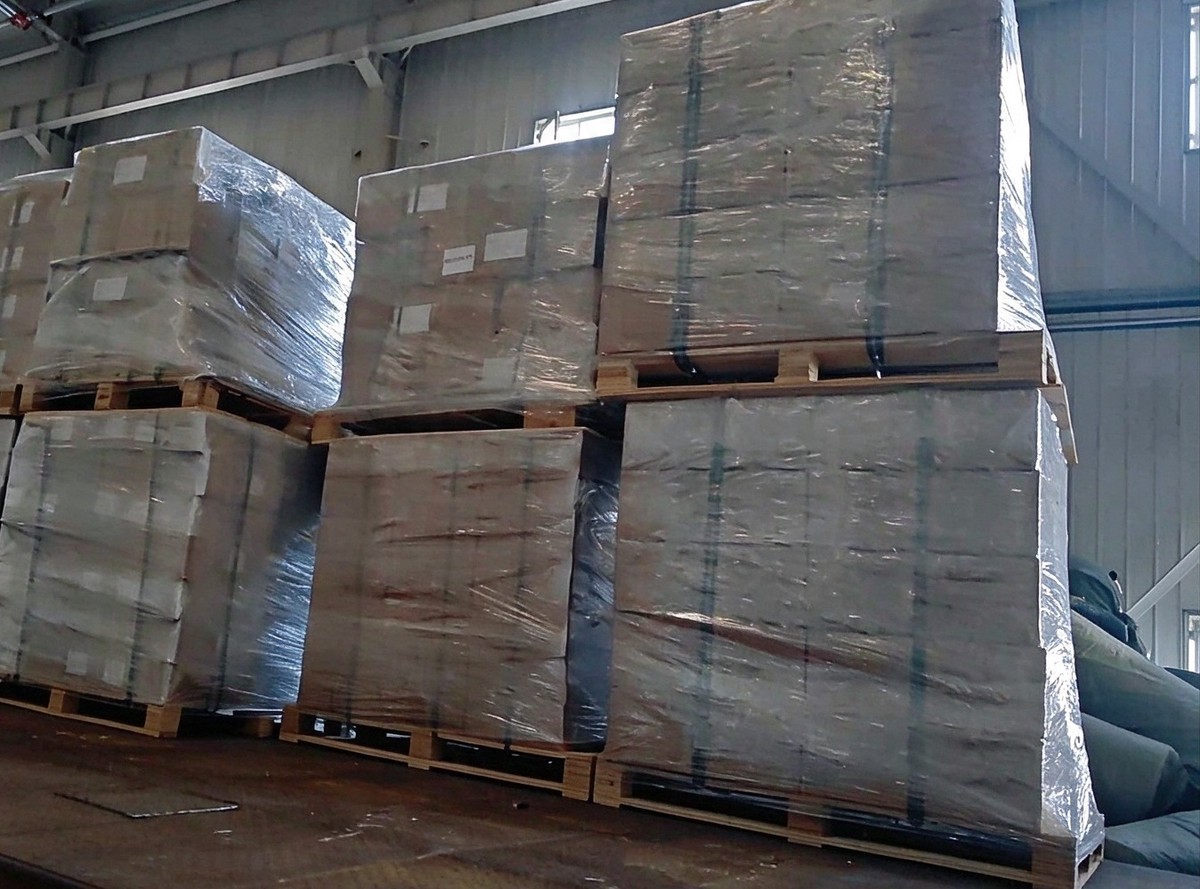
2. China to Iran Land Shipping Routes: The Central Asia Corridor Explained
Deploy long-tails: China to Iran land route via Kazakhstan Turkmenistan, multimodal transport China to Iran via Central Asia
2.1 Rail Freight (FCL & LCL) — The Workhorse for Volume Shipments
The primary rail corridor runs west from major Chinese hubs, crosses into Kazakhstan, traverses Turkmenistan, and enters Iran at the Sarakhs or Incheh Burun border crossings before terminating at Aprin Dry Port or Shahyar Railway Yard near Tehran. For a deeper dive into this route, see our dedicated guide on Rail Freight from China to Iran via Central Asia.
Standard Route: Xi’an / Changsha / Yiwu → Khorgos or Alashankou → Kazakhstan (Dostyk transshipment) → Turkmenistan → Sarakhs → Tehran
- Transit time: 14–18 days terminal-to-terminal; premium block trains can hit ~14 days
- Cost (2026 estimates):
| Container Type | Rate (USD) | Best For |
|---|---|---|
| 20ft GP | $3,000–$3,800 | General cargo, electronics, small machinery |
| 40ft GP / 40HQ | $4,500–$5,000 | Textiles, bulk consumer goods, machinery |
| LCL (per CBM) | $150–$280 | 1–15 CBM, mixed small orders from multiple suppliers |
One critical detail most guides skip: break-of-gauge. China uses standard gauge (1,435 mm), while Kazakhstan and Turkmenistan use broad gauge (1,520 mm). Iran also uses standard gauge (1,435 mm) — the same as China — which means containers must be physically reloaded onto different wagons at both the China-Kazakhstan border (Khorgos or Alashankou) and the Turkmenistan-Iran border (Sarakhs or Incheh Burun), adding 1–2 days at each node. This is normal — but it is why “14 days” is a benchmark, not a guarantee.
2.2 Road Freight (Trucking) — The Flexible Choice for Urgent, Smaller Orders
For shipments under 15 CBM, or when true door-to-door delivery is non-negotiable, cross-border trucking is often the better play.
Standard Route: Guangzhou / Shenzhen → Khorgos (or Kashgar → Kyrgyzstan) → Tashkent → Turkmenistan → Mashhad → Tehran
- Transit time: 18–25 days door-to-door
- Key advantage: No transshipment. Your cargo stays on the same truck from your supplier’s factory in Guangdong all the way to your warehouse in Tehran.
- Documentation: CMR (Convention on the Contract for the International Carriage of Goods by Road) serves as the international road waybill, with transit customs formalities handled at each intermediate border.
Real-Life Scenario: Last October, an Iranian garment importer we work with closed a deal at the Canton Fair on a Friday for 8 CBM of premium cotton shirting fabric. The supplier was in Foshan, 40 minutes from our Guangzhou warehouse. We collected the goods Monday, completed export declaration Tuesday, and the truck departed Khorgos Thursday. The fabric arrived in Tehran 21 days later — in time for their winter production run. Had they waited for LCL sea freight, the same shipment would have taken 40+ days with Hormuz-related uncertainty stacked on top.
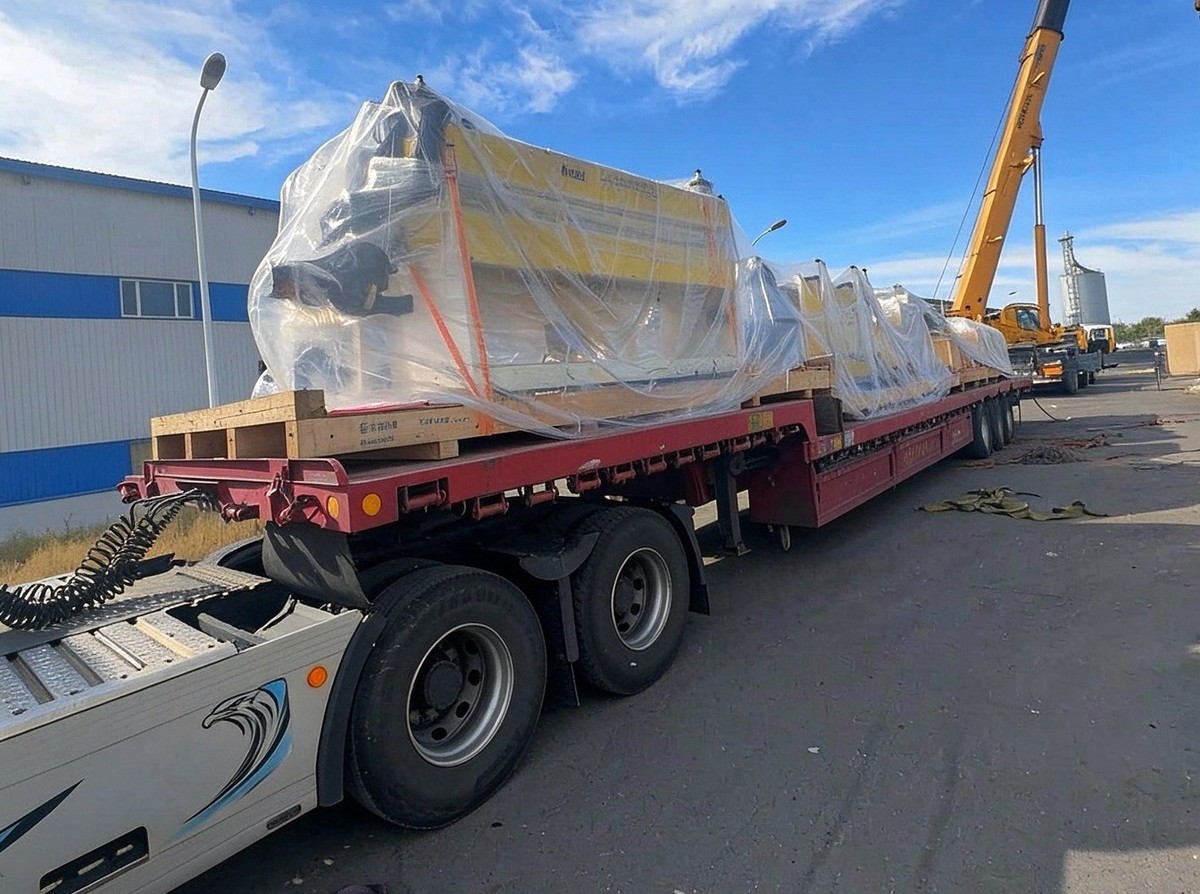
2.3 Multimodal (Rail + Road) — The Hybrid Approach
Sometimes the best answer is a combination. For example:
- Truck from Shenzhen to Khorgos (flexible pickup, no minimum volume)
- Rail from Khorgos to Sarakhs (lower cost per unit on the long haul)
- Truck from Sarakhs to final destination in Iran (door delivery)
This multimodal transport via Central Asia approach balances cost and flexibility, and is ideal for mixed cargo profiles — say, a pallet of medical devices alongside several cartons of fabric samples.
3. Shipping Textiles and Medical Supplies from the Canton Fair: Industry-Specific Guidance
Deploy long-tails: Canton Fair urgent order shipping to Iran, shipping textiles from China to Iran Canton Fair, medical supplies shipping China to Iran
3.1 Textiles: Light, Bulky, and Moisture-Sensitive
Textiles are deceptively tricky to ship. They are light but voluminous — meaning you will likely pay by volumetric weight rather than actual weight on air freight, and you need to maximize container fill rates on land routes.
Key considerations:
- Moisture protection: The Central Asia route crosses climate zones with significant temperature and humidity swings. We line containers with desiccant strips and recommend moisture-barrier poly-bagging for high-value fabrics.
- HS code accuracy: Textile HS codes (Chapters 50–63) vary dramatically by fiber content and construction. A misclassified shipment can trigger inspections at IRICA (Islamic Republic of Iran Customs Administration) and add 2–4 days.
- Labeling: Iran requires Persian-language labeling for retail consumer goods. Ensure your supplier includes country-of-origin marks and fiber content labels before consolidation.
3.2 Medical Supplies: Certification-Heavy but High-Stakes
Medical cargo demands a higher compliance bar. Depending on the product category, you may need:
- CE marking or FDA registration (for reference, even though Iran is the destination, these certifications support quality claims)
- ISO 13485 certification for medical device manufacturers
- Free Sale Certificate (CFS) from the country of origin
- Iranian Ministry of Health registration for certain Class II and III devices
- Cold chain logistics for temperature-sensitive items like diagnostic reagents
If your shipment includes electronic medical devices, our guide on Shipping Electronics from China to Iran covers battery compliance and anti-static packaging in detail.
Our Industry Insight: The single biggest delay we see with medical cargo is not transport — it is documentation. A commercial invoice that says “medical accessories” instead of “sterile surgical gauze, HS 3005.90” is practically an invitation for customs inspection. Be precise. Be consistent. Every document — invoice, packing list, CIM/SMGS rail waybill — must describe the cargo identically.
3.3 Canton Fair On-Site Logistics: From Booth to Border
The Canton Fair (China Import and Export Fair) runs three phases each spring and autumn in Guangzhou. If you are sourcing from multiple suppliers across different phases, consolidation is your best friend.
A typical post-fair workflow looks like this:
- Collect all supplier orders at a consolidation warehouse in Guangzhou or Shenzhen
- Inspect — we check quantity, packaging integrity, and labeling compliance
- Repack into export-grade cartons (domestic Chinese packaging is rarely sufficient for a 3,000-km overland journey)
- Consolidate into a single LCL or FCL shipment
- Export declare and dispatch via your chosen land route
This eliminates the chaos of managing five separate small shipments from five different suppliers — and dramatically reduces your per-unit logistics cost.
4. Strait Crisis Risk Management: Why Overland Routes Are the Smart Hedge
Deploy long-tail: alternative shipping routes to Iran avoiding Strait of Hormuz
As of October 2026, the situation in the Strait of Hormuz remains tense. Even when vessels are not physically blocked, the secondary effects cascade through the supply chain:
- War-risk insurance premiums on Gulf transits have risen sharply
- Rerouting via the Cape of Good Hope adds 30–40 days and thousands of dollars in fuel and charter costs
- Carrier schedule reliability has degraded, with blank sailings and port congestion compounding delays
Overland shipping through Central Asia is structurally immune to all of this. No strait. No Red Sea. No Gulf. Just a continuous land bridge from China’s manufacturing heartland to Iran’s consumption centers. For a broader look at how current tensions are reshaping regional logistics, read our analysis of the 2026 Strait of Hormuz Crisis and its supply chain implications.
Our Industry Insight: We recommend building route redundancy into your supply chain. For critical recurring orders, split your volume: 70% via land (primary), 30% via sea (backup). If land borders experience seasonal congestion — winter weather in Kazakhstan can slow things — you have flexibility. If Hormuz heats up further, your land volume absorbs the shift seamlessly.
5. Required Documents and Sanctions-Compliant Shipping from China to Iran
Deploy long-tails: required documents for shipping to Iran, sanctions compliant shipping to Iran from China, HS code for textiles medical supplies Iran
Getting compliance right is half the battle. Here is what you need:
5.1 China Export Documents
| Document | Purpose |
|---|---|
| Commercial Invoice | Value declaration for export and Iran import duty assessment |
| Packing List | Weight, dimensions, package count |
| Export Customs Declaration | Filed with GACC (General Administration of Customs of China) |
| Certificate of Origin (CO) | Mandatory for Iran import; verifies China origin |
| Fumigation Certificate | Required for wooden packaging (ISPM 15) |
| MSDS / Transport Appraisal Report | For batteries, liquids, powders, chemicals |
5.2 Iran Import / Transit Documents
| Document | Purpose |
|---|---|
| IRICA Form T1 | Iran transit declaration |
| HS Code Validation | Conducted via Iran’s Single Window System |
| Kart-e Bazargani | Iranian importer’s Commercial ID — required for customs clearance |
| Standard Certificate | For regulated products (electronics, medical devices, chemicals, food) |
| CIM/SMGS Consignment Note | International rail waybill governing multi-country carriage |
5.3 Sanctions Compliance Checklist
- Use accurate HS codes and consistent product descriptions across all documents
- Declare the true end-user and final destination
- Avoid transshipment concealment or re-export misdeclaration
- Maintain full cargo insurance for the entire multimodal journey
- Work with a forwarder that provides clear, auditable documentation
6. DDP Shipping from China to Tehran: Door-to-Door Service Explained
Deploy long-tails: DDP shipping cost China to Tehran, freight forwarder China to Iran door to door
DDP (Delivered Duty Paid) means your freight forwarder handles everything — you pay one price, and the cargo shows up at your door in Tehran. If you are weighing door-to-door versus port-to-port, our comparison of Door to Door Shipping from China to Iran breaks down the service scope and cost trade-offs.
What is included:
- Factory pickup in China
- Export customs clearance
- International land transport (rail, road, or multimodal)
- Iran import customs clearance
- Duty and VAT payment on your behalf
- Final delivery to your specified address
Typical DDP cost structure:
| Cost Component | Estimated Range (USD) | Notes |
|---|---|---|
| Inland haulage (factory to border) | $200–$500 | Depends on distance from Guangdong to Khorgos/Kashgar |
| International land freight | Varies by volume | See rail and road rates above |
| Iran import clearance (IRICA) | $300–$600 | Varies by HS code and cargo value |
| Duties and VAT | 9%–40%+ of CIF | VAT currently 10% (raised from 9% in 2024); duties vary by product |
| Final-mile delivery in Iran | $200–$800 | Tehran vs. provincial cities |
DDP vs. FOB vs. CIF — which should you choose?
- DDP: Best if you have no customs broker in Iran or want a single, predictable all-in cost
- FOB: Best if you have your own import agent and want control over the Iran-side process
- CIF: Best if you want the seller to handle ocean freight to Bandar Abbas but you handle import clearance — though in the current environment, CIF to an Iranian port carries obvious Hormuz risk
7. FAQ
Deploy long-tails: fastest shipping from China to Iran urgent orders, China to Iran land shipping transit time 2026, DDP shipping agent Shenzhen to Tehran
Q1: What is the fastest land shipping option from China to Iran? A: Premium rail block trains can reach Tehran in approximately 14 days terminal-to-terminal. For door-to-door trucking from Guangdong, expect 18–25 days depending on border conditions.
Q2: How much does land shipping from China to Iran cost in 2026? A: LCL rail runs $150–$280 per CBM. A full 40ft container costs $4,500–$5,000 station-to-station. Trucking is priced per shipment based on weight, volume, and cargo type — generally falling between rail and air.
Q3: Are there special requirements for shipping textiles or medical supplies? A: Textiles need moisture protection and accurate HS codes (Chapters 50–63). Medical supplies may require CE/FDA documentation, ISO 13485, and Iranian Ministry of Health registration depending on the device class.
Q4: What documents does Iran customs require? A: Commercial Invoice, Packing List, Certificate of Origin, IRICA Form T1, HS code validation via Iran’s Single Window, and your Kart-e Bazargani (Commercial ID).
Q5: Does the Strait of Hormuz crisis affect land shipping? A: No. Overland routes through Central Asia are entirely independent of maritime chokepoints, making them the most reliable option during periods of Gulf instability.
Q6: Can I track my shipment in real time? A: Yes. Trucks and rail containers are trackable at key milestones — border crossings, gauge-change stations, and arrival yards — with status updates provided by your forwarder.
Q7: Do you offer cargo insurance? A: Absolutely. We strongly recommend full-value cargo insurance for the entire multimodal journey, including war-risk riders where applicable.
Q8: Do you provide special services during Canton Fair? A: Yes. We offer on-site collection from exhibition halls, multi-supplier consolidation at our Shenzhen warehouse, quality inspection, repacking, and expedited dispatch so your post-fair orders move within days, not weeks.
8. Conclusion: Your Fast-Track Action Plan
The Central Asia land corridor answers a question many importers are asking right now: how do I move my Canton Fair orders from China to Iran without gambling on maritime chokepoints? This guide has given you the routes, the real costs, the handling specifics for textiles and medical supplies, and the compliance essentials. The next step is yours. Whether you need a fast DDP trucking quote, a block-train booking, or guidance on HS codes and sanctions-compliant documentation, reach out before the Fair ends — and let us build a shipping plan that gets your order to Tehran on time, every time.
Start by consolidating your multi-supplier orders at a Guangdong warehouse to save 30–50% on fragmented shipping costs.
Then choose your mode. Rail works for volume. Trucking gives you speed and true door-to-door — and with a reliable partner, you avoid transshipment delays entirely.
If you want one predictable price with zero surprises, DDP is the way to go.
And whatever you do, verify compliance upfront. Accurate HS codes, complete COO documents, and approved payment channels prevent customs holds that can erase your time savings overnight.
At Sinoshipment, we have been managing China-to-Iran logistics from our Shenzhen headquarters since 2013. With 5,000+ customers served and deep partnerships across the Central Asia corridor, we offer the transparency, speed, and reliability your urgent orders demand.
Have an urgent shipment? Contact us now for a free, no-obligation quote — and let us put your Canton Fair orders on the fast track to Tehran.
For a broader overview of all transport modes to this destination, read our complete guide to freight shipping from china to iran.