FCL Sea Freight From China to France: The Complete 2026 Guide (Rates, Transit Times & DDP)
· By SinoShipment
FCL sea freight from China to France is the workhorse of East–West trade for any importer moving serious volume. With Chinese exports to France exceeding €98 billion in 2026, the majority of machinery, electronics, furniture, and retail goods still crosses the ocean in sealed 20-foot, 40-foot, and 40-foot high-cube containers. Yet too many buyers accept vague quotes, miss hidden surcharges, or discover compliance gaps only after cargo is already stuck in Le Havre customs.
This guide cuts through the noise. You will learn when Full Container Load (FCL) beats Less than Container Load (LCL), what realistic 2026 rates look like by origin port and box size, how long the voyage really takes, which French port is best for your final destination, and how to navigate French/EU import rules without surprises. Whether you are a B2B importer in Paris, an Amazon FBA seller restocking France, or a procurement team comparing forwarders, the principles below will help you plan, budget, and ship with confidence.
What Is FCL Sea Freight From China to France?
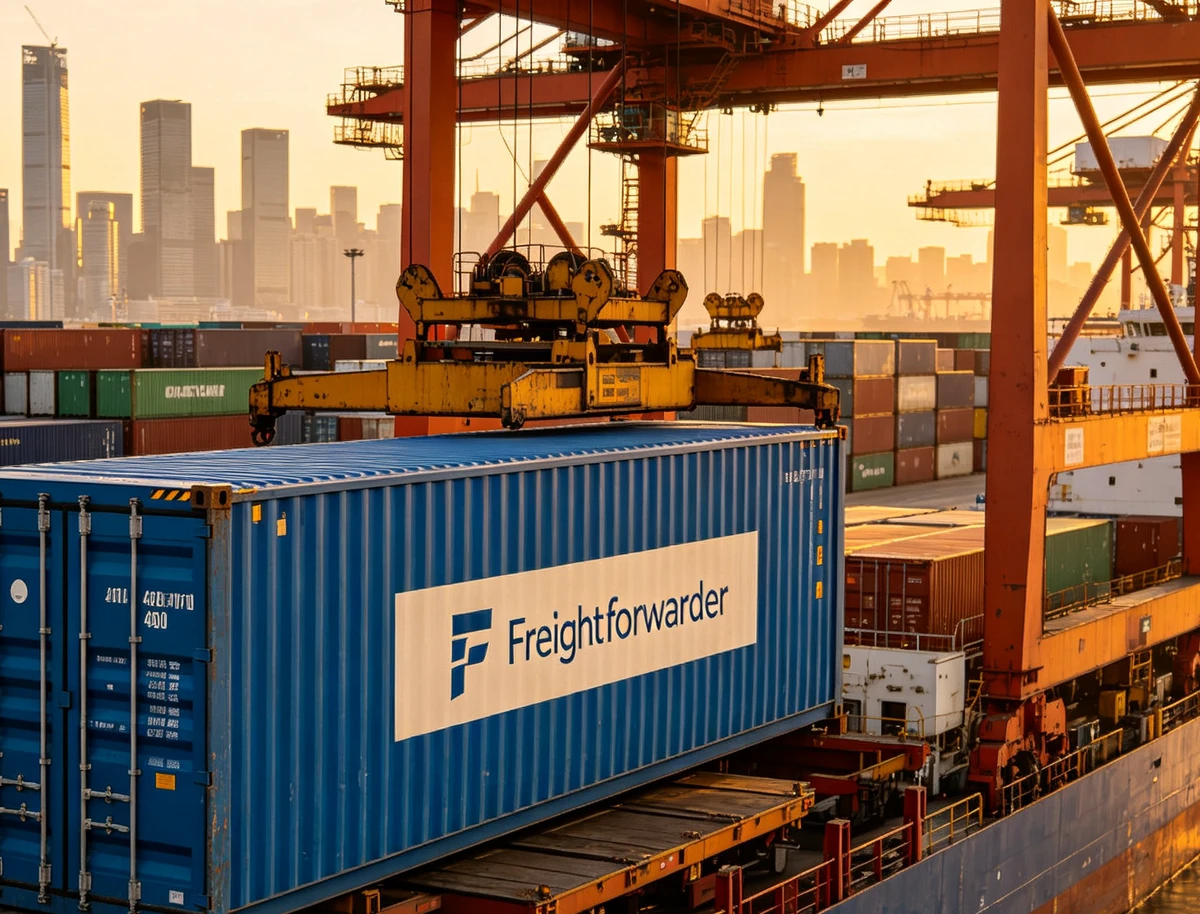
As a form of sea freight, FCL (Full Container Load) means one shipper books an entire shipping container for one shipment. The container is loaded at the supplier’s factory or a container yard (CY) in China, sealed, and delivered to the consignee in France with the seal intact. The buyer pays for the whole box regardless of whether it is 80% or 100% full.
By contrast, LCL (Less than Container Load) combines cargo from multiple shippers into one container. A freight forwarder consolidates shipments at a Chinese CFS (Container Freight Station), ships the box, and deconsolidates it at a French CFS. That shared model is flexible for small volumes but adds handling steps, time, and risk.
FCL is usually the smarter choice when:
- Cargo volume exceeds roughly 15 CBM.
- Goods are high-value, fragile, or prone to damage.
- You ship repeatedly and want predictable lead times.
- You need exclusive control over loading, stowage, and seals.
Common France-bound FCL cargo includes electronics from Shenzhen and Guangzhou, machinery and auto parts from Ningbo and Shanghai, furniture and home goods from Guangdong, and textiles from the Yangtze River Delta. For a consolidated service overview of this corridor, see our dedicated freight shipping from China to France route page.
Why Choose FCL Over LCL for China–France Shipping?
The decision between FCL and LCL is not just about cubic meters. It affects landed cost, cargo condition, and supply-chain predictability.
| Factor | FCL | LCL |
|---|---|---|
| Typical volume threshold | 15+ CBM | 1–15 CBM |
| Cost structure | Per container | Per CBM or per ton |
| Transit time | 25–45 days port-to-port | 30–55 days port-to-port |
| Handling risk | Minimal; sealed at origin | Higher; consolidated and deconsolidated |
| Cargo control | Full control over loading | Shared space with other shippers |
| Predictability | More stable schedules | Depends on consolidation volumes |
Because an FCL box skips the consolidation warehouse in China and the deconsolidation warehouse in France, it typically saves 3 to 7 days compared with LCL. For seasonal inventory or Amazon FBA replenishment windows, that difference can determine whether you hit or miss a sales deadline.
FCL also gives you control over loading patterns. Heavy machinery can be chained to the floor, cartons can be stacked floor-to-ceiling without worrying about other shippers’ cargo, and you can order a loading supervisor to photograph the process. Those details matter when a French customs inspector opens the container and asks why the packing list does not match the physical load.
Main Shipping Routes and Ports for FCL From China to France
Key China Origin Ports
France-bound containers leave from almost every major Chinese container port on the Container Shipping from China to France lane. The best origin depends on where your supplier is located:
- Shanghai — the world’s busiest container port; ideal for Yangtze River Delta suppliers (machinery, textiles, auto parts).
- Shenzhen (Yantian / Shekou) — the electronics and cross-border e-commerce capital; best for South China factories.
- Guangzhou (Nansha) — strong for furniture, lighting, home goods, and building materials.
- Ningbo-Zhoushan — a cost-competitive alternative to Shanghai for machinery and consumer goods.
- Qingdao, Xiamen, Tianjin — niche options for northern and southeastern origins.
Key France Destination Ports
- Le Havre (FRLEH) — France’s largest container gateway. Best for Paris, Lille, Normandy, and northern France distribution.
- Fos-sur-Mer / Marseille (FRFOS) — the Mediterranean entry point. Best for Lyon, Marseille, Toulouse, and southern France. Importers comparing neighboring Mediterranean markets may also review FCL Shipping from China to Spain for Barcelona or Valencia discharge.
- Dunkirk (FRDKR) — smaller northern port with good rail and road links; useful when Le Havre is congested.
2026 FCL Transit Times by Route
| Route | Port-to-Port | Door-to-Door |
|---|---|---|
| Shanghai → Le Havre | 26–35 days | 38–45 days |
| Shenzhen → Le Havre | 26–30 days | 38–44 days |
| Ningbo → Le Havre | 29–36 days | 40–47 days |
| Guangzhou → Le Havre | 28–34 days | 39–46 days |
| Shanghai → Fos-sur-Mer | 30–38 days | 42–50 days |
| Shenzhen → Dunkirk | 28–34 days | 40–46 days |
Note that port-to-port figures exclude factory pickup, export customs, unloading, import clearance, and inland trucking. Door-to-door timelines reflect the full chain under normal conditions. Current routing via the Cape of Good Hope (instead of the Suez Canal) is still common for some services and can add variability.
Choosing the Right Port for Your Final Destination
If your warehouse or fulfillment center is near Paris or Lille, Le Havre is usually the closest and cheapest discharge point. If you distribute to Lyon, Marseille, or Toulouse, Fos-sur-Mer reduces inland trucking distance and can offset a slightly longer ocean leg. Dunkirk works well for importers serving Belgium or the Netherlands in addition to northern France, or as a backup when Le Havre berth congestion spikes. For businesses that also move volume into Central Europe, our guide to Shipping from China to Germany by Sea covers rates and transit options from the same origins.
FCL Container Types: Which Box Fits Your Cargo?
Standard Dry Containers
| Type | Internal Volume | Max Payload | Best For |
|---|---|---|---|
| 20GP | ~33 CBM | ~28,000 kg | Heavy, dense cargo: machinery, tiles, metal, stone |
| 40GP | ~67 CBM | ~27,000 kg | General cargo: retail goods, cartons, mixed pallets |
| 40HQ | ~76 CBM | ~26,500 kg | Bulky/light goods: furniture, packaging, e-commerce inventory |
A 20GP is the right choice when weight, not volume, is the constraint. A 40GP is the standard all-rounder. A 40HQ gives you an extra foot of height and is often the best value per cubic meter for furniture, lighting, and volumetric e-commerce cargo.
Special Equipment
- Reefer containers maintain set temperatures for food, pharmaceuticals, chemicals, and other temperature-sensitive goods.
- Flat-rack and open-top containers handle oversized machinery, project cargo, and goods that cannot be loaded through standard doors.
- High-cube vs. standard is a simple math problem: if your cargo is light and bulky, the 40HQ almost always wins on cost per CBM.
Loading Best Practices
Before a container leaves the factory, three things must be right:
- Weight distribution — heavy items should sit low and centered to avoid axle-limit issues during French road haulage.
- Loading supervision — a forwarder or third-party inspector should photograph the load and confirm it matches the packing list.
- VGM (Verified Gross Mass) — carriers require a certified container weight before gate-in. Missing or inaccurate VGM is one of the most common causes of missed sailings.
FCL Shipping Costs From China to France (2026)
Typical Rate Ranges by Container Type
The rates below are port-to-port ocean freight benchmarks only. Door-to-door or DDP quotes will be higher because they include origin handling, customs, duties, VAT, and inland trucking.
| Container Type | Port-to-Port Range (USD) |
|---|---|
| 20GP | $2,000 – $4,250 |
| 40GP | $2,650 – $5,850 |
| 40HQ | $3,300 – $6,200 |
Typical Rates by Origin Port to Le Havre
| Origin Port | 20GP | 40GP |
|---|---|---|
| Shanghai | $2,350 | $2,950 |
| Shenzhen | $2,550 | $3,250 |
| Ningbo | $2,450 | $3,050 |
| Guangzhou | $2,650 | $3,250 |
| Qingdao | $2,650 | $3,350 |
Rates change weekly. A quote that looks cheap on paper may exclude fuel surcharges, terminal handling, or peak-season fees. Always ask your forwarder whether the rate is all-in or ocean freight only.
What Affects FCL Rates
Several forces push ocean freight up or down:
- Peak-season surcharge (PSS) — carriers add PSS before Chinese New Year, during summer restocking, and ahead of Q4 holiday demand.
- BAF (Bunker Adjustment Factor) — rises when marine fuel prices climb.
- CAF (Currency Adjustment Factor) — offsets exchange-rate swings, usually USD-EUR.
- Equipment imbalance — empty containers may be scarce in South China during export surges.
- Direct vs. transshipment — direct sailings cost more but are faster and more reliable.
Hidden Costs to Demand in Your Quote
A complete China–France FCL quote should break down every line item. Watch for:
- Origin THC, documentation, and export customs clearance
- Ocean freight + BAF/CAF/PSS
- Destination THC, handling, and unloading
- French customs duties and 20% VAT (TVA)
- Inland trucking from port to warehouse
- Demurrage and detention if the container is not returned within free time
- Cargo insurance
Landed Cost Example: Furniture From Shenzhen to Lyon
Imagine a 40HQ of furniture shipped DDP from a Shenzhen factory to Lyon via Le Havre:
| Cost Item | Amount (USD) |
|---|---|
| Ocean freight + surcharges | $3,800 |
| Origin handling + export customs | $450 |
| Destination THC + handling | $550 |
| Customs duty (0% for most furniture) | $0 |
| French VAT (20% on CIF) | ~$940 |
| Inland trucking Le Havre → Lyon | $650 |
| Cargo insurance | $180 |
| Total landed cost | ~$6,570 |
If the container holds 600 CBM-equivalent units, the freight and compliance cost per unit is roughly $10.95. That number is what matters when you negotiate a sale price in France.
Incoterms 2020: Choosing the Right Term for China–France FCL
The Incoterm you choose determines who pays for freight, insurance, export/import customs, and final delivery.
| Incoterm | Seller Pays To | Buyer Handles | Best For |
|---|---|---|---|
| EXW | Factory floor only | Everything from pickup | Experienced buyers with own China logistics |
| FOB | On board vessel at origin port | Ocean freight, insurance, France clearance | Importers with their own French customs broker |
| CIF | To destination port | Import clearance, duties, VAT, trucking | Buyers who want seller to arrange ocean leg |
| DAP | To named French destination | Import clearance, duties, VAT | Buyers with in-house customs capability |
| DDP | Delivered duty paid, all-inclusive | Nothing; forwarder/seller handles all | E-commerce sellers, FBA, first-time importers |
DDP is the most popular choice for Amazon FBA France and smaller B2B importers because it bundles freight, customs, VAT, and final-mile delivery into one predictable invoice. FOB or CIF can save money for large importers with established French customs brokers and high shipment volumes.
Documentation and French/EU Compliance
China Export Documents
Smooth customs clearance on both sides starts with accurate paperwork. Every France-bound FCL shipment needs the following from the Chinese side:
- Commercial Invoice — value, description, HS code, Incoterm, and payment terms.
- Packing List — quantity, weight, dimensions, and packaging type for each item.
- Bill of Lading (B/L) — the carrier’s contract of carriage and title document.
- Export Customs Declaration — filed by the forwarder or supplier through China Customs.
- Certificate of Origin — required for preferential duty treatment under certain trade agreements.
- VGM Declaration — certified container weight.
- MSDS / Dangerous Goods Papers — for batteries, chemicals, or other regulated cargo.
France/EU Import Requirements
- EORI Number — mandatory for any business importing into France or the EU. If you do not have one, customs clearance cannot proceed.
- HS / CN Code Classification — determines the duty rate and any import restrictions.
- French VAT (TVA) — the standard rate is 20%, calculated on CIF value plus duty.
- Postponed VAT Accounting — VAT-registered EU businesses can defer VAT payment to their next return instead of paying cash at customs.
Emerging Compliance Topics
- ICS2 (Import Control System 2) — the EU’s advance cargo security system requires carriers and forwarders to submit detailed data before arrival. Inaccurate filings can trigger holds.
- CBAM (Carbon Border Adjustment Mechanism) — currently applies to imports of steel, cement, aluminum, fertilizers, hydrogen, and electricity. Importers in these sectors must report embedded emissions.
- CE Marking — mandatory for electronics, machinery, toys, PPE, and medical devices sold in the EU.
- AGEC / Eco-Contribution — France’s anti-waste law imposes fees on electronics, electrical equipment, and certain packaging.
- IPPC Marking — wooden pallets, crates, and dunnage must carry the ISPM-15 stamp to prove heat treatment or fumigation.
Compliance is not a last-minute checkbox. The HS code should be confirmed before booking, the EORI number should be active before sailing, and CE/IPPC markings should be verified during supplier audits.
Step-by-Step FCL Shipping Process From China to France
- Quote and booking — confirm container type, Incoterm, sailing schedule, and all-in cost.
- Supplier coordination — arrange factory pickup or deliver the empty container to the supplier’s yard.
- Container loading and VGM — supervise loading, seal the container, and submit verified gross mass.
- China export customs clearance — forwarder submits declaration; customs may inspect randomly.
- Ocean transit — track the vessel through carrier platforms or your forwarder.
- France import customs clearance — submit B/L, invoice, packing list, EORI, and HS classification; pay duty and VAT.
- Inland delivery — truck the container from Le Havre, Fos-sur-Mer, or Dunkirk to the final warehouse.
- Unload and return empty container — avoid detention by unloading and returning the empty box within free time.
A reliable freight forwarder manages this chain as a single workflow rather than a series of handoffs. That coordination is where delays are usually won or lost.
When to Book and How to Lock Better FCL Rates
Ocean freight is seasonal. Planning around the calendar protects both your budget and your lead time.
| Period | Market Condition | Booking Advice |
|---|---|---|
| Jan–Feb | Chinese New Year surge | Book 4–6 weeks ahead; expect PSS |
| Mar–May | Post-holiday normalization | Good window for stable rates |
| Jun–Aug | Summer restocking, peak-season surcharges | Book 3–4 weeks ahead |
| Sep–Nov | Q4 holiday rush | Highest rates; lock space early |
| Dec | Pre-holiday lull then CNY pre-booking | Plan January sailings now |
Most ocean quotes are valid for 7 to 14 days. If you have recurring volume, negotiate a rolling rate agreement or space commitment with your forwarder. Always add 5 to 10 days of buffer to quoted transit for customs inspections, port congestion, or weather delays.
Common Mistakes to Avoid
- Booking LCL when FCL is cheaper. Once you approach 12–15 CBM, the per-unit economics of FCL often win.
- Accepting “ocean freight only” quotes. Origin and destination charges can double the apparent cost.
- Wrong HS codes. Misclassification causes delays, fines, or overpaid duty.
- Missing EORI. Without it, French customs cannot release the container.
- Ignoring IPPC marks. Wooden packaging without the stamp may be rejected or fumigated at your expense.
- Skipping cargo insurance. Ocean carriers’ liability is limited; a total loss can be catastrophic.
Why Sinoshipment for FCL Sea Freight From China to France
Sinoshipment is a professional freight forwarder based in Shenzhen, China, with operations rooted in the country’s busiest export logistics corridor. Since 2013, we have helped more than 5,000 importers move cargo from China to Europe, the Middle East, the Americas, and beyond.
For France-bound FCL, our advantage is local:
- South China hub access — direct coordination at Shenzhen Yantian, Shenzhen Shekou, and Guangzhou Nansha, the home ports of China’s electronics and e-commerce supply chains.
- End-to-end FCL service — factory pickup, loading supervision, export customs, ocean freight, French import clearance, DDP, and inland delivery.
- Transparent, all-in quotes — we itemize ocean freight, surcharges, THC, duties, VAT, and trucking so you know the real landed cost before the container sails.
- France/EU compliance support — EORI guidance, HS code review, ICS2 filing, CBAM advisory, CE marking checks, and AGEC eco-contribution guidance.
- Amazon FBA France expertise — FCL inbound to French fulfillment centers including CDG7, LIL1, and MRS4, with labeling, palletization, and delivery appointment support.
Whether you need a one-time 40HQ to Le Havre or a quarterly FCL program from South China to France, our team can build a route and rate plan that fits your supply chain.
FAQ
How long does FCL take from China to France?
Port-to-port transit is typically 25–45 days, depending on origin port and routing. Door-to-door delivery usually takes 38–50 days.
How much does a 20ft container cost from China to France?
In 2026, port-to-port rates for a 20GP range from roughly $2,000 to $4,250, with Shanghai and Ningbo generally cheaper than South China origins.
How much does a 40ft container cost from China to France?
A 40GP typically costs $2,650–$5,850 port-to-port. A 40HQ costs slightly more but offers better value per cubic meter for light, bulky cargo.
What is the cheapest FCL shipping route from China to France?
Shanghai and Ningbo to Le Havre often offer the lowest base ocean freight due to high vessel frequency and direct services. The cheapest total landed cost depends on your supplier location and final French destination.
Do I need an EORI number to import into France?
Yes. An EORI number is mandatory for any business clearing goods through French or EU customs.
What documents are needed for FCL customs clearance in France?
Typically: commercial invoice, packing list, bill of lading, certificate of origin (if applicable), and proof of EORI registration.
Is DDP available for FCL shipping from China to France?
Yes. DDP (Delivered Duty Paid) is widely used for France-bound FCL, especially by e-commerce sellers and Amazon FBA importers who want a single all-in price.
Can Sinoshipment ship FCL to Amazon FBA warehouses in France?
Yes. Sinoshipment handles FCL inbound to Amazon fulfillment centers in France, including customs clearance, VAT settlement, palletization, labeling, and delivery appointments.
What is the difference between FCL and LCL from China to France?
FCL gives one shipper exclusive use of a container and is faster and more secure. LCL shares container space and is better for small shipments under 12–15 CBM.
When should I book FCL before Chinese New Year?
Book 4 to 6 weeks before Chinese New Year.Factories and ports close for 1–2 weeks, and space fills quickly.
Conclusion
Shipping FCL from China to France is not complicated, but it is detail-heavy. The five decisions that determine success are: choosing the right container size, selecting the best origin-destination port pair, picking the right Incoterm, getting compliance right the first time, and partnering with a forwarder who can coordinate the entire chain.
Get those right, and FCL becomes one of the most cost-effective ways to move bulk cargo across the 10,000 nautical miles between China and France. Get them wrong, and a single missed document or misunderstood surcharge can erase your margin overnight.
If you are planning your next FCL shipment from China to France, contact Sinoshipment for a transparent, all-in quote and a shipping plan built around your product, your timeline, and your budget. For businesses distributing across the continent, explore our full Freight Shipping from China to Europe network.