How to Import and Ship a Car from China to Iran: The Complete 2026 Guide (RoRo, Container & DDP)
· By SinoShipment
If you want to import and ship a car from China to Iran, you are not alone. Iranian dealerships, auto brokers, and individual buyers are increasingly sourcing vehicles directly from Chinese manufacturers like BYD, Chery, Changan, Geely, and Haval. The price advantage, technology, and model variety are compelling. But the process is not as simple as buying a car and booking a container. It involves Iran import rules, vehicle-specific shipping methods, China export documentation, and sanctions-sensitive logistics.
This guide explains exactly how to move a car from a Chinese factory or dealer to an Iranian port — and beyond. You will learn who can import, which vehicles are eligible, whether to use RoRo or a container, what documents you need, how much it costs, and how to avoid the mistakes that delay or derail shipments.
This guide reflects the operational experience of Sinoshipment’s China-Iran logistics team. Iranian regulations and sanctions-related conditions change frequently, so always confirm current rules with IRICA and your licensed broker before booking.
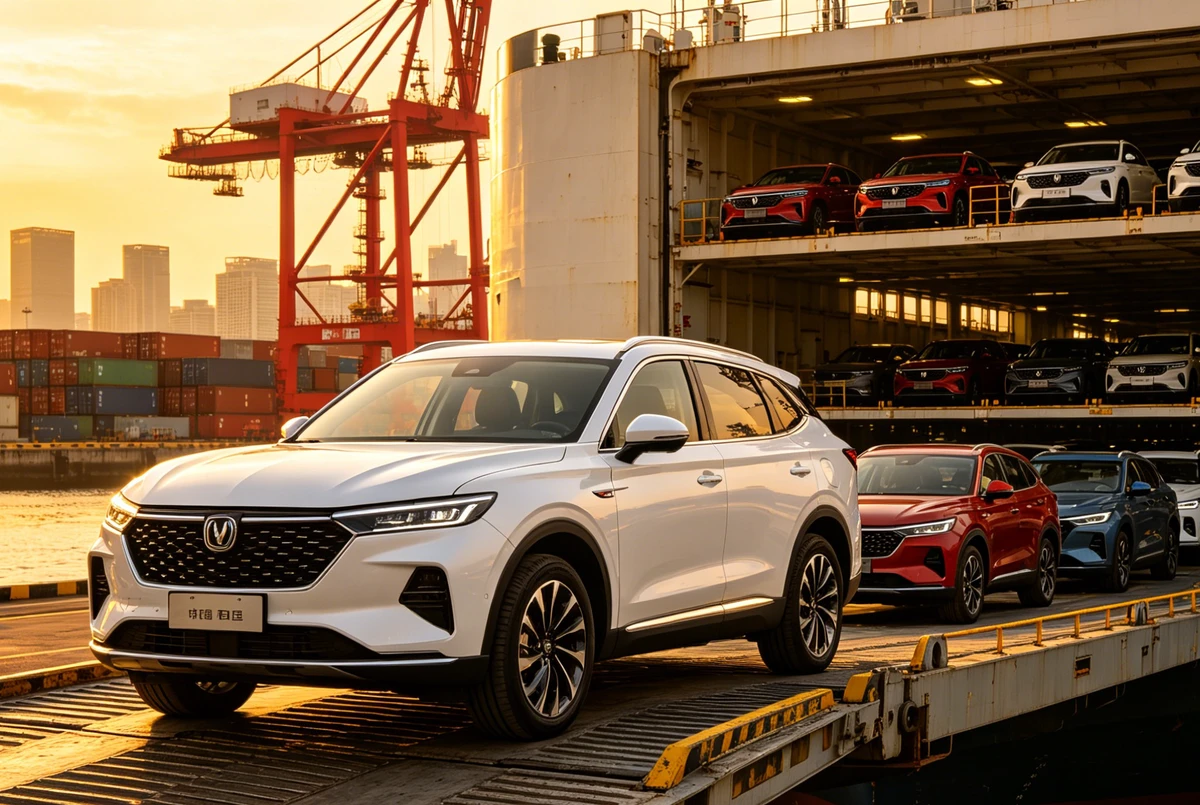
Why More Buyers Are Importing Cars from China to Iran
The case for sourcing vehicles from China has grown stronger over the past three years. China overtook Japan and Germany to become the world’s largest vehicle exporter, and its automakers are expanding aggressively into Middle Eastern markets.
Price Competitiveness
Chinese-brand SUVs and sedans often land in Iran below the price of comparable European, Japanese, or Korean models, especially for compact SUVs, EVs, and fleet vehicles.
EV and Technology Leadership
Brands like BYD, NIO, Xpeng, and Zeekr lead in battery-electric vehicle (BEV) technology. For Iranian buyers in free zones or cities with charging infrastructure, Chinese EVs are an attractive alternative to gasoline vehicles.
Export Infrastructure
China has built dedicated vehicle-export terminals at Shanghai, Tianjin, Shenzhen, Guangzhou (Nansha), and Qingdao. These ports handle millions of vehicles annually and offer regular RoRo sailings to the Middle East, including Bandar Abbas.
Who Can Import a Car into Iran?
Not everyone can bring a vehicle into Iran. The importer category determines the rules, documents, and duties. Before you buy a car in China, confirm that you qualify.
Commercial Importers and Dealerships
Registered Iranian companies with automotive import licenses can import vehicles for resale. They must hold valid commercial registration, obtain any required import permit from the Ministry of Industry, Mine and Trade, and complete order registration (Sabt-e Sefaresh) through Iran’s National Trade Single Window.
Iranian Expatriates
Iranian citizens living abroad can import one vehicle per Iranian calendar year, provided they have resided outside Iran for at least six months, the vehicle is under five years old, and funding comes from personal foreign currency held abroad. The imported vehicle typically cannot be sold for several years.
Foreign Investors and Diplomats
Foreign investors with an Iranian business card may import vehicles subject to value limits, while diplomats can import duty-free with an exemption from Iran’s Ministry of Foreign Affairs.
Temporary Import
Foreign nationals can sometimes bring a vehicle temporarily using a carnet de passage or a bank deposit, useful for tourists, business visitors, or exhibition vehicles.
Iran Vehicle Import Regulations and Eligibility
Iran enforces strict vehicle standards. A car that leaves China legally is not guaranteed entry into Iran. Verify every requirement before you pay.
Vehicle Age Limits
Used cars are generally restricted. Most rules require the vehicle to be under three to five years old at the time of import, depending on the importer category. New vehicles face no age restriction as long as they meet technical and standards requirements.
Drive-Side and Engine Rules
- Left-hand drive (LHD) only. Right-hand drive vehicles are prohibited.
- Diesel engines are generally prohibited for passenger cars.
- Engine displacement may be restricted for certain importer categories or vehicle types.
Standards Compliance
Chinese vehicles must meet both Chinese and Iranian standards. China Compulsory Certification (CCC) confirms the vehicle met Chinese safety and emissions requirements at production. INSO / ISIRI compliance is required for Iranian import, and a Certificate of Conformity (COC) or equivalent type-approval documentation is often required. The Vehicle Identification Number (VIN) must be clear, valid, and consistent across all documents.
Electric Vehicle Rules
Electric cars are a fast-growing import category, but they require extra attention. Lithium batteries are classified as dangerous goods for transport, and carriers may require UN38.3 test reports and MSDS documentation. Some Iranian free zones offer special provisions for hybrid or electric vehicles, but charging infrastructure and after-sales support should be planned before import.
Prohibited and Restricted Vehicles
Avoid US-origin vehicles, right-hand drive vehicles, vehicles without valid CCC or COC documentation, and rebuilt or modified vehicles that cannot pass Iranian standards inspection.
Shipping Methods: RoRo vs. Container vs. Air Freight
Choosing the right shipping method affects your cost, transit time, and risk exposure. For most vehicle shipments from China to Iran, the decision comes down to RoRo or container, the two main sea freight options for moving vehicles.
Roll-on/Roll-off (RoRo) Shipping
RoRo is the most common method for finished vehicles. The car is driven onto the vessel at the Chinese port and driven off at Bandar Abbas or another Iranian port. It offers the lowest ocean freight cost per vehicle, frequent sailings, and simple handling, making it ideal for running vehicles in normal condition. The downsides are exposure to weather and sea air, no personal belongings inside the vehicle, and the requirement that the vehicle be in running condition. Typical transit time is 20–38 days depending on route and transshipment.
Container Shipping for Cars
With container shipping, the vehicle is loaded into a 20ft or 40ft container and secured with braces, lashings, and wheel chocks. A 20ft container fits one standard car plus parts; a 40ft container fits two to four vehicles depending on size. Container shipping offers higher security and weather protection, works for non-running vehicles, and allows spare parts to travel with the car. The downside is higher cost per unit for single-vehicle shipments and the need for professional loading.
- Adds handling steps at origin and destination.
Flat-Rack and Open-Top Containers
For oversized vehicles — such as trucks, buses, modified off-road vehicles, or heavy machinery — a standard container will not work. A flat-rack or open-top container allows loading from the top or side and is secured to the deck of the vessel.
Air Freight for Cars
Air freight is rarely used for full-size vehicles because of cost, but it makes sense for ultra-high-value or collectible cars, exhibition or motorsport vehicles, or urgent replacements where time matters more than cost. Typical rates run $5–$8+ per kilogram, with total costs often exceeding $10,000 for a single sedan. Transit time is usually 3–7 days. For urgent non-vehicle cargo into the Gulf, our Air Freight from China to UAE guide explains rates and booking options.
Shipping Method Comparison
| Factor | RoRo | Container (FCL) | Air Freight |
|---|---|---|---|
| Cost per vehicle | Lowest | Medium | Highest |
| Transit time | 20–38 days | 22–40 days | 3–7 days |
| Security | Standard | High | High |
| Cargo allowed | Vehicle only | Vehicle + parts | Vehicle only |
| Best for | Running cars, fleet volumes | Luxury/non-running/multiple cars | Urgent/high-value cars |
Ports and Routes: From China to Iran
The most efficient route for your shipment depends on where the vehicle is located in China and which Iranian port can clear it.
Main Chinese Load Ports for Vehicle Exports
- Shanghai — China’s largest vehicle export port, with frequent RoRo sailings to the Middle East.
- Tianjin — Key northern gateway for vehicles from Beijing, Hebei, and northeastern China.
- Shenzhen / Guangzhou (Nansha) — Ideal for EV brands in the Pearl River Delta.
- Qingdao / Ningbo — Regional alternatives.
Main Iranian Ports of Entry
- Bandar Abbas — Iran’s largest port and primary gateway for vehicle imports, with the most developed RoRo and customs infrastructure.
- Imam Khomeini Port — Growing container traffic for containerized vehicles.
- Bushehr — Streamlined customs for certain routes.
- Khorramshahr — Alternative port for specific cargo.
Typical Transit Times by Route
| Route | Mode | Transit Time |
|---|---|---|
| Shanghai → Bandar Abbas | RoRo / Container | 22–30 days |
| Shenzhen → Bandar Abbas | RoRo / Container | 20–25 days |
| Tianjin → Bandar Abbas | RoRo / Container | 25–35 days |
| Qingdao → Bushehr | RoRo / Container | 28–35 days |
| Shanghai → Tehran | Air Freight | 3–7 days |
Direct vs. Transshipment Routes
Direct sailings from China to Iran exist but are not always available on every carrier. Many shipments transship through Jebel Ali (Dubai), Port Klang, or Singapore, adding a few days but expanding carrier options. Some forwarders also arrange switched Bills of Lading for operational flexibility, though this requires careful documentation handling.
Step-by-Step: How to Import and Ship a Car from China to Iran
Follow this roadmap to keep your shipment on track.
Step 1 — Verify Vehicle Eligibility for Iran
Before paying anything, confirm:
- The vehicle is under the permitted age.
- It is left-hand drive.
- It has a gasoline or acceptable hybrid/electric powertrain.
- It has valid CCC and can obtain INSO / ISIRI approval.
- The VIN is clear and consistent.
Step 2 — Choose Your Supplier and Agree on Terms
Decide whether to buy from a factory-authorized dealer, an export trading company, or a broker. For new vehicles, authorized dealers offer stronger documentation support. For used vehicles, a thorough inspection is critical. Request a proforma invoice, vehicle specifications, VIN, CCC certificate or COC, and photos.
Step 3 — Select the Right Incoterm
The Incoterms 2020 rule you choose determines who pays for what. EXW puts most responsibility on the buyer from the supplier’s premises. FOB means the supplier delivers the vehicle to the Chinese port and clears export customs, while you arrange ocean freight and Iran import clearance. CIF means the supplier pays freight to Bandar Abbas, and you handle import clearance. DDP means the forwarder handles pickup, shipping, Iran customs clearance, duties, and final delivery.
For most Iranian importers, FOB or DDP offer the best combination of control and simplicity.
Step 4 — Book Vehicle Shipping
Choose RoRo or container based on the vehicle type, budget, and schedule. Then:
- Arrange inland transport from the factory or dealer to the load port.
- Reserve vessel space, especially before Chinese New Year and peak seasons.
- Confirm the load port, discharge port, and expected sailing date.
Step 5 — Complete China Export Procedures
Your forwarder or supplier will handle China export customs declaration, vehicle deregistration or title transfer, loading onto the RoRo vessel or into the container, and issuance of the Bill of Lading (B/L) or Sea Waybill.
Step 6 — Iran Import Clearance
After the vessel arrives at Bandar Abbas or another Iranian port, submit all import documents to IRICA (Iran Customs Administration) for customs clearance, pay customs duties, VAT, and any additional fees, and undergo physical or technical inspection if selected by customs.
Step 7 — Standards Inspection and Registration
Before the vehicle can be driven legally, pass INSO / ISIRI inspection if required, obtain Iranian license plates, and arrange local insurance.
Step 8 — Final Delivery
Arrange inland transport from the port to your dealership, warehouse, or end customer. Many forwarders offer door-to-door delivery to Tehran, Mashhad, Isfahan, and other major cities.
Required Documents Checklist
In our experience, missing or inconsistent paperwork is the most common cause of delays on the China-Iran car lane. Prepare every document in advance and make sure names, values, and VINs match exactly across all paperwork. Keep both digital and physical copies.
China Export Documents
- Commercial Invoice
- Packing List
- Bill of Lading (B/L) or Sea Waybill
- Certificate of Origin (CO)
- China Customs Declaration
- Vehicle Title / Registration Certificate
- Vehicle Identification Number (VIN) documentation
- CCC Certificate (China Compulsory Certification)
- Export license or permit if applicable
Iran Import Documents
- Import License / Order Registration (Sabt-e Sefaresh)
- Proforma Invoice
- Original Commercial Invoice
- Original Packing List
- Original Bill of Lading
- Certificate of Origin (legalized)
- Certificate of Conformity (COC) or INSO approval
- Insurance Certificate
- Proof of foreign currency payment where required
- Passport and residence documents for expatriate imports
Cost Breakdown: How Much Does It Cost to Ship a Car from China to Iran?
The total landed cost includes far more than ocean freight. Below is a realistic breakdown, based on recent quotes we have arranged, for a compact Chinese SUV shipped from Shanghai to Bandar Abbas under a DDP arrangement, plus a sample calculation.
| Cost Item | Estimated Range (USD) | Notes |
|---|---|---|
| Vehicle FOB price | $12,000–$25,000 | Depends on brand and model |
| China inland transport + export fees | $400–$800 | Factory to port |
| RoRo ocean freight | $1,100–$1,900 | Per running vehicle |
| Container ocean freight (FCL 40ft) | $3,200–$4,500 | Holds 2–4 cars |
| Marine insurance | 0.3%–1.0% of CIF | All-risk recommended |
| Iran customs duty (HS 8703) | 30%–55% of CIF | Varies by engine and type |
| VAT | 5%–9% | Applied on CIF + duty |
| Port handling / THC / documentation | $300–$700 | Bandar Abbas |
| Customs broker fees | $200–$500 | For complex clearance |
| INSO / ISIRI inspection | $100–$300 | If mandatory |
| Registration, plates, insurance | $200–$500 | Iran local costs |
Sample Landed Cost Calculation
| Line Item | Amount (USD) |
|---|---|
| Vehicle FOB Shanghai | $18,000 |
| Inland transport + export fees | $600 |
| Ocean freight (RoRo) | $1,400 |
| Insurance (0.5% of CIF) | $100 |
| CIF Value | $20,100 |
| Customs duty (40%) | $8,040 |
| VAT (9% on CIF + duty) | $2,533 |
| Port handling + documentation | $500 |
| Customs broker | $350 |
| INSO inspection | $200 |
| Registration and plates | $300 |
| Estimated Total Landed Cost | $32,023 |
Actual duties depend on the exact HS code, engine displacement, and current Iranian tariff schedules. Always request an itemized quote before committing. Iranian tariffs, VAT rates, and sanctions-related requirements change frequently, so confirm current rules with IRICA, the Ministry of Industry, Mine and Trade, and your licensed Iranian customs broker before finalizing any purchase. For a comparable Gulf corridor, our guide to Freight Costs from China to UAE explains rate structures and surcharges.
Cost-Saving Tips
- Consolidate. A 40ft container usually lowers the per-unit cost for multiple cars.
- Pick the right port. Shenzhen to Bandar Abbas is often the fastest and most competitive lane.
- Avoid peak seasons. Rates rise and space tightens before Chinese New Year and Ramadan.
- Compare FOB and DDP quotes carefully. A low FOB price can hide high local costs in Iran.
Transit Times and Scheduling
Typical Transit Times
| Mode | Route | Transit Time |
|---|---|---|
| RoRo | Shanghai → Bandar Abbas | 22–30 days |
| RoRo | Shenzhen → Bandar Abbas | 20–25 days |
| Container | Shanghai → Bandar Abbas | 22–32 days |
| Air freight | Shanghai → Tehran | 3–7 days |
For context on a nearby Middle East lane, see our breakdown of How Long Does Shipping Take from China to Saudi Arabia.
Factors That Affect Timing
- Port congestion at Shanghai, Shenzhen, or Bandar Abbas.
- Weather delays, especially during monsoon season or winter storms.
- Customs inspection intensity in Iran.
- Transshipment connections through Dubai or Port Klang.
- Holidays, including Chinese New Year and Iranian public holidays.
Insurance and Risk Management
A vehicle is a high-value cargo. We recommend All-Risk coverage or Institute Cargo Clauses (A), with premiums typically ranging from 0.3% to 1.0% of the CIF value. RoRo vehicles are exposed to sea air and handling equipment, so risks include saltwater corrosion, scratches or dents during loading, theft of loose parts, and total loss in rare incidents.
EV and Battery Considerations
For transport, lithium batteries may require UN38.3 test summaries, MSDS documentation, battery state-of-charge limitations, and dangerous goods declarations on certain routes.
Sanctions and Compliance Risks
International sanctions affect banking, insurance, and carrier options for Iran trade. For a deeper look at how geopolitical developments affect pricing, read our update on How the May 2026 US-Iran Tensions Impact Shipping Costs from China. Work with a forwarder that has direct China-Iran experience and can explain which shipping lines and insurers currently accept Iran-bound cargo, how payments can be settled without violating sanctions, and whether transshipment or switched B/L is needed.
Red flags include rates that seem too low, refusal to provide vessel names, requests to misdeclare cargo, or pressure to use unusual payment channels.
Common Mistakes to Avoid
- Buying without verifying Iran eligibility. A right-hand drive car, a diesel engine, or a vehicle over the age limit will be rejected at the border.
- Underestimating total landed cost. Duties, VAT, port fees, and registration can add 40%–70% to the CIF value.
- Using an inexperienced forwarder. China-Iran vehicle shipping requires specific RoRo, customs, and sanctions expertise.
- Under-invoicing. Iran’s TSC (Tariff System Customs) database compares declared values to reference prices; undervaluation triggers reassessment and penalties.
- Skipping pre-shipment inspection. Photos and a third-party inspection report protect you against disputes over damage or missing parts discovered after arrival.
How to Choose the Best Car Shipping Company from China to Iran
What to Look For
Look for proven experience shipping vehicles from China to Iran, direct RoRo booking capability to Bandar Abbas, professional container loading and lashing, transparent DDP quotes, an Iran customs clearance network, cargo insurance options, and multilingual support.
Questions to Ask Before You Book
- Do you offer RoRo and container car shipping to Bandar Abbas?
- Can you load multiple vehicles into one 40ft container?
- Is Iran customs clearance included in your DDP quote?
- What insurance options do you offer?
- How do you handle sanctions-compliant routing and payments?
Why Sinoshipment
Sinoshipment is a professional freight forwarder based in Shenzhen, China, with operations experience dating back to 2013 and more than 5,000 clients served globally. We specialize in freight shipping from China to Iran, including dedicated vehicle logistics. Our operations team regularly coordinates vehicle loading at Shanghai, Tianjin, and Shenzhen ports and has managed RoRo and container shipments discharging at Bandar Abbas, Bushehr, and Imam Khomeini Port. For China-Iran car shipments, we provide factory or dealer pickup, export customs clearance, RoRo and container shipping, Iran import clearance, duty payment, and inland delivery — all under transparent DDP quotes with no hidden fees.
Whether you are a dealership importing SUVs or an expatriate bringing one vehicle home, we can tailor a solution to your timeline and budget.
FAQ: Importing and Shipping Cars from China to Iran
Can I import a used car from China to Iran?
Yes, but used cars are usually restricted by age. Most importer categories require the vehicle to be under three to five years old.
Is right-hand drive allowed in Iran?
No. Only left-hand drive vehicles may be imported.
What is the cheapest way to ship a car from China to Iran?
For a single running vehicle, RoRo is usually the cheapest option. For multiple vehicles, consolidating into a 40ft container often reduces the per-unit cost.
How long does it take to ship a car from Shanghai to Bandar Abbas?
By RoRo or container, expect 22–30 days. Air freight takes 3–7 days but is far more expensive.
What documents do I need to import a car into Iran?
Key documents include the commercial invoice, packing list, bill of lading, certificate of origin, CCC certificate, COC or INSO approval, import license, and insurance certificate. Requirements vary by importer type.
Can I import an electric car from China to Iran?
Yes, but EV shipments require battery safety documentation such as UN38.3 and MSDS, and some free zones have special provisions for electric vehicles.
Should I choose RoRo or container shipping?
Choose RoRo for running vehicles where cost is the priority. Choose a container for luxury cars, non-running vehicles, or when you want to ship spare parts and documents with the car.
How are import duties calculated for cars in Iran?
Duties are calculated on the CIF value (cost of vehicle + insurance + freight). Rates vary by HS code and vehicle type, often ranging from 30% to 55% for passenger cars. VAT is applied on top of CIF plus duty.
Can I ship personal belongings inside the car?
For RoRo, personal belongings are generally not allowed. For container shipments, you may be able to include spare parts or documents, but personal household items usually require separate declaration.
What happens if my car fails INSO inspection?
You may need to repair or modify the vehicle to meet standards, or in some cases re-export it. Pre-shipment compliance verification reduces this risk.
Is marine insurance mandatory for shipping a car?
It is not always legally mandatory, but it is strongly recommended. Vehicle values are high, and ocean transit carries real risks.
Conclusion
Importing a car from China to Iran is a multi-step process that rewards careful planning. The key decisions are straightforward once you understand them: confirm eligibility, choose RoRo or container based on your vehicle and budget, prepare the full document set, and work with a forwarder who understands the China-Iran trade lane.
If you are also exploring other markets, see our guides on How to Import and Ship Cars from China to UK and How to Import and Ship Cars from China to Nigeria.
At Sinoshipment, we help Iranian dealerships, brokers, and individual buyers move vehicles from Chinese factories and ports to Bandar Abbas and beyond. If you need a transparent quote for RoRo, container, or DDP car shipping from China to Iran, contact our team today.
Last updated: June 2026. The import rules, duties, and sanctions guidance in this article reflect conditions at the time of writing and should be verified with IRICA and your licensed Iranian customs broker before shipment.